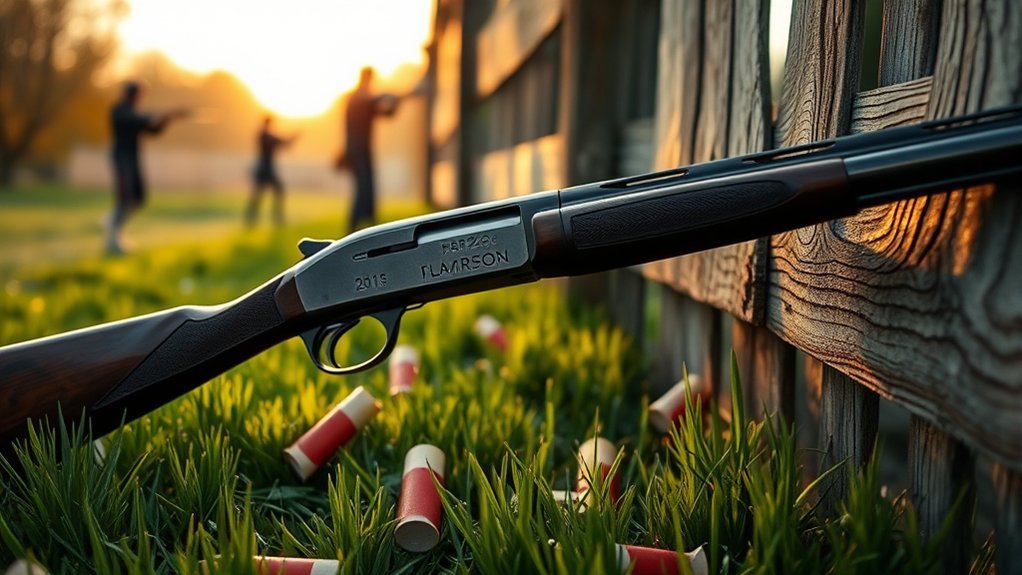
The shotgun moved from a hunting firearm into a major part of competitive shooting as artificial targets, formal rules, international organizations, and specialized sporting designs developed. Early fowling pieces were built for moving birds; later clay-target games turned those field skills into repeatable contests such as trap, skeet, and sporting clays. Olympic recognition and organizations such as the ISSF then helped standardize competition at the international level.
Quick Answer
Shotguns evolved from early smoothbore fowling pieces used for bird hunting into specialized sporting firearms for trap, skeet, sporting clays, and practical shotgun events. The transition accelerated as artificial targets replaced live-bird competition, organized rules became more consistent, trap entered the Olympics in 1900, the ISSF was formally established in 1907, and skeet joined the Olympic program in 1968.
Last updated: September 21, 2026 — historical dates, Olympic milestones, ISSF rule references, and source links reviewed.
Key Takeaways
- Shotguns developed from hunting firearms intended for moving birds into specialized sporting firearms used under standardized competition rules.
- Artificial breakable targets helped turn field shooting skills into repeatable clay-target sports.
- Trap, skeet, sporting clays, and practical shotgun competitions test different combinations of timing, consistency, target reading, and safe firearm handling.
- Production of Browning’s Auto-5 began in 1902, illustrating the rise of successful repeating shotgun designs alongside traditional break actions.
- Trap was an Olympic event in 1900, while skeet made its Olympic debut in 1968.
- Safe handling, legal compliance, and range discipline remain essential parts of organized shotgun sports.
Shotgun Sports History Timeline
| Period | Milestone | Why It Matters |
|---|---|---|
| Late 1800s | Breakable artificial targets, including glass balls and later clay targets, became increasingly important in organized shooting. | They provided a repeatable alternative to live-bird competition. |
| 1900 | Trap appeared as an Olympic event in Paris. | It established shotgun competition within the early Olympic shooting program. |
| 1902 | Production of the Browning Auto-5 began. | The Auto-5 became an important early example of a successful semi-automatic shotgun. |
| 1907 | The organization now known as the ISSF was formally established on July 17. | International governance helped formalize shooting-sport rules and competition. |
| 1925 | Rules for the game that became skeet were published, and the name “skeet” was selected. | A hunting-practice game became a distinct organized shotgun discipline. |
| 1968 | Skeet made its Olympic debut in Mexico City. | Skeet joined trap on the Olympic shooting program. |
| Around 1980 | Sporting clays arrived in the United States from Britain. | It expanded clay competition beyond the fixed presentations of traditional trap and skeet. |
These dates are supported by historical and governing-body sources including NRA Shooting Sports USA, Olympedia, Browning, and the ISSF history.
The Origins of Shotguns in Hunting
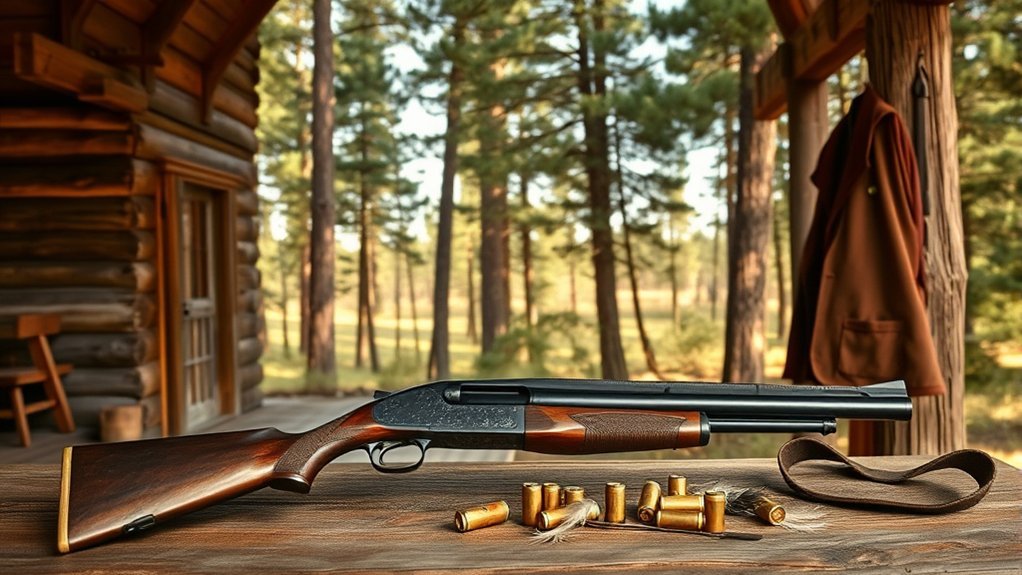
The history of sporting shotguns begins with smoothbore hunting firearms built for moving game. European fowling pieces were used to take birds before modern sporting shotguns became common. Britannica describes a fowling piece as a firearm used for shooting birds and an important predecessor of later shotguns Britannica.
Rather than sending a single projectile toward one fixed point, these hunting firearms could fire multiple pellets that formed a pattern. That characteristic suited fast-moving birds and helped establish the connection between shotguns and moving-target shooting.
Gunmakers gradually improved locks, barrels, stocks, cartridges, and loading systems. Double-barreled designs provided two shots without a full reload, while later repeating actions expanded the range of shotgun designs available to hunters and sport shooters.
Note: The same ability to engage moving game helped make the shotgun a natural platform for artificial flying-target sports once standardized targets became widely available.
The Rise of Competitive Shooting
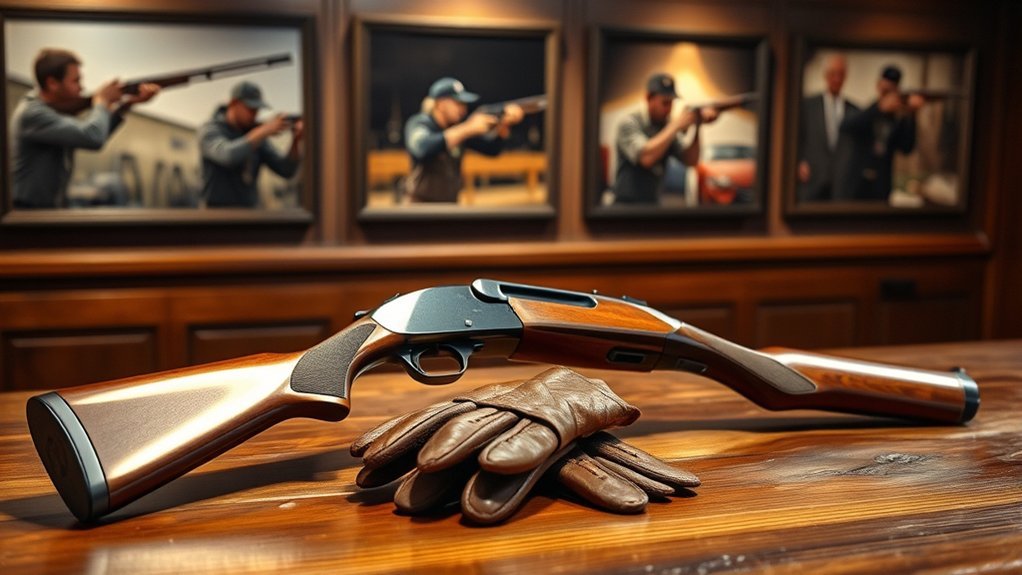
Competitive shotgun shooting emerged when skills once practiced against live quarry were converted into organized contests with controlled targets and rules. Historical accounts describe live-pigeon competition giving way to glass balls and other breakable targets during the late 19th century before clay targets became established NRA Shooting Sports USA.
Why the shift mattered: Competitive shooting turned field skills into repeatable tests performed with standardized targets, scoring systems, and range-safety procedures.
Artificial targets made competition more consistent because competitors could face defined target presentations instead of relying on unpredictable live game. Clubs and governing organizations could then establish comparable scoring systems, event formats, and safety expectations.
- Competition emphasized repeatable timing and consistency rather than success during an unpredictable hunt.
- Formal matches allowed shooters to compare scores under shared rules.
- Standardized targets made organized practice and larger competitions easier to reproduce.
This shift created the foundation for modern trap, skeet, sporting clays, and other shotgun competitions.
Evolution of Shotgun Design and Technology

Competitive shotgun design evolved around four recurring needs: reliable operation, consistent gun fit, manageable recoil, and predictable shot patterns. Different disciplines eventually favored different combinations of these characteristics.
Break-action shotguns became closely associated with clay-target sports because an open action is easy to recognize visually on a range. Over-under designs also place two barrels on one vertical line while allowing two shots before reopening the action.
Repeating actions influenced shotgun development as well. Browning records that production of the Auto-5 began in 1902. The design became one of the important early examples of a successful semi-automatic shotgun Browning.
Modern competition guns may also use adjustable combs, refined stock geometry, recoil pads, and interchangeable choke systems. These features do not replace technique, but they allow equipment fit and pattern characteristics to be adapted more closely to a shooter or discipline.
Key Point: Competition-shotgun development has increasingly emphasized repeatability: the same mount, sight picture, balance, and handling from target to target.
Key Milestones in Shotgun Sports
Three milestones were especially important to the international recognition of shotgun sport: Olympic trap, the creation of an international governing structure, and Olympic skeet.
- Olympedia records trap as an Olympic event in 1900, with competition held in Paris from July 15 to 17 Olympedia — Trap 1900.
- The International Shooting Sport Federation traces its formal establishment to July 17, 1907, when representatives of seven national federations met in Zurich ISSF History.
- Olympedia records skeet as a new Olympic shooting event in 1968 at the Mexico City Games Olympedia — Shooting 1968.
Skeet itself predates its Olympic debut by decades. Historical material from NRA Shooting Sports USA says the developing game was first known as “clock shooting”; complete rules were published in 1925, when the name “skeet” was selected NRA Shooting Sports USA — Skeet History.
Sporting clays followed a different path. NRA Shooting Sports USA reports that the British game reached the United States around 1980, bringing a more varied course format designed around changing target presentations NRA Shooting Sports USA — Sporting Clays.
Popular Shotgun Disciplines Today
Modern shotgun sports include several distinct disciplines. Trap emphasizes targets moving generally away from the shooter, skeet uses crossing presentations from high and low houses, sporting clays uses varied stations and target paths, and practical shotgun competitions combine multiple targets with timed stages under the rules of their sanctioning body.
| Discipline | Typical Target Presentation | Historical Marker | Main Competitive Emphasis |
|---|---|---|---|
| Trap | Targets generally travel away from the firing line. | Olympic event in 1900. | Consistency, reaction, and repeatable target engagement. |
| Skeet | Crossing targets launched from high and low houses. | Named in 1925; Olympic debut in 1968. | Timing and consistency across known target paths. |
| Sporting Clays | Varied target angles and presentations across a course. | Reached the U.S. around 1980. | Adaptability across changing presentations. |
| Practical Shotgun | Multiple targets arranged in stages under discipline-specific rules. | Part of the broader practical-shooting tradition. | Accuracy, safe movement, and time management. |
Clay Target Shooting
Clay target shooting turns moving-target skills into repeatable competition. Trap, skeet, and sporting clays all use breakable targets, but the way those targets are presented changes substantially between disciplines.
Key differences include:
- Trap: targets generally move away from the shooter at changing angles.
- Skeet: targets cross the field from fixed high and low houses.
- Sporting clays: a course presents varied target directions, elevations, and flight paths.
Those differences explain why a competitor who performs well in one clay discipline may still need time to adapt to another. Each rewards a different balance of timing, visual tracking, consistency, and target reading.
Practical Shotgun Competitions
Practical shotgun competitions belong to a different competitive tradition from fixed clay-target games. Instead of repeating one standardized clay-field presentation, competitors complete stages containing multiple targets and positions under the rules of the relevant sanctioning organization.
Scoring methods vary by event, but accuracy, penalties, and elapsed time may all influence results. This makes it important to understand the specific match rules rather than assuming practical shotgun uses the same scoring model as trap or skeet. For a broader explanation, see this guide to target shooting scoring systems.
Whatever the format, muzzle control, range commands, and safe movement take priority over speed.
How Shotgun Sports Are Scored
Shotgun scoring depends on the discipline. In many clay-target events, a target that is visibly broken according to the rules is recorded as a hit, while a missed target is recorded as lost. Rankings are then based on the event’s defined course of fire, qualification structure, finals format, and tie-breaking rules.
Practical shotgun uses different scoring systems depending on the sanctioning organization. Points, penalties, and elapsed time may all matter, so the rulebook for the specific event is the controlling source.
2026 ISSF update: In June 2026, the ISSF announced the reintroduction of shoot-offs to break qualification ties that determine entry to Trap and Skeet finals. Countback remains in use for subsequent qualification rankings ISSF.
Because governing bodies can revise competition procedures, competitors should check the current rulebook for the event they plan to enter.
Shotgun Safety and Responsible Participation
Shotgun sports depend on strict firearm handling, range discipline, and legal compliance. Before participating, follow the rules of the range and event as well as applicable local, state, and federal law. In the United States, the ATF publishes federal firearms-law resources ATF.
Warning: Always treat every shotgun as loaded, keep the muzzle pointed in a safe direction, keep your finger off the trigger until ready to shoot, and follow the range officer’s commands.
Range safety also includes appropriate eye and hearing protection, designated loading procedures, open actions when required, and clear communication with other participants. The NRA’s basic safety rules emphasize safe muzzle direction, trigger discipline, and knowing the target and what lies beyond it NRA Gun Safety Rules.
Compliance & Safety (U.S.): Always follow applicable firearms laws and your range’s current safety requirements ATF firearms laws & regulations NRA Gun Safety Rules.
The Cultural Impact of Shotgun Sports
Shotgun sports also developed social traditions beyond formal scoring. Clubs, coaching relationships, family participation, and organized events can create communities around recreational and competitive clay shooting.
- Community engagement: Clubs and competitions give participants a regular place to practice and meet other shooters.
- Cultural heritage: Hunting and clay-target traditions are sometimes shared across generations.
- Conservation connections: Some hunting and shooting organizations also participate in habitat, wildlife-management, or outdoor-stewardship programs.
These associations vary by organization and region, but they help explain why shotgun sports are often discussed in terms of tradition and community as well as competition.
Frequently Asked Questions
How did shotguns move from hunting to competitive shooting?
Shotguns were already suited to moving targets because of their hunting role. Organized shooting gradually replaced variable live-quarry situations with standardized artificial targets, including glass balls and clay targets. Clubs and governing organizations then formalized target presentations, scoring, equipment rules, and safety procedures, turning hunting-related skills into repeatable sports.
When did trap shooting become an Olympic sport?
Trap was included as an Olympic shooting event at the 1900 Paris Games. Olympedia records the Olympic trap competition as taking place from July 15 to 17, 1900.
When was skeet created, and when did it enter the Olympics?
The game that became skeet developed in the 1920s. Historical material from NRA Shooting Sports USA says complete rules were published in 1925, when the name “skeet” was selected. Skeet later made its Olympic debut at the 1968 Mexico City Games.
What is the difference between trap, skeet, and sporting clays?
Trap generally sends targets away from the shooter. Skeet uses crossing targets launched from fixed high and low houses. Sporting clays uses a course with varied target directions and presentations. All are clay-target shotgun sports, but each emphasizes a different pattern of target movement and competitive consistency.
What changed in ISSF shotgun competition in 2026?
In June 2026, the ISSF announced that shoot-offs would again be used to break qualification ties that determine entry to Trap and Skeet finals. Countback remains the method for determining subsequent qualification rankings.
Conclusion
The history of shotgun sports is a progression from hunting firearms and live-bird contests to artificial targets, standardized clay disciplines, international rules, and Olympic competition. Trap’s Olympic appearance in 1900, the ISSF’s establishment in 1907, skeet’s development in the 1920s and Olympic debut in 1968, and sporting clays’ U.S. emergence around 1980 mark major stages in that evolution.
Modern competitors now choose among disciplines that emphasize different skills and formats, but the common foundation remains controlled target shooting under defined rules. Anyone entering the sport should start with the current rules of the chosen discipline and the safety requirements of the range.
Sources
- Britannica — Fowling piece — background on early bird-shooting firearms.
- NRA Shooting Sports USA — Early History of the Clay Target Shotgun Event — historical background on live-bird competition and artificial targets.
- Browning — Auto-5 semi-automatic shotgun — confirms production began in 1902.
- ISSF — Federation History — confirms formal establishment on July 17, 1907.
- Olympedia — Trap 1900 — documents the Olympic trap event in Paris.
- NRA Shooting Sports USA — Early Skeet History — supports the 1925 rules and naming milestone.
- Olympedia — Shooting at the 1968 Summer Olympics — confirms skeet’s Olympic debut.
- NRA Shooting Sports USA — Sporting Clays History — supports the sport’s arrival in the United States around 1980.
- ISSF — 2026 Shotgun Shoot-Off Update — confirms the June 2026 qualification tie-breaking change.
- ATF — Firearms Laws and Regulations — U.S. federal firearms-law resources.
- NRA Gun Safety Rules — general firearm-safety guidance.


1 thought on “Shotgun Sports History: Tech Evolution & Olympic Milestones”