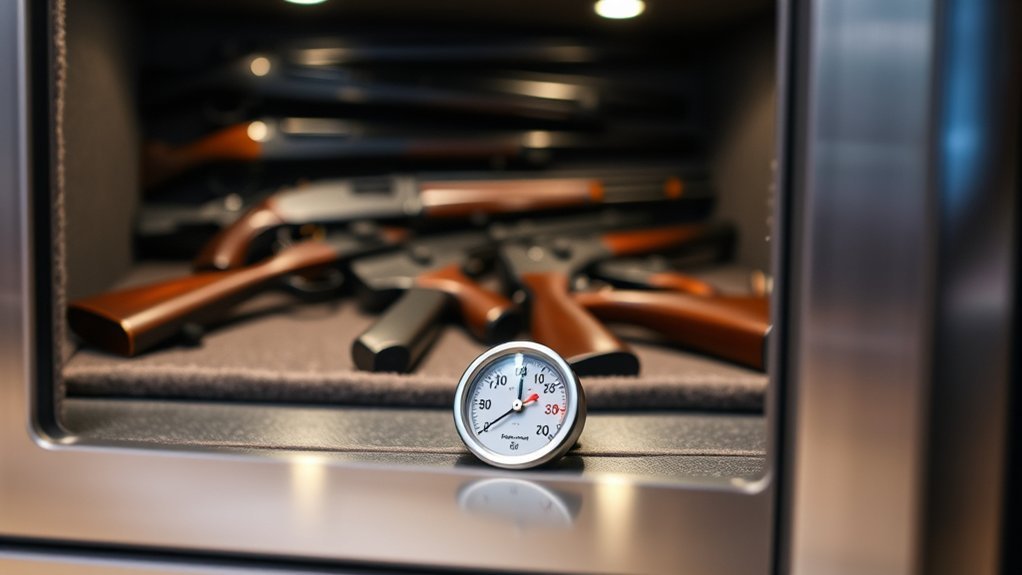
For most home gun safes, about 30% to 50% relative humidity is a practical target. Measure the actual conditions with a hygrometer before choosing a moisture-control method. A plug-in dehumidifier rod mainly warms the interior and reduces condensation risk, while rechargeable silica gel physically adsorbs moisture and works well where power is unavailable.
Last updated: September 11, 2026
Quick Answer
Aim for a stable gun-safe humidity level of about 30% to 50% RH for normal home storage, then confirm the result with a digital hygrometer. Use a heating rod for steady condensation control in larger or persistently damp safes, rechargeable silica gel for smaller safes or locations without power, and room-level dehumidification if the surrounding room itself stays humid.
Key Takeaways
- Measure first with a hygrometer instead of guessing whether the safe is damp.
- For most home safes, use roughly 30% to 50% RH as a practical working range and prioritize stable conditions.
- Let cold firearms reach room temperature and dry completely before long-term storage.
- A heating rod lowers relative humidity and condensation risk; silica gel actually captures moisture and eventually becomes saturated.
- If the room itself is persistently damp, control the room as well as the safe.
At a Glance
| Practical Home Target | About 30% to 50% relative humidity, monitored for stability |
| First Tool to Buy | Digital hygrometer with an easy-to-read current RH display |
| Large Safe or Persistent Condensation | Heating rod plus hygrometer; address room humidity if readings remain high |
| Small Safe or No Outlet | Rechargeable silica gel or another firearm-safe desiccant |
| Persistently Damp Basement or Garage | Whole-room humidity control plus in-safe monitoring |
What Humidity Should a Gun Safe Be?
For normal home storage, about 30% to 50% RH is a useful working target. The important part is not chasing one perfect number; it is keeping the environment reasonably stable and avoiding extended periods of excessive humidity or extreme dryness.
Guidance is not identical in every storage setting. Liberty Safe cites a 30% to 50% range for a home safe, while NRA Family reports that National Firearms Museum curators maintain approximately 50% to 55% RH at about 70°F in their controlled museum environment. For a home safe, use your hygrometer and the condition of the stored materials to judge whether your setup is stable and dry enough.
If humidity stays high, metal parts face greater corrosion risk and wood, fabric, documents, and other materials can absorb moisture. On the other hand, extremely dry conditions can also damage wood, paper, leather, ivory, bone, and similar materials. Do not assume that “drier is always better.”
Warning: Do not lock damp firearms, wet cases, soaked gun socks, or moisture-heavy accessories inside the safe. Dry them first, then confirm that the safe humidity has returned to its normal range.
What Causes Moisture in a Safe?
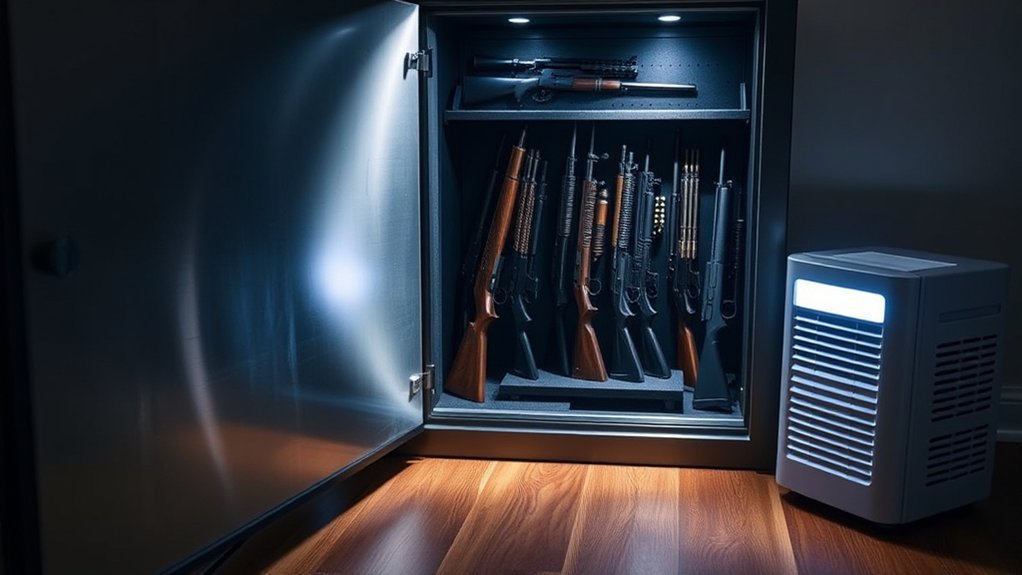
Gun-safe moisture usually comes from the room around the safe, damp objects placed inside, or condensation caused by temperature changes. Because most safes are not completely airtight, humid room air can gradually affect the interior.
Location matters. Basements, garages, laundry areas, exterior walls, and spaces near plumbing can expose a safe to higher humidity or larger temperature swings than a conditioned interior room. A small device inside the safe may struggle if the surrounding room stays persistently damp.
Humid Air Infiltration
Humid room air can enter through normal gaps around a safe door and other openings. Instead of trying to make the safe completely airtight, focus on controlling the environment and monitoring the actual RH inside.
- Humid room air: Basements, garages, coastal climates, and poorly conditioned rooms can keep the safe exposed to high ambient humidity.
- Indoor climate changes: Seasonal weather, evaporative coolers, heating, and uneven air conditioning can cause moisture swings.
- Damp stored items: Wet cases, clothing, cleaning cloths, range bags, or firearms can release moisture after the door closes.
- Cold metal entering a warm room: Condensation can form on a firearm when its surface temperature is below the room’s dew point.
If the surrounding room remains humid, a household room dehumidifier or better climate control may accomplish more than repeatedly adding small desiccant packs inside the safe.
Temperature Fluctuations
Rapid temperature changes matter because cold metal can collect condensation when it enters warmer, humid air. Keeping the safe in a stable indoor location reduces these swings.
| Common Situation | What Can Happen |
|---|---|
| Cold firearm brought into a warm room | Condensation can form on metal surfaces |
| Safe placed against a cold exterior wall | Larger surface-temperature swings may increase condensation risk |
| Unconditioned garage or basement | Room temperature and relative humidity may change significantly during the day or season |
If the safe sits on concrete, follow the safe manufacturer’s installation guidance. Some manufacturers recommend a moisture barrier between the safe and concrete to reduce corrosion risk at the base.
Cold Firearm Condensation
A cold firearm can collect water on its surface after being brought into a warm, humid room. Before long-term storage:
- Handle the firearm according to normal safe-handling procedures and make sure it is in a secure, dry location.
- Remove it from any wet or damp soft case.
- Allow it to reach room temperature gradually.
- Wipe away visible condensation with a clean, dry cloth.
- Inspect hidden moisture-prone areas and follow the firearm manufacturer’s cleaning and corrosion-protection instructions.
- Return it to the safe only after the firearm and storage accessories are dry.
Do not intentionally seal ventilation gaps or modify the safe in an attempt to make it airtight unless the manufacturer specifically instructs you to do so.
Pro Tip: After outdoor use in cold, rainy, or snowy conditions, check the firearm and its case separately. A dry firearm placed back into a damp fabric case can still be exposed to moisture.
Gun Safe Dehumidifiers
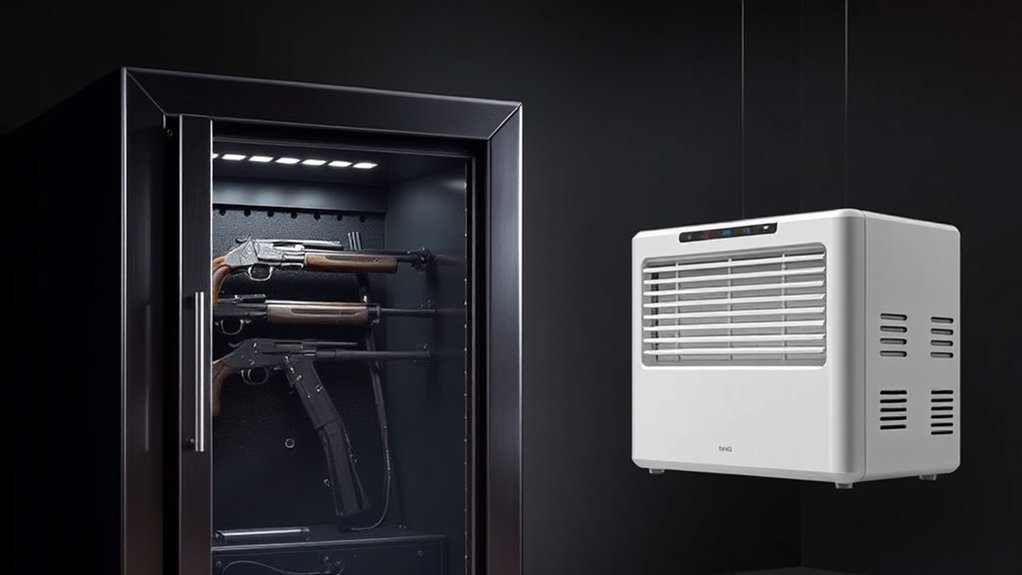
Gun-safe humidity-control products work in different ways. A heating rod uses gentle heat and natural convection to keep interior surfaces warmer and lower relative humidity, reducing condensation risk. Silica gel adsorbs water vapor until it becomes saturated and must be recharged or replaced.
Choose the method according to your measured humidity, safe size, room conditions, and power access rather than assuming every safe needs the same device.
Types of Dehumidifiers
- Electric heating rod: Runs continuously, gently warms the interior, and promotes convection. It is useful for larger safes or locations that experience recurring condensation.
- Rechargeable silica-gel unit: Adsorbs moisture without requiring power while it sits inside the safe. It works well in smaller safes or where no outlet is available.
- Loose or canister silica gel: A simple passive option that must be monitored and recharged or replaced once saturated.
- Combination setup: A heating rod plus silica gel can provide continuous condensation control with extra moisture capacity during humid periods.
Avoid treating calcium-chloride moisture absorbers as interchangeable with silica gel around firearms. Calcium chloride can produce liquid brine after absorbing enough water, creating an additional spill and corrosion concern.
For a more detailed device comparison, see desiccant vs dehumidifier for gun cabinets.
Benefits of Dehumidifiers
A properly selected humidity-control method can reduce condensation, slow corrosion risk, and help stabilize conditions for wood, documents, optics, and other valuables.
Heating rods are low-maintenance because they work continuously while powered. Rechargeable silica-gel units need more attention because their moisture capacity is finite. Neither method replaces room-level moisture control when the safe sits in a persistently wet environment.
Practical Methods for Minimizing Moisture in a Gun Safe
The most reliable approach is to measure first, identify the source of the moisture, and then use the simplest method that keeps the safe stable.
- Install a hygrometer: Record the actual RH instead of judging moisture by feel.
- Establish a baseline: Watch the reading for about a week before changing your setup if there is no active water leak or visible corrosion problem.
- Choose the right control method: Use silica gel, a heating rod, room-level dehumidification, or a combination according to the readings and safe location.
- Store only dry items: Keep wet cases, cloths, clothing, and recently condensed firearms out until they are dry.
- Inspect regularly: Check for changing RH, musty odors, rust, wet fabric, or saturated desiccant.
Opening the safe can help during inspection or while drying a known moisture problem, but do not rely on “airing it out” when the surrounding room air is more humid than the safe interior.
Where to Place a Hygrometer
Place the hygrometer where you can read it without moving firearms and where it is not directly beside a heating rod, wet object, door gap, or desiccant container. Those locations can produce a reading that does not represent the whole safe.
In a tall safe, compare readings from different levels if you suspect a large temperature or humidity difference. If a reading changes unexpectedly, check it against a second hygrometer before replacing your moisture-control equipment.
How Often to Check Your Safe
Check frequently while establishing your baseline and after making a change. A weekly check is reasonable at first. Once conditions remain stable, many owners can fold the check into their normal inspection routine.
Check more often during humid seasons, after major weather changes, after storing equipment used outdoors, or whenever a rechargeable desiccant approaches saturation. Follow the desiccant manufacturer’s indicator and recharging instructions rather than relying on a fixed number of days.
Storage Habits That Reduce Moisture
Good storage habits reduce the amount of moisture your equipment has to manage. Avoid long-term storage in damp foam-lined cases or wet fabric. Leave enough space for air to move around stored items, and keep documents or optics away from anything that can hold moisture.
If the safe sits on a concrete floor, check the safe manufacturer’s installation instructions for a recommended moisture barrier or riser. Concrete and the safe base can remain cooler than the room, and some manufacturers specifically recommend a barrier to protect the safe’s bottom from corrosion.
Note: A small device inside the safe cannot correct a chronically damp basement, garage, leak, or water-intrusion problem. Fix the room-level moisture source too.
Electric Rod vs. Silica Gel: Which Should You Use?
Use the hygrometer reading and the safe environment to decide. A rod is best when you want continuous condensation control and have reliable power. Silica gel is better when you need a passive, cordless option that can actually capture moisture.
| Method | What It Does | Best Fit | Main Limitation |
|---|---|---|---|
| Heating Rod | Warms air and surfaces; lowers RH and condensation risk | Larger safes or recurring condensation with power available | Needs continuous electricity and does not collect liquid water |
| Rechargeable Silica Gel | Adsorbs water vapor | Small safes, cabinets, or locations without an outlet | Eventually saturates and must be recharged |
| Rod + Silica Gel | Combines continuous warming with passive moisture capture | Humid environments where one method does not keep RH stable | More equipment and maintenance |
| Room Dehumidifier | Reduces humidity in the surrounding room | Persistently damp basement, garage, or storage room | Larger appliance with drainage, power, and maintenance needs |
When to Use an Electric Dehumidifier
A heating rod makes sense when the safe is large, condensation recurs, or the room experiences regular humidity swings. Manufacturers commonly recommend installing rod-style units low in the safe because the warmed air rises and creates natural convection.
Route the cord only through a manufacturer-approved electrical opening or accessory system. Keep the rod clear of fabric, foam, paper, cases, and other materials, and follow the rod manufacturer’s clearance and installation instructions.
When to Use Silica Gel or Desiccant Packs
Silica gel works well in compact safes, handgun safes, cabinets, and locations without convenient electrical power. It can also supplement a heating rod during especially humid periods.
Recharge or replace it when its indicator shows saturation or when your hygrometer demonstrates that it is no longer keeping up. Do not assume a packet is still working simply because it remains inside the safe.
Why Humidity Control Matters for Firearms and Valuables
Humidity control protects more than the firearm’s metal finish. A stable environment also helps protect wood components, paper records, leather, optics, electronics, and other stored valuables.
- Excess humidity increases the likelihood of corrosion on unprotected metal.
- Persistent dampness can encourage mold and mildew on porous materials.
- Rapid temperature swings can create condensation even when the average room humidity does not appear extreme.
- Extremely dry conditions can damage wood, paper, leather, and similar materials, so the objective is controlled humidity rather than the lowest possible reading.
Measure the safe itself instead of relying only on the room’s weather report or thermostat. The interior can respond differently depending on the safe location, how often the door opens, and what has recently been stored inside.
Common Gun Safe Humidity Mistakes
- Storing damp cases or foam: Fabric and foam can hold moisture close to metal surfaces.
- Ignoring the surrounding room: A wet basement or garage can overwhelm a small in-safe device.
- Never checking the hygrometer: You cannot confirm whether the system is working without a measurement.
- Forgetting saturated silica gel: Once the material reaches capacity, it cannot keep capturing moisture until it is recharged or replaced.
- Overcrowding the safe: Packing items tightly can restrict air movement and make inspection difficult.
- Assuming drier is always better: Very low humidity can damage wood and other organic materials.
- Trying to make the safe airtight: Do not modify door seals or ventilation paths unless the manufacturer specifically approves the change.
Make humidity checks part of the same routine you use to inspect stored equipment. Early signs such as musty smells, visible condensation, damp fabric, or surface corrosion deserve immediate attention.
Troubleshooting High Humidity in a Gun Safe
If the RH stays high, diagnose the problem before buying more equipment.
- Confirm the reading: Compare the hygrometer with another gauge if the number suddenly looks wrong.
- Check the room: Measure the humidity outside the safe and look for leaks, damp concrete, plumbing problems, or poor climate control.
- Inspect the contents: Remove wet cases, cloth, clothing, foam, or recently condensed equipment.
- Recharge passive desiccants: Saturated silica gel cannot keep adsorbing water.
- Check the heating rod: Confirm that a powered rod is operating and installed according to its instructions.
- Escalate to room-level control: If the entire room is humid, use appropriate room dehumidification or improve the environment instead of relying only on a small in-safe product.
If you find visible corrosion, remove the affected item from the damp environment and follow the firearm manufacturer’s care instructions or obtain qualified professional help for corrosion that affects function, safety, or protected finishes.
Start with a hygrometer. Moisture control becomes much easier once you know the safe’s actual relative humidity instead of guessing.
A Simple 7-Day Gun Safe Humidity Test
If there is no active leak, standing water, visible condensation, or existing rust emergency, use a short baseline test before buying more equipment.
- Place a digital hygrometer in a representative part of the safe.
- Record the RH at roughly the same times each day for seven days.
- Note unusual events such as heavy rain, opening the safe for a long period, or returning equipment from outdoors.
- If the readings stay within your target range and the safe remains dry, continue monitoring rather than adding unnecessary equipment.
- If the reading stays high, identify whether the problem is inside the safe or throughout the room, then choose the appropriate moisture-control method.
- After making a change, repeat the measurements so you can confirm that the change actually worked.
This measurement-first approach gives you a repeatable way to judge a rod, silica gel pack, room dehumidifier, or relocation of the safe instead of relying on product claims alone.
Gun Safe Humidity FAQ
What humidity should a gun safe be?
For most home gun safes, about 30% to 50% relative humidity is a practical target. Keep the reading reasonably stable and verify it with a hygrometer rather than assuming the room humidity matches the safe interior.
Can a gun safe be too dry?
Yes. Extremely dry conditions can damage wood stocks, leather, paper, ivory, bone, and similar materials. If the RH falls into a very dry range for an extended period, reduce unnecessary dehumidification and continue monitoring rather than trying to drive humidity as low as possible.
Do I need a dehumidifier in my gun safe?
Not always. A safe in a stable, climate-controlled room may already stay in a suitable range. Measure first. If RH remains high or condensation occurs, add a method suited to the problem: a heating rod, silica gel, room dehumidification, or a combination.
Where should a gun-safe dehumidifier rod go?
Rod-style heaters are commonly installed low in the safe so the warmed air can rise and circulate naturally. Follow the specific manufacturer’s mounting, electrical-routing, clearance, and safety instructions for your safe and rod.
How often should I recharge silica gel in a gun safe?
Recharge it when the product’s saturation indicator or your hygrometer shows that it is no longer controlling moisture effectively. Humidity, safe size, door-opening frequency, and desiccant capacity all affect how quickly it becomes saturated, so a fixed calendar interval is less reliable than the indicator and RH reading.
Conclusion
Gun-safe moisture control starts with measurement. For most home safes, use roughly 30% to 50% RH as a practical target, keep the temperature and humidity reasonably stable, and avoid placing damp equipment inside.
Check the hygrometer first. If the reading is high, determine whether the source is a wet item, condensation, the safe location, or the entire room. Then choose the least complicated solution that keeps the environment stable: silica gel, a heating rod, room-level dehumidification, or a combination.
