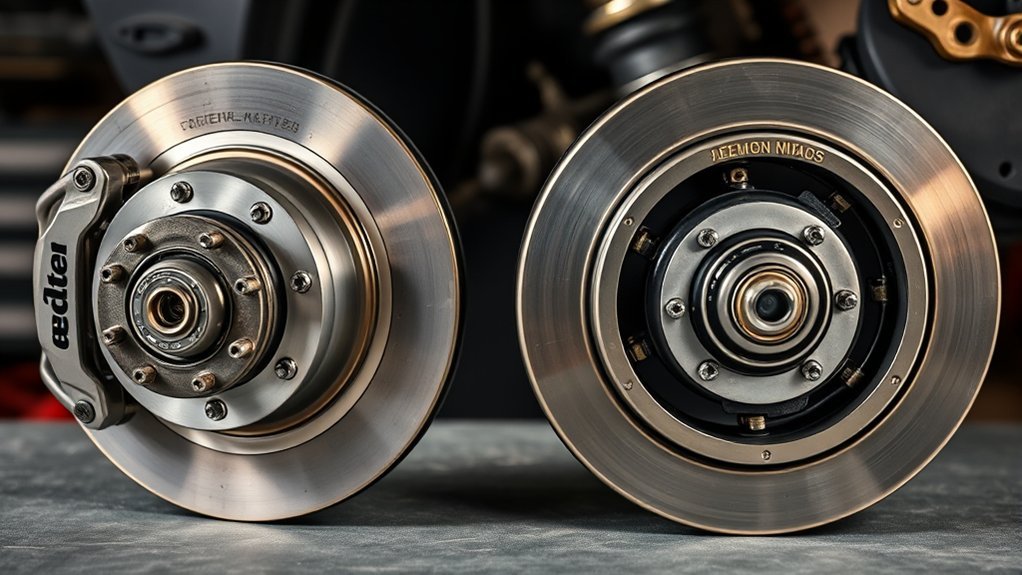
A disc-caliper parking brake and a drum-in-hat parking brake can both hold a parked vehicle securely, but they apply friction in different ways. A disc-caliper design mechanically clamps the rear brake pads against the rotor. A drum-in-hat design expands separate parking-brake shoes against a drum surface formed inside the rotor hat.
Quick Answer
A disc parking brake uses a cable, screw mechanism or electric actuator to clamp the rear disc pads. A drum-in-hat system uses separate shoes inside the rear rotor. Disc-caliper systems reduce the number of friction components, while drum-in-hat systems provide a dedicated parking surface that does not depend on the service pads.
Key Takeaways
- A parking brake may be activated by a lever, pedal or electric switch, but it must retain its application mechanically rather than relying on stored hydraulic pressure.
- A disc-caliper system reuses the rear service pads and rotor faces, while a drum-in-hat system has separate shoes inside the rotor hat.
- Neither architecture is automatically better. Holding ability depends on the complete vehicle design, adjustment, friction condition and actuator force.
- Drum-in-hat service normally requires rotor removal. Electronic calipers may require a scan tool or a manufacturer-specific maintenance mode.
- Your vehicle’s factory design, owner’s manual and service information should determine inspection and repair procedures.
Parking Brake vs. Service Brake
Your service brakes slow the moving vehicle when you press the brake pedal. On most passenger vehicles, hydraulic pressure moves pistons in the calipers and clamps brake pads against the rotors.
The parking brake has a different primary job. It keeps the vehicle stationary after you park. Under the U.S. light-vehicle brake standard, the parking brake must use friction and have a solely mechanical means of retaining engagement. The control must also be independent of the normal service-brake control. You can review these requirements in 49 CFR 571.135.
An electronic parking brake does not violate that requirement. The electric motor applies the brake, while a gearset, spindle, cable mechanism or other mechanically locking component maintains the force after application.
Federal testing requires a parking brake to hold a fully loaded light vehicle on a 20 percent grade for five minutes in both forward-facing and rearward-facing positions.
Understanding the Mechanism of Disc Parking Brakes

A disc-caliper parking brake uses the rear brake pads and the rotor’s outer friction surfaces. However, it does not normally depend on trapped brake-fluid pressure to remain applied.
Traditional versions use a parking-brake cable connected to a lever on the rear caliper. Pulling the cabin lever or pressing the parking-brake pedal rotates a cam or screw inside the caliper. That mechanism pushes the piston outward and clamps the pads against the rotor.
A motor-on-caliper electronic parking brake replaces the external cable lever with a small electric motor and reduction gear mounted on each rear caliper. When you operate the switch, the motor turns a spindle that moves the piston and applies the pads. The mechanical gear and spindle assembly retain the clamp force.
Some electronic systems instead use one central electric actuator to pull conventional parking-brake cables. This cable-puller design may operate rear disc calipers, drum brakes or drum-in-hat shoes, depending on the vehicle.
Note: “Disc parking brake” can describe several designs. Before ordering parts, confirm whether your vehicle uses a cable-operated caliper, motor-on-caliper EPB, separate spot caliper or another factory arrangement.
How the Drum-in-Hat Parking Brake System Works
A drum-in-hat system places a small mechanical drum brake inside the center section of a rear disc rotor. The outer rotor faces work with the hydraulic service-brake pads. The cylindrical inner surface of the rotor hat works with the parking-brake shoes.
When you apply the parking brake, a cable or electromechanical actuator moves an operating lever. The lever spreads two curved shoes outward against the inner drum surface. Springs retract the shoes when you release the brake, while an adjuster maintains the required shoe-to-drum clearance.
This arrangement gives the parking brake its own friction material. Normal rear service-brake pad wear does not directly reduce the thickness of the parking shoes. However, the shoes, springs, clips, adjuster, cable and rotor-hat surface can still corrode, seize, delaminate or fall out of adjustment.
The small drum is enclosed by the rotor, so visual inspection usually requires removing both the wheel and rotor. A worn ridge, corrosion or an incorrectly adjusted shoe can also make rotor removal difficult.
Comparing Disc and Drum-in-Hat Parking Brake Systems
| Feature | Disc-Caliper Parking Brake | Drum-in-Hat Parking Brake |
|---|---|---|
| Friction components | Uses the rear service pads and rotor faces | Uses separate shoes and the rotor’s inner drum surface |
| Application method | Cable, caliper lever, screw mechanism or motor-on-caliper actuator | Cable or electric actuator expands the shoes mechanically |
| Inspection access | Pad condition is often easier to view after wheel removal | Rotor normally must be removed to inspect the shoes and hardware |
| Rear pad replacement | Parking mechanism may require piston rotation or EPB service mode | Service pads can often be replaced without disturbing the parking shoes |
| Common trouble areas | Seized caliper lever, cable, spindle, slide pins or EPB actuator | Rust, seized adjuster, broken springs, worn lining or shoe delamination |
| Holding capability | Vehicle-specific; depends on caliper geometry, actuator force and friction condition | Vehicle-specific; depends on shoe geometry, adjustment, effective radius and friction condition |
| Parts count | Fewer separate friction parts, but the caliper mechanism can be more complex | Adds shoes, springs, adjusters, clips and a backing plate |
Advantages of Disc Parking Brakes
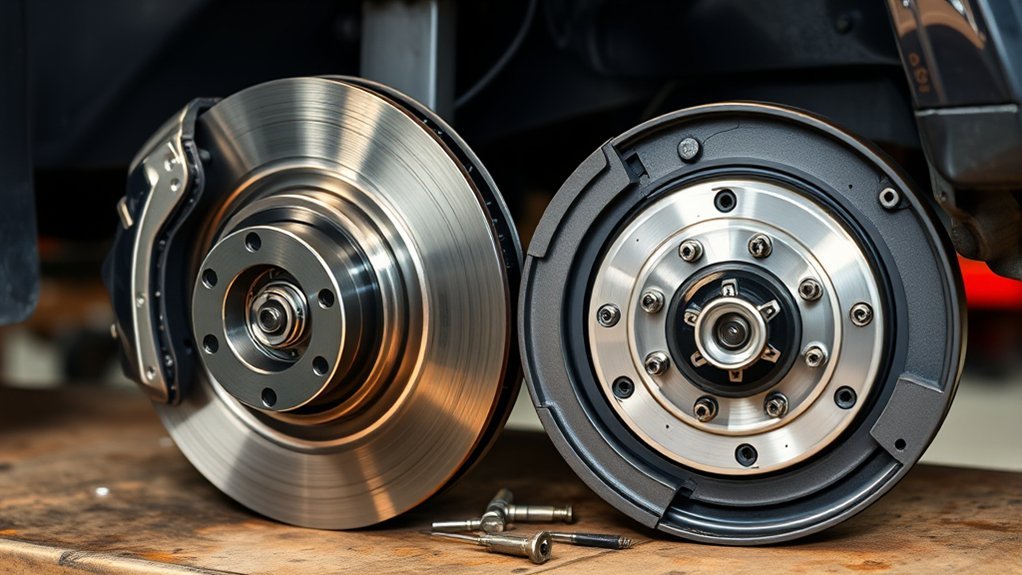
A disc-caliper parking brake eliminates a separate set of parking shoes and drum hardware. This can reduce the total number of friction components inside the rear wheel assembly.
The service-pad thickness and outer rotor condition are generally easier to inspect than enclosed drum-in-hat shoes. When a mechanical cable operates an external caliper lever, a technician can also inspect the lever’s movement without removing the rotor.
Motor-on-caliper systems support automatic application, automatic release, roll-away detection and integration with other vehicle-control functions. Their cabin switch also takes up less space than a large hand lever or foot pedal.
These benefits do not guarantee lower repair costs. A seized internal screw, failed motor, damaged wiring or control fault can make an electronic caliper more expensive to diagnose or replace than a basic mechanical system.
Benefits of the Drum-in-Hat Brake System
A drum-in-hat design gives the parking brake a dedicated friction surface. It does not need to move the hydraulic service-caliper piston to hold the vehicle.
This separation can be useful when the rear service brake uses a fixed multi-piston caliper or another design that does not easily accept an internal parking-brake screw mechanism. It also allows the service pads and parking shoes to be selected for their different duties.
Dedicated Holding Geometry
Drum shoes can produce substantial holding torque from a compact diameter when their geometry, friction material and adjustment are designed correctly. The available holding force does not come from lining area alone. Effective radius, shoe layout, actuator travel, cable tension and friction condition also matter.
A poorly adjusted or contaminated drum-in-hat system may hold less effectively than a properly operating disc-caliper system. The vehicle manufacturer designs the complete system to meet the required holding performance.
Compact Design Advantages
The parking mechanism fits inside the center of the rear rotor, so it does not require a second external caliper. This can provide useful packaging around the suspension, wheel and service-brake caliper.
The hidden arrangement also protects some components from direct impact. However, moisture and road salt can still enter and remain inside the rotor hat, especially when the parking brake is used infrequently.
Performance Comparison of Disc vs. Drum-in-Hat Parking Brakes
A parking-brake comparison should focus primarily on whether the vehicle remains stationary, releases fully and continues to work after normal exposure and wear. Heat rejection and repeated high-speed stops are mainly service-brake concerns.
Design Differences Explained
A disc-caliper design shares its friction surfaces with the rear service brake. A drum-in-hat design shares the rotor casting but uses separate friction surfaces and operating hardware.
The shared-pad arrangement can simplify the wheel-end parts count, but it makes the parking mechanism part of the caliper. The drum-in-hat arrangement adds hardware, but it keeps the parking function mechanically separate from the service caliper.
Holding Power Assessment
Neither design has universally greater holding power. The correct question is whether the complete system can generate and retain enough wheel torque for the vehicle’s weight and required grade.
Weak holding can result from excessive cable travel, incorrect shoe adjustment, glazed or contaminated friction material, a seized mechanism, a damaged actuator, a worn rotor surface or installation errors. Replacing parts without identifying the cause can leave the problem unresolved.
Maintenance Requirements Comparison
Disc-caliper systems may need cable adjustment, lever lubrication, slide service or electronic diagnosis. Some mechanical rear calipers require the piston to be rotated while it is retracted. Motor-on-caliper systems commonly require a manufacturer-specified maintenance mode before rear-pad service.
Drum-in-hat systems require inspection of the shoes, return springs, hold-down hardware, adjuster, backing-plate contact points and rotor drum surface. Access normally requires rotor removal, and the shoes may need adjustment after installation.
Service difficulty varies by vehicle. A simple drum-in-hat assembly may be cheaper to repair than an electronic caliper, while a rusted rotor and damaged shoe hardware can make drum service labor-intensive.
Maintenance Tips for Disc and Drum-in-Hat Parking Brakes
Warning: Chock the wheels before releasing or servicing a parking brake. Support the vehicle with correctly rated jack stands on approved lifting points. Never work under a vehicle supported only by a jack. For an electronic parking brake, follow the factory service-mode procedure before retracting a piston or disconnecting an actuator.
Inspect or arrange professional service when you notice any of these symptoms:
| Symptom | Possible Causes |
|---|---|
| Vehicle rolls with the brake applied | Poor adjustment, stretched cable, worn friction material, seized mechanism or actuator fault |
| One rear wheel becomes hot | Sticking cable, seized caliper lever, EPB actuator fault, tight shoe adjustment or broken hardware |
| Scraping inside the rotor | Loose lining, broken spring, shifted shoe or heavy rust inside a drum-in-hat rotor |
| Excessive lever or pedal travel | Cable stretch, incorrect adjustment, worn shoes or a damaged linkage |
| Parking-brake warning remains on | Brake not fully released, switch fault, low brake fluid or an electronic system fault, depending on the vehicle |
| Electric motor runs but brake does not apply | Damaged gear, spindle, cable mechanism, caliper or actuator linkage |
- Use the parking brake regularly so cables, levers, adjusters and shoes do not remain unused for long periods.
- Follow the inspection interval and adjustment procedure in your owner’s or service manual.
- Check cables and rubber boots for cracking, corrosion, binding and water entry.
- Keep oil, grease and brake fluid away from pads, shoes and rotor friction surfaces.
- Lubricate only the manufacturer-approved contact points with the specified brake lubricant.
- After service, verify that both rear wheels rotate freely when the brake is released.
- Test holding ability in a controlled location before relying on the system on a steep grade.
Pro Tip: Before removing a drum-in-hat rotor, confirm that the parking brake is fully released and back off the shoe adjuster when the factory procedure requires it. Forcing the rotor over an expanded shoe can damage the lining, springs or backing plate.
Do not use compressed air or dry sweeping to clean brake dust. Older or imported friction material may contain asbestos, and modern brake dust can still irritate your lungs. Review the EPA’s brake and clutch repair guidance and use an approved wet-cleaning or enclosed cleaning method.
Ideal Applications for Disc Parking Brakes
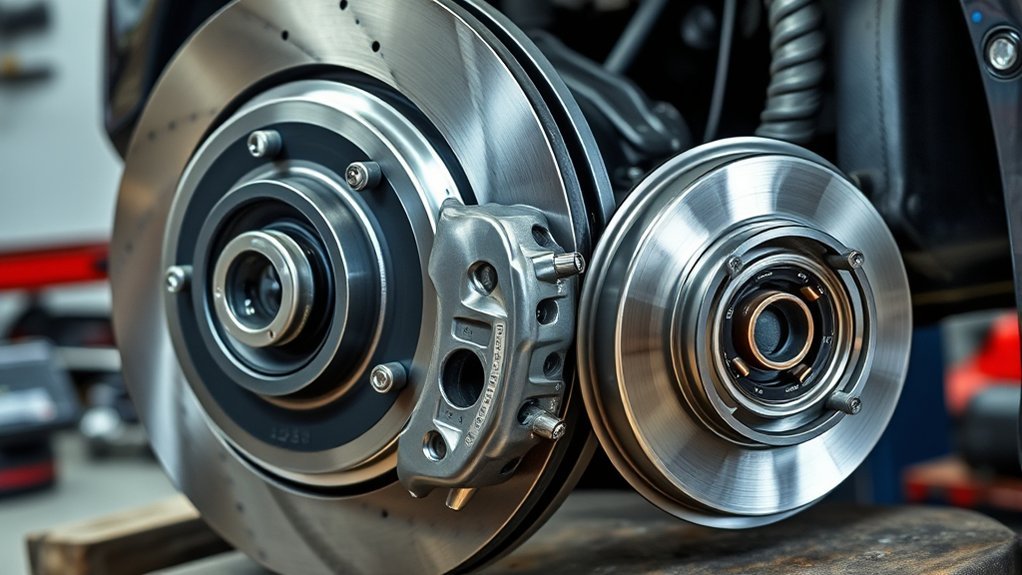
Integrated disc parking brakes work well when the vehicle uses a compatible sliding rear caliper and the manufacturer wants to reuse the service pads for parking. Motor-on-caliper systems also support automatic application and other electronically controlled functions.
A separate drum-in-hat system can make more sense when the service-caliper layout is unsuitable for an integrated mechanism or when engineers want dedicated parking friction material. This is one reason drum-in-hat systems can appear on vehicles with large or complex rear disc brakes.
These are engineering and packaging decisions rather than simple indicators of vehicle quality. Both systems appear across economy, luxury, utility and performance vehicles.
Choosing the Right Parking Brake for Your Vehicle
Most owners do not choose between a disc-caliper and drum-in-hat parking brake. Your vehicle’s rotor, caliper, hub, backing plate, cables, wiring, software and certification were designed around the factory system.
When repairing the vehicle, match parts to the VIN, model year, drivetrain and brake option. Rear rotors that look similar may differ because one has a machined internal drum and another does not. Calipers may also differ between cable-operated and electronic versions.
A conversion should only use a complete, engineered system intended for the specific vehicle and application. Mixing incompatible calipers, rotors, cables or electronic components can produce poor holding, brake drag, warning lights or loss of important safety functions.
Whichever system your vehicle uses, proper adjustment and complete release matter more than broad claims that one design is always stronger or easier to maintain.
Related Guides
Frequently Asked Questions
How do disc brakes and drum brakes work?
A hydraulic disc service brake squeezes pads against both sides of a rotor. A hydraulic drum service brake pushes shoes outward against the inside of a drum. Parking-brake versions use a mechanical cable, lever, screw or electric actuator so the applied brake remains mechanically engaged.
What is a drum-in-hat parking brake?
It is a small mechanical drum brake built inside the center, or hat, of a rear disc rotor. The hydraulic caliper uses the outer rotor faces for normal braking, while separate shoes press against the inner drum surface when you apply the parking brake.
What is the 30 30 30 rule for brakes?
It is not a universal inspection or maintenance rule. The phrase is sometimes used for a bedding procedure involving repeated stops near 30 mph with cooling time between applications, but the exact number, speed and interval vary. Always follow the brake-pad or vehicle manufacturer’s instructions.
How does a disc parking brake work?
A cable-operated version turns a lever, cam or screw inside the rear caliper to clamp the pads. A motor-on-caliper system uses an electric motor and reduction gear to turn a spindle. Both designs retain the application mechanically rather than depending on stored hydraulic pressure.
Which parking-brake design is better?
Neither design is universally better. Disc-caliper systems use fewer separate friction components, while drum-in-hat systems provide dedicated shoes and can suit caliper layouts that cannot accept an integrated mechanism. Condition, adjustment and vehicle-specific engineering determine actual performance.
Can you use the parking brake if the service brakes fail?
Some vehicles allow controlled emergency application, but behavior varies. A mechanical lever can lock the rear wheels if applied abruptly, while an electronic system may use a controlled braking program. Keep steering steadily, reduce speed safely and follow the emergency procedure in your owner’s manual.
Conclusion
Disc-caliper and drum-in-hat parking brakes solve the same problem with different hardware. A disc-caliper system mechanically clamps the rear service pads, while a drum-in-hat system expands dedicated shoes inside the rotor.
The disc design can reduce separate friction components and simplify visual pad inspection. The drum-in-hat design separates parking duty from the service caliper and fits many wheel-end layouts. Neither system guarantees better holding or lower maintenance on every vehicle.
Use the factory-specified parts and service procedure, keep the mechanism correctly adjusted and investigate weak holding or brake drag promptly. Those steps matter more than the name of the parking-brake architecture.
Sources
- Electronic Code of Federal Regulations, 49 CFR 571.135 — parking-brake design, control and grade-holding requirements.
- SAE: Main Design Factors and Unified Software Structure for Cable Puller and Caliper Integrated Type Electric Parking Brakes — electronic parking-brake architectures.
- U.S. Environmental Protection Agency: Brake and Clutch Repair Best Practices — brake-dust and asbestos-exposure precautions.
