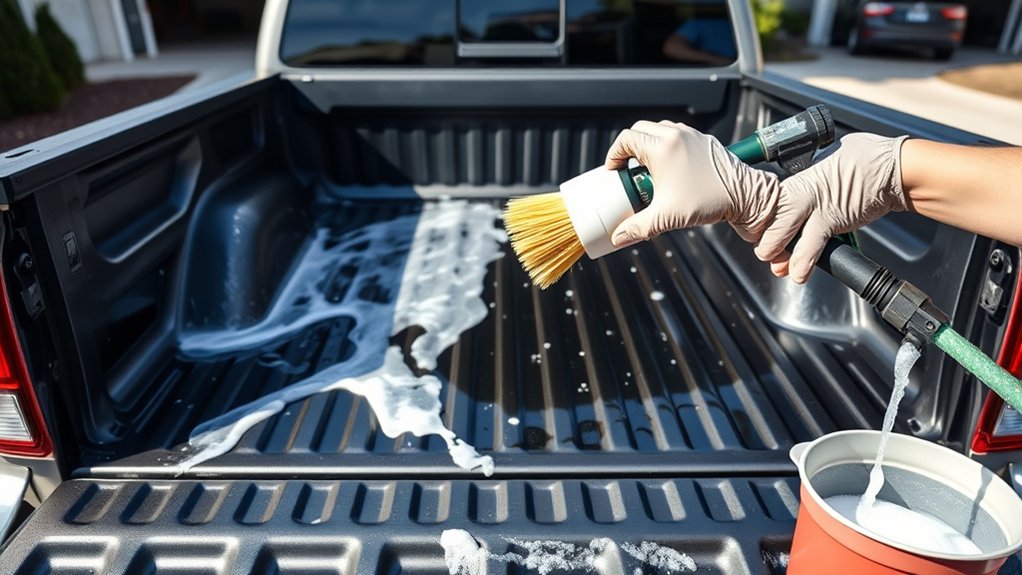
To clean a Toyota Tacoma bed liner safely, first identify the surface you are actually washing. Many recent Tacomas use a factory Sheet-Molded Composite (SMC) bed surface rather than a separate liner, while other trucks may have a spray-in coating, removable plastic liner, rubber mat, or exposed painted metal. Start with loose-debris removal, a garden hose, mild automotive soap, and a soft or medium-bristle nylon brush. Rinse thoroughly and let the bed dry before reinstalling mats or accessories.
Last updated: September 11, 2026
Quick Answer
Sweep or vacuum the Tacoma bed, rinse it with a garden hose, wash it with mild automotive soap and a soft or medium-bristle nylon brush, then rinse and dry it fully. First confirm whether you are cleaning Toyota’s factory composite bed, an aftermarket spray-in coating, a drop-in liner, or a removable mat. Use a pressure washer only when the applicable bed or liner manufacturer permits it, and avoid concentrated spray, harsh solvents, abrasive tools, and slippery dressings.
Key Takeaways
- Identify the bed surface before choosing a cleaner, brush, or water pressure; a factory Tacoma SMC bed is not the same thing as an aftermarket liner.
- Start with the least aggressive method: sweeping, a hose, mild soap, and a non-abrasive nylon brush.
- Do not assume a plastic drop-in liner should be removed; follow its installation instructions first.
- Treat oil, sap, paint, concrete residue, and chemical spills differently instead of using one strong cleaner.
- Inspect the clean bed for lifting coating, cracks, trapped debris, blocked drains, loose fasteners, and exposed metal.
At a Glance
| Time Required | About 20–45 minutes for routine cleaning; longer for stubborn stains or a removable liner that must be cleaned underneath |
| Difficulty | Easy |
| Tools Needed | Broom or vacuum, garden hose, bucket, microfiber towels, and a soft or medium-bristle nylon brush |
| First Check | Confirm whether the visible surface is factory composite, spray-in coating, drop-in plastic, a removable mat, or painted/exposed metal |
| Cost | Low; basic soap and cleaning supplies are usually sufficient |
| Surface | How to Recognize It | Safe Default Method | Main Caution |
|---|---|---|---|
| Factory SMC composite bed | Molded factory bed surface with no separate liner edge | Hose, mild automotive soap, soft brush, rinse and dry | Avoid unapproved solvents and concentrated pressure around accessories |
| Spray-in coating | Textured coating bonded to the bed contours | Mild soap and soft or medium nylon brush | Do not lift damaged edges with pressure or aggressive chemicals |
| Drop-in liner | Separate molded plastic shell with visible edges or mounting points | Clean in place unless its instructions allow removal | Do not disconnect rails, wiring, outlets, or other accessories blindly |
| Rubber or carpeted mat | Separate floor covering that can usually be lifted | Remove when appropriate, clean both sides, and dry completely | Do not trap moisture or abrasive debris underneath |
| Painted or exposed metal | Painted repair area, older surface, hardware, seam, or exposed metal section | Gentle automotive wash and careful drying | Scratches and chips can expose metal to corrosion |
What Type of Toyota Tacoma Bed Liner Do You Have?
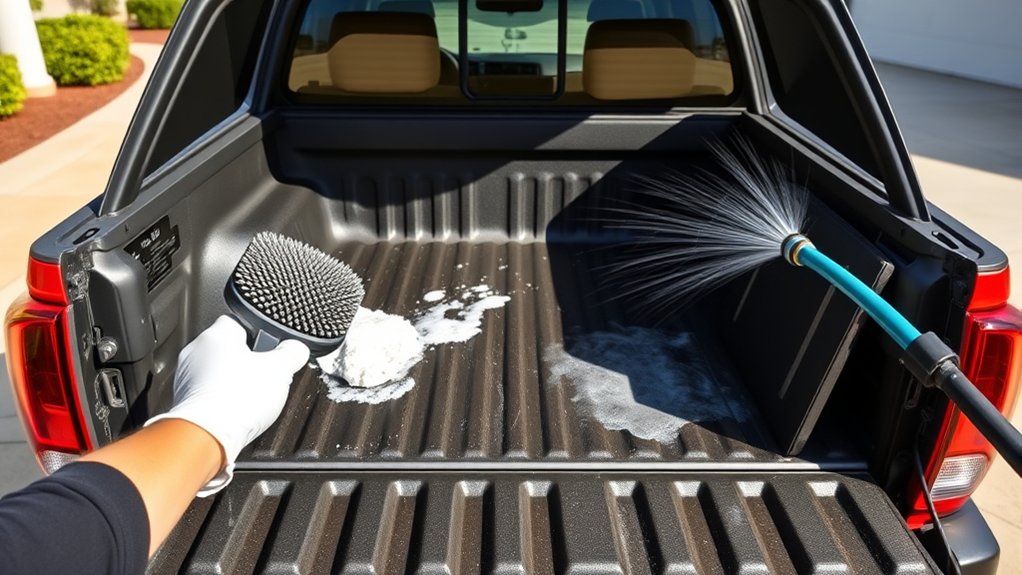
Do not assume every Tacoma has the same truck-bed surface. Toyota’s 2023 Tacoma brochure describes a fiber-reinforced Sheet-Molded Composite inner bed, while Toyota’s 2026 Tacoma information describes an aluminum-reinforced bed with an SMC surface. On these trucks, the factory composite material is the bed surface itself rather than a conventional removable liner.
An aftermarket coating, drop-in liner, or mat may still be installed over or inside that factory bed. The correct cleaning method therefore depends on the model year, installed accessories, visible surface, and liner manufacturer. If you need to confirm your generation or bed length, see our Toyota Tacoma bed dimensions guide.
- Factory SMC composite bed: A molded factory bed surface used on many recent Tacomas. The composite itself does not rust, but metal fasteners, hardware, seams, and other metal components still require inspection.
- Spray-in liner: A textured coating bonded directly to the bed. It is not meant to be lifted or removed for routine cleaning.
- Drop-in liner: A molded plastic shell that sits over the bed. Some versions are removable, while others use fasteners, rails, wiring, or accessory connections.
- Rubber or carpeted bed mat: A separate floor covering that can often be removed and cleaned on both sides.
- Painted or exposed metal: Older, repaired, modified, chipped, or accessory-related areas may expose painted or bare metal that needs gentler washing and corrosion protection.
Look at the texture, seams, edges, fasteners, and underside of any removable mat. When you know the brand of an aftermarket liner, check its care instructions before applying a solvent, restoration product, or pressure washer.
Tacoma-specific note: A factory composite bed and an aftermarket bed liner are not interchangeable terms. Clean the material that is actually exposed on your truck, and follow the aftermarket manufacturer’s instructions whenever a coating or liner has been added.
Research note: Tacoma bed-construction details in this guide are checked against Toyota information. Chemical/runoff and eye-safety guidance is based on EPA and CDC/NIOSH sources linked in the article and Sources section.
Essential Tools for Cleaning Your Bed Liner
You do not need a foam cannon, specialty coating, or branded detailing system for routine cleaning. Start with simple tools and increase cleaning strength only when the dirt requires it.
Cleaning Equipment Essentials
- A broom, handheld brush, or wet/dry vacuum for loose debris
- A garden hose with an adjustable spray nozzle
- Two buckets: one for soapy water and one for rinsing the brush
- A soft or medium-bristle nylon brush
- Microfiber towels or a clean drying towel
- Nitrile or chemical-resistant gloves when required by the cleaner label
- Protective eyewear when splashing cleaner or spraying embedded debris
- An optional pressure washer only when the liner instructions permit it
Recommended Cleaning Products
For ordinary mud and road grime, use a mild automotive wash soap or a cleaner approved by the liner manufacturer. Follow the product’s dilution directions instead of estimating the amount. The EPA’s Safer Choice program can also help you find cleaning and car-care products whose ingredients meet its program criteria.
Avoid bleach, strong alkaline degreasers, gasoline, lacquer thinner, brake cleaner, acetone, and other aggressive solvents unless the liner manufacturer specifically approves them. Even when a product appears safe, test it on a small hidden area and allow the spot to dry before treating the full bed.
Protective Gear and Work-Area Safety
Wear closed-toe, slip-resistant shoes because the bed, tailgate, and surrounding pavement will become wet. Gloves can prevent irritation when the cleaner label calls for them. Use properly fitting safety glasses or goggles when a brush or spray may send grit or cleaner toward your face. CDC/NIOSH eye-safety guidance identifies flying particles and cleaning chemicals as potential eye hazards and recommends protective eyewear appropriate to the hazard.
Work outside or in a well-ventilated area. Do not rely on an ordinary dust mask for chemical vapors. When a cleaner’s label or safety data sheet requires respiratory protection, use only the specified equipment and instructions.
Prepare the Truck Bed Before Cleaning
- Park in the shade. A cool surface gives soap more time to work and reduces spotting.
- Remove cargo and accessories. Take out loose tools, dividers, mats, storage boxes, and tie-downs that are designed for removal.
- Check for spills. Absorb oil, fuel, paint, pesticides, fertilizer, and unknown chemicals before adding water.
- Sweep or vacuum. Remove gravel, sand, leaves, mulch, and other material that could scratch the surface while you scrub.
- Inspect drain paths. Clear loose debris from factory drainage areas without forcing tools into sealed joints.
- Check damaged areas. Note peeling coating, exposed substrate, cracked plastic, loose fasteners, damaged wiring, or lifted edges before spraying them.
Warning: Do not rinse oil, grease, fuel, antifreeze, paint, pesticides, or other chemicals into a street or storm drain. Absorb the spill and follow the product label and local hazardous-waste rules. EPA nonpoint-source pollution guidance specifically advises proper disposal of oil, antifreeze, paint, and similar chemicals instead of hosing them into streets or drains.
How to Clean a Toyota Tacoma Spray-In Bed Liner
- Remove loose debris. Sweep or vacuum the entire bed, including corners, wheel-well areas, the tailgate gap, and tie-down recesses.
- Pre-rinse with a hose. Use a broad spray to loosen dust and mud. Direct water toward normal drainage paths rather than forcing it into electrical outlets or accessory housings.
- Apply mild soap. Mix the cleaner according to its label and work on one section at a time.
- Scrub the texture. Use a soft or medium nylon brush. Scrub in several directions so the bristles reach the coating’s low spots.
- Treat remaining stains separately. Use the stain guidance below instead of repeatedly scrubbing the entire liner with a stronger chemical.
- Rinse completely. Remove soap from the bed walls, floor, corners, tailgate, and drainage areas.
- Dry and inspect. Let water drain, then blot pooled areas with microfiber towels. Check for lifting edges, bubbles, cuts, worn spots, or exposed substrate.
Pro Tip: Let dried mud soak under a gentle stream of water before brushing. Softening the deposit usually works better than increasing water pressure or using a harder brush.
Can You Pressure Wash a Tacoma Bed Liner Safely?
A pressure washer is optional, not required. Check the bed or liner manufacturer’s care instructions first. If pressure washing is permitted:
- Begin with the lowest practical pressure and a wide fan pattern.
- Test a small, hidden area before cleaning the whole bed.
- Keep the nozzle moving and maintain a conservative distance.
- Do not use a concentrated zero-degree stream.
- Do not aim directly at lifted coating, damaged seams, decals, wiring, outlets, cameras, seals, or people.
- Stop if the coating flexes, lifts, changes texture, or sheds material.
How to Clean a Drop-In Tacoma Bed Liner
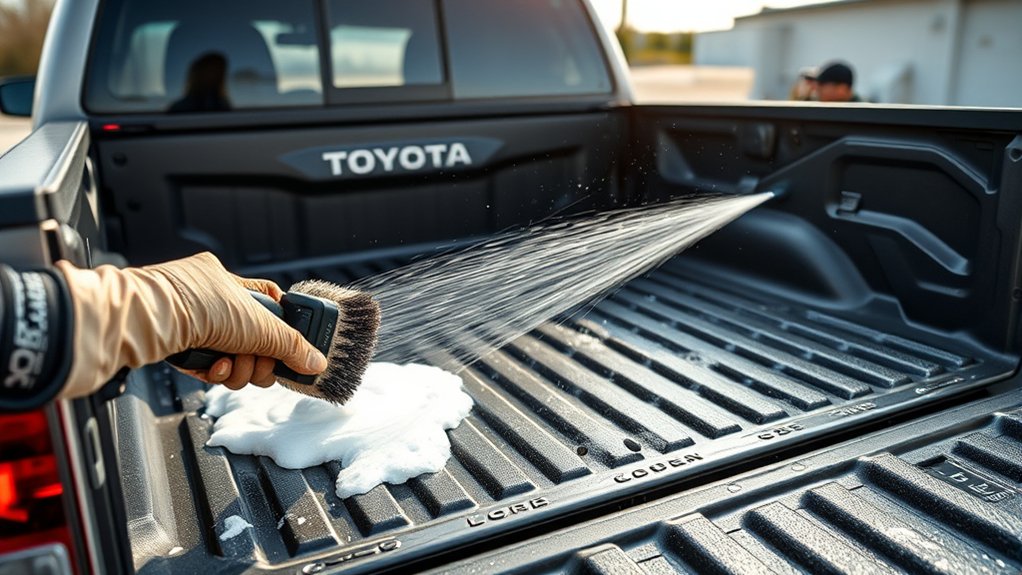
First determine whether the liner is designed for owner removal. Do not pull it out when it is connected to rails, fasteners, lighting, an outlet, a tonneau-cover system, or other accessories you do not know how to disconnect.
Cleaning a Drop-In Liner in Place
- Remove loose debris with a broom or vacuum.
- Rinse the liner using a garden hose.
- Apply diluted mild soap.
- Scrub the floor, walls, grooves, corners, and tailgate section with a nylon brush.
- Rinse until no foam remains.
- Allow the liner and visible edges to dry.
- Inspect the liner for movement, cracks, worn mounting points, or debris trapped around the perimeter.
Cleaning Under a Removable Drop-In Liner
When the installation instructions confirm that owner removal is appropriate, follow the stated removal sequence and ask another person for help with a large molded liner. Set it on a clean surface so it does not bend or drag across pavement.
Clean both sides with mild soap, rinse them, and let them dry fully. Sweep and wash the exposed truck bed separately. Inspect painted metal, fasteners, seams, tie-down mounts, and accessory holes for abrasion or corrosion. Reinstall the liner only after both surfaces are dry and all required retainers are secure.
How to Clean the Factory Tacoma Composite Bed
Many recent Tacomas use a factory SMC composite bed surface rather than painted sheet metal as the main bed floor. Use a hose, mild automotive soap, and a non-abrasive wash tool on that composite surface. Although the composite itself cannot rust, harsh solvents or concentrated water pressure may still discolor or damage the material, while metal fasteners and accessories can still corrode.
Painted or exposed metal may still be present around repairs, hardware, accessories, damaged areas, or other parts of the truck. Treat those areas with the same care you would use on exterior paint because deep scratches and chips can expose metal.
- Sweep out sand and gravel before touching the surface with a brush.
- Pre-rinse from the cab end toward the open tailgate.
- Wash with mild soap and a soft brush or wash mitt.
- Use a separate stain treatment only when necessary.
- Rinse and dry the bed, seams, tie-downs, and accessory mounting areas.
Effective Stain Removal Techniques for Your Bed Liner
| Stain or Material | Safer First Method | What to Avoid |
|---|---|---|
| Mud or clay | Soak with water, loosen it with a nylon brush, and rinse. | Scraping dry material with metal tools. |
| Oil or grease | Blot fresh liquid with absorbent material, then use a liner-approved degreaser on the remaining film. | Hosing the spill into a street or drain. |
| Tree sap or adhesive | Use a manufacturer-approved adhesive remover after a hidden-area test. | Unapproved acetone, thinner, gasoline, or metal blades. |
| Wet paint | Blot without spreading it and follow the paint and liner manufacturers’ cleanup instructions. | Choosing a solvent without confirming compatibility. |
| Cement or concrete residue | Remove loose material carefully and contact the liner manufacturer before using an acidic remover. | Hammering, chiseling, or using masonry acid without approval. |
| Fertilizer or road salt | Sweep it out promptly, rinse thoroughly, and dry metal hardware and seams. | Leaving granules trapped under a mat or liner. |
| Unknown chemical | Keep people away, check the container label, and contact the product manufacturer or local hazardous-waste authority. | Adding water or another chemical before identifying it. |
Give any stain remover the shortest contact time needed, keep it from drying on the surface, and rinse it according to its label. Repeating a mild treatment is usually safer than jumping immediately to an aggressive solvent.
How to Maintain Your Bed Liner After Cleaning
Use the truck’s actual workload rather than a rigid monthly schedule. Clean the bed after hauling soil, mulch, salt, fertilizer, oily equipment, wet vegetation, food waste, chemicals, or any load that leaves abrasive debris.
- Sweep sand, gravel, and metal fragments out before they are ground into the surface.
- Lift removable mats periodically and clean both sides.
- Check drop-in liner edges and fasteners for movement.
- Keep drainage paths free of leaves and packed dirt.
- Inspect spray-in coatings for bubbles, cuts, peeling edges, and exposed substrate.
- Touch up chipped paint on metal surfaces using the correct Toyota repair procedure.
- Use a UV treatment or rejuvenator only when the liner manufacturer approves it.
When you are checking the bed for corrosion around metal hardware or after heavy salt and mud exposure, it is also a useful time to follow a broader Toyota Tacoma underbody inspection checklist.
The best maintenance schedule is simple: clean the bed when the load leaves dirt, chemicals, salt, moisture, or abrasive material behind.
Avoid These Common Mistakes When Cleaning Your Bed Liner
Using Harsh Chemicals
A cleaner can remove a stain while also fading, softening, whitening, or glossing the surrounding surface. Do not assume a strong household degreaser is safe for a polyurea coating, polyethylene liner, rubber mat, composite bed, and painted surface alike.
Read the cleaner label, check the liner instructions, and test a hidden area. Do not use an unapproved solvent simply because mild soap did not remove the stain immediately.
Using Too Much Water Pressure
Moving the pressure-washer nozzle closer increases the force on a small area. That can lift a damaged coating edge, force water into accessories, or mark a softer surface. Start with a hose. When pressure washing is allowed, use a wide pattern, gentle setting, safe distance, and continuous movement.
Skipping Proper Drying
Allow the bed, liner edges, fasteners, mats, and accessories to dry before closing a tonneau cover or reinstalling a removable liner. Drying helps prevent water spots, odors, and moisture from remaining around hardware or painted metal.
Do not apply a restoration product to a damp surface unless its instructions specifically permit it. Water can interfere with adhesion and create an uneven finish.
Ignoring Manufacturer Guidelines
The liner manufacturer’s instructions take priority over generic cleaning advice. They may restrict solvents, brush types, pressure washing, waxes, dressings, or repair products. Toyota’s manual for your exact model year should also guide the treatment of factory bed materials and installed equipment.
Applying a Slippery Dressing
Tire shine, silicone-heavy trim dressing, household polish, and glossy protectants can make a truck bed dangerously slick. Use only a bed-liner product that the manufacturer approves, and follow its curing instructions before loading cargo.
How to Restore the Finish of Your Bed Liner
Cleaning must come before restoration. A dressing applied over dirt, oil, soap residue, or loose coating can create blotches and may hide damage that needs repair.
- Wash the liner with mild soap.
- Rinse until no cleaner remains.
- Let the surface dry fully.
- Inspect for cracks, bubbles, peeling, worn texture, or exposed substrate.
- Confirm that the restoration product is approved for the liner’s material and brand.
- Test the product in a hidden area.
- Apply a thin, even coat according to the label.
- Keep cargo and water off the surface for the required curing period.
Fading alone may be cosmetic. Cracking, lifting, bubbling, missing coating, or exposed metal requires more than a shine product. Contact the original installer or liner manufacturer when the damaged area is large, near a seam, contaminated with oil, or no longer bonded to the bed.
Can You Touch Up a Spray-In Bed Liner?
Small repairs may be possible when the manufacturer offers a compatible repair kit and the surrounding coating remains firmly bonded. The area normally needs cleaning, surface preparation, correct mixing, and proper curing. Do not cover loose or contaminated coating with a generic aerosol product.
Professional repair is the safer choice when the liner is peeling across a wide area, bubbling, deeply gouged, exposing substantial metal, or separating around bed hardware.
Related Guides
Frequently Asked Questions
Is the factory Toyota Tacoma bed a bed liner?
Many recent Tacomas use a factory Sheet-Molded Composite bed surface rather than a conventional removable bed liner. Toyota documents an SMC inner bed on the 2023 Tacoma and an SMC bed surface on the 2026 Tacoma. A spray-in coating, drop-in liner, or removable mat may still be added separately.
How often should you clean a Toyota Tacoma bed liner?
Clean it whenever a load leaves mud, sand, salt, fertilizer, oil, vegetation, chemicals, or other residue. A lightly used bed may need only occasional cleaning, while a work truck may need rinsing after individual jobs.
How do you clean a spray-in bed liner?
Sweep or vacuum it, pre-rinse with a hose, apply mild automotive soap, scrub the texture with a nylon brush, rinse completely, and let it dry. Treat remaining stains separately with a product approved for that liner.
Can you pressure wash a Tacoma bed liner?
Only when the liner or bed manufacturer permits it. Start with the gentlest practical setting and a wide fan pattern, keep a conservative distance, and avoid loose coating, seals, wiring, outlets, cameras, accessories, and concentrated spray.
Should you remove a drop-in liner before cleaning it?
Remove it only when its installation instructions say owner removal is appropriate. Some liners connect to rails, fasteners, wiring, outlets, tonneau systems, or other accessories. A liner that cannot be safely removed can still be cleaned in place and inspected around its edges.
How do you restore a faded spray-in bed liner?
Clean and dry it first, then use only a rejuvenator approved by the liner manufacturer. A dressing may improve cosmetic fading, but it will not repair peeling, bubbles, deep gouges, poor adhesion, or exposed substrate.
What are common problems with spray-in bed liners?
Common visible problems include fading, cuts, worn texture, bubbles, lifting edges, peeling, and exposed substrate. Widespread adhesion failure or damage near seams and hardware should be inspected by the original installer or manufacturer.
Can you touch up a spray-in bed liner yourself?
A small touch-up may be suitable when the manufacturer supplies a compatible repair product and the surrounding coating is secure. Large, peeling, contaminated, or deeply damaged areas usually need professional surface preparation and repair.
Conclusion
The safest way to clean a Toyota Tacoma bed liner is to match the method to the surface. First confirm whether you are cleaning Toyota’s factory composite bed or an added spray-in coating, drop-in liner, or mat. Remove loose debris, use mild soap, scrub with a non-abrasive nylon brush, rinse completely, and let everything dry.
Reserve strong cleaners, pressure washing, restoration products, and touch-up coatings for situations where the applicable manufacturer approves them. After cleaning, inspect coating edges, plastic mounting points, mats, drains, tie-downs, wiring, painted areas, and exposed metal before loading the truck again.
Sources
- Toyota 2026 Tacoma — Bed Utility — current Tacoma SMC bed construction
- Toyota 2023 Tacoma Brochure — third-generation fiber-reinforced SMC inner-bed information
- Toyota Manuals and Warranties — model-specific owner manuals and Toyota care instructions
- EPA Safer Choice — cleaning and car-care products whose ingredients meet Safer Choice criteria
- CDC/NIOSH Eye Safety for Workers — eye hazards and protective-eyewear guidance
- EPA Nonpoint Source Pollution Guidance — runoff guidance covering oil, grease, antifreeze, paint, and other pollutants
