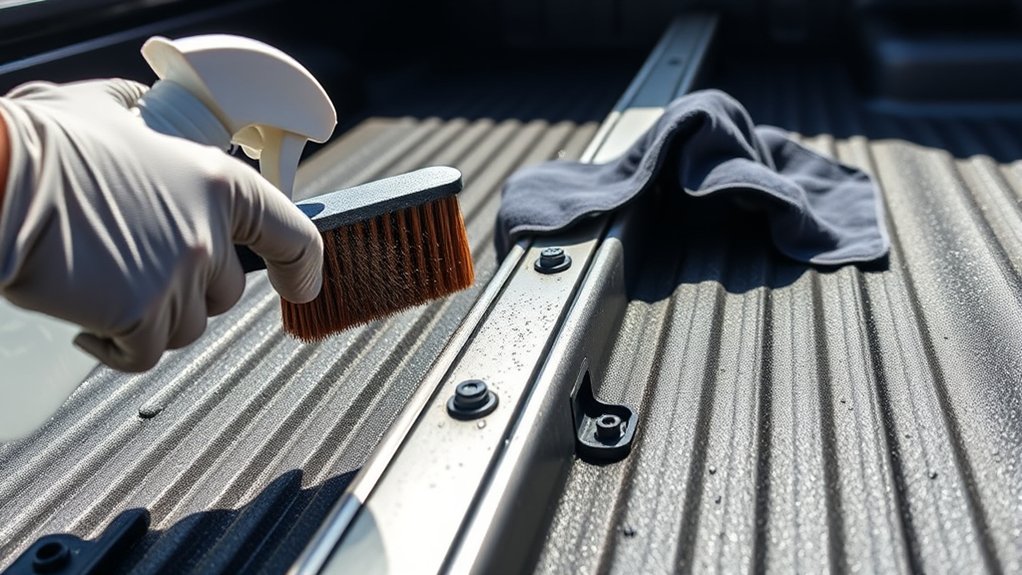
Cleaning Toyota Tacoma bed rails and tie-down cleats is mostly a matter of removing grit without scratching the surfaces or leaving slippery residue behind. Use mild automotive soap, soft nylon brushes, controlled rinsing, and thorough drying. Because bed materials and deck-rail designs vary by model year, check your Toyota owner’s manual before removing cleats or applying any chemical product.
Quick Answer
Unload the bed, brush or vacuum out loose grit, wash the rails and tie-downs with diluted automotive soap and a soft nylon brush, rinse gently, and dry the track completely. Use stronger cleaners only after checking the label and testing a hidden spot. Avoid abrasive tools, concentrated degreasers, and slippery trim dressings on load-contact surfaces.
Key Takeaways
- Start dry by removing sand, soil, and gravel before adding water.
- Use automotive wash soap, microfiber towels, and soft nylon brushes as your default cleaning tools.
- A garden hose is the safer rinse option; use a pressure washer only with a wide fan and low pressure.
- Keep trim restorers, waxes, oils, and silicone dressings off the track interior and tie-down contact surfaces.
- Dry the rails and test every cleat’s locking action before securing cargo.
At a Glance
| Time Required | About 30–45 minutes, plus drying time |
| Difficulty | Easy |
| Tools Needed | Hose, bucket, automotive soap, soft nylon brushes, microfiber towels, and a vacuum or soft hand brush |
| Cost | About $0–$25 if you already own basic wash supplies |
Warning: Never aim a concentrated pressure-washer jet into the ends of the deck-rail track, electrical outlets, cameras, sensors, seams, or damaged coating. High pressure can force water and grit into protected areas or lift weakened finishes.
The Tools You Need for Cleaning Your Tacoma Bed Rails
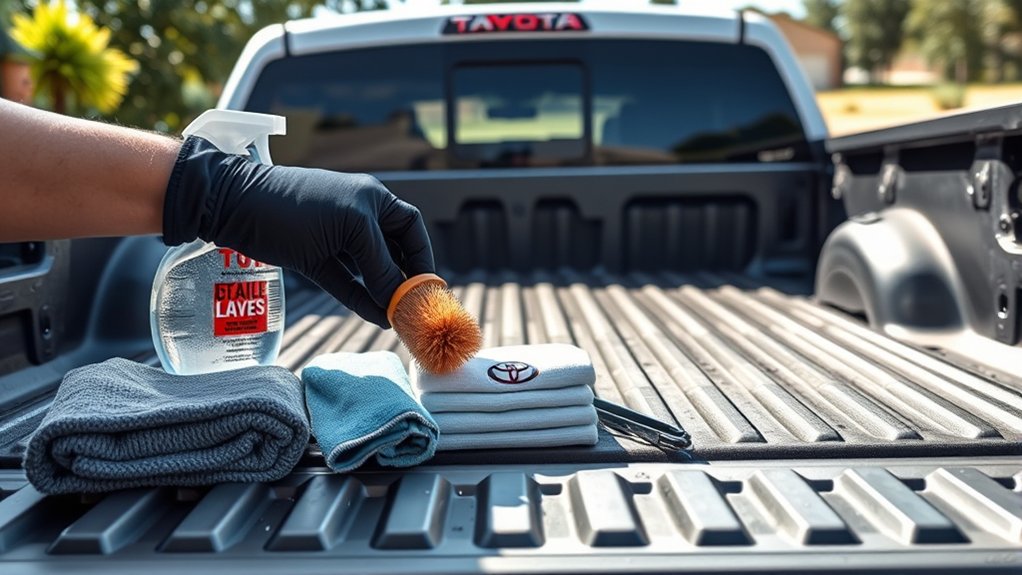
You do not need an aggressive chemical or abrasive scrubber for routine cleaning. Start with the least aggressive method and increase cleaning strength only when a stain remains.
- Vacuum or soft hand brush: Removes sand, gravel, mulch, and dried mud before those particles can scratch the rails.
- Automotive wash soap: Choose a product labeled safe for exterior plastic, composite, painted, and coated surfaces. The EPA’s Safer Choice program includes a category for car-care products made with ingredients that meet its criteria.
- Soft nylon detailing brushes: Use a narrow brush for the channel and a larger brush for rail caps and the bed floor.
- Microfiber towels: Keep separate towels for washing, drying, and spot-cleaning greasy residue.
- Garden hose with a spray nozzle: A gentle fan rinse gives you more control than a concentrated high-pressure jet.
- Bucket and hand-pump sprayer: Either works for applying diluted soap. Follow the cleaner’s label rather than guessing the concentration.
- Gloves and eye protection: Wear them when handling degreasers, stain removers, or corrosion products. Product labels and safety data sheets explain the required precautions.
Choose Cleaners by Surface, Not by Brand Recognition
A Tacoma bed may include composite material, painted metal, coated fasteners, plastic rail caps, aluminum or steel track parts, and an aftermarket liner. One cleaner may not be suitable for all of them. Read the product label, confirm surface compatibility, and test a small hidden area first.
Do not use “Castrol GTX cleaner.” Castrol GTX is associated with engine oil, and the article’s original product name appears to confuse it with a different degreaser. If you use any automotive degreaser, verify its exact name, dilution ratio, surface restrictions, dwell time, and rinse directions before it touches the truck.
Step-by-Step Guide to Cleaning Your Tacoma’s Track System
- Park safely and empty the bed. Park on level ground, set the parking brake, and remove cargo, mats, loose accessories, and anything that blocks the rails. Let hot surfaces cool before washing.
- Check your model-year instructions. Tacoma deck-rail systems and cleat-release methods vary. Review the Toyota manual before removing a cleat, end cap, or accessory. Do not pry on a part that does not release easily.
- Remove loose grit while the bed is dry. Vacuum or brush the rail channel, cleat slots, corners, and bed seams. This step keeps sand from becoming an abrasive paste when water is added.
- Pre-rinse gently. Use a garden hose or a low-pressure fan spray. Work from the cab end toward the tailgate so debris flows out instead of being driven deeper into the channel.
- Wash with diluted automotive soap. Apply the solution with a sponge, microfiber mitt, or hand-pump sprayer. Let it loosen grime briefly, but do not allow soap to dry on the surface.
- Brush the track and tie-downs. Use a soft nylon brush with light pressure. Clean around locking tabs, handles, fastener heads, and track edges. Avoid steel wool, wire brushes, stiff deck brooms, and abrasive pads.
- Rinse until the water runs clear. Flush loosened grit from the channel and rinse every cleaner completely. Residue can attract dirt or make handling surfaces slick.
- Dry the system. Wipe accessible surfaces with microfiber towels. Open the tailgate and allow the track, cleats, corners, and drainage paths to air-dry before replacing mats or covers.
- Inspect and reinstall. Look for cracks, bent parts, loose hardware, damaged coatings, corrosion, and cleats that do not lock firmly. Reinstall removable cleats according to the manual and pull each one firmly by hand to confirm engagement before securing cargo.
Pro Tip: Keep a small, clean detailing brush in the truck. Brushing sand and soil out of the rail channel after hauling prevents most heavy buildup and takes less time than a deep cleaning.
The safest cleaning method is the least aggressive one that removes the contamination without changing the surface texture, coating, or grip.
Cleaning Tips for Stubborn Stains on Tacoma Bed Rails
Grease and Oily Residue
Blot excess grease first instead of spreading it. Apply a cleaner that is specifically labeled for automotive exterior surfaces and compatible with the material you are treating. Follow the label’s dilution and dwell-time instructions, scrub with a soft brush, and rinse thoroughly. Do not mix cleaners. OSHA’s hazard communication resources explain why labels and safety data sheets matter when chemicals are used.
Tree Sap, Tar, and Adhesive
Use an automotive sap, tar, or adhesive remover only on surfaces listed on its label. Apply it to a microfiber towel rather than pouring it into the rail channel. Test a hidden spot, work in short intervals, and wash the area afterward with automotive soap.
Faded Plastic Rail Caps
Clean and dry the cap before considering a trim restorer. Apply the product only if its label lists exterior plastic and the spot test leaves an even finish. Keep it off the rail channel, cleat mechanism, bed floor, tailgate step, and any area used for grip or cargo restraint. Buff away excess so the surface does not remain oily.
Rust, Oxidation, or Damaged Coating
Red-brown corrosion usually points to an exposed steel part, while white or chalky residue may be oxidation or mineral deposits on another material. Do not automatically sand the rail, fender area, or fastener to bare metal. First identify the affected material and check whether the part is structural, removable, painted, plated, or covered by warranty.
Clean minor surface contamination and dry the area. If you find deep pitting, bubbling paint, a loose anchor, a cracked rail, or corrosion around a load-bearing fastener, stop using that tie-down point and have a Toyota dealer or qualified body shop inspect it.
Note: On a Tacoma with a composite bed, the composite panel itself does not form red rust, but nearby steel hardware, body seams, or accessories can corrode. Older models and aftermarket bed systems may use different materials.
How to Maintain a Clean Tacoma Bed?
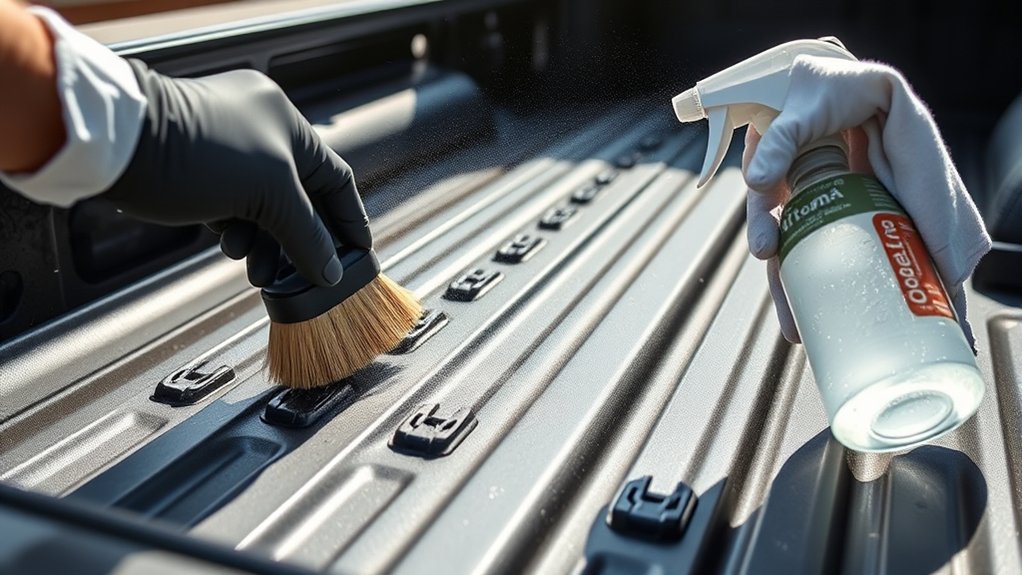
Routine care is easier than removing packed grit or dried chemicals later. Clean the bed whenever debris collects in the rail channel and after hauling materials that hold moisture or leave corrosive residue.
- After soil, sand, gravel, or mulch: Sweep or vacuum the bed before rinsing.
- After road salt, fertilizer, pool chemicals, or coastal use: Rinse promptly and dry the metal hardware and seams.
- After oily cargo: Absorb spills first, then use a compatible cleaner instead of washing a large amount of oil into the runoff.
- Before securing a heavy load: Check that the cleats slide, lock, and release normally and that the track is free of stones.
- Before installing a tonneau cover or rack: Clean the clamping surfaces so grit does not become trapped under the hardware.
Do not add oil, grease, silicone spray, or dry lubricant to the rail channel unless the owner’s manual or accessory manufacturer specifically requires it. Unapproved lubricant can collect abrasive grit, migrate onto cargo, or change how a cleat grips.
Wash where runoff can be managed responsibly. Transportation runoff can carry hydrocarbons, metals, and other pollutants into waterways, according to the U.S. Environmental Protection Agency. Follow local wash-water rules and avoid sending concentrated cleaner, oil, or loose chemicals into a storm drain.
Common Mistakes to Avoid When Cleaning Your Tacoma Bed Rails
- Starting with a pressure washer: Dry debris should be removed first so the spray does not drive grit into track ends or seams.
- Using a zero-degree nozzle or holding the wand too close: A concentrated jet can damage coatings, seals, plastic edges, and already-weakened finishes.
- Using an unidentified “Castrol GTX cleaner”: The name is not a verified cleaning product and should not be treated as one.
- Applying concentrated degreaser without a spot test: Strong alkalinity or solvents can haze, stain, soften, or discolor certain materials.
- Scrubbing with steel wool or a wire brush: Abrasive tools can scratch plastic, remove protective finishes, and leave particles that later corrode.
- Coating the track with trim dressing: Restorers belong only on compatible cosmetic trim, not inside the rail or on tie-down contact surfaces.
- Ignoring trapped water: Reinstalling mats, covers, or cleats while the bed is wet can keep moisture and dirt against hardware.
- Assuming every Tacoma bed is identical: Cleaning limits, materials, outlets, rail designs, and accessories vary by model year and configuration.
Troubleshooting Tacoma Bed Rail and Tie-Down Problems
The Cleat Will Not Slide
Do not force it with a hammer or pry bar. Remove visible stones and packed dirt, rinse gently, dry the channel, and follow the manual’s release procedure. If the cleat remains stuck, inspect it for deformation or internal damage.
The Cleat Slides but Will Not Lock
Stop using that tie-down point. Clean the locking surfaces and check for a worn tab, bent part, missing component, or damaged rail. Replace or professionally inspect a cleat that cannot lock firmly.
The Rail Looks Cloudy After Cleaning
Rinse again with clean water and dry it. Cloudiness may be dried soap, mineral residue, chemical staining, or surface damage. Do not cover it immediately with dressing. Test a mild automotive wash solution in a hidden area and seek professional advice if the finish remains changed.
The Bed Smells Musty Under a Mat or Platform
Remove the mat or platform, wash away organic debris, and let the bed dry fully. Check drainage paths and the underside of accessories. Persistent odor, trapped moisture, or visible mold on fabric-covered accessories may require separate cleaning or replacement according to the accessory maker’s instructions.
Related Guides
Frequently Asked Questions
How do you clean a Tacoma truck bed?
Empty the bed, remove loose grit with a vacuum or soft brush, rinse gently, wash with diluted automotive soap and a soft nylon brush, rinse completely, and dry the bed and hardware. Treat grease or stains with a surface-compatible product only after a spot test.
How do you clean under a truck-bed platform?
Remove the platform only as its manufacturer directs. Vacuum trapped grit, wash the exposed bed with mild automotive soap, rinse without soaking electrical accessories, and let both the bed and platform dry completely before reassembly. Inspect mounting points for looseness or corrosion.
How do you clean fabric or carpet on a Tacoma bed platform?
Vacuum first, then spot-clean with a product approved by the platform or carpet manufacturer. Use as little moisture as practical, blot rather than saturate, and air-dry the material fully outside the closed bed. Test for colorfastness in a hidden area.
What should you use to clean a truck bed liner?
Use mild automotive soap, water, and a soft or medium nylon brush unless the liner manufacturer specifies another method. Avoid solvents, abrasive tools, and strong degreasers until you confirm they are compatible with that exact drop-in, spray-on, or factory bed surface.
Can you pressure wash Tacoma bed rails?
You can use controlled low pressure with a wide fan, but a garden hose is safer for routine work. Keep the nozzle moving and follow the pressure washer and vehicle instructions. Never use a concentrated jet on track ends, electrical parts, seams, loose coating, cameras, or sensors.
Should you lubricate the Tacoma deck-rail track?
Do not lubricate it unless Toyota or the accessory manufacturer directs you to do so for your exact system. Oil, grease, or silicone can attract grit and may affect the cleat’s grip. Clean and dry the track first, then investigate any sticking or damage.
Conclusion
Clean Tacoma bed rails and tie-downs with mild soap, soft brushes, gentle rinsing, and complete drying. Reserve stronger products for verified, compatible surfaces, and keep slippery dressings out of the track and off load-contact parts. A clean rail should also work correctly, so test each cleat and stop using any damaged or unreliable tie-down point until it is repaired.
Sources
- Toyota Manuals and Warranties — model-specific owner’s manuals and vehicle instructions.
- U.S. EPA Safer Choice — safer-ingredient guidance and certified car-care product categories.
- U.S. EPA: Stormwater Discharges from Transportation Sources — pollutants associated with vehicle and roadway runoff.
- OSHA Hazard Communication — product-label and safety-data-sheet guidance for chemical hazards.
