
You do not plug in a standard Toyota RAV4 Hybrid. It has no external charging port; its gasoline engine, motor-generators, regenerative braking system, and battery controls manage the high-voltage traction battery while you drive. The RAV4 Plug-in Hybrid, formerly called the RAV4 Prime in the United States, is the version designed to accept electricity from an external charger.
Last updated: September 11, 2026 — checked against Toyota’s current 2026 RAV4, Plug-in Hybrid, warranty, and owner-manual information.
Quick Answer
A standard Toyota RAV4 Hybrid does not have an external charging port. It replenishes its traction battery through regenerative braking and electricity generated by the gasoline engine. You only need to plug in a RAV4 Plug-in Hybrid, although that model can continue driving in hybrid mode after its usable EV charge runs low.
Key Takeaways
- The standard RAV4 Hybrid charges its traction battery automatically while you drive.
- The RAV4 Plug-in Hybrid is the version that connects to home or public charging equipment.
- You do not need to manage a target battery percentage in the standard hybrid.
- Using a plug-in model without charging it will not strand you, but it reduces the value of its electric-driving capability.
- For the 2026 U.S. model, Toyota lists a 54-mile EPA-estimated all-electric range for the Plug-in Hybrid SE; warranty, towing, fuel, and range details still vary by model year and configuration.
How Does the Toyota RAV4 Hybrid System Work?
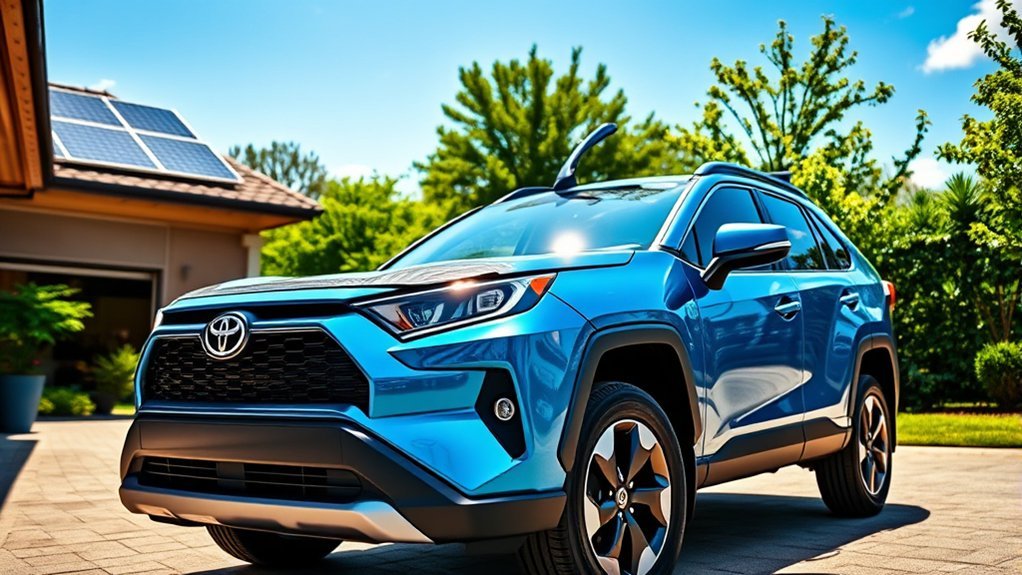
The RAV4 Hybrid is a hybrid electric vehicle, often shortened to HEV. Its powertrain combines a gasoline engine with one or more electric motor-generators. The vehicle decides when to use the engine, electric assistance, or both.
During light acceleration and some low-load conditions, the electric motors may move the vehicle with the gasoline engine off. The engine can start whenever extra power, cabin heat, battery charging, or other operating conditions require it.
For 2026, Toyota says the RAV4 Hybrid uses its fifth-generation hybrid system with a 2.5-liter four-cylinder engine, two front motor-generators (MG1 and MG2), and a lithium-ion traction battery. The vehicle manages these components automatically; you do not select a battery-charging mode for the standard Hybrid.
Regenerative braking recovers part of the vehicle’s kinetic energy during deceleration. Instead of wasting all that energy as heat at the brakes, an electric motor acts as a generator and sends electricity back to the traction battery. Toyota explains this basic difference between conventional and plug-in hybrids in its hybrid and plug-in hybrid guide.
A standard RAV4 Hybrid charges while you drive. The RAV4 Plug-in Hybrid is the version designed to connect to an outside power source.
The system’s main convenience is that you drive and refuel it much like a gasoline vehicle. You do not need a home charger, charging cable, or public charging stop.
What Makes the RAV4 Hybrid Different From the Plug-In Hybrid?
The RAV4 Hybrid’s automatic battery charging is not unique among conventional hybrids. Regenerative braking and engine-generated electricity are standard HEV principles. The more useful comparison is between the RAV4 Hybrid and RAV4 Plug-in Hybrid.
| Feature | RAV4 Hybrid | RAV4 Plug-in Hybrid |
|---|---|---|
| External charging | Not available or required | Designed for home or public charging |
| Electric-only travel | Brief periods when conditions allow | Extended EV driving after charging |
| After usable EV charge is consumed | Not applicable | Continues operating as a hybrid |
| Best fit | Drivers who cannot or do not want to charge | Drivers who can charge regularly and want more electric miles |
2026 update: Toyota replaced the RAV4 Prime name with RAV4 Plug-in Hybrid for the 2025 U.S. model year. The prior generation carried a 42-mile EPA EV rating, while Toyota now lists an EPA-estimated 54-mile all-electric range for the 2026 SE grade. For 2026 charging hardware, XSE and Woodland grades add a CCS1 port with DC fast-charging capability; SE and GR SPORT use J1772 for Level 1 and Level 2 AC charging. See Toyota’s 2025 naming announcement, current RAV4 Plug-in Hybrid information, and Toyota’s 2026 RAV4 launch details.
How Can You Tell Whether Your RAV4 Is a Hybrid or Plug-In Hybrid?
Check for a charging-port door and the vehicle’s badging before following any charging instructions. A standard RAV4 Hybrid has no external charging inlet. A RAV4 Plug-in Hybrid—or an older U.S. model badged RAV4 Prime—has a charging inlet and can use compatible external charging equipment.
How Does the RAV4 Hybrid Charge Its Battery?
The standard RAV4 Hybrid replenishes its traction battery in two main ways: regenerative braking and engine-driven electrical generation. The system switches between these methods automatically.
How Does Regenerative Braking Charge the Battery?
When you lift off the accelerator, coast, or press the brake pedal, the vehicle may use an electric motor-generator to slow the wheels. The motor-generator converts some of that motion into electricity and stores it in the high-voltage traction battery.
Regeneration cannot handle every braking situation. Conventional friction brakes also operate when you need stronger deceleration, when the battery cannot accept as much energy, or when vehicle conditions require them.
The energy display may show arrows moving from the wheels toward the battery during regeneration. That display represents energy flow, not a promise that every stop will produce the same amount of charge.
How Does the Gasoline Engine Help Charge the Battery?
The gasoline engine can provide mechanical power to the wheels and help generate electricity. When the control system determines that the traction battery needs more charge, it can run the engine and motor-generators in a way that restores the battery’s operating reserve.
The charging process works without driver intervention:
- Regenerative braking recovers energy while slowing or coasting.
- The gasoline engine can contribute energy when operating conditions require it.
- The battery-management system protects the traction battery within a controlled operating range.
- The vehicle decides when electric, gasoline, or combined power is appropriate.
- No external charging cable can be connected to the standard RAV4 Hybrid.
You may see the displayed battery level rise and fall during normal driving. That movement is expected. The gauge does not mean the system regularly uses the battery’s complete physical capacity.
How Does Regenerative Braking Improve Hybrid Efficiency?
Regenerative braking is especially useful in city traffic, where repeated slowing creates frequent opportunities to recover energy. Stop-and-go driving can therefore favor a hybrid more than steady high-speed travel, although actual fuel economy still depends on temperature, traffic, speed, tires, cargo, and driving style.
Gradual braking gives the system more time to recover energy. Hard braking often requires greater assistance from the friction brakes, so a smaller share of the vehicle’s motion may be converted into electricity.
Pro Tip: Look farther ahead, release the accelerator early, and brake smoothly when traffic allows. Do not coast or brake in a way that disrupts traffic or reduces safety simply to increase regeneration.
Regeneration improves efficiency, but it does not create free energy. Every energy conversion involves losses, and the vehicle still needs gasoline unless operating conditions allow a limited period of electric-only driving.
What Happens If You Rely Solely on Gas in a Plug-In Hybrid?
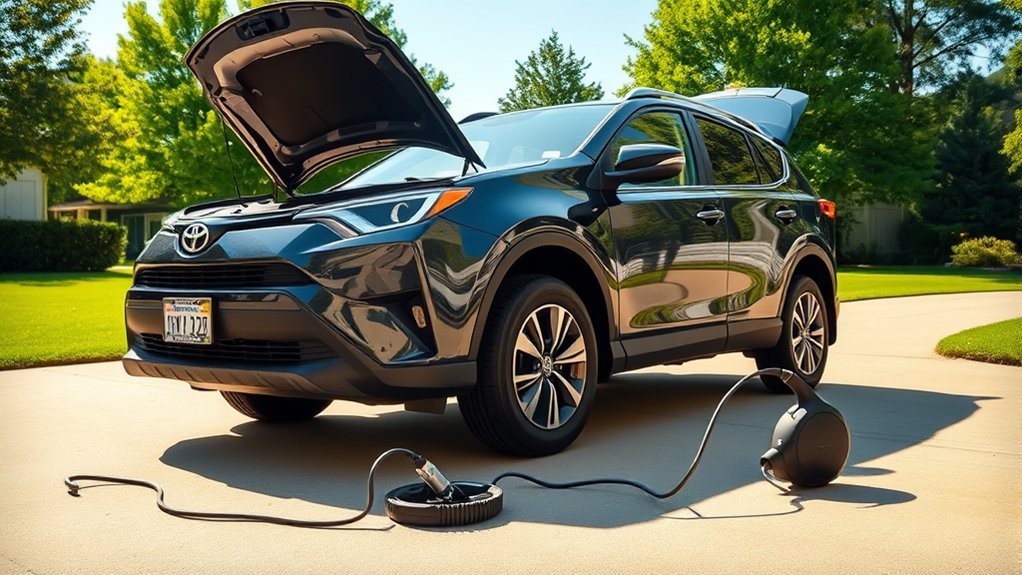
A RAV4 Plug-in Hybrid does not stop working when its usable EV charge runs low. It continues in hybrid operation using its gasoline engine, electric motors, and regenerative braking. Toyota explicitly notes that the plug-in model can keep driving as an efficient hybrid when you cannot plug it in; see Toyota’s RAV4 Plug-in Hybrid explanation.
Occasionally driving without charging is not the same as damaging the vehicle. However, never plugging it in means you give up much of what distinguishes the plug-in model:
- Fewer electric miles: Most or all propulsion energy will ultimately come from gasoline.
- More gasoline use: You will miss opportunities to replace short gasoline trips with charged electric travel.
- More tailpipe emissions: A PHEV produces tailpipe emissions whenever its gasoline engine operates.
- Lower ownership value: You carry the cost and weight of a larger battery without regularly using its full plug-in capability.
- Different cost results: Whether electricity saves money depends on your electric rate, gasoline price, charging fees, and driving pattern.
The vehicle may still deliver smooth acceleration and normal hybrid operation. Avoid claiming that an uncharged plug-in model automatically becomes slow or unsafe.
What Are the Benefits of Regularly Charging a Plug-In Hybrid?
Regular charging allows the RAV4 Plug-in Hybrid to use its larger battery as intended. Drivers with predictable commutes and convenient home charging are most likely to use a large share of their daily miles without starting the gasoline engine.
How Can Regular Charging Reduce Gasoline Use?
Starting a trip with available EV charge can reduce gasoline consumption, especially when your daily travel fits within the vehicle’s electric range. Longer trips can combine charged electric travel with normal hybrid operation after the usable EV charge is consumed.
Your results will vary with outside temperature, heater and air-conditioning use, speed, hills, passenger and cargo weight, tire pressure, and acceleration habits.
How Does Electric Driving Affect Tailpipe Emissions?
When a plug-in hybrid operates on electricity alone, it produces no tailpipe emissions during that portion of the trip. Once the gasoline engine runs, the vehicle produces tailpipe emissions like other gasoline-powered vehicles.
Total environmental impact also includes electricity generation and fuel production. The U.S. Environmental Protection Agency explains that PHEV emissions vary with battery use, charging frequency, gasoline operation, and the electricity sources in your area. See the EPA’s passenger-vehicle emissions guidance.
Can Home Charging Cost Less Than Gasoline?
Home charging can cost less per mile than gasoline, but no single dollar figure applies to every owner. Your cost depends on how much electricity the charger draws and the rate charged by your utility.
Time-of-use plans may offer lower overnight prices. Public chargers may add session fees, parking fees, idle fees, or higher per-kilowatt-hour rates.
How Do Charging Costs Stack Up Against Refueling Costs?
Use your own electric bill and fuel prices instead of relying on a universal “full charge” estimate.
| Charging-session cost | Electricity drawn from the outlet × your rate per kWh |
| Hypothetical example | 15 kWh × $0.18 per kWh = $2.70 |
| Electric cost per mile | Charging-session cost ÷ electric miles driven |
| Gasoline cost per mile | Price per gallon ÷ your observed MPG |
The example demonstrates the calculation only. It does not represent a guaranteed RAV4 charging session, battery capacity, utility rate, or real-world electric range.
Include charging losses in your comparison by using the electricity reported by the charger or utility meter when possible. Energy drawn from the wall can be greater than the energy stored in the battery.
Is the RAV4 Hybrid Right for Your Driving Needs?
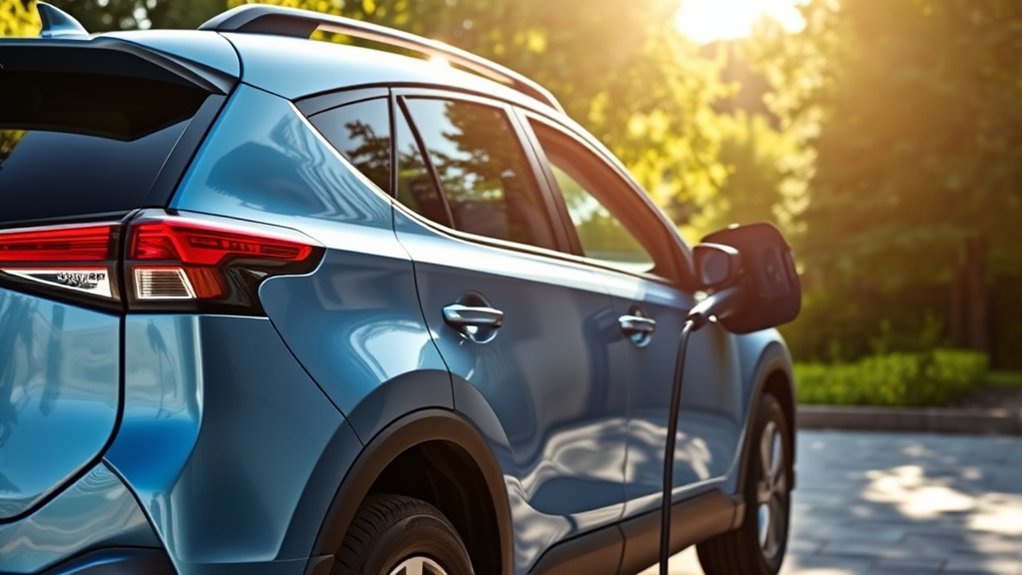
The standard RAV4 Hybrid is a practical option when you want improved fuel efficiency without planning around charging access. The plug-in model becomes more attractive when you have reliable charging and can use its electric range regularly.
Which RAV4 Fits a Daily Commute Better?
The standard hybrid may fit you better when:
- You park on the street or cannot install a charger.
- You want to refuel conventionally during trips.
- Your schedule makes routine charging inconvenient.
- You prefer a simpler transition from a gasoline vehicle.
The plug-in model may fit you better when:
- You can charge at home or work.
- Many daily trips fit within its electric range.
- You are willing to compare electric rates with gasoline prices.
- You want electric commuting with gasoline backup for longer travel.
Which RAV4 Works Better for Long Trips?
Both versions can handle long trips without requiring a charging stop. The standard RAV4 Hybrid operates as an HEV for the entire journey. The RAV4 Plug-in Hybrid uses gasoline-hybrid operation after the usable EV charge is consumed.
| Consideration | RAV4 Hybrid | RAV4 Plug-in Hybrid |
|---|---|---|
| Charging required to continue | No | No, gasoline-hybrid operation remains available |
| Best use of electric capability | Automatic assistance throughout the trip | Charge before departure, then continue in hybrid mode |
| Planning priority | Fuel stops | Fuel stops, with optional charging when convenient |
Debunking Myths About Hybrid Vehicles
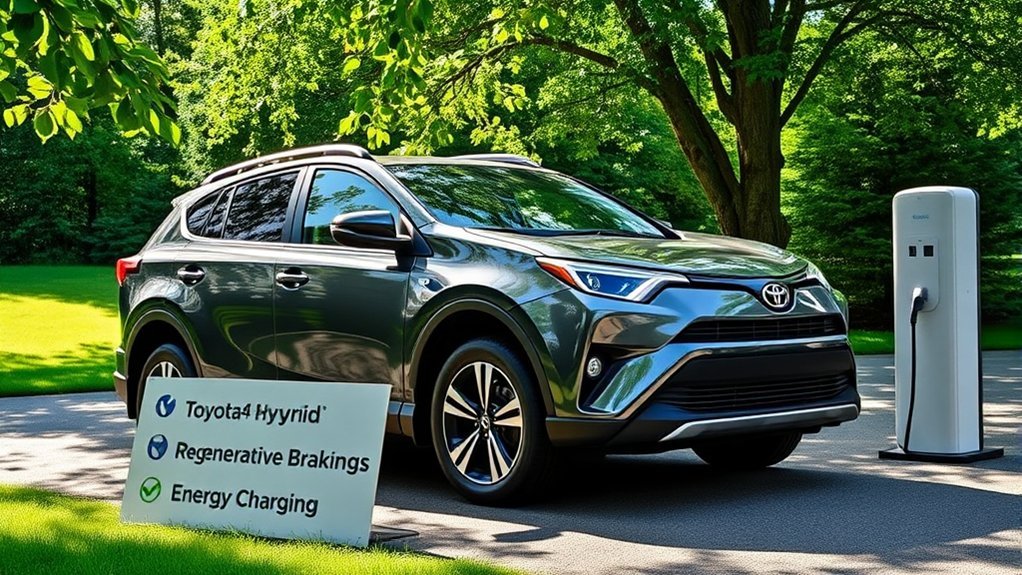
Hybrid terminology can make the two RAV4 powertrains sound more alike than they are. These corrections address the most common misunderstandings:
- Myth: Every hybrid must be plugged in.
The standard RAV4 Hybrid cannot be externally charged. Only the plug-in version has a charging inlet. - Myth: Regenerative braking fully charges the battery for long electric trips.
Regeneration recovers some energy, but a standard hybrid has a smaller usable electric reserve and is not designed for extended EV travel. - Myth: A low battery display means the hybrid will soon stop.
The system normally manages the traction battery by running the engine and recovering braking energy. - Myth: Owners should keep the hybrid battery near a chosen percentage.
The standard hybrid’s control system manages the battery automatically. - Myth: The battery warranty predicts when the battery will fail.
Warranty coverage defines repair protection. It is not a fixed replacement schedule. - Myth: A plug-in hybrid cannot continue once its EV range is used.
It transitions to gasoline-hybrid operation and can continue as long as it has fuel.
How to Maximize Your RAV4 Hybrid’s Efficiency
You cannot manually control the standard RAV4 Hybrid’s traction-battery percentage, but you can reduce unnecessary energy use:
- Accelerate smoothly instead of making repeated full-throttle starts.
- Release the accelerator early and brake gradually when traffic conditions permit.
- Maintain the tire pressures listed on the driver-door label.
- Remove unnecessary heavy cargo and external racks when they are not needed.
- Combine short errands when practical to reduce repeated cold starts.
- Use climate control reasonably, especially during very hot or cold weather.
- Follow the maintenance schedule for your exact model year.
Do not expect a fixed electric-only speed. The gasoline engine can start at low speed because of acceleration demand, battery temperature, cabin heating, defrosting, battery charge, or other system requirements.
Battery Warranty, Maintenance, and Safety
For U.S. Toyota hybrids beginning with the 2020 model year, Toyota covers the hybrid battery for 10 years or 150,000 miles from the original date of first use, whichever comes first. Other hybrid-system components have different coverage periods, and vehicles sold outside the United States can have different terms. Toyota lists the same hybrid-battery term in its 2026 RAV4 Hybrid warranty information.
Toyota’s 2026 RAV4 Warranty and Maintenance Guide lists scheduled maintenance at 5,000-mile or six-month intervals, whichever comes first. The exact services performed at each visit vary by mileage, time, and operating conditions.
Hybrid maintenance still includes familiar items such as tires, brakes, engine oil, filters, fluids, and inspections. Hybrid-specific components, including the battery cooling intake and electrical system, should be inspected or serviced according to the owner’s documentation.
Warning: Never open or modify the high-voltage traction battery, inverter, orange high-voltage wiring, or charging components. Have hybrid-system warnings and damaged charging equipment inspected by a qualified technician. Electrical work for home PHEV charging equipment should follow local codes and be completed by a qualified electrician.
What Should You Do If the Battery Gauge Is Low?
A low traction-battery display can be normal. When the vehicle is in READY mode and no warning appears, continue driving normally. The gasoline engine may start and generate electricity while regenerative braking adds charge during later deceleration.
Seek service when you see a hybrid-system warning, the vehicle cannot enter READY mode, performance is severely limited, or warning messages remain after restarting the vehicle according to the owner’s manual.
The traction battery and 12-volt battery are different components. The smaller 12-volt battery powers control systems and allows the hybrid system to start. A discharged 12-volt battery can prevent READY mode even when the high-voltage battery has energy. Follow the model-specific jump-start procedure rather than attempting to access the traction battery.
Frequently Asked Questions
Can I manually charge the RAV4 Hybrid battery?
You cannot connect a standard RAV4 Hybrid to an external charger. Regenerative braking, the gasoline engine, and the vehicle’s motor-generators manage the traction battery automatically. The RAV4 Plug-in Hybrid is the version with an external charging inlet.
Can I use an EV charging station for a regular RAV4 Hybrid?
No. A standard RAV4 Hybrid has no external charging port, so it cannot connect to an EV charging station. Public charging applies to the RAV4 Plug-in Hybrid or older RAV4 Prime, depending on the model year and compatible connector.
What type of fuel does the RAV4 Hybrid use?
For the 2026 U.S. RAV4, Toyota specifies unleaded gasoline with an octane rating of 87 (Research Octane Number 91) or higher. Check the fuel-door label and owner’s manual for your exact model year and country because specifications can vary. Using premium fuel does not automatically improve efficiency when the vehicle does not require it.
How long does the RAV4 Hybrid battery last?
No single replacement age applies to every battery. Lifespan depends on time, mileage, climate, cooling, use, and manufacturing variation. Current U.S. Toyota hybrid batteries receive 10-year or 150,000-mile warranty coverage, whichever comes first, but the warranty period is not a predicted failure date.
Is maintenance different for a RAV4 Hybrid?
Most routine work remains familiar, including oil changes, tire service, filters, fluids, brakes, and inspections. The hybrid also has high-voltage components, an inverter, and a battery cooling system that require model-specific inspection procedures. Owners should not service high-voltage parts themselves.
Can I tow with a RAV4 Hybrid?
Yes, but the limit depends on model year, grade, drivetrain, equipment, cargo, and trailer configuration. For 2026, Toyota lists up to 3,500 pounds for RAV4 Hybrid XLE, Woodland, SE, XSE, and Limited grades with AWD, plus Plug-in Hybrid SE, XSE, and Woodland. Toyota lists 1,750 pounds for FWD models and the LE AWD. Confirm your exact vehicle’s rating in its owner’s manual before towing. See Toyota’s 2026 RAV4 specifications.
Can the RAV4 Hybrid drive when the battery gauge looks empty?
A low displayed charge level does not usually mean the traction battery is physically empty. The hybrid system keeps a protected reserve and can run the gasoline engine to generate electricity. Follow any warning message if the vehicle reports a malfunction.
What happens when a RAV4 Plug-in Hybrid uses all its EV range?
The vehicle switches to hybrid operation and continues using gasoline, electric assistance, and regenerative braking. You do not have to stop and charge before continuing, provided the vehicle has fuel and no warning or malfunction is present.
Conclusion
You do not need to plug in a standard Toyota RAV4 Hybrid. Its engine, motor-generators, regenerative braking, and battery controls maintain the traction battery while you drive. Choose the RAV4 Plug-in Hybrid when you have convenient charging and want extended electric travel, but remember that model year, grade, weather, and driving conditions affect its rated and real-world range.
Whichever version you drive, follow the owner’s manual for fuel, maintenance, towing, warning messages, and battery safety. Avoid trying to manage the standard hybrid’s battery percentage or service its high-voltage components yourself. If your RAV4 has a charging port, use the model-year-specific steps in our RAV4 Plug-in Hybrid home charging guide.
Sources
- Toyota: Hybrid and Plug-In Hybrid Differences — hybrid operation and regenerative braking.
- Toyota: 2026 RAV4 Plug-in Hybrid — current EV-range and powertrain information.
- Toyota: 2025 RAV4 Plug-in Hybrid Naming Announcement — former Prime name and older-generation range.
- Toyota: 2026 RAV4 Warranty and Maintenance Guide — battery warranty and maintenance intervals.
- Toyota: 2026 RAV4 — current model and capability information.
- Toyota USA Newsroom: 2026 RAV4 Arrives This Winter — 2026 hybrid-system, towing, charging-port, and fast-charging details.
- Toyota: 2026 RAV4 Fuel Information — 87-octane-or-higher unleaded fuel requirement.
- U.S. Environmental Protection Agency: Passenger-Vehicle Greenhouse Gas Emissions — PHEV tailpipe and electricity-related emissions.

1 thought on “Do You Need to Charge a Toyota RAV4 Hybrid? How Hybrid Charging Really Works”