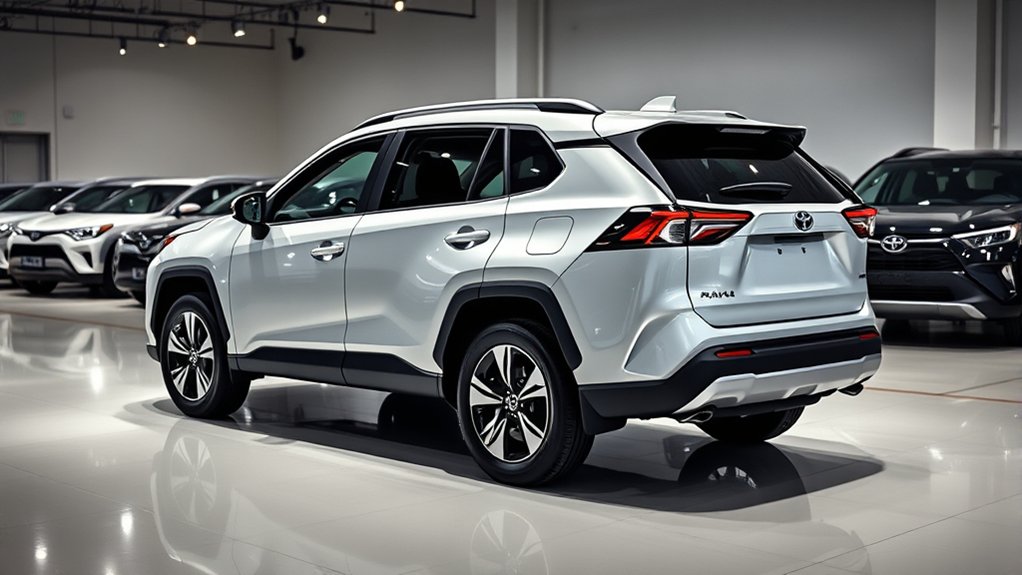
Does the Toyota RAV4 Have 3 Rows in 2026?
No. The 2026 U.S.-market Toyota RAV4 has two rows and seats five. Toyota last offered a factory third row on select U.S.-market third-generation RAV4s from the 2006 through 2012 model years. For 2012, Toyota documented the option as a two-passenger 50/50 Split-and-Stow® third-row seat that folded under the rear deck. If you regularly carry more than five people, a vehicle designed around three rows will provide easier access and more usable passenger space.
Last updated: September 22, 2026. Rechecked against Toyota U.S. information for the 2012, 2013, and 2026 RAV4.
Quick Answer
The 2026 Toyota RAV4 has five seats in two rows and no factory third-row option. In the United States, select 2006–2012 RAV4s could be factory-equipped with two additional rear seats for up to seven occupants. The third row was not standard, so verify the exact used vehicle rather than relying on its model year alone.
Key Takeaways
- The 2026 U.S.-market RAV4 is a five-seat, two-row compact SUV.
- Select 2006–2012 U.S.-market RAV4s offered a factory third row for up to seven occupants.
- Toyota documented the 2012 option as a 50/50 Split-and-Stow® third-row seat on RAV4 and Limited grades.
- Third-row availability varied by year, grade, configuration, and market, so verify any used vehicle individually.
- Do not install an unverified cargo-area seat in a RAV4 that was not factory-built for that seating position.
Which RAV4 Years Had Third-Row Seating?
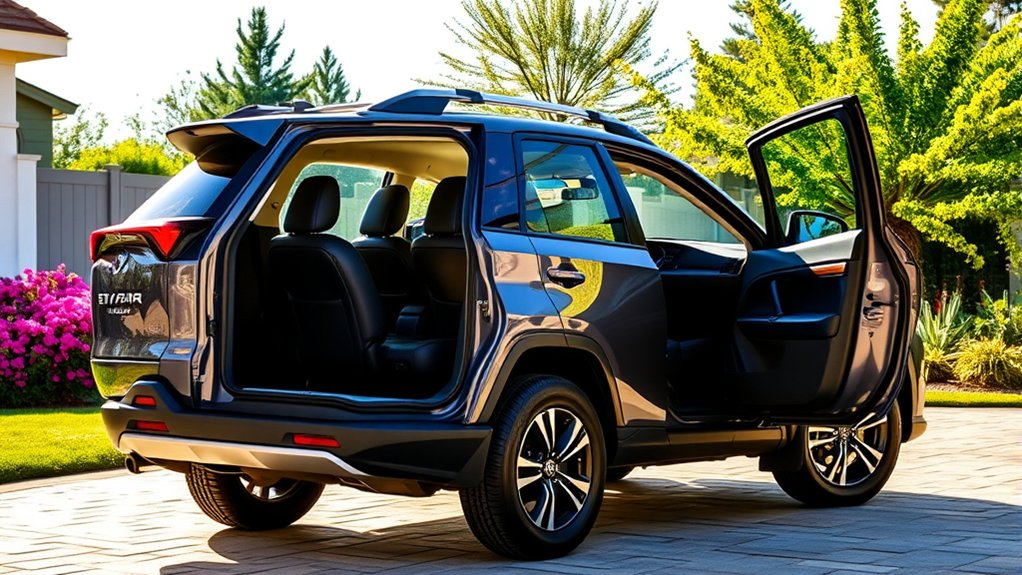
No current U.S.-market Toyota RAV4 offers third-row seating. Toyota lists the 2026 Toyota RAV4 with five seats, and Toyota describes the redesigned 2026 model as the RAV4’s sixth generation. It remains a two-row compact SUV rather than a seven-passenger model.
For U.S. shoppers, the factory three-row exception is the 2006–2012 third-generation RAV4. Toyota’s North American history describes that generation as the 2006–2012 model and confirms that the enlarged RAV4 offered optional third-row seating. Availability was not universal, so a model year alone does not prove that a particular vehicle has seven seats.
Note: Some sources call this the “2005 RAV4 generation” because Toyota unveiled and launched the third generation in parts of the world during 2005. In the United States, however, the redesigned vehicle was sold as a 2006 model.
| U.S. Model Years | Factory Third Row | Maximum Seating | What to Know |
|---|---|---|---|
| 2001–2005 | No | 5 | Second-generation U.S. RAV4s used a two-row layout. |
| 2006–2011 | Optional on select configurations | Up to 7 | Verify the individual vehicle; many were built with only two rows. |
| 2012 | Optional on RAV4 and Limited grades | Up to 7 | Toyota described a 50/50 Split-and-Stow® third row for two passengers. |
| 2013–2025 | No | 5 | The 2013 redesign returned the RAV4 to two-row seating. |
| 2026 | No | 5 | The sixth-generation RAV4 remains a two-row SUV. |
The current RAV4 is therefore best suited to individuals, couples, and small families who normally carry no more than five people. Shoppers who need a third row every week should compare larger Toyota models such as the Highlander, Grand Highlander, or Sequoia.
How Did RAV4 Third-Row Seating Work?
Toyota substantially enlarged the third-generation RAV4. Toyota’s North American RAV4 history identifies 2006–2012 as the third generation and says the enlarged model offered optional third-row seating. Toyota’s global RAV4 history also explains that some markets received short- and long-wheelbase versions, with the longer body able to accommodate a third row.
What Did Toyota Document for the 2012 RAV4 Third Row?
For the final year of the third generation, Toyota’s 2012 RAV4 product information described an optional 50/50 Split-and-Stow® third-row seat on RAV4 and Limited grades. It accommodated two passengers and folded flat under the rear deck, raising maximum seating to seven. In daily use, that layout had several practical limitations:
- The third row was considerably smaller than the rear seating in a purpose-built midsize three-row SUV.
- Access required passengers to move or fold part of the second row.
- Legroom and headroom were better suited to smaller passengers and occasional trips.
- Using the third row left less space behind the seats for luggage, groceries, or a stroller.
- Availability varied, and many RAV4s from these years were still built as five-seat vehicles.
Because of these limitations, the old RAV4 third row should be viewed as occasional overflow seating rather than a direct substitute for the third row in a Highlander, Pilot, or Grand Highlander.
When Did Toyota Stop Offering the RAV4 Third Row?
Toyota introduced the fourth-generation RAV4 for the 2013 model year with a two-row interior and a documented seating capacity of five. The third-row option did not return in the fifth generation introduced for 2019 or in the sixth-generation 2026 RAV4.
This change reinforced the RAV4’s position as a compact, five-passenger SUV. Toyota continued serving three-row buyers with larger vehicles designed around additional passenger capacity.
Why Was the Third-Row Option Discontinued?
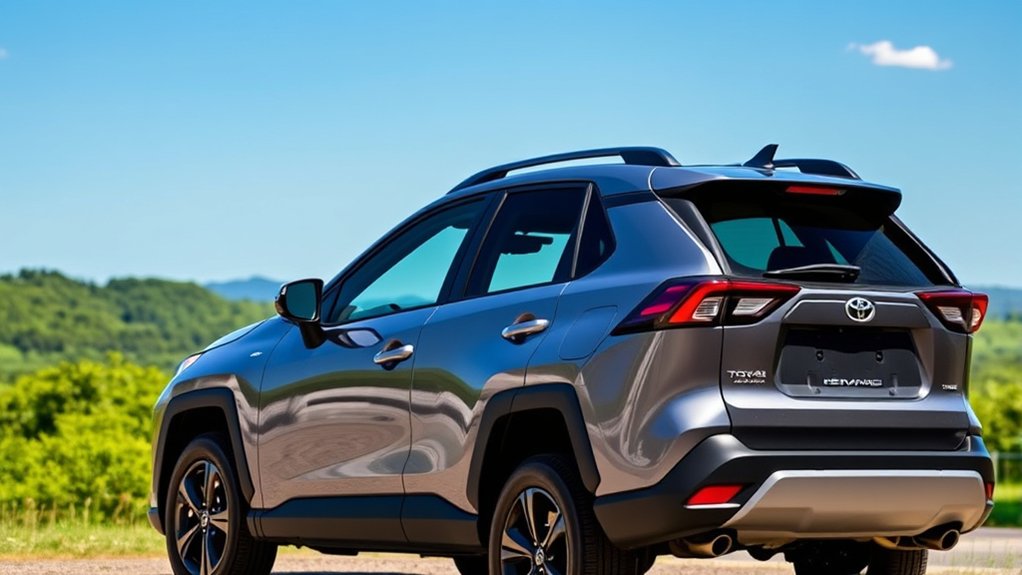
Toyota has not identified one single published reason for dropping the RAV4’s third-row option. What the model history does show is a clear product change: the 2013 redesign moved to two-row seating for five, while Toyota continued to sell larger vehicles for buyers who needed three rows. Packaging and model positioning are therefore reasonable context, but they should not be presented as a confirmed Toyota explanation.
A compact SUV has a limited amount of interior length. Adding another row means dividing that space among more passengers, shrinking cargo capacity, or increasing the vehicle’s exterior dimensions. The old RAV4’s third row provided extra seating, but it could not match the comfort and usability of a larger SUV engineered around three rows.
Was Low Demand the Reason?
There is no Toyota statement in the sources reviewed here that identifies low demand as the reason the third row disappeared. Treat that explanation as speculation. What is documented is Toyota’s lineup separation: the RAV4 remained a compact two-row SUV while larger Toyota models continued to cover three-row passenger needs.
That product separation gives shoppers several distinct choices:
- The RAV4 could remain a maneuverable and efficient two-row compact SUV.
- The Highlander and later Grand Highlander could provide more usable three-row family space.
- The Sequoia could serve buyers needing a larger body-on-frame SUV with substantial passenger and towing capability.
How Does a Third Row Affect Cargo Space?
The cargo tradeoff is unavoidable in a compact vehicle. A third-row seat and its supporting structure occupy space that would otherwise hold luggage. When the seats are in use, the remaining area behind them is limited; when folded, the hardware still takes up part of the cargo floor.
By contrast, the current two-row RAV4 offers up to 37.8 cubic feet of cargo capacity behind the second row, according to Toyota’s 2026 specifications. That gives five occupants a dedicated cargo area without needing to fold a third row.
Limitations of the RAV4’s Third-Row Seating
The factory third row found in some used 2006–2012 RAV4s can be useful, but buyers should evaluate it realistically rather than relying on the advertised seven-passenger capacity.
| Limitation | What It Means in Daily Use |
|---|---|
| Passenger space | Adults and taller teenagers may find knee, foot, and head space restrictive. |
| Access | Entering and leaving the rear row can be awkward, especially when child restraints occupy the second row. |
| Cargo room | Luggage space behind an occupied third row is limited. |
| Availability | Many RAV4s from the same years were built with only two rows, so listings must be verified. |
| Age of vehicle | Every factory three-row RAV4 is now an older used vehicle whose belts, latches, seat mechanisms, and recall history require inspection. |
The old RAV4 third row is best treated as occasional seating—not as a full-size rear row for regular adult use.
How to Verify a Factory Third-Row RAV4
Do not assume that every 2006–2012 RAV4 has seven seats. Before buying one, confirm that the individual vehicle was factory-equipped with the complete third-row system.
- Inspect the vehicle in person. Confirm that both rear seats, head restraints, folding mechanisms, and matching seat belts are present.
- Check the seating-capacity label and owner’s manual. The documented passenger capacity should match the installed seating positions.
- Request the VIN and original build information. Ask a Toyota dealer to check whether the vehicle’s original equipment records support the installed seating configuration.
- Look for factory-quality mounting and trim. Loose hardware, improvised brackets, cut carpeting, or mismatched panels are warning signs.
- Test the second-row access mechanism. Make sure the seat moves, locks, and returns securely.
- Inspect every restraint. Check belt webbing, buckles, retractors, anchors, and head restraints for wear, damage, or missing parts.
- Review open recalls. Search the VIN through Toyota and the NHTSA recall database.
- Arrange a pre-purchase inspection. Ask a qualified technician to examine the seating, restraint system, collision history, and underbody before purchase.
Pro Tip: Bring every regular passenger—and any child restraints you plan to use—to the test drive. Confirm that second-row seats can still move safely, belts fit correctly, and enough cargo room remains with all occupied seats upright.
Warning: Do not install an unverified rear-facing bench or other cargo-area seat in a RAV4 that was not factory-built for it. A seat alone does not provide validated belt anchorage, head protection, crash structure, or airbag integration. Use only documented seating positions and consult Toyota or a properly qualified vehicle modifier about any accessibility-related modification.
Is a RAV4 Without a Third Row Right for You?
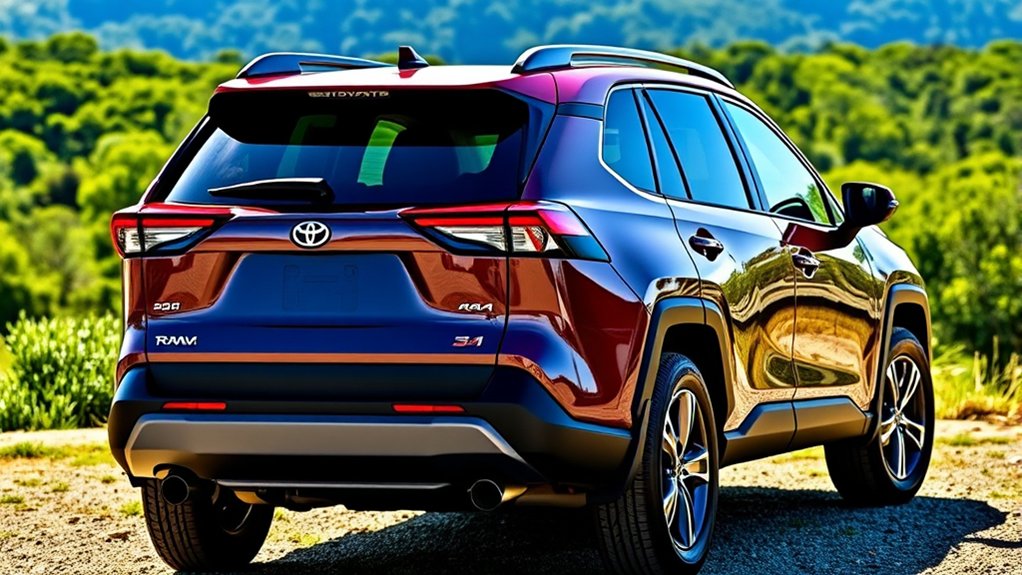
A two-row RAV4 can be an excellent fit when you normally carry five or fewer people. Its compact exterior is easier to park than a large three-row SUV, while its rear seat and cargo area support commuting, school trips, shopping, and light family travel.
The RAV4 is likely a good match when:
- You rarely need more than five seat belts.
- You value fuel efficiency and manageable exterior dimensions.
- You regularly carry luggage, sports equipment, groceries, or pets behind the second row.
- You prefer a compact SUV over a midsize or full-size model.
- You do not want to maintain an older vehicle solely to obtain occasional extra seats.
Choose a purpose-built three-row vehicle instead when:
- You transport six or more people every week.
- Adults or teenagers will regularly use the third row.
- You need third-row seating and useful cargo space at the same time.
- You have multiple child restraints that complicate access through the second row.
- You expect to keep the vehicle as your family grows.
Best Alternatives to the RAV4 With Third-Row Seating
Families needing more than five seats have several current alternatives. The best choice depends on whether you prioritize a compact footprint, adult-friendly third-row space, sliding-door access, all-weather traction, or towing. Seating capacity and features vary by trim, so verify the exact configuration before buying.
| Vehicle | Why Consider It | Best Fit |
|---|---|---|
| Toyota Highlander | A familiar Toyota alternative with three rows and gas or hybrid availability. | Families wanting a midsize step up from the RAV4. |
| Toyota Grand Highlander | Offers seating for up to eight and more cargo room behind the third row than many smaller SUVs. | Regular three-row use and family road trips. |
| Kia Sorento | Provides third-row availability in a relatively manageable exterior footprint. | Buyers needing occasional extra seats without moving to the largest class. |
| Honda Pilot | Its standard third row and available seating for up to eight support regular family use. | Families prioritizing passenger access and flexible seating. |
| Subaru Ascent | A standard three-row layout with all-wheel-drive-oriented family positioning. | Drivers who frequently encounter winter weather. |
| Ford Explorer | A larger three-row SUV with multiple powertrain and equipment choices. | Families wanting more space and stronger performance options. |
| Toyota Sienna | Offers three rows, seating for seven or eight depending on grade, and sliding-door access. | Families prioritizing easy passenger loading and regular third-row use. |
| Toyota Sequoia | A substantially larger body-on-frame Toyota with three rows and greater towing capability. | Large families, towing, and heavy-duty use. |
How Does the RAV4 Compare to Other SUVs With Third-Row Seating?
The current RAV4 and a purpose-built three-row SUV solve different problems. The RAV4 keeps five-seat packaging in a compact footprint. A three-row model adds passenger capacity but is usually longer and heavier, and some models provide much less cargo room when every seat is occupied.
| Consideration | Current RAV4 | Purpose-Built Three-Row SUV |
|---|---|---|
| Normal passenger capacity | Up to five | Usually six to eight, depending on configuration |
| Parking and maneuverability | Generally easier in urban areas | Requires more parking and turning space |
| Cargo with every seat occupied | Full cargo area remains behind row two | Varies widely; smaller models may have limited space behind row three |
| Third-row adult comfort | Not applicable on current models | Usually better, but should still be tested in person |
| Best use | Daily five-passenger driving and cargo versatility | Regular family transport involving more than five people |
Choosing the Right SUV for Your Family
Start with the number of passengers you carry regularly—not the maximum number you might carry once or twice a year. If six or more people ride with you every week, prioritize third-row access, restraint fit, and cargo space with all seats raised rather than choosing by advertised seating capacity alone.
Ask these questions before choosing:
- How many people ride in the vehicle during a normal week?
- Will adults, teenagers, or young children use the third row?
- Can passengers reach the rear row when child restraints are installed?
- How much cargo must fit when every seat is occupied?
- Do you need captain’s chairs or a second-row bench?
- Will older passengers be able to climb into and out of the rear row?
- Can the vehicle fit in your garage and usual parking spaces?
- What do NHTSA and IIHS report for the exact model year and configuration?
A RAV4 remains a strong choice when five seats are enough. When extra passengers are a normal part of daily life, buying a true three-row vehicle is usually more practical than searching for an aging RAV4 with occasional-use rear seats.
How Should You Test a Three-Row SUV at the Dealership?
A specification sheet cannot tell you whether a particular seating layout works for your household. Use the dealership visit to test the vehicle under realistic conditions.
- Confirm the exact trim. Seating capacity can change when captain’s chairs replace a bench.
- Use every seating position. Sit in the third row rather than judging it from the open liftgate.
- Test entry and exit. Move the second row as a passenger would during daily use.
- Bring child restraints. Verify installation, belt routing, lower-anchor access, and third-row entry.
- Measure cargo space with all rows upright. Confirm that your stroller, luggage, mobility equipment, or sports gear fits.
- Check outward visibility. Rear passengers should have adequate windows and a comfortable seating posture.
- Review the owner’s manual. Confirm seating, child-restraint, cargo, and towing limitations.
- Compare exact-year safety results. Search both NHTSA and the Insurance Institute for Highway Safety.
- Take a full-family test drive. Listen for complaints about access, knee room, belt fit, ride quality, and climate control.
Quick Decision Guide: RAV4 or Three-Row SUV?
The RAV4 is most compelling as a two-row compact SUV. Its manageable size and useful cargo area are advantages when your household needs no more than five seats. The old third-row option added flexibility, but its small dimensions and age make it a niche used-vehicle solution today.
| Your Main Need | Best Direction |
|---|---|
| Five seats, compact dimensions, and generous two-row cargo room | Current Toyota RAV4 |
| Occasional small-passenger overflow in a used vehicle | A carefully verified factory three-row 2006–2012 RAV4 |
| Three rows in a relatively manageable footprint | Kia Sorento or a similar smaller three-row SUV |
| Regular seven- or eight-passenger family use | Grand Highlander, Highlander, Honda Pilot, Subaru Ascent, or a comparable midsize model |
| Three rows plus substantial towing or heavy-duty capability | Toyota Sequoia or another appropriately equipped large SUV |
Related Guides
Frequently Asked Questions
What year did the RAV4 first offer third-row seating?
For the U.S. market, the optional third row arrived with the redesigned 2006 Toyota RAV4 and remained available on select configurations through 2012. Toyota introduced the third generation globally in 2005, which explains why some non-U.S. histories use a 2005 start date.
How does the RAV4’s cargo space compare with three-row SUVs?
The current two-row RAV4 provides up to 37.8 cubic feet behind its second row, according to Toyota. A three-row SUV may offer more total interior volume, but cargo room behind an occupied third row varies substantially. Compare the space with every seat in the position you will normally use.
Is the old RAV4 third row comfortable for adults?
Generally, it is better suited to smaller passengers and occasional trips. Adult comfort depends on height, seat position, and trip length, so every regular passenger should test the actual vehicle before purchase.
What are the safety ratings for a RAV4 without a third row?
There is no single rating that applies to every RAV4. Results vary by model year, crash test, equipment, and sometimes trim or headlight configuration. Check the exact year on the NHTSA ratings site and the IIHS vehicle-ratings database.
Can I add aftermarket third-row seating to a RAV4?
A non-factory cargo-area seat is not recommended. It may lack validated seat-belt anchors, head restraints, crash protection, and integration with the vehicle’s structure and restraint systems. Use only documented factory seating positions. Accessibility-related modifications should be handled through Toyota and a properly qualified vehicle modifier.
Does the RAV4 Hybrid or RAV4 Plug-in Hybrid have a third row?
No. Current RAV4 Hybrid and RAV4 Plug-in Hybrid configurations use a two-row layout. Buyers wanting an electrified Toyota with three rows should compare current Highlander Hybrid and Grand Highlander Hybrid configurations.
Conclusion
The current Toyota RAV4 does not have third-row seating. Certain U.S.-market RAV4s from the 2006–2012 model years offered a small factory third row, but it was best suited to occasional use and reduced cargo flexibility. Verify any used example carefully, avoid unapproved seating modifications, and choose a purpose-built three-row SUV when carrying more than five people is a regular need.
Sources
- Toyota — 2026 RAV4 — current U.S. cargo and model information.
- Toyota USA Newsroom — All-New 2026 RAV4 Debut — confirms the 2026 model as the sixth-generation RAV4.
- Toyota USA Newsroom — 25 Years of the RAV4 in North America — identifies the 2006–2012 third generation and its optional third row.
- Toyota USA Newsroom — 2012 RAV4 Product Information — documents the optional two-passenger 50/50 Split-and-Stow® third row on RAV4 and Limited grades.
- Toyota USA Newsroom — All-New 2013 RAV4 Pricing — documents two-row seating for five.
- Toyota UK — Toyota RAV4 History — global generation history and long-wheelbase third-row packaging.
- National Highway Traffic Safety Administration — Seat Belt Safety — restraint-use and seat-belt-fit guidance.
- National Highway Traffic Safety Administration — Vehicle Safety Ratings — model-year-specific federal crash-test information.
- Insurance Institute for Highway Safety — Vehicle Ratings — crashworthiness, crash-prevention, restraint, and headlight evaluations.
- Toyota — 2026 Grand Highlander — current three-row Toyota alternative.

