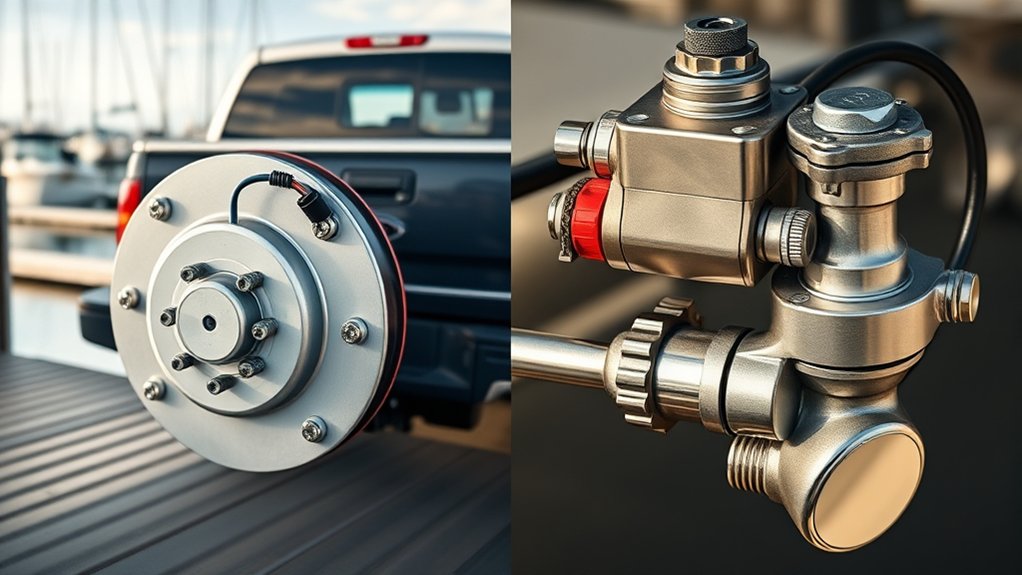
Electric and surge trailer brakes can both stop a properly matched trailer safely, but they respond in different ways. Electric brakes give you more adjustment from the tow vehicle, while surge brakes operate automatically through a hydraulic coupler. Your best choice depends on the trailer’s design, loaded weight, towing terrain, reverse system, water exposure, hitch compatibility, and applicable laws.
Last updated: September 22, 2026 — rechecked Dexter manuals, surge-brake reverse guidance, hitch-compatibility guidance, and federal commercial brake rules.
Quick Answer
Electric trailer brakes are usually the stronger choice when you need adjustable, driver-controlled braking for RVs, cargo trailers, changing loads, or steep routes. Surge brakes suit many boat and rental trailers because they are self-contained and need no conventional in-cab controller. There is no universal winner: choose by trailer design, legal requirements, reverse operation, water exposure, hitch compatibility, and maintenance.
Key Takeaways
- Electric brakes offer more adjustment: A compatible controller lets you change brake output for load and road conditions.
- Surge brakes operate automatically: Trailer momentum compresses a hydraulic actuator when the tow vehicle slows.
- Not every electric controller is proportional: Time-delayed controllers and proportional controllers respond differently.
- Reverse operation matters: Some surge systems need free-backing drum brakes or an electric reverse-lockout solenoid.
- Hitch compatibility matters with surge brakes: The actuator must remain free to telescope, so verify any weight-distribution or sway-control equipment with its manufacturers.
- Legal requirements vary: Check the rules for your jurisdiction, trailer weight, axle configuration, and commercial or private use.
Affiliate disclosure: GoMyReview may earn a commission from qualifying purchases made through affiliate links, at no additional cost to you.
How this comparison was made: This guide compares activation method, driver adjustment, changing loads, reverse operation, water exposure, hitch compatibility, maintenance, breakaway equipment, and current federal commercial rules. It is based on manufacturer documentation and regulations and does not claim a controlled stopping-distance test.
Understanding Trailer Brake Systems: Electric vs. Surge
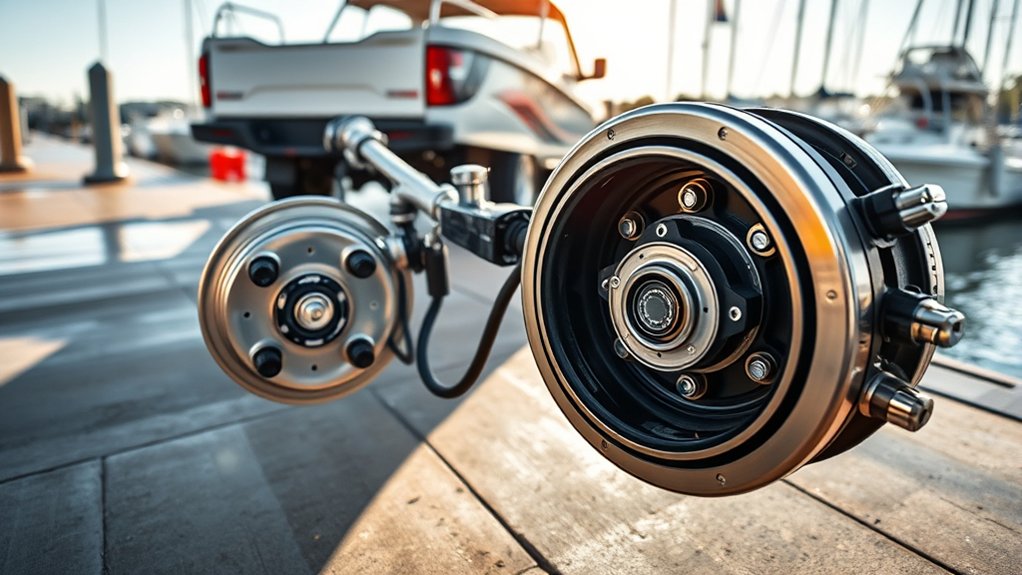
Electric and surge brakes both use friction at the trailer wheels, but they create that braking force differently. Conventional electric trailer brakes use electromagnets inside drum assemblies. A controller in the tow vehicle sends current to the magnets, which move the brake shoes against the drums. Increasing electrical output increases braking force.
Dexter’s light-duty trailer service manual explains that electric brakes can be adjusted for changing loads and road conditions. Many controllers also include a manual control that can apply trailer braking separately when the controller manufacturer allows it.
Surge brakes use a hydraulic actuator built into the trailer coupler. When the tow vehicle slows, the trailer pushes forward against the coupler. The actuator compresses and sends hydraulic pressure through the brake lines to drum or disc brakes. The Dexter surge-actuator manual describes this action as the trailer’s push automatically activating the hydraulic system.
Proportional and Time-Delayed Electric Controllers
Electric trailer brakes do not automatically provide proportional braking. Their behavior depends on the controller.
- Proportional controllers detect tow-vehicle deceleration or use vehicle brake data to increase trailer braking in proportion to the stop.
- Time-delayed controllers increase output according to a preset rate after you press the brake pedal.
- Integrated factory controllers may communicate with the tow vehicle’s braking and stability systems, but compatibility varies by vehicle and trailer actuator.
A proportional controller usually gives smoother response when load and terrain change. A time-delayed controller can still work when installed and adjusted correctly, but its response is based on settings rather than measured deceleration. If you tow with a compatible Toyota Tundra, see our Toyota Tundra Integrated Trailer Brake Controller guide for a vehicle-specific example.
Electric vs. Surge Brakes at a Glance
| Comparison Point | Electric Trailer Brakes | Surge Brakes |
|---|---|---|
| How they activate | A controller sends electrical current to brake magnets. | Trailer movement compresses a hydraulic coupler actuator. |
| Driver adjustment | Gain and response can be adjusted through a compatible controller. | No normal in-cab gain adjustment because pressure follows coupler movement. |
| Tow-vehicle equipment | Controller, suitable wiring, connector, ground, and often a breakaway battery. | Hydraulic actuator and lines; some systems also need reverse-lockout wiring. |
| Independent control | Many controllers provide a manual trailer-brake control. | The driver normally cannot apply the trailer brakes independently. |
| Backing up | Normal backing is usually possible when the system is operating correctly. | May require free-backing drums or an electric reverse-lockout solenoid. |
| Water exposure | Repeated submersion can increase corrosion concerns unless the brake and electrical components are designed and maintained for that environment. | Common on boat trailers, but marine-rated hydraulic components still need flushing, inspection, and corrosion control as specified by the manufacturer. |
| Weight-distribution or sway-control equipment | Brake activation does not depend on a sliding surge coupler, but the hitch and trailer still must be compatible with the tow vehicle and each other. | The actuator must remain free to telescope. Use only weight-distribution or sway-control equipment approved for the specific actuator and hitch. |
| Common applications | Travel trailers, cargo trailers, equipment trailers, and variable loads. | Boat trailers, rental trailers, and trailers designed around hydraulic braking. |
| Main service areas | Controller, wiring, grounds, magnets, shoes, drums, and breakaway battery. | Fluid, actuator, seals, lines, cylinders or calipers, friction parts, and breakaway cable. |
| Best reason to choose | You want adjustable braking for changing loads and conditions. | Your trailer is designed for a self-contained hydraulic system. |
Why Electric Trailer Brakes Might Be Right for You
Electric trailer brakes are a strong choice when you tow changing loads or want to adjust trailer braking from the driver’s seat. Correctly set gain can reduce the feeling that the trailer is pushing the tow vehicle during a stop. It can also prevent excessive trailer braking that causes wheel lockup or harsh engagement.
Many electric controllers include a manual control. This can apply trailer braking without pressing the tow vehicle’s brake pedal, but you should use it only as directed by the controller manufacturer. It does not replace correct loading, safe speed, functioning tow-vehicle brakes, or sway prevention.
Advantages of Electric Trailer Brakes
- You can adjust brake output for different trailer loads.
- A proportional controller can provide smooth braking during light and hard stops.
- Electrical faults can often be diagnosed by checking controller codes, voltage, current, wiring, connectors, and grounds.
- The system can include a dedicated battery-operated breakaway switch.
- Many tow vehicles are available with factory wiring or an integrated controller.
Limitations of Electric Trailer Brakes
- The tow vehicle needs a compatible controller and suitable wiring.
- Corroded connectors, weak grounds, damaged wires, low voltage, or incorrect adjustment can reduce braking.
- Drum magnets, shoes, armature surfaces, and adjusters require inspection and service.
- Regular water submersion can increase corrosion concerns if the system was not designed and maintained for marine use.
- A controller that is set too aggressively can cause harsh braking or wheel lockup.
Pro Tip: Set the controller according to its manual in a clear, level, dry area away from traffic and pedestrians. Recheck the setting whenever trailer load, road grip, tires, or brake condition changes.
Surge Brakes: Advantages and Limitations Explained
Surge brakes are self-contained hydraulic systems. They do not need a conventional in-cab electric brake controller because the coupler senses the trailer pushing toward the tow vehicle. This design makes it easier to move some trailers between compatible tow vehicles.
Hydraulic surge brakes are common on boat trailers because hydraulic disc components can be selected for marine exposure. However, water and salt still promote corrosion. The actuator, coupler, brake lines, fasteners, calipers, cylinders, rotors, drums, and electrical reverse-lockout connections all need suitable protection and maintenance.
Advantages of Surge Brakes
- Operation begins automatically when the trailer compresses the actuator.
- No conventional dashboard brake controller is required.
- The system stays with the trailer when you change tow vehicles.
- Hydraulic disc configurations can provide strong braking and straightforward visual pad inspection.
- The design works well for trailers engineered around a surge coupler.
Limitations of Surge Brakes
- You normally cannot change gain from the driver’s seat.
- You cannot usually apply the trailer brakes independently to correct a developing handling problem.
- Air, leaks, contaminated fluid, corroded lines, damaged seals, or a sticking actuator can reduce braking.
- Backing may activate the brakes unless the system uses free-backing drums or a reverse-lockout solenoid.
- Some surge actuators provide limited or no trailer braking while backing downhill, so you must follow the actuator manufacturer’s instructions.
Cold weather alone does not make every surge system unsuitable. The more useful concerns are fluid condition, absorbed moisture, corrosion, damaged hoses or lines, seal condition, and whether the components are approved for the expected operating temperature. Use only the fluid type specified by the actuator manufacturer.
Note: A surge system may not be completely electrical-free. Hydraulic disc actuators often use a solenoid connected to the tow vehicle’s reverse-light circuit so you can back up without applying the trailer brakes.
Can You Use a Weight Distribution Hitch With Surge Brakes?
Sometimes, but only when the surge actuator and hitch manufacturers approve the combination. A surge actuator must be free to telescope as the trailer pushes toward the tow vehicle. A control device that restricts that travel can interfere with brake operation. A surge-actuator installation manual hosted by NHTSA specifically warns against devices that restrict actuator movement while allowing weight-distribution hitches designed for surge-brake use. Verify the exact actuator, hitch, and sway-control instructions rather than assuming every weight-distribution system is compatible.
What About Electric-Over-Hydraulic Trailer Brakes?
Electric-over-hydraulic systems combine driver-controlled electrical input with hydraulic wheel brakes. A compatible brake controller sends a signal to an electric hydraulic actuator on the trailer. The actuator then pressurizes hydraulic disc or drum brakes.
This setup can provide hydraulic braking with in-cab adjustment, making it useful on heavier trailers and some premium boat, equipment, or RV applications. It also adds cost and complexity. The controller, actuator, hydraulic pressure requirements, brake type, wiring, battery, and breakaway system must all be compatible.
Do not assume that every factory or aftermarket controller supports electric-over-hydraulic operation. Check both manufacturers’ compatibility instructions before buying or converting components.
Choosing the Right Brake System for Towing
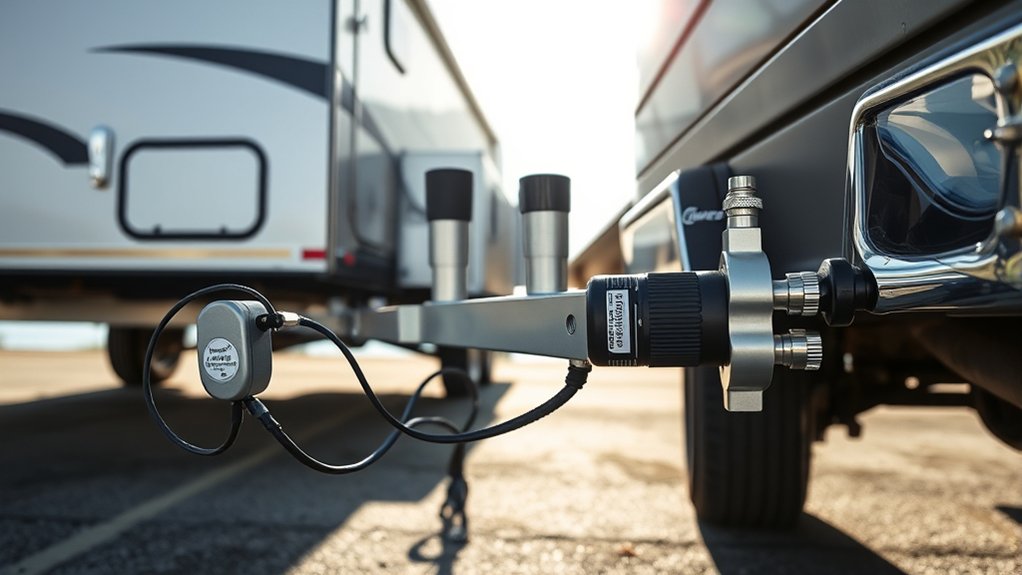
Start with the trailer manufacturer’s approved brake design. Changing from surge to electric, or from electric to hydraulic, may require new wheel-brake assemblies, an actuator or controller, wiring, brake lines, a coupler, a breakaway system, and compatible hubs or drums.
The best trailer brake system is not simply the strongest type. It is the system correctly matched to the trailer, tow vehicle, loaded weight, legal requirements, and operating conditions.
- Check the approved system: Confirm the brake type, axle rating, wheel-brake size, actuator capacity, and controller requirements listed by the trailer manufacturer.
- Use actual loaded weight: Consider the trailer, cargo, water, fuel, batteries, accessories, and equipment you will carry.
- Review your towing conditions: Frequent hills, changing cargo, stop-and-go driving, highway use, and wet launches can affect your choice.
- Check tow-vehicle compatibility: Confirm connector type, controller support, towing capacity, gross combined rating, hitch rating, and electrical requirements.
- Consider reverse operation: Verify how a surge system prevents unwanted braking while backing.
- Check hitch compatibility: If the trailer uses surge brakes, verify that any weight-distribution or sway-control equipment lets the actuator move as designed.
- Compare maintenance duties: Choose a system you can inspect and service at the intervals required by its manufacturer.
- Verify applicable law: Check every jurisdiction in which you plan to tow, especially when crossing state, provincial, or national borders.
Choose electric brakes when you need adjustable output, regularly change loads, tow an RV or cargo trailer, or want a controller with manual trailer-brake activation.
Choose surge brakes when the trailer was designed for a hydraulic coupler, you want to use it with multiple compatible tow vehicles, or you need a marine-oriented hydraulic setup without a conventional in-cab controller.
Consider electric-over-hydraulic brakes when you want hydraulic wheel brakes combined with compatible electronic control and are prepared for the added installation and maintenance requirements.
Brake Laws and Breakaway Systems
Do not rely on a single weight threshold found online. Trailer-brake requirements can depend on jurisdiction, actual weight, rated weight, axle count, trailer type, tow-vehicle weight, stopping performance, and whether the combination is used commercially.
The federal rules in 49 CFR §393.42, §393.43, and §393.48 apply to covered commercial motor vehicles. They should not be treated as the complete rule for every private recreational or utility trailer.
Federal commercial example: Under §393.48(d), surge brakes are allowed on a covered trailer with a GVWR of 12,000 pounds or less when the trailer GVWR does not exceed 1.75 times the towing vehicle’s GVWR. For a covered trailer with a GVWR greater than 12,000 pounds but less than 20,001 pounds, the trailer GVWR must not exceed 1.25 times the towing vehicle’s GVWR. These ratios are federal commercial conditions, not universal private-trailer brake thresholds.
Where a breakaway system is required, it must apply the trailer brakes if the trailer separates from the tow vehicle. Conventional electric systems commonly use a charged battery, switch, and pull pin. Hydraulic surge systems commonly use a mechanical cable that activates the actuator.
For trailers covered by the federal commercial rule in §393.43(d), brakes that are required on the trailer generally must apply automatically and immediately upon breakaway and remain applied for at least 15 minutes, subject to the regulation’s listed exceptions. Private recreational and utility-trailer rules can differ by state or other jurisdiction.
Warning: Never use a breakaway system as a parking brake. Attach its cable to the tow vehicle as directed, not to the safety chains, and test the system according to the trailer and brake manufacturer’s instructions before towing.
This article provides general safety information, not legal advice. Check the current law enforced where you register and operate the trailer.
Braking Safely on Hills and Long Descents
Electric brakes are not immune to heat, and surge brakes do not automatically overheat on every hill. Both systems use friction at the wheels, so prolonged braking can raise drum, rotor, shoe, pad, magnet, actuator, and fluid temperatures.
Tow-vehicle and trailer brakes work together to stop the combination. Poor trailer-brake adjustment or fade can shift more of the braking demand to the tow vehicle. If you tow with a Tundra, our guide to Toyota Tundra brake fade when towing explains additional heat-management and controller checks.
- Reduce speed before the descent.
- Use the tow vehicle’s recommended lower gear or descent-control mode.
- Leave more following distance.
- Avoid riding the brakes continuously when the vehicle manufacturer recommends controlled brake applications instead.
- Stop safely if you notice fading, smoke, a burning smell, pulling, unusual controller readings, or a change in pedal feel.
- Allow overheated components to cool before inspection. Do not touch drums, rotors, hubs, or calipers with bare hands.
Never exceed the tow vehicle, hitch, trailer, axle, tire, or brake-system ratings. A larger or more adjustable brake system cannot correct an overloaded or badly balanced combination.
Maintenance Tips for Electric and Surge Trailer Brakes
Inspect the complete braking system, not only the shoes or pads. Service intervals vary by manufacturer, mileage, storage conditions, water exposure, and towing frequency.
Electric Brake Maintenance
- Inspect the controller, connector, grounds, wires, splices, and breakaway battery.
- Check for damaged insulation, loose terminals, corrosion, low voltage, and uneven magnet current.
- Inspect drum surfaces, magnets, shoes, springs, adjusters, and backing plates.
- Adjust non-self-adjusting brakes at the interval specified by the axle or brake manufacturer.
- Replace worn or contaminated friction parts in balanced axle sets when required.
- Follow the specified burnishing procedure after installing new shoes, magnets, drums, or complete brake assemblies.
Dexter advises adjusting applicable manually adjusted electric brakes after their initial seating period and at specified mileage intervals. Its manual also recommends immediate inspection when performance drops and generally describes annual servicing as suitable for normal use, with more frequent service for heavier use.
Surge Brake Maintenance
- Check the actuator for smooth movement, corrosion, damage, and binding.
- Inspect the master-cylinder fluid level and use only the specified fresh brake fluid.
- Look for leaks, cracked hoses, corroded metal lines, damaged fittings, and seized wheel components.
- Inspect pads, shoes, drums, rotors, calipers, wheel cylinders, and mounting hardware.
- Test the reverse-lockout system where fitted.
- Check the breakaway cable and confirm the emergency mechanism is released before towing.
- After marine exposure, follow the trailer manufacturer’s flushing and corrosion-control instructions.
Warning Signs That Need Immediate Inspection
- The trailer pushes the tow vehicle during normal stops.
- The brakes grab, lock, pulse, drag, or pull to one side.
- The controller reports a connection or overload fault.
- The actuator repeatedly slams, sticks, or remains compressed.
- Brake fluid falls below its normal level.
- You find fluid near a line, cylinder, caliper, or actuator.
- A wheel, hub, drum, or rotor becomes much hotter than the others.
- Stopping performance changes after launching, storage, repairs, or a load change.
Warning: Never work beneath a trailer supported only by a jack. Use properly rated stands at the lifting and support points specified by the trailer manufacturer. Brake work involves safety-critical components, so use a qualified trailer technician when you lack the correct tools or procedure.
Related Guides
Frequently Asked Questions
Which Is Better, Surge Brakes or Electric Brakes on a Trailer?
Electric brakes are usually better when you need adjustable output for changing loads, hills, RVs, or cargo trailers. Surge brakes can be better for a trailer designed around a self-contained hydraulic actuator, especially some boat and rental trailers. Compatibility and maintenance matter more than choosing one type by reputation alone.
Is Regenerative Braking the Same as Electric Trailer Braking?
No. Regenerative braking uses a hybrid or electric vehicle’s drive motor to recover energy during deceleration. Conventional electric trailer brakes use electrical current to energize magnets that apply friction brakes inside the trailer’s drums. The two systems have different parts and purposes.
How Good Are Surge Brakes?
A correctly sized and maintained surge system can provide effective trailer braking. Performance depends on actuator condition, hydraulic pressure, fluid, brake lines, wheel components, load, and correct matching of drum or disc brakes. Its main limitation is the lack of normal in-cab adjustment or independent manual control.
Are Electric Trailer Brakes Better?
They often provide more control because you can adjust output with a compatible controller. That advantage disappears when wiring, grounds, magnets, adjustment, or controller settings are poor. Electric brakes are not automatically safer than a correctly designed and maintained hydraulic system.
Do Surge Brakes Work When Backing Up?
Coupler compression during backing can apply surge brakes. Many systems prevent this with free-backing drum brakes or an electric reverse-lockout solenoid. Operation varies by actuator and brake design, so follow the trailer manufacturer’s procedure, especially when backing uphill or downhill.
Does a Trailer With Electric Brakes Need a Brake Controller?
Conventional electric trailer brakes need a compatible controller or approved integrated tow-vehicle system to regulate brake output. Electric-over-hydraulic actuators also require a controller that specifically supports that actuator type. A basic lighting connection alone does not control electric trailer brakes correctly.
Can Electric Brakes Be Converted to Surge Brakes?
A conversion may be possible, but it is not usually a simple component swap. You may need a rated surge coupler, hydraulic lines, compatible hubs or rotors, wheel brakes, a reverse system, and a hydraulic breakaway mechanism. Confirm the design with the trailer and axle manufacturers or a qualified trailer shop.
Are Surge Brakes Good for Boat Trailers?
Surge hydraulic brakes are common on boat trailers because the braking system is self-contained and marine-oriented hydraulic disc components are available. They are not maintenance-free: water and salt can still corrode actuators, lines, fasteners, calipers, rotors, and reverse-lockout connections, so follow the trailer and brake manufacturers’ flushing and service instructions.
Can You Use a Weight Distribution Hitch With Surge Brakes?
Sometimes. The surge actuator must remain free to telescope, so use only a weight-distribution or sway-control setup approved by the actuator and hitch manufacturers. A device that restricts actuator travel can interfere with braking.
Conclusion
Electric trailer brakes usually make sense when you value adjustable braking, carry changing loads, or tow on varied terrain. Surge brakes remain a practical choice for trailers designed around a hydraulic actuator, including many boat and rental trailers. Electric-over-hydraulic systems offer another option when you want electronic control with hydraulic wheel brakes.
Choose the system that matches the trailer, tow vehicle, loaded weight, operating environment, hitch equipment, and applicable law. Correct installation, controller or actuator setup, breakaway equipment, pre-trip testing, and regular maintenance affect safety more than the name of the brake type.
Sources
- Dexter Light Duty 600-8K Complete Service Manual — electric and hydraulic brake operation, controller setup, adjustment, inspection, troubleshooting, and maintenance.
- Dexter Light Duty Surge Actuator Installation Manual — surge-actuator operation, reverse solenoids, brake fluid, breakaway cables, testing, and towing cautions.
- NHTSA-hosted surge-brake actuator installation manual — actuator movement and weight-distribution or sway-control compatibility guidance.
- 49 CFR §393.42 — federal commercial motor-vehicle brake requirements and listed exceptions.
- 49 CFR §393.43 — breakaway and emergency-braking requirements for covered commercial trailers.
- 49 CFR §393.48 — operative-brake requirements and federal commercial conditions allowing surge brakes.