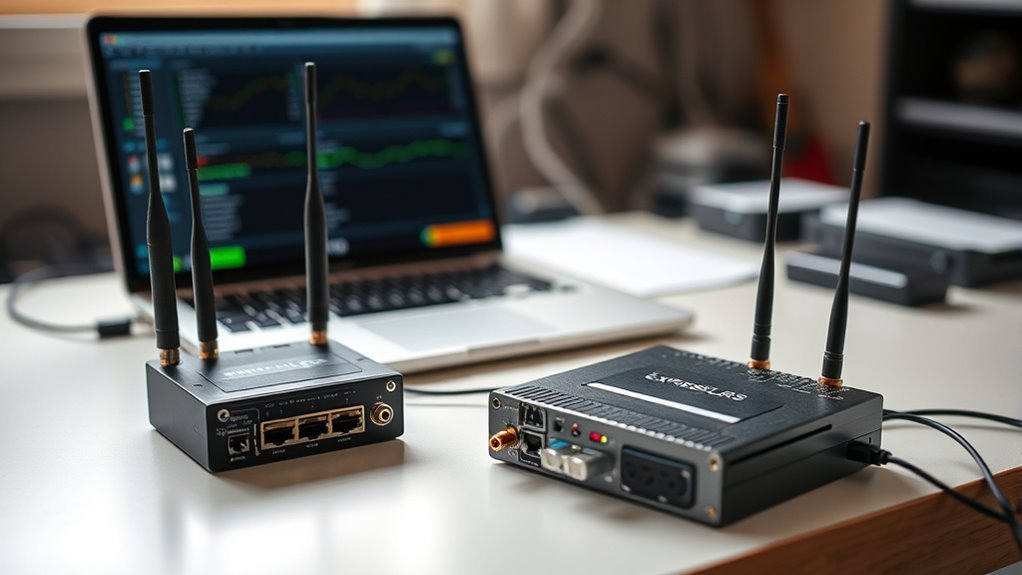
ExpressLRS devices can use different IP addresses depending on how their WiFi connection is configured. When a receiver or TX module creates its own WiFi access point, the Web UI is normally available at 10.0.0.1. When the device joins a home WiFi network instead, the router assigns an address through DHCP. Knowing which mode is active is the key to finding the Web UI quickly and avoiding misleading IP-conflict diagnoses.
Quick Answer
ExpressLRS normally uses 10.0.0.1 when you connect directly to its ExpressLRS RX or ExpressLRS TX WiFi access point. On home WiFi, the router assigns an address by DHCP; try elrs_rx.local or elrs_tx.local, or find the device in the router’s DHCP list.
Key Takeaways
- 10.0.0.1 is the normal ExpressLRS access-point address, not the address the device necessarily uses on your home network.
- The default WiFi access points are normally named
ExpressLRS RXandExpressLRS TX, withexpresslrsas the WiFi password. - On home WiFi, try
elrs_rx.localfor a receiver orelrs_tx.localfor a transmitter before searching the router’s DHCP list. - Two ELRS devices can each use
10.0.0.1on their own separate access points without creating a normal same-LAN duplicate-IP conflict. - TX and RX firmware must use compatible major versions; check the official release and binding documentation before updating.
At a Glance
| Time Required | Usually a few minutes for basic Web UI access; longer if firmware recovery is required |
| Difficulty | Easy for normal WiFi access; moderate for firmware troubleshooting |
| Tools Needed | Phone, tablet, or computer with compatible WiFi; router access may help in home-WiFi mode |
| Cost | Usually $0 if no repair adapter or replacement hardware is needed |
Warning: If you are powering a receiver through an aircraft or multirotor during setup, remove the propellers before bench work. When flashing firmware, select the exact hardware target and the regulatory domain appropriate for where the equipment will be used.
How ExpressLRS IP Addresses Work
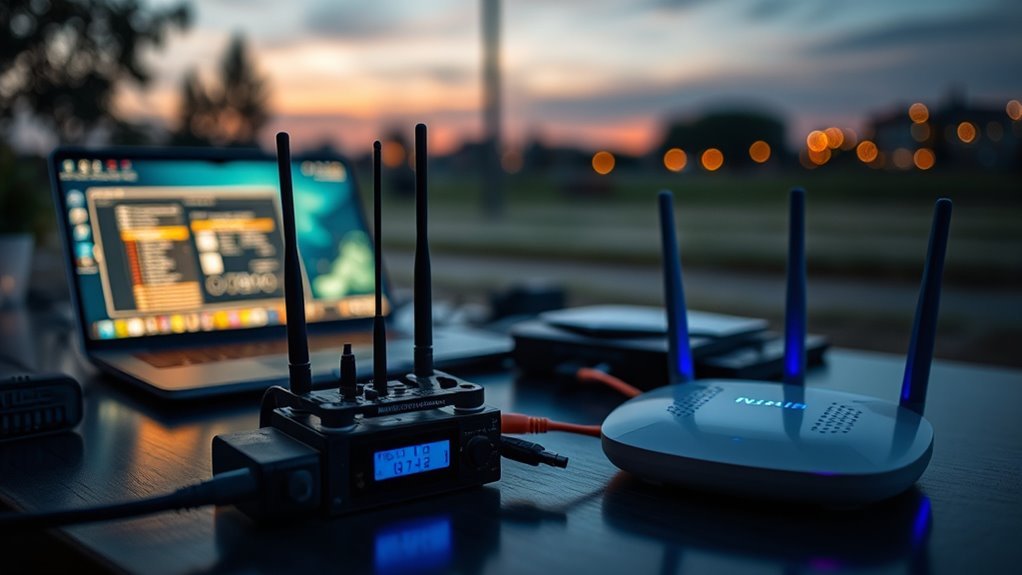
ExpressLRS WiFi behavior is easiest to understand as two separate connection modes: the device can create its own access point, or it can connect to an existing WiFi network.
When an RX or TX creates its own ExpressLRS access point, connect your phone or computer directly to that WiFi network and open http://10.0.0.1/. The official ExpressLRS Web UI documentation lists this address for both receiver and transmitter access-point mode.
The WiFi network normally appears as ExpressLRS RX for a receiver or ExpressLRS TX for a transmitter. The default password for these access points is expresslrs.
If the ExpressLRS device has been configured with home-WiFi credentials and successfully joins that network, it no longer needs to use 10.0.0.1 from your computer’s point of view. Your router supplies the device with an address through DHCP.
On a home network, ExpressLRS also provides convenient local hostnames:
http://elrs_rx.localfor a receiverhttp://elrs_tx.localfor a transmitter
These names depend on mDNS support. If a computer, browser, or router cannot resolve them, use the numerical DHCP address instead.
Note: If you previously saved home-WiFi credentials and the ELRS device can connect to that network, its ExpressLRS RX or ExpressLRS TX hotspot may not appear. That can be normal behavior rather than a failed WiFi radio.
ExpressLRS Hotspot vs Your Home WiFi
Access-point mode and home-WiFi mode reach the same Web UI in different ways. The correct address depends on which network the ExpressLRS device is currently using.
| Mode | What Happens |
|---|---|
| ExpressLRS access point | Connect directly to ExpressLRS RX or ExpressLRS TX, then open 10.0.0.1. |
| Home WiFi | The router gives the ELRS device a DHCP address. Try elrs_rx.local or elrs_tx.local, or check the DHCP list. |
| mDNS unavailable | Use the numerical address shown in the router’s DHCP client list or identify it with network tools such as arp -a. |
| Saved home WiFi connects successfully | The standalone ExpressLRS hotspot may not appear because the device has joined the configured network instead. |
You do not need to keep ExpressLRS Configurator open merely to use the Web UI or operate the radio link. The Configurator is primarily used to prepare and flash supported firmware targets and settings.
How to Find the Web UI Fast
Start by determining whether you want to connect directly to the ExpressLRS access point or reach the device through your existing WiFi network.
Put the ExpressLRS device into WiFi mode first, then use the address that matches the network it actually joined.
[Amazon Products Picked for You]

Upgrade Existing Controllers with Wireless Access - Transform compatible irrigation controllers into connected systems with this 2nd generation WiFi accessory. Quick Pair technology enables fast setup, while sprinkler controller connectivity and wireless irrigation management help simplify daily operation.

The RadioMaster ER series of PWM receivers are based on the revolutionary ExpressLRS system. It offers high performance, high reliability, flexible configuration, fast response speed and ultra-long range bringing you brand new experience with your hobby.

Scope of Application: This module is mainly used for grid connected inverter of solar photovoltaic power generation.
Method 1: Connect Directly to the ExpressLRS Access Point
- Put the receiver or TX module into WiFi mode using the method supported by that device.
- Wait for its WiFi-mode indication. LED patterns vary by hardware, although many receivers change to a rapid blink in WiFi mode.
- Open WiFi settings on a phone, tablet, or computer.
- Select
ExpressLRS RXorExpressLRS TX. - Enter
expresslrsif a WiFi password is requested. - Open a normal browser window and manually enter
http://10.0.0.1/.
The official documentation recommends entering the address manually instead of relying on a captive-portal or network-login popup, because those mini-browser windows may show an incomplete version of the Web UI.
Method 2: Use Home WiFi
If the ExpressLRS device already knows your home-WiFi SSID and password, it can join that network in WiFi mode. Try:
http://elrs_rx.localfor a receiverhttp://elrs_tx.localfor a TX module
If the hostname does not resolve, log in to the router and look through its DHCP or connected-device list for an ELRS device. The numerical address assigned by the router can then be entered directly in the browser.
You can also open a command prompt or terminal and use arp -a to inspect addresses visible on the local network. The official ExpressLRS documentation recommends the router DHCP list as another fallback when mDNS does not work.
Pro Tip: If 10.0.0.1 unexpectedly opens your router or ISP modem page, temporarily disconnect Ethernet or the competing network connection, stay connected only to the ExpressLRS WiFi access point, and try the address again.
Why 10.0.0.1 Sometimes Fails
The address 10.0.0.1 is reliable when your browser is actually routing traffic to the ExpressLRS access point. Most failures happen because the device is in a different WiFi mode, the computer is using another route, or WiFi mode never started correctly.
| Symptom | Likely Cause | What to Do |
|---|---|---|
10.0.0.1 opens a router page |
Your Ethernet or existing WiFi network also routes 10.0.0.1 |
Disconnect the competing connection and remain connected to the ExpressLRS access point. |
| ExpressLRS hotspot is missing | The device may have joined saved home WiFi instead | Try elrs_rx.local, elrs_tx.local, or the router’s DHCP list. |
| Local hostname does not load | mDNS is unavailable or blocked | Use the DHCP-assigned numerical IP address. |
| No ELRS WiFi network appears at all | WiFi mode may not have started, or the client cannot use the required WiFi band | Re-enter WiFi mode, move the devices closer, and verify the phone/computer can connect to 2.4GHz WiFi where required. |
| Receiver LED behavior is unexpected | Binding, wiring, bootloader, firmware, or device-specific state may be involved | Check the hardware’s official LED and recovery instructions instead of treating it as an IP-address problem. |
A solid receiver LED should therefore not automatically be diagnosed as an IP conflict. For example, a normally bound receiver may show a solid state, while the official Web UI documentation also notes that a newly wired receiver showing an unexpected solid LED can require bootloader or wiring investigation. Diagnose the LED state separately from the network address.
How to Fix ExpressLRS IP Conflicts
Many problems described as “ExpressLRS IP conflicts” are actually routing or connection-mode problems. A TX and RX can each use 10.0.0.1 while each operates as its own standalone WiFi access point because those access points are separate networks.
A genuine duplicate-address problem is more relevant when two hosts are on the same network and are incorrectly configured with the same static address. Normal router DHCP is designed to avoid that situation by allocating separate addresses.
[Amazon Products Picked for You]

Dual Installation: Solderable/plug-in options enable flexible installation and detachment

Revolutionary ExpressLRS System: The ER6 ELRS PWM Receiver is based on the revolutionary ExpressLRS system, offering high performance, high reliability, flexible configuration, fast response speed, and ultra-long range.

Presenting the RadioMaster Nomad: the next evolution in ExpressLRS RF design!
Identify IP Conflicts
First establish which network the computer and ELRS device are actually using.
- If connected directly to
ExpressLRS RXorExpressLRS TX, use10.0.0.1. - If the device joined home WiFi, check the router’s DHCP list instead.
- If
10.0.0.1opens a router configuration page, disconnect Ethernet or another connection that may be taking priority. - If the router shows two devices with unusual duplicate static assignments, return them to DHCP or correct the static addressing.
Do not interpret the fact that both an ELRS transmitter and receiver can individually advertise 10.0.0.1 as proof of a conflict. That address is used inside each device’s own access-point network.
Change Device Network
Joining your existing WiFi network can make repeated Web UI access easier because you do not need to switch the phone or computer to the ExpressLRS hotspot each time.
Use the WiFi section of the ExpressLRS Web UI to configure the local network supported by your device. After it connects, try elrs_rx.local or elrs_tx.local. If those names fail, look up the DHCP address assigned by the router.
A manually configured static IP is not normally required. If you want an address to remain predictable, a DHCP reservation in the router is generally cleaner than assigning an arbitrary address directly on a device, because the router can keep track of which address is reserved.
If TX and RX still refuse to bind after network access is working, stop troubleshooting the IP address and check the binding phrase, firmware major versions, selected hardware targets, and RF configuration. The official ExpressLRS binding guide states that the first number of the firmware version must match between the transmitter and receiver.
Use DHCP Settings
On a normal home network, leave the router’s DHCP service enabled so each ExpressLRS device can receive a valid address automatically.
- Check the router’s DHCP or connected-client list for the ELRS device.
- Use the assigned address directly if mDNS names do not resolve.
- Use a DHCP reservation if you want the same device to receive the same address consistently.
- Avoid manually assigning an address that already belongs to another host.
Power cycling the device after changing WiFi settings can also clear a stale connection state. However, repeatedly restarting equipment will not fix an underlying firmware-target or compatibility problem, so move to firmware checks if normal networking is already confirmed.
What to Check Before Buying ExpressLRS
ExpressLRS compatibility involves more than the Web UI IP address. Before buying a transmitter module or receiver, verify the hardware band, firmware support, radio interface, receiver type, and regional requirements.
- Frequency/band: Confirm that the transmitter and receiver hardware support the intended compatible band and configuration.
- Hardware target: Make sure the device has an official ExpressLRS firmware target or is otherwise supported by its manufacturer and ExpressLRS version.
- TX/RX firmware generation: The major firmware version must match for normal binding. For example, the official documentation shows 3.x TX firmware working with 3.x RX firmware but not with 2.x.
- WiFi/Web UI support: If browser-based configuration is important, confirm that the specific hardware supports the required WiFi features.
- Installation type: Check whether the receiver is UART, SPI, PWM, or another design appropriate for the aircraft or controller.
- Regulatory domain: When firmware requires a regulatory-domain selection, use the setting appropriate for the location where the equipment will operate.
As of September 21, 2026, the official ExpressLRS GitHub releases page lists ExpressLRS 4.1.0 as the latest release and states that it is compatible with hardware running other ExpressLRS 4.x versions. That does not mean every existing device should be flashed blindly; always confirm the exact hardware target and update instructions first.
[Amazon Products Picked for You]

433mhz RF Transmitter and Receiver Superheterodyne UHF ASK Remote Control Switch Module For Arduino Wireless Diy Kit.
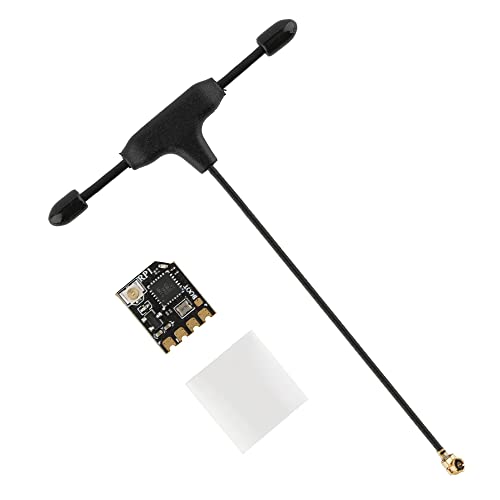
RP1 2.4GHz ELRS Nano receiver is an open source receiver based on ExpressLRS with ESP8285 MCU and SX1280 RF chip.

【PWM Output】BETAFPV ELRS Micro receiver is the first ELRS receiver with PWM output on BETAFPV. Supports 5 channels PWM outputs. It also supports flash CRSF output firmware, in this case CH2 corresponds to TX and CH3 corresponds to RX
Frequently Asked Questions
What Is the IP Address for ExpressLRS?
When connected directly to an ExpressLRS RX or ExpressLRS TX WiFi access point, open http://10.0.0.1/. If the device has joined home WiFi, the router gives it a DHCP address instead. You can also try elrs_rx.local or elrs_tx.local when mDNS works.
What Is the ExpressLRS WiFi Password?
The official ExpressLRS documentation lists expresslrs as the password for the default ExpressLRS RX and ExpressLRS TX access points.
Why Does elrs_rx.local or elrs_tx.local Not Work?
These addresses depend on mDNS name resolution. If the computer, browser, or local network does not resolve mDNS names, check the router’s DHCP list and open the numerical IP address assigned to the ELRS device instead.
Is ExpressLRS a Protocol?
Yes. ExpressLRS is an open-source radio-control link system used between compatible transmitters and receivers. It is designed around features such as low-latency control, selectable packet rates, telemetry, long-range capability, and support across a wide range of compatible hardware.
What Is the Recommended Packet Rate for ELRS?
There is no single packet rate that is best for every ExpressLRS setup. Official documentation explains that higher packet rates send control packets more frequently and reduce latency, while lower rates generally provide greater receiver sensitivity. On compatible 2.4GHz hardware, LoRa choices can include 50Hz, 150Hz, 250Hz, and 500Hz. A middle setting such as 250Hz can be a practical starting point, but the best choice depends on range, latency, hardware, and RF conditions.
How Do You Flash an ELRS Transmitter?
Use the flashing procedure specified for the exact transmitter or internal module. For many supported EdgeTX radio configurations, the official workflow uses ExpressLRS Configurator with the correct device category and hardware target, EdgeTXPassthrough as the flashing method, the appropriate regulatory domain, and an optional binding phrase and local-WiFi credentials. Other hardware may support different update methods, so follow its official target-specific instructions rather than assuming one flashing method fits every transmitter.
Conclusion
ExpressLRS IP setup becomes much easier once access-point mode and home-WiFi mode are treated separately. Use 10.0.0.1 when connected directly to the ELRS device’s own WiFi access point. On a home network, use elrs_rx.local, elrs_tx.local, or the DHCP-assigned address instead.
If 10.0.0.1 fails, first check which network your phone or computer is actually using rather than assuming the transmitter and receiver are fighting over the same IP. After networking is confirmed, move on to firmware-major-version compatibility, binding settings, hardware targets, and device-specific recovery steps.
Sources
- ExpressLRS — The Web UI — backs up the 10.0.0.1 access-point address, WiFi SSIDs/password, home-WiFi hostnames, DHCP lookup, mDNS, LED guidance, and routing warning.
- ExpressLRS — Binding — backs up TX/RX major-version compatibility and binding-phrase guidance.
- ExpressLRS — Transmitter Updating — backs up target selection, EdgeTXPassthrough, regulatory-domain, binding-phrase, and flashing guidance.
- ExpressLRS — Lua Script — backs up packet-rate behavior and the latency-versus-sensitivity trade-off.
- ExpressLRS GitHub Releases — backs up current stable-release and 4.x compatibility information.
