Traveling with a drone is usually allowed, but you need to pack the aircraft, batteries, chargers, and accessories the right way before you reach the airport. The safest approach is to keep the drone in your carry-on bag, protect every lithium battery from short circuits, and check both TSA rules and your airline’s battery policy before you fly.
Quick Answer
You can usually bring a drone through TSA in carry-on or checked baggage, but carry-on is the safer choice. Spare lithium drone batteries must travel in carry-on baggage only, with terminals protected. Batteries between 101 and 160Wh usually need airline approval, and batteries over 160Wh are not allowed on passenger flights.
Key Takeaways
- Pack your drone in carry-on baggage when possible, so TSA can inspect it without rough handling.
- Keep spare lithium batteries in your carry-on only, never loose in checked luggage.
- Protect battery terminals with caps, tape, sleeves, or individual battery bags.
- Check the watt-hour rating before you fly, especially if you carry larger drone batteries.
- Research drone laws at your destination before packing, especially for international travel.
At a Glance
| Best Packing Method | Carry-on baggage for the drone, batteries, controller, and chargers when space allows. |
| Battery Rule | Spare lithium batteries must go in carry-on baggage with terminals protected. |
| Airline Approval | Usually required for lithium batteries rated 101–160Wh. |
| Main Risk | Battery short circuits, airline limits, customs restrictions, and local drone bans. |
TSA Regulations for Drones
When you travel with a drone, you need to understand how TSA regulations apply at the security checkpoint. TSA allows drones through security checkpoints, and you may pack them in either carry-on or checked baggage. Still, carry-on baggage is usually the smarter option because it keeps the drone under your control and makes inspection easier.
Traveling with a drone is usually simple when you separate the aircraft, protect the batteries, and confirm both TSA and airline rules before your trip.
The biggest issue is not usually the drone body itself. The main concern is the lithium batteries. Spare lithium batteries must travel in your carry-on baggage, not in checked luggage, because damaged or short-circuited batteries can create a fire risk.
Before you fly, check your airline’s policies for drones, lithium batteries, and smart batteries. Airlines can set their own limits on battery quantity, battery size, and approval requirements, even when TSA allows the item through screening.
At the checkpoint, place your drone, controller, batteries, and larger accessories in separate bins if TSA officers need a clearer view. This can help prevent delays, especially when your drone case contains cables, chargers, propellers, filters, memory cards, and several batteries.
While TSA allows drones in general, remember that the final decision on whether an item passes through security rests with the TSA officer at the checkpoint. Pack neatly, label your gear clearly, and keep battery information easy to find.
Note: TSA screening rules and airline battery policies are related, but they are not the same. TSA handles security screening, while your airline controls what it accepts onboard.
Packing Guidelines for Drones
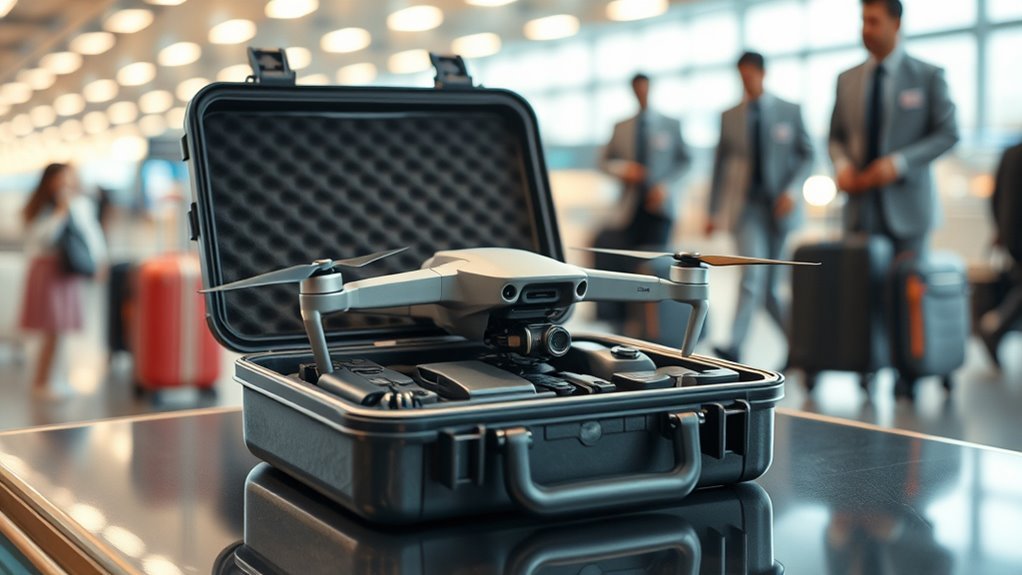
Packing your drone properly helps protect your gear and makes the airport process smoother. A compact drone may fit inside a backpack, while a larger camera drone may need a padded case. Either way, the goal is to keep the aircraft secure and make battery inspection simple.
- Use carry-on baggage when possible: Pack your drone, controller, charger, propellers, and batteries in your carry-on bag for easier access and safer handling.
- Remove the batteries: Take lithium batteries out of the drone when practical and place them in your carry-on bag.
- Protect the terminals: Use terminal caps, electrical tape, battery sleeves, or individual plastic bags to prevent short circuits.
- Use a padded case: Protect the camera, gimbal, arms, propellers, and controller sticks from impact.
- Keep accessories organized: Store cables, chargers, propellers, ND filters, and memory cards in labeled pouches.
- Check battery charge level: For longer storage or travel, many drone makers recommend keeping batteries at a partial charge rather than fully charged.
You should also check specific airline policies, as some airlines require lithium batteries to be removed from checked drones. If your drone must go in checked baggage because of size, remove all spare batteries and carry them onboard.
Following these packing tips reduces the risk of damage, short circuits, inspection delays, and airline issues.
Pro Tip: Take a photo of your packed drone case before leaving for the airport. It can help you repack quickly after TSA inspection and document your gear if anything is misplaced.
FAA Regulations for Drone Batteries
Understanding FAA rules for drone batteries is essential because most drones use lithium-ion or lithium-polymer batteries. The FAA restricts spare lithium batteries in checked baggage and requires passengers to keep spare batteries in carry-on baggage.
Here is a simple overview of the common battery limits for passenger flights:
| Battery Rating | Carry-On Luggage | Checked Baggage |
|---|---|---|
| Up to 100Wh | Allowed, with terminals protected | Spare batteries not allowed |
| 101–160Wh | Limited to two spare batteries with airline approval | Spare batteries not allowed |
| Over 160Wh | Not allowed on passenger aircraft | Not allowed |
Most consumer drone batteries are under 100Wh, but you should never guess. Check the label on the battery or the manufacturer’s battery specifications. If the battery lists volts and amp-hours instead of watt-hours, you can estimate watt-hours by multiplying volts by amp-hours.
For example, a 15.4V battery rated at 3.5Ah is about 53.9Wh. That falls below the 100Wh limit. Larger professional drone batteries may fall into the 101–160Wh range, which usually requires airline approval.
Warning: Never pack loose spare drone batteries in checked luggage. A loose battery can short circuit if its terminals touch metal objects, keys, tools, coins, or another battery.
Smart Battery Safety Tips

Smart drone batteries include built-in electronics, but they still need careful handling during travel. Heat, impact, pressure, and short circuits can damage lithium batteries, so treat them as safety-sensitive items.
Use these battery safety tips before and during your trip:
- Carry-on only: Always store spare lithium batteries in your carry-on baggage. Spare batteries are not allowed loose in checked luggage because of fire risks.
- Use LiPo-safe bags: Fire-resistant battery bags can add protection and keep batteries separated inside your backpack.
- Limit larger batteries: Most airlines allow up to two spare lithium batteries rated between 101 and 160Wh only with prior airline approval.
- Insulate and label: Cover battery terminals with caps or tape, and label your drone battery gear clearly for quicker TSA inspection.
- Inspect before packing: Do not travel with swollen, leaking, cracked, overheated, or damaged batteries.
- Avoid extreme temperatures: Do not leave drone batteries in a hot car, direct sunlight, or freezing conditions for long periods.
Many drone batteries include automatic discharge features for storage. Still, you should check the battery status before packing and follow the drone manufacturer’s storage instructions.
These steps help prevent short circuits and make your drone kit easier for TSA officers and airline staff to inspect.
International Drone Travel Considerations
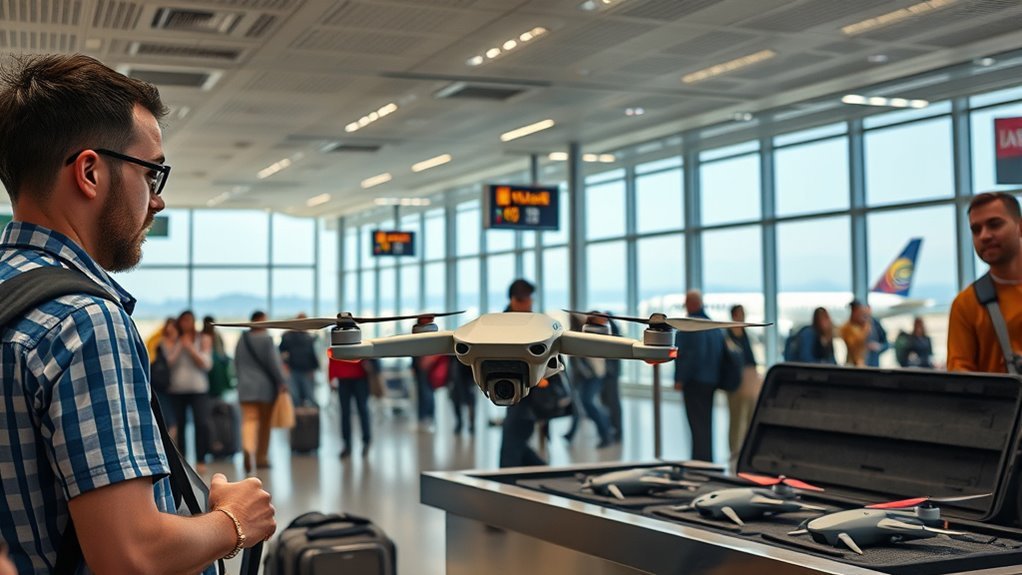
International drone travel involves more than TSA screening and battery limits. Every country can set its own drone rules, import policies, registration process, privacy laws, and no-fly zones.
Before traveling with your drone, research the specific customs regulations and import laws of your destination country. Some countries allow recreational drones with registration. Others require permits, insurance, pilot identification, or prior approval. A few destinations may restrict or ban drones entirely.
Be prepared for potential confiscation at customs, especially in places with strict drone enforcement. You may need to complete drone registration, show proof of ownership, declare high-value equipment, or obtain a temporary import document.
You should also check local airspace restrictions. Airports, military areas, government buildings, national parks, religious sites, crowds, and protected wildlife areas often have strict limits. Even when you can bring a drone into a country, you may not be allowed to fly it everywhere.
Consider carrying printed or saved digital copies of your drone serial number, battery specifications, registration documents, airline approval, and insurance details. These can help if airline staff, customs officers, or local authorities ask questions.
Finally, consider obtaining drone insurance if you plan to fly internationally. Coverage can help with liability, damage, theft, or travel-related risks, depending on the policy.
Tips for Going Through TSA With a Drone
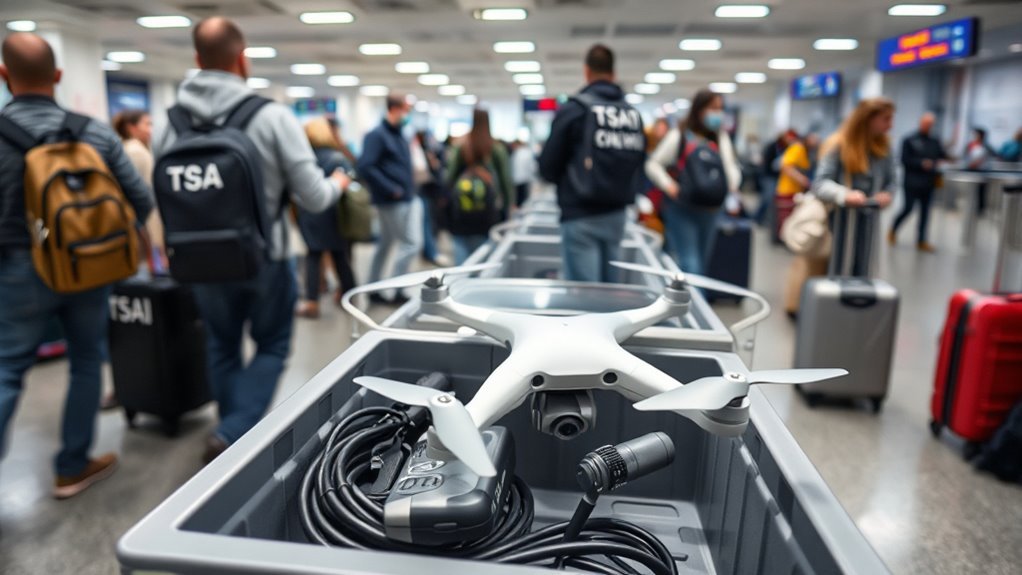
Going through TSA security with a drone is easier when your gear is organized. TSA officers need to see dense electronics clearly, so a messy bag with tangled cables and loose batteries can slow the process.
- Use separate bins: Place your drone, controller, and batteries in separate bins if asked, especially when your bag is packed tightly.
- Keep spare batteries in carry-on: Do not place spare lithium drone batteries in checked baggage.
- Know your battery specs: Make sure your batteries are under the applicable watt-hour limits, and keep documentation handy.
- Protect battery connectors: Use caps, tape, or sleeves on battery terminals to prevent short circuits.
- Arrive with extra time: Drone gear can trigger extra inspection, especially if you carry multiple batteries or a larger drone case.
- Stay polite and clear: Tell the officer you are carrying a drone and lithium batteries if they ask about your equipment.
Always check your airline’s drone equipment policy before your travel day. Some airlines publish lithium battery limits, approval rules, and packing instructions on their websites.
Note: If your drone has a removable propeller set, remove or secure the propellers before packing. This helps prevent bent props, scratched gear, and accidental damage during inspection.
Review Drone Laws in Your Destination Country

After you understand the airport process, review the rules that control drone use at your destination. Drone laws vary widely, and they can change based on country, city, park, event, or airspace zone.
Some destinations require registration before you fly. Others require a local permit, a pilot certificate, a visible registration number, insurance, or approval for camera use. Local privacy laws may also restrict filming people, homes, beaches, government areas, or private property.
Before you fly, check these points:
- Registration: Does the country require recreational or commercial drone registration?
- Weight limits: Do smaller drones follow different rules than larger drones?
- No-fly zones: Are airports, military sites, cities, parks, or landmarks restricted?
- Camera rules: Are there privacy, filming, or surveillance restrictions?
- Import rules: Do you need to declare the drone or carry proof of ownership?
- Insurance: Is liability insurance required before you operate?
Understanding these laws helps drone operators avoid fines, confiscation, or legal issues. It also helps protect local safety, privacy, wildlife, and airspace rules.
Common Mistakes to Avoid When Flying With a Drone
Many drone travel problems come from simple packing or planning mistakes. You can avoid most issues by checking rules early and packing with inspection in mind.
- Packing spare batteries in checked luggage: Spare lithium batteries belong in carry-on baggage only.
- Leaving terminals exposed: Loose batteries can short circuit when terminals touch metal items.
- Assuming every country allows drones: Some destinations restrict or ban drone imports and flights.
- Ignoring airline rules: Airlines may limit battery size, battery count, or approval requirements.
- Forgetting proof of specs: Battery watt-hour information can help if airline staff ask questions.
- Flying near restricted areas: Airports, stadiums, military zones, and national parks often have strict rules.
- Traveling with damaged batteries: Swollen, cracked, or leaking batteries should not fly.
A few minutes of preparation can save you from delays at security, denied boarding, or trouble at your destination.
Final Thoughts on Traveling With Drones

Traveling with a drone can be exciting, but it requires careful planning. Your main responsibilities are simple: pack the drone safely, carry spare batteries correctly, follow airline rules, and understand the drone laws where you plan to fly.
- Pack your drone and lithium batteries in carry-on baggage when possible.
- Remove spare batteries from checked gear and protect every battery terminal.
- Check whether your batteries are under 100Wh or need airline approval.
- Prepare for TSA screening by keeping your drone, controller, and batteries easy to inspect.
- Review destination drone laws before you travel, especially for international trips.
Before you leave, visit official TSA, FAA, airline, and destination aviation authority resources for the latest travel regulations. A well-packed drone kit helps you move through the airport smoothly and enjoy safer flights once you arrive.
Related Guides
Frequently Asked Questions
How do you bring a drone through TSA?
Pack your drone in carry-on baggage when possible, keep spare lithium batteries in your carry-on only, and protect the battery terminals. At the checkpoint, place the drone, controller, and batteries in separate bins if TSA officers need a clearer inspection.
How do you travel on a plane with a drone?
Use a padded carry-on case, remove or secure batteries, protect terminals, and check your airline’s lithium battery policy before departure. Also research drone laws at your destination before you pack, especially for international flights.
What is the 1-to-1 rule for drone batteries?
The 1-to-1 rule is informal advice that means carrying one spare battery for each drone. It is not the main FAA battery rule. The more important limits are the battery watt-hour rating, carry-on requirement for spare batteries, terminal protection, and airline approval for larger batteries.
Does the FAA know when I fly my drone?
The FAA does not personally track every recreational drone flight in real time. However, many drones must meet registration or Remote ID requirements, and pilots must follow FAA airspace rules, local restrictions, and safety guidelines whenever they fly.
Can I put my drone in checked luggage?
You may be able to pack the drone body in checked luggage, but carry-on is safer. Spare lithium batteries must go in carry-on baggage. If you check the drone, remove the batteries when possible and pack them separately in your carry-on.
Can I bring DJI drone batteries on a plane?
Most DJI consumer drone batteries are within common airline lithium battery limits, but you should still check the watt-hour rating on your exact battery. Keep spare batteries in your carry-on, protect the terminals, and ask the airline for approval if any battery is between 101 and 160Wh.
Conclusion
Traveling with drones can be a rewarding experience, but you need to stay informed before you fly. TSA generally allows drones through security, but spare lithium batteries must be handled carefully and packed in carry-on baggage. Airline rules, FAA battery limits, and destination drone laws can all affect your trip.
Before heading to the airport, check your battery watt-hour ratings, protect every terminal, organize your drone gear, and confirm your airline’s policy. If you are traveling internationally, research drone registration, import rules, no-fly zones, and local privacy laws before you pack. With the right preparation, you can protect your drone, avoid airport delays, and fly more responsibly when you arrive.
Sources
- TSA: Drones — supports TSA screening guidance for drones in carry-on or checked baggage.
- FAA PackSafe: Lithium Batteries — supports lithium battery carry-on, checked baggage, and watt-hour safety guidance.
- FAA Unmanned Aircraft Systems — supports U.S. drone operation, registration, and safety rule guidance.
- FAA Remote ID — supports Remote ID information for drones operated in the United States.
