River fishing gives you a simple way to read moving water, find active fish, and build real skill with each trip. You’ll learn how to pick the right rod, spot pockets where fish hold, and make casts that land softly in current. With smart safety and conservation habits, you can fish longer, protect the river, and make every outing more productive.
Quick Answer
To fish a river as a beginner, start with light, mobile gear, then target slow pockets near rocks, bends, eddies, logs, and current seams. Cast slightly upstream, let your bait or lure drift naturally, and adjust depth, weight, and retrieve speed until you find where fish are feeding.
Key Takeaways
- Fish usually hold where current slows, food gathers, and cover gives them protection.
- Small rivers favor short rods, light line, and careful wading, while larger rivers often need longer rods, heavier line, or boat access.
- Cast upstream or across current so your bait moves naturally through eddies, seams, and ambush lanes.
- Change your lure weight, depth, and retrieve speed before you change spots too quickly.
- Always check local regulations, wear a personal flotation device around boats or fast water, and pack out everything you bring in.
At a Glance
| Time Required | 1 to 3 hours for a beginner practice session |
| Difficulty | Beginner-friendly, with extra caution needed in swift current |
| Tools Needed | Spinning rod and reel, line, hooks or lures, pliers, net, tackle box, polarized sunglasses, and wading or bank-safety gear |
| Cost | Low to moderate, depending on rod, reel, license, bait, and safety gear |
Understanding River Types and Flow
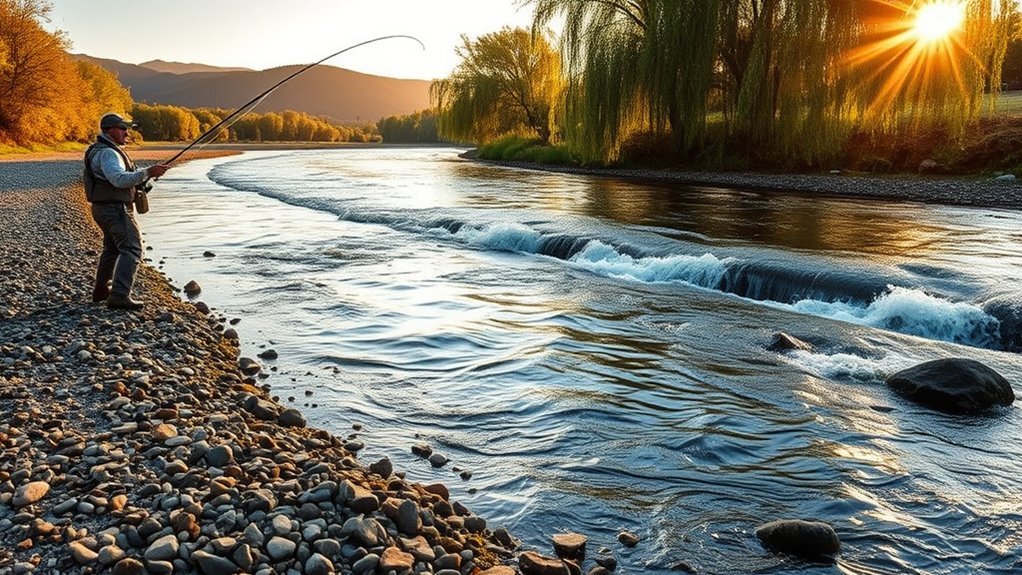
When you head to a river, remember that its size, depth, speed, and access points shape where fish hide and how you can reach them. Small rivers and creeks often let you fish from the bank or wade carefully. Larger rivers may need a boat, longer casts, and more planning because deeper channels and stronger current create extra risk.
You’ll read the river systems by watching how current moves around bends, rocks, logs, islands, and depth changes. Smaller bodies of water let you move freely, feel the current, and make precise presentations. Bigger systems demand more planning, better boat control, and tactics that use mobility safely.
Study flow changes because rocks, depth shifts, and bends create quiet water where bait concentrates and predators ambush. Seek upwelling zones and current breaks at points and bends; those short windows can produce bites when your bait passes naturally.
Trust what the river tells you, adapt your position, and focus on the water that gives fish food, cover, and a break from heavy current. Fishing becomes more rewarding when you learn to read the water and move confidently where fish choose to hold.
Essential River Fishing Gear
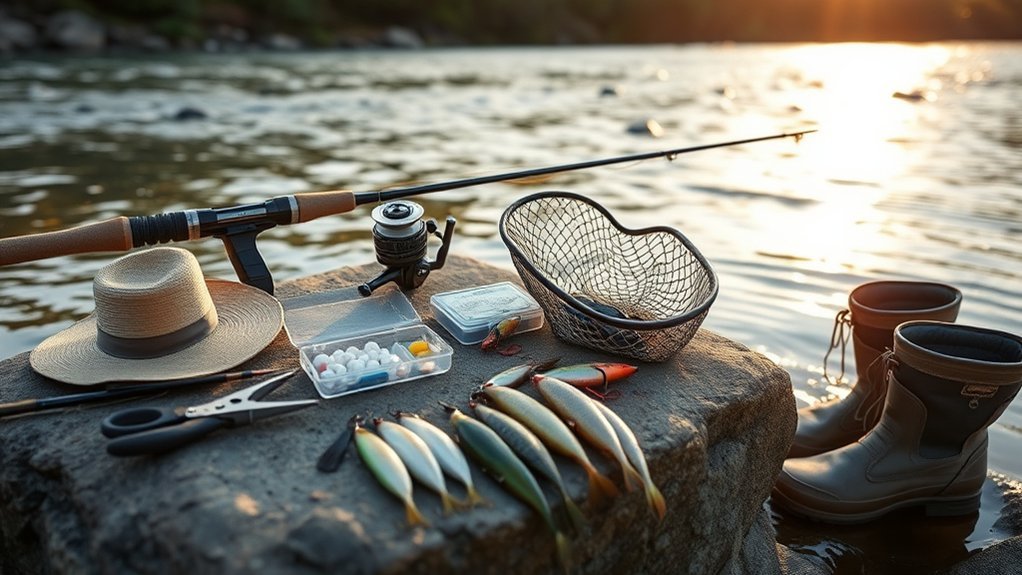
Now that you can read where fish like to hold, you need the right kit to reach them and make effective presentations.
For river fishing, choose gear that keeps you mobile and able to adapt. On small rivers, a 4 to 6 ft spinning rod with a 1000 to 2000 size reel gives control and precision. On larger rivers, a 6 to 9 ft rod with a 3000 to 5000 size reel can help you handle stronger current, longer casts, and bigger fish.
Match line to conditions. Use 4 to 12 lb line for small streams and lighter species. Move up to 10 to 30 lb line for larger flows, heavy cover, or stronger fish.
Pack different tackle: Ned rigs, in-line spinners, and jigs cover a range of species and presentations.
Include essential items like wading gear for safety and comfort, extra leaders, a net, pliers, and a compact tackle box so you can change tactics quickly. Polarized sunglasses also help you see seams, rocks, depth changes, and fish movement below the surface.
This kit keeps you mobile and confident on the water, letting you pursue better fishing and a more enjoyable outdoor experience.
Note: Choose gear based on the fish you expect to catch, the water speed, and the amount of cover. A setup that works in a shallow creek may feel underpowered in a deep river with strong current.
Where to Find Fish in a River

Look for structure and cover like submerged vegetation, sunken trees, stumps, undercut banks, bridge pilings, and low-hanging branches where fish hide and feed.
Also scan for current breaks because merging currents, drop-offs, and the downstream sides of islands or rock piles create calmer pockets fish use to rest while facing upstream.
Check backwaters, tailwaters, and surface signs like swirls, bait movement, foam lines, or jumps to pinpoint your casts.
Structure and Cover
Because fish need food and protection, you’ll find them around structure and cover. Sunken trees, overhanging branches, rock piles, stumps, vegetation, and shaded banks all concentrate prey and shelter fish from current and predators.
You should target these spots confidently. Cast upstream of submerged logs and let your lure drift into the calm water behind them. Work the edges of rock piles and the downstream sides of islands where fish often sit facing upstream to ambush food.
Try casts into backwaters and small eddies; they offer refuge and easier presentations. Vegetation and stumps give shade and hiding places, so slow your retrieve there.
Stay observant, move between promising features, and trust that reading structure and cover will free you from fishing empty water and increase consistent catches.
Current Breaks
Find the quieter seams where fast water meets slow water. These spots often form behind boulders, along island edges, near logs, below riffles, and inside eddies. Fish hold there to rest and ambush food.
You’ll read the surface for swirls, bubbles, foam, or slight color changes that mark current breaks created by rocks, logs, ledges, or depth shifts. Fish often sit just downstream, facing upstream, and let food come to them.
Cast into those calmer pockets and let your bait move naturally. These areas are natural ambush points where fish conserve energy and feed.
| Feature | What to look for |
|---|---|
| Behind boulders | Slower water, downstream lies |
| Island edges | Eddies, protected lanes |
River Fishing Techniques for Beginners
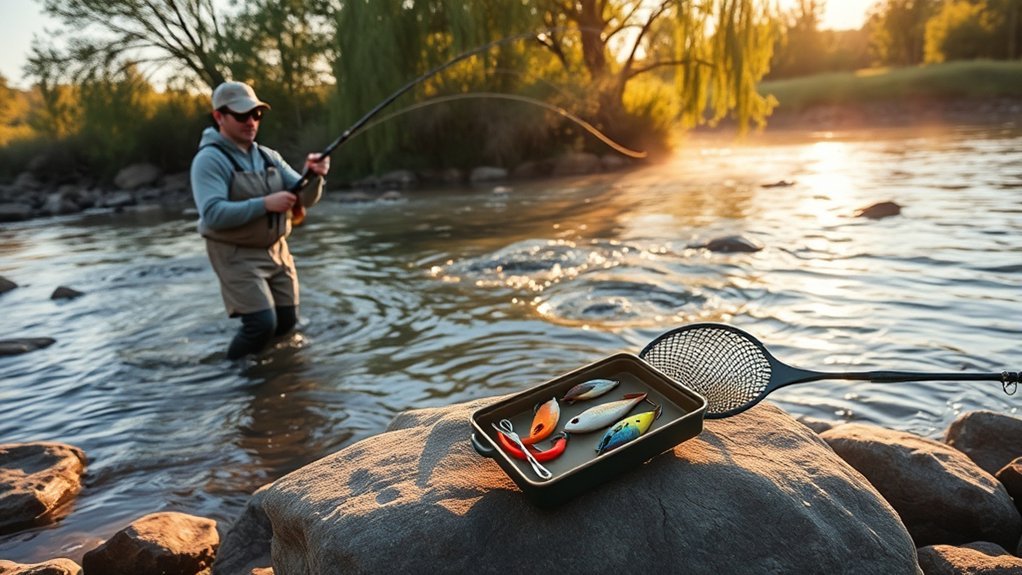
Start by learning to read water flow. Spot eddies, seams, riffles, tailouts, and slow pockets behind obstacles where fish hold.
Practice simple wading and controlled drift casts so your bait moves naturally with the current without spooking fish.
Keep your steps slow and deliberate, and try different drift angles until you find what triggers bites.
Reading Water Flow
When you learn to read water flow, you’ll spot the places fish like to hold. Look behind rocks and bends, in eddies, near depth changes, and where currents merge or drop off because these spots offer calmer pockets, ambush points, and richer food.
Watch how water moves around obstacles; those quiet seams let fish rest and wait for prey.
Scan for upwelling and merging currents. Where moving water changes depth or direction, baitfish and insects may gather, and predators often follow.
Note eddies and drop-offs as reliable holding zones, and cast near overhanging trees or vegetation that feed insects into the stream.
As you practice reading water, you’ll free yourself from guesswork, target the right lies, and fish a river with confidence and purpose.
Keep observing, adapt, and stay patient.
Wade and Drift Techniques
Now that you can read where fish like to hold, wading and drifting will let you reach those spots more effectively. Wading puts you into quieter seams and behind structure, while drifting presents your bait or lure through likely ambush lanes with a natural look.
You’ll use wade fishing to move quietly into deeper or hidden pockets. Wear proper gear, keep your steps slow, and avoid water that feels too fast or too deep. With drift fishing, cast upstream and let current carry your offering, matching weight and lure size to flow. Both need patience, observation, and the confidence to move where fish hide.
- Use steady, deliberate movement to avoid spooking fish.
- Match weight to current: lighter for slow water and heavier for fast water.
- Read seams and breaks for holding spots.
- Respect safety in strong currents.
- Let the drift look natural and free.
Pro Tip: If your lure races past the target zone, add a little weight or cast farther upstream. If it drags bottom constantly, reduce weight or lift your rod tip.
Wading, Bank, and Boat Strategies
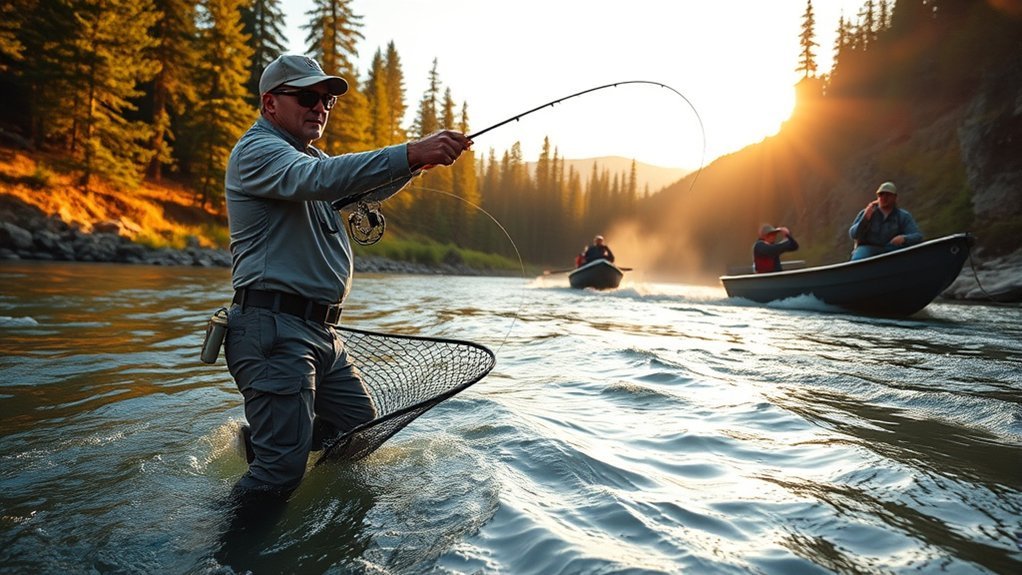
Curious which approach fits the river and your skill level? You’ll choose between wading, bank fishing, and boat fishing based on safety, access, and freedom to roam.
Wading lets you reach stumps, overhanging branches, seams, and tight pockets in small rivers. Move deliberately, watch currents, and don’t enter fast water.
Bank fishing gives you immediate, low-stress access. It’s perfect when you’re starting out and want to learn river patterns without gear complexity.
Bank-side fishing offers easy, low-stress access, which makes it ideal for beginners learning river patterns without extra gear hassle.
Boat fishing opens larger water. From a canoe or kayak, you can slip into deeper pockets and quieter bends. In bigger rivers, target humps, rips, channel edges, and eddies where current changes concentrate fish.
Always scout features, read the water ahead, and plan exit points so you stay safe and independent.
Choose the method that matches the river’s scale and your comfort, and you’ll expand where you can fish while keeping control of risk and enjoying the freedom of moving where the fish are.
Warning: Do not wade into water if you cannot see the bottom, feel steady footing, or cross safely. River levels can rise fast after rain or dam releases.
Best Lures and Baits for River Angling

After you pick wading, bank, or boat fishing, the next choice is what you put on the end of your line.
You want gear that frees you from guesswork and gets results. Pick a lure or fly that imitates local prey, matching size and color to the forage.
Ned rigs, jigs, in-line spinners, small crankbaits, and glide baits work in varied flows and attract multiple game fish. Topwater poppers can call surface feeders when fish are looking up, while jigheads with soft plastics tempt fish below.
If you use live bait, minnows are versatile; worms and crickets reliably pull sunfish and bass. Always check local rules because some rivers restrict live bait to protect native species.
- Match lure size and color to local forage.
- Use Ned rigs, jigs, glide baits, and in-line spinners for versatility.
- Try topwater poppers for surface strikes in calm pockets.
- Use jigheads with soft plastics for subsurface action.
- Choose minnows, worms, or crickets when live bait is allowed.
Be bold, learn quickly, and let your choices improve your fishing.
Seasonal River Fishing Tips
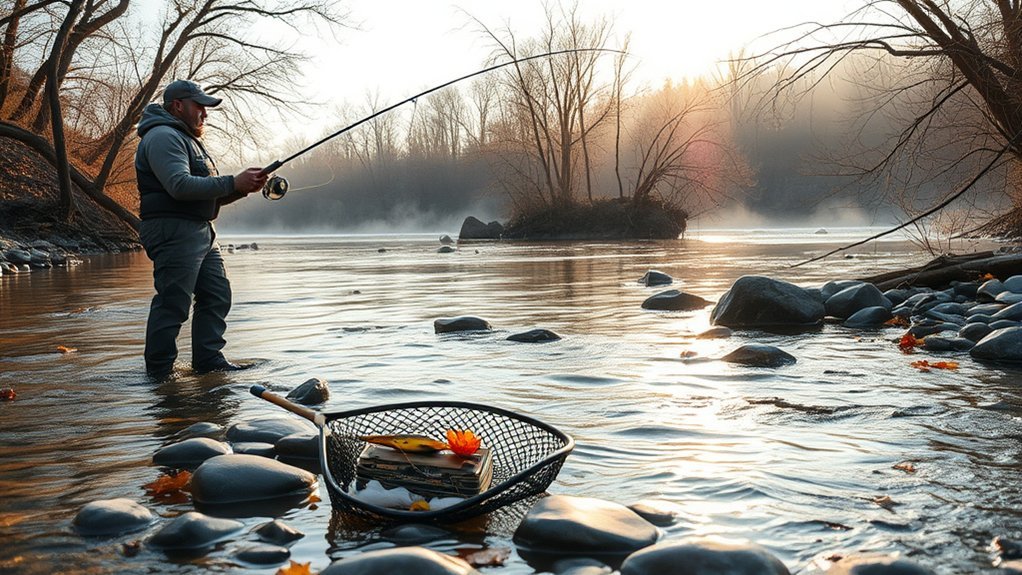
Because fish behavior shifts with the seasons, you’ll get more bites if you match your techniques and locations to spring, summer, fall, and winter patterns.
In spring, target shallow runs, gravel bars, bank cover, and warmer pockets where some fish move to feed or spawn. Use presentations that fit the species, water clarity, and current speed.
In summer, follow cooler, oxygen-rich pockets such as riffles, shaded bends, deeper pools, and tailouts. Slow your retrieves when fish seem less active during heat.
In fall, move toward warming shallow flats, bait-rich seams, and feeding lanes as fish bulk up before colder weather. Faster baits and active searches can pay off.
In winter, focus on deeper pools and slow-moving channels where fish conserve energy. Downsize baits and use subtle presentations.
Across seasons, read water temperature, clarity, level, and current, then adjust depth, speed, and tackle.
Embrace these seasonal changes instead of using one tactic all year. Adapt, experiment, and you’ll find the rhythms rivers offer and the consistent bites that follow.
Safety and Conservation on the Water
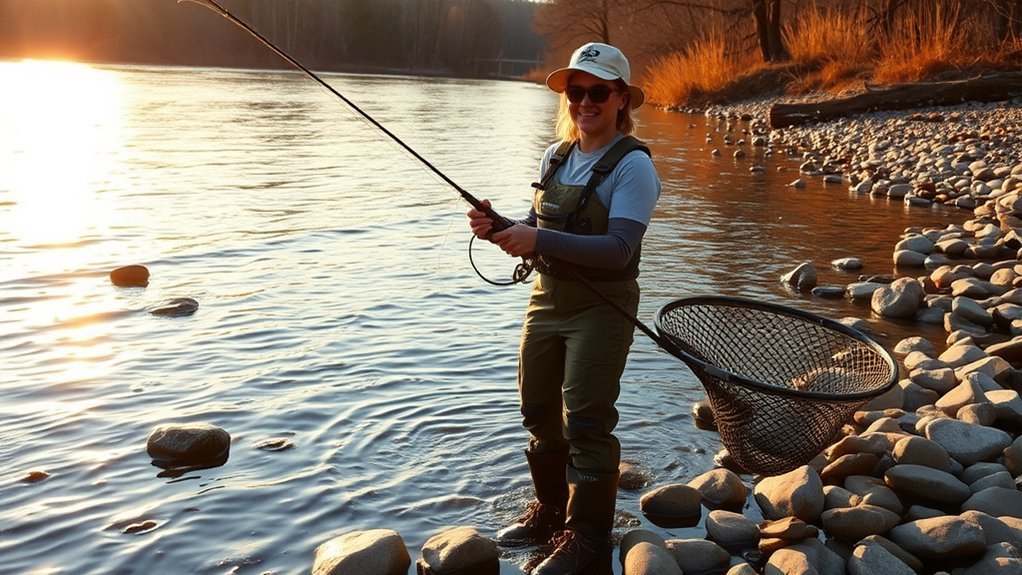
When you head out on a river, prioritize safety and conservation so your trip stays enjoyable and the waterway stays healthy for others.
You’ll wear a PFD when boating, paddling, or fishing near strong current. Watch changing currents and levels, and follow local rules that protect species and set catch limits.
Adopt catch-and-release where appropriate and handle fish gently so populations can thrive. Wet your hands before touching fish, support the fish horizontally, and release it quickly when you are not keeping it legally.
Leave no trace: pack out trash, secure gear, and avoid trampling fragile banks.
These habits free you to fish responsibly and keep rivers wild for everyone.
- Wear a personal flotation device every time you’re on a boat, kayak, canoe, or near risky current.
- Know local regulations for limits, seasons, bait rules, and protected species.
- Monitor water levels and currents; don’t push into dangerous stretches.
- Practice catch-and-release with proper handling and quick release.
- Carry out all waste and minimize impact on banks and vegetation.
Respectful actions protect ecosystems and empower you to enjoy river fishing now and into the future.
Practice Drills to Improve River Skills
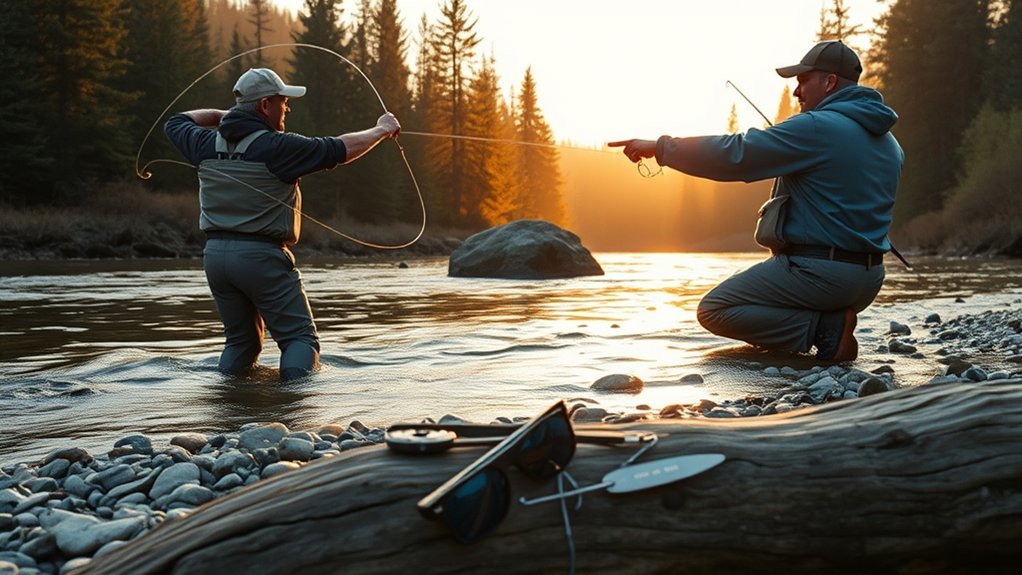
If you want to fish rivers confidently, practice drills will sharpen the specific skills that matter most: accurate casting into tight targets, reading and matching current flows, and moving safely and stealthily while wading.
Start by practicing casting accuracy at marked targets like stumps and overhangs. Use a practice rod and reel to build smooth, controlled motion. Vary distances and angles to force adjustments, and try different techniques such as roll casts, sidearm casts, and short pitch casts to see what lands best in tight slots.
Set up current-identification drills: note where river currents speed up, slow down, or form eddies, then adjust retrieve speed and lure presentation to match conditions.
Practice wading drills in safe, shallow water to feel balance and footing so you move confidently without spooking fish.
Finally, run simulated scenarios with friends to trade tips and test responses under pressure. These focused exercises free you from hesitation and give you the practical control to fish rivers with skill and purpose.
Frequently Asked Questions
How do you fish a river as a beginner?
Start with a simple spinning setup, then fish slow water near rocks, logs, bends, eddies, and seams. Cast upstream or across the current and let your bait drift naturally. Keep moving until you find active fish, but change your depth and speed before leaving a promising spot.
What is the 80/20 rule in fishing?
The 80/20 rule in fishing means a small number of high-quality spots often produce most of your bites. Instead of casting everywhere, focus on the best structure, current seams, shade, depth changes, and feeding lanes.
What is the 90/10 rule in fishing?
The 90/10 rule says most fish often concentrate in a small part of the available water. In rivers, that productive water is usually near cover, current breaks, drop-offs, food sources, shade, or safer holding areas.
Where should beginners fish in a river?
Beginners should fish easy-access spots with visible structure and manageable current. Look for sunken trees, eddies, downstream sides of islands, bridge pilings, shaded banks, merging currents, and slow pockets behind rocks.
What bait works best for river fishing?
The best bait depends on the species and local rules. Worms, minnows, crickets, jigs, in-line spinners, soft plastics, and small crankbaits all work well in many rivers. Match bait size and color to the natural food fish are already eating.
Conclusion
You’ve got the basics to get out on a river and catch fish with confidence. Start with one skill at a time: reading current, casting to seams, controlling your drift, and choosing safe water. Stay curious, prioritize safety and conservation, and experiment with gear and spots. Keep it simple, enjoy the rhythm of the water, and you’ll turn short outings into steady progress.