
Keeping your baby entertained in the stroller can be a challenge, especially during longer outings. Your baby may feel bored, overstimulated, uncomfortable, hungry, tired, or simply too far away from your touch and voice. The best stroller rides balance engaging activities, soothing sounds, comfort checks, and regular breaks so your baby feels safe while exploring the world.
Quick Answer
To keep your baby entertained in a stroller, use secure attachable toys, talk or sing often, point out nearby sights, offer safe snacks when age-appropriate, and take regular comfort breaks. Watch for boredom, tiredness, overheating, or overstimulation so you can adjust the ride before fussiness builds.
Key Takeaways
- Start with short stroller rides so your baby can build comfort without feeling overwhelmed.
- Use stroller-safe toys that clip on securely and offer texture, sound, color, or gentle movement.
- Talk, sing, make eye contact, and point out sights because your attention is often more soothing than any toy.
- Check the harness, clothing, sun exposure, temperature, and stroller recline when your baby seems uncomfortable.
- Take regular breaks during longer outings so your baby can stretch, feed, reset, and reconnect with you.
At a Glance
| Time Required | A few minutes of planning before each outing, plus quick checks during the ride. |
| Difficulty | Easy. Most fixes involve comfort, connection, toy rotation, and timing. |
| Tools Needed | Clip-on toys, soft book, blanket, sun protection, stroller fan if appropriate, snacks, water for you, and baby essentials. |
| Cost | Low. Many helpful activities, such as talking, singing, and pointing out sights, cost nothing. |
Why Babies Don’t Like Strollers In The Beginning

When you first introduce your baby to a stroller, they might not take to it right away, and that’s completely normal. Many babies experience stroller anxiety because the seat can feel confined compared with the warmth, movement, and closeness of being held. The harness, recline angle, straps, and unfamiliar view can all feel strange at first.
Some babies resist because they are used to being carried against your body, where they can hear your voice and feel your movement. A stroller changes that experience. Your baby may feel farther away, less secure, or unsure about the new position.
Additionally, new sights and sounds can overwhelm them, causing fussiness as they adjust to the outside world. The loneliness of being in a stroller can also make discomfort feel worse. Babies thrive on physical closeness, so their first negative reaction often comes from a need for comfort, reassurance, and connection.
With patience and a little creativity, you can help them associate stroller rides with fun and adventure. Start small, keep the first rides calm, and build up slowly as your baby learns that stroller time can feel safe and pleasant.
Note: Always follow your stroller’s age, weight, recline, and harness guidelines. Newborns need proper head and neck support, and not every stroller seat is suitable from birth without an approved bassinet or infant car seat attachment.
Understanding Overstimulation
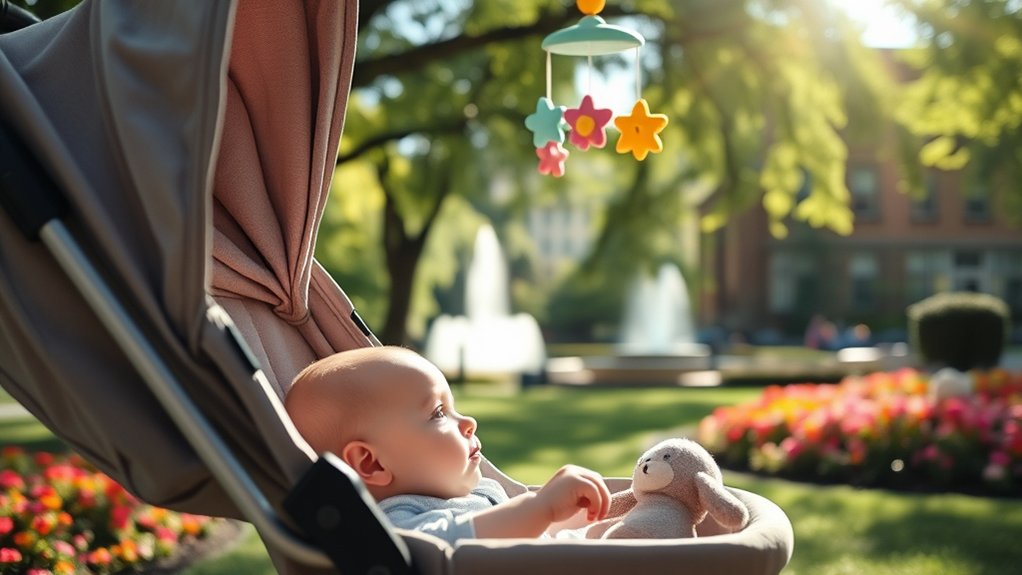
When you’re out with your baby in the stroller, it’s important to recognize that they can experience sensory overload from the new sights, smells, movements, lights, and sounds around them. This overstimulation can lead to fussiness, stiff body movements, crying, turning away, yawning, or sudden quietness.
Stroller rides may seem peaceful to you, but your baby is processing a lot at once. Cars, dogs, bright sun, wind, people talking, music, store lights, and uneven sidewalks can quickly become too much. By gradually introducing your baby to the outside environment and monitoring their reactions, you can help them adjust and find comfort during stroller rides.
Baby’s Sensory Overload
As you take your baby for a stroll, it’s important to recognize that the vibrant sights and sounds of the outside world can easily overwhelm them. Sensory overload can lead to stress and fussiness, making stroller rides less enjoyable. To support your baby’s sensory integration, consider these calming techniques:
- Choose Quieter Routes: Opt for paths with less traffic, fewer crowds, and fewer loud noises to create a more peaceful environment.
- Adjust the Stroller Canopy: Limit direct sunlight and glare by using the canopy, which helps reduce visual overstimulation.
- Monitor Reactions: Keep an eye on your baby’s cues. If they seem uncomfortable, slow down, pause, or move to a calmer spot.
Being mindful of these factors can transform stroller rides into a calming experience for both of you.
Gradual Exposure Techniques
To help your baby adapt to the bustling world outside, gradual exposure techniques are key in managing overstimulation during stroller rides. Start with short outings in familiar environments, like your neighborhood sidewalk, a quiet park path, or the same block near your home.
As your baby becomes more comfortable, slowly increase the duration and exposure to new sights and sounds. Try one new setting at a time instead of combining a long walk, a busy store, and a noisy restaurant in one outing. Always monitor your baby’s reactions; fussiness or irritability can signal overstimulation, so adjust the pace or environment accordingly.
Incorporate soothing techniques, like gentle rocking, soft voices, a familiar blanket, or quiet humming, to calm them if needed. Engage by pointing out interesting sights or adding attachable toys, creating positive associations and making stroller rides enjoyable for both of you. This approach promotes comfort and confidence during outdoor adventures.
Addressing Discomfort in the Stroller

While babies often enjoy the sights and sounds of the world around them, being in a stroller can sometimes lead to discomfort. A baby who seems bored may actually be too hot, too cold, hungry, tired, overbuckled, under-supported, or bothered by the seat angle.
To enhance your baby’s experience and support stroller safety, consider these tips for easing their adjustment:
- Check the Fit: Verify that the safety buckles aren’t too tight and adjust them properly. A snug fit is safe, but it shouldn’t pinch, rub, or leave your baby slumped.
- Choose Comfort: Dress your baby appropriately for the weather and make sure the stroller has adequate padding. This can greatly reduce fussiness during rides.
- Limit Overstimulation: Be mindful of your surroundings. If intense sights and sounds seem to overwhelm your baby, try quieter routes or use the canopy for shade.
Also check for twisted straps, bunched clothing, a diaper that needs changing, sun in your baby’s eyes, or a toy pressing into their side. These small issues can make a stroller ride feel frustrating fast.
Allowing time for baby adjustment is essential. With patience, your little one can learn to appreciate stroller rides as part of their adventures.
Warning: Never place loose pillows, bulky blankets, or unsafe add-ons around a young baby in a way that could affect breathing, posture, or harness fit. Keep the harness secured and keep your baby visible during the ride.
Combating Loneliness During Rides
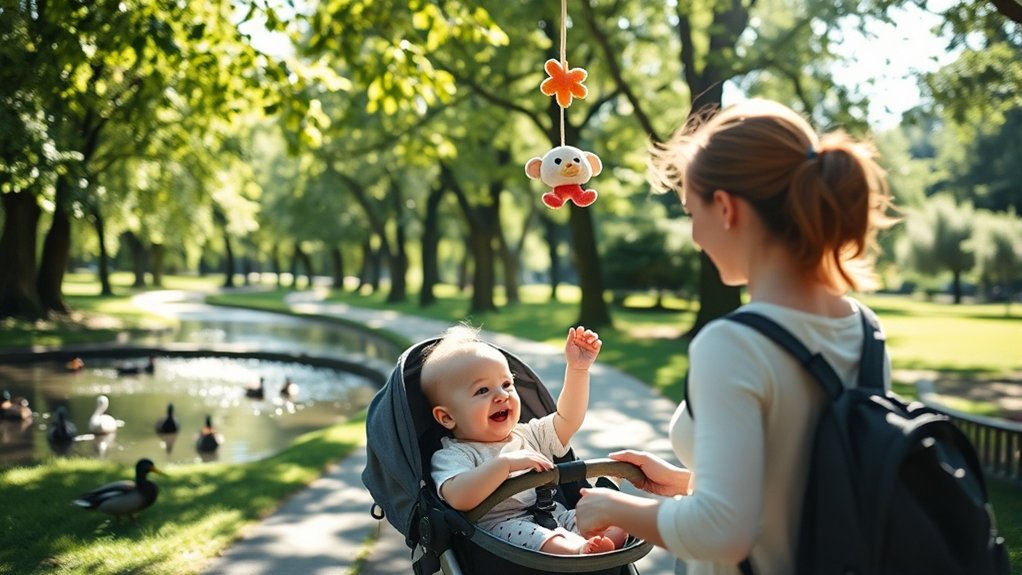
Since babies often feel a sense of loneliness when strapped into their strollers, it’s crucial to find ways to keep them engaged and connected during rides. Your voice, face, touch, and rhythm can be more comforting than any stroller accessory.
Incorporating physical touch, like holding your baby’s hand briefly during stops or offering a soft toy, can provide comfort and reassurance. As you stroll, don’t hesitate to engage in gentle singing. Your voice can create a soothing atmosphere, helping them feel less isolated.
Make eye contact and use expressive vocal tones to show you’re present and attentive. Respond to their cues, whether it’s a smile, coo, babble, or whimper, to foster a deeper connection. If your stroller allows a parent-facing position, use it during early months or fussy phases so your baby can see you more easily.
Attachable toys with different textures or sounds can also serve as excellent distractions, keeping them entertained. By regularly checking in and nurturing this bond, you can transform stroller rides into joyful moments, countering any feelings of loneliness. This engagement not only comforts your baby but strengthens your relationship.
Engaging Activities for Stroller Rides

Keeping your baby entertained during stroller rides can turn potential boredom into an engaging adventure. The best activities are simple, safe, and flexible. They should match your baby’s age, mood, energy level, and attention span.
By incorporating a few interactive activities, you can promote sensory exploration and keep your little one captivated. Here are three engaging activities to try:
Transform stroller rides into exciting adventures by incorporating interactive activities that promote sensory exploration for your baby.
- Attachable Toys: Use toys that clip securely to the stroller, offer varied textures, or make gentle sounds. They’re perfect for interactive play and easy for your baby to reach.
- I Spy Game: Play a simple game of “I Spy” with your baby. For younger babies, name objects yourself, such as trees, birds, cars, flowers, or dogs. For older babies, pause and let them point, look, or babble back.
- Snack Time: Offer snacks and sips during the ride when your baby is old enough and can eat safely while seated. This not only entertains but also keeps your baby comfortable and energized.
Additionally, you can play soft music or sing nursery rhymes for a soothing atmosphere, enhancing the overall experience. With these activities, stroller rides can become a delightful sensory adventure for you and your baby.
Age-Appropriate Stroller Activity Ideas
Different ages need different kinds of entertainment. A newborn may need your voice and a calm ride, while an older baby may enjoy pointing, reaching, chewing, and watching the world move around them.
| Baby’s Stage | Helpful Stroller Activities | What To Watch For |
|---|---|---|
| Newborn to 3 months | Soft talking, gentle singing, parent-facing rides, shade, smooth paths, and short outings. | Head and neck support, temperature, feeding cues, and overstimulation. |
| 3 to 6 months | High-contrast toys, soft rattles, stroller mirrors made for babies, and simple songs. | Toy placement, harness fit, glare, and signs of tiredness. |
| 6 to 12 months | Clip-on teethers, soft books, peekaboo, pointing games, safe snacks, and naming objects. | Dropped toys, choking hazards, boredom, and hunger. |
| 12 months and older | Simple scavenger hunts, animal sounds, songs with actions, snack breaks, and park stops. | Restlessness, desire to walk, frustration, and the need for movement breaks. |
Choosing the Right Toys for Entertainment
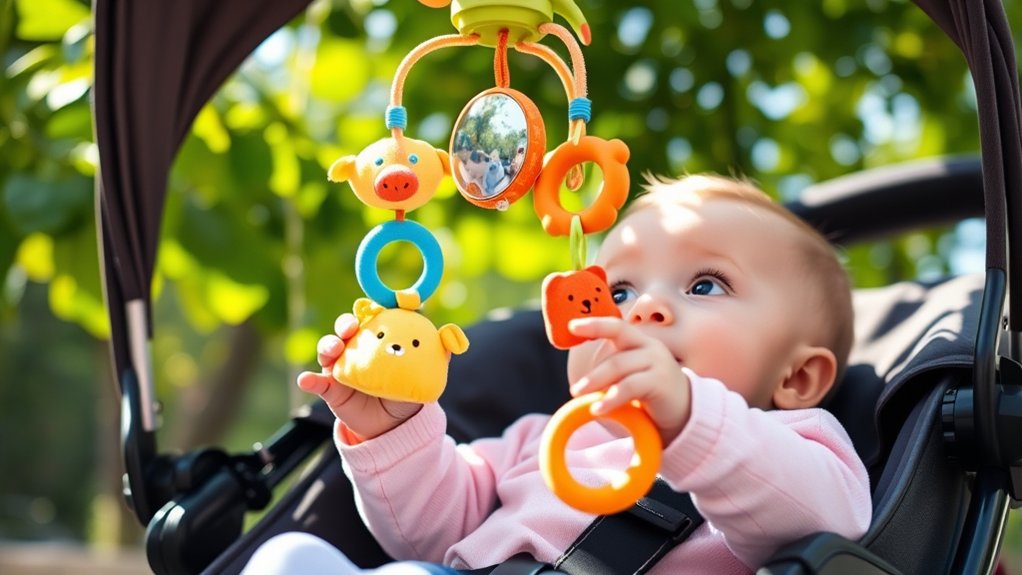
Choosing the right toys for your baby’s stroller can make all the difference in keeping them entertained and engaged during your outings. Start with attachable toys designed specifically for strollers; this helps them stay secure and within reach.
For effective sensory stimulation, opt for toys featuring varied textures, vibrant colors, and gentle sounds, as these elements can capture your baby’s attention. Soft books, silicone teethers, fabric activity toys, stroller bars, and baby-safe mirrors can all work well when used correctly.
Hygiene is essential, so select toys that are easy to clean and safe for little mouths. Avoid toys with tiny detachable parts, long strings, sharp edges, button batteries, or pieces that could become choking hazards.
Balance your toy selection by incorporating both quiet toys for calming moments and interactive ones that encourage active play, helping you avoid overstimulation. To keep things fresh, rotate toys regularly; familiarity can lead to boredom, so introducing new options can reignite your baby’s interest.
By thoughtfully choosing toys, you can create a joyful and engaging stroller experience, making each outing an adventure for your little one.
Pro Tip: Keep one or two “stroller-only” toys in your bag. Because your baby does not see them all day, they feel new and interesting during walks.
Importance of Breaks and Comfort
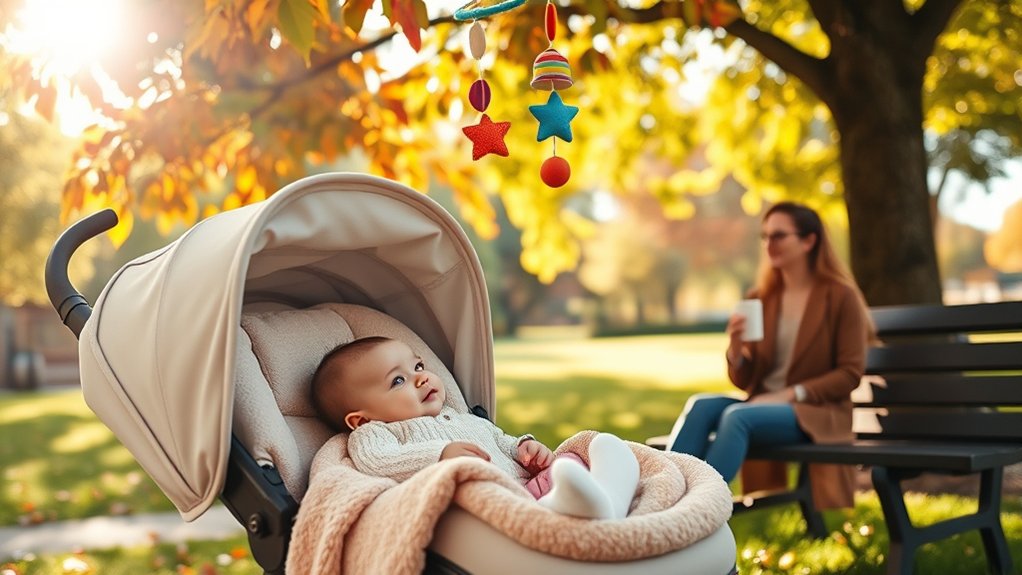
When you’re out with your baby in the stroller, scheduling regular pit stops is essential for their comfort and enjoyment. Even a well-supported baby can get tired of staying in one position for too long. A short pause can reset their mood and prevent a small fuss from turning into a full meltdown.
Keep an eye on their comfort levels and adjust the stroller for proper support, ensuring they’re snug and secure. These simple steps not only prevent fussiness but also create a more engaging and enjoyable experience for both of you.
Schedule Regular Pit Stops
Although stroller rides can be a delightful way for you and your baby to explore the world together, scheduling regular pit stops is essential for ensuring your little one stays comfortable and happy. Here are some pit stop benefits to contemplate:
- Stretch and Move: Allowing your baby to stretch and move helps reduce fussiness and discomfort.
- Sensory Processing: Breaks give your baby time to process overwhelming sights and sounds, providing necessary moments of calm.
- Engagement Activities: Stopping at parks or playgrounds turns outings into engaging adventures, enhancing the experience for both of you.
For longer outings, plan breaks around feeding, diaper changes, naps, and your baby’s usual mood patterns. A well-timed stop can make the next part of the walk much smoother.
Monitor Baby’s Comfort Levels
To guarantee your baby remains comfortable during stroller rides, it’s essential to keep a close eye on their comfort levels. Frequent breaks help prevent discomfort, allowing your little one to stretch and reduce fussiness. Watch for baby cues, like restlessness or crying, to know when it’s time for a break.
| Comfort Checks | Suggested Adjustments |
|---|---|
| Monitor body language | Adjust harness snugness |
| Provide a soft toy | Offer a blanket for warmth |
| Shield from sunlight | Check stroller position |
Other helpful checks include feeling the back of your baby’s neck for overheating, checking whether socks or clothing have twisted, and making sure the canopy is not trapping too much heat.
Adjust Stroller for Support
Ensuring your baby is properly supported in the stroller is essential for a pleasant outing. Proper harness adjustments and the right stroller accessories play a key role in your baby’s comfort. Here are three ways to enhance support:
- Adjust the harness: Make sure it fits snugly but comfortably, preventing any discomfort during rides.
- Take breaks: Regular stops allow your baby to stretch and move, reducing any feelings of constraint.
- Recline for comfort: A reclining position can help your baby relax, making it easier for them to nap during longer outings.
If your baby often slumps to one side, seems chin-to-chest, or cries shortly after being buckled, recheck the stroller seat angle, harness height, and manufacturer instructions. Proper support matters more than adding extra padding that was not designed for the stroller.
Practical Tips for a Better Stroller Experience
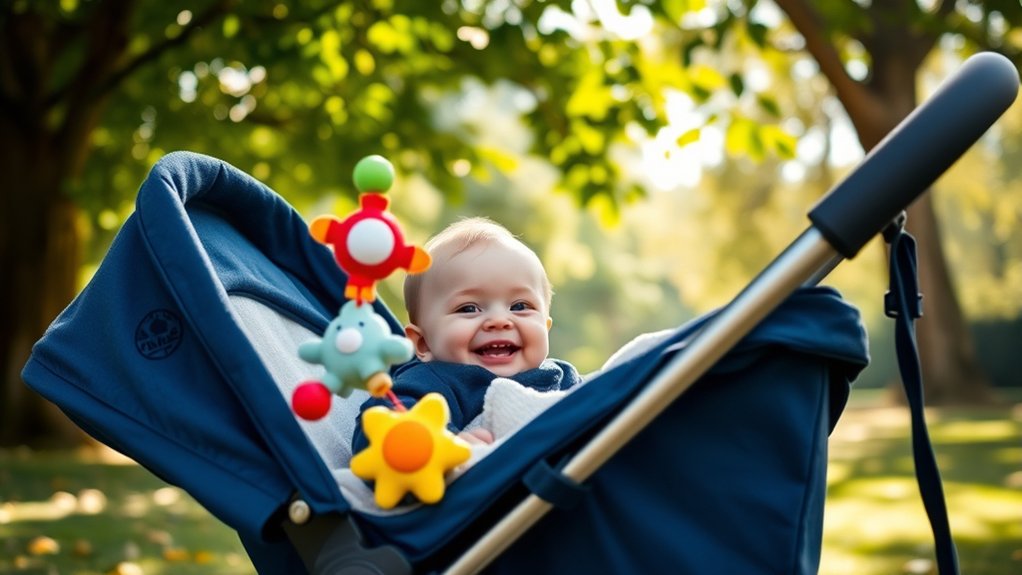
When you’re out and about with your baby in a stroller, keeping them entertained can greatly enhance the experience for both of you. Here are some practical tips to improve your stroller rides while ensuring stroller safety and promoting sensory integration:
| Tip | Benefits | Implementation |
|---|---|---|
| Attach toys within reach | Engages your baby and prevents loss | Use clips or straps |
| Light-up and sound toys | Captures attention without overstimulation | Balance sensory input |
| Smooth terrain | Minimizes shocks for a comfortable ride | Choose paths wisely |
| Adjust canopy | Protects from sunlight and glare | Position for ideal shade |
Incorporate gentle rocking or soft music if your baby shows fussiness. You can also narrate your walk by saying things like, “I see a red car,” “That dog is barking,” or “The leaves are moving.” Your baby learns from your words even before they can answer.
By following these strategies, you can create a more enjoyable stroller experience for both you and your little one.
What To Pack For Longer Stroller Outings
A prepared stroller basket can prevent many common problems. Pack for comfort first, then entertainment. A baby who is dry, shaded, fed, and rested is much easier to keep engaged.
- Diapers and wipes: Bring more than you think you need, especially for long walks or errands.
- Weather items: Pack a light blanket, stroller rain cover, hat, or sun protection based on the forecast.
- Safe snacks and drinks: Bring age-appropriate snacks only if your baby is ready for them and can eat safely.
- Two or three toys: Choose a soft book, teether, or clip-on toy instead of bringing too many options.
- Comfort item: A familiar small blanket or soft toy can help your baby feel secure, as long as it is used safely.
- Parent essentials: Bring water, keys, phone, hand sanitizer, and anything you need so the outing stays calm.
Monitoring Environmental Factors During Rides
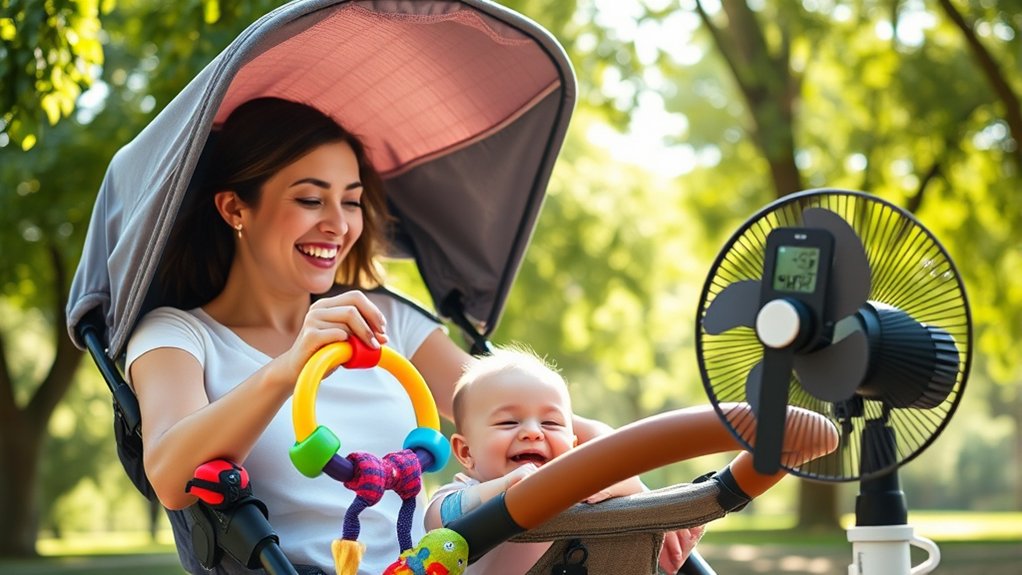
Monitoring environmental factors during stroller rides is essential for your baby’s comfort and well-being. By keeping a close eye on these elements, you can guarantee a pleasant experience for both you and your little one. Here are three key factors to ponder:
- Sun Position: Adjust the stroller canopy to shield your baby from direct sunlight. This prevents glare and overheating, keeping your child comfortable and safe.
- Environmental Noise: Be mindful of the noise levels around you. Opt for quieter routes to avoid overstimulation, which can lead to fussiness.
- Visual Stimuli: Pay attention to the sights surrounding the stroller. Familiar or calming environments can enhance your baby’s comfort, while overwhelming visuals may cause distress.
Temperature also matters. Babies can become too warm or too cold faster than adults, especially when they are sitting still. Check your baby often, avoid covering the stroller with heavy blankets that block airflow, and choose shaded or indoor breaks during extreme weather.
Troubleshooting Common Stroller Fussiness
If your baby keeps fussing in the stroller, look for patterns instead of assuming they simply dislike rides. The cause may be easy to fix once you know when and where the fussiness starts.
| What You Notice | Possible Cause | What To Try |
|---|---|---|
| Baby cries soon after buckling | Harness discomfort, awkward seat angle, or need for closeness | Check straps, adjust recline, talk gently, and start with shorter rides. |
| Baby turns away or becomes fussy in busy places | Overstimulation | Move to a quieter path, use the canopy, lower noise, and take a calm break. |
| Baby keeps dropping toys | Normal exploration or toy boredom | Use short stroller-safe toy straps, rotate toys, and offer one toy at a time. |
| Baby fusses near nap time | Tiredness or trouble settling | Recline safely, reduce stimulation, use a calm route, and keep the ride smooth. |
| Baby gets restless during long errands | Needs movement, feeding, or a reset | Stop for a diaper check, snack, cuddle, stretch, or change of scenery. |
Related Guides
Frequently Asked Questions
How Can I Make Stroller Outings More Enjoyable for My Baby?
You can make stroller outings more enjoyable by using secure interactive toys, talking often, singing simple songs, pointing out interesting sights, and taking comfort breaks. Keep the ride calm at first, then slowly add new places, sounds, and activities as your baby adjusts.
What Age Is Best to Start Using a Stroller?
You can use a stroller from birth only if the stroller is designed for newborns, such as a bassinet stroller, fully reclining stroller, or approved infant car seat travel system. For a regular upright stroller seat, many babies need better head and trunk control first, often around six months. Always follow the stroller manufacturer’s instructions.
How Do I Know if My Baby Is Bored in the Stroller?
You’ll know your baby may be bored if they fidget, fuss, whine, toss toys, turn away from the view, or try to get your attention. First check comfort, hunger, temperature, and tiredness. Then try a new toy, song, snack, or short break.
Can I Use a Stroller for Outdoor Adventures With My Baby?
Yes, you can use a stroller for outdoor adventures when the stroller matches the terrain and your baby is safely secured. Use the harness, choose smooth and stable paths when possible, bring weather protection, and avoid rough terrain unless your stroller is designed for it.
What Should I Pack in the Stroller for Longer Outings?
Pack diapers, wipes, a change of clothes, weather protection, a small blanket, age-appropriate snacks, water for you, and two or three stroller-safe toys. Soft books, rattles, teethers, and clip-on toys can keep your baby engaged without overloading the stroller.
How Often Should I Stop During a Long Stroller Walk?
Stop whenever your baby shows signs of discomfort, hunger, tiredness, or overstimulation. For longer outings, plan regular breaks for feeding, diaper checks, stretching, and cuddling. Younger babies usually need more frequent pauses than older babies.
Are Stroller Toys Safe?
Stroller toys can be safe when they are age-appropriate, securely attached, easy to clean, and free from small parts, sharp edges, long cords, or button batteries. Check toys often for wear, loose pieces, or broken clips.
Conclusion
Incorporating engaging activities during stroller rides can transform your outings from a chore into a delightful adventure. Just as a flower needs sunlight to bloom, your baby thrives on interaction, comfort, and reassurance.
By choosing the right toys, taking breaks, checking comfort, managing sensory input, and fostering connection, you’re not just keeping your baby entertained; you’re nurturing their development. Remember, each stroll is an opportunity for exploration and bonding, so embrace the journey together and watch your little one flourish in the world around them.

