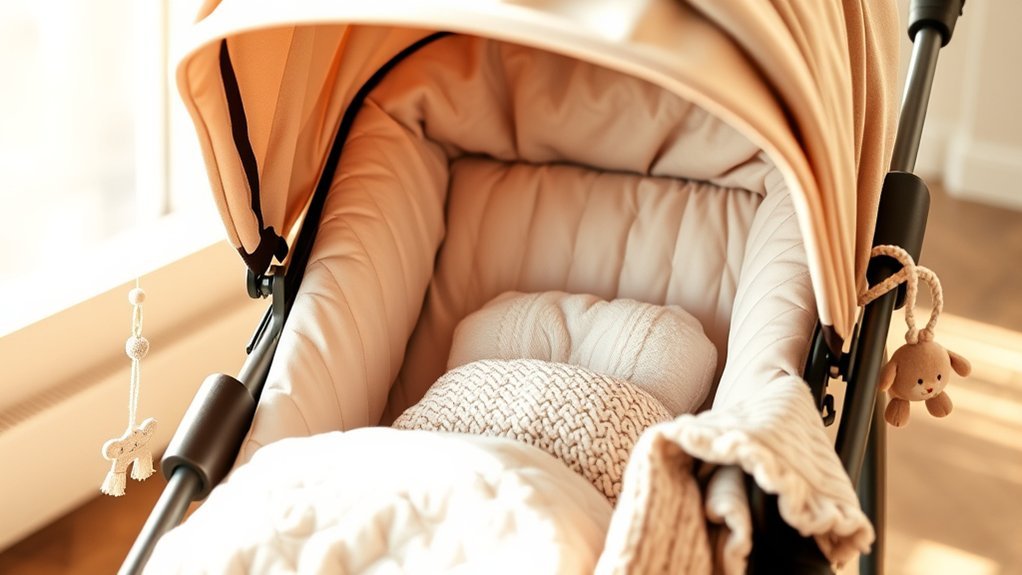
To make a stroller more comfortable for your baby, start with the setup the stroller was designed to use: choose the seat mode and recline approved for your child’s age and development, buckle the harness snugly, keep the seat cool and ventilated, and make the ride smoother by cleaning and checking the wheels. If you add a liner, sunshade, footmuff, cup holder, or organizer, use an option that is approved or compatible with your stroller and does not change the harness fit, folding mechanism, or balance. For shade, use the built-in canopy, a compatible parasol, or a purpose-designed stroller sunshade instead of draping a dry blanket over the opening. If a baby younger than 1 year falls asleep in the stroller, the American Academy of Pediatrics recommends moving them to a firm, flat sleep surface on their back as soon as possible.
Last updated: September 11, 2026
Quick Answer
To make a stroller more comfortable, first use the manufacturer-approved seat position for your baby’s stage, adjust the harness so it lies flat and snug, keep airflow open, and check that the wheels roll smoothly. Use only stroller-compatible liners or accessories that do not alter the harness or balance. For shade, use the stroller canopy, a compatible parasol, or a purpose-designed sunshade rather than covering the stroller opening with a dry blanket or muslin.
Key Takeaways
- Check the stroller manual first. A reclined seat is not automatically suitable for a newborn unless the manufacturer approves that configuration.
- Use only a thin, secure stroller liner or insert that works with the seat and harness; avoid loose pillows and bulky aftermarket padding.
- Use the canopy, parasol, or a compatible sunshade for shade. Do not drape a dry blanket or muslin across the stroller opening in warm weather.
- Keep the harness fastened, the wheels and brakes maintained, and heavy bags low in the storage basket instead of hanging them from the handle.
- If a baby younger than 1 year falls asleep in the stroller, move them to a firm, flat sleep surface on their back as soon as possible.
How to Make a Stroller More Comfortable: Fast Troubleshooting
| Baby slumps or leans | Check that the seat mode is approved for your baby’s stage, then check the recline, harness slots, buckle position, and any permitted insert. |
| Baby feels hot or sweaty | Move into shade, open airflow, remove unnecessary layers, and do not cover the stroller opening with a dry blanket or muslin. |
| Harness rubs or sits oddly | Remove twists and check the manual for the correct shoulder, waist, and buckle positions. Remove any liner that blocks the harness path. |
| Ride feels bumpy or stroller pulls | Clear debris from the wheels, check locks and swivel settings, and follow the manual for tire pressure or wheel maintenance. |
How Can You Keep a Baby Cool and Shaded in a Stroller?
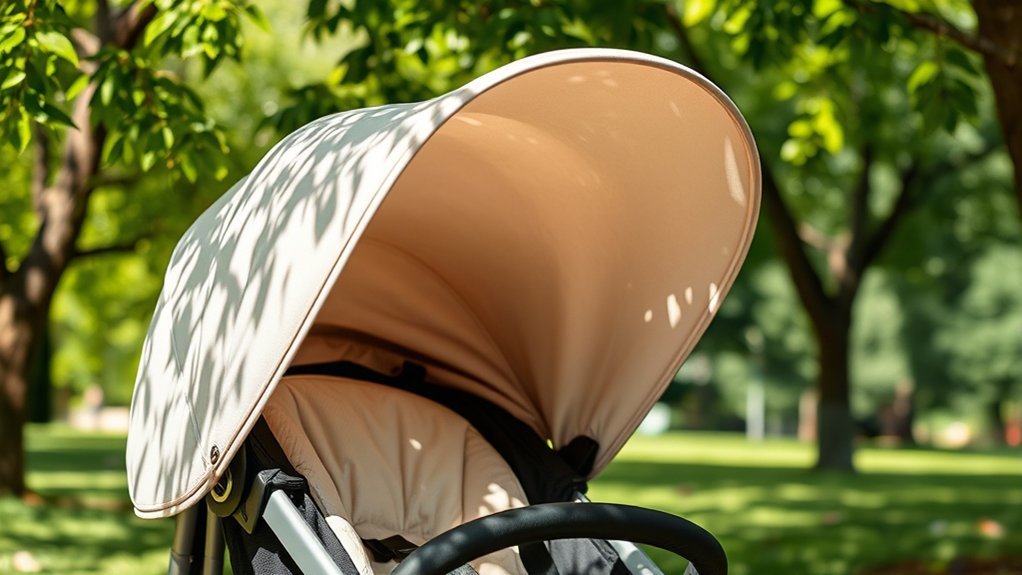
Shade matters, but airflow matters just as much. Start with the stroller’s built-in canopy and position the stroller so your baby stays out of direct sun. If the canopy does not provide enough coverage, use a compatible parasol or purpose-designed stroller sunshade that does not seal the stroller opening.
The NHS advises against covering a pushchair or pram with a blanket because it can contribute to overheating. Keep the stroller opening ventilated and check your baby regularly during warm outings.
Warning: Do not drape a dry blanket, muslin, towel, or other fabric across the stroller opening for shade in hot weather. In a 2023 controlled stroller study, a dry muslin covering increased in-stroller air temperature by 2.6°C compared with the study control, while dry flannelette increased it by 3.7°C.
You can read the controlled heat-study abstract on PubMed. The safer approach is to create shade without unnecessarily blocking natural ventilation.
During warm weather, choose cooler times of day when practical, take breaks in shade, and feel the seat fabric and buckles before placing your baby inside. Sweating, a hot chest, or flushed skin can be signs that a baby is getting too warm. Move to a cooler environment and reassess clothing and airflow if that happens.
If you use a stroller fan, mount it securely where your baby cannot reach the blades, cord, or clamp, and treat it as an airflow aid rather than a substitute for shade or temperature checks. For more detail, see our guide to stroller fan safety.
Reflective tape can improve visibility during early morning or evening walks, but it does not cool the stroller. Place reflective strips on the frame or lower sides where they will not peel into your baby’s space. Regularly inspect the canopy for stretched seams, loose snaps, broken zippers, or sagging fabric so it keeps providing reliable coverage.
Cup Holders and Organizers: Keep Convenience From Affecting Stability
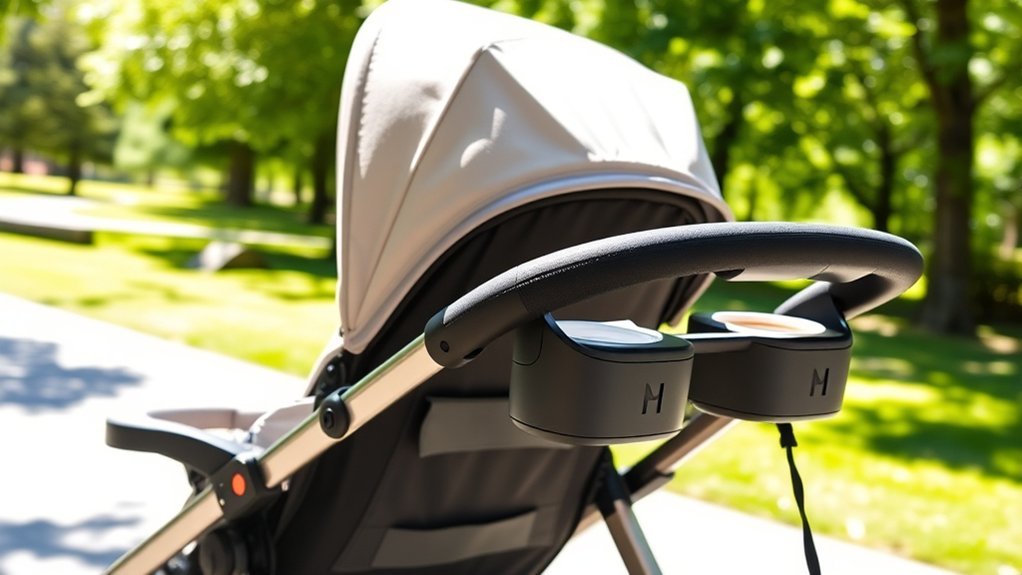
A cup holder or organizer can make walks easier, but it should not change the stroller’s balance, steering, folding mechanism, or access to the brake. Choose a stroller-compatible accessory and install it according to its instructions rather than improvising attachments around folding joints or moving parts.
Keep heavy bottles, large tumblers, diaper bags, and shopping bags out of positions that make the stroller tip backward. The American Academy of Pediatrics advises parents not to hang bags or other items from stroller handles and recommends placing carried items in a low basket near the rear wheels when the stroller is designed with one. See the AAP stroller-safety guidance.
Note: Hot drinks can spill during bumps or sudden stops. Use a sealed travel mug and keep hot liquids away from your baby’s hands, legs, and seat area.
Clean cup holders and organizers when spills occur, and remove anything that makes the stroller harder to steer, brake, fold, or keep balanced.
How Can You Improve Stroller Support Without Adding Unsafe Padding?
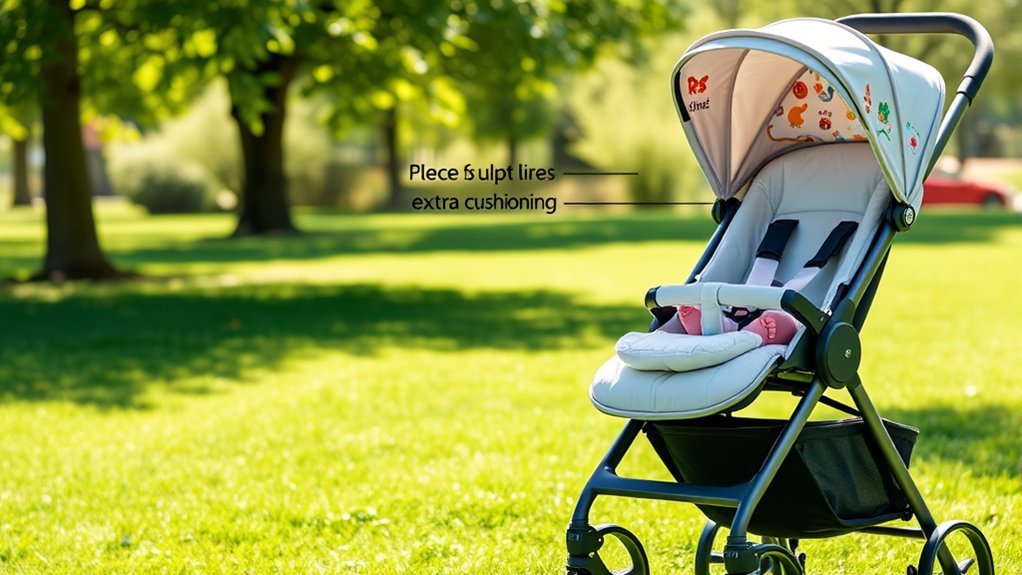
Start with the stroller’s approved seat configuration rather than trying to correct poor positioning with extra padding. The seat, recline, harness, and any insert should work together without pushing your baby forward, bunching behind the back, or changing where the buckle sits.
- Seat mode: Use only a stroller seat, bassinet, or compatible infant-car-seat setup that the manufacturer approves for your child’s age, size, and developmental stage.
- Padded inserts: If the stroller manufacturer permits an insert or liner, choose one that lies flat and lines up correctly with every required harness opening. Avoid loose pillows, folded blankets underneath the baby, or thick aftermarket padding.
- Recline: Use only the recline positions allowed in your stroller manual. Do not assume that a fully reclined toddler seat is approved for a newborn.
- Head and body position: Your baby’s face should remain visible and their head should not be forced forward with the chin pressed toward the chest. Do not add an aftermarket head-positioning pillow unless the stroller manufacturer permits it.
- Foot position: If the stroller has an adjustable footrest or calf support, position it according to the manual so an older baby or toddler is not left with awkwardly dangling or compressed legs.
- Ride quality: Check tires, wheel locks, swivels, and suspension. A stroller that rattles, drags, or pulls to one side can remain uncomfortable regardless of seat padding.
Pro Tip: After installing any permitted liner or insert, follow your stroller manual’s harness-fit instructions again. The straps should lie flat, stay untwisted, and secure your child without the accessory changing the buckle or strap position.
If your baby keeps fussing after the stroller setup is corrected, check temperature, hunger, diaper needs, clothing, strap contact points, fatigue, and whether the outing has simply gone on too long. Persistent slumping or poor positioning is a reason to reassess the stroller configuration rather than adding more cushioning.
Are Stroller Liners Safe?
A stroller liner can add a washable layer and modest cushioning when it is suitable for the stroller and does not interfere with the restraint system. Start by checking the stroller manual and the liner instructions for compatibility.
The liner should stay flat, keep every required harness slot usable, and leave the buckle in its intended position. Remove it if it slides, bunches, pushes your baby forward, blocks strap adjustment, or prevents the stroller from folding and locking normally.
During warm weather, avoid adding unnecessary thick or plush layers that trap heat around your baby. In cold weather, use a stroller-compatible footmuff or weather accessory only when its instructions allow the harness to route and tighten correctly. Do not place bulky coats, cushions, or folded blankets underneath the harness to create softness.
How Should You Adjust the Recline and Seat Position?
The correct stroller position depends first on what the manufacturer approves for your child’s age, size, and development. Newborns have limited head and neck control, so use a configuration specifically approved for newborn use, such as an appropriate bassinet, compatible infant car seat, or stroller seat that the manufacturer permits from birth. For more detail, see our guide on using a stroller for a newborn safely.
As babies gain head and trunk control, the stroller manual may allow progressively more upright positions. Before each outing, check that your baby is not slumping sharply forward or to one side and that their face remains visible.
If your stroller has a calf support or footrest, adjust it according to the manufacturer’s instructions so the legs are supported without being forced into an awkward position.
For babies younger than 1 year, a stroller is not a routine safe-sleep surface. The American Academy of Pediatrics recommends moving a baby who falls asleep in a stroller to a firm, flat sleep surface on their back as soon as possible. Do not add loose pillows, stuffed animals, mattresses, or bulky bedding around a sleeping baby. For more context, see our guide to stroller naps.
How Should a Stroller Harness Fit?
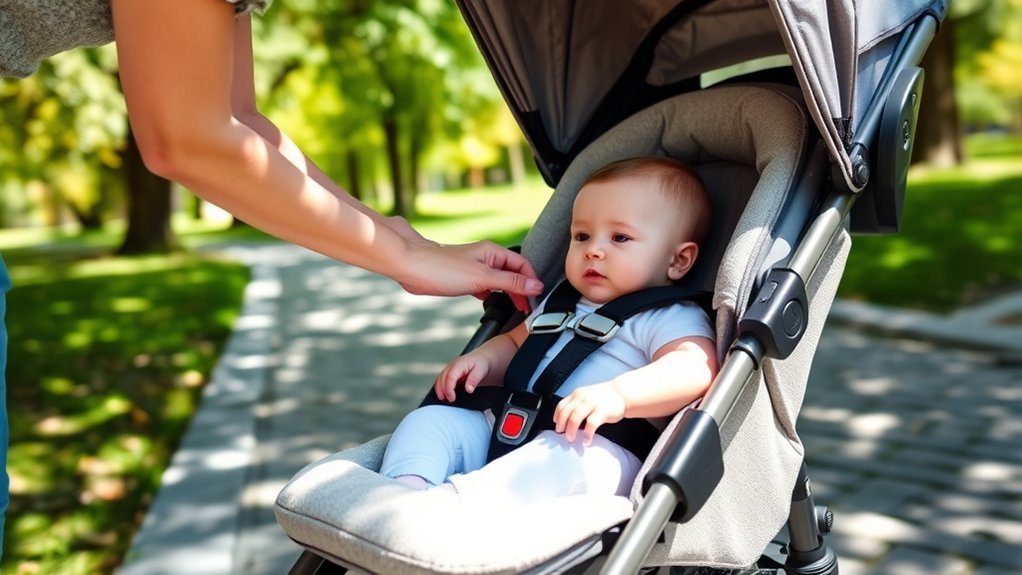
Use the stroller’s restraint system every time your child rides. The American Academy of Pediatrics recommends a five-point harness that restrains the child at the shoulders, hips, and between the legs. Follow your own stroller manual for the exact strap height, buckle position, and adjustment method.
Check the harness again after adding any permitted liner, footmuff, or insert. Straps should pass through the correct openings, lie flat without twisting, and secure your child in the intended position. If an accessory blocks the harness path, moves the buckle, or prevents proper tightening, remove it.
Inspect the webbing and buckles for cuts, fraying, damaged stitching, cracks, or unreliable latching. Do not tie knots in damaged straps or improvise a buckle repair. Contact the stroller manufacturer for the correct replacement or repair procedure.
Never leave a baby unattended in a stroller. A stroller also does not replace an approved child restraint for travel in a motor vehicle.
How Can You Make the Stroller Ride Smoother?
A smooth ride can matter as much as seat padding. If the stroller shakes over ordinary pavement or pulls to one side, inspect the wheels for hair, gravel, leaves, thread, or dried mud before adding more cushioning to the seat.
If your stroller has air-filled tires, use the pressure specified by the manufacturer or on the tire when applicable. Do not guess a pressure value. Underinflation, overinflation, a puncture, wheel damage, or misalignment can all change how the stroller pushes and absorbs bumps.
Use front-wheel swivel and locking features as the stroller manual directs. A locked front wheel may be appropriate for some rougher straight paths, while swivel mode usually makes smooth surfaces and tight turns easier. If a wheel squeaks or binds, clean it first and follow the manufacturer’s lubrication instructions rather than applying an unspecified oil or spray.
What Stroller Maintenance Improves Comfort and Safety?
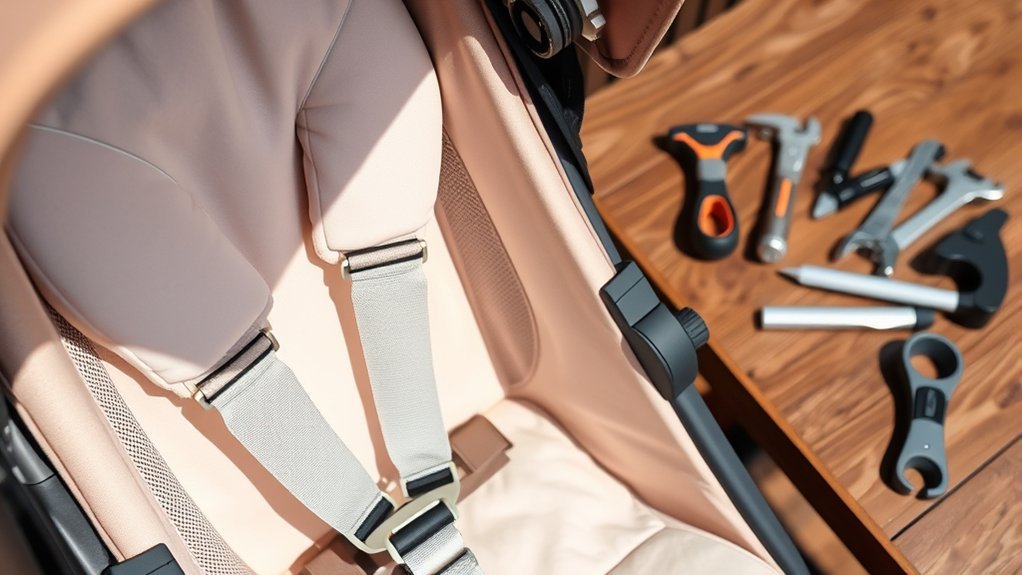
Regular maintenance helps the stroller roll, brake, fold, and restrain your child as designed. Use the cleaning and maintenance instructions in your stroller manual because approved detergents, removable fabrics, lubricants, and replacement parts vary by model.
A damaged brake, folding lock, harness, wheel attachment, or frame component is a safety issue to repair correctly—not a comfort problem to patch temporarily.
- Fabric and seat: Wipe crumbs and spills promptly and clean removable or fixed fabrics only as the manufacturer directs. Let fabric dry fully before storing or folding when the instructions require it.
- Harness and buckle: Look for fraying, cuts, loose stitching, cracks, contamination, or a buckle that does not latch and release correctly.
- Frame and folding mechanism: Inspect for loose fasteners, bent parts, sharp edges, cracks, or a lock that does not engage fully.
- Brakes and wheels: Remove debris and confirm that brakes engage and release correctly and wheels remain securely attached.
- Weight distribution: Keep heavy items in the stroller’s designated lower storage area instead of loading the handlebar.
- Recall check: Especially with a used stroller or accessory, search the U.S. Consumer Product Safety Commission recall database for the brand and model.
If a handle covering, canopy, wheel, brake, harness, folding lock, or frame component is damaged, follow the manufacturer’s repair or replacement guidance. Avoid improvised fixes that hide damage or interfere with moving parts.
Comfort Checklist Before Each Walk
Before leaving home, take a minute to check the stroller setup in the same order each time. Start with the approved seat configuration, then posture, harness fit, temperature, and ride quality.
- Check the seat mode: Confirm that the stroller configuration is approved for your child’s age, size, and developmental stage.
- Check posture: Make sure your baby is not sharply slumped forward or to one side and that their face remains visible.
- Check the harness: Buckle every required strap, remove twists, and adjust it according to the stroller manual.
- Check airflow: Keep the stroller opening ventilated and do not use a dry blanket or muslin as a full stroller cover.
- Check temperature: Feel the seat and buckles and watch for sweating, a hot chest, or flushed skin.
- Check accessories: Confirm that liners, organizers, cup holders, footmuffs, and shades do not interfere with straps, folding parts, brakes, or balance.
- Check storage: Put heavy belongings in the designated low storage basket rather than hanging them from the handle.
- Check wheels and brakes: Make sure the wheels roll normally and the brakes engage and release as designed.
Related Guides
Frequently Asked Questions
What materials are safe for baby when modifying the stroller?
Use only materials and accessories allowed by the stroller manufacturer or clearly compatible with your model. A permitted liner should stay flat, keep the harness openings clear, and not change the buckle position. Avoid loose pillows, thick padding, dangling cords, and small detachable pieces.
How often should I clean the stroller for comfort?
Follow the cleaning schedule and methods in your stroller manual. Wipe up crumbs and spills promptly, clean the fabric when it becomes soiled, and inspect the harness, buckles, brakes, and wheels regularly so dirt or damage does not affect comfort or operation.
Can I use a stroller liner in any stroller model?
No. Check the stroller manual and liner instructions first. A suitable liner should match the seat, keep every required harness opening usable, stay flat, and not interfere with buckling, adjustment, folding, or the stroller’s approved seating position.
What are signs my baby is uncomfortable in the stroller?
Fussing, crying, repeated squirming, sweating, a hot chest, flushed skin, sharp slumping, or straps rubbing the neck or legs can signal discomfort. Check the seat configuration, posture, harness, temperature, clothing, diaper, and whether your baby needs a break from the stroller.
How can I prevent my baby from overheating in the stroller?
Use the stroller canopy, a compatible parasol, or a purpose-designed sunshade while keeping airflow open. Dress your baby for the weather, take breaks in cooler areas, and do not cover the stroller opening with a dry blanket or muslin. Check your baby regularly for sweating, a hot chest, or flushed skin.
Is it safe to add extra cushions to a stroller?
Do not add loose pillows, mattresses, folded blankets, or bulky padding just to make the seat softer. Use an insert or liner only when the stroller manufacturer permits it or the accessory is clearly compatible and it does not change your child’s position or harness fit.
Should my baby nap in the stroller?
If a baby younger than 1 year falls asleep in a stroller, keep them supervised and move them to a firm, flat sleep surface on their back as soon as possible. A stroller should not be used as the baby’s routine sleep space.
Conclusion
The safest way to make a stroller more comfortable is to improve the setup before adding more padding. Use the manufacturer-approved seat mode, adjust the harness correctly, keep shade and airflow open, support the legs when the stroller provides an adjustable footrest, and keep the wheels and brakes working smoothly.
Before your next walk, remove any loose or incompatible accessories, check the stroller manual, confirm that the harness and seat position still fit your child, and inspect the wheels, brakes, and folding locks. Small adjustments usually improve comfort more safely than bulky cushions, improvised covers, or DIY modifications.
