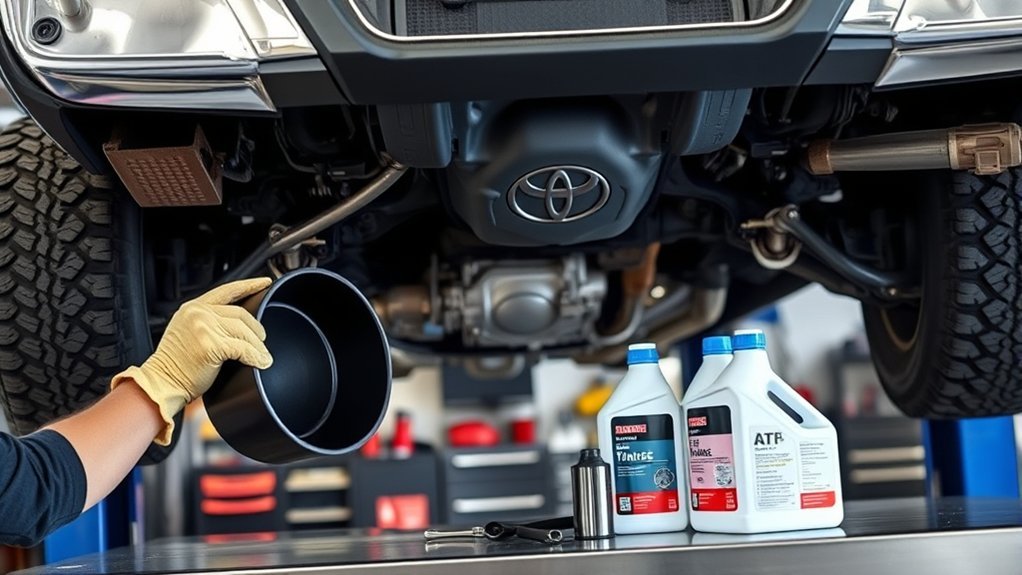
Your Toyota Tundra’s transmission can deliver dependable service for many years, but there isn’t one maintenance interval or fluid rule that fits every model. The best approach is to follow the maintenance guide for your exact model year, control heat and load while towing, inspect for leaks, and address shifting problems before they become serious.
Quick Answer
To help your Toyota Tundra transmission last longer, follow the maintenance guide for your exact model year, use the specified fluid, inspect for leaks, use Tow/Haul when appropriate, stay within payload and towing limits, and act quickly on slipping, harsh shifts, warning lights, or a burning smell.
Key Takeaways
- Use the maintenance schedule and transmission-fluid specification for your exact Tundra year and powertrain.
- Do not assume every Tundra needs fluid replacement every 30,000 miles or at every oil change.
- Towing, heavy loading, repeated grades, and hot conditions increase transmission stress.
- Many newer transmissions are sealed and do not have an owner-accessible dipstick.
- Slipping, delayed engagement, warning messages, smoke, or loss of drive require prompt professional attention.
At a Glance
| Time Required | About 10–15 minutes for a visual leak and warning check; professional fluid service may take one to several hours. |
| Difficulty | Easy for visual checks and recordkeeping; advanced for sealed-transmission fluid service. |
| Tools Needed | Flashlight, gloves, clean cardboard, maintenance records, and the correct Toyota manual. Sealed systems require model-specific service equipment. |
| Cost | Visual checks cost little. Fluid service, diagnostics, and cooler work vary by model year, fluid capacity, parts, and local labor rates. |
Identify Your Tundra’s Maintenance Requirements First
Before planning transmission service, confirm your Tundra’s model year, engine, transmission, drivetrain, and normal use. Toyota has used different transmissions and fluid specifications across Tundra generations, so advice for one year may be wrong for another.
Use Toyota’s manual and warranty lookup to find the owner’s manual and maintenance guide for your truck. Check both the normal-service chart and any special-operating-condition notes that apply to towing, heavy loading, dirt roads, or other demanding use.
Note: Do not choose transmission fluid by color, bottle wording, or another owner’s recommendation. Use the exact specification listed for your model year and transmission.
Understanding the Importance of Transmission Maintenance
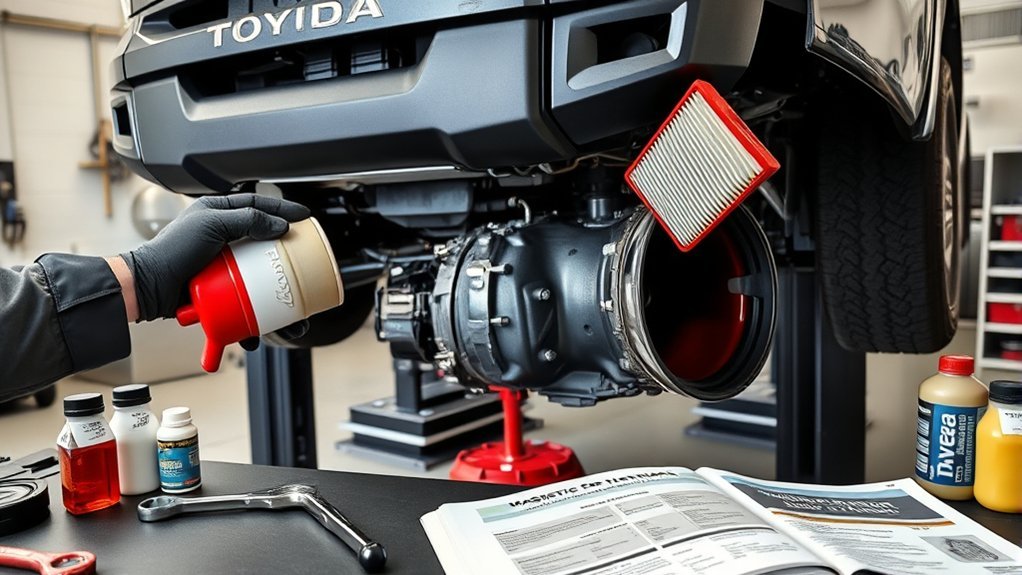
Transmission maintenance helps your Toyota Tundra shift properly, control heat, maintain hydraulic pressure, and protect internal parts. The fluid lubricates bearings and gears while supporting clutch operation and carrying heat away from working components.
Maintenance does not mean replacing the fluid as often as possible. It means following the correct schedule, using the correct fluid, checking for leaks, inspecting cooler hoses and connections when required, and diagnosing unusual operation early.
Keep detailed records showing the service date, mileage, fluid specification, work performed, and shop or technician. These records help prevent duplicate service and give a technician useful information if a problem develops later.
Warning Signs Your Tundra’s Transmission Needs Attention
A single symptom does not always prove that the transmission is failing. Engine performance, electrical faults, driveshaft problems, transfer-case issues, differentials, brakes, and wheel bearings can create similar noises or driving sensations. A proper diagnosis matters.
| Symptom | Possible concern | Recommended action |
| Delayed engagement | Fluid, pressure, valve-body, control, or internal wear issue | Schedule diagnosis soon and avoid heavy towing. |
| Engine revs rise without matching acceleration | Possible transmission slip or reduced power transfer | Stop towing and arrange prompt inspection. |
| Harsh, erratic, or repeated shifting | Control, sensor, software, pressure, or internal problem | Have diagnostic trouble codes and live data checked. |
| Fresh fluid beneath the truck | Possible transmission, cooler-line, engine, coolant, transfer-case, or differential leak | Identify the source before driving far or towing. |
| Temperature warning, smoke, or strong burning odor | Overheating, fluid leak, or another serious mechanical problem | Pull over safely, stop the load, and follow the owner’s manual. |
Slipping Gears or Delayed Engagement
Possible slipping may feel like rising engine speed without normal acceleration, an unexpected change in gear, or delayed movement after you select Drive or Reverse. Do not keep testing the symptom with hard acceleration because that may create more heat and wear.
Check the dashboard for warning messages and look beneath the truck for fresh leakage. A technician should then inspect trouble codes, fluid condition where serviceable, line pressure, control operation, and related powertrain components.
Unusual Noises While Shifting
Whining, clunking, grinding, humming, or vibration during acceleration or shifting deserves investigation. The noise may come from the transmission, but it may also come from a driveshaft joint, differential, transfer case, engine mount, exhaust part, or wheel bearing.
Note when the sound occurs, including the gear, road speed, engine speed, load, temperature, and whether the truck is turning or climbing. These details can reduce diagnostic time.
Warning: Stop driving and arrange towing if the truck loses drive, slips severely, produces smoke, leaks fluid rapidly, or displays a transmission-temperature warning that does not clear after you follow the owner’s-manual procedure.
Why Correct Transmission Fluid Service Matters
Transmission fluid gradually faces heat, oxidation, clutch material, and other contamination. However, the correct service interval depends on the transmission, model year, operating conditions, and Toyota’s published schedule.
For example, the 2025 Toyota Tundra Warranty and Maintenance Guide lists automatic-transmission-fluid inspections at scheduled intervals. It calls for replacement at 60,000 miles when the truck is driven primarily while towing a trailer, using a car-top carrier, or carrying heavy loads. The severe-use replacement appears again at 120,000 miles.
That example should not be applied automatically to every earlier or later Tundra. Always check the guide assigned to your VIN or model year.
Drain-and-Fill Versus a Transmission Flush
A drain-and-fill removes part of the old fluid and replaces it with the specified new fluid. A pan service may also involve removing the pan and servicing a strainer, filter, gasket, or magnets when the model-specific procedure calls for it.
A machine flush exchanges a larger percentage of the fluid. It is not automatically better for every high-mileage transmission, and it should not be performed merely because a generic shop menu recommends it. Ask what Toyota procedure the shop will follow, what fluid it will use, and how it will set the final level.
Use the Correct Fluid and Level Procedure
The wrong fluid can affect shift quality, clutch operation, seals, and long-term durability. Do not assume that all Toyota automatic-transmission fluids are interchangeable.
Many newer vehicles use sealed transmissions without an owner-accessible dipstick. Toyota advises owners to consult the manual because fluid type and level-check procedures vary. A sealed transmission may require a precise temperature range, vehicle position, and service procedure to establish the correct level.
Pro Tip: Ask the technician to record the exact fluid specification and quantity used on your invoice. This creates a useful service history and helps prevent incompatible fluid from being added later.
How to Prevent Transmission Overheating While Towing
Towing increases the work required from the engine and transmission. Trailer weight, payload, grade, speed, headwind, outside temperature, tire pressure, and repeated gear changes can all affect heat production.
Monitor the Factory Gauge and Warnings
Use the factory display, gauge, or warning system provided on your Tundra. Do not rely on one internet temperature limit for every model year. If a warning appears, reduce the load on the powertrain and follow the instructions in your owner’s manual.
Watch for repeated gear hunting, reduced performance, a burning odor, unusual shifting, or a temperature warning during a climb. Find a safe place to stop if the truck does not return to normal operation.
Use Tow/Haul Mode and Manage the Load
Use Tow/Haul or Tow+ when your equipped model’s manual recommends it. Toyota explains that the system changes engine, transmission, and steering behavior to better suit trailer towing or heavy loading.
Stay within the truck’s actual payload, gross combined weight, axle ratings, hitch rating, and towing capacity. Passenger weight, cargo, accessories, and trailer tongue weight all use part of the available payload.
Accelerate smoothly and allow the transmission to select appropriate gears. On long grades, follow the owner’s manual for gear selection and engine braking. Slowing down can reduce repeated shifting and powertrain load.
Consider an Aftermarket Transmission Cooler Carefully
An additional cooler may be useful on some Tundras that regularly tow near their rated limits or operate in demanding heat. However, it is not an automatic requirement for every truck.
The installer must consider the factory cooling circuit, fittings, hose material, flow direction, mounting location, airflow, cold-weather operation, and available temperature control. Poor installation can create leaks, restricted flow, excessive cooling in cold conditions, or damage to nearby parts.
Have a qualified technician inspect the factory cooler, radiator or heat exchanger, hoses, connections, and airflow before adding parts. A damaged or obstructed factory system should be repaired first.
Should You Consider an Aftermarket Transmission Cooler?
An aftermarket cooler makes the most sense when a model-specific evaluation shows that the factory system cannot adequately manage your repeated towing or loading conditions. Useful questions include:
- Does your Tundra already have a factory cooler or integrated heat exchanger?
- Are you towing frequently, or only a few times each year?
- Does the truck display high-temperature warnings or abnormal behavior under a verified legal load?
- Are the radiator, cooler passages, hoses, and connections clean and undamaged?
- Will the cooler be thermostatically controlled if your climate includes cold winters?
- Can the installer use approved fittings and prevent hose contact with hot or moving parts?
A cooler does not extend the factory fluid interval by itself. Continue to follow the maintenance schedule for the truck’s year and operating conditions.
How Your Driving Habits Affect Transmission Health

Your driving style affects how often the transmission shifts, how much heat it produces, and how heavily its internal clutches and bearings are loaded. Small changes can reduce unnecessary stress without making the truck difficult to drive.
Aggressive Driving Consequences
Repeated full-throttle acceleration, abrupt throttle changes, hard launches, and rapid shifts between Reverse and Drive increase driveline load. Allow the truck to stop completely before changing direction, and use progressive accelerator input when starting with a heavy load.
Avoid holding the truck on a hill with the accelerator. Use the brake pedal, parking brake, or brake-hold function where equipped and appropriate.
Towing Habits That Protect the Transmission
- Verify the complete load: Include passengers, cargo, accessories, hitch equipment, and trailer tongue weight.
- Use the correct towing mode: Activate Tow/Haul or Tow+ when the model-specific manual recommends it.
- Accelerate smoothly: Gradual throttle input reduces shock loading and unnecessary heat.
- Control speed on grades: Follow the manual’s gear-selection guidance and avoid repeated high-load gear hunting.
- Inspect after demanding trips: Look for fresh leaks, damaged cooler lines, unusual odors, or new shifting symptoms.
Regular Maintenance and Inspection
Have the transmission fluid, cooler hoses, and connections inspected at the intervals listed for your truck. Also maintain the engine cooling system, because poor airflow or cooling-system problems can contribute to high underhood and powertrain temperatures.
After off-road travel, inspect the underbody for impact damage, packed mud, crushed lines, and leakage. After deep-water exposure, arrange an inspection if water may have reached breathers, connectors, seals, or driveline components.
Recommended Maintenance Schedule for Your Tundra’s Transmission
No single schedule covers every Toyota Tundra. Use this table as a decision guide, not as a replacement for your maintenance booklet.
| Situation | What to do |
| Normal driving with no symptoms | Follow the inspection and replacement entries in the maintenance guide for your exact model year. |
| Primary use includes towing or heavy loading | Follow the special-operating-condition schedule. For example, the 2025 guide specifies automatic-transmission-fluid replacement at 60,000-mile intervals for this use. |
| Fresh leak or damaged cooler line | Arrange inspection immediately. Do not tow or continue driving with rapid fluid loss. |
| Harsh shifting, slipping, delayed engagement, or warning light | Diagnose the cause before performing a routine fluid service or adding parts. |
| Unknown service history | Have the truck inspected and discuss an appropriate service plan based on condition, mileage, use, and model-specific procedures. |
Do not schedule a drain-and-fill at every oil change unless a model-specific Toyota document or a qualified diagnosis provides a clear reason. Likewise, do not assume that a filter or pan gasket must be replaced at every fluid service.
When to Seek Professional Help for Tundra Transmission Issues
Arrange professional diagnosis when you notice persistent slipping, delayed engagement, harsh or unpredictable shifting, warning messages, fresh leakage, a burning odor, vibration, or unusual noises. Diagnostic work should come before replacing fluid or installing a cooler when the truck already has symptoms.
A qualified technician can check trouble codes, software updates, wiring, sensors, solenoids, mounts, driveline components, cooler flow, and internal transmission operation. These checks help separate a transmission problem from an engine, transfer-case, differential, or driveshaft fault.
Check your VIN through the Toyota recall and service-campaign lookup and the NHTSA recall database. Recall coverage is VIN-specific and can change as manufacturers identify affected vehicles.
Safe DIY Checks for Common Transmission Concerns
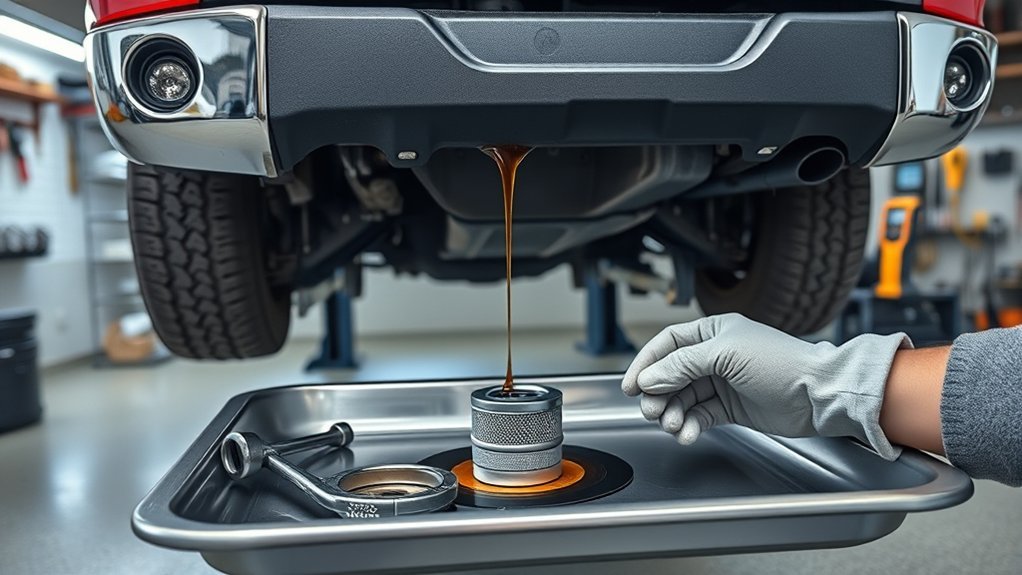
You can perform several useful checks without opening the transmission or guessing at the fluid level:
- Inspect the parking area: Place clean cardboard beneath the truck overnight and look for fresh drips.
- Check the dashboard: Record warning messages and note whether they occur when cold, hot, towing, climbing, or cruising.
- Document the symptom: Write down the gear, speed, engine rpm, load, and driving conditions.
- Inspect visible lines and connections: Look for wetness, abrasion, loose supports, impact damage, or hose contact with hot parts.
- Review service records: Confirm the last fluid service, specification used, and whether the work matched the applicable schedule.
- Check for recalls: Use the truck’s VIN rather than relying on model-year rumors or forum posts.
Warning: Do not remove fill, check, or drain plugs from a sealed transmission unless you have the correct Toyota procedure, specified fluid, safe lifting equipment, and required service tools. An incorrect fluid level can damage the transmission.
Using Tundra Owner Communities Wisely
Tundra forums, social groups, and local meetups can help you identify common symptoms, reputable shops, useful towing setups, and model-specific service experiences. They can also help you prepare better questions for a technician.
Community advice should not replace the Toyota manual or a diagnosis. Always confirm the poster’s model year, engine, transmission, drivetrain, climate, modifications, and use. A fluid or cooler recommendation for one generation may not fit another.
Related Guides
Frequently Asked Questions
What can I do to make my Tundra transmission last longer?
Follow the maintenance guide for your exact year, use the specified fluid, stay within towing and payload limits, use Tow/Haul when recommended, inspect for leaks, avoid abrupt direction changes, and diagnose shifting problems promptly.
How long does a Toyota Tundra transmission last?
Toyota does not publish one guaranteed or typical lifespan. Longevity depends on the transmission design, service history, towing load, heat exposure, driving style, fluid condition, repairs, and individual component condition.
What is the common transmission problem with the Toyota Tundra?
No single transmission problem applies to every Tundra generation. Symptoms may involve fluid leakage, sensors, wiring, software, solenoids, valve-body operation, mounts, cooler components, or internal wear. Check recalls by VIN and obtain a diagnosis for your specific truck.
How often should you change transmission fluid in a Toyota Tundra?
Use the maintenance guide for your exact model year. As one current example, Toyota’s 2025 Tundra guide calls for inspections during normal service and replacement at 60,000-mile intervals when towing, car-top carrier use, or heavy loading represents the truck’s primary operation.
Is a transmission flush better than a drain-and-fill?
Not automatically. The correct choice depends on the transmission, service history, fluid condition, symptoms, and Toyota’s procedure. A shop should explain the method, fluid specification, level-setting process, and reason for recommending it.
Does my Tundra need an aftermarket transmission cooler?
Not every Tundra needs one. Have the factory cooling system, cooler lines, airflow, load, climate, and towing pattern evaluated first. An additional cooler should be selected and installed for the exact model rather than added as a universal upgrade.
Sources
- Toyota 2025 Tundra Warranty and Maintenance Guide — transmission inspection intervals and severe-use fluid replacement.
- Toyota Manuals and Warranties — model-year-specific owner’s manuals and maintenance guides.
- Toyota Transmission Fluid Guidance — fluid-service methods, manual verification, and sealed-transmission information.
- Toyota 2024 Tundra Quick Reference Guide — Tow/Haul operation and current Tundra towing controls.
- Toyota Recall Lookup — VIN-specific safety recalls and service campaigns.
- NHTSA Recall Lookup — federal recall and safety-issue information.
Conclusion
Helping your Toyota Tundra transmission last longer starts with accurate, model-specific information. Follow the maintenance guide for your truck, use the specified fluid, manage towing loads, inspect for leaks, and use factory towing modes as directed.
Avoid arbitrary fluid intervals, universal temperature targets, and one-size-fits-all cooler upgrades. When slipping, warning messages, leakage, or unusual shifting appears, early diagnosis gives you the best chance of correcting the cause before additional damage occurs.