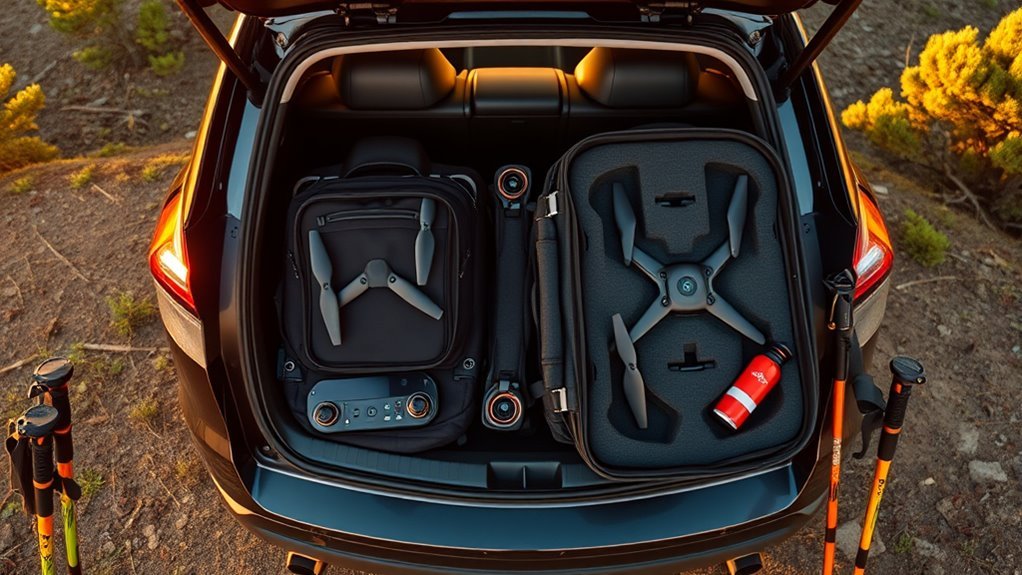
Packing and transporting a drone requires more than dropping it into a bag. The right approach depends on whether it is going in a car, a hiking backpack, or airline baggage. Battery placement, propeller security, and case protection all matter, especially when deciding between carry-on and checked luggage. A few small packing choices can determine whether the equipment arrives intact or in pieces.
How Should You Pack a Drone for Travel?
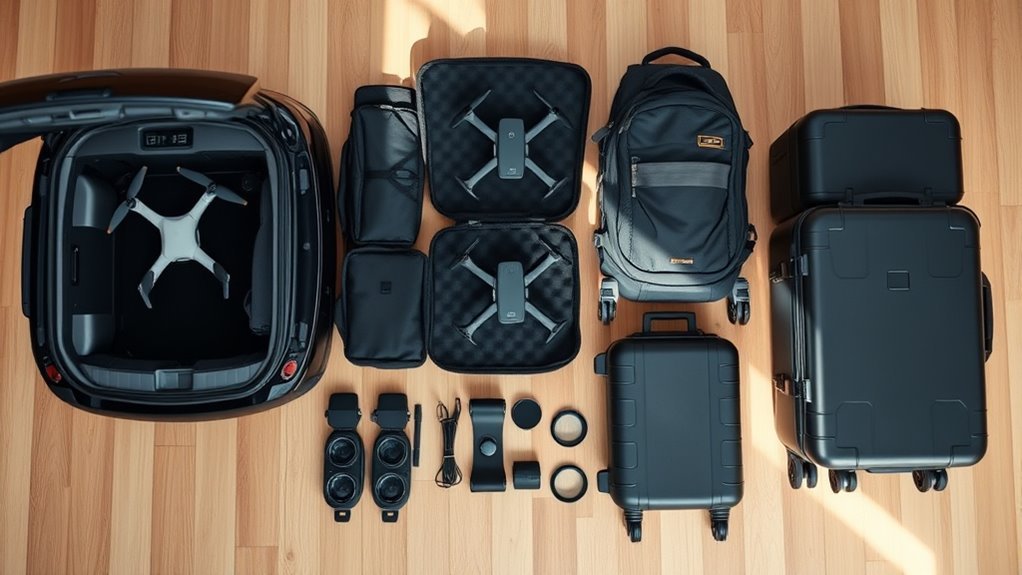
A drone should be packed in a specialized backpack or hard case designed to organize and protect the aircraft and its accessories during travel. The backpack should include padded compartments that immobilize the frame, propellers, controller, cables, and filters, limiting impact and internal abrasion.
Lithium-ion batteries must be placed in carry-on baggage, not checked baggage, because airline rules and airport security commonly restrict them from the hold. A traveler should verify size and weight limits before departure; many carriers accept carry-on backpacks under 55L without extra fees.
Lithium-ion batteries must travel in carry-on baggage, with size and weight limits checked before departure.
If the drone kit is large, a hard case may provide better structure, but the same battery rule applies. For mobility, a compact, lightweight backpack with modular storage supports efficient movement through terminals and keeps essential parts accessible.
Careful packing reduces dependence on external handling and preserves operational readiness.
How Do You Pack a Drone in Your Car?
Before departure, the drone should be powered off, with all propellers removed or firmly secured to eliminate movement and reduce the risk of damage.
For car transport, a padded case is the most effective enclosure. It should protect the drone from vibration, road shock, and incidental contact. Accessories, including batteries and controllers, should be placed in separate compartments to preserve order and prevent abrasion.
| Item | Placement | Purpose |
|---|---|---|
| drone | main compartment | impact control |
| batteries | separate slot | protect cells |
| controller | padded pocket | prevent abrasion |
| accessories | organized sections | rapid access |
| case | secured in vehicle | stop shifting |
Heavy objects should never be stacked above the drone, since compression can damage sensitive components. The case must be restrained by a seat, cargo net, or other stable surface so it remains fixed during transport. This arrangement supports safe movement while keeping the drone ready for immediate deployment.
What Makes a Good Drone Backpack for Hiking?
A good drone backpack for hiking balances capacity and organization through multiple compartments for drones, batteries, controllers, and personal gear.
It also requires protective padding, durable materials, and accessible storage that reduce handling time while shielding equipment from impact.
Comfort and weight distribution remain critical, with a manageable volume and load balance that limit strain over extended hikes.
Capacity And Organization
For hiking, a good drone backpack typically falls in the 30–55 liter range, providing enough room for the drone, batteries, controller, and other essentials without becoming unnecessarily bulky.
This capacity supports disciplined organization: multiple compartments, padded dividers, and dedicated pockets keep gear separated, protected, and immediately accessible. A well-designed backpack reduces search time and limits incidental contact between sensitive components.
Models such as the High Vibes and Nomatic Peter McKinnon illustrate this approach with tailored layouts for drone systems.
Pilots often value adaptability as well, since a single pack may also carry cameras or fishing equipment. The objective is efficient storage, controlled weight distribution, and a clear internal structure that supports mobility without excess.
Comfort And Weight
Comfort and carry weight are central to a hiking drone backpack’s usefulness, and an empty pack weighing no more than 5–6 pounds is generally preferred to reduce fatigue over long distances.
A well-chosen model respects weight limits while preserving comfort through adjustable, padded shoulder straps and a supportive hip belt that shifts load to the hips.
Capacity around 30–40 liters is usually sufficient, but the backpack carefully should remain compact enough to avoid drag and imbalance.
Multiple compartments and dividers keep equipment organized, reducing handling time and wasted effort.
Breathable materials and a stable frame also help maintain efficient movement on uneven terrain.
For hikers seeking mobility and autonomy, the ideal pack balances restraint, structure, and comfort without adding unnecessary burden.
Protection And Access
Protection and access determine how well a hiking drone backpack performs once the trail gets rough. A good model uses padded compartments to deliver protection from impacts, dust, and moisture while keeping sensitive components stable.
Efficient organization is essential: multiple pockets and dividers support quick access to the drone, batteries, controllers, and tools without unpacking everything. For Backpacking Gear, the pack should also remain light, durable, and easy to carry over distance.
Adjustable straps and breathable panels improve load control, reducing strain on the body. If the backpack can fit extra cameras or fishing equipment, its utility increases without sacrificing order.
In practical terms, it should function like a personal item that enables movement, readiness, and liberated field use.
Can You Carry On a Drone Backpack?
Yes, in most cases a drone backpack can be carried on board, as long as it meets the airline’s size limits for carry-on items, typically around 9 x 14 x 22 inches.
Most carriers allow one bag allowed in carry-on, but policy varies, so one should check your pack before travel. This matters on a backpacking trip, where freedom depends on avoiding gate-check delays and unexpected fees.
Budget airlines may impose stricter dimensions or require a smaller personal item, and weight restrictions can also apply even when the bag fits physically.
Drone batteries must remain in the cabin under TSA rules, not in checked baggage. The backpack should be secure, compact, and easy to inspect.
Organized compartments improve mobility and reduce handling time at security. If the pack exceeds limits, it may need to be checked or incur charges.
A precise review of the airline’s carry-on terms preserves access, control, and travel independence.
What Drone Gear Goes in Carry-On?
When packing drone gear for air travel, the battery packs should go in carry-on luggage, since lithium batteries are not permitted in checked bags. Spare cells should remain under 100 watt-hours each, matching TSA limits for a carry-on bag.
Remote controls, propellers, and cameras belong there as well, because quick access and impact protection reduce operational risk. A padded drone backpack or case keeps components organized and insulated from crush damage, while leaving checked baggage for noncritical items only.
Nothing powered by lithium should be treated as allowed in checked baggage unless the carrier states otherwise in writing. Before departure, the traveler should confirm airline size limits, since overhead-bin dimensions vary and can constrain a liberated, efficient setup.
A small first aid kit may also fit beside the kit, but it should not displace mission-critical gear. Personal experience often shows that compact packing preserves autonomy at security and boarding.
How Do You Check a Drone Backpack Safely?
A drone backpack should be checked only after all straps, buckles, and loose accessories are secured and tucked away to prevent snagging or abrasion during handling.
Hard components should be surrounded with soft clothing or padding, and the backpack should be placed inside a suitcase or durable duffel for added impact protection.
Clear contact labeling and travel insurance add further safeguards if the bag is delayed, lost, or damaged in transit.
Packing Straps Securely
Before checking a drone backpack, all straps and loose materials should be tucked in and snapped down to reduce snagging and abrasion in transit. For packing straps securely, the operator should verify every buckle on the large backpack and then place the load in checked luggage only after a final check. A mesh storage bag or sleeping-bag sack adds an external barrier without blocking handles. Delicate parts should be wrapped in soft clothing so precious gear stays isolated from impact. Trekking pole tips, if present, should be capped with socks to prevent punctures.
| Check | Action |
|---|---|
| Straps | Tuck and snap |
| Closure points | Confirm latched |
| Exterior | Bag the pack |
| Fragile items | Cushion with clothing |
| Identification | Add contact info |
Protecting Drone Gear
Protecting drone gear in checked baggage begins with minimizing exposed surfaces and internal movement.
Before the backpack is checked, all straps, clips, and loose accessories should be secured to prevent snagging during handling. A large mesh or storage bag can encase the pack, and a trash bag at the counter adds a simple outer shield.
Inside, delicate drone components should be surrounded with soft clothing to limit shock and reduce shifting. Clear contact information on the bag improves recovery if the load is misplaced in air travel.
For backpacking travelers, this layered approach keeps equipment protected while preserving mobility. Travel insurance is prudent, since checked baggage is exposed to rough handling, delay, and loss.
What TSA Rules Apply to Drone Batteries?
When flying with a drone, TSA regulations require lithium-ion batteries to be carried in carry-on luggage rather than checked, due to fire risk.
Drone batteries cannot be placed in checked baggage under standard TSA rules, because onboard access is needed if thermal runaway occurs. Each lithium-ion battery carried on board must stay under 300 watt-hours, and passengers may bring no more than two spare batteries in carry-on luggage, each below 160 watt-hours.
Drone batteries must stay in carry-on baggage, with spare limits and watt-hour caps to reduce fire risk.
Terminals should be taped or otherwise covered to prevent short circuits, and each battery should be isolated in a protective case. These measures reduce electrical contact and preserve mobility through airport screening without surrendering control to the cargo hold.
Airline policies may be stricter than TSA rules, and international regulations can differ by carrier and route. Before departure, the traveler should verify current limits for drone batteries directly with the airline to maintain compliance and avoid confiscation, delay, or forced rebooking.
How Do You Protect Checked Drone Gear?
A drone placed in checked luggage should be secured in a durable, padded case designed to absorb shocks and impact during transit.
In checked baggage, a rigid suitcase with a fitted insert offers the most reliable shield against crushing and vibration. Every loose component should be immobilized so internal motion cannot abrade frames, gimbals, or housings.
Delicate parts, including propellers and cameras, should be wrapped in soft clothing or bubble wrap to add cushioning without excess bulk.
If a specialized case is unavailable, a cardboard box can serve as a temporary container, but it must fit tightly enough to prevent shifting.
The objective is simple: secure the aircraft so turbulence, drops, and handling do not compromise its structure.
Clear exterior labeling with contact information and contents helps recover lost gear.
Proper packing protects equipment and preserves the freedom to travel without avoidable damage.
How Do You Pack Cables, Pads, and Accessories?
Cables, pads, and small accessories should be packed in organized compartments to prevent tangling, abrasion, and unnecessary movement during transit.
Cable organizers or pouches should separate leads by function, allowing rapid retrieval without unpacking the entire kit.
Padded cases or divided inserts inside a backpack can shield batteries, remote controllers, and similar accessories from impact and compression.
Velcro straps and elastic bands should secure loose items so they remain fixed during transport, reducing wear and friction.
Color-coding or labeling improves identification, especially when a quick launch is needed and time is limited.
The pack should also be inspected regularly; worn or damaged cables should be replaced before they compromise performance or safety.
A disciplined system of organizers and compartments gives the operator cleaner access, faster setup, and more freedom to move through field conditions without avoidable delays or equipment failure.
Frequently Asked Questions
Can I Pack My Drone in My Checked Luggage?
Yes, a drone can usually be placed in checked luggage, but compliance depends on airline policies and battery regulations.
Lithium batteries often must be carried on, not checked, due to safety limits.
The drone should be secured with padding or specialized packing materials, with propellers removed to reduce damage.
For reliable transportation methods, the traveler should declare the item at check-in and verify drone safety tips before departure.
Can I Bring a Hiking Backpack on an Airplane?
A hiking backpack can usually be brought on an airplane if it meets airline regulations for carry-on size and weight.
Most carriers accept hiking gear under about 50–55 liters, though dimensions matter more than volume.
Packing tips include compressing straps and securing travel essentials to preserve drone safety and fit.
Larger packs may be checked on smaller aircraft.
Final confirmation should come from the specific airline before departure.
Can I Bring a Hiking Backpack on a Plane?
Yes, a hiking backpack can usually fly, can usually board, can usually clear security, provided airline policies and travel regulations are met.
The pack should fit carry-on limits, especially when loaded with hiking gear or bulky exterior pockets. Precise packing tips, strict measurement, and compression support compliance are essential.
For liberated, efficient movement, the traveler should verify size limits early, protect contents, and account for drone safety if sensitive equipment is included.
Does TSA Allow Backpacks as Carry-On?
Yes; TSA generally allows backpacks as carry-on if they fit the airline’s carry on limits and pass security screening.
Size and weight still depend on the carrier, so a compact pack is easier to approve. Battery regulations matter for electronics and drone size can affect packing.
Travel tips: verify dimensions, keep valuables accessible, and check the airline’s policy before departure.
Strict compliance preserves movement, reduces fees, and avoids unnecessary restriction.
Conclusion
Packing a drone for travel works best when the case is padded, the props are secured, and batteries stay within airline rules. In a car, stable placement and load control prevent damage; for hiking, a fitted backpack improves comfort and access. Carry-on is usually safest for lithium-ion batteries, while checked gear needs extra padding and labeling. With cables, pads, and accessories organized, the setup is travel-ready, even for a knight’s road to the trailhead.