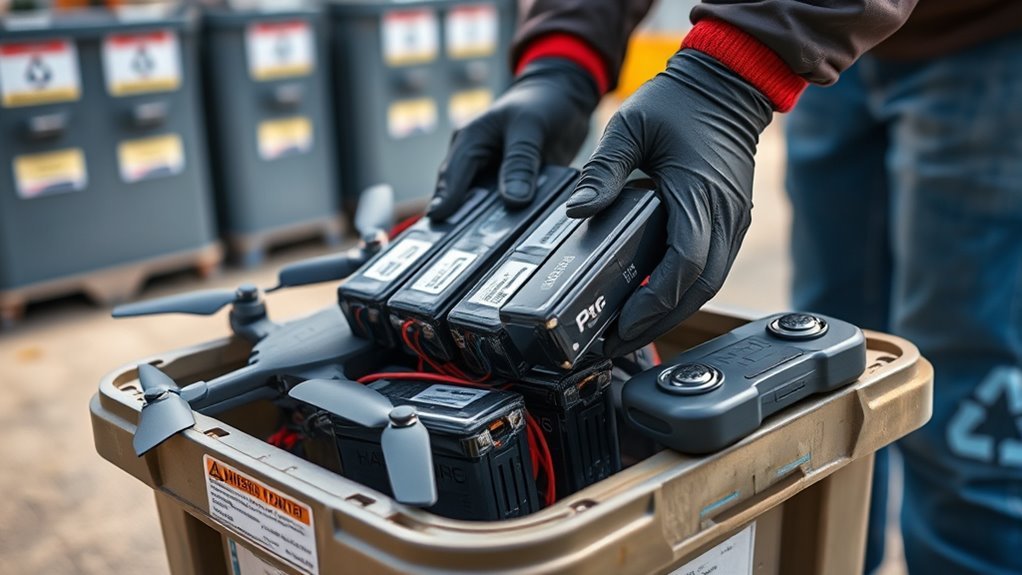
Drone batteries require careful disposal because LiPo and Li-ion packs can ignite, leak, or fail under stress. They should not be treated as ordinary waste, and simple mistakes during discharge or transport can create serious hazards. Safe handling starts with controlled power reduction, then moves to isolation, labeling, and certified recycling. The details matter, especially when a pack is swollen, damaged, or already unstable.
Why Drone Batteries Shouldn’t Go in the Trash
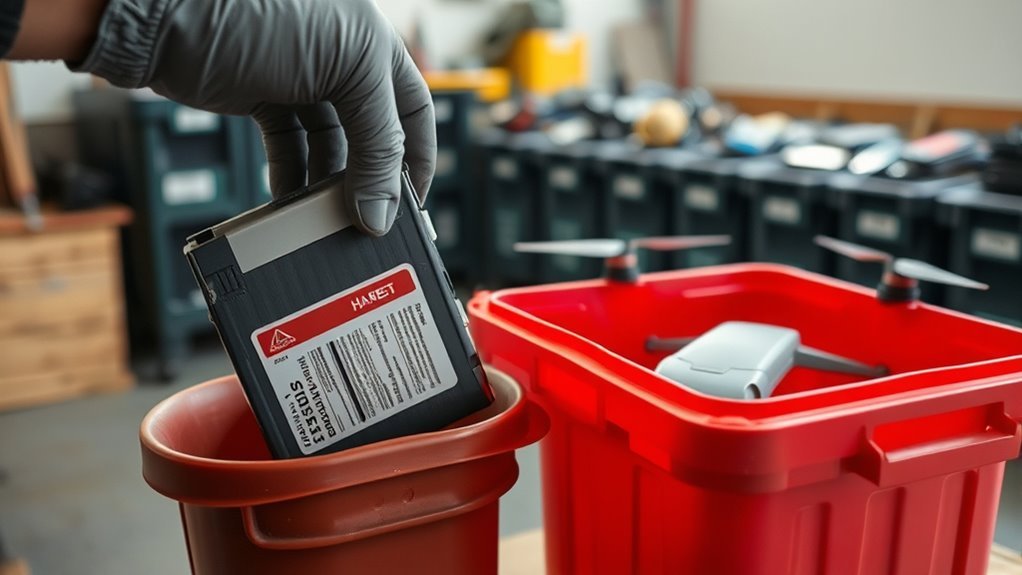
Drone batteries, especially lithium polymer (LiPo) and lithium-ion types, should not be placed in regular trash because they contain hazardous materials that can contaminate soil and water if they leak.
From a battery safety perspective, these lithium batteries also present a serious ignition hazard when crushed, punctured, or short-circuited in waste streams.
LiPo cells are classified as high-energy items, and damage during collection, compaction, or transport can trigger fire or explosion. Such events threaten sanitation workers, landfill operations, and nearby communities.
Many jurisdictions prohibit disposal in household waste and require consumers to properly dispose of them through certified collection systems.
A recycling center equipped for battery processing can isolate risks and recover valuable metals, reducing demand for newly mined raw materials.
That pathway supports environmental protection and material independence, while avoiding legal penalties tied to improper disposal.
How to Discharge Drone Batteries Safely
To reduce fire risk before disposal, LiPo drone batteries should be discharged to roughly 10% capacity rather than left fully charged. This controlled discharge lowers stored energy and helps the owner safely dispose of the pack with less hazard.
Discharge LiPo drone batteries to about 10% before disposal to reduce stored energy and fire risk.
A hobby charger, used in a fire-safe area, is the preferred method because it can monitor current and limit overheating. A resistive load, such as a 12V low-voltage bulb, may also be applied on a non-flammable surface to draw down the LiPo battery gradually.
As a last resort, saltwater immersion can discharge Lithium cells, but the process is slow, messy, and less controlled. Manufacturer guidelines should always be consulted before any method is chosen, since design differences affect safety and compliance.
Careful handling preserves personal freedom from unnecessary risk while keeping the battery outside the waste stream.
How to Prep Drone Batteries for Recycling
Before a drone battery is sent to recycling, it should be reduced to roughly 10% capacity to limit stored energy and lower fire risk.
For battery recycling, the lithium battery should then be prepared with caution: follow manufacturer guidance, especially for DJI packs, which may be discharged while still installed in the aircraft. Acceptable discharge methods include a controlled session with a hobby charger in a fire-safe area, or the use of a resistive load such as a low-voltage bulb to bleed off remaining charge.
Once the pack is at the target level, inspect the exterior for stability and secure handling. Before transport, tape the terminals with non-conductive tape to prevent accidental short circuits.
A prepared pack should remain isolated, labeled if required, and delivered promptly to an approved facility. This procedure supports safe, disciplined recycling while reducing unnecessary hazard and preserving personal autonomy through informed, responsible action.
How to Handle Swollen or Damaged Packs
Swollen, punctured, or leaking LiPo packs should be isolated immediately and treated as unstable.
They should be placed in a fire-resistant container and kept on a non-flammable surface, away from combustibles, until disposal is arranged.
The local hazardous waste facility should then be contacted for instructions specific to the damaged battery type.
Isolate Damaged Packs
Damaged LiPo packs should be isolated immediately, as swollen, punctured, or leaking batteries can become unstable and pose a fire hazard.
Such damaged batteries should be set apart from intact packs, handled minimally, and kept on a non-combustible surface away from flammable materials to reduce fire hazards and preserve control.
Before transport, the terminals should be taped to prevent accidental short circuits. The pack should then be referred to a local hazardous waste facility for exact instructions on how to dispose of it under regional rules.
Disposal or recycling should proceed only through approved channels, where trained handlers can manage the risk.
Isolation is not optional; it is a practical safeguard that protects people, property, and the freedom to move unsafe energy out of ordinary use.
Use Fire-Resistant Containers
Once a swollen, punctured, or leaking LiPo pack has been isolated, it should be placed in a fire-resistant container, such as a metal bucket or terracotta pot, to reduce the likelihood of ignition and contain any thermal event.
This fire-resistant container should sit on concrete or outdoors, clear of combustibles, while swollen batteries and damaged batteries remain under observation until disposal is complete.
- Cover the pack with sand or kitty litter.
- Keep the lid loose, not sealed tight.
- Do not move the container unnecessarily.
- Inspect for heat, odor, or swelling.
- Follow local hazardous waste facility instructions.
Measured handling preserves personal freedom through disciplined risk control and prevents a minor failure from becoming a larger incident.
Contact Hazardous Waste Facilities
Hazardous waste facilities should be contacted promptly when a LiPo pack shows swelling, puncture damage, or leakage, since these conditions make the battery unstable and fire-prone.
The pack should remain isolated on concrete or outdoors, away from flammables, until transfer is arranged. One should contact your local Household Hazardous Waste program and confirm whether it accepts swollen or damaged batteries, along with any intake limits or packaging rules.
If required, apply proper labeling to identify the hazard clearly. Transport should occur only in a non-conductive container, reducing short-circuit risk and preserving public safety.
Such procedures limit exposure, protect handlers, and support responsible disposal of damaged batteries without surrendering collective control to preventable battery failure.
Where to Recycle Drone Batteries Near You
Many retailers, including Lowe’s, Walmart, Best Buy, Target, and Staples, offer battery recycling drop-off points that may accept drone batteries for safe disposal. These sites should be checked before arrival, since acceptance limits vary by location and battery chemistry. A certified recycling bin at Best Buy or similar stores may accept batteries from drones, but confirmation is prudent.
- local recycling centers often handle lithium-ion and lithium-polymer packs
- household hazardous waste facilities may accept batteries under specific rules
- Earth911 can locate nearby certified recyclers
- Call2Recycle lists approved collection sites
- community recycling events may add temporary drop-off options
Each option expands access to responsible disposal and reduces reliance on unsafe storage. For those seeking practical freedom from waste, the key is verification: confirm that the facility will accept batteries, note any size restrictions, and follow posted procedures.
Each option broadens access to safe recycling, but verification remains essential before drop-off.
This disciplined approach supports safe recycling and preserves material recovery pathways.
How to Transport Drone Batteries Without Shorts
Drone batteries should be prepared for transport by isolating every exposed contact point before movement. Each battery terminal should be sealed with electrical tape, and the main connector plus balance plugs should also be covered to prevent contact with conductive debris.
For a LiPo Battery, a non-conductive container or LiPo-safe bag reduces the chance of shorts and limits fire spread if damage occurs. A fireproof container, such as a metal bucket or rated fireproof bag, adds another containment layer during transport.
The battery should remain in a cool, dry place, away from flammable materials and extreme temperatures, because heat and moisture increase risk. Careful transport is not merely compliance; it is a practical assertion of control over hazardous chemistry.
Frequently Asked Questions
Can You Throw Away a Lipo Battery?
No, a LiPo battery should not be thrown away in regular trash. Proper charging safety and disposal reduce fire risk, protect battery lifespan management, and limit environmental impact.
It should be discharged fully, then taken to approved recycling options, such as retailer programs or hazardous waste facilities. The casing must remain intact, and storage should be in a fireproof container until transfer.
This approach supports safe, responsible, and liberated material stewardship.
Does Home Depot Take Bad Lipo Batteries?
Home Depot generally does not guarantee acceptance of bad LiPo batteries; local Home Depot policies vary.
Like a sealed spark in a spent lantern, a damaged pack demands controlled handling.
Battery recycling options should be confirmed directly with a store before transport.
Safe disposal methods require full discharge and insulation of terminals.
This cautious path reduces fire risk and environmental impact, while giving the owner practical freedom to choose lawful, specialized recycling facilities.
Is It Safe to Throw Away a Lithium-Ion Battery?
No, it is not safe to throw away a lithium-ion battery in regular trash. Proper battery recycling is the recommended disposal method because damaged cells can ignite and create significant environmental impact.
Safety guidelines advise taping terminals, avoiding puncture or crushing, and taking batteries to certified recycling or hazardous-waste sites.
These disposal methods reduce fire risk, limit chemical release, and support responsible handling while preserving freedom from preventable harm.
Are Lipo Batteries a Fire Hazard?
Yes—LiPo batteries are a fire hazard, especially when damaged, overcharged, or punctured; coincidentally, the same faults that reduce performance often trigger thermal runaway.
LiPo safety tips emphasize careful handling, while fire prevention methods include storage in fireproof containers and controlled discharge.
Battery disposal guidelines should be followed precisely.
Effective risk management strategies reduce ignition risk and support safer, more liberated use of drone technology without unnecessary exposure to preventable hazards.
Conclusion
In the end, drone batteries are most safely retired when treated as if they remain fully dangerous, which, inconveniently, they often do. LiPo and Li-ion packs should be discharged to about 10% capacity, terminals taped, and damaged cells isolated in fire-resistant storage before recycling. The irony is plain: a device built for flight must be grounded with care. Following certified disposal channels and local rules prevents fires, shorts, and unnecessary environmental harm.