MyPhonak app updates are supported on iPhone SE models running iOS 15.0 or later, including the 1st and 2nd generation, but results are usually better on newer hardware. The iPhone SE 1st gen is more limited because it stops at iOS 15.7 and may struggle with Bluetooth stability. Users should check iOS version, storage, and hearing-aid firmware before updating. If issues persist, more specific compatibility and troubleshooting steps can help.
Key Takeaways
- MyPhonak supports iPhone SE models running iOS 15.0 or later, including 1st and 2nd generation devices.
- iPhone SE 1st generation is limited to iOS 15.7, which can restrict newer MyPhonak features and stability.
- Bluetooth connectivity and updated hearing-aid firmware are essential for reliable MyPhonak performance.
- The app needs about 210 MB of storage, plus Wi-Fi and battery power, to install and update properly.
- If issues continue after re-pairing and restarting, contact Phonak support for firmware or compatibility help.
Is MyPhonak Supported on iPhone SE?
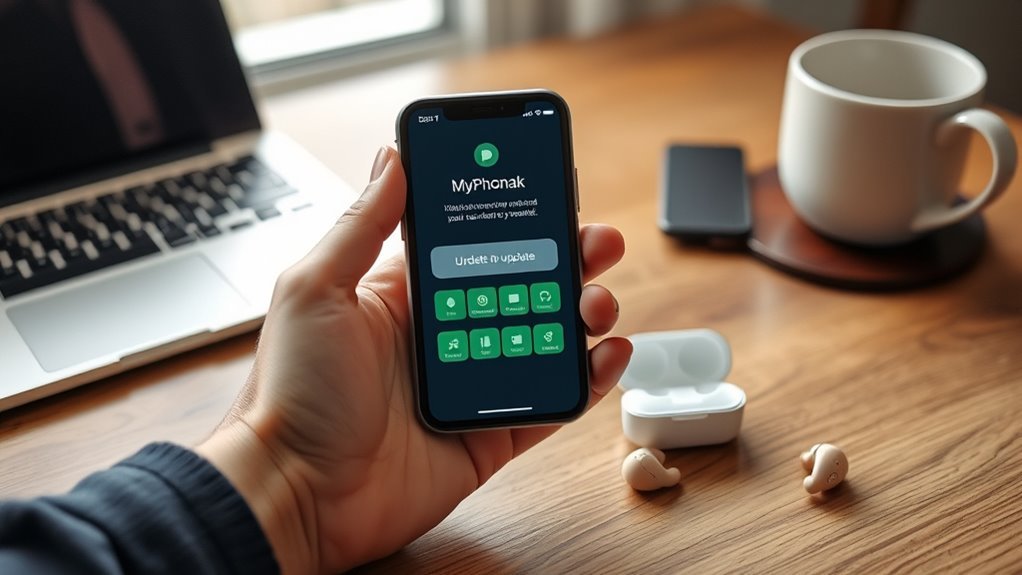
MyPhonak is supported on iPhone SE models that meet its iOS requirement, specifically iOS 15.0 or later. The myPhonak app can thus run on an iPhone SE 1st generation if the device is updated to iOS 15 or newer, and it also works on iPhone SE 2nd generation because that model satisfies the same system threshold.
Support, however, is not only about launch; it depends on stable performance, which older software can weaken. For users seeking control over hearing aid management, this matters. The app provides Bluetooth-based hearing aid controls and health tracking features for compatible Phonak devices, offering practical self-management.
Keeping the iPhone SE current improves reliability and reduces friction. Users should verify device compatibility on Phonak’s website before relying on the app, since model-specific behavior can vary.
Which iPhone SE Models Work With Myphonak?
Which iPhone SE models work with MyPhonak depends mainly on iOS support: the original iPhone SE from 2016 and the iPhone SE 2nd generation from 2020 both meet the app’s iOS 15.0 or later requirement.
For the MyPhonak app, that means either model can provide full functionality when kept on a supported system. The 2016 iPhone SE reaches iOS 15, which is enough for basic compatibility.
The 2020 iPhone SE supports iOS 15 and later, making it the stronger choice for users who want access to newer app features and smoother Bluetooth pairing with Phonak hearing aids.
Before relying on an iPhone SE, users should open Settings, confirm the exact model, and check the installed iOS version. This quick verification protects autonomy by avoiding unnecessary upgrades and ensuring the device still serves the user’s hearing needs.
Why the iPhone SE 1st Gen Fails
Although the original iPhone SE can still run iOS 15, it falls short of the latest MyPhonak update requirements because it is capped at iOS 15.7 rather than iOS 16.0. The iPhone SE 1st Gen thus struggles with the MyPhonak app, especially during a firmware update for Phonak hearing aids.
| Limitation | Practical effect | Result |
|---|---|---|
| iOS 15.7 cap | Misses iOS 16 features | Update failure |
| No Bluetooth-Low-Energy | Weak radio efficiency | Connectivity issues |
| Older hardware | Slower processing | Reduced stability |
| Limited health tracking | Fewer app functions | Less personalization |
| Modest battery life | Less sustained use | Dropped links |
This combination leaves the device unable to maintain reliable Bluetooth-Low-Energy sessions or support newer health tracking tools. For users seeking autonomy, the issue is not preference but capability: the iPhone SE 1st Gen cannot consistently deliver the responsive, uninterrupted experience newer Phonak hearing aids now expect.
MyPhonak Requirements for iPhone SE in 2026
In 2026, iPhone SE compatibility with MyPhonak depends on meeting the app’s baseline of iOS 15.0 or later, with newer iOS versions preferred for full support.
Bluetooth connectivity and hearing aid firmware also remain limiting factors, since the app is built for compatible Phonak models, including select Audéo devices.
Adequate storage is needed as well, because the app’s roughly 210.2 MB size can affect whether installation or updates proceed smoothly.
IPhone Se Compatibility
For iPhone SE users in 2026, MyPhonak support depends on both the device model and the installed iOS version: the app requires iOS 15.0 or later, and full functionality is best achieved on iOS 16.0 or newer.
This makes iPhone SE compatibility practical, but not universal across all generations. The original 2016 iPhone SE is constrained by its software ceiling and may not reach the level needed for the app’s current feature set.
Newer iPhone SE models are better positioned to run MyPhonak with fewer limits, provided storage is available for the 210.2 MB app.
Regular app updates should be checked, since new releases can improve performance and restore access to features users want to control their hearing on their own terms.
IOS Version Requirements
MyPhonak requires iOS 15.0 or later, so iPhone SE models can run the app only when their installed system version meets that threshold.
These iOS version requirements are satisfied by both the 1st and 2nd generation iPhone SE, provided the device is updated.
For practical use, the MyPhonak app should be installed on the latest available iOS version, because older releases may lose support and limit features.
The iPhone SE also needs enough storage, since the app is about 210.2 MB.
When the requirement is met, users can access health tracking links with Apple Health and keep hearing support under their own control.
In 2026, the decisive factor is system currency, not model age.
Bluetooth And Firmware Limits
Bluetooth connectivity becomes the main constraint once iPhone SE compatibility is established, because myPhonak depends on Bluetooth Low-Energy (BT-LE) to pair with supported Phonak hearing aids.
On an iPhone SE 2nd generation or later, bluetooth pairing generally works for app control, adjustments, and remote access. The original iPhone SE faces tighter limits: even where basic pairing is possible, older hardware and firmware support can reduce stability and block newer features.
Firmware updates for the hearing aids should be applied through the app whenever available, since they preserve compatibility and introduce improvements. The app’s 210.2 MB size also demands enough storage for smooth updates.
For users seeking independent, reliable hearing control, newer SE models offer the practical path in 2026.
How to Check MyPhonak Compatibility
Compatibility with the MyPhonak app can be confirmed by checking two main requirements: the iPhone model and the hearing aid model. MyPhonak compatibility begins with device age: an iPhone 6s or newer meets the baseline, so both iPhone SE generations qualify. iOS 15.0 or later is the prudent target for stable operation and fewer obstacles.
| Check | Standard |
|---|---|
| iPhone model | 6s or newer |
| iOS version | 15.0 or later |
| Hearing aid type | Bluetooth-enabled Phonak model |
| Verification method | Phonak website compatibility checker |
The hearing aids should be Bluetooth-capable, including Audéo, CROS, Naída, and Virto families. The checker on Phonak’s website offers a direct validation route, reducing uncertainty and supporting informed use. The app is intended for adults 18 and older with hearing loss, and it is classified as a medical device.
Features on Supported iPhone SE Models
On supported iPhone SE models running iOS 15.0 or later, the MyPhonak app provides core hearing-aid controls, health tracking, and Bluetooth-based adjustments. This gives users direct control without dependence on extra hardware or constant clinic visits, supporting more independent daily use.
- Adjust volume, program, and sound settings from the iPhone SE
- Track steps and wearing time inside MyPhonak
- Use Bluetooth for remote hearing-aid control
Newer iPhone SE models generally deliver the full experience more reliably, while the 1st generation may face feature limits because of older hardware.
Newer iPhone SE models usually deliver the full experience more reliably, while the first generation may have feature limits.
That does not eliminate access, but it can narrow what the app can handle in practice. Keeping the device updated to the latest iOS version helps preserve compatibility and performance.
For users seeking flexibility, MyPhonak on a supported iPhone SE remains a practical tool for managing hearing needs with less friction and more autonomy.
Fix Bluetooth Issues After Updates
After an iPhone SE or hearing-aid software update, connection problems can appear even when the MyPhonak app itself is supported. The first check is iOS version: the iPhone SE should run iOS 15.0 or later for reliable compatibility.
Next, verify hearing-aid firmware, because outdated code can disrupt Bluetooth handshakes and block MyPhonak control. If the link remains unstable, delete the hearing aids from Bluetooth settings, then pair them again from a clean state. This often clears corrupted connection records left behind by an update.
When failures continue, restart the device fully and, if needed, enter recovery mode to wipe the cache partition and remove software residue.
On compatible Android devices, similar post-update checks apply, including OS fixes that affect Bluetooth. Practical troubleshooting restores autonomy: confirm requirements, refresh firmware, rebuild pairing, and eliminate hidden glitches before assuming the app itself has failed.
Update MyPhonak on iPhone SE
To update MyPhonak on an iPhone SE, the user should open the App Store, go to the Updates section, and tap Update beside the app if a newer version is available. This process helps update myphonak on iphone se with minimal friction and keeps hearing aid control available.
The app requires iOS 15.0 or later, so compatibility depends on the iPhone SE model and installed system version. Before starting, the device should be on Wi-Fi and have enough battery to avoid interruption.
- Check for updates regularly to stay current.
- Install releases that add bug fixes and features.
- Keep the app aligned with hearing aid compatibility.
Regular updates often improve stability, expand functionality, and refine performance. For users seeking more autonomy, routine maintenance is a practical way to preserve control without relying on unnecessary support.
When to Contact Phonak Support
Phonak Support should be contacted if Bluetooth issues, missing custom programs, or failed health data syncs continue after standard troubleshooting.
Clarification is also appropriate when a firmware update may be affecting hearing aid performance or app features.
If the problem remains unresolved, the Product Support Center can provide further guidance and support.
Support Center Contact
When persistent problems remain after an update, users should contact Phonak Support to review app functionality, Bluetooth connectivity, or streaming issues that may affect the MyPhonak experience on iPhone SE.
Support can also clarify compatibility with new iOS releases and confirm whether the app is operating as intended. If custom programs vanish or need repeated recreation, that pattern deserves direct support review.
The Product Support Center offers a practical path for unresolved questions.
- Submit the support contact form with a clear issue summary.
- Include iPhone SE model, iOS version, and app version.
- Request targeted guidance for hearing aid and app features.
This approach reduces guesswork, speeds diagnosis, and helps users regain control without unnecessary troubleshooting loops.
Firmware Update Help
Firmware update problems, unexpected hearing aid behavior after an update, or lost custom programs are all clear reasons to contact Phonak Support. For firmware update help, a direct case review is often the fastest route to stable function and restored control.
| Situation | Action |
|---|---|
| Programs disappear | Report the issue |
| Hearing aids act oddly | Request troubleshooting |
| iOS compatibility is unclear | Ask support for guidance |
| Streaming or audiologist communication fails | Escalate to support |
Support can confirm MyPhonak app compatibility with current iPhone SE/iOS versions, explain known bugs, and provide device-specific steps. This approach avoids guesswork and protects the user’s ability to manage hearing independently.
Frequently Asked Questions
What Are the Compatibility Requirements for the myPhonak App?
Device Compatibility requires an iPhone 6s or newer, iOS 15.0+, adequate storage for the 210.2 MB app, and Bluetooth Low-Energy support; hearing-aid model support varies, so Phonak’s latest compatibility list remains essential.
Why Is the myPhonak App Not Working?
The myPhonak app often fails because App Functionality is disrupted by outdated iOS, incompatible device settings, Bluetooth instability, outdated hearing-aid firmware, language mismatches, or corrupted installation; updating, reinstalling, and checking firmware usually restores reliable control.
Why Won’t myPhonak App Pair With My iPhone?
The myPhonak app won’t pair because of Connection Issues: unsupported iPhone, outdated iOS or firmware, Bluetooth disabled, or hearing aids not in pairing mode. Reboot, forget devices, then reconnect; verify compatibility on Phonak’s checker.
How Do I Update myPhonak App?
Open the App Store, search “myPhonak,” and tap Update. About 210.2 MB may be required. If iPhone SE runs iOS 15 or later, App Features improve through automatic downloads, bug fixes, and better performance.
Conclusion
In 2026, the verdict is clear: MyPhonak support on iPhone SE depends on the model. The iPhone SE 2nd and 3rd generations can still pair the app’s features with proper iOS and Bluetooth support, while the 1st generation often falls short like an old key in a new lock. Checking compatibility before updating prevents frustration, dropped connections, and silent hearing aids. When trouble lingers, Phonak support remains the quickest path to a stable fix.
