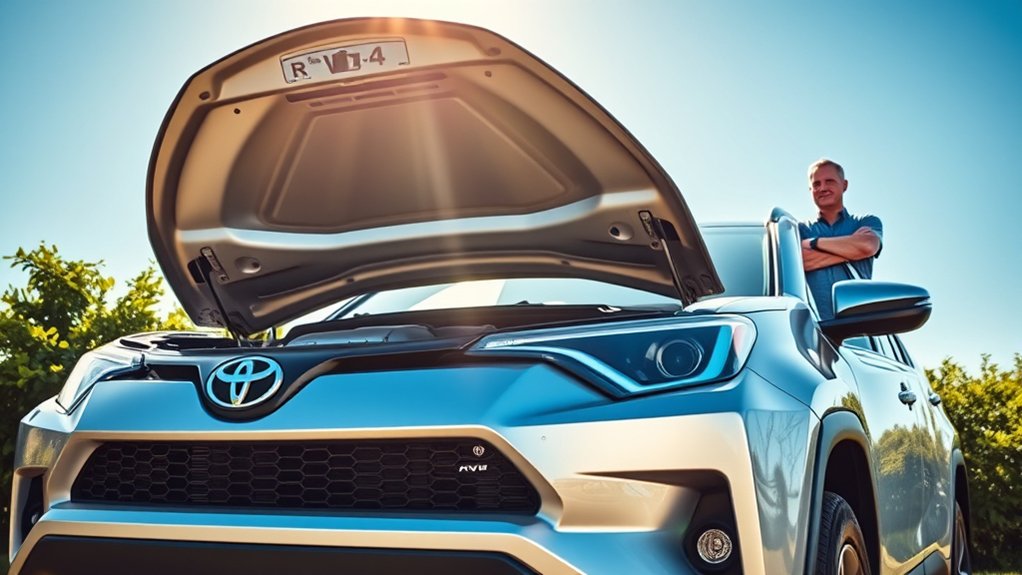
The Toyota RAV4 V6 remains popular with used-SUV shoppers because it combines strong acceleration, practical space, and a generally durable 3.5-liter powertrain. Sold in North America for the 2006 through 2012 model years, the V6 version uses Toyota’s 2GR-FE engine and can be a strong used buy when its maintenance, cooling system, oil system, drivetrain, and underbody condition check out.
Last updated: September 19, 2026. Historical specifications, Toyota service-campaign information, towing guidance, fuel-economy figures, and the current 2026 RAV4 comparison were rechecked for this update.
Quick Answer
The 2006–2012 North American Toyota RAV4 V6 is generally a durable used SUV when it has been maintained well. In the 2012 U.S. specification, its 3.5-liter 2GR-FE produces 269 horsepower and 246 lb-ft of torque. Used buyers should specifically verify VVT-i oil-hose campaign history on certain 2006–2009 V6 models, then inspect for cooling-system leaks, water-pump symptoms, misfires, oil leaks, drivetrain noise, rust, and neglected fluids. A 2012 V6 is rated at 19 city/27 highway mpg with 2WD or 19/26 with 4WD, and its towing limit is 2,000 pounds without the towing package or up to 3,500 pounds with it.
Key Takeaways
- North American RAV4 V6 models use a 3.5-liter 2GR-FE engine rated at 269 horsepower in the commonly referenced U.S. specification and paired with a five-speed automatic transmission.
- Toyota Limited Service Campaign 90K covered certain 2006–2009 RAV4 V6 models because the rubber portion of the VVT-i oil-supply hose could degrade over time; verify applicability and completion from the VIN and Toyota service history.
- Maintenance records, present condition, rust, overheating history, and previous repairs matter more than an isolated odometer reading.
- Watch for coolant or oil leaks, water-pump symptoms, misfires, abnormal drivetrain noises, overheating evidence, and delayed maintenance.
- The timing chain has no routine timing-belt-style replacement interval. Follow the maintenance guide for the exact model year.
- For the 2012 V6, Toyota lists a 2,000-pound trailer rating without the towing package and up to 3,500 pounds with it; always verify the exact year and equipment before towing.
- A modern RAV4 hybrid uses substantially less fuel, while the current plug-in hybrid also exceeds the old V6’s peak power output.
Research basis: This is a source-based used-vehicle guide built from Toyota period specifications and owner information, Toyota service-campaign documentation hosted by NHTSA, U.S. government fuel-economy resources, and Toyota’s current RAV4 information. It does not claim hands-on testing of a specific vehicle.
Is the Toyota RAV4 V6 Reliable?
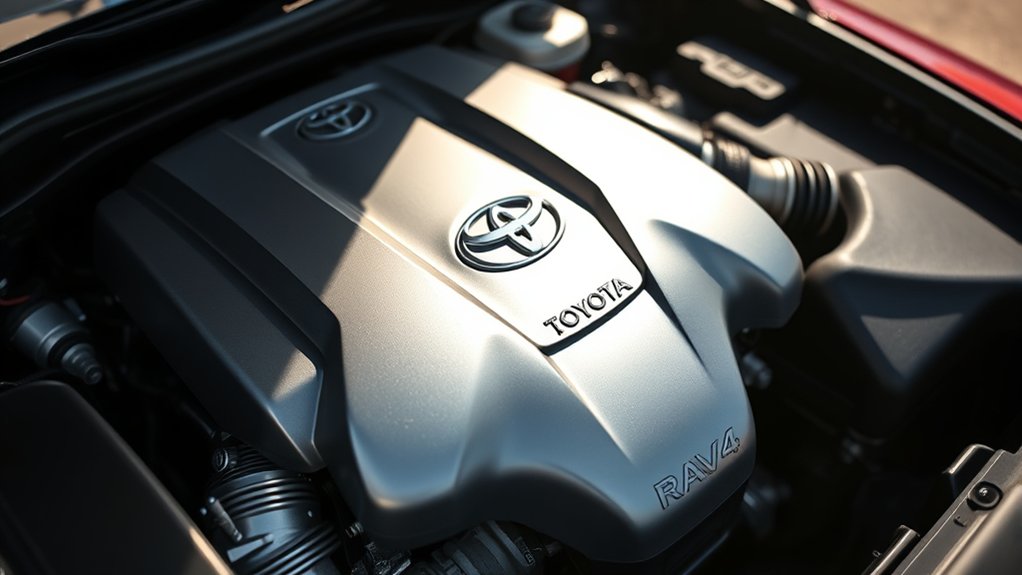
A well-maintained RAV4 V6 can be a durable used SUV, but the condition of an individual 2006–2012 vehicle matters more than the engine’s reputation alone. The naturally aspirated 3.5-liter 2GR-FE avoids a turbocharger and, in the 2012 RAV4, is rated at 269 horsepower at 6,200 rpm. Toyota also rated it at 246 lb-ft of torque at 4,700 rpm and paired it with a five-speed automatic transmission rather than the four-speed automatic used with the four-cylinder engine.
That combination provides strong acceleration for highway merging, passing, climbing grades, and pulling a properly matched trailer. Toyota stated that the 2012 V6 RAV4 could accelerate from zero to 60 mph in under seven seconds. For a used buyer today, however, cold-start behavior, oil and coolant condition, service history, rust, diagnostic codes, and drivetrain noise are more important than period performance numbers.
The V6 was offered in North American third-generation RAV4 models from 2006 through 2012. Toyota redesigned the RAV4 for the 2013 model year and removed the V6 option. That limited production period contributes to the model’s appeal among drivers who want compact-SUV dimensions with stronger-than-average acceleration.
Note: Specifications can vary by model year, trim, drivetrain, and market. Confirm the vehicle’s engine and equipment from its VIN, under-hood emissions label, owner’s manual, and original build information.
Toyota RAV4 V6 Specifications at a Glance
| Specification | Common North American V6 Configuration |
|---|---|
| Model years | 2006–2012 |
| Engine | 3.5-liter naturally aspirated 2GR-FE V6 |
| Output | 269 horsepower at 6,200 rpm and 246 lb-ft at 4,700 rpm in the 2012 U.S. specification |
| Transmission | Five-speed automatic |
| Drivetrain | Front-wheel drive or available electronic on-demand four-wheel drive, depending on year and trim |
| 2012 EPA fuel economy | 19 city/27 highway mpg with 2WD; 19 city/26 highway mpg with 4WD |
| Maximum towing | 2012 V6: 2,000 pounds without towing package; up to 3,500 pounds with towing package. Verify the exact model year and equipment. |
| Camshaft drive | Timing chain, not a scheduled-replacement timing belt |
| Fuel | 87-octane unleaded or higher in the 2012 U.S. specification; follow the exact owner’s manual |
What Owner Reports Say About RAV4 V6 Reliability
Owner discussions frequently praise the RAV4 V6 for smooth acceleration, confident highway merging, and useful power in hilly areas. Long-lived examples are also reported, but an owner’s odometer story cannot predict the remaining life of another vehicle.
A high-mileage vehicle with complete records and a clean inspection can be a safer purchase than a lower-mileage example that has overheated, sat unused for long periods, developed structural rust, or missed fluid services. Treat mileage as one data point rather than a substitute for condition.
A high odometer reading does not prove durability by itself. Service records, cold-start behavior, fluid condition, diagnostic results, and evidence of overheating reveal far more about a used RAV4 V6.
The V6’s reputation also benefits from its naturally aspirated design, but every surviving example is now an older vehicle. Rubber seals, cooling-system parts, motor mounts, sensors, wiring connectors, suspension components, and driveline hardware can deteriorate even when the engine’s internal parts remain healthy.
What Are the Most Common Toyota RAV4 V6 Problems?
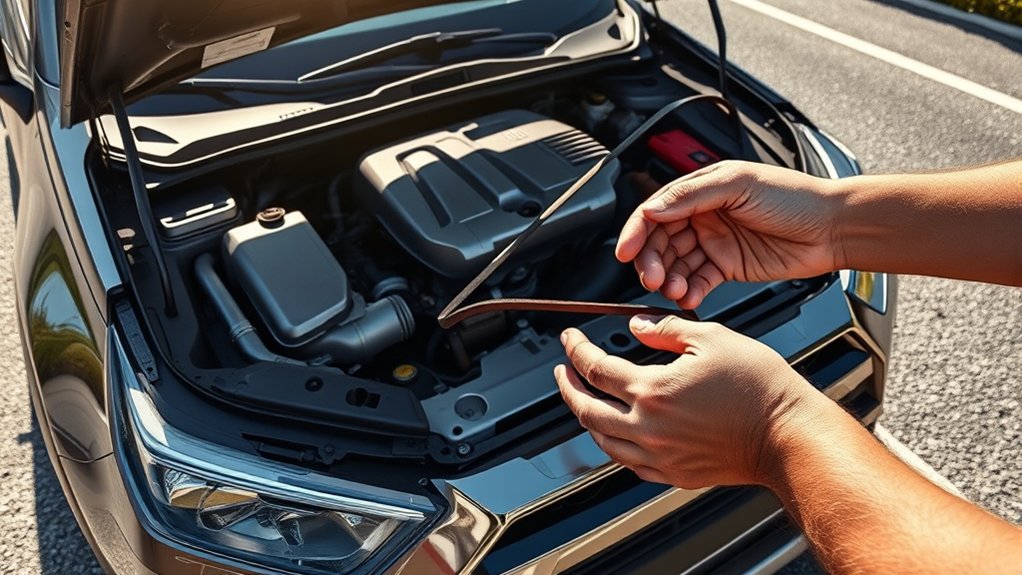
The RAV4 V6 does not have one failure that affects every vehicle. The most useful buying approach is to separate documented model-specific service issues from ordinary age- and mileage-related wear. Check the VVT-i oil-hose campaign history on applicable early V6 models, then inspect the individual vehicle for cooling leaks, misfires, oil leaks, overheating evidence, drivetrain noise, and neglected maintenance.
Ignition-Coil and Misfire Symptoms
A worn spark plug, weak ignition coil, damaged connector, vacuum leak, fuel-delivery issue, or mechanical problem can trigger a misfire. Symptoms include rough idling, hesitation, reduced power, poor fuel economy, or a check-engine light.
Do not replace every coil solely because the vehicle has reached a particular mileage. Read the diagnostic trouble codes, inspect the spark plugs, test the suspected cylinder, and confirm the cause before buying parts. A flashing check-engine light can indicate an active misfire severe enough to damage the catalytic converter.
Water-Pump and Cooling-System Concerns
Water pumps, hoses, radiator caps, thermostats, and seals can wear as the vehicle ages. Look for dried coolant residue, a sweet smell, coolant loss, bearing noise, temperature fluctuations, or signs that the cooling system has been repeatedly topped off.
A leaking water pump can be labor-intensive to replace because access around the V6 is limited. A pre-purchase inspection should include a cooling-system pressure test when there is visible residue, an unexplained low coolant level, or a history of overheating. Any history of serious overheating deserves additional scrutiny because overheating can turn a relatively routine cooling-system repair into major engine damage.
VVT-i Oil-Hose Campaign and Other Oil Leaks
Toyota Limited Service Campaign 90K covered certain 2006–2009 RAV4 models equipped with the 2GR-FE V6. Toyota’s campaign documentation states that the rubber portion of the oil-supply hose for the VVT-i actuator could degrade over time. Buyers of an early V6 should therefore verify the VIN and Toyota service history rather than assuming the work was completed because of the vehicle’s age.
Also inspect the engine, splash shields, oil pan area, timing-cover area, hoses, and surrounding components for fresh oil or accumulated residue. A low oil level with no clear maintenance explanation deserves diagnosis before purchase.
Use the NHTSA recall lookup and Toyota’s recall or dealer records. NHTSA’s public recall lookup may not show a completed repair, an expired customer-support program, or every non-safety manufacturer service campaign, so a Toyota dealer history check remains useful.
Transmission and Drivetrain Noise
During a test drive, listen for whining, humming, clunks, delayed engagement, harsh shifts, or vibration under acceleration. A noise may come from the transmission, four-wheel-drive components, wheel bearings, tires, mounts, or another rotating part.
Do not assume that a whine is normal because the vehicle still drives. A technician should identify its source before purchase, especially when the noise changes with road speed, throttle load, or tight turns.
Warning: Stop driving if the oil-pressure warning remains on, the temperature gauge rises abnormally, coolant is rapidly disappearing, the engine knocks, or the check-engine light flashes. Continuing to drive can turn a repairable leak or misfire into major engine or catalytic-converter damage.
What Maintenance Helps a RAV4 V6 Last?
Consistent service improves the likelihood of long engine life, but no maintenance routine can guarantee a particular mileage. Use the schedule for the exact model year, drivetrain, and operating conditions through Toyota’s manuals and warranties portal.
| Maintenance Item | Practical Guidance |
|---|---|
| Engine oil and filter | Use the viscosity and specification listed for the exact model year. Follow Toyota’s time and mileage schedule, with different requirements where the maintenance guide specifies special operating conditions. |
| Coolant and cooling system | Use the specified Toyota-compatible coolant. Inspect the level, hoses, radiator, reservoir, cap, pump area, and signs of past overheating. |
| Spark plugs | Use the correct plug type and replacement interval from the maintenance guide. Diagnose oil fouling, unusual deposits, or repeated misfires instead of only installing new plugs. |
| Ignition coils | There is no universal short-interval replacement schedule for all six coils. Inspect and test them when symptoms, trouble codes, connector damage, or moisture intrusion indicate a problem. |
| Transmission and driveline fluids | Check the maintenance guide for inspection and replacement requirements, especially when the vehicle has been used for towing, heavy loading, repeated short trips, or other special operating conditions. |
| Timing chain | The chain does not have a routine timing-belt-style replacement interval. Investigate abnormal start-up rattle, timing-correlation codes, metal contamination, or other diagnosed symptoms instead of replacing it solely because of mileage. |
| Belts, hoses, mounts, and seals | Inspect for cracks, swelling, leaks, excessive movement, vibration, and age-related deterioration at regular service visits. |
Pro Tip: Inspect a used RAV4 V6 when the engine is completely cold. A pre-warmed engine can make cold-start rattles, smoke, rough running, weak battery performance, or delayed transmission engagement harder to detect.
What MPG Does a Toyota RAV4 V6 Get?
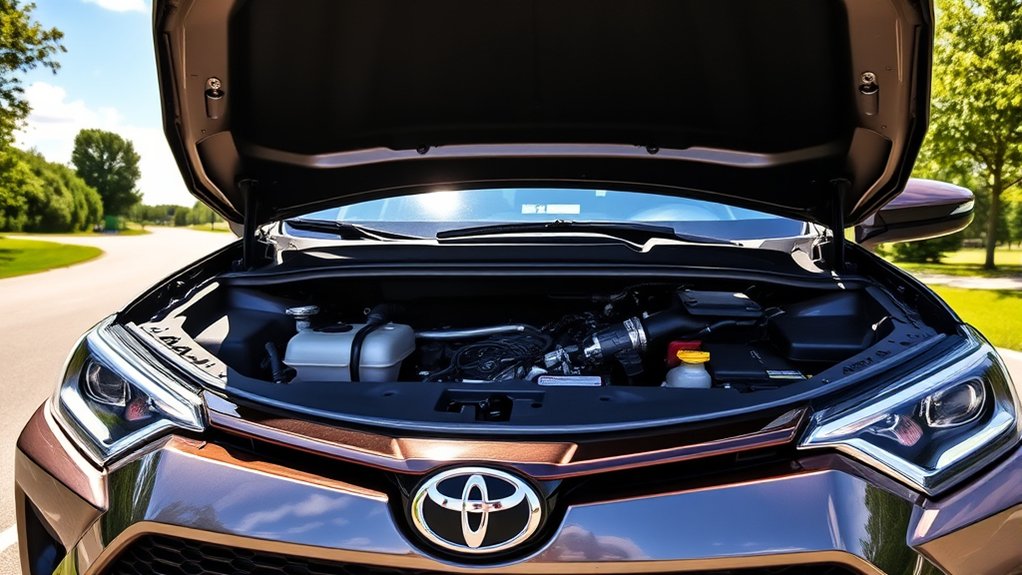
Fuel economy is not the V6 RAV4’s main advantage. For the 2012 model year, Toyota lists EPA estimates of 19 mpg city and 27 mpg highway for 2WD V6 models and 19 mpg city and 26 mpg highway for 4WD V6 models. Earlier years can differ, so use the exact model year rather than applying the 2012 figures to every V6.
Actual fuel economy also varies with speed, weather, tire condition and pressure, traffic, cargo, towing, maintenance, and driving style. Short trips, cold weather, roof cargo, heavy acceleration, trailer use, and prolonged idling can reduce mileage significantly.
For the correct government rating, use the FuelEconomy.gov comparison tool and select the exact model year, engine, and drivetrain. That is more reliable than applying one MPG number to every V6 RAV4.
How Does the RAV4 V6 Compare With the 2026 RAV4?
The original V6 still provides strong naturally aspirated performance, but the comparison is no longer simply V6 versus four-cylinder gasoline engines. Toyota’s 2026 U.S. RAV4 lineup uses hybrid and plug-in-hybrid powertrains.
| Powertrain | Output | Main Strength | Main Trade-Off |
|---|---|---|---|
| 2006–2012 RAV4 V6 | 269 hp in the commonly referenced U.S. specification | Smooth naturally aspirated response and strong acceleration for an older compact SUV | Lower fuel economy, older safety technology, and age-related repair risk |
| 2026 RAV4 Hybrid FWD | 226 net combined hp | Much higher fuel efficiency plus current safety and convenience technology | Lower peak system output than the older V6 |
| 2026 RAV4 Hybrid AWD | 236 net combined hp | Efficient AWD operation and electric-motor assistance | Lower peak system output than the old V6 |
| 2026 RAV4 Plug-in Hybrid | 324 net combined hp | More power than the V6, electric driving capability, and substantially better gasoline efficiency | Higher purchase cost and greater system complexity, plus charging considerations for maximizing electric use |
Toyota lists manufacturer-estimated combined fuel economy as high as 44 mpg for a 2026 hybrid configuration and up to 40 mpg for a plug-in-hybrid configuration. Actual ratings and results vary by grade and operating conditions. Toyota also lists a 3,500-pound towing capacity for specific AWD grades, showing that the newest lineup can combine substantially greater efficiency with useful towing capability.
Power Comparison With Turbocharged and Hybrid Engines
The older RAV4 V6 can still outperform many economy-focused four-cylinder SUVs in peak horsepower and passing response. Its naturally aspirated power delivery is predictable and does not rely on a turbocharger to produce its rated output.
Horsepower alone does not determine how quick or capable a vehicle feels. Modern hybrids can provide immediate electric-motor assistance, use power-split systems designed to keep the gasoline engine in an efficient operating range, and pair that drivetrain with much newer traction, safety, and driver-assistance technology.
The current RAV4 plug-in hybrid also removes the assumption that an efficient powertrain must be less powerful. Toyota rates it at 324 net combined horsepower, above the older V6’s published 269-horsepower figure.
Efficiency vs. Performance Trade-Offs
The RAV4 V6 suits a buyer who values naturally aspirated response, strong acceleration, and the lower entry price of an older used vehicle. A modern hybrid better suits a buyer prioritizing fuel economy, current safety technology, quieter low-speed operation, and reduced gasoline use.
Total ownership cost matters more than horsepower alone. A low purchase price can be offset by fuel consumption, overdue maintenance, rust, cooling-system repairs, tires, suspension work, or drivetrain problems. A newer hybrid costs more upfront but avoids many age-related risks simply because the vehicle is newer.
What Can RAV4 V6 Owner Reports Tell You?
Owner stories commonly emphasize the V6’s passing power, smooth highway performance, and ability to handle grades without feeling strained. Longevity stories can be encouraging, but they are anecdotal and should not be used to predict how long another vehicle will last.
Online discussions can also overrepresent unusually good or unusually bad experiences. They are useful for identifying symptoms worth inspecting, but they do not establish a failure rate for the entire RAV4 V6 population.
For a buyer, a folder containing oil-change records, coolant service, spark-plug replacement, brake work, tire history, campaign or recall documentation, and major repair invoices is more useful than another owner’s mileage claim.
What Should You Check Before Buying a Used RAV4 V6?
A professional pre-purchase inspection is one of the best ways to reduce risk. The following checks can help identify a poor candidate before purchase:
- Confirm the engine and equipment. Decode the VIN and verify that the vehicle is a genuine V6 model with the drivetrain and towing equipment the seller claims.
- Check early-V6 oil-hose campaign history. For applicable 2006–2009 V6 models, ask Toyota to verify whether Limited Service Campaign 90K applied to the VIN and whether the oil-hose work was completed.
- Check the vehicle cold. Listen for prolonged rattling, knocking, squealing, rough idle, smoke, or delayed gear engagement.
- Scan the available control modules. Look for current, pending, permanent, and recently cleared diagnostic trouble codes. A clear dashboard does not prove that no codes are stored.
- Inspect fluid condition and levels. Low coolant, unusually low engine oil, burned-smelling transmission fluid, contamination, or unexplained mixed fluids can reveal neglect or an active problem.
- Look for leaks. Inspect above and below the engine, around the cooling system, behind splash shields, and where the vehicle was parked.
- Test-drive at different speeds. Include stop-and-go driving, highway acceleration, gentle and firm braking, tight turns, and a hill when possible.
- Check for overheating history. Look for stained coolant reservoirs, mismatched cooling parts, damaged connectors, warped plastic, repeated coolant invoices, or unexplained engine work.
- Inspect the underside for rust. Pay special attention to structural areas, brake and fuel lines, suspension mounting points, subframes, exhaust parts, and hitch attachment points.
- Check tires and alignment. Uneven wear can indicate neglected rotation, worn suspension parts, collision damage, or alignment problems.
- Verify recalls and manufacturer actions. Search the VIN with NHTSA and ask a Toyota dealer to check completed and outstanding manufacturer actions.
- Review towing history. Examine the hitch, wiring, rear suspension, cooling system, transmission behavior, and service records if the vehicle has pulled trailers.
- Pay for an independent inspection. Use a technician who is not employed by the seller and who can place the vehicle on a lift.
Is the RAV4 V6 Still a Good Buy Today?
A well-maintained RAV4 V6 can still be a useful used-SUV purchase. It offers strong acceleration, practical cargo space, available electronic on-demand four-wheel drive, and towing capability that remains useful for relatively light trailers when the exact vehicle is properly equipped.
Its desirability does not make every example a good value. Some sellers charge a premium simply because the vehicle has the V6. Compare that premium with fuel costs, immediate maintenance, rust, upcoming age-related repairs, insurance, and newer alternatives.
| Consider the RAV4 V6 If | Consider Another Vehicle If |
|---|---|
| You want stronger acceleration than the same-generation four-cylinder offers. | Fuel economy is your highest priority. |
| The vehicle has complete records, applicable campaign history can be verified, and it passes an independent inspection. | The seller cannot document maintenance or refuses a cold-start or independent inspection. |
| You need modest towing capability and have confirmed the exact rating and towing equipment. | You need modern driver-assistance systems, current crash-protection technology, substantially better MPG, or frequent heavy towing. |
| You can budget for repairs associated with an older vehicle. | The vehicle has severe rust, unexplained coolant loss, active oil leaks, flashing warning lights, overheating evidence, or unresolved drivetrain noise. |
Resale value varies widely by year, trim, drivetrain, mileage, region, rust, accident history, maintenance documentation, and current market demand. Use current local listings and an established vehicle-specific valuation tool rather than assuming that every V6 commands the same premium.
Frequently Asked Questions
Is the Toyota RAV4 V6 reliable?
The 2006–2012 RAV4 V6 can be a durable used SUV when maintained properly, but vehicle condition matters more than reputation alone. Check service records, cold-start behavior, cooling-system condition, leaks, diagnostic codes, rust, drivetrain noise, and applicable campaign history before buying.
What should I check before buying a used RAV4 V6?
Verify the VIN, maintenance records, applicable 2006–2009 VVT-i oil-hose campaign history, cold-start behavior, coolant and oil levels, stored trouble codes, leaks, transmission and drivetrain operation, tire wear, underside rust, towing history, and recall status. Finish with an independent inspection on a lift.
What are common modifications for the RAV4 V6 engine?
Common modifications include intake, exhaust, suspension, wheel, tire, and software changes. Power gains are not guaranteed, and poorly matched parts can cause warning lights, noise, emissions-compliance problems, or reduced drivability. Complete baseline maintenance first and use parts that comply with local emissions and safety rules.
How does the RAV4 V6 handle in winter conditions?
A four-wheel-drive RAV4 V6 can provide useful traction when accelerating on snow, but the V6 engine itself does not create better grip. Winter tires, adequate tread, proper pressure, slower speeds, and increased following distance have a greater effect on turning and stopping. Four-wheel drive does not shorten braking distance on ice.
What is the towing capacity of the RAV4 V6?
For the 2012 RAV4 V6, Toyota lists a 2,000-pound trailer rating without the towing package and up to 3,500 pounds with the towing package. The exact limit depends on model year, drivetrain, factory equipment, hitch rating, vehicle load, trailer weight, tongue weight, and trailer-brake requirements. Confirm every limit in the owner’s manual before towing.
Are special tools needed for RAV4 V6 maintenance?
Basic work may require a metric socket set, torque wrench, drain equipment, safe lifting equipment, and an OBD-II scan tool. Spark plugs and several V6 repairs have limited access, while cooling-system, transmission, air-conditioning, and internal-engine work may require specialized tools and professional procedures.
What is the resale value of a used RAV4 V6?
No single resale figure applies to every RAV4 V6. Value depends on the model year, trim, drivetrain, mileage, condition, rust, accident history, location, records, and current demand. Compare current local listings and obtain a vehicle-specific valuation before buying or selling.
Which Toyota RAV4 model years offered a V6?
Toyota offered the 3.5-liter V6 in North American third-generation RAV4 models from the 2006 through 2012 model years. The redesigned 2013 RAV4 did not offer a V6.
Does the RAV4 V6 use a timing belt or timing chain?
The 3.5-liter 2GR-FE V6 uses a timing chain. It does not have a routine timing-belt replacement interval. Correct oil maintenance is important, and abnormal rattling or timing-related trouble codes should be diagnosed rather than ignored.
Conclusion
The Toyota RAV4 V6 remains an appealing used SUV for buyers who want strong acceleration, practical space, and as much as 3,500 pounds of towing capacity when the exact vehicle has the required equipment. The 3.5-liter 2GR-FE has a strong durability reputation, but an older vehicle should be judged by its maintenance history, campaign status, operating history, rust, and present mechanical condition rather than reputation or mileage alone.
Before buying, verify applicable 2006–2009 VVT-i oil-hose campaign history, look for complete maintenance records, insist on a cold start, confirm stable coolant temperature, inspect for oil and coolant leaks, test transmission and drivetrain operation, check the underside for structural corrosion, and obtain an independent inspection. Walk away from severe rust, unexplained coolant loss, major active leaks, a flashing check-engine light, overheating evidence, or a seller who will not allow an independent evaluation.
Sources
- Toyota Manuals and Warranties — model-specific owner manuals, warranty information, specifications, and maintenance guidance.
- National Highway Traffic Safety Administration Recall Lookup — VIN-based safety recall and manufacturer-information checks.
- NHTSA-hosted Toyota Limited Service Campaign 90K documentation — identifies certain 2006–2009 RAV4 models equipped with the 2GR-FE V6 and describes degradation of the rubber portion of the VVT-i oil-supply hose.
- U.S. Department of Energy and EPA FuelEconomy.gov — model-year, engine, and drivetrain-specific fuel-economy comparisons.
- Toyota: The Next Adventure Begins, 2026 RAV4 — current hybrid and plug-in-hybrid power, fuel-economy, drivetrain, and towing information.
- Toyota Europe: The Third-Generation Toyota RAV4 — third-generation launch history and platform context.
- Kelley Blue Book 2012 Toyota RAV4 Specifications — historical V6 horsepower and towing specifications.

