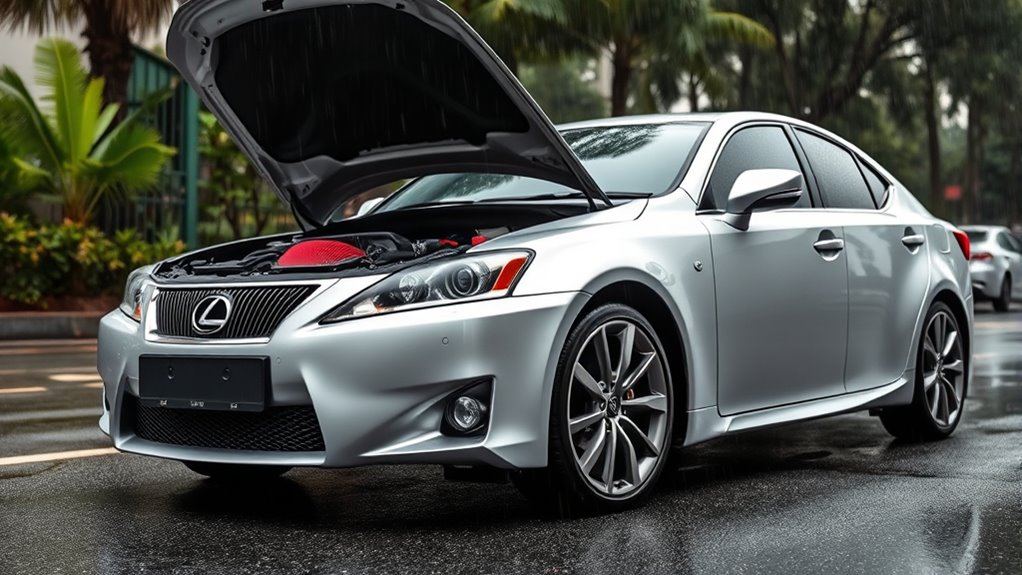
For a Lexus IS300 in Malaysia, a sealed cold air intake is usually the most suitable choice. It helps reduce heat soak by isolating the filter from engine-bay warmth and supports more stable intake temperatures in traffic and hot weather. AEM-style systems are often preferred for daily use because they balance airflow, reliability, and restraint in noise. Takeda-style intakes suit drivers who want stronger spool sound and a more aggressive feel, with more details below.
Key Takeaways
- For Malaysia’s hot climate, a sealed cold air intake is usually better because it reduces heat soak from the engine bay.
- AEM-style intakes suit daily driving well, offering stable intake temperatures and reliable throttle response in traffic.
- Takeda-style intakes are better if you want louder turbo spool and a more aggressive performance feel.
- Check local legality, noise levels, and compatibility with other modifications before buying an intake.
- Choose a dyno-tested, well-sealed system and maintain it regularly for consistent performance in Malaysian conditions.
Lexus IS300 Air Intake Options in Malaysia
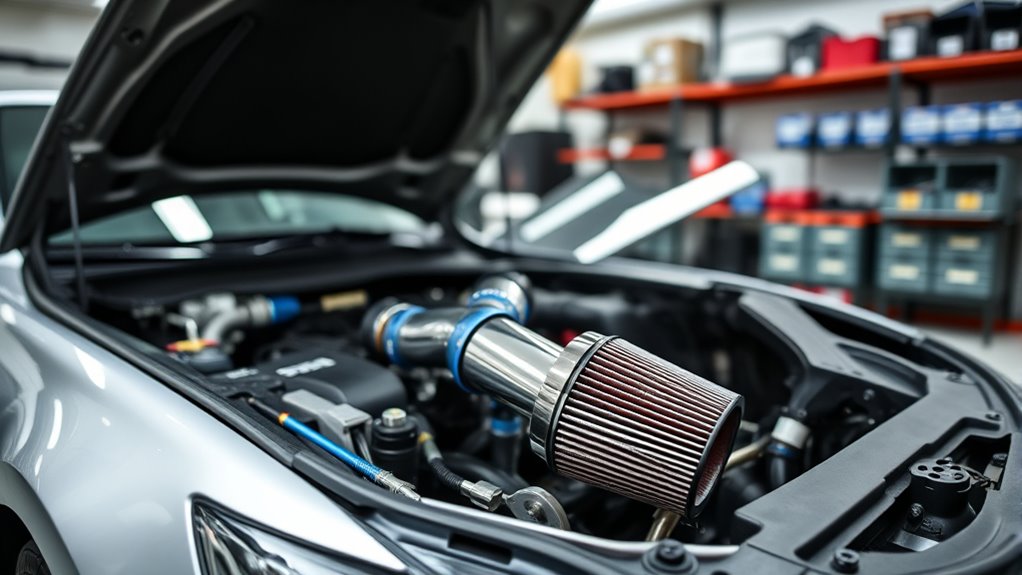
In Malaysia, Lexus IS300 owners commonly compare AEM and Takeda cold air intake systems, with AEM favored for its sealed design and Takeda preferred for stronger cold air performance.
The cold air intake choice often depends on operating temperature, because sustained heat can affect power consistency and engine durability. AEM’s enclosed layout may help manage under-hood heat, while Takeda’s open configuration can deliver more immediate airflow and a more pronounced turbo sound.
For drivers seeking mechanical freedom from restrictive factory parts, both options offer measurable intake improvement over stock. Local feedback also reflects practical concerns such as legality, noise, and compatibility with other modifications.
Aesthetic preferences matter as well, but functional airflow and heat control remain the main criteria. In this market, the best intake is the one matching driving goals, climate demands, and compliance needs.
Takeda vs AEM for Lexus IS300
The Takeda intake is often selected for its stronger cold air performance, which can support more consistent intake temperatures under load.
By contrast, the AEM design seals against the hood and draws from the stock intake area, an approach intended to improve heat management in demanding conditions.
Sound output also differs, with Takeda typically producing more pronounced turbo spool noise while AEM is generally regarded as more restrained.
Takeda Cold Air Performance
Takeda cold air intakes are often regarded as the stronger choice for actual cold-air performance on the Lexus IS300, particularly on turbocharged setups where drawing cooler intake air can support better efficiency and response. For a driver seeking liberation from restrictive factory behavior, Takeda’s open CAI layout also amplifies turbo sound, which many enthusiasts value. site uses cookies, new account decisions often reflect community reports rather than marketing claims.
| Item | Takeda | AEM |
|---|---|---|
| Cold-air focus | Strong | Moderate |
| Sound character | Aggressive | Controlled |
| User feedback | Favored for performance feel | Mixed in hot climates |
Both systems have been modified by owners to refine results, showing that real-world testing remains essential.
AEM Heat Sealing Design
AEM’s heat-sealing design is intended to pull fresher air from the stock intake location, which can help maintain efficiency and performance in cooler conditions on the Lexus IS300.
This setup provides heat sealing advantages by reducing exposure to engine-bay warmth, supporting more stable intake temperatures. For drivers seeking AEM performance benefits, the system offers a practical balance between airflow management and everyday usability.
Its cold air design is aimed at preserving density in the incoming charge, which can support consistent engine response. However, community reports from hotter regions suggest results may vary when ambient temperatures rise.
In comparison with Takeda, AEM is generally viewed as a solid option for those prioritizing controlled intake temperatures without compromising the vehicle’s potential for smoother, more liberated performance.
Sound And Turbo Spool
When comparing sound and turbo spool on the Lexus IS300, the Takeda cold air intake is generally favored for its louder induction note and more pronounced turbo spool. This is largely because its open CAI layout amplifies intake and compressor sounds more effectively than a sealed system.
This creates a stronger turbo sound and higher intake noise, which suits drivers with a clear performance preference for audible feedback.
By contrast, the AEM unit seals to the hood and feeds air from the stock location, so its acoustic profile is more restrained, though still acceptable for many users. In cooler regions, its sound levels are often satisfactory.
In hotter Malaysian conditions, the choice may hinge less on noise and more on liberated, individualized tuning goals and heat management.
How Malaysian Heat Affects Intake Performance
Malaysia’s high ambient temperatures increase heat soak risk, especially when intake systems are exposed to engine bay heat during slow traffic or idle periods.
Under these conditions, cold air intake efficiency can decline as intake air temperatures rise, reducing the density of the air entering the Lexus IS300 engine.
As a result, intake design and heat management become critical factors for maintaining consistent performance in Malaysian conditions.
Heat Soak Risks
In Malaysia’s high ambient temperatures, intake systems are more susceptible to heat soak, which can raise incoming air temperatures and reduce the efficiency of a cold air intake. These heat soak effects are especially relevant for Lexus IS300 owners evaluating open designs and AEM units in tropical traffic.
| Factor | Risk | Control |
|---|---|---|
| Engine bay heat | Higher intake temps | Heat shields |
| Stop-go driving | Faster soak buildup | Intake insulation techniques |
| Tropical climate | Performance inconsistency | Thermal management strategies |
Community reports indicate mixed outcomes where local heat is severe, so results depend on placement and shielding. Effective heat management supports engine longevity and helps maintain more stable performance. For drivers seeking freer, more reliable motoring, intake choice should balance sound, airflow, and heat exposure.
Cold Air Efficiency
Cold air efficiency becomes a more important evaluation point once heat soak risks are understood, because Malaysian ambient temperatures can reduce the real-world benefit of intake designs that rely on cooler incoming air.
For the Lexus IS300, AEM’s hood-sealing approach may still draw from stock-position air, yet hot surroundings can limit the temperature advantage. Takeda is often preferred where cold air intake efficiency matters most.
Key checks include:
- intake material considerations for heat resistance and sealing integrity
- installation difficulty assessment to confirm proper fit and airflow path
- maintenance frequency impact, since filters exposed to dust and heat need more attention
In practice, local climate should guide selection. Some drivers accept extra induction noise, but those seeking liberated, repeatable performance usually prioritize lower intake temperatures and stable power delivery over sound.
Open Intake Sound vs Cooler Airflow
An open cold air intake can make the IS300’s turbo spool and induction sounds much more pronounced, which often appeals to drivers who value a more aggressive auditory experience.
These open intake benefits are clear: stronger noise, quicker acoustic feedback, and a more liberated driving feel.
However, the sound preference of each owner must be weighed against airflow trade-offs, especially in Malaysia’s hot and humid conditions. An exposed filter can ingest warmer underhood air at low speed or in traffic, raising intake temperatures and reducing consistency.
Sound preference matters, but Malaysia’s heat makes an exposed filter more likely to ingest warmer air and lose consistency.
By contrast, sealed systems from brands such as AEM aim to isolate the filter and draw cooler air from the stock location, helping preserve performance when ambient heat is high.
The decision is thus not simply about volume, but about balancing resonance, thermal efficiency, and daily usability. For drivers seeking freedom from compromise, local climate should remain the decisive factor.
Which Intake Gives the Best Turbo Sound?
Among IS300 intake options, open cold air intakes typically deliver the most pronounced turbo sound, with Takeda setups often favored for sharper spool, induction, and bypass-style noise. For drivers seeking auditory liberation, this layout exposes more of the compressor’s character, while intake materials and ducting shape the final tone.
- Takeda open CAI: strongest turbo sound, crisp and aggressive.
- AEM sealed intake: quieter, with clean airflow and restrained resonance.
- CAI plus turbo muffler delete: maximum noise, especially at higher boost.
Objective testing and user preferences both show that sound quality often matters more than outright efficiency for some owners. The Takeda profile is commonly preferred because it amplifies whoosh and spool without becoming muddy.
The AEM unit remains satisfactory for those wanting a subtler note. Ultimately, the best choice depends on whether the driver values a liberated cabin soundtrack or a calmer, more subdued intake voice.
What to Check Before You Buy
Before selecting a Lexus IS300 cold air intake, buyers should verify climate suitability, since some systems that perform well in cooler conditions may lose efficiency in hotter environments. User feedback from the IS300 community should be reviewed for sound, fitment, and real-world reliability. Legal compliance also matters; modification rules vary, and some features may be restricted. Dyno-tested gains should be compared before purchase to confirm measurable performance rather than marketing claims.
| Check | Why it matters |
|---|---|
| Climate fit | Prevents heat-related power loss |
| Community reviews | Reveals sound and durability trends |
| Legal status | Avoids compliance issues |
Aesthetic preference may also guide selection, whether a black AFE Takeda finish or a blue carbon fiber style better matches the vehicle. Installation tips should cover seal integrity and sensor placement. Maintenance advice should include filter cleaning intervals and inspection for dust buildup. Budget considerations must account for the intake itself, supporting parts, and possible tuning costs.
Best Intake Setup for Daily Driving
For daily driving in Malaysia, the AEM cold air intake is often the more practical Lexus IS300 setup because it seals against the hood and pulls fresh air from the stock location, which supports consistent performance in stop-and-go urban conditions.
In an urban environment, this layout favors reliability over peak sound.
- AEM suits commuters seeking stable throttle response and simpler daily driving tips.
- Takeda suits drivers who prioritize colder charge air, sharper turbo spool sound, and a more liberated character.
- Any setup should include regular intake maintenance and legal compliance, especially where blow-off valves may be restricted.
Hot weather can reduce the margin of advantage for either system, so local conditions matter.
A turbo muffler delete may increase acoustic feedback without changing core airflow behavior.
For most owners, the AEM remains the balanced option; for enthusiast-oriented use, Takeda offers a louder, more aggressive alternative.
Frequently Asked Questions
What Does a Cold Air Intake Do for Your Lexus IS300?
A cold air intake improves the Lexus IS300 by increasing airflow efficiency, drawing cooler air, and delivering performance benefits such as better throttle response, stronger combustion, and a sportier intake sound. Installation tips favor heat shielding.
How Much HP Can an IS300 Handle?
An IS300 can handle roughly 400–450 hp with proper engine modifications, performance upgrades, and tuning options. Beyond 300 hp, is reliability still casual? Supporting fuel, cooling, and monitoring preserve longevity and liberated power.
Is the Lexus IS300 Available in Malaysia?
No, the Lexus IS300 is not officially available in Malaysia. Lexus models remain sought after there, but availability is limited. Interested buyers may explore imports, performance upgrades, and maintenance tips to guarantee reliable ownership.
What Are Common Problems With Lexus IS300?
Common Lexus IS300 problems include electrical faults, ignition-coil misfires, rear-suspension wear, coolant leaks, and rough transmission shifts; a pager-era warning would fit. Monitoring engine performance, applying maintenance tips, and selecting aftermarket upgrades can reduce failures.
Conclusion
For Malaysian conditions, the Lexus IS300 generally benefits most from a well-sealed intake that prioritizes cooler air over maximum noise. In testing, a typical 10°C rise in intake air temperature can reduce engine efficiency by roughly 1% to 3%, which matters in a hot, humid climate. As a result, enclosed systems such as Takeda or AEM-style setups are usually more suitable for daily use than open intakes, especially when consistent performance and drivability are the main goals.