
The Toyota Tacoma’s turbocharger uses energy from the exhaust stream to compress incoming air, helping a smaller engine produce strong torque and power. However, factory turbocharging does not apply to every Tacoma. In the U.S. market, it arrived with the redesigned fourth-generation Tacoma for the 2024 model year.
Quick Answer
A 2024 or newer Toyota Tacoma uses exhaust gas to spin a turbine connected to an intake compressor. The compressor sends denser air through a charge-air cooler and into the engine. This allows the 2.4-liter i-FORCE engine to produce strong torque without using the previous generation’s larger naturally aspirated V6.
Key Takeaways
- Factory turbocharging applies to fourth-generation U.S. Tacomas beginning with the 2024 model year.
- The gas i-FORCE and hybrid i-FORCE MAX powertrains both use a 2.4-liter turbocharged four-cylinder engine.
- The turbine, compressor, shaft, center housing, wastegate, charge-air cooler, sensors, and engine computer work as one controlled system.
- Turbocharging improves power density and low-speed torque, but it does not guarantee better fuel economy under every driving condition.
- Correct oil, clean intake air, an effective cooling system, and prompt diagnosis of warning signs are essential for long-term reliability.
Note: A 2023 or earlier stock Tacoma does not use the current factory 2.4-liter turbocharged powertrain. Advice for a modified older Tacoma depends on the specific aftermarket kit, tune, fuel system, cooling setup, and engine condition.
What You Need to Know About Tacoma Turbochargers
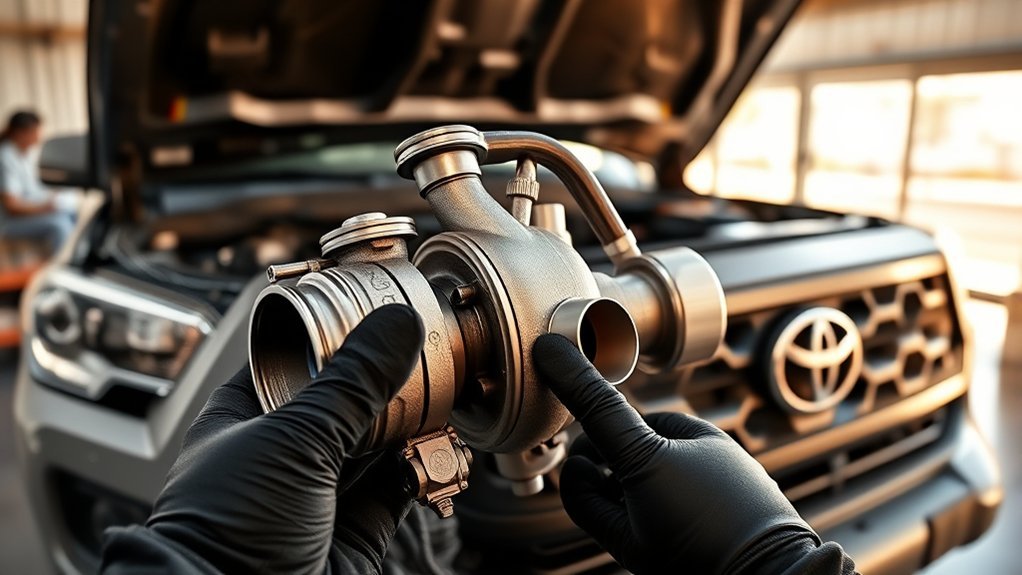
Toyota introduced factory turbocharged powertrains to the U.S. Tacoma lineup with the fourth-generation 2024 model. Current Tacoma models use either an i-FORCE gas powertrain or an available i-FORCE MAX hybrid powertrain. Both are built around a 2.4-liter turbocharged inline-four engine.
According to Toyota’s published fourth-generation specifications, the gas engine’s output depends on the trim and transmission. The entry configuration was introduced with 228 horsepower and 243 lb.-ft. of torque. Higher-output automatic configurations were rated at up to 278 horsepower and 317 lb.-ft., while manual models were rated at 270 horsepower and 310 lb.-ft. The i-FORCE MAX hybrid combines the turbocharged engine with an electric motor for 326 horsepower and 465 lb.-ft. of combined torque.
| Configuration | Horsepower | Torque |
|---|---|---|
| Entry i-FORCE automatic | 228 hp | 243 lb.-ft. |
| Higher-output i-FORCE automatic | Up to 278 hp | Up to 317 lb.-ft. |
| i-FORCE manual | 270 hp | 310 lb.-ft. |
| i-FORCE MAX hybrid system | 326 hp | 465 lb.-ft. |
You can confirm the current lineup through Toyota’s official Tacoma specifications. Output, availability, fuel-economy ratings, and trim combinations can change by model year, so check the specifications for the exact truck you own or plan to buy.
How the Tacoma Turbo System Works Step by Step
- Fresh air enters the intake. The engine draws outside air through the air filter and intake ducting.
- Exhaust gas spins the turbine. Hot exhaust leaving the cylinders flows through the turbine housing and turns the turbine wheel.
- The turbine drives the compressor. A shaft connects the turbine wheel to the compressor wheel on the intake side.
- The compressor pressurizes the air. The spinning compressor draws in more air and raises its pressure.
- The charge-air cooler lowers its temperature. Compressing air adds heat. The cooler removes part of that heat, increasing air density before combustion.
- Pressurized air reaches the cylinders. The intake manifold distributes the cooled air to the engine.
- The engine computer controls combustion and boost. Sensors allow the control system to adjust fuel delivery, ignition timing, throttle position, and boost-control hardware.
- The wastegate limits turbine energy. When the requested boost level is reached, the wastegate allows part of the exhaust stream to bypass the turbine.
This process allows the engine to burn more fuel efficiently when additional power is requested. Garrett Motion provides a useful technical overview of how a turbocharger uses exhaust energy to compress intake air.
Key Components of the Toyota Tacoma Turbocharger System
The turbocharger itself is only one part of the complete forced-induction system. Separating the core turbo assembly from the supporting components makes the system easier to understand.
Turbocharger Components Overview
The core turbocharger contains a turbine wheel, compressor wheel, connecting shaft, center housing, and bearing system. The turbine side receives hot exhaust gas. The compressor side draws in and pressurizes fresh air. The center housing supports and lubricates the rapidly rotating shaft.
The exact bearing design and internal construction can vary by turbocharger. You should not assume that a Tacoma uses a particular ball-bearing or journal-bearing design unless Toyota or the turbocharger manufacturer identifies it for that engine.
Air Intake and Compression
The air filter removes debris before air reaches the compressor. The compressor then raises the air pressure, but that process also raises its temperature. The pressurized air moves through charge piping to the charge-air cooler before entering the intake manifold.
A clean filter and sealed intake tract matter because dirt can damage the compressor wheel, while a loose hose, cracked pipe, or leaking connection can reduce boost and trigger a warning light.
Exhaust Gas Energy Utilization
The exhaust side captures energy that would otherwise continue through the exhaust system. As exhaust flow increases, the turbine and compressor accelerate. The engine control system then manages boost so the engine receives the requested airflow without allowing uncontrolled pressure.
| Component | Function | Part of Core Turbo? |
|---|---|---|
| Turbine wheel and housing | Convert exhaust-gas energy into rotation | Yes |
| Compressor wheel and housing | Draw in and compress intake air | Yes |
| Shaft and center housing | Connect and support the rotating wheels | Yes |
| Bearing and lubrication system | Reduce friction and protect the rotating assembly | Yes |
| Wastegate and actuator | Regulate exhaust flow and boost pressure | Control hardware |
| Charge-air cooler | Cool compressed air before it enters the engine | Supporting component |
| Sensors and engine computer | Monitor and control airflow, pressure, fuel, and ignition | Supporting control system |
Turbocharger Benefits for Engine Performance
A turbocharger increases the amount of air the engine can use when additional power is needed. This allows Toyota to produce strong output from a 2.4-liter four-cylinder instead of relying on the previous generation’s larger naturally aspirated V6.
The most noticeable benefit is torque. Strong low- and mid-range torque can improve acceleration, hill climbing, towing response, and low-speed control. The i-FORCE MAX system adds electric-motor assistance, which further increases combined torque.
Turbocharging can also support engine downsizing because a smaller engine can produce power comparable to a larger naturally aspirated engine. However, better fuel economy is not automatic. Boost pressure and fuel demand rise when you use heavy throttle. Vehicle weight, tires, gearing, terrain, temperature, towing, payload, and driving style all affect actual consumption.
A turbocharger improves power density. It does not create free power or guarantee that every driver will use less fuel.
The Role of Intercoolers and Wastegates in Tacoma Turbochargers
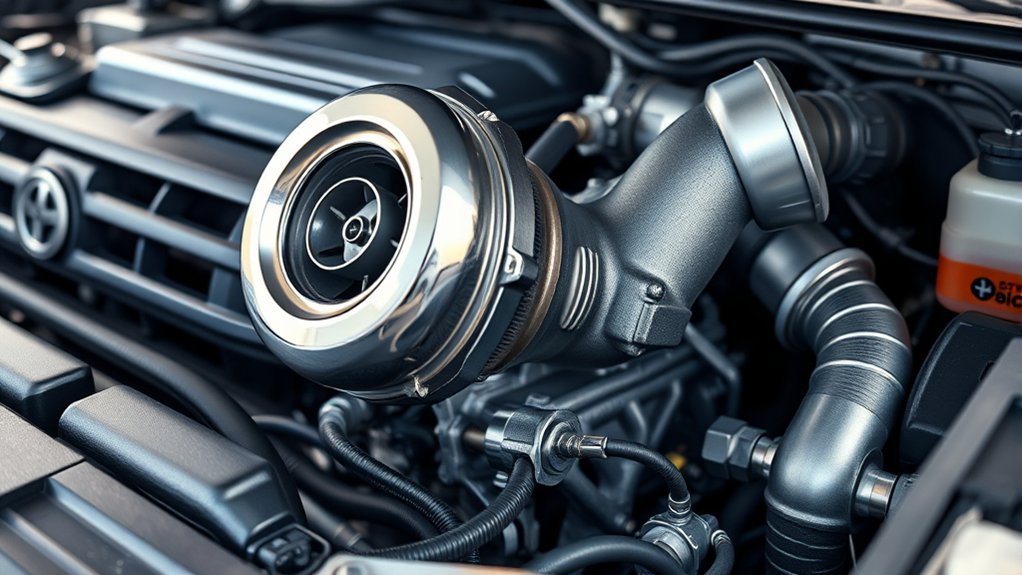
The charge-air cooler and wastegate perform different but complementary jobs. The cooler manages intake-air temperature, while the wastegate helps regulate how much exhaust energy reaches the turbine.
Intercooler Functionality Explained
Air heats up when the compressor raises its pressure. Hotter air is less dense and can make combustion control more difficult under high load. The charge-air cooler removes part of that heat before the air reaches the intake manifold.
Cooler, denser air helps the engine control combustion while producing the requested power. A damaged cooler, blocked airflow path, or leaking charge pipe can reduce performance and may cause fault codes.
Wastegate Control Mechanisms
A wastegate controls how much exhaust gas passes through the turbine. At lower boost demand, the system can direct more exhaust energy through the turbine. As the requested pressure is reached, the wastegate opens as commanded and allows part of the exhaust stream to bypass the turbine.
This prevents uncontrolled turbo speed and excessive boost. Wastegates can use pneumatic or electronic actuation depending on the application. Garrett’s explanation of wastegated turbocharger operation shows how bypassing exhaust flow helps regulate boost.
Turbocharged vs. Naturally Aspirated Engines: What Tacoma Owners Should Know
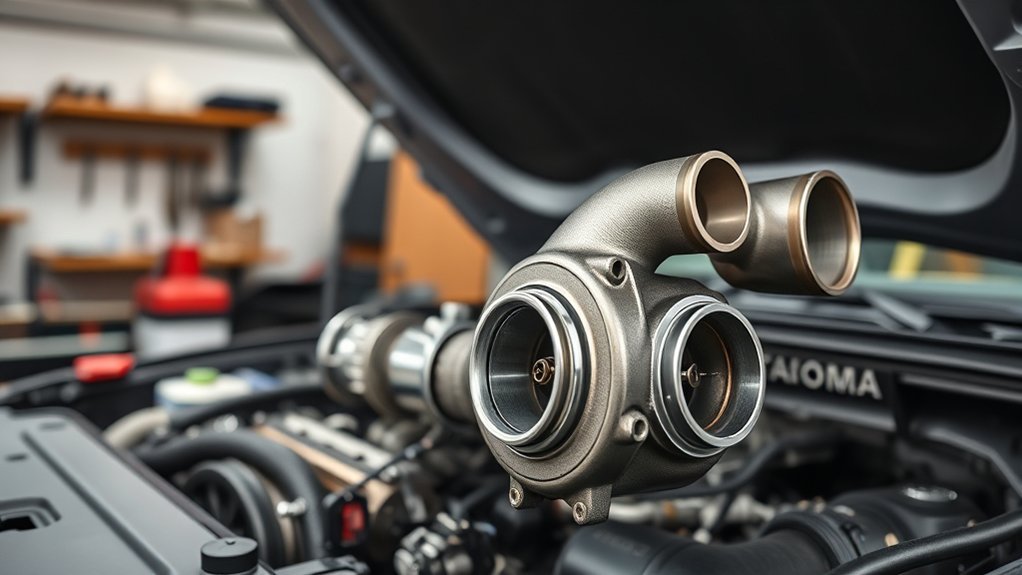
The third-generation Tacoma offered naturally aspirated four-cylinder and V6 engines. The fourth-generation Tacoma replaced those U.S. powertrains with turbocharged 2.4-liter four-cylinder options.
- Power density: A turbocharged engine can produce more power from a given displacement because it forces additional air into the cylinders.
- Low-speed torque: The current Tacoma’s turbocharged powertrains provide strong torque at lower engine speeds than many older naturally aspirated designs.
- Throttle response: A naturally aspirated engine can feel more linear because airflow responds directly to throttle opening. A turbo system needs time to build exhaust energy and boost.
- Heat and complexity: Turbo systems add charge piping, boost controls, additional heat, and a fast-spinning lubricated assembly.
- Fuel use: A smaller turbo engine can operate efficiently under light load, but frequent boost and heavy acceleration increase fuel consumption.
- Maintenance sensitivity: Correct oil, filtration, cooling, and timely diagnosis are especially important because the turbocharger operates under high speed and heat.
What Turbo Lag Feels Like
Turbo lag is the brief delay between pressing the accelerator and receiving the full increase in turbocharged torque. The rotating assembly must accelerate, and the engine must produce enough exhaust flow to create the requested boost.
Modern engine controls, carefully matched turbine and compressor sizes, transmission programming, and hybrid assistance can make this delay less noticeable. A small amount of lag can be normal. New or severe hesitation, warning lights, surging, or a major loss of power needs diagnosis rather than being dismissed as normal turbo behavior.
Maintaining a Turbocharged Toyota Tacoma
You do not need a complicated routine to own a factory-turbocharged Tacoma, but basic maintenance matters. Follow the schedule and fluid specifications for your exact model year, engine, and operating conditions.
- Use the specified engine oil. The turbocharger depends on engine oil for lubrication and heat control. Use the viscosity and specification listed by Toyota.
- Check the oil level. Investigate unexplained oil loss instead of repeatedly topping it off without finding the cause.
- Replace the air filter as required. Dirt entering the compressor can damage the wheel and contaminate the intake system.
- Keep the cooling system healthy. Low coolant, leaks, overheating, or a failing cooling component can expose the engine and turbo system to excessive heat.
- Inspect intake and charge connections. Loose clamps, split hoses, damaged pipes, and leaking seals can cause reduced boost or unmetered airflow.
- Avoid heavy load on a cold engine. Give the oil and coolant time to circulate and warm before demanding full boost.
- Respond to warning lights promptly. A check-engine light can indicate an airflow, pressure, ignition, fuel, sensor, or emissions fault.
Pro Tip: Record oil level, mileage, warning lights, unusual sounds, smoke, and the conditions under which a problem occurs. That information can help a technician separate a turbo fault from an intake leak, ignition problem, sensor fault, or exhaust restriction.
Signs of a Possible Turbo or Boost-System Problem
One symptom alone does not prove the turbocharger has failed. Several engine, intake, exhaust, fuel, and electronic faults can create similar behavior.
| Symptom | Possible Areas to Check |
|---|---|
| Sudden loss of power | Charge-air leak, sensor fault, wastegate control, ignition problem, fuel delivery, or protective reduced-power mode |
| Whistling, scraping, or siren-like noise | Intake leak, damaged piping, exhaust leak, foreign-object damage, or rotating-component wear |
| Blue or gray exhaust smoke | Oil entering the intake or exhaust, engine wear, ventilation-system fault, or turbo sealing problem |
| Check-engine light | Boost pressure, airflow, sensor, ignition, fuel, catalyst, or emissions-control fault |
| Oil or coolant loss | External leak, engine leak, cooling-system fault, hose or connection problem, or turbo-related leak |
| Surging or uneven power | Air leak, control fault, wastegate issue, sensor problem, ignition fault, or calibration problem |
Warning: Stop driving and shut the engine off safely if you see an oil-pressure warning, severe overheating, heavy smoke, a loud mechanical scraping noise, or rapidly worsening power loss. Turbocharger and exhaust components also become extremely hot, so do not touch or inspect them until the vehicle has cooled.
Aftermarket Turbo Upgrades and Tuning Risks
Raising boost pressure is not a simple way to gain safe power. The engine computer, fuel system, ignition timing, charge-air cooling, transmission, exhaust temperatures, emissions equipment, and engine internals must remain within their operating limits.
An intake, exhaust, boost controller, larger turbocharger, or ECU calibration can change airflow and load. Poorly matched parts or an aggressive tune can cause detonation, excessive exhaust temperature, compressor surge, transmission stress, emissions faults, or engine damage.
For an older Tacoma with an aftermarket turbo kit, follow the kit manufacturer’s requirements and use a qualified tuner who can verify air-fuel ratio, ignition timing, fuel quality, boost control, and operating temperatures. Also review how modifications may affect emissions compliance and warranty coverage before changing the factory calibration.
Debunking Common Myths About Tacoma Turbochargers
Myth: Every Tacoma Has a Turbocharger
Factory turbocharging applies to the fourth-generation U.S. Tacoma beginning with the 2024 model year. Earlier stock Tacomas used naturally aspirated engines, although some owners installed aftermarket forced-induction systems.
Myth: A Turbo Always Saves Fuel
A turbocharger can help a smaller engine produce greater output, but fuel use still rises when you request more power. Actual economy depends on the truck’s configuration, load, tires, speed, terrain, weather, and driving style.
Myth: Any Hesitation Is Normal Turbo Lag
A brief and consistent delay can be normal. New hesitation, severe surging, a warning light, smoke, unusual noise, or a large power loss can indicate a fault and should be diagnosed.
Myth: A Factory Turbo Needs No Special Attention
The factory system is designed as part of the engine, but it still depends on correct oil, clean intake air, effective cooling, sealed charge piping, working sensors, and timely maintenance.
Related Guides
Frequently Asked Questions
How do turbos work step by step?
Exhaust gas spins the turbine wheel. A shaft transfers that rotation to the compressor wheel, which draws in and pressurizes fresh air. The charge-air cooler lowers the compressed air’s temperature, and the intake manifold sends it to the cylinders. Sensors, the engine computer, and boost-control hardware regulate the process.
What is the main disadvantage of a turbocharged engine?
The main tradeoff is added heat and complexity. A turbocharged engine requires a lubricated high-speed rotating assembly, charge piping, boost controls, cooling, sensors, and precise calibration. Some drivers may also notice brief turbo lag. Correct maintenance and prompt diagnosis help control these risks.
What are the five main components of a turbocharger?
The core assembly can be described through five main groups: the turbine wheel and housing, compressor wheel and housing, connecting shaft, center housing, and bearing and lubrication system. The wastegate, charge-air cooler, sensors, intake pipes, and engine computer support or control the broader turbo system.
How does a V6 turbo work, and does the current Tacoma use one?
A turbocharged V6 uses the same exhaust-driven turbine and intake compressor principle. It may use one or two turbochargers depending on the design. However, the production 2024–2026 Toyota Tacoma uses a turbocharged 2.4-liter inline-four, not a turbocharged V6.
Which Toyota Tacoma years have a factory turbocharger?
In the U.S. market, Toyota introduced the current factory turbocharged powertrains with the redesigned 2024 Tacoma. The 2024, 2025, and 2026 models use 2.4-liter turbocharged i-FORCE or i-FORCE MAX configurations, depending on trim.
How long should a Tacoma turbocharger last?
Toyota does not provide one universal service-life number for every truck and operating condition. Longevity depends on oil quality, maintenance history, heat exposure, filtration, cooling, driving load, manufacturing condition, and whether the engine remains at its factory calibration.
Conclusion
A 2024 or newer Toyota Tacoma uses a carefully controlled turbo system to produce strong power and torque from a 2.4-liter four-cylinder engine. Exhaust energy drives the turbine, the compressor pressurizes fresh air, the charge-air cooler reduces its temperature, and the wastegate and engine computer regulate boost.
The system’s advantages include strong low-speed torque and greater power density. Its tradeoffs include added heat, more components, and greater sensitivity to oil, cooling, filtration, leaks, and unauthorized tuning. Follow Toyota’s specifications, investigate warning signs promptly, and confirm advice against the documentation for your exact model year.
Sources
- Toyota 2026 Tacoma — current U.S. powertrain availability, maximum output, trims, and fuel-economy estimates
- Toyota USA Newsroom: 2024 Toyota Tacoma Is the Ultimate Adventure Machine — fourth-generation engine, transmission, horsepower, torque, and hybrid specifications
- Garrett Motion: What Is a Turbo and How Does It Work? — turbine, compressor, shaft, airflow, and charge-air cooling principles
- Garrett Motion: Distinctions Between Turbo Types — wastegate operation and boost regulation
- Garrett Motion: Turbo Lag Causes, Effects, and Solutions — turbo-lag definition and contributing factors
