The first time I hooked a sheepshead felt like opening a rusty combination lock: click after click until the fish finally turned and that patience paid off. You’ll learn how to spot their teethy faces and tight bites under docks, choose the right bait and gear, and keep a tight line for quick hooksets. Stick with me and you’ll be catching, landing, and cleaning sheepshead with more confidence, starting with where to look first.
Quick Answer
To catch sheepshead, fish tight to structure with natural baits such as fiddler crabs, shrimp, oysters, barnacles, or clams. Use a sensitive medium to medium-heavy spinning setup, keep your bait near pilings or rocks, watch for tiny taps, and confirm your state’s current size, season, and bag limits before keeping fish.
Key Takeaways
- Sheepshead are easiest to identify by their dark vertical bars, deep silvery body, and stubby teeth built for crushing crabs, oysters, barnacles, and mussels.
- The best spots usually include docks, bridge pilings, seawalls, jetties, reefs, oyster beds, rock piles, and other food-rich structure.
- Fiddler crabs are a top bait, but shrimp, clams, oysters, barnacles, sand fleas, and small crabs can all work when presented naturally.
- A sensitive rod, braided mainline, fluorocarbon leader, small strong hook, and patient hookset help you detect light bites before the fish steals the bait.
- Rules change by state and waterbody, so always check the latest local regulations before your trip.
At a Glance
| Best Time | Winter through spring in many coastal areas, with strong action around moving tides and structure. |
| Difficulty | Moderate. Sheepshead bite lightly, steal bait quickly, and fight hard around cover. |
| Tools Needed | Medium or medium-heavy spinning rod, 3000-4000 reel, braid, fluorocarbon leader, small strong hooks, sinkers, bait, net, pliers, and a sharp fillet knife. |
| Typical Baits | Fiddler crabs, mud crabs, shrimp, oysters, barnacles, clams, mussels, and sand fleas. |
Sheepshead Identification and Key Features

Look for the unmistakable dark vertical bars on a compressed, silvery body. Sheepshead are easy to identify once you know the main signs. You’ll also notice their stubby, human-like rows of teeth, which help them crush hard-shelled prey like crabs, barnacles, oysters, mussels, and clams.
Look for dark vertical bars, a deep silvery body, and stubby teeth. Sheepshead are built for picking food from structure and crushing hard-shelled prey.
For clear identification, note the body shape. Sheepshead have a deep, laterally compressed body, a blunt head, sharp dorsal spines, and bold bands that may fade slightly on larger fish. They are often in the 10- to 20-inch range, though larger fish are possible in many coastal fisheries.
Those dark vertical bars and tooth structure are the key features that set sheepshead apart from many other coastal species. Juvenile black drum can look similar at a glance, but black drum usually have a more rounded profile, different mouth shape, and a different overall body look as they grow.
You’ll also recognize sheepshead by their confident, stubborn fight on the line. They often dig hard for pilings, rocks, bridge supports, oyster bars, and other cover. That makes them popular with anglers who want a challenge and a great table fish.
While they frequent coastal areas, docks, and jetties, focus first on anatomy and behavior so you can confidently identify them without confusion. Use these concrete cues and you’ll sharpen your fishing instincts with precision.
When and Where to Find Sheepshead
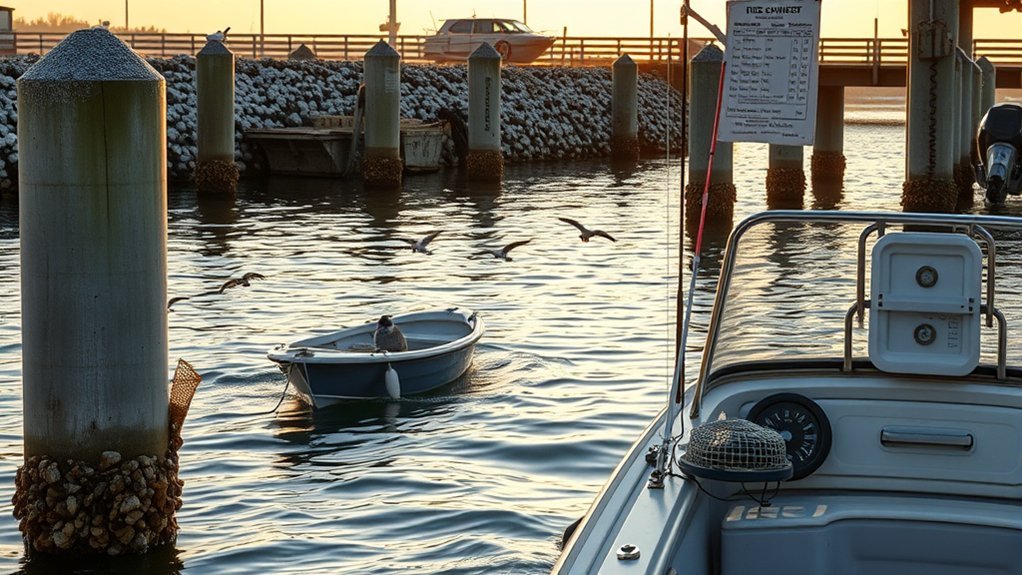
When you’re hunting sheepshead, head for structures: docks, bridge pilings, seawalls, artificial reefs, jetties, wrecks, oyster bars, and rocky outcrops. These spots matter because barnacles, oysters, crabs, mussels, shrimp, and small crustaceans gather there. That food turns hard cover into a natural feeding station.
You’ll find them in coastal waters near those ideal habitats. They often hold around deeper, cooler water for parts of the year, then move closer to inshore structure when conditions line up with feeding and spawning patterns.
Focus sheepshead fishing around bridge supports, seawalls, jetty rocks, dock pilings, artificial reefs, oyster beds, and nearshore structure. Depending on your coast, you may catch them in a few feet of water or around structure several miles offshore.
Winter and spring are prime times in many areas because fish feed actively and may move closer to predictable structure. Spawning timing varies by region, but late winter through early spring often brings strong action in many southern and mid-Atlantic waters.
Time your efforts around moving water. Two hours before and after low tide can be productive in many locations, but the best window depends on the spot. Some docks fish better on incoming water, while some jetties and bridges shine when current sweeps bait past the structure.
You’ll feel more confident when you steer toward food-rich cover instead of fishing open water at random. Sheepshead are structure-oriented fish, so every cast should have a target.
Keep your presentations tight to crustaceans and mollusks on the bottom, then move along structure methodically. Drop beside each piling, seam, rock, or oyster edge. If you do not get bites, change depth, angle, bait size, or current side before leaving the spot.
Pro Tip: Fish the up-current side first, then drop your bait along the current seam where food naturally washes past pilings, rocks, or oyster edges.
State Regulations, Seasons, and Limits

Before you cast, check each state’s season dates, minimum size limits, and creel limits so you stay legal and protect the population. Sheepshead rules can change by state, year, waterbody, and management area.
Regulations may also differ between Atlantic, Gulf, bay, and inland-connected waters. A fish that is legal in one state may be undersized or over the daily limit in another. That matters if you travel, fish near a state line, or launch in one state and fish in another.
Maryland, Delaware, Virginia, Florida, Texas, Louisiana, and other coastal states may set different rules for seasons, minimum length, vessel limits, bag limits, and licensing. Because these rules can change, make it a habit to confirm current rules with the official state resource before you go.
Warning: Do not rely on old forum posts, outdated videos, or dock talk for harvest rules. Check the official state agency before keeping sheepshead.
Season Dates by State
Because regulations differ by state, you should always check local season dates, size limits, and creel limits before you head out to fish for sheepshead.
Some states allow year-round sheepshead harvest with size and bag limits. Others may set seasonal windows, area rules, or special limits. Maryland, Delaware, and Virginia have used different minimum sizes and possession limits at different times, which shows why current official rules matter more than any general guide.
Use local resources such as state fish and wildlife websites, regulation booklets, phone hotlines, license portals, and marina postings to confirm current rules. If you fish with a guide, still check the rules yourself so you understand what you can keep.
Stay updated because changes happen. Fishing compliance protects the fishery, prevents fines, and helps you keep fishing responsibly.
Plan trips with the latest information, especially if you are traveling to a new state or fishing during a seasonal transition.
Size and Creel Limits
You’ve already seen how season dates differ by state, so next look closely at size and creel limits. Those numbers determine what you can legally keep.
You’ll want to know the minimum size, daily creel limit, vessel limit if one applies, and any closed season rules. Measure fish carefully with the mouth closed and the tail pinched or positioned as your state requires.
Do not assume one state’s rule applies everywhere. Maryland, Delaware, and Virginia have each used different sheepshead rules, and those rules may change. Florida, Texas, Louisiana, Georgia, the Carolinas, and other coastal states also set their own requirements.
Peak fishing months often run from late winter into spring in many regions, but legal harvest rules do not always match peak fishing activity. Check local resources before you go.
Know the rules, keep only legal fish, and protect the resource. Responsible harvest helps maintain strong sheepshead fishing for the next trip.
Essential Rods, Reels, and Line for Sheepshead
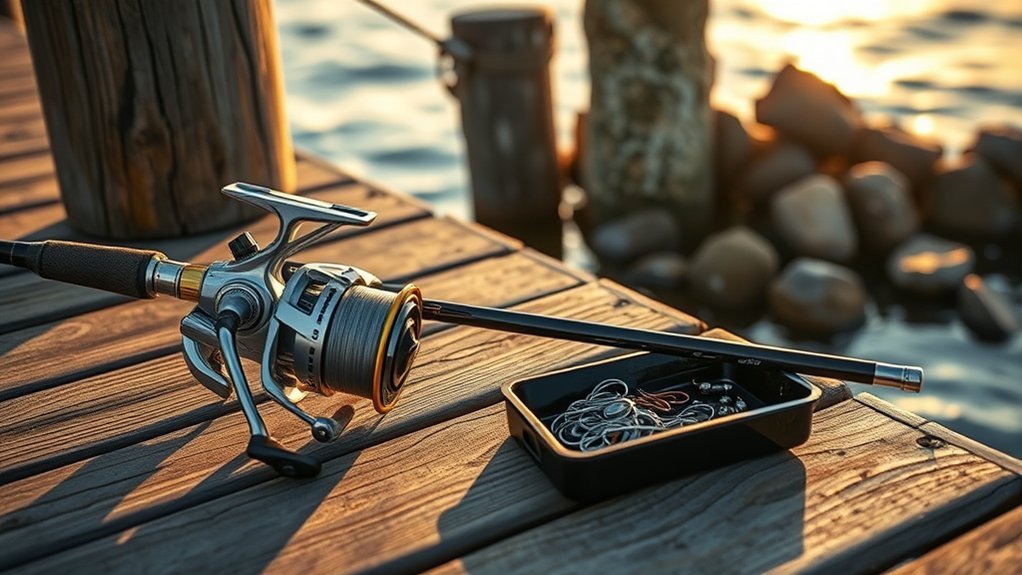
You’ll want a medium to medium-heavy spinning rod about 6.5 to 7.5 feet long to feel those picky sheepshead bites. A sensitive tip helps you detect taps, while enough backbone helps pull fish away from pilings and rocks.
Pair it with a 3000-4000 size spinning reel with a smooth drag for controlled hooksets. You do not need oversized tackle for most inshore sheepshead, but you do need enough strength to handle structure.
Use 15-20 lb braid with a 4-6 foot fluorocarbon leader for sensitivity and better hookups while fishing tight to structure. Increase leader strength when oysters, barnacles, bridge pilings, or rocks are cutting you off.
Rod Length & Action
One strong choice for sheepshead is a 6- to 7-foot rod with medium to medium-heavy action. This gives you the sensitivity to feel subtle, sideways pecks while still providing the backbone to set hooks and pull fish away from structure.
You’ll want a medium action or medium-heavy blank to balance feel and power. A fast or extra-fast tip can help when fish are barely tapping the bait. Even a shorter, sensitive rod can work well around docks when you need quick tip response and tight control.
Pair that rod length and action with 15-20 lb braided line for strong sensitivity, then tie a 4-6 foot fluorocarbon leader to reduce visibility and improve abrasion resistance.
Use a Carolina rig, knocker rig, jig head, or small dropper-style setup to keep bait near structure and close to the bottom. Match the weight to current so the bait stays natural instead of tumbling too fast.
This setup keeps you nimble, confident, and ready when a sheepshead finally turns a tiny tap into steady pressure.
Reel Size & Drag
After picking the right rod length and action, match it with a 3000-4000 spinning reel so your setup stays balanced and comfortable all day. You’ll want a reel size that gives power without bulk. Pair it with a medium to medium-heavy spinning rod for the sensitivity and backbone to feel light bites and handle bigger fish.
Set the drag tight enough to steer sheepshead away from structure, but not so tight that a sudden surge snaps your leader. A smooth drag matters more than a single exact number because fish size, leader strength, current, and structure all affect the fight.
Use braided line to maximize sensitivity and reduce stretch, then tie a 4-6 foot fluorocarbon leader for low visibility and better abrasion resistance. You’ll feel more confident and ready to outsmart smart fish.
| Power | Feel | Freedom |
|---|---|---|
| 3000-4000 reel | High sensitivity | Confident control |
| Smooth drag | Reduced break-offs | Calm battles |
| Braided line + fluorocarbon leader | Better bite detection | Precise structure fishing |
Line Type & Strength
A braided mainline in the 15-20 lb range gives you the sensitivity to feel those light sheepshead pecks and the strength to work around oysters and pilings with more confidence.
Pair that braided line with a 4-6 foot fluorocarbon leader to keep your presentation stealthy. Fluorocarbon also adds abrasion resistance when a fish rubs the line against barnacles, rocks, dock posts, or shell.
You’ll want a medium spinning rod in the 6.5- to 7.5-foot range for feel and control, matched to a 3000-4000 reel for comfort and power.
Fish a simple Carolina rig with a small strong hook to present crabs, shrimp, clams, or oysters near structure without spooking wary fish. Many anglers use hook sizes around #1 to 1/0, but bait size and local fish size should guide your choice.
This setup frees you to target sheepshead confidently, stay nimble around cover, and land more bites.
Best Natural Baits and How to Present Them

When you target sheepshead, nothing beats natural baits like fiddler crabs, mud crabs, oysters, barnacles, clams, mussels, shrimp, and sand fleas. Fiddler crabs are a favorite for a reason: they match what sheepshead already pick from pilings, rocks, and oyster bars.
You can remove one larger claw from a fiddler crab before rigging if it helps the bait sit better and release scent. Avoid crushing the bait into mush. You want it secure enough to survive small pecks but natural enough to tempt a cautious fish.
For oysters, clams, and mussels, use tough pieces that stay on the hook. Some anglers use bait thread, mesh, or small bait bags to hold soft shellfish in place. Barnacles can also work when chipped from structure where legal, but check local rules before collecting any natural bait.
Place bait tight to structures such as docks, pilings, rocky edges, seawalls, bridge supports, and oyster bars. You want your offering to look like the food they’re already picking at, so let it hug the cover and sit naturally.
Keep line taut and watch for subtle taps. Sheepshead often nibble lightly before committing, and they can strip bait before you feel a hard pull. Stay patient but ready, and you’ll gain confidence each cast as you outsmart picky feeders with smart presentation and proven natural baits.
Note: Bait collection rules vary. Before scraping barnacles, gathering oysters, or collecting crabs, check local harvest rules and closed areas.
Rigs, Hooks, and Tackle Techniques That Work
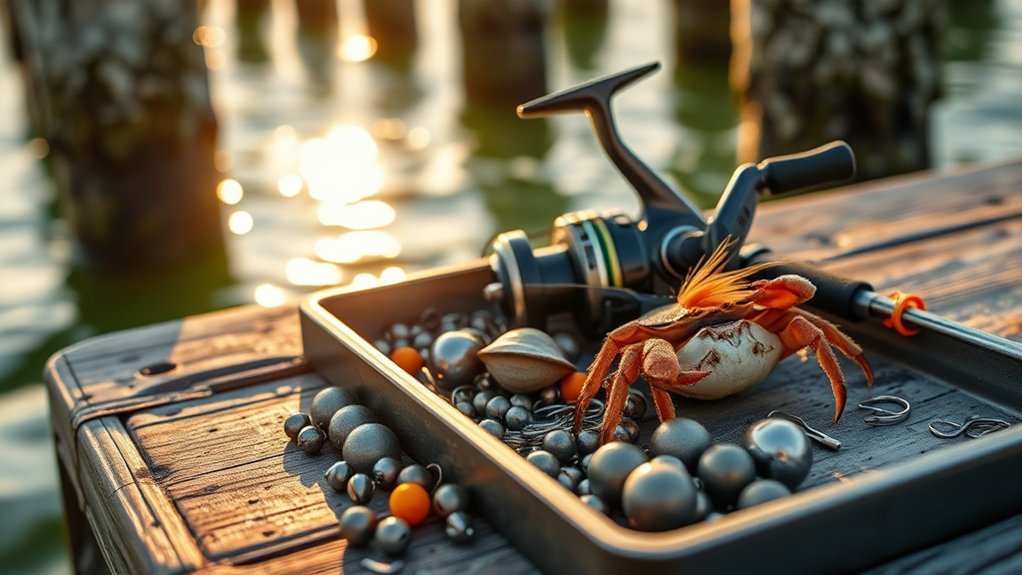
One clear setup can make the difference: rig a Carolina-style setup with a small strong hook, 15-20 lb braid, and a 4-6 foot fluorocarbon leader so your bait sits tight to structure without spooking sheepshead.
You’ll want a 6- to 7-foot medium to medium-heavy rod with a 3000-4000 spinning reel for control and comfort. Drop your bait, such as mud crab, fiddler crab, shrimp, clam, or oyster, close to jetties or pilings. Keep the drag fairly firm and feel for the subtle takes.
Use tackle that gives you sensitivity and stealth: braid for feel, fluorocarbon for lower visibility and abrasion resistance, and a small strong hook that won’t tear bait apart.
Opt for sensitive, stealthy tackle. Use braid for feel, fluorocarbon for abrasion resistance, and a small, tough hook that holds bait well.
Hook bait securely so sheepshead cannot steal it easily. When you fish this way, you take control on the water and stop guessing.
- Choose rigs and hooks that match bait size, current, depth, and structure.
- Keep leaders long enough, often 4-6 feet, to reduce line visibility and add abrasion protection.
- Maintain steady tension and patience for light, deliberate bites.
- Use enough weight to hold bottom, but not so much that the bait looks stiff or unnatural.
- Set the hook when taps turn into steady pressure, not at every tiny peck.
Simple Sheepshead Rig Options
A Carolina rig works well when you need to keep bait on or near the bottom while allowing a natural presentation. Slide on an egg sinker, add a swivel, tie your fluorocarbon leader, then finish with a small strong hook.
A knocker rig keeps the weight close to the hook, which can help around rocks, reefs, and pilings. This setup is simple, compact, and easy to drop straight down beside structure.
A jig head can work when fish are feeding aggressively or when you want a direct feel. Tip it with shrimp, crab, clam, or a small piece of shellfish. Keep the jig close to the structure and avoid overworking it.
A dropper rig can help when you need the bait slightly above snaggy bottom. Keep the leader short enough for control but long enough to let the bait move naturally in current.
How to Detect the Bite
Sheepshead are famous bait thieves. You may feel a tap, pause, scratch, or slight heaviness instead of a hard strike. Keep your index finger near the line, maintain light tension, and watch the rod tip closely.
Do not swing wildly at every peck. Let the fish load the rod or create steady pressure, then lift firmly. A short, quick hookset often works better than a dramatic overhead swing, especially near pilings.
If you keep losing bait, downsize the bait, hide the hook point less, adjust the weight, or move to the side of the structure where current is easier to manage.
Landing, Cleaning, and Filleting Sheepshead
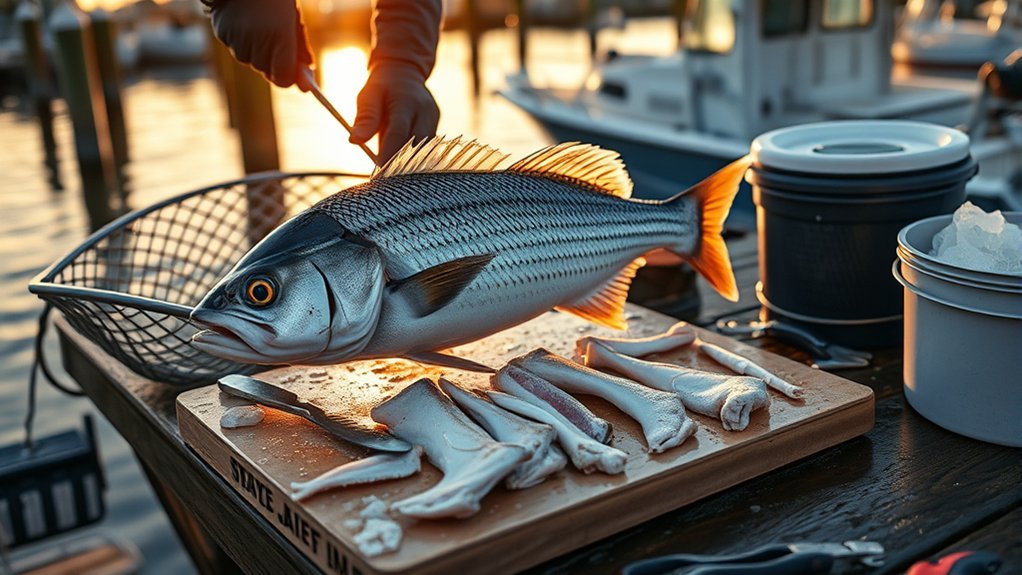
Now that you’ve got your rig, hookset, and bait placement dialed in, you’ll want to finish strong at the boat or shore. Landing, cleaning, and filleting sheepshead correctly preserves the quality of your catch and saves time.
When landing, use a net to counter their strong, stubborn fight around structure so you do not lose a hard-won fish. Keep steady pressure, guide the fish away from barnacles or rocks, and net it headfirst when possible.
Handle sheepshead carefully because the dorsal spines are sharp. Use pliers for hook removal, keep your fingers away from the teeth, and place the fish on a stable surface before cleaning.
For cleaning, make careful cuts along the large rib cage near the head and keep the tail connected to the fillet for easier handling and control. Their thick ribs and tough scales can make cleaning harder than cleaning many softer-bodied fish.
Filleting calls for cuts close to the spine and a v-cut technique to remove small bones cleanly. A sharp fillet knife makes those precise moves and minimizes damage to the meat.
Watch a few video demonstrations to match your hands to the motions. Visual guidance can speed up the learning process, especially because sheepshead have a firm body and heavy rib cage.
Stay deliberate and confident in your approach. Good technique turns stubborn sheepshead into table-ready fillets with minimal waste and maximum pride.
Top Destinations and Trip Planning Tips

Because sheepshead concentrate around structure, you’ll get the best results by targeting proven hotspots like Florida’s bridges and piers, Texas oyster beds and jetties, Louisiana rigs and marsh edges, and the Outer Banks or Charleston systems. Each region offers consistent action and local quirks you should plan for.
Sheepshead concentrate on structure. Target bridges, piers, oyster beds, rigs, jetties, reefs, and marsh edges for more consistent action.
You’ll find Tampa Bay and Jacksonville especially reliable in Florida when fish stack around bridges, docks, and nearshore structure. The Gulf Coast from Galveston Bay to Corpus Christi can shine around oyster beds, rocks, jetties, and channel edges. In Louisiana, rigs, docks, reefs, and marsh edges hold fish that hit live shrimp, fiddler crabs, and small crustaceans.
In the Carolinas and Mid-Atlantic, look for bridge pilings, rock jetties, inlet walls, docks, nearshore reefs, and wrecks. Local bait shops can help you match bait size, tide timing, and water clarity for the week you fish.
Book smart when you are new to an area. Use a vetted local captain or guide who knows tides, tackle, safe navigation, and local rules. A good guide can shorten your learning curve and show you how sheepshead position on structure during different tides.
- Prioritize structure-rich spots: bridges, piers, jetties, reefs, wrecks, rigs, seawalls, docks, and oyster bars.
- Bring live shrimp and small crustaceans, then match local bait when fish get picky.
- Schedule around tides, water clarity, seasonal movement, and a vetted guide if you are learning new water.
- Pack a landing net, extra leaders, spare hooks, sinkers, pliers, a measuring tool, and a valid fishing license.
- Check wind and current before fishing jetties, bridges, or nearshore reefs because these areas can become unsafe quickly.
With focused trip planning, you’ll fish confidently, learn local patterns, and consistently catch more sheepshead.
Common Mistakes to Avoid
Many beginners struggle with sheepshead because they treat them like aggressive open-water fish. Sheepshead often feed slowly, stay tight to cover, and steal bait with quick nibbles. Small changes make a big difference.
- Fishing too far from structure: If your bait is several feet away from the piling, rock, or oyster edge, you may be outside the strike zone.
- Using bait that is too large: Oversized bait gives sheepshead more chances to nibble without touching the hook.
- Swinging too early: Tiny taps may only mean the fish is testing or stealing the bait. Wait for steady pressure.
- Ignoring abrasion: Barnacles, oysters, and rocks can cut weak leaders fast. Retie often.
- Using too much weight: Heavy sinkers can make bait look unnatural and reduce bite feel.
- Forgetting the rules: Size and bag limits change. Confirm regulations before keeping fish.
Frequently Asked Questions
What is the secret to catching sheepshead?
The secret is fishing close to structure with natural bait while staying patient. Use fiddler crabs, shrimp, oysters, clams, or barnacles near pilings, rocks, docks, jetties, or oyster beds. Keep the line tight, watch for subtle taps, and set the hook when you feel steady pressure.
What is the best setup for sheepshead fishing?
A strong all-around setup is a 6.5- to 7.5-foot medium or medium-heavy spinning rod, a 3000-4000 reel, 15-20 lb braid, and a 4-6 foot fluorocarbon leader. Use a small strong hook with a Carolina rig, knocker rig, jig head, or dropper rig depending on depth, current, and structure.
What is the best bait to catch sheepshead with?
Fiddler crabs are one of the best sheepshead baits, especially around docks, pilings, and oyster bars. Shrimp, mud crabs, oysters, barnacles, clams, mussels, and sand fleas can also work well. Match the bait to what sheepshead are already eating in that area.
What is the best month to catch sheepshead?
February is often one of the best months in many southern coastal areas, but the best month depends on your region. Late winter through spring commonly produces strong sheepshead action around bridges, docks, jetties, reefs, and other structure. Always check local reports and current regulations before planning a harvest trip.
Can you catch sheepshead from shore?
Yes. Shore anglers catch sheepshead from piers, bridges, seawalls, jetties, docks, and rock edges. The key is reaching structure with natural bait and keeping your rig close to the cover where the fish feed.
Why do sheepshead steal bait so easily?
Sheepshead have strong teeth and a cautious feeding style. They can nip, crush, and pull bait from the hook before you feel a strong bite. Use smaller bait pieces, sharp hooks, steady tension, and a patient hookset to improve your landing rate.
Sources
- Florida Fish and Wildlife Conservation Commission — sheepshead identification, habitat, and recreational rule reference.
- Texas Parks and Wildlife Department — saltwater bag and length limit reference.
- Louisiana Department of Wildlife and Fisheries — recreational saltwater finfish rules.
- Maryland Department of Natural Resources — fishing regulation reference for Maryland waters.
- Virginia Marine Resources Commission — recreational fishing size, possession, and licensing reference.
Conclusion
You’ve got the basics down, from spotting sheepshead’s toothy grin to choosing fiddler crabs, fishing tight to structure, and using a sensitive rod. Like a lighthouse guiding night sailors, these tips steer you toward productive docks, pilings, jetties, reefs, oyster beds, and bridge supports during strong seasonal windows.
Stay legal with local limits, keep your line tight, and use simple rigs for confident hooksets. With practice, you’ll read the bite faster, lose less bait, land more fish, and turn these stubborn fighters into clean, table-ready fillets.