
Toyota Camry catalytic converter lifespan is not set by a scheduled replacement mileage. Toyota’s maintenance schedule calls for exhaust-system inspections rather than routine converter replacement. Keep the converter if it passes diagnosis; investigate it if you have P0420 or P0430, rattling, abnormal heat, an emissions-test failure, or power loss; and replace it only after testing confirms damage, restriction, or inadequate catalyst efficiency.
Last updated: September 19, 2026. This guide was fact-checked against Toyota warranty and maintenance information, U.S. EPA emissions-warranty and anti-tampering guidance, California Air Resources Board aftermarket-converter rules, and RepairPal’s September 2026 Toyota Camry cost estimate. It does not claim hands-on diagnosis of a specific vehicle.
Affiliate disclosure: If you buy through qualifying links that appear on this page, we may earn a commission at no extra cost to you.
Quick Answer
A Toyota Camry catalytic converter has no fixed replacement mileage. Toyota schedules exhaust inspections rather than routine converter replacement. Diagnose first: P0420 or P0430, rattling, excess heat, an emissions-test failure, or power loss can justify testing, but replacement should follow confirmed physical damage, restriction, or low catalyst efficiency. Fix misfires, fuel-control faults, oil or coolant burning, and exhaust leaks before installing a new converter.
Key Takeaways
- Toyota does not specify a routine mileage for catalytic-converter replacement.
- A P0420 or P0430 code does not automatically prove that the converter must be replaced.
- Misfires, fuel-control faults, oil burning, coolant leaks, and exhaust leaks should be repaired before a new converter is installed.
- Check your emissions warranty before paying for replacement.
- Match any replacement to the VIN, engine, emissions label, and state requirements.
Toyota Camry Catalytic Converter Lifespan: Keep, Diagnose, or Replace?
Use condition and test results—not odometer mileage alone—to decide what to do next. This framework separates a healthy converter from a vehicle that needs diagnosis and from a converter that has actually been confirmed failed.
| What You Find | Best Next Step | Why |
|---|---|---|
| No catalyst codes, no abnormal heat or rattling, normal power, and emissions monitors ready | Keep it in service | Toyota does not list routine catalytic-converter replacement as scheduled maintenance. |
| P0420 or P0430 with otherwise normal power | Diagnose before buying parts | Exhaust leaks, misfires, fuel-control faults, sensor problems, and contamination can affect catalyst-monitor results. |
| Power loss, internal rattling, a glowing converter, or a flashing check-engine light | Arrange prompt diagnosis | These symptoms can accompany restriction, broken substrate, or severe overheating. |
| Testing confirms physical damage, severe restriction, or catalyst efficiency below the required threshold after other causes are ruled out | Replace after fixing the root cause | A new converter can be damaged again if the misfire, mixture fault, oil or coolant consumption, or exhaust leak remains. |
Understanding the Lifespan of a Toyota Camry Catalytic Converter
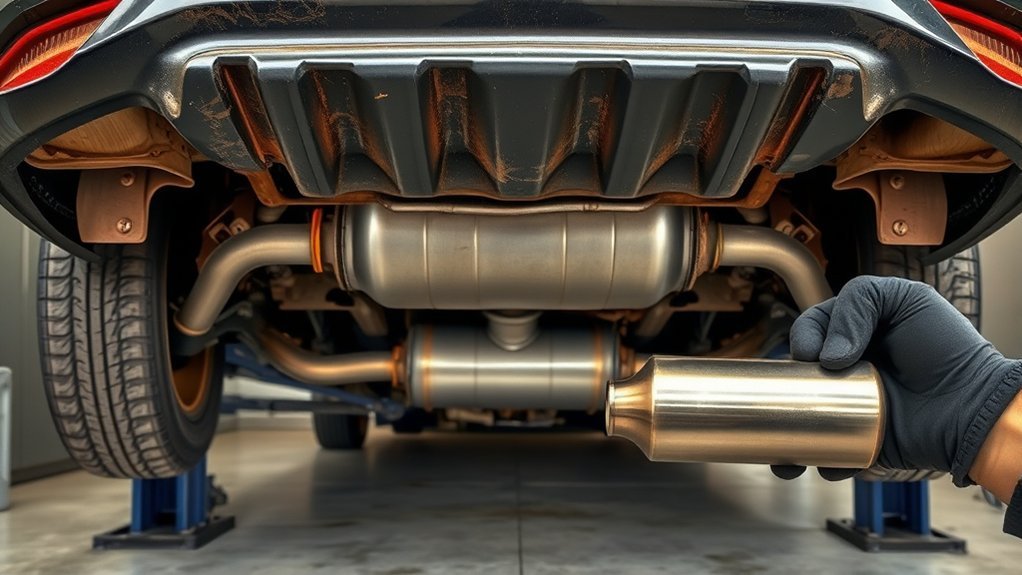
A catalytic converter is an emissions-control component rather than a scheduled wear item. Toyota’s maintenance information calls for periodic inspection of the exhaust pipes and mountings, but it does not list a routine catalytic-converter replacement interval. Replace the converter only when diagnosis confirms that it is damaged, restricted, contaminated, missing, or no longer reducing emissions effectively.
This page focuses on lifespan, replacement timing, diagnosis, warranty, and cost. For a deeper explanation of converter function, emissions chemistry, and Camry converter layouts, see how the Toyota Camry catalytic converter works.
A converter that receives clean, correctly balanced exhaust can last for many years. Its life may be shortened when unburned fuel, engine oil, or coolant reaches the catalyst. Road impact, rust, thermal stress, and poor-quality previous repairs can also damage the housing or the internal ceramic structure.
Why the Camry’s Model Year and Engine Matter
Toyota Camry exhaust layouts vary by generation, engine, drivetrain, and emissions certification. Some catalysts are incorporated into an exhaust manifold or front-pipe assembly, while other vehicles have more than one monitored catalyst. A four-cylinder Camry and a V6 Camry may also use different code descriptions and replacement assemblies.
Do not order a converter based only on the model name. Use the VIN, engine size, emissions label, and exact model year to identify the correct assembly.
Note: Warranty length is not the same as expected lifespan. For example, Toyota’s 2025 Camry Warranty & Maintenance Guide identifies the catalytic converter and protector as federal emissions-warranty parts covered for eight years or 80,000 miles. Check the guide for your own model year because coverage and state provisions can differ.
What Are the Symptoms of a Failing Toyota Camry Catalytic Converter?
A failing converter can produce warning lights, poor performance, excess heat, abnormal exhaust odor, or rattling. None of these symptoms is unique to the converter, so diagnosis should include the engine, sensors, fuel system, and exhaust system.
Check Engine Light Activation
The check-engine light may turn on when the engine computer detects catalyst efficiency below its programmed threshold. Common catalyst-related codes include P0420 and, on engines with another monitored bank, P0430.
These codes do not automatically mean that the converter itself is the only failed part. A technician should also look for:
- Current or recent engine misfires
- Exhaust leaks ahead of or near the oxygen sensors
- Incorrect fuel trims or a rich-running condition
- Slow, biased, damaged, or incorrectly installed sensors
- Oil or coolant entering the combustion chambers
- Incorrect aftermarket exhaust components or engine calibration
Clearing the code without repairing the cause only removes the warning temporarily. The monitor may fail again after the vehicle completes another drive cycle.
Power Loss Symptoms
A severely restricted converter can limit exhaust flow and cause sluggish acceleration, reduced high-speed power, stalling, or difficulty maintaining speed under load. In extreme cases, the engine may become hard to start.
However, low fuel pressure, ignition faults, transmission problems, restricted air intake, and other engine conditions can produce similar symptoms. Exhaust back-pressure or another restriction test may be needed before blaming the converter.
Rattling From the Converter Area
A loose or broken catalyst substrate may rattle during startup, idling, acceleration, or deceleration. A damaged heat shield, exhaust bracket, or pipe can make a similar noise, so the sound should be located before replacement.
- A light metallic buzz may come from a loose heat shield.
- A deeper internal rattle may indicate a broken ceramic substrate.
- Rattling combined with power loss may point to a collapsing or restricted catalyst.
Odor, Excess Heat, and Emissions-Test Failure
A sulfur or rotten-egg odor may accompany a fuel-control or catalyst problem, but odor alone does not prove converter failure. A failed emissions inspection also indicates that the emissions system needs diagnosis, not necessarily that the converter must be replaced immediately.
A converter that becomes visibly red or glows beneath the vehicle is overheating. This can occur when excess unburned fuel reaches the exhaust and burns inside the converter.
Warning: If the check-engine light is flashing, the engine is misfiring badly, the converter is glowing, or you smell intense heat, reduce engine load and stop in a safe location. Continued driving can overheat the converter and nearby components. Do not touch the exhaust or park over dry grass or other combustible material.
Common Causes of Catalytic Converter Failure
Catalytic converters often fail because another engine or exhaust problem exposes them to excessive fuel, contamination, heat, or physical stress. Replacing the converter without correcting that problem can damage the new part.
| Cause | What Happens | What Should Be Checked |
|---|---|---|
| Engine misfire | Unburned fuel enters the exhaust and can overheat or melt the catalyst. | Spark plugs, ignition coils, injectors, compression, wiring, and misfire codes |
| Rich air-fuel mixture | Excess fuel raises converter temperature and emissions. | Fuel trims, injectors, air-fuel sensors, mass-airflow data, and fuel pressure |
| Oil consumption | Burned oil can coat or poison the catalyst over time. | Oil level changes, smoke, piston rings, valve seals, and PCV operation |
| Coolant entering the engine | Coolant residue can contaminate the catalyst and sensors. | Coolant loss, head-gasket symptoms, pressure testing, and combustion-gas testing |
| Exhaust leak | Outside air can affect sensor readings and catalyst-monitor results. | Manifold, gaskets, flex section, pipe joints, welds, and sensor threads |
| Physical damage or corrosion | Impact or rust can crack the housing, substrate, pipe, or mounting points. | Underbody damage, rust, hangers, shields, and pipe alignment |
| Incorrect replacement part | The monitor may not accept a converter that lacks the required capacity or certification. | VIN, engine, emissions label, part number, and CARB Executive Order when applicable |
Why Regular Maintenance Extends Your Catalytic Converter’s Lifespan
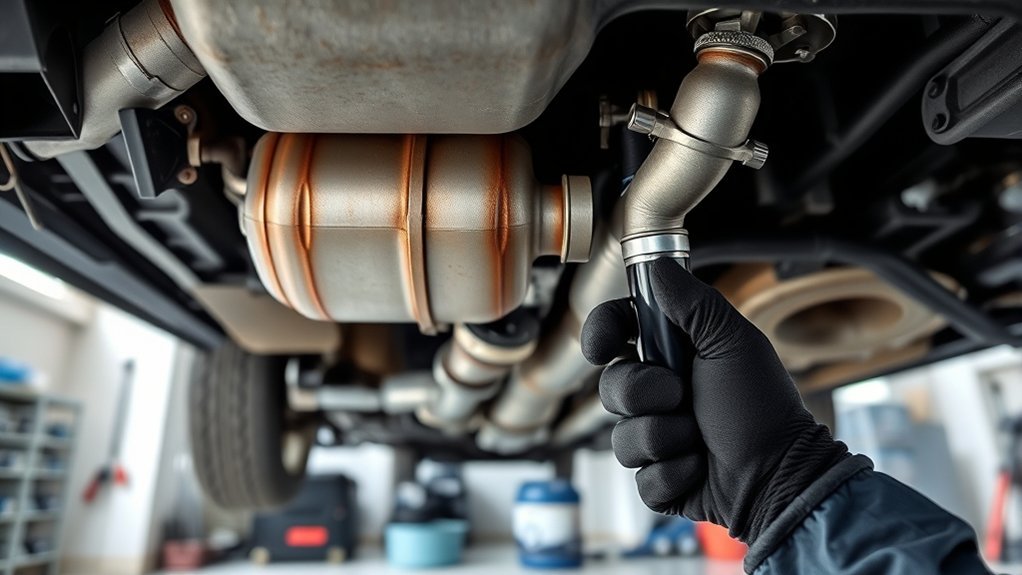
The converter has no filter or fluid that you replace during normal service. Protecting it means keeping the engine and exhaust system in good condition.
- Respond to a flashing check-engine light: A severe misfire can send raw fuel into the converter.
- Follow the correct spark-plug schedule: Worn or incorrect plugs can contribute to misfires.
- Maintain the air-intake system: Replace or inspect the engine air filter according to the schedule for your model year and driving conditions.
- Track oil and coolant levels: Unexplained consumption may reveal an internal leak before the converter becomes contaminated.
- Repair exhaust leaks: Toyota’s maintenance guidance calls for inspecting exhaust pipes, mountings, deterioration, and leakage.
- Use the specified fuel and fluids: Follow the owner’s manual rather than using unapproved additives or unusually thick oil to hide another problem.
- Do not ignore stored misfire or fuel-system codes: The car may still feel drivable while the converter is being overheated.
How Do You Know When to Replace Your Catalytic Converter?
Replacement is justified when testing shows that the converter is physically damaged, internally broken, severely restricted, missing, or unable to meet the required catalyst-efficiency threshold after other causes have been ruled out.
A P0420 or P0430 code is a diagnostic starting point, not an automatic order to replace the catalytic converter.
Check-Engine Light Warning
A steady check-engine light means you should scan the vehicle and diagnose the stored codes. If a catalyst-efficiency code is present, review pending codes, freeze-frame data, misfire history, fuel trims, and relevant sensor readings before condemning the converter.
Repeatedly clearing the code is not a repair. It also resets emissions monitors, which can leave the vehicle “not ready” for an inspection until the required monitors run again.
Performance Degradation Symptoms
When the complaint is low power, the technician should confirm whether the exhaust is restricted. Depending on the vehicle and equipment available, diagnosis may include exhaust back-pressure testing, vacuum behavior under load, temperature comparison, or temporary sensor-port testing.
| Symptom | What It May Mean | Next Check |
|---|---|---|
| P0420 or P0430 with normal power | Efficiency problem, sensor issue, exhaust leak, or aging catalyst | Leak inspection, fuel trims, sensor data, misfire history, and catalyst test |
| Loss of power under load | Possible exhaust restriction or another engine-performance fault | Restriction test plus fuel, ignition, and air-intake checks |
| Internal rattling | Broken substrate or loose external heat shield | Physical inspection and sound localization |
| Glowing converter or flashing light | Severe overheating, often linked to a major misfire or excess fuel | Stop heavy driving and arrange immediate diagnosis |
Failed Emissions Test Indications
If your Camry fails an emissions test, keep the test report. A failed test may result from the catalytic converter, an oxygen or air-fuel sensor, an exhaust leak, an incomplete readiness monitor, a misfire, or another emissions-system fault.
If the car may still be within its emissions-warranty period, take the test report and maintenance records to an authorized Toyota dealer. Toyota’s warranty guide explains that qualifying emissions-test failures may be handled under the applicable emissions-performance warranty.
How a Technician Confirms the Failure
- Scan all modules and code types. Review confirmed, pending, permanent, and misfire-related codes.
- Inspect the exhaust. Check for leaks, damaged wiring, loose heat shields, impact damage, and incorrect previous repairs.
- Check engine operation. Verify fuel trims, ignition performance, injector behavior, oil use, coolant loss, and sensor data.
- Test for restriction when needed. This is especially important when the vehicle has severe power loss.
- Evaluate catalyst performance. Compare relevant upstream and downstream sensor behavior using Toyota-compatible service information.
- Identify the original cause. Repair the misfire, mixture fault, leak, or oil or coolant consumption before installing the replacement.
Pro Tip: Ask the repair shop what test confirmed converter failure and what caused it. A complete estimate should identify both the failed converter and any upstream problem that could damage the replacement.
How Much Does a Toyota Camry Catalytic Converter Replacement Cost?
Catalytic-converter replacement costs vary widely by Camry model year, engine, converter location, emissions certification, part type, labor rate, and whether theft or corrosion damaged nearby components.
As of September 3, 2026, RepairPal’s national Toyota Camry estimate is approximately $1,872 to $1,950 before taxes, fees, location adjustments, and related repairs. RepairPal’s model-year estimates vary considerably, so use this as a broad reference rather than a quote for every Camry.
Your total may include:
- The converter, manifold, or front-pipe assembly
- Gaskets, studs, nuts, clamps, and heat shields
- Oxygen or air-fuel sensors damaged by age, corrosion, or theft
- Welding or rust repair
- Diagnostic labor
- Repair of the misfire, leak, or fuel-control fault that damaged the old converter
- Additional labor for seized fasteners or restricted access
Check Warranty Coverage Before Paying
Before authorizing an expensive replacement, locate the warranty guide for your exact model year and check the VIN in Toyota’s owner resources. The U.S. Environmental Protection Agency identifies catalytic converters as specified major emissions-control components covered by the federal emissions warranty for eight years or 80,000 miles, whichever comes first. Toyota’s model-year guide controls the vehicle-specific parts list and claim terms. California-certified vehicles may also have additional state-specific coverage.
Coverage depends on the applicable warranty and cause of failure. EPA notes that a manufacturer may deny federal emissions-warranty coverage when evidence shows the failure was caused by improper use or maintenance rather than a defect. Check the Toyota guide before authorizing paid work.
Where to Buy a Correct, Compliant Catalytic Converter
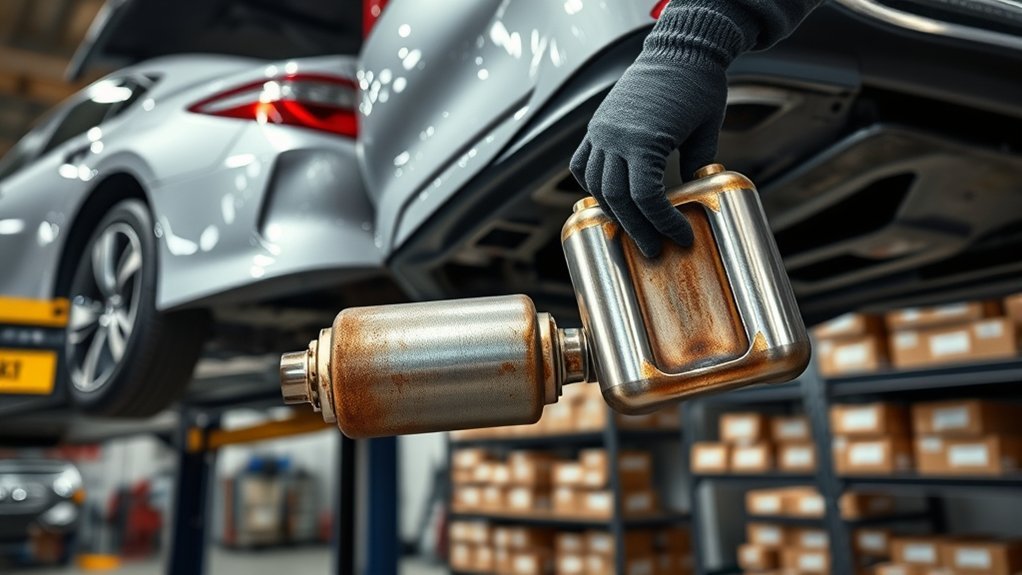
Buy from a Toyota dealer, established exhaust shop, or reputable parts supplier that can verify the part against your VIN and emissions information. Do not rely on a listing that says only “fits Toyota Camry.”
Information Needed for Correct Fitment
- Full VIN
- Model year
- Engine size and engine code
- Federal or California emissions certification
- Test group or engine family from the underhood emissions label
- Converter position or assembly being replaced
- Applicable CARB Executive Order number when required
OEM Versus Aftermarket Converter
An OEM Toyota assembly generally offers direct fitment and the same intended emissions design as the original part, but it may cost more. A properly engineered aftermarket converter can be a legal alternative when it is approved for the exact vehicle application and meets the rules in your state.
A very low-priced universal converter may require fabrication, may not have enough catalyst capacity for the Camry’s monitor strategy, and may not be legal for your application. Compare the manufacturer’s warranty, certification, construction, included hardware, and exact fitment rather than choosing by price alone.
California and Federal Emissions Rules
The California Air Resources Board states that an aftermarket converter must have an exemption Executive Order before it can be legally sold and installed in California. The approval applies only to listed vehicle applications, so the EO must match the Camry’s model year, engine size, and test group or engine family.
The U.S. Environmental Protection Agency states that removing a catalytic converter without an approved replacement is tampering under federal law. Do not remove, gut, bypass, or replace the converter with a straight pipe on a road vehicle.
What to Do If Your Catalytic Converter Fails
- Limit driving if severe symptoms are present. Do not continue driving normally with a flashing check-engine light, glowing converter, severe power loss, or intense heat.
- Have the vehicle scanned and inspected. A code alone is not enough to select a replacement.
- Check warranty status. Use the VIN and the warranty guide for your exact model year.
- Find the root cause. Correct misfires, rich operation, leaks, oil consumption, coolant loss, or sensor faults first.
- Choose the correct legal part. Match the VIN, engine, emissions label, and applicable state approval.
- Keep the paperwork. Save diagnostic results, emissions-test reports, part numbers, warranty information, and repair invoices.
- Complete the required drive cycle. After repair, the emissions monitors may need normal driving before they report ready for inspection.
Can a Catalytic Converter Be Cleaned?
Do not depend on a fuel-tank additive, chemical cleaner, or improvised burn-off procedure to repair a confirmed failed converter. These methods cannot rebuild a melted substrate, repair a crack, remove impact damage, restore missing catalyst material, or correct a converter that no longer meets the required efficiency threshold.
If contamination is suspected, the proper response is to diagnose the engine condition that caused it. A converter that begins working normally after the underlying fault is repaired did not need an artificial burn-off. A converter that remains damaged or inefficient will need replacement.
Note: Catalytic converters become extremely hot during operation and can remain hot after the engine is shut off. Inspection or replacement beneath the vehicle should be performed with proper lifting equipment and safety procedures, never with the vehicle supported only by a jack.
Related Guides
Frequently Asked Questions
How long does a catalytic converter last on a Toyota Camry?
There is no Toyota-specified replacement mileage. Keep the converter in service while it passes diagnosis and the vehicle has no confirmed catalyst failure. Misfires, excess fuel, oil or coolant burning, corrosion, exhaust leaks, and impact damage can shorten its service life.
Is a Toyota Camry catalytic converter covered by the federal emissions warranty?
Yes, when the vehicle and failure meet the warranty terms. EPA identifies the catalytic converter as a specified major emissions-control component covered for eight years or 80,000 miles, whichever comes first. Check the Toyota warranty guide for your exact model year and any applicable state coverage.
At what mileage do Toyota Camry catalytic converters go bad?
There is no dependable failure mileage. Diagnose the converter based on codes, emissions results, restriction testing, physical condition, sensor data, and the condition of the engine rather than replacing it at a preset odometer reading.
How do I know if my Toyota Camry catalytic converter is bad?
Possible signs include P0420 or P0430, a failed emissions test, rattling from the converter, excess heat, or power loss caused by restriction. A technician should rule out misfires, exhaust leaks, sensor faults, fuel-control problems, and oil or coolant consumption before confirming replacement.
Does a P0420 code always mean the catalytic converter is bad?
No. P0420 means the monitored catalyst efficiency is below the expected threshold. Exhaust leaks, misfires, incorrect fuel mixture, sensor problems, engine oil or coolant consumption, and an unsuitable replacement converter can also affect the monitor result.
How much does a Toyota Camry catalytic converter replacement cost?
RepairPal’s national Toyota Camry estimate, updated September 3, 2026, is about $1,872 to $1,950 before taxes, fees, location adjustments, and related repairs. Actual cost varies by model year, engine, converter location, emissions certification, labor rate, and parts required.
Can I drive a Camry with a bad catalytic converter?
A car with only a steady warning light may remain drivable long enough to reach a repair facility, but it still needs prompt diagnosis. Avoid continued driving if the light flashes, the converter glows, the engine misfires badly, power drops sharply, or intense heat or smoke is present.
Conclusion
Your Toyota Camry’s catalytic converter does not need replacement simply because the car has reached a certain age or mileage. Keep it in service when the vehicle has no confirmed catalyst fault. When P0420 or P0430, an emissions failure, rattling, abnormal heat, or power loss appears, diagnose the engine and exhaust system before buying parts.
If replacement is confirmed, ask what test proved the converter failed and what caused the failure. Check warranty coverage first, repair any misfire, fuel-control fault, oil or coolant consumption, or exhaust leak, and use a VIN-matched replacement that complies with the emissions rules in your state.
Sources
- Toyota 2025 Camry Warranty & Maintenance Guide — federal emissions-warranty coverage, replacement-part guidance, maintenance responsibilities, and exhaust inspection.
- U.S. Environmental Protection Agency: Transportation, Air Pollution, and Climate Change FAQs — federal emissions-warranty coverage and catalytic-converter anti-tampering guidance.
- California Air Resources Board: Aftermarket Catalytic Converters — California Executive Order approval and vehicle-specific fitment requirements.
- RepairPal Toyota Camry Catalytic Converter Replacement Estimate — current national cost estimate and general diagnostic considerations.
