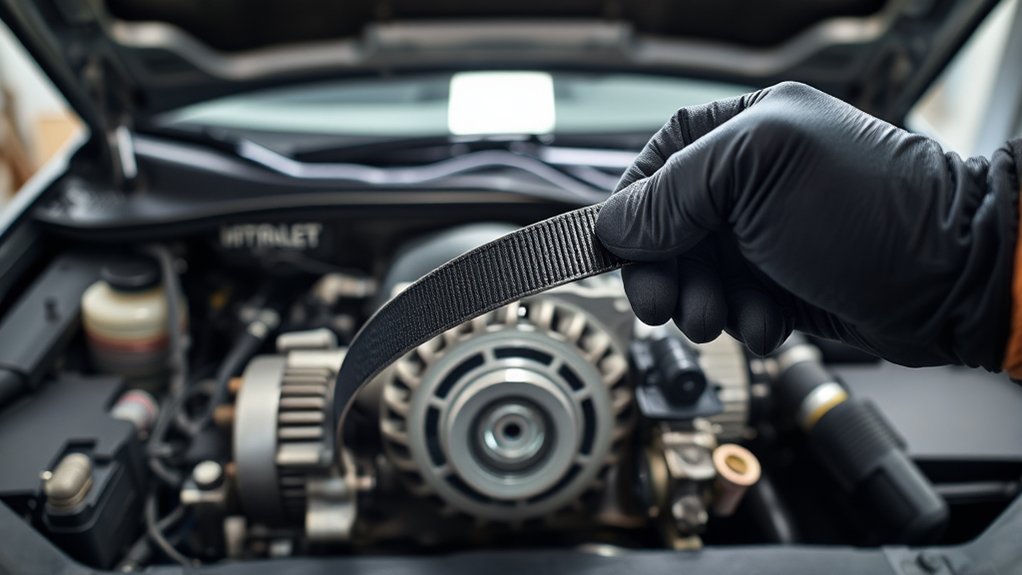
Your Toyota Camry’s accessory drive belt may look simple, but a worn, contaminated, or misaligned belt can affect the systems it drives. The correct inspection and replacement schedule depends on the Camry’s model year, engine, and powertrain, so use the vehicle-specific maintenance guide rather than a universal mileage rule.
Quick Answer
Inspect a Toyota Camry serpentine or accessory drive belt during routine service and whenever you notice noise, fraying, missing ribs, contamination, charging problems, overheating, or weak accessory performance. Toyota does not publish one universal replacement interval for every Camry. Follow the Warranty & Maintenance Guide for your exact year, engine, and powertrain.
Key Takeaways
- There is no single Toyota Camry serpentine-belt interval that applies to every model year and engine.
- A quick visual check at routine service is useful, but the exact factory schedule comes from the vehicle-specific maintenance guide.
- Replace the belt promptly if it has missing ribs, exposed cords, edge damage, heavy glazing, fluid contamination, or cannot track correctly.
- A squeal does not prove the belt alone is bad; the tensioner, idler pulleys, alignment, or a fluid leak may be the real cause.
At a Glance
| Time Required | About 5–10 minutes for a basic visual check |
| Difficulty | Easy inspection; replacement ranges from moderate to advanced |
| Tools Needed | Flashlight, gloves, and a small inspection mirror; use the correct service tools for replacement |
| Cost | No cost for a visual check; replacement cost varies by model, engine, labor rate, and whether the tensioner or pulleys also need service |
Why Your Serpentine Belt Matters in a Toyota Camry
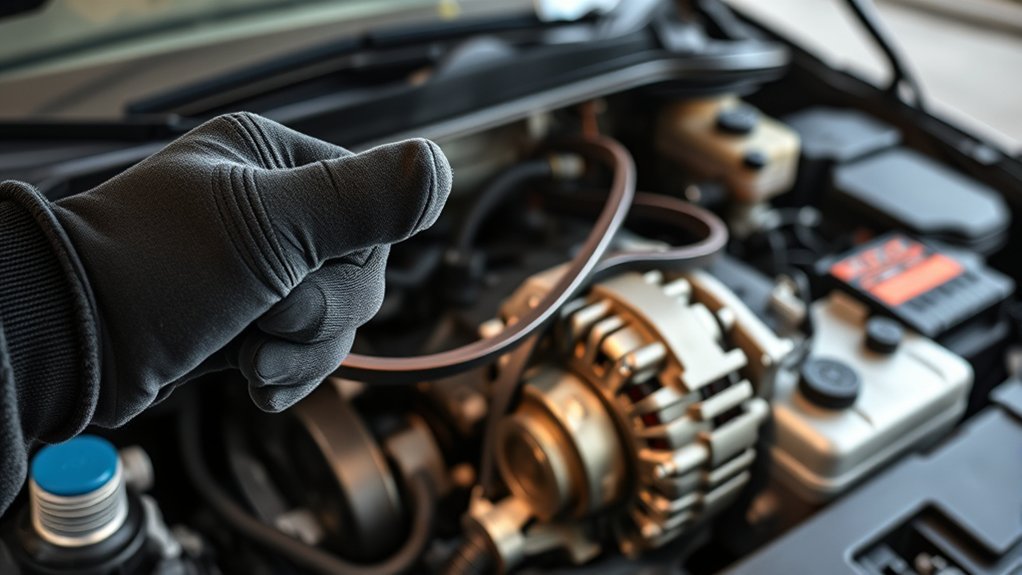
On Camrys equipped with a conventional accessory drive belt, the belt transfers crankshaft power to one or more accessories. Depending on the model year and engine, those accessories may include the alternator, air-conditioning compressor, water pump, or a hydraulic power-steering pump. Newer and hybrid Camrys can use different layouts, including electrically powered accessories, so do not assume that every Camry has the same belt or that the belt drives the same components.
Note: The U.S.-market 2025 Camry is exclusively hybrid. Before using gasoline-model advice, confirm your vehicle’s year, engine, powertrain, and accessory-drive layout in Toyota’s vehicle-specific manuals and maintenance guide.
A healthy belt must grip the pulley grooves, stay aligned, and maintain the correct tension. The belt works as a system with the tensioner, idler pulleys, accessory pulleys, and crankshaft pulley. Replacing only the belt without checking the rest of that system can leave the original cause of noise or wear unresolved.
The safest interval is not a guessed mileage number—it is the schedule for your exact Camry plus condition-based inspections whenever symptoms appear.
How Often to Inspect Your Serpentine Belt
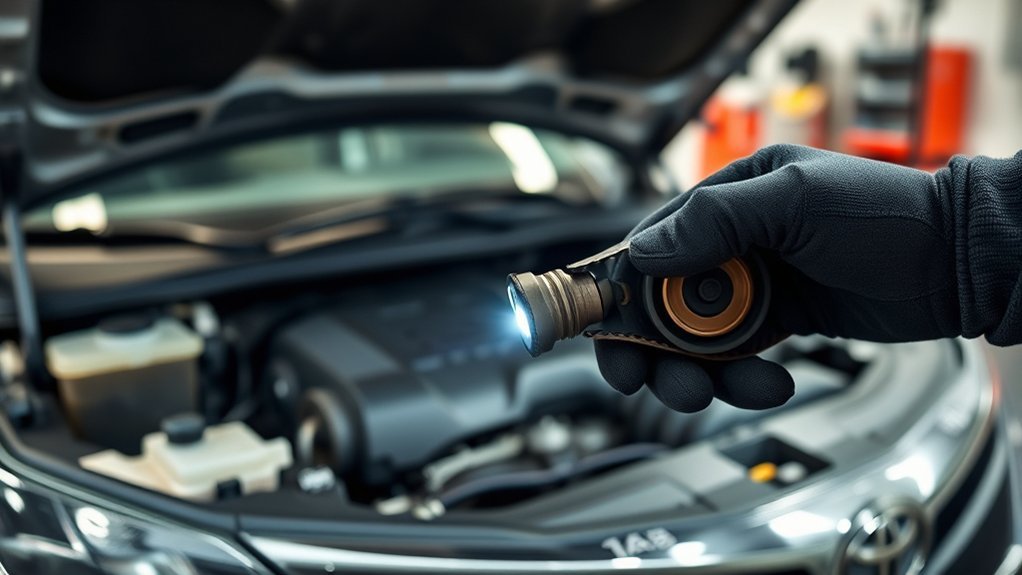
Use the Toyota Warranty & Maintenance Guide for your exact model year and powertrain as the controlling source. Toyota’s owner portal requires you to select the vehicle because maintenance requirements are not identical across all Camrys.
A Practical Inspection Schedule
Even when the factory guide does not call for belt replacement at a fixed mileage, a quick visual check during routine maintenance is a sensible habit. Ask for an inspection during oil-service visits, before a long trip, and whenever the vehicle has been exposed to an oil or coolant leak near the belt drive.
- At routine service: Check the visible belt surfaces, edges, routing, and tracking.
- Immediately after a symptom: Inspect persistent squealing, chirping, slapping, a burning-rubber odor, or sudden accessory problems.
- After fluid contamination: Repair the leak and have the belt assessed; oil or coolant can damage the belt and reduce grip.
- On an older or unknown-service vehicle: Inspect now rather than assuming the belt was replaced by a previous owner.
Why Mileage Alone Is Not Enough
Heat, age, fluid leaks, pulley alignment, tensioner condition, dust, frequent short trips, and long periods of storage can all affect belt condition. A belt with modest mileage may need replacement after contamination or mechanical damage, while another belt may remain serviceable beyond a commonly quoted mileage range. The vehicle-specific guide and the belt’s actual condition should decide the next step.
Pro Tip: Record the belt’s brand, part number, installation date, and vehicle mileage on the repair invoice or in your maintenance log. That removes guesswork for the next inspection.
How to Inspect a Toyota Camry Serpentine Belt
Warning: Turn the engine off, remove the key or switch the hybrid system fully off, set the parking brake, and let the engine cool. Never place hands, clothing, hair, or tools near a moving belt, fan, or pulley. Do not reach into the engine bay while the vehicle is in READY mode.
1. Confirm the Belt and Routing
Open the hood and locate the accessory drive belt using the under-hood routing label or the correct Toyota manual. Some engines have more than one belt, and hybrid layouts differ from conventional gasoline layouts. If the belt is difficult to see, use a flashlight and inspection mirror rather than placing your hands into a tight space.
2. Inspect the Belt Surface and Ribs
Examine the visible ribbed and smooth surfaces. Replace or professionally assess the belt if you find:
- Missing rib sections, deep cracks, chunks, or exposed reinforcing cords
- Frayed or chewed edges
- Heavy glazing or a polished, hardened surface
- Oil, coolant, or other fluid contamination
- Bulges, separation, melted areas, or heat damage
- A belt riding off-center or climbing a pulley edge
Small surface marks do not always show the belt’s full condition, and not every section is visible from above. A technician can rotate the engine safely with the proper procedure and inspect the entire belt.
3. Check the Rest of the Belt-Drive System
The belt should sit squarely in the pulley grooves. With the engine off, look for obvious pulley damage, belt dust, a crooked tensioner arm, or signs that a pulley is out of line. Do not remove the belt or spin loaded components unless you have the correct service information and tools.
A professional inspection should check the automatic tensioner, idler pulleys, accessory bearings, crankshaft pulley, alignment, and nearby leaks. A seized bearing or weak tensioner can destroy a new belt quickly.
4. Listen Without Touching
If the noise occurs only while the engine runs, listen from a safe position and keep clear of all moving parts. A chirp may point to alignment or pulley issues, while a squeal may indicate slip, contamination, excessive load, or inadequate tension. Noise alone is not enough to identify which part has failed.
Signs Your Serpentine Belt Is Failing
Inspect the belt promptly when any of the following symptoms appear:
- Visible damage: missing ribs, exposed cords, frayed edges, splits, or chunks of material
- Persistent noise: squealing, chirping, slapping, or grinding from the accessory-drive area
- Charging-system symptoms: a battery or charging warning, dimming lights, or declining electrical performance on a belt-driven alternator system
- Cooling symptoms: rising coolant temperature or an overheating warning if that engine uses a belt-driven water pump
- Accessory loss: reduced air-conditioning performance or, on older hydraulically assisted systems, suddenly heavy steering
- Tracking problems: the belt walks toward a pulley edge or produces unusual amounts of rubber dust
The Check Engine light is not a reliable serpentine-belt warning by itself. Toyota warning symbols and their meanings vary by vehicle, so use the Toyota warning-light guide and the owner’s manual for your exact Camry.
Signs That Need Immediate Attention
Stop treating the issue as routine maintenance if the belt is partly shredded, has left the pulleys, smells burned, or is accompanied by a charging warning or overheating. Shut the vehicle down safely and arrange service rather than driving until the battery is depleted or the engine overheats.
What to Do If Your Serpentine Belt Is Failing
Identify the Symptom and Stop Safely
If a warning appears while driving, reduce electrical and accessory loads only if it is safe to do so, move out of traffic, and stop in a secure location. Turn the engine or hybrid system off. Do not continue driving with an overheating warning, a shredded belt, smoke, or a strong burning-rubber smell.
Inspect Without Restarting Repeatedly
With the vehicle fully off and cool, look for a missing, loose, damaged, or displaced belt. Also check for obvious fluid leaks. Repeatedly restarting an engine with a displaced belt can worsen damage or wrap belt material around nearby components.
Arrange a Complete Belt-System Inspection
Have a qualified technician identify why the belt failed before installing another one. The repair may require only the correct replacement belt, but it can also involve a tensioner, idler pulley, accessory bearing, crankshaft pulley, alignment correction, or leak repair.
Replacement price varies widely by Camry generation, engine access, local labor rates, belt quality, and related parts. Ask for an itemized estimate and verify what the parts-and-labor warranty covers instead of relying on a universal price or warranty claim.
Consequences of a Failing Serpentine Belt
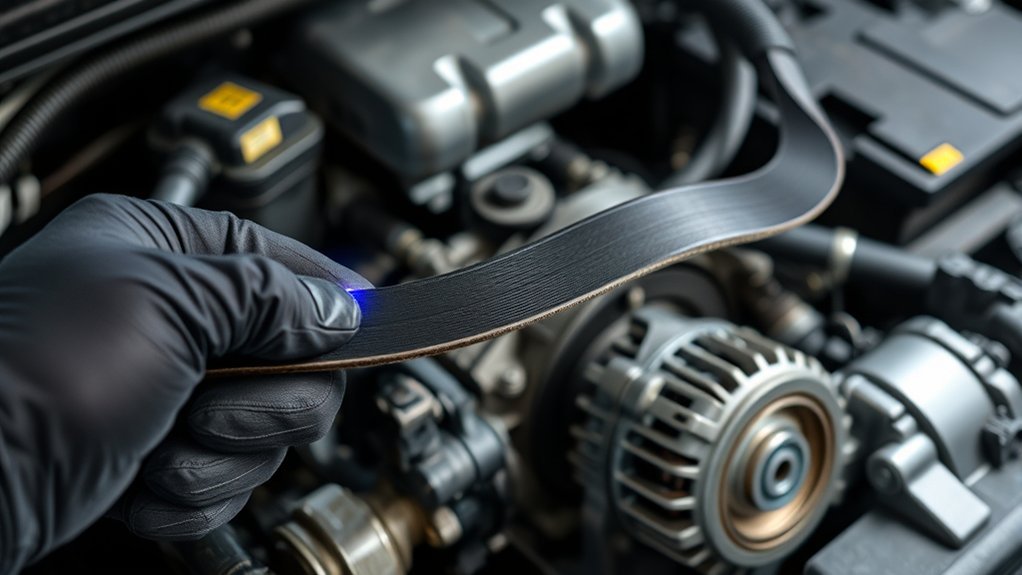
The result of a broken belt depends on what that belt drives on the specific Camry:
- A belt-driven alternator can stop charging, leaving the vehicle dependent on stored battery power until it shuts down.
- A belt-driven water pump can stop circulating coolant, causing rapid overheating and possible engine damage.
- A belt-driven air-conditioning compressor will stop providing cooling.
- An older belt-driven hydraulic power-steering pump can lose assist, making steering much heavier.
- A loose or shredded belt can damage wiring, hoses, seals, pulleys, or nearby components.
Because Camry accessory layouts vary, one failed belt does not create the same symptoms on every model. Treat the battery/charging warning, high-temperature warning, smoke, or sudden steering change as urgent and follow the vehicle-specific owner’s manual.
Professional Services for Serpentine Belt Replacement
Serpentine-belt replacement can be straightforward on some Camrys and difficult on others because of engine-bay access, splash shields, tensioner design, and routing. A professional repair is a strong choice when the belt is difficult to reach, the routing is unclear, the tensioner appears unstable, or the vehicle has recurring noise or uneven wear.
A complete service should include:
- Confirming the correct belt by VIN, model year, engine, and powertrain
- Comparing the installed routing with the factory diagram
- Checking the tensioner, idlers, pulleys, and accessory bearings
- Looking for oil or coolant leaks that could contaminate the new belt
- Verifying pulley alignment and belt tracking after installation
- Documenting the replacement date, mileage, part number, and warranty
Toyota’s Technical Information System is the factory source for service information, repair manuals, wiring diagrams, and technical publications for North American Toyota vehicles.
Frequently Asked Questions
How often do you change the serpentine belt on a Toyota Camry?
There is no single replacement interval for every Camry. Follow the Warranty & Maintenance Guide for your exact year and powertrain, and replace the belt earlier if it is damaged, contaminated, noisy because of confirmed belt wear, or no longer tracks correctly.
What is the service interval for a serpentine belt?
The factory interval is vehicle-specific. As a practical habit, visually inspect the belt during routine maintenance and immediately after any belt noise, accessory problem, fluid leak, charging warning, or overheating symptom.
How long do Toyota serpentine belts last?
Service life varies with belt material, age, heat, driving conditions, pulley alignment, tensioner condition, and fluid exposure. Do not treat a broad mileage estimate as a guarantee. Use the model-specific schedule and the results of a complete inspection.
Can a serpentine belt last 200,000 miles?
A belt may remain installed for a very long time, but 200,000 miles should not be used as a planned service target. If the belt’s history is unknown or it appears original at high mileage, arrange a full belt, tensioner, and pulley inspection now.
Is a serpentine belt the same as a timing belt?
No. A serpentine or accessory belt is outside the engine and drives accessories. A timing belt or timing chain synchronizes internal engine operation. They use different parts, inspection methods, and service procedures.
Can I keep driving if the belt squeals?
A brief noise does not identify the cause, but persistent or worsening squeal needs prompt diagnosis. Stop driving if the noise comes with smoke, a burning smell, overheating, a charging warning, heavy steering, or visible belt damage.
Conclusion
Inspecting your Toyota Camry’s accessory drive belt during routine maintenance is a useful preventive habit, but the correct factory interval depends on the exact vehicle. Use Toyota’s year- and powertrain-specific guide, respond quickly to warning signs, and treat the belt as part of a complete system that includes the tensioner, pulleys, bearings, alignment, and nearby seals. That approach is safer and more reliable than replacing the belt by a universal mileage estimate.
Sources
- Toyota Manuals and Warranties — vehicle-specific owner’s manuals and Warranty & Maintenance Guides.
- Toyota Warning Lights — model-specific warning-light guidance and owner’s-manual direction.
- Toyota Technical Information System — factory service information, repair manuals, wiring diagrams, and technical publications.
- Toyota USA Newsroom: Next-Generation Camry — confirms that the U.S.-market 2025 Camry is exclusively hybrid.
