By Nathan Rhodes · Last updated: September 19, 2026
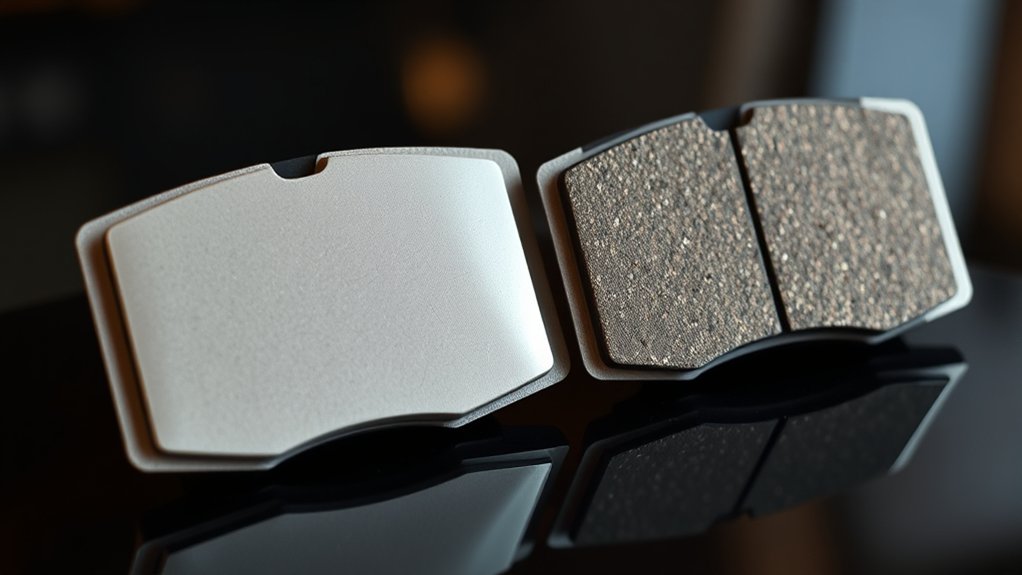
For most Toyota Camry street drivers choosing between ceramic and semi-metallic brake pads, ceramic pads are usually the quieter, lower-dust choice for daily commuting, while semi-metallic pads often make more sense when repeated heat and stronger initial bite matter more. The exact pad formula and correct vehicle fitment matter more than the material label alone.
Quick Answer
For most Toyota Camry drivers, ceramic brake pads are usually the better fit for quiet, low-dust daily driving. Semi-metallic pads often suit drivers who regularly encounter long descents, repeated hard braking, or higher brake temperatures and who accept more noise and dust in exchange for a stronger, more responsive feel. Always confirm the exact pad line for your Camry year, trim, powertrain, and axle.
Key Takeaways
- Ceramic brake pads are usually a better fit for quiet daily driving, lower visible dust, and smooth street use.
- Semi-metallic brake pads often provide stronger initial bite and better heat handling, but some formulas are louder and dustier.
- Always confirm fitment by Camry model year, trim, front or rear axle, and hybrid or gas configuration before buying.
- A material label does not guarantee performance. Friction formula, pad design, rotor condition, hardware, and installation all affect noise, feel, wear, and heat behavior.
- Camry Hybrid models also use regenerative braking, so friction brakes are not the only source of deceleration during many routine stops.
- If your Camry squeals, grinds, pulls, vibrates, leaks brake fluid, or shows a brake-system warning, have the braking system inspected rather than treating the problem as a simple pad-material choice.
Understanding the Basics: What Are Brake Pads?
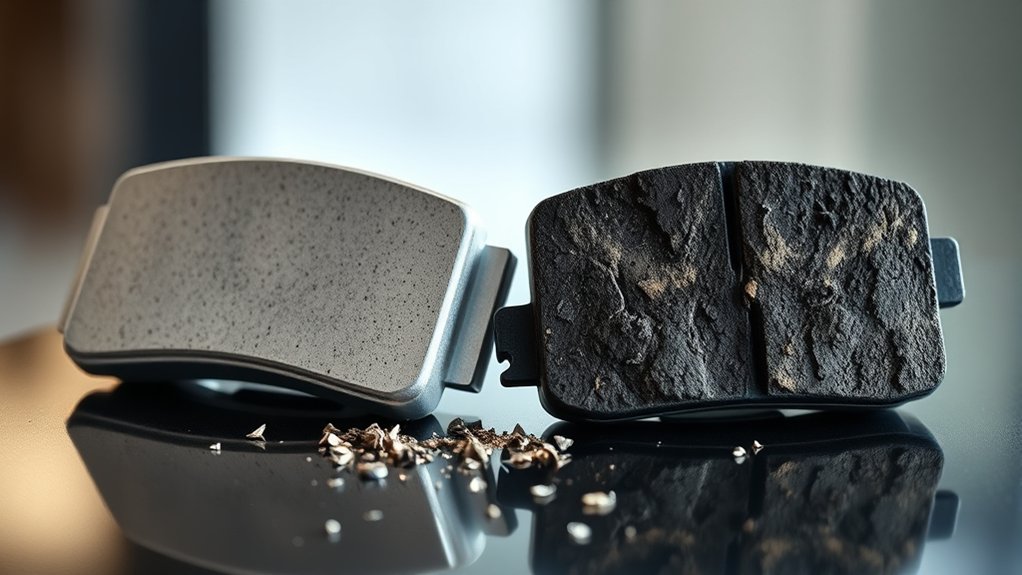
Brake pads are the friction parts in your Camry’s disc brake system. When you press the brake pedal, the caliper pushes the pads against the brake rotor. That friction converts the vehicle’s motion into heat and slows the wheel.
Your Camry may use different pad sizes, hardware, or brake packages depending on model year, trim, drivetrain, powertrain, and whether the pads are for the front or rear axle. Before ordering parts, check your owner resources, part number, or VIN through Toyota’s manuals and warranty page or a Toyota parts counter.
Replacement pads generally fall into three broad material groups: ceramic, semi-metallic, and organic. This guide focuses on the two choices Camry owners most often compare: ceramic vs semi-metallic brake pads.
Important: Brake-pad formulas vary by brand and product line. A ceramic pad from one manufacturer can behave differently from another ceramic pad, and the same is true of semi-metallic pads. Compare the exact application and product line, not just the material category.
Ceramic vs Semi-Metallic Brake Pads: Key Differences
The simplest way to choose is to match the pad formula to how you use your Camry. Ceramic pads generally favor quietness, low visible dust, and everyday refinement. Semi-metallic pads generally favor heat management and a more aggressive initial braking response.
| Category | Ceramic Pads | Semi-Metallic Pads |
| Noise | Usually quieter in normal city and highway driving. | Some formulas are noisier, especially when cold or during harder use. |
| Brake Dust | Usually lighter and less noticeable on wheels. | Often darker and more visible, especially with aggressive formulas. |
| Pedal Feel | Often smooth and progressive for everyday stops. | Many formulas provide a stronger initial bite. |
| Heat Handling | Well suited to normal commuting and street driving when the pad is designed for the application. | Often better suited to repeated high-heat braking and long descents. |
| Rotor Wear | Many street ceramic formulas are relatively rotor-friendly. | Some aggressive metallic formulas can be more abrasive to rotors. |
| Best Fit | Daily commuters, family cars, city driving, highway use, and drivers prioritizing low noise and cleaner wheels. | Drivers who encounter long hills, repeated hard stops, higher brake temperatures, or who prefer a more aggressive brake feel. |
These are general material tendencies, not guarantees for every pad. AAA’s ceramic-versus-semi-metallic guidance and Bridgestone’s brake-pad material guide describe similar trade-offs in noise, dust, heat behavior, and rotor wear.
Noise Levels Comparison
If you want your Camry to remain quiet and refined, a street-oriented ceramic pad usually fits that goal well. Ceramic formulations commonly generate less audible brake noise during ordinary commuting, school runs, errands, and highway driving.
Semi-metallic pads can make more sound because of their friction formulation and performance priorities. That does not automatically mean a noisy pad is defective. Some performance-oriented compounds accept more noise in exchange for heat resistance or braking response.
Dust Production Differences
Ceramic brake pads usually produce lighter, less noticeable brake dust, which can make alloy wheels easier to keep clean. Semi-metallic formulations commonly produce darker dust that is more visible on wheels.
Brake wear also contributes to non-exhaust particulate emissions. Avoid using compressed air to blow accumulated brake dust into the air during cleaning or service.
Cost and Durability
Ceramic pads often cost more than comparable basic friction materials, but many Camry owners value them for quiet operation and low visible dust. Semi-metallic pricing varies widely by brand and performance level, and aggressive compounds can increase rotor wear.
Do not choose brake pads by price or material label alone. Pad durability depends on the exact compound, traffic, terrain, braking style, rotor condition, caliper operation, and installation quality.
Why Choose Ceramic Brake Pads for Your Camry?
Ceramic brake pads are usually a strong match for ordinary Toyota Camry use because most owners prioritize quiet operation, predictable street braking, and low visible wheel dust rather than repeated high-temperature braking.
Choose a street-oriented ceramic pad if you:
- Drive mostly in the city, suburbs, or on normal highways.
- Prioritize low brake noise.
- Prefer less visible brake dust on the wheels.
- Use your Camry mainly as a commuter, family car, or rideshare vehicle.
- Want a smooth, street-oriented braking feel.
The trade-offs depend on the exact product. Some ceramic formulations are not intended for sustained high-temperature use, repeated hard braking, or track-style driving. In those situations, a pad specifically designed for greater heat capacity may be more appropriate.
When Are Semi-Metallic Brake Pads Better for a Toyota Camry?
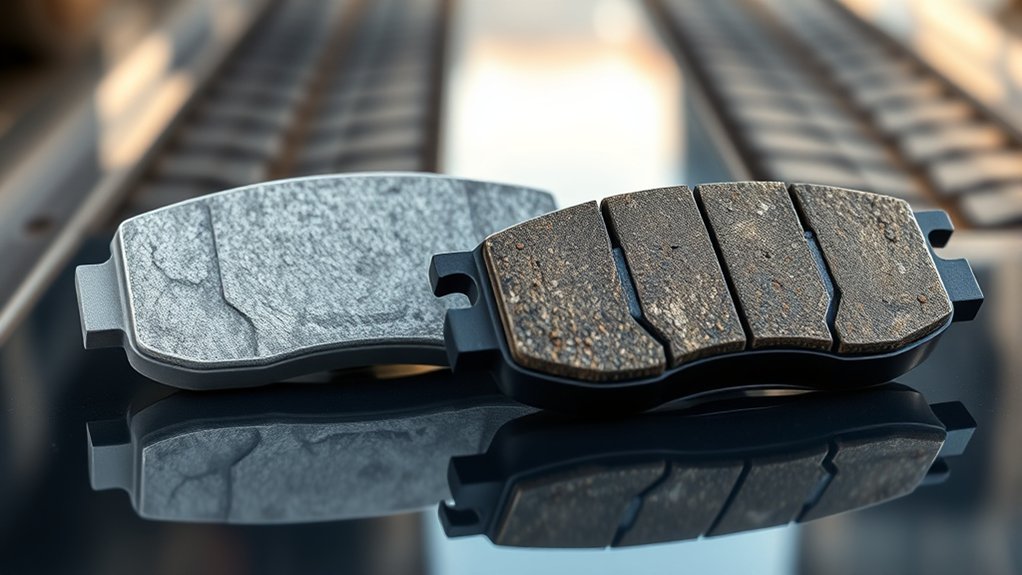
Semi-metallic brake pads incorporate a significant amount of metal into the friction material. Many semi-metallic formulas provide a firm initial response and manage repeated brake heat well.
Consider semi-metallic pads if you:
- Regularly drive on steep hills or long mountain descents.
- Make repeated hard stops more often than a typical commuter.
- Frequently drive with a full passenger or cargo load in demanding terrain.
- Prefer a firmer or more immediate braking response.
- Accept the possibility of more visible dust or noise in exchange for those characteristics.
Semi-metallic pads are not automatically an upgrade for every Camry. If your main goals are quiet operation and low visible wheel dust, a quality street ceramic pad will often be a better match.
The best Camry brake pad is the correctly fitted pad whose friction characteristics match the way you actually drive.
Which Brake-Pad Material Fits Your Camry Driving Style?
Start with the conditions your Camry experiences most often rather than choosing the most aggressive pad available. A commuter in flat urban traffic places different demands on the brakes than a driver who regularly descends long grades.
Choose Ceramic Pads If
- You mainly drive to work, school, stores, and appointments.
- You prioritize low noise and smooth modulation.
- You dislike dark brake dust on alloy wheels.
- Your Camry is primarily a family car, rideshare car, or commuter.
- You want a balanced street pad rather than a performance-focused compound.
Choose Semi-Metallic Pads If
- You prefer stronger initial braking response from a compatible pad line.
- You regularly drive long hills or make repeated hard stops.
- You are less concerned about brake dust or occasional noise.
- You prioritize high-temperature behavior over maximum refinement.
- You have confirmed that the exact pad is intended for your Camry application and axle.
What About Brake Pads on a Toyota Camry Hybrid?
Camry Hybrid models use regenerative braking as part of the braking process. Toyota explains that braking can convert the electric motor into a generator so some of the vehicle’s kinetic energy is recovered and stored in the hybrid battery. That means the friction pads and rotors are not the only source of deceleration during many routine stops.
Regenerative braking does not make ceramic or semi-metallic pads universally correct for every hybrid Camry. Pad size, axle position, hardware, friction specification, and brake-system design still vary by model year and configuration. Confirm the exact application before ordering, and do not assume a pad that fits a non-hybrid Camry automatically fits a hybrid version.
Camry Brake Pad Fitment Checklist Before You Buy
Brake-pad material matters only after fitment is correct. The wrong pad shape, axle position, hardware, or application can cause installation problems, poor contact, noise, or uneven wear.
Pro Tip: Confirm the exact model year, trim, powertrain, and front or rear axle before buying. When possible, match the part by VIN or use Toyota Genuine Parts or a trusted application-specific parts catalog.
Check these items before ordering brake pads:
- Model year: Do not assume pads interchange across Camry generations.
- Trim and powertrain: Brake components can vary by configuration, including hybrid applications.
- Front vs rear: Front and rear pads are different parts and are not interchangeable.
- Exact pad application: Confirm the manufacturer’s fitment listing or VIN-based catalog data rather than relying only on a marketplace title.
- Rotor condition: Deep scoring, excessive wear, runout, cracks, or other damage can affect the results of a new pad installation.
- Hardware: Clips, shims, caliper slides, and other hardware influence pad movement, noise, and wear.
- Driving environment: Heat, hills, road salt, dust, moisture, traffic, and vehicle loading can change brake wear and temperature.
Essential Maintenance Tips for Camry Brake Pads
Brake-pad performance depends on the complete braking system. Rotors, calipers, slide pins, hydraulic components, tires, and installation condition can all affect how a Camry stops.
Warning: If your Camry grinds, pulls strongly to one side, vibrates heavily, leaks brake fluid, shows a brake-system warning, or requires substantially more pedal effort or travel than normal, do not treat it as a routine pad-material decision. Have the brake system inspected before driving farther than necessary.
How Often Should Camry Brake Pads Be Inspected?
Use the maintenance schedule for your exact model year and market rather than one universal brake-pad mileage or thickness rule. For example, Toyota’s 2025 U.S. Camry maintenance guide calls for scheduled maintenance every 5,000 miles or six months and includes brake-pad/disc inspections in the maintenance schedule. At specified intervals, the guide also calls for pad-thickness measurement and disc-runout checks. Other Camry years and markets can differ.
For a deeper model-specific schedule discussion, see the Toyota Camry brake inspection interval guide and the Camry brake pad and rotor lifespan guide.
Have the brakes inspected when you notice symptoms such as:
- New or persistent squealing, scraping, or grinding.
- Vibration or pulsation during braking.
- A noticeable increase in stopping distance.
- A brake pedal that feels soft, spongy, unusually low, or unusually hard.
- The vehicle pulling left or right when braking.
- Uneven pad wear between inner and outer pads.
- Brake-fluid leakage around hydraulic components.
If a dashboard warning appears, check your owner’s manual and arrange appropriate service. Toyota’s warning-light resources also direct owners to model-specific guidance and service when a brake-system warning is present.
Proper Cleaning Techniques
Brake wear produces fine particles, so do not blow accumulated brake dust into the air with compressed air. Use an appropriate brake-cleaning method, follow the cleaner manufacturer’s instructions, and work in a properly ventilated area. If you are not trained to service brakes, leave disassembly and diagnosis to a qualified technician.
During service, the caliper slide pins, abutment clips, shims, pad contact points, boots, and rotor condition should also be checked. Even a suitable brake pad can make noise or wear unevenly when hardware is damaged, corroded, dry, seized, or incorrectly installed.
When Should Camry Brake Pads Be Replaced?
Replace pads when they reach the applicable service limit or show excessive, damaged, contaminated, cracked, or severely uneven friction material. Do not wait until the metal backing plate contacts the rotor.
Brake-pad wear depends on:
- Stop-and-go traffic.
- Driving speed and braking habits.
- Hills and repeated brake heat.
- Pad compound and product design.
- Rotor condition and caliper movement.
- Road salt, moisture, dust, and corrosion.
- Vehicle loading and tire condition.
Brake pads are normally serviced as an axle set rather than replacing only one wheel’s pads. Uneven wear between sides should also trigger a check for caliper, slide, hardware, hose, or other mechanical problems rather than simply installing another pad.
Do New Camry Brake Pads Need to Be Bedded In?
Many replacement brake pads require a bedding or burnishing process after installation. Bedding allows the pad and rotor surfaces to mate and can establish a more uniform friction-material transfer layer, helping the system deliver consistent braking while reducing the risk of uneven deposits, noise, or judder.
Always follow the instructions supplied by the manufacturer of the exact pads you installed. Bedding sequences vary by compound and application, so do not copy a procedure intended for another product. Brembo’s technical guidance, for example, explains the role of gradual bedding and transfer-layer formation for its applicable brake products.
Until the new pads and rotors have completed the required bedding process, avoid unnecessary repeated hard stops unless an emergency requires maximum braking.
Related Guides
Frequently Asked Questions
Is semi-metallic or ceramic better for Toyota Camry brakes?
For most Camry street drivers, a compatible ceramic pad is usually the better fit when quiet braking and low visible dust are priorities. A compatible semi-metallic pad may be a better fit for repeated high-heat braking, long descents, or drivers who prefer a stronger initial response. The exact pad formula and application matter more than the category name alone.
Do ceramic brake pads stop as well as semi-metallic pads?
A quality ceramic pad designed for your Camry can provide predictable braking for normal street use. Semi-metallic pads often emphasize initial bite and high-temperature behavior. Overall stopping performance also depends on tires, road conditions, rotors, brake-system condition, ABS operation, and the exact friction compound, so pad material alone does not determine stopping distance.
What are the disadvantages of ceramic brake pads?
Ceramic pads often cost more than basic alternatives, and some street-oriented ceramic compounds are not intended for repeated extreme-temperature braking. Their exact bite, heat behavior, noise, and wear characteristics depend on the product rather than the ceramic label alone.
Are semi-metallic brake pads bad for a Camry?
No. A correctly fitted semi-metallic pad designed for the vehicle can be a valid Camry replacement. Some formulas simply prioritize heat handling and braking response over the low dust and quietness associated with many street ceramic pads.
Should I replace rotors when replacing Camry brake pads?
Not automatically. The rotors should be inspected and measured against the applicable specification. Excessive wear, insufficient thickness, runout, deep scoring, cracks, severe corrosion, heat damage, or an unsuitable surface may require rotor service or replacement. New pads alone will not correct a damaged or out-of-spec rotor.
How do I know which brake pads fit my Toyota Camry?
Match pads by model year, trim, powertrain, axle position, and the application information supplied by the pad manufacturer or parts catalog. A VIN-based lookup can help resolve variations. Do not assume one Camry brake-pad set fits every Camry year or configuration.
Does a Toyota Camry Hybrid need different brake pads?
It may. Camry Hybrid models use regenerative braking, but replacement friction pads still must match the exact model year, axle, brake package, and application. Do not choose pads only because another Camry of the same year uses them; verify the hybrid fitment specifically.
How often should Toyota Camry brake pads be inspected?
Follow the maintenance guide for your exact year and market. As one current example, Toyota’s 2025 U.S. Camry maintenance schedule uses 5,000-mile or six-month service intervals and includes brake-pad/disc inspections. Inspection details and service limits can differ on other model years.
Conclusion
For a Toyota Camry used mainly for commuting, errands, family driving, and ordinary highway trips, a correctly fitted street ceramic pad is usually a strong choice when quiet operation and low visible dust are priorities.
A compatible semi-metallic pad can make more sense when you regularly generate more brake heat through long descents or repeated hard braking, or when you prefer a more aggressive initial response and are willing to accept additional noise or dust from some compounds.
Do not make the decision from the material name alone. Confirm exact fitment, inspect the rotors and hardware, follow the pad manufacturer’s installation and bedding instructions, and choose a friction formula intended for your real driving conditions. Brake symptoms such as grinding, fluid leakage, severe vibration, pulling, or warning lights require diagnosis rather than a blind pad swap.
Sources
- Toyota Owners Manuals and Warranties — model-specific owner and maintenance information.
- Toyota 2025 Camry Warranty & Maintenance Guide — scheduled maintenance and brake-pad/disc inspection guidance for the 2025 U.S. Camry.
- Toyota Camry/Camry Hybrid Quick Reference Guide — regenerative-braking operation on Camry Hybrid models.
- AAA Automotive: Ceramic vs. Semi-Metallic Brake Pads — material characteristics, noise, dust, heat handling, and use-case trade-offs.
- Bridgestone: Ceramic vs. Metallic Brake Pads — material, noise, dust, heat, and driving-condition comparison.
- Brembo Brake Pad Bedding Guidance — explains bedding, pad/disc mating, and transfer-layer formation for applicable products.
- UK Department for Transport: Measurement of Emissions from Brake and Tyre Wear — non-exhaust brake-wear emissions research.

