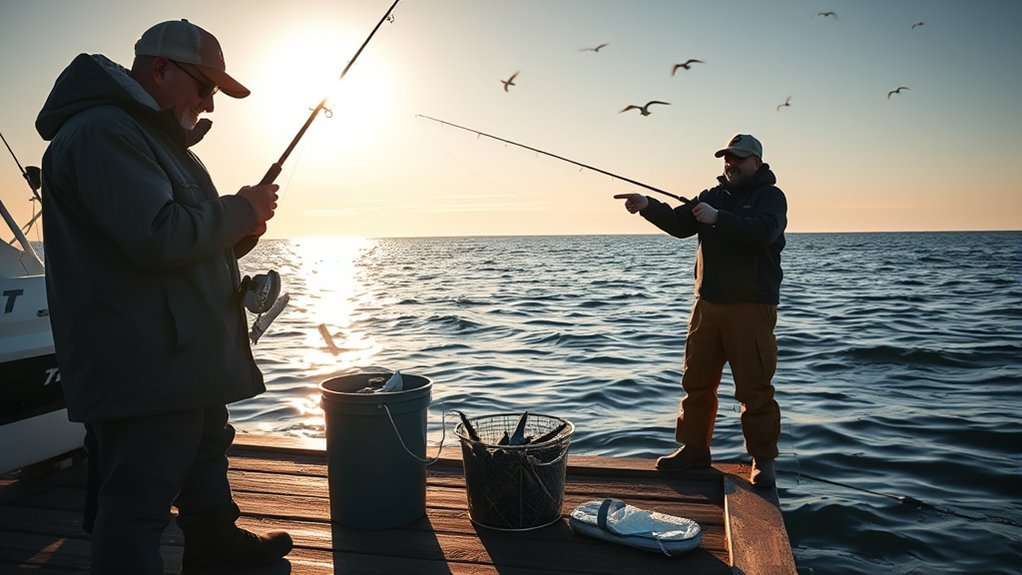
Halibut fishing for beginners comes down to one core skill: keeping your bait or lure close to productive bottom while using tackle strong enough for the depth, current, and fish in your area. For Pacific halibut, start with a stout saltwater rod, a high-capacity conventional reel, low-stretch line, a tough leader, a hook matched to your bait, and enough sinker weight to maintain bottom contact. Herring, salmon belly, squid, and octopus are common natural baits, while metal jigs and large soft baits can also work. Focus on drop-offs, humps, gravel or sand transitions, ledges, and current edges, then check the current regulations before you fish.
NOAA Fisheries identifies Pacific halibut as the largest flatfish species and lists them at up to 500 pounds and 8 feet long. That potential size is one reason beginners should take landing safety, heavy tackle, cold water, and local fishing rules seriously.
Last updated: September 11, 2026. Reviewed against current 2026 Pacific halibut fishery guidance and regional regulations.
Quick Answer
For beginner Pacific halibut fishing, use a stout heavy-action saltwater rod, a high-capacity conventional reel, low-stretch line, a durable leader, a hook matched to the bait, and enough sinker weight to stay close to bottom. Herring, salmon belly, squid, and octopus are common baits. Bottom fishing, drifting, and vertical jigging are the main techniques to learn first. Fish around legal sandy or gravel bottoms, drop-offs, humps, ledges, and current edges, and verify the current local season and retention rules before every trip.
Key Takeaways
- Halibut usually relate closely to the seafloor, so maintaining bottom contact is more important than following one universal depth.
- Anchored bottom fishing, drifting, and jigging can all work; choose the method according to current, bottom structure, boat control, and local rules.
- Herring is a widely used halibut bait, while salmon pieces, squid, octopus, metal jigs, and large soft baits can also be effective.
- Pacific halibut and California halibut are different species. Make sure the advice and regulations you follow apply to the fish you are actually targeting.
- Regulations can change during the season, so check the managing agency immediately before fishing rather than relying on an old screenshot or printed guide.
- Wear a PFD and plan for cold water, changing weather, heavy tackle, large fish, and emergency communication before leaving the dock.
At a Glance
| Best For | Beginners planning a guided charter or private-boat trip in legal Pacific halibut waters, plus shore anglers targeting halibut where local access and species allow |
| Difficulty | Moderate, because deep water, strong current, heavy tackle, and landing large fish can require careful boat handling and teamwork |
| Core Gear | Heavy saltwater rod, conventional reel, low-stretch main line, abrasion-resistant leader, suitable hooks, sinkers or jigs, bait, legal landing tool, PFD, pliers, knife, gloves, and cooler or fish box |
| Main Rule | Verify the species, management area, open dates, retention rules, gear restrictions, and reporting requirements immediately before fishing |
What Gear Do Beginners Need for Halibut Fishing?
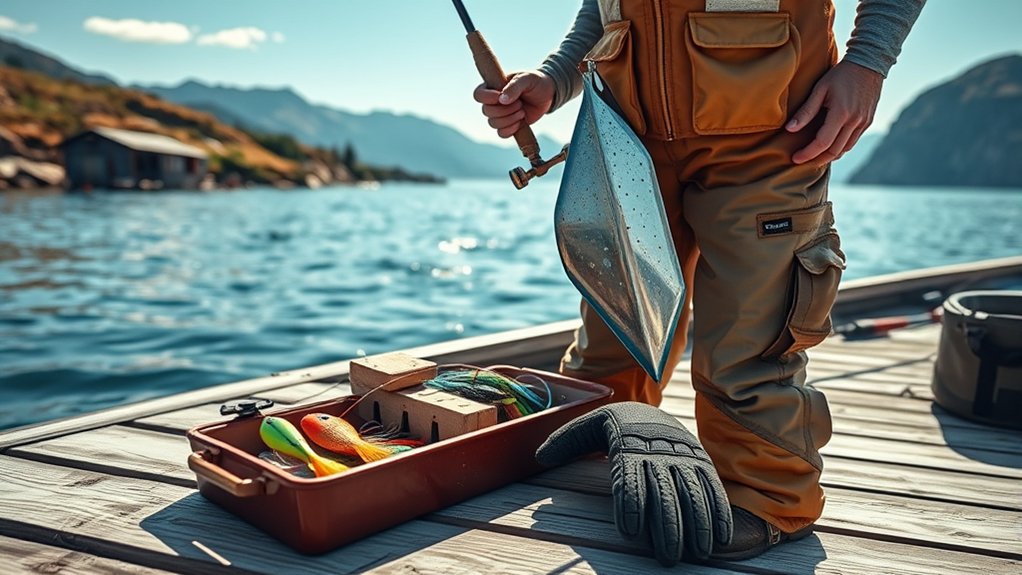
Halibut gear must do two jobs well: reach the bottom in the current you are fishing and control a powerful fish without forcing you to fight both the tackle and the halibut. A stout saltwater rod with a strong backbone and a conventional reel with high line capacity and a smooth drag is the standard starting point for boat fishing.
Line strength should match the region and expected fish rather than one universal number. For example, Alaska Department of Fish and Game guidance for Lower Cook Inlet notes that anglers commonly use stout gear with 80- to 100-pound-test line because large halibut and strong currents occur there. Other fisheries may call for a different setup.
Choose tackle for the depth, current, bait size, and fish expected in the water you are actually fishing. The goal is reliable bottom contact and controlled pressure, not simply using the heaviest equipment available.
Braided or other low-stretch main line helps you detect bottom contact and subtle changes in pressure at depth. Add a tough monofilament or fluorocarbon leader where abrasion resistance is useful around sinkers, swivels, fish, and bottom structure.
Circle hooks are popular for natural-bait halibut fishing, but there is no single correct hook size for every bait, hook pattern, and region. Match the hook to the bait and tackle, keep enough hook point exposed for it to work correctly, and check local rules for hook-style, barbless, or gear restrictions.
Herring is one of the most common natural baits. Salmon pieces, squid, and octopus are also widely used in Pacific halibut fisheries. Metal jigs, large soft baits, and other vertical lures are useful when you prefer a more active presentation.
Note: Heavier is not automatically better. Use only enough sinker or jig weight to maintain dependable bottom contact while still allowing you to detect bites and fish comfortably.
How Do You Catch Halibut?
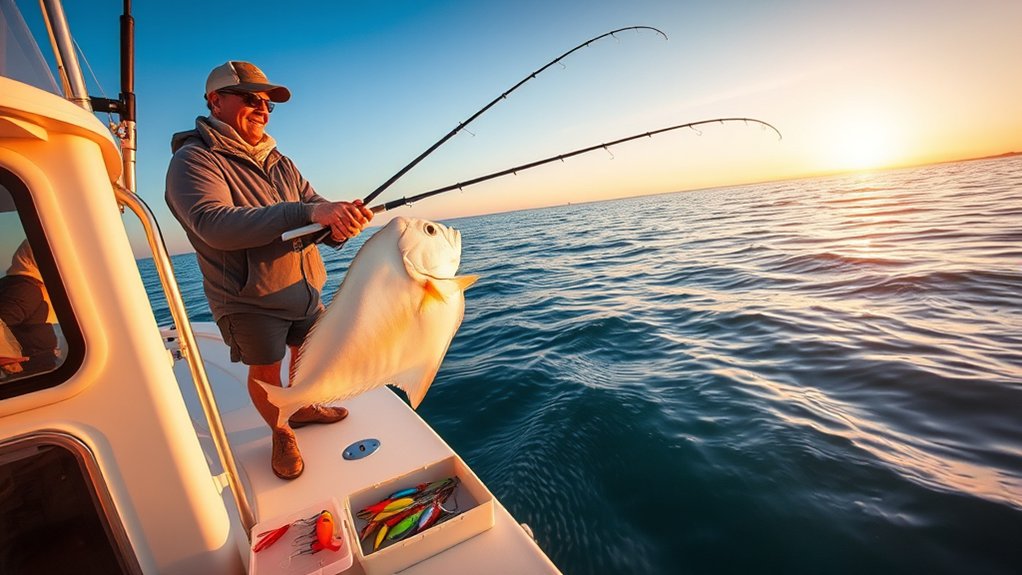
The three most useful techniques for a beginner to learn are anchored bottom fishing, drift fishing, and vertical jigging. Slow trolling can also work in some regional fisheries, but there is no universal trolling depth that applies to every halibut species and location.
| Technique | When It Makes Sense |
|---|---|
| Anchored Bottom Fishing | When anchoring is safe and legal and you want scent from bait to work through a productive area. |
| Drift Fishing | When the current and wind allow you to cover bottom structure while keeping the presentation near the seafloor. |
| Vertical Jigging | When you want an active presentation and can keep a jig close to productive bottom. |
| Slow Trolling | In fisheries where trolling is effective and legal, with the presentation controlled close to the target zone. |
Anchored bait fishing lets scent move away from your boat and can be effective over a known feeding area. Anchoring in deep water or strong current requires experience, suitable equipment, and a safe retrieval plan, so beginners should follow the captain or an experienced operator rather than improvising.
Drifting lets you search more water. The key is line angle. If your bait is sweeping far behind the boat and you cannot tell when it touches bottom, reset the drift, move to more manageable current, or adjust weight rather than continuing with poor contact.
Jigging is more active. Drop the jig close to bottom, work it with controlled lifts, and stay alert as it falls. Avoid unnecessarily high lifts that pull the lure well out of the strike zone.
Beginner Bottom-Fishing Sequence
- Check the rules, weather, and current first. Confirm that the area is open and that conditions are suitable for your boat and experience level.
- Choose a productive bottom feature. Look for drop-offs, humps, ledges, gravel or sand transitions, or areas where bait is concentrated.
- Lower the bait or jig until you can identify bottom. Keep the presentation close to the seafloor without dragging uncontrollably.
- Stay patient through the bite. With circle hooks, avoid a hard traditional hookset; let steady pressure load the rod and reel down.
- Coordinate the landing before the fish reaches the boat. Keep the line clear of the motor, anchor line, and other anglers, and let the designated person handle the legal landing tool.
Pro Tip: If you are using a circle hook, resist the urge to swing hard at the first tap. Let the fish load the rod, then reel down and apply smooth, steady pressure.
Where and When Should You Fish for Halibut?

This guide primarily covers Pacific halibut (Hippoglossus stenolepis). They occur across the North Pacific, with major recreational fisheries in Alaska, British Columbia, Washington, Oregon, and parts of northern California.
Do not confuse Pacific halibut with California halibut. California halibut (Paralichthys californicus) are a different species that are especially important in California’s nearshore and bay fisheries. The California Department of Fish and Wildlife provides identification differences between the two species. Advice about depth, bait, shore fishing, seasons, and size limits may therefore change depending on which halibut you mean.
For Pacific halibut, look beyond a single target depth. Productive fish often relate to bottom features such as sandy or muddy flats, gravel transitions, drop-offs, underwater hills, bars, reef edges, trenches, and current breaks where prey concentrates. A chartplotter and depth sounder can help you repeat productive drifts or return to a bottom contour where fish have been caught.
Alaska destinations such as Homer, Seward, and Kodiak are well known for Pacific halibut. British Columbia, the Strait of Juan de Fuca, Puget Sound, the Washington and Oregon coasts, and northern California also support Pacific halibut opportunities where seasons are open.
There is no single “best depth” or “best month” for the entire Pacific coast. Fish location changes with region, bottom structure, prey, current, weather, and migration, while the days you are legally allowed to fish may be controlled by quotas and in-season management.
For trip planning, prioritize the local open season and safe marine conditions first. Then use local reports, charts, sonar, tide/current information, and recent catches to decide whether to start shallow, deep, or somewhere between.
What Halibut Regulations Should You Check?
Halibut regulations can change by country, state or province, management area, date, vessel type, charter status, and species. Before fishing, verify your license, open area, open dates, daily and possession limits, annual limit if applicable, size restrictions, hook rules, reporting requirements, and any emergency or in-season changes.
Current rules also show why a general article should not publish one permanent coastwide limit. Two 2026 examples are below; they are snapshots, not substitutes for checking the agency immediately before your trip.
2026 Halibut Regulation Examples
| Fishery | Example Checked September 11, 2026 |
|---|---|
| Washington Puget Sound / Strait of Juan de Fuca | WDFW lists Marine Areas 5–10 as open April 2–June 30 and August 16–September 30, 2026, subject to in-season closure. The page lists a one-fish daily limit, six-fish annual limit, catch-record requirements, and barbless-hook rules for Marine Areas 5–13. |
| British Columbia recreational halibut | A DFO in-season notice increased the daily limit to two halibut effective September 1 through December 31, 2026. It also lists a 112 cm maximum head-on length, a ten-fish annual limit for April 1, 2026–March 31, 2027, and immediate catch-recording requirements. |
Other areas may have completely different limits or days. Alaska also distinguishes between unguided and guided charter rules in some areas, while Washington, Oregon, and California fisheries can close when allocations are reached.
When a fishery uses quotas or emergency orders, a date printed months earlier does not guarantee that the fishery remains open today. Check the managing agency again shortly before leaving the dock.
Warning: Do not rely on old screenshots, cached search results, printed guides, or another angler’s memory for halibut regulations. In-season changes can affect open days, limits, areas, gear rules, and reporting requirements.
What Safety Gear Do You Need for Halibut Fishing?
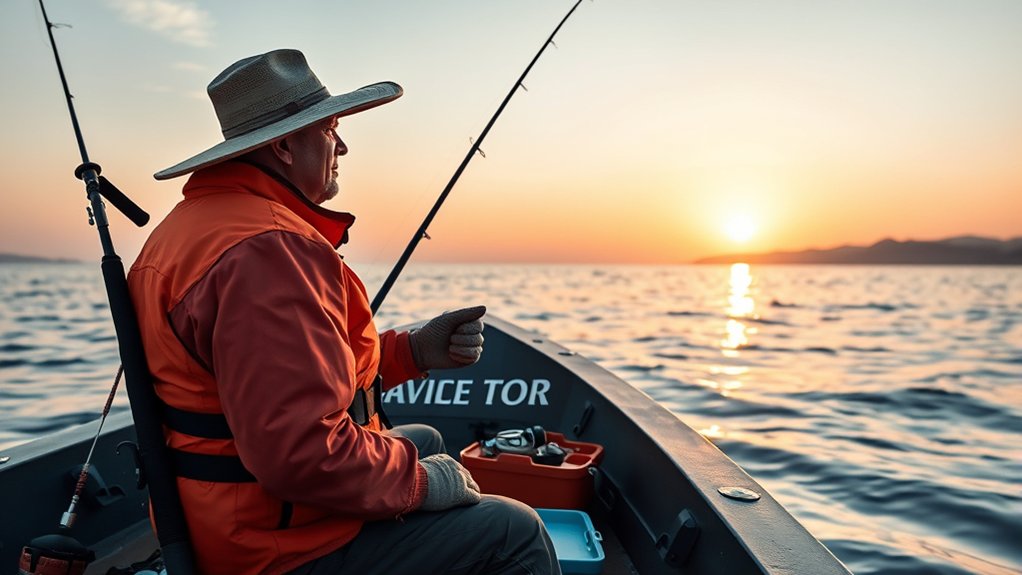
Halibut fishing combines cold water, sharp hooks, heavy sinkers, large fish, changing marine weather, and sometimes deep-water anchoring. Safety planning should happen before the first line goes overboard.
Wear a properly fitted personal flotation device rather than leaving it stored under a seat. National Weather Service cold-water guidance notes that cold shock can immediately affect breathing and recommends wearing a life jacket and dressing for the water temperature rather than the air temperature.
For a private-boat trip, carry the required boating safety equipment plus reliable emergency communication. Depending on where and how far offshore you travel, that may include a VHF radio and an EPIRB or personal locator beacon. File a float plan with someone ashore who knows your boat, passengers, route, and expected return time.
Carry a sturdy legal landing tool appropriate to the fish you intend to retain. Large halibut can thrash violently beside or inside a boat. A gaff, net, harpoon, or tail rope may be used in different fisheries and situations, but the method must be legal and the person handling it should know how to control a large fish safely.
A reliable fishing knife is useful for cutting bait, trimming line, and processing a legal catch. Keep it secured when not in use and away from loose feet, fuel lines, inflatable equipment, and children.
Also bring gloves, pliers, a first-aid kit, weather-appropriate layers, rain protection, sun protection, drinking water, food, and seasickness supplies. Check the marine forecast, tide/current conditions, and water temperature before departure.
Keep retained fish cold in ice or a fish box. Before cleaning or removing the head at sea, verify whether local regulations require the fish to remain identifiable or measurable in a particular form until landing.
What Bait and Lures Work for Halibut?
Herring is one of the most widely used Pacific halibut baits. Salmon pieces, squid, and octopus are also common choices. The best option depends on bait availability, local regulations, fish size, current, and whether you need a bait that stays on the hook through a long soak or drift.
Start with a proven local bait and concentrate first on putting it in the right place. Perfect bait cannot compensate for fishing far above productive bottom or in an unproductive area.
When using a circle hook, choose a hook size and pattern that fit the bait rather than relying on one universal size number. Keep the point clear and use smooth pressure instead of a violent hookset.
Metal jigs and large soft plastics offer an active alternative to natural bait. Drop them into the same bottom-oriented zone and use controlled vertical movements. Glow or scent-enhanced presentations may help in deep or low-light water, but location and bottom contact remain the more important variables.
If local regulations allow it, some anglers combine a jig with a strip of bait or scent. Always confirm that the resulting rig still complies with hook, bait, and gear restrictions for that management area.
How Do You Adjust When Halibut Are Not Biting?
Rather than following a universal seasonal-depth chart, adjust to what the boat, current, bottom, electronics, bait, and recent fish activity are telling you.
| What You Notice | What to Adjust |
|---|---|
| You cannot feel bottom | Reset the drift, increase weight if appropriate, or move to more manageable current. |
| Your line sweeps far behind the boat | Shorten the drift and reposition so the bait or jig stays closer to the intended bottom zone. |
| You get bites on one contour or feature | Save the location and repeat the drift or setup over the same productive structure. |
| Soft bait disappears quickly | Try a tougher bait such as octopus or secure the bait more firmly where local rules allow. |
| No bites after thoroughly covering a spot | Move to another bottom feature, depth, or current edge instead of waiting indefinitely. |
Pay close attention to tide and current because they affect boat position, scent movement, line angle, and your ability to maintain bottom contact. Very strong current may make a location difficult to fish safely, while a change in current can create a better presentation window.
Mark bites, landed fish, bait concentrations, and productive drifts on your chartplotter or in a notebook. A repeatable bottom feature is more useful than memorizing a generic seasonal depth range.
Pro Tip: When one drift produces a bite, repeat the same line before making a large move. Productive structure, current direction, and bait concentration can make a small section of bottom much better than the surrounding area.
Common Beginner Mistakes to Avoid
The first mistake is using tackle that is poorly matched to the depth, current, or fish. Too-light gear can make bottom control and landing difficult, while unnecessarily heavy gear can reduce bite detection and exhaust the angler.
The second mistake is losing bottom contact. Halibut are strongly bottom-oriented, so a bait or jig that spends most of its time well above the productive zone may pass over fish. Reset when the line angle or current prevents you from understanding where your presentation is.
The third mistake is setting a circle hook too aggressively. Instead of jerking the rod at the first tap, allow the fish to load the tackle, reel down, and apply smooth pressure.
The fourth mistake is treating regulations as permanent. Halibut fisheries may change during the season because of quotas or management actions.
The fifth mistake is ignoring deck safety. Clear loose tackle before a large fish reaches the boat, keep feet away from hooks and the fish’s tail, and decide who will control the rod and landing tool before the fish surfaces.
How to Land and Handle Halibut
Keep steady pressure as the fish rises and let the reel’s drag work during strong runs. Avoid forcing the fish with a locked spool or repeatedly creating slack in the line.
As the fish nears the surface, keep the line clear of the motor, propeller area, trim tabs, anchor line, and other anglers. Large halibut may appear exhausted and then make another powerful dive.
For smaller legal fish, a suitable net may be practical. Larger retained fish may require a gaff, harpoon, tail rope, or another approved method depending on local practice and law. These tools are for controlled landing and handling; they should not be treated as a casual beginner fishing technique.
Follow the captain or experienced boat operator’s instructions for dispatching and securing a retained fish. A large halibut can injure people or damage equipment if it begins thrashing freely on deck.
Bleed and chill the catch promptly when legal, but do not process it in a way that violates identification, measurement, tagging, or landing requirements.
Where Should You Check Halibut Information Before a Trip?
Use official fishery agencies as your final authority for seasons, limits, reporting, and emergency changes. Start with the agency responsible for the exact water you intend to fish rather than a general blog post or old printed regulation booklet.
For U.S. Pacific halibut, useful starting points include NOAA Fisheries and the relevant Alaska, Washington, Oregon, or California fish-and-wildlife agency. In British Columbia, use Fisheries and Oceans Canada fishery notices and the current Tidal Waters Sport Fishing Licence conditions.
For safety and trip timing, also check the current marine forecast, wind, tide, current, and water temperature. A legal open day is not automatically a safe boating day.
Use local reports and fishing communities to learn where fish have recently been found, but use the managing government agency—not a forum or social post—to decide whether you may legally fish and retain halibut.
Instructional videos, charter captains, local fishing clubs, and experienced anglers can help you learn knot tying, bait rigging, safe anchoring, chart reading, drift control, fish handling, and other skills that are easier to understand through demonstration than text alone.
Frequently Asked Questions
What is the secret to catching halibut?
The most repeatable approach is to put a suitable bait or jig close to productive bottom and keep it there. Target drop-offs, humps, gravel or sand transitions, ledges, and current edges, then adjust your boat position and weight so you can maintain bottom contact. Fresh bait and good tackle help, but location and presentation come first.
What is the best bait for halibut fishing?
Herring is one of the most common Pacific halibut baits. Salmon pieces, squid, and octopus are also widely used. The best choice depends on local forage, bait availability, hook size, current, and how well the bait stays attached. Check local bait and gear rules before rigging.
What is the best month to fish for halibut?
There is no single best month for every halibut fishery. Productive timing depends on species, region, migration, weather, prey, and the legal season. Choose your destination first, then check its current season and recent local fishing conditions.
How old is a 20 lb halibut?
You cannot reliably determine a halibut’s exact age from a 20-pound weight alone. Growth varies by species, sex, region, food availability, and individual fish. Weight is therefore not a dependable age calculator.
Can beginners catch halibut from shore?
Yes, in some fisheries. California halibut are commonly targeted from beaches, piers, bays, and other nearshore areas, while Pacific halibut are more commonly pursued from boats in many regions. Shore access, legal seasons, species, tides, bottom type, and local regulations determine whether shore fishing is practical where you live.
Do you need a special hook for halibut?
No single hook size or style works for every halibut fishery, but strong circle hooks are popular for natural bait. Match the hook to the bait and target fish, and check local rules because some areas impose hook-style, barbless, or other gear requirements.
Conclusion
For a first halibut trip, concentrate on the fundamentals: verify the species and current regulations, choose tackle suited to the local depth and current, keep your presentation near productive bottom, and use proven local bait or a suitable jig.
Before leaving the dock, check the marine forecast, wear your PFD, confirm your emergency communication gear, and make a landing plan. If you are new to deep-water anchoring or handling large halibut, fishing with an experienced captain or angler is the safest way to learn the process.
Sources
- NOAA Fisheries: Pacific Halibut — species size, biology, distribution, and management background
- Alaska Department of Fish and Game: Lower Cook Inlet Fishing Opportunities — halibut locations, tackle, bait, current, and fishing methods
- Washington Department of Fish and Wildlife: Puget Sound and Strait Halibut Regulations — 2026 season dates, limits, catch-record requirements, and hook rules
- Fisheries and Oceans Canada: 2026 Halibut In-Season Update — British Columbia daily limit, annual limit, maximum retained length, and recording requirements
- California Department of Fish and Wildlife: California Halibut — species identification and Pacific-halibut comparison
- National Weather Service: Cold Water Hazards and Safety — life jackets, cold shock, emergency communication, and float-plan guidance
- NOAA Fisheries: 2026 Pacific Halibut Recreational Fishery — current Area 2A recreational management measures