Secure firearm storage helps prevent unauthorized access, theft, and avoidable injury. As of , recent U.S. survey findings show that many gun owners still do not store every firearm locked and unloaded. One 2025 survey reported that about 37% of adults in gun-owning households do not keep all guns in locked locations. That makes the choice between a trigger lock, cable lock, safe, or lockbox more than a convenience decision.
Quick Answer
A cable lock usually offers better basic disablement because it can hold the action open and block loading on many firearms. A trigger lock is compact and affordable, but it only blocks trigger movement. For stronger protection, use either device only on an unloaded firearm and store it inside a locked safe or lockbox.
Key Takeaways
- Trigger locks block trigger movement, but they do not lock the action, chamber, or loading path.
- Cable locks often hold the action open and can make loading more difficult when installed correctly.
- Never install or remove a trigger lock or cable lock on a loaded firearm.
- Locks are basic security devices. A locked safe or quick-access lockbox offers stronger protection against unauthorized access.
- Massachusetts has specific firearm storage and vehicle transport rules, so owners should check current state law before storing or transporting firearms.
Understanding Trigger Locks
Trigger locks attach around the trigger and trigger guard to prevent trigger movement. Most models use two locking halves that clamp around the trigger area and open with a key or combination. They are inexpensive, small, and sometimes provided with a firearm purchase.
Trigger locks can help reduce casual or quick unauthorized use, but they offer only basic security. They do not block the action, chamber, magazine well, or loading port. If someone installs one incorrectly, uses the wrong model, or tries to place it on a loaded firearm, the device can create serious danger instead of safety.
Warning: Never install a trigger lock on a loaded firearm. Unload the firearm first, remove the magazine when applicable, open the action, and visually and physically confirm that the chamber is empty before handling any locking device.
Use trigger locks only on unloaded firearms and only as part of a broader storage plan. A better plan combines locked storage, unloaded firearms, and ammunition secured separately. Both the ATF and pediatric safety experts emphasize locked, unloaded storage with ammunition stored away from the firearm.
Note: A trigger lock does not block the action or loading port. It prevents trigger pull, but it may not stop disassembly, loading, or misuse if installed on the wrong firearm or installed incorrectly. No lock is foolproof.
The Functionality of Cable Locks
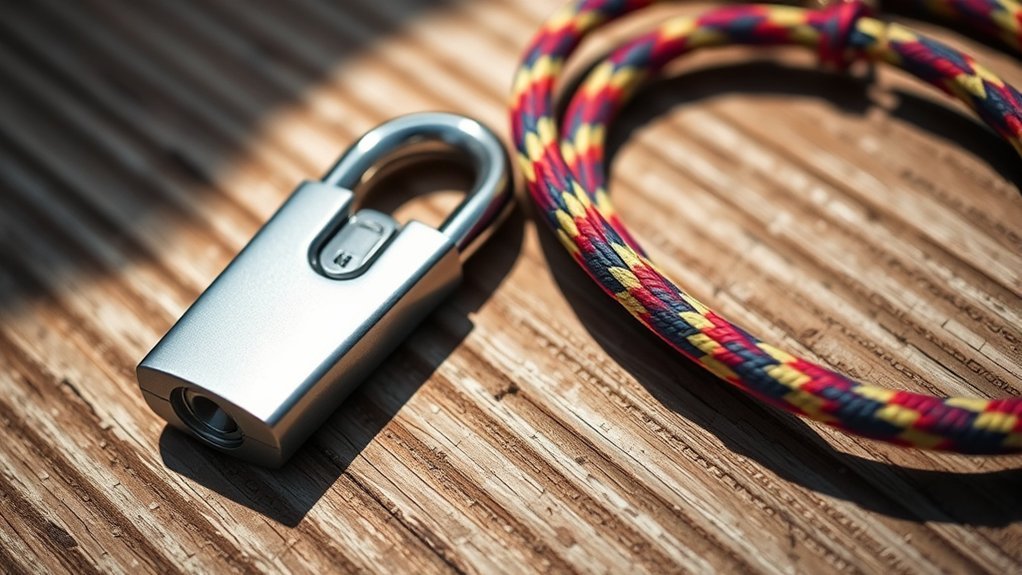
Cable locks use a flexible, vinyl- or nylon-coated steel cable that routes through part of the firearm, such as the barrel, ejection port, action, or magazine well. The exact path depends on the firearm type and the lock instructions.
When correctly installed on an unloaded firearm, a cable lock can hold the action open and make loading or firing impractical. This visual “open action” position is one reason many safety programs distribute cable locks. They are also widely available through community safety programs, local law enforcement partners, and firearm safety initiatives such as Project ChildSafe.
- Most include protective sleeves to help reduce finish damage, but you should still inspect fit and avoid forcing the cable through tight or sharp contact points.
- They are low-cost and widely available, and many communities distribute them at no cost through firearm safety programs.
- They work well as part of layered security, especially for rifles and shotguns, but they are still not a substitute for a locked safe or lockbox.
Pro Tip: Keep the lock instructions with the firearm’s manual. Cable placement can differ between handguns, rifles, and shotguns, and the safest routing is the one specified for that firearm and lock.
Pros and Cons of Each Lock Type
Trigger locks and cable locks both help reduce unauthorized access, but they solve different problems. A trigger lock focuses on the trigger. A cable lock focuses on disabling the action or loading path. That difference matters when you compare everyday storage, child safety, theft resistance, and legal compliance.
Trigger Locks
- Pros: Inexpensive; small form factor; fits many models; easy to store; quick to remove with a key or combination when used correctly.
- Cons: Does not block the action; may allow dangerous conditions if misapplied; should never be installed on a loaded firearm; can be defeated; not as robust as a locked container, safe, or lockbox.
Cable Locks
- Pros: Keeps the action open on many firearms; typically prevents magazine insertion on compatible designs; widely distributed at low or no cost; gives a visible sign that the firearm is disabled.
- Cons: Not foolproof; may not fit certain firearm designs; can cause finish abrasion if poorly fitted; may be slower to remove; still less secure than a bolted safe or dedicated lockbox.
Trigger Lock vs. Cable Lock Comparison
| Feature | Trigger Lock | Cable Lock |
| Main function | Blocks trigger movement | Holds the action open or blocks loading on many firearms |
| Best use | Basic storage on compatible unloaded firearms | Basic storage when visible open-action disablement is preferred |
| Security level | Basic | Basic, often with clearer visual disablement |
| Loaded firearm use | Never install on a loaded firearm | Never install on a loaded firearm |
| Best upgrade | Locked safe or lockbox | Locked safe or lockbox |
Bottom line: Either lock is better than no locking device, but neither should be your only security layer. For safer storage, keep firearms unloaded, locked, and stored with ammunition secured separately. If rapid authorized access matters, a quick-access safe or lockbox is usually better than a standalone trigger lock or cable lock.
Legal Considerations and Compliance
Selecting an appropriate locking mechanism matters, and so does how you store and transport firearms under your state’s law.
Firearm storage and transport laws vary by state. Some states focus on access by minors or prohibited persons. Others require specific locking devices, locked containers, or transport conditions. Because laws can change, you should confirm current state statutes and official guidance before relying on any storage or transport method.
Massachusetts Storage Requirements (M.G.L. c.140 §131L)
In Massachusetts, it is unlawful to keep any firearm, rifle, or shotgun unless it is either secured in a locked container or equipped with a tamper-resistant mechanical lock or other safety device. The device must be properly engaged so the weapon is inoperable by unauthorized users.
When buying a handgun in Massachusetts, confirm that the included lock is approved by the Massachusetts State Police under §131K. The Massachusetts State Police publish a list of approved firearm safety and locking devices, including an updated list dated April 13, 2025.
Massachusetts Vehicle Transport (M.G.L. c.140 §131C; Major Update Effective Oct. 2, 2024)
- Large-capacity rifles or shotguns in a vehicle: They must be unloaded and secured in a locked container, such as a locked trunk, locked console, or locked glovebox, as defined under Massachusetts law. A trigger lock or cable lock alone does not meet this locked-container requirement.
- Handguns: A loaded handgun may be carried in a vehicle only if it remains under the licensee’s direct control. If it is not under direct control, such as when left unattended, it must be unloaded and secured in a locked case, trunk, or other secure container.
Note: This article provides general safety information and a Massachusetts-focused compliance overview. It is not legal advice. Check the current statute text or official state guidance before storage or transport.
Alternative Security Measures for Firearms
A trigger lock or cable lock is a starting point, not a complete storage system. If you want stronger protection, think in layers. The best option depends on your household, firearm type, local law, and whether you need quick authorized access.
- Quick-access safes and lockboxes: These provide faster authorized access than traditional safes while still keeping the firearm locked. Anchor or mount the unit when possible to deter theft.
- Full-size gun safes: These offer more storage space and stronger theft resistance, especially when bolted down. They are best for multiple firearms or long guns.
- Layered security: Combine unloaded storage, a locking device, and separate locked ammunition to reduce misuse risk, especially around children, guests, or visitors.
- Free cable-lock programs: Many communities distribute no-cost cable locks through Project ChildSafe, local law enforcement, and firearm safety partners.
- Household safety conversations: Storage devices work best when every responsible adult in the home understands the storage plan, key control, and emergency rules.
Avoid unsafe practices: Do not leave safes open “for convenience,” leave keys accessible, share combinations casually, or install or remove any lock on a loaded firearm.
How to Choose the Right Locking Option
Choose a storage method based on risk, not just price. A lock that technically fits your firearm may still be the wrong choice if children visit your home, roommates have access, theft risk is high, or your state requires a locked container.
Choose a Trigger Lock If
- You need a compact, low-cost device for an unloaded firearm.
- Your firearm model is compatible with the lock design.
- You understand that it blocks the trigger only, not the action or loading path.
- You will still store the firearm inside a locked container, safe, or controlled location.
Choose a Cable Lock If
- You want a visible open-action storage method for an unloaded firearm.
- You own a rifle, shotgun, or handgun compatible with cable routing through the action or magazine well.
- You want an affordable option that may be available free through local safety programs.
- You can follow the lock instructions without forcing the cable or damaging the firearm.
Choose a Safe or Lockbox If
- You need stronger protection against unauthorized access or theft.
- You need quick authorized access while keeping the firearm locked.
- You live with children, teens, guests, roommates, or anyone who should not access the firearm.
- Your state’s storage or vehicle transport law requires a locked container.
Safe Installation Checklist
Before using any firearm locking device, follow a careful safety routine. This checklist applies to both trigger locks and cable locks, but you should still follow the specific instructions supplied with your device and firearm.
- Point the firearm in a safe direction. Keep your finger off the trigger and outside the trigger guard.
- Unload the firearm completely. Remove the magazine when applicable, open the action, and remove all ammunition.
- Check the chamber. Visually and physically confirm that the chamber, magazine well, and action are empty.
- Install only the correct lock type. Do not force a trigger lock or cable lock onto a firearm it does not fit.
- Confirm the firearm is disabled. A trigger lock should block trigger movement. A cable lock should follow the recommended path and hold the action open when applicable.
- Store ammunition separately. Use a separate locked location when possible.
- Control keys and combinations. Keep keys, combinations, and override tools away from children and unauthorized users.
- Recheck the device regularly. Inspect for loose fit, damage, wear, corrosion, or missing keys.
Warning: Do not rely on memory when checking whether a firearm is loaded. Always inspect the chamber and action every time you handle the firearm, even if you believe it was already unloaded.
Common Mistakes to Avoid
Most lock failures come from poor fit, poor habits, or relying on one device to do too much. Avoid these common mistakes when comparing trigger locks and cable locks.
- Installing a lock on a loaded firearm: This is unsafe and directly conflicts with common manufacturer warnings.
- Using the wrong lock size: A loose or incompatible trigger lock may not block the trigger properly.
- Assuming a lock prevents theft: Basic locks may slow access, but they do not replace a safe or anchored lockbox.
- Leaving keys nearby: A lock offers little protection if the key is on the same shelf, in the same drawer, or easy to guess.
- Ignoring state law: Some laws require a locked container or specific transport method, not just a trigger or cable lock.
- Skipping maintenance: Dirt, wear, damaged cables, and sticky lock cylinders can reduce reliability.
Conclusion
If your priority is preventing unauthorized access, a properly installed cable lock on an unloaded firearm generally offers clearer, more visible disablement because it can hold the action open on many firearms. If your priority is compact, low-cost basic security, a trigger lock can still help when it fits correctly and is used only on an unloaded firearm.
If your priority is fast authorized access while maintaining stronger security, a quick-access safe or lockbox is typically the better choice than either standalone lock. In all cases, follow the same core rule: store firearms unloaded, locked, and with ammunition secured separately. Then confirm that your storage and transport method complies with your state’s current laws.
References
- CDC MMWR: Firearm Storage Behaviors — survey data on firearm storage practices.
- American Journal of Preventive Medicine: Factors Associated With Secure Firearm Storage Among U.S. Gun Owners — secure storage prevalence and related factors.
- Annenberg Public Policy Center: Gun Storage Survey — 2025 survey finding on adults in gun-owning households.
- Massachusetts General Laws c.140 §131L and Mass.gov §131L Explainer — Massachusetts firearm storage requirements.
- Massachusetts General Laws c.140 §131C and Mass.gov 2024 Firearms Law Update — Massachusetts vehicle transport requirements.
- Mass.gov Firearms License FAQ — Massachusetts firearm licensing and transport guidance.
- Massachusetts State Police: Approved Firearm Safety/Locking Devices — approved device list dated April 13, 2025.
- ATF: Safety & Security for Firearm Owners — firearm owner safety and secure storage guidance.
- American Academy of Pediatrics: Safe Storage of Firearms — child safety and firearm storage guidance.
- Master Lock: Cable Gun Lock Instructions — cable lock installation warnings and safe-use instructions.
- FSDC: Trigger Lock Instructions — trigger lock installation warnings and safe-use instructions.
- Johns Hopkins: How Safe and Secure Gun Storage Reduces Injury and Safe Storage Saves Lives Toolkit — secure storage overview and public safety toolkit.
- California DOJ: Roster of Firearm Safety Devices — firearm safety device certification reference.