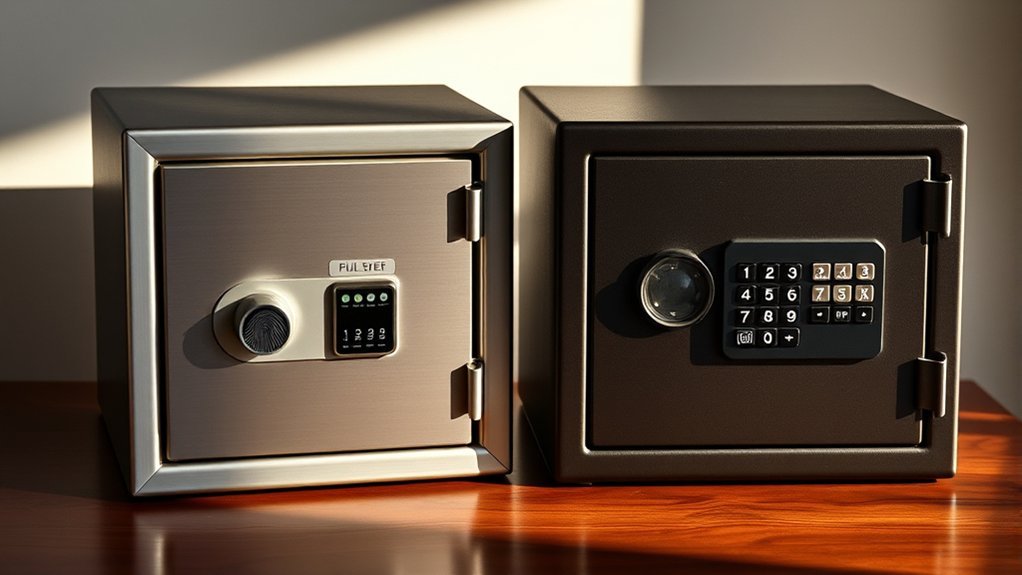
When considering gun safes, you’ll find yourself weighing the merits of biometric versus keypad options. For most buyers comparing biometric vs keypad gun safes, the right choice comes down to reliability under stress, certification, backup access, and your environment. Biometric safes promise quick access through fingerprint recognition, but they can struggle with dirty fingers, moisture, weak batteries, or sensor errors. Keypad safes offer simple code-based access and often cost less, but forgotten or shared codes can create their own risks. Understanding these trade-offs helps you choose a safe that protects your firearms without slowing you down when access matters.
Quick Answer
Choose a biometric gun safe if you want the fastest access and can keep the scanner clean, powered, and tested. Choose a keypad gun safe if you want simpler, lower-cost access that is less affected by fingerprints or moisture. For the best reliability, look for redundant entry methods, backup power, and third-party security ratings.
Key Takeaways
- Biometric safes can open quickly, but sensor performance may drop with wet, dirty, injured, or poorly placed fingers.
- Keypad safes are simple and affordable, but weak codes, shared codes, dead batteries, and forgotten combinations can reduce security.
- Electronic biometric and keypad models usually need batteries, so backup keys, external power ports, or mechanical override options matter.
- Independent ratings, solid construction, pry resistance, and safe-storage compliance are more important than the lock type alone.
- Hybrid safes with fingerprint, keypad, and key access often provide the best balance of speed and redundancy.
Understanding Biometric Gun Safes
Biometric gun safes are designed to provide firearm owners with rapid access through fingerprint recognition technology. Instead of typing a code, you place an enrolled finger on the scanner and wait for the lock to identify you. This can be helpful in stressful situations because you do not need to remember a combination under pressure.
Many biometric safes can store several fingerprints, which allows authorized family members or trusted adults to access the safe without sharing one code. Some models also include encryption, tamper alerts, pry-resistant bodies, interior lighting, app controls, or event logs. These features can improve access control, but they do not replace strong physical construction.
Reliability remains the key concern. A fingerprint scanner may fail if your finger is wet, dirty, cut, swollen, or placed at the wrong angle. Battery failure can also lock you out if the safe has no backup key or external power option. For that reason, models with manual keys, external battery contacts, USB power ports, or a backup keypad are usually safer choices than fingerprint-only models.
Advantages of Biometric Gun Safes
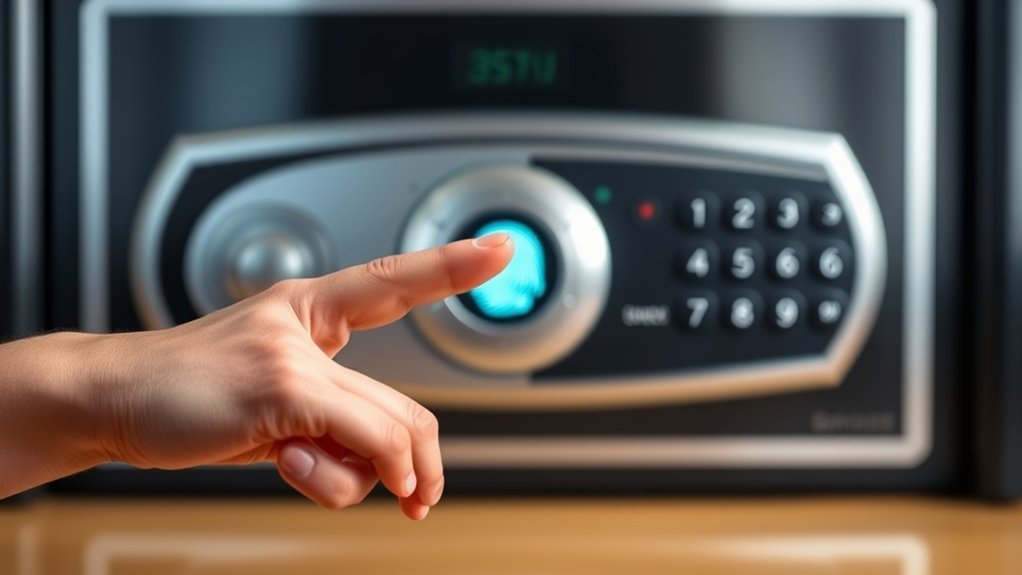
Biometric gun safes offer rapid access, allowing you to open the safe with a fingerprint instead of entering a code. Their advanced security features, like encrypted fingerprint storage and tamper-resistant designs, can improve firearm security when the safe is well built. They also reduce the need to remember a code or keep a key nearby, which can lower the chance of simple access mistakes.
Quick Access Benefits
When it comes to quick access during emergencies, biometric gun safes can be convenient. You can often open the safe with one enrolled finger, which may feel faster than typing a code. Unlike keypad safes, you won’t need to remember numbers or worry about mistyping a combination while stressed.
Key benefits of biometric gun safes include:
- Quick access for authorized users, enhancing gun safety.
- Ability to store multiple fingerprints for family or trusted individuals.
- Unique biometric data prevents simple code guessing, minimizing some security risks.
- Useful access for people who struggle to remember numeric codes.
- Convenient use in low-light settings when the scanner is easy to locate.
In urgent situations, the efficiency of a fingerprint scanner can make a difference. Still, speed should never be the only factor. A safe also needs strong hinges, a secure locking mechanism, pry resistance, and dependable backup access.
Note: Enroll the same authorized finger from several angles if your safe allows it. This can improve recognition when your finger placement is not perfect.
High Security Features
While traditional safes might rely on codes and keys, biometric gun safes offer security through their use of fingerprint recognition technology. These safes use your unique biological traits, making unauthorized access through simple code guessing more difficult. With advanced security elements like encrypted templates and tamper-resistant designs, they can enhance protection against casual access attempts.
Many biometric safes accommodate multiple user profiles, allowing family access with proper authorization. This is helpful when more than one responsible adult needs access, but each user should be enrolled carefully and tested before relying on the safe.
For reliability, prioritize models with manual key overrides, backup power, and another entry method such as a keypad. These features reduce the chance of being locked out when the batteries die or the scanner fails to read your fingerprint.
Disadvantages of Biometric Gun Safes
Although biometric gun safes offer modern convenience, they come with several disadvantages that can compromise their effectiveness. Here are some key concerns to contemplate:
- False rejections: Dirt, moisture, cuts, worn skin, or improper finger placement can prevent you from accessing the safe.
- Power issues: Many biometric locks rely on batteries or electronics, so dead batteries can cause lockouts if no backup method exists.
- Technology failure: Sensor or circuit malfunctions can create serious access issues, leaving you unable to open the safe quickly.
- Training gaps: If you rarely test the scanner, you may not notice access problems until you need the safe.
- Higher cost: Biometric models often cost more than basic keypad safes with similar size and construction.
Additionally, many small biometric safes lack third-party security ratings such as a UL Residential Security Container listing. A rating does not make a safe theft-proof, but it can help you compare resistance to physical attack more clearly than marketing language alone.
Environmental factors, such as humidity, dust, cold fingers, or minor hand injuries, can also hinder the sensor’s ability to recognize your biometric data. If you work with your hands, live in a humid area, or need access after outdoor activity, test the scanner under realistic conditions before trusting it as your only entry method.
Warning: Do not rely on a fingerprint-only safe unless it has a dependable backup entry method. A dead battery, dirty scanner, or injured finger can block access when you need it most.
Advantages of Keypad Gun Safes
Keypad gun safes present a reliable alternative to biometric options, addressing several concerns users may have about accessibility and functionality. One significant advantage is the customizable security they offer. You can create a personal access code and change it when needed, especially after sharing access with someone temporarily.
Most electronic keypad locks do use batteries. Only mechanical locks, such as rotary dial locks or Simplex-style pushbutton locks, avoid batteries completely. Still, keypad safes usually avoid some biometric-specific problems because they do not need to read your fingerprint.
Their affordability makes them a practical choice for budget-conscious users. Many keypad models cost less than biometric safes of similar size, especially in compact handgun-safe categories. The straightforward operation also minimizes certain tech frustrations, providing reliable performance without the complexities of biometric sensors.
For convenience, you can easily share access codes with trusted adults, enhancing usability in multi-user scenarios. A keypad also works well when your hands are dirty, cold, wet, or injured, as long as you can still press the buttons accurately.
Why Keypads Can Be More Predictable
Keypads are often predictable because they depend on a code rather than a sensor reading. If the battery has power and the buttons work, the correct code should open the safe. This can make keypad safes appealing for users who want a simple routine they can practice repeatedly.
Backlit keypads can help in low light, and raised buttons can be easier to feel without looking. Some models also include silent modes, lockout delays after repeated wrong codes, and backup keys. These features can improve both usability and security.
Pro Tip: Use a code that is easy for you to remember but hard for others to guess. Avoid birthdays, addresses, repeated digits, and simple patterns like 1234 or 2580.
Disadvantages of Keypad Gun Safes
Even with their many advantages, keypad gun safes have notable disadvantages that can impact their effectiveness.
- Vulnerability to unauthorized access: If someone guesses, sees, records, or shares your access code, your security is compromised.
- Risk of being locked out: Forgetting your access code can leave you locked out, especially in urgent situations.
- Inconsistent performance: Electronic components can fail or batteries can die, leading to unreliable functioning.
- Wear patterns: Frequently used buttons may show wear over time, making it easier for someone to guess which digits are in the code.
- Shoulder surfing: Someone nearby may watch you enter the code if you do not shield the keypad.
If you want to avoid batteries entirely, consider a mechanical keypad or dial model. Mechanical options may feel slower, but they remove the battery-failure risk found in most electronic locks.
Unlike biometric safes, basic keypad models may not store multiple named user profiles, which can make controlled family access less granular. If several adults need access, you may need to share one code or choose a model with multiple user codes.
Biometric vs Keypad Gun Safes: Side-by-Side Comparison
| Factor | Biometric Gun Safe | Keypad Gun Safe |
| Access Speed | Usually very fast when the fingerprint scanner reads correctly. | Fast with practice, but slower if you mistype or forget the code. |
| Reliability | Can be affected by moisture, dirt, cuts, sensor quality, and battery life. | Less affected by finger condition, but still vulnerable to dead batteries or button failure. |
| Security Risk | Harder to guess than a code, but scanner quality and physical safe strength matter. | Code can be guessed, shared, watched, or exposed by worn buttons. |
| Best For | Users who want fast access and will test the scanner often. | Users who want simple, affordable, code-based access. |
| Best Setup | Biometric + keypad + key or external power backup. | Keypad + backup key, external power, or mechanical lock option. |
Making the Right Choice for Your Needs
When you’re choosing between biometric and keypad gun safes, it’s essential to assess security features that align with your needs. You should also evaluate how quickly you can access your firearm in an emergency and consider your budget to find the best fit. Balancing these factors will help you make an informed decision that prioritizes both safety and convenience.
Assessing Security Features
As you assess security features in your choice between biometric and keypad gun safes, it is crucial to weigh the advantages and disadvantages of each option.
- Biometric fingerprint technology offers enhanced convenience but can be affected by dirt, moisture, injuries, or poor scanner placement.
- Keypad safes provide easy access and consistent performance, but they may pose a risk if codes are shared, guessed, or watched.
- Look for third-party ratings or compliance, such as a UL Residential Security Container listing and any applicable state safe-storage criteria.
- Check the safe body, locking bolts, hinge design, pry resistance, mounting options, and steel thickness instead of focusing only on the lock type.
- Choose redundant access methods whenever possible, especially for emergency-use handgun safes.
Legal & safety note (U.S.): Always follow applicable safe-storage laws and best practices. Store firearms unloaded when appropriate, lock firearms and ammunition separately when required or practical, and keep combinations, keys, and override tools out of children’s reach.
Evaluating Access Speed
Choosing between biometric and keypad gun safes hinges considerably on access speed, particularly in situations where every second counts. Biometric gun safes can excel in this area when they grant entry quickly with a fingerprint scan. This can provide rapid access during emergencies.
In contrast, keypad gun safes require you to input codes, which can delay access if you forget or mistype them. While biometric safes allow for multiple fingerprint profiles, making access easier for authorized users, environmental factors like dirt or moisture can hinder their performance.
Keypad safes are generally less affected by finger condition, helping provide more consistent access in some environments. Ultimately, consider how access speed, user training, and realistic home conditions affect your security needs before making your decision.
Budget Considerations
Access speed is just one factor to evaluate; budget plays a significant role in selecting the right gun safe for your needs. Compact biometric handgun safes often cost more because they include fingerprint sensors and extra electronics. Entry-level electronic keypad pistol boxes are often more affordable, though price varies by brand, size, lock type, construction, and included features.
Consider these budget considerations:
- Long-term costs, including battery replacements for electronic biometric and keypad locks.
- Maintenance needs; mechanical locks avoid batteries but trade some speed and convenience.
- Value of hybrid models with biometric, keypad, and key access for redundancy.
- Mounting hardware, cable locks, interior lighting, and warranty coverage.
- Build quality, pry resistance, and third-party ratings, not just the lock style.
Ultimately, if you’re budget-conscious, weighing the upfront costs against potential long-term expenses will help you make an informed choice that meets your security and financial needs.
Matching the Safe to Your Environment
Your environment can make one lock type more practical than the other. A biometric safe may be less dependable in a damp garage, dusty workshop, or bedside location where lotions, sweat, or humidity affect your fingers. A keypad may be easier in those settings because it does not need to read skin detail.
However, a keypad safe can create problems in shared spaces if someone watches you enter the code. It can also become less secure if you reuse an easy code or write the combination nearby. For either safe type, place the safe where unauthorized users cannot easily see, carry, pry, or remove it.
Checking Backup Access and Maintenance
Backup access is one of the most important features in any electronic gun safe. Before buying, check how the safe opens if the battery dies. Better models may offer a backup key, external power port, battery contacts, or a second electronic method.
You should also test your safe regularly. Replace batteries on a schedule instead of waiting for failure. Keep the fingerprint reader clean, update enrolled fingerprints if your hands change, and practice opening the safe in low light. A safe you cannot open reliably is not a good fit, even if it looks secure on paper.
Safe Storage Best Practices
A gun safe is only one part of safe firearm ownership. The lock type matters, but storage habits matter too. Keep unauthorized users, especially children, from accessing firearms, keys, codes, and backup tools. Do not store the override key in an obvious drawer next to the safe.
Mounting also matters. A small handgun safe can be carried away if it is not anchored. Use the manufacturer’s mounting points when possible, and secure the safe to a solid surface. If you rent or cannot drill, consider a cable-secured model, but understand that cables usually offer less theft resistance than proper anchoring.
Test any safe before relying on it. Enroll fingerprints carefully, set a strong code, check the backup key, and confirm that every authorized adult can open the safe. Then retest it periodically so battery, keypad, or scanner problems do not surprise you later.
Who Should Choose a Biometric Gun Safe?
A biometric gun safe may be the better choice if speed and convenience are your top priorities. It can work well for responsible adults who want fast access without remembering a code. It also makes sense if multiple authorized users need access and the model can store several fingerprints.
Choose biometric if you are willing to maintain it. That means cleaning the scanner, replacing batteries, enrolling fingerprints from different angles, and testing access often. You should also choose a model with a backup keypad, key, or external power option.
Avoid fingerprint-only designs if your hands are often dirty, wet, injured, or covered by work-related wear. In those cases, a keypad or mechanical lock may be more predictable.
Who Should Choose a Keypad Gun Safe?
A keypad gun safe may be the better choice if you want simple operation, lower cost, and fewer biometric sensor concerns. It can work well for people who can remember a strong code and practice entering it quickly.
Choose a keypad model if you live in a humid area, work with your hands, or worry that a fingerprint reader may reject you. Keypads can also be easier for households where authorized adults prefer a familiar code-based system.
Avoid weak codes and change the code when access no longer needs to be shared. Shield the keypad when entering your combination, and replace batteries before they fail. If battery-free reliability matters most, consider a mechanical lock instead of an electronic keypad.
Conclusion
In choosing between biometric and keypad gun safes, consider your unique needs, environment, budget, and comfort level with each access method. For instance, if you live in a humid area or often have dirty hands, a biometric safe might struggle with moisture or poor fingerprint reads, leading to access issues during emergencies. Conversely, if you’re prone to forgetting codes, a keypad safe could become a liability.
Prioritize independent ratings, strong construction, reliable locking hardware, and applicable state standards where relevant. Choose models with redundant entry methods, such as biometric plus keypad plus key, for better reliability. Weighing these factors ensures you select a safe that offers both security and convenience tailored to your lifestyle, ultimately protecting what matters most to you.
Sources
- Bureau of Alcohol, Tobacco, Firearms and Explosives — firearm storage safety guidance.
- U.S. Department of Justice — gun violence prevention and safe-storage context.
- California Department of Justice — firearm safety device information and certified device list.
- UL Solutions — safes and vaults certification information.