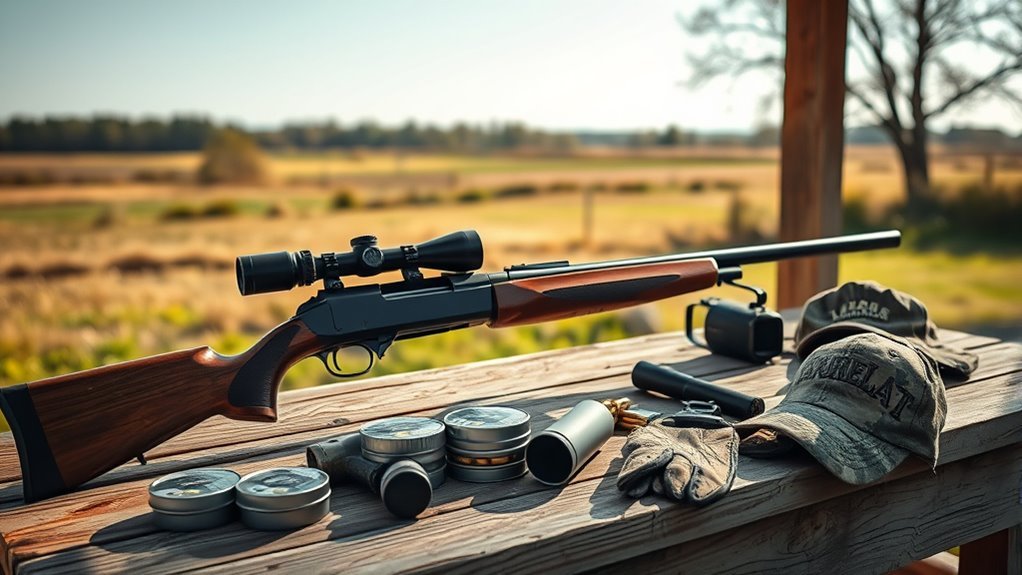
Multi-shot air rifles (also called multi-load or repeater air rifles) hold several pellets in a magazine, so you can fire again without hand-loading each pellet. For varmint control, the real choices are PCP rifles such as the Umarex Gauntlet 2 and Beeman Chief II Plus, and break-barrel gas-piston rifles such as the Gamo Swarm 10X GEN3i. Pick .22 for most pests, keep shots close, aim for the head or chest, and check your local laws before you shoot.
Key Takeaways
- Multi-shot means the magazine loads the next pellet for you. On a break-barrel rifle you still have to cock the rifle for every shot.
- PCP rifles give steady power and low recoil, but you need a way to fill them with high-pressure air.
- .22 is the usual choice for varmints. .177 is flatter but hits with less energy. .25 hits harder but holds fewer shots.
- No air rifle is silent. Shrouded or suppressed models are quieter, and heavier pellets at lower speeds are quieter still.
- Ethical hunting means a clean head or chest shot at a range you have practised. If you cannot place the shot, do not take it.
Best Multi-Shot Air Rifles for Small Game
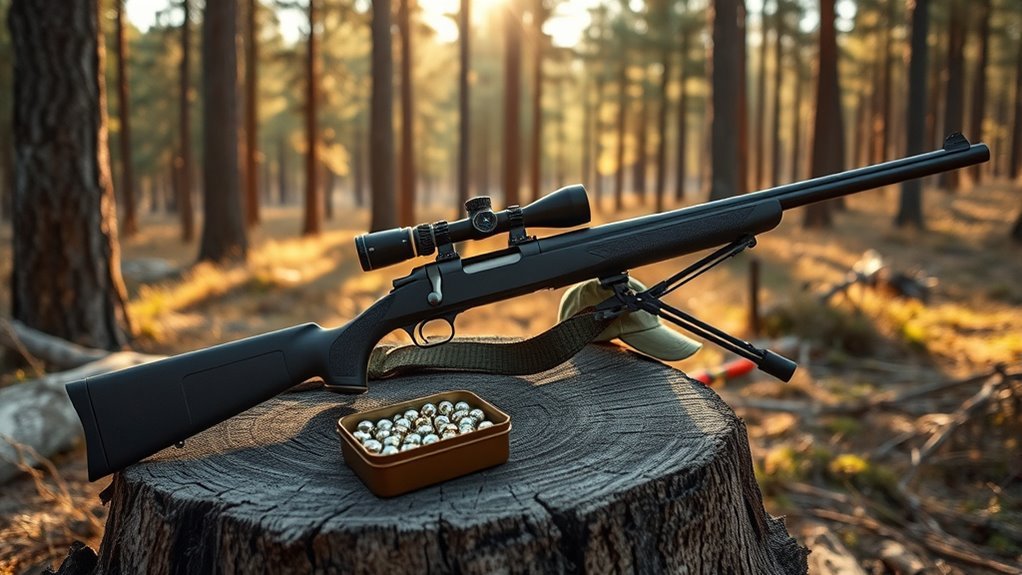
These rifles are real, current multi-shot models. Figures come from the makers and retailers and may differ by version, so check the exact model before you buy.
Umarex Gauntlet 2 (PCP)
- Specs: Regulated PCP, bolt action. Offered in .22, .25, and .30. The .22 has a 10-shot magazine and the .25 has 8 shots. Umarex lists the .22 at up to 1,050 fps with light pellets and 33 ft-lbs with standard pellets. Max fill is 4,500 psi, and a published launch report puts the .22 at about 70 shots per fill.
- Pros: Steady power from the regulator. Shrouded barrel for lower noise. Many shots per fill.
- Cons: Needs a 4,500 psi air source. It weighs about 8.5 lb, so it is heavy for long walks.
Beeman Chief II Plus (PCP)
- Specs: PCP in .177 (up to 1,100 fps) and .22 (up to 1,000 fps), with two 12-shot magazines included. It has a sound-suppressing muzzle. One review found good accuracy at 25 yards with heavier pellets and judged it suitable for pests out to about 40 yards.
- Pros: Light, easy to handle, and one of the more affordable PCP repeaters.
- Cons: Accuracy fell once tank pressure dropped below about 2,100 psi in that review, so watch your gauge.
Beeman Commodore (PCP)
- Specs: Under-lever PCP. Retailer listings show .177 with 12 shots, .22 with 10 shots, and .25 with 9 shots. Regulated versions exist. One listing shows a 3,500 psi fill and about 1,000 fps in .177.
- Pros: Several calibers and a large magazine.
- Cons: Versions differ, so confirm regulator, fill pressure, and magazine size on the exact listing.
Gamo Swarm 10X GEN3i (gas piston break barrel)
- Specs: The Swarm 10X GEN3i line, including the Fusion, Magnum, and Bone Collector, comes in .177 and .22 and holds 10 pellets in an inertia-fed magazine that advances on recoil. Listed top speeds, such as 1,300 fps in .177 for the Fusion and 975 fps in .22, are with light alloy pellets. Lead pellets are slower.
- Pros: No air supply needed. The magazine saves pellet-loading time.
- Cons: You cock the rifle for every shot. The Magnum is listed at about 41 lb of cocking effort. Hold technique affects accuracy, and the scope must be rated for spring or gas-piston recoil.
Why Multi-Shot Air Rifles Work
A magazine removes the slow step of loading a pellet by hand. That helps when a second shot is needed, and it means less fumbling in the field. It does not make the rifle semi-automatic. On a PCP bolt-action you work the bolt. On a break barrel you cock the rifle.
Most repeaters use a rotary magazine, a small wheel that turns each pellet in line with the barrel. Keep the magazine clean and use undamaged pellets. Dirt or a bent pellet can jam the feed.
Which Air Rifle Type Fits Your Hunt?
- PCP: Steady power, low recoil, and many shots per fill. Needs a hand pump, compressor, or air tank.
- Spring or gas-piston break barrel: Self-contained and easy to start with. More recoil and more hold-sensitive. Multi-shot versions like the Gamo Swarm add a magazine.
- Pump-up and CO2: Simple power sources, but most are lower in power, and CO2 output changes with temperature. Check each model before you count on it for varmints.
Choose the Best Caliber for Small Game
- .177: Light pellet, fast and flat. Best for small pests at short range. Less energy per shot.
- .22: The usual varmint choice. A heavier pellet carries more energy, which suits squirrels, rabbits, and rats at normal distances.
- .25: Heavier again, with more energy, but fewer shots per fill and a smaller magazine on rifles like the Gauntlet 2.
Muzzle energy in ft-lbs equals pellet weight in grains times speed in fps squared, divided by 450,240. As an example, a 14.3 grain .22 pellet at 800 fps carries about 20 ft-lbs. An 8.4 grain .177 pellet at 900 fps carries about 15 ft-lbs. These are worked examples, not data for a specific rifle. Always chronograph your own rifle with your own pellets.
Check local rules too. Some states set a minimum caliber or energy for game animals.
Pick a Quiet Air Rifle
No air rifle is silent. Quieter models cut the muzzle blast with a shroud or built-in suppressor. Pellets faster than about 1,125 fps break the sound barrier and crack, so slower, heavier pellets are quieter.
- Umarex Gauntlet 2: Umarex says its shroud is 8 dB quieter than the first Gauntlet.
- Beeman Chief II Plus: sound-suppressing muzzle.
- Gamo Swarm Fusion and Magnum: Whisper Fusion noise dampening. The Bone Collector uses Whisper Maxxim.
The Ruger Targis Hunter Max (SilencAir) and Stoeger S4000-E (integrated S3 suppressor) often appear in quiet-rifle lists. Both are single-shot break barrels, not multi-shot, so they do not fit this guide.
Match the Rifle to Your Job
- Backyard pests at short range: A .22 or .177 PCP such as the Chief II Plus is light and easy to handle.
- Farm or barn work with more power: A .22 or .25 PCP such as the Gauntlet 2 gives more energy and consistency.
- No air supply available: A Gamo Swarm gas-piston rifle works out of the box.
Lower-Cost Multi-Shot Air Rifles
Among the models above, the Gamo Swarm line and the Beeman Chief II Plus are the more affordable ways into multi-shot hunting. A gas-piston Swarm needs no extra gear. The Chief II Plus is a PCP, so you will also need a hand pump or other fill source. Compare current prices at the seller, since they change often.
Dial In Your Scope and Pellets
Scope Zeroing Basics
- Mount the scope firmly. A spring or gas-piston rifle needs a scope rated for that recoil.
- Shoot from a steady rest at 25 yards.
- Fire a group of three to five pellets.
- Adjust the turrets to move the group to your aim point. One MOA moves the impact about 0.26 inch at 25 yards.
- Fire another group to confirm, then check your zero again after travel.
Pellet Match Testing
Every rifle likes different pellets. Shoot groups with several brands and weights from the same rest, then keep the one that groups tightest. Re-check your zero when you change pellets. Heavier lead pellets are often a good place to start.
Shoot More Ethically and Accurately
- Shot placement: Aim for the head or the heart and lung area. Pellets lack the energy to reliably stop an animal with a poor hit.
- Range: A common rule of thumb is to keep shots within about 30 to 40 yards, and closer with .177. The true limit is the distance at which you can place every shot in the kill zone.
- Backstop: Know what is behind the target. Do not shoot at hard surfaces or water, where pellets can bounce back.
- Protected animals: Many native birds are protected by federal law. Only target species that are legal to remove where you live.
- Local laws: Air rifles are not firearms under federal law, but states and towns differ. Check discharge ordinances, hunting seasons, and any minimum caliber or energy rule with your state wildlife agency.
If a pest problem is bigger than air rifles can handle humanely, call a licensed wildlife control professional.
Frequently Asked Questions
What Is the Best Varmint Air Rifle?
For a repeater, a .22 PCP such as the Umarex Gauntlet 2 gives steady power and a 10-shot magazine. If you do not want to deal with an air supply, a Gamo Swarm gas-piston rifle is the simpler option.
What Is the Best Air Rifle for Pest Control?
A .22 PCP is a strong choice for most pests because it has steady power and low recoil. A shrouded or suppressed model helps in noise-sensitive areas.
What Is the Best Multi-Shot Air Rifle?
There is no single best. The Gauntlet 2 suits shooters who want power and a regulated PCP. The Chief II Plus is lighter and more affordable. The Gamo Swarm needs no air supply.
What Is the Killing Range of a .22 Air Rifle?
There is no fixed number. Many hunters keep .22 shots to about 30 to 40 yards or less. Your limit is how far you can put every shot into a small kill zone, in real field conditions.
Conclusion
The best multi-shot air rifle for varmint control is the one you can shoot accurately and humanely. Choose a caliber that suits your pests, confirm the rifle details on the exact listing, practise at the range you will shoot, and follow your local laws.
