
Carbines and rifles look similar, but they are built for different shooting roles. A carbine is usually shorter, lighter, and easier to handle in tight spaces. A rifle usually has a longer barrel, steadier handling, and better performance at longer distances. Knowing the difference helps you understand firearm design, history, and common legal, sporting, and professional uses.
Quick Answer
A carbine is generally a shorter, lighter firearm designed for easier carrying and handling, especially at close to medium distances. A rifle is usually longer and built for steadier aim, higher velocity, and better long-range accuracy. The best choice depends on lawful use, training, environment, caliber, and local regulations.
Key Takeaways
- Carbines are usually shorter and lighter than full-length rifles, which makes them easier to carry and maneuver.
- Rifles usually offer better stability, sight radius, velocity, and accuracy at longer distances.
- Barrel length, overall length, caliber, stock design, and intended use are the main differences.
- Both firearm types can appear in hunting, sport shooting, military, law enforcement, and lawful personal-defense contexts.
- Always follow firearm safety rules, storage requirements, and all federal, state, and local laws before buying, transporting, or using any firearm.
Warning: Firearm laws vary by location and can change. Barrel length, overall length, accessories, magazine rules, and ownership requirements may affect legality. Check current laws and get qualified instruction before handling or purchasing any firearm.
Definition of a Carbine

A carbine is a lightweight, shorter firearm designed for ease of handling, portability, and quicker movement. In common use, the term often describes a rifle-style firearm with a shorter barrel or shorter overall length than a full-size rifle in the same general family.
Many modern carbines use barrels around 16 inches or longer in civilian rifle configurations, though exact definitions depend on the firearm type and the laws that apply in your area. Some carbines fire intermediate cartridges, while others use full-power rifle cartridges or pistol calibers. That means the word “carbine” describes size and handling more than one single caliber or action type.
You’ll often see carbines discussed in close to medium-range contexts because their shorter length can make them easier to move, store, and carry. Their lighter feel may also help with faster target transitions in lawful sport shooting. Originally developed for mounted troops and other users who needed a handier long gun, carbines later evolved for military, law enforcement, sporting, ranch, and civilian applications.
Definition of a Rifle

A rifle is a long-barreled firearm designed to be fired from the shoulder and built for accuracy and precision. Its defining feature is a rifled bore, which uses spiral grooves inside the barrel to spin the projectile and help stabilize it in flight.
You’ll find many types of rifles, each suited for specific lawful applications, from hunting and target shooting to professional use. Compared with carbines, rifles often place more emphasis on steadiness, velocity, sighting options, and consistent performance at longer distances.
Key Characteristics of Rifles
Rifles are defined by several characteristics that set them apart from other firearms. They usually feature a long barrel, which can improve velocity and make the firearm easier to aim steadily at longer distances. The rifled bore creates spiral grooves inside the barrel, imparting spin to the projectile and stabilizing its flight path.
You’ll notice that rifles often use a shoulder stock, giving the shooter a stable point of contact during firing. Many rifles also support a wide range of sighting systems, including iron sights, scopes, and red-dot optics. Their actions may be single-shot, bolt-action, lever-action, pump-action, semi-automatic, or, in tightly regulated professional contexts, automatic.
Understanding these characteristics is vital when comparing rifles with carbines. A rifle’s longer profile can make it less compact, but that added length may improve balance, sight picture, and downrange performance.
Common Rifle Types
While many types of rifles exist to meet specific needs, each type serves unique purposes and operates under different mechanisms. Bolt-action rifles are known for accuracy and mechanical strength, using a manually operated bolt to chamber each round.
Semi-automatic rifles cycle the action after each shot, allowing quicker follow-up shots without manually working the action each time. Lever-action rifles, recognized by their lever-operated mechanism, offer a classic design often associated with hunting and sport shooting.
Pump-action rifles require the shooter to manually cycle the action using a fore-end. Automatic rifles can fire continuously with a single pull of the trigger, but they are heavily regulated in many countries and are generally limited to military, law enforcement, or other tightly controlled settings. Understanding these common rifle types helps you appreciate their applications and engineering differences.
Typical Uses and Applications
Rifles are used in several lawful contexts, and each application places different demands on the firearm. A hunting rifle may prioritize caliber, field weight, and ethical shot placement. A target rifle may prioritize precision, trigger quality, and optic compatibility.
| Application | Description |
|---|---|
| Hunting | Used for precision shooting at legal game within ethical and lawful limits. |
| Target Shooting | Designed for accuracy in recreational or competitive settings. |
| Military | Used by trained personnel for combat and tactical operations. |
| Law Enforcement | Used by trained officers in limited situations that require greater precision or range. |
Each application highlights the rifle’s versatility and effectiveness. By understanding these uses, you can better appreciate the role rifles play in different fields and situations. Whether used for sport, hunting, training, or professional duty, rifles serve specific functions that depend on design, law, and user responsibility.
Historical Context of Carbines

As military needs evolved in the 19th century, the carbine emerged as an essential weapon for cavalry and other troops who needed a more compact firearm. Its shorter barrel and lighter weight made it more practical for mounted use, where a full-length rifle could be awkward to carry and operate.
Carbines were designed to provide useful firepower while still allowing soldiers to maintain mobility. The introduction of breech-loading mechanisms further improved their effectiveness by allowing faster reloading than older muzzle-loading designs.
By the mid-1800s, various armies adopted carbines for skirmishers, cavalry, artillery crews, and support troops. Their use in conflicts such as the American Civil War and the Franco-Prussian War helped establish the carbine as a practical alternative to longer rifles in situations where portability mattered.
Historical Context of Rifles
Rifles have evolved markedly since their inception, reflecting advancements in firearm technology, manufacturing, ammunition, and battlefield doctrine. Their military and civilian roles changed as firearms became more accurate, faster to load, and easier to produce at scale.
Understanding this historical context helps you see why rifles became pivotal in hunting, sport shooting, and military history. Their longer barrels and rifled bores gave them accuracy advantages over smoothbore firearms, especially as ammunition improved.
Evolution of Firearms
While the development of firearms has been marked by significant technological advancements, the evolution of rifles stands out because of their impact on warfare and hunting. Early rifles, appearing centuries ago, used rifled barrels that improved accuracy compared with smoothbore muskets.
Innovations such as conical bullets, improved ignition systems, metallic cartridges, and breech-loading mechanisms increased practical range and efficiency. The Industrial Revolution also changed production by making repeating rifles and standardized parts more available.
By the late 19th century, the introduction of smokeless powder improved reliability, increased velocity, and reduced smoke compared with earlier black powder systems. Modern rifles now integrate advanced materials and optics, showing how the platform continues to evolve for lawful sporting, hunting, professional, and collecting purposes.
Military Applications Over Time
Throughout history, the military applications of rifles have evolved considerably, reflecting shifts in combat strategies and technology. Initially, many military rifles were single-shot muzzle-loaders, offering better accuracy than smoothbores but limited rates of fire.
The introduction of breech-loading systems improved efficiency by allowing quicker reloading. Repeating rifles in the 19th century gave soldiers more sustained firepower, changing infantry tactics and battlefield expectations.
World War I saw wider use of automatic rifles and light machine-gun concepts, which changed infantry roles. In later decades, service rifles and carbines became lighter, more modular, and more adaptable. Today, rifles remain part of professional military use, where trained personnel select platforms based on mission, range, reliability, and logistics.
Design Differences Between Carbines and Rifles
When comparing carbines and rifles, it’s essential to recognize the key design differences that set them apart. These differences affect handling, storage, range, balance, and suitability for different lawful uses.
- Barrel Length: Carbines typically have shorter barrels than full-length rifles, improving portability and maneuverability.
- Weight: Carbines are often lighter, making them easier to carry for long periods.
- Stock Design: Carbines may feature fixed, collapsible, or adjustable stocks, depending on the model and legal rules.
- Overall Length: Carbines are usually more compact, allowing easier storage and transport.
- Sighting Systems: Many carbines use optics suited for close to mid-range use, while rifles may use optics optimized for longer distances.
A carbine’s shorter size can make it easier to handle, but a rifle’s longer barrel may provide better velocity, steadier balance, and more forgiving sight alignment. That trade-off is the heart of the carbine vs. rifle comparison.
[Amazon Products Picked for You]
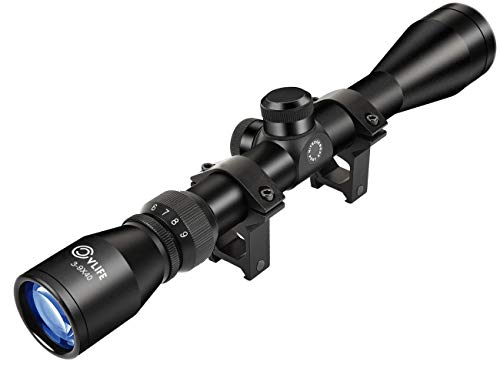
Specification: 3-9x40

True 1x With Zero Distortion: The Ronin delivers genuine 1x magnification with extra-low dispersion glass and fully multicoated lenses, so your sight picture stays sharp and color-true from edge to edge. Shoot both eyes open at close quarters for fast target transitions, then dial to 6x for precision at distance. A 3.5-inch eye relief keeps you comfortable through rapid follow-ups, whether you're running 3-gun stages, hunting, or tactical training drills

ONE SIZE FITS MOST - Featuring an extra-wide, flexible design, this rifle cover is sure to fit and store guns with large scopes, pistols grips, and other tactical accessories up to 47 inches in length. Wider and more flexible than most other gun socks on the market.
Caliber and Ammunition Variations
Understanding caliber and ammunition variations between carbines and rifles is essential because size alone does not tell the whole story. A carbine can use an intermediate rifle cartridge, a full-power rifle cartridge, or even a pistol cartridge. A rifle can also chamber many cartridges, from small rimfire rounds to powerful centerfire hunting rounds.
Carbines are commonly associated with intermediate calibers such as 5.56x45mm or 7.62x39mm, which are often discussed for short to medium-range use. Rifles often chamber larger calibers such as .308 Winchester or .30-06 Springfield, which may offer greater range and energy in suitable platforms.
Ammunition type, bullet weight, barrel length, and intended use all affect performance. A shorter barrel may reduce velocity compared with a longer barrel using the same cartridge. Heavier bullets may improve certain downrange performance traits but can also increase recoil. For safe and lawful use, choose ammunition that matches the firearm’s chamber marking and manufacturer guidance.
Note: Never assume two cartridges are interchangeable because their names look similar. Use only the exact ammunition marked for your firearm and confirmed in the owner’s manual.
Handling and Maneuverability
Handling is one of the biggest practical differences between a carbine and a rifle. A carbine’s shorter overall length can make it easier to move through narrow spaces, carry in a vehicle where legal, or manage during long training sessions. Its lighter weight may also reduce fatigue.
A full-length rifle usually feels steadier once mounted to the shoulder. The extra weight and length can help reduce muzzle movement, especially during slow, deliberate shots. That makes rifles a strong fit for hunting blinds, bench shooting, precision target work, and other settings where range and steadiness matter more than compact size.
Neither design is automatically “better.” A compact firearm can feel faster but may produce more muzzle blast or less velocity. A longer firearm may shoot more comfortably at distance but feel less convenient to carry. The right choice depends on lawful use, body size, training, terrain, and storage needs.
Accuracy, Range, and Barrel Length
Rifles often have an advantage when distance and precision matter. A longer barrel can provide a longer sight radius with iron sights and may allow more complete powder burn with some cartridges. That can increase velocity and help with predictable downrange performance.
Carbines can still be accurate within their intended ranges. In many real-world sporting and training settings, the shooter’s skill, optic quality, ammunition consistency, trigger control, and firearm fit matter as much as barrel length. A well-built carbine can perform very well at close to medium distances.
The main point is simple: carbines favor handiness, while rifles often favor steadiness and extended-range performance. When comparing two specific models, look at the barrel length, twist rate, caliber, optic setup, and the manufacturer’s intended use rather than relying only on the label.
Typical Uses of Carbines
Carbines are widely used because of their lightweight design, compact size, and versatility. In lawful civilian contexts, they may appear in target shooting, training classes, competition, ranch use, and some hunting roles where permitted. Professional users may choose carbines when portability and fast handling matter.
Military Applications
In various military operations, carbines serve as compact tools for trained personnel. Their size makes them useful in roles where a full-length rifle may be less practical. Common high-level military applications include:
- Close-quarters environments: Useful where compact handling matters.
- Vehicle operations: Easier to manage in confined spaces.
- Support roles: Carried by personnel who need a lighter firearm while performing other duties.
- Airborne or mobile deployments: Shorter size can support easier transport.
- Specialized missions: Used by trained teams when compact size and mobility are priorities.
These features help explain why carbines became common in modern professional settings. Their main advantage is not raw long-range performance, but a balance of portability, control, and adequate capability within the firearm’s intended role.
Law Enforcement Usage
Military personnel aren’t the only ones who benefit from the adaptability of carbines; law enforcement agencies may also use them in specific scenarios. Carbines can give trained officers more accuracy and control than a handgun in high-risk situations, while remaining easier to handle than a full-length rifle.
Their lightweight design can help in urban environments, building searches, and other settings where movement is restricted. Officers may deploy carbines during serious incidents, high-risk warrant services, or patrol situations where department policy allows it.
Carbines can also accept optics, lights, and sling systems that support identification and safer handling. These professional uses require strict policy, training, accountability, and legal oversight.
Recreational Shooting Events
While many enthusiasts appreciate the challenge of recreational shooting events, carbines stand out as a popular choice for their versatility and ease of use. Whether you’re an experienced shooter or a beginner under qualified supervision, carbines can offer several advantages:
- Speed: Quick handling and target acquisition in sport settings.
- Accuracy: Practical precision at short to medium distances.
- Adaptability: Compatibility with many lawful accessories and optics.
- Lightweight: Easier to carry during extended range sessions.
- Fun: Engaging for both competitive and casual target shooters.
These features contribute to carbines being used in events like 3-gun competitions, tactical-style sport shooting, and informal target practice. With proper safety habits and legal compliance, they can be useful tools for building marksmanship skills.
Typical Uses of Rifles
Rifles serve a variety of functions, ranging from sport shooting and hunting to professional applications in law enforcement and military operations. In sport shooting, you’ll find rifles used in precision target matches, smallbore competition, benchrest shooting, service rifle events, and three-gun matches.
For hunting, rifles are often preferred for their range and energy, allowing lawful hunters to take game efficiently when they follow ethical shot placement and local regulations. The rifle, cartridge, optic, and bullet type must match the game and terrain.
In law enforcement, rifles may give trained officers enhanced accuracy and controlled firepower in rare high-risk situations. Military operations use rifles because they can engage targets effectively at varying distances. Some households also consider rifles for lawful personal defense, though safe storage, training, and local laws are essential.
Advantages of Carbines
Carbines offer several advantages that make them a popular choice among shooters in various lawful contexts. Their compact design and lighter weight provide practical benefits, especially when portability matters.
- Maneuverability: Easier to handle in tight spaces compared with many full-length rifles.
- Reduced Recoil: Many carbine setups use lighter-recoiling cartridges, which may improve control.
- Versatility: Suitable for several lawful applications, from target shooting to some defensive or field roles.
- Rapid Handling: Shorter overall length can make the firearm quicker to bring into a safe shooting position.
- Customization: Many carbines allow lawful aftermarket modifications, such as optics, slings, and lights.
These strengths make carbines appealing when space, weight, and fast handling are priorities. The trade-off is that some carbines may give up velocity, sight radius, or long-range stability compared with a full-length rifle.
Advantages of Rifles
When comparing carbines to rifles, it’s clear that rifles bring their own set of advantages that suit specific needs and preferences. One major advantage is the longer barrel length, which may support improved accuracy, higher velocity, and a steadier sight picture.
This makes rifles useful for long-range target shooting, many hunting situations, and precision-focused applications. Rifles often feel more stable because of their longer profile and added weight. That extra steadiness can help when shooting from supported positions or when making careful shots at distance.
The availability of many calibers also allows you to choose rifles for different roles, from rimfire practice to centerfire hunting. In addition, rifles often support enhanced sighting options, such as magnified scopes designed for precise aiming. Overall, rifles excel when distance and accuracy are the priority.
Carbine vs. Rifle Comparison Table
The easiest way to compare a carbine and a rifle is to look at the practical trade-offs. Carbines focus on compact handling, while rifles usually focus on stability and longer-range performance.
| Feature | Carbine | Rifle |
| Length | Shorter and more compact | Longer and more stable |
| Weight | Usually lighter and easier to carry | Often heavier, which can aid steadiness |
| Best Strength | Handling and portability | Range and precision |
| Common Uses | Training, sport shooting, professional compact-use roles, some hunting | Hunting, target shooting, precision work, professional long-gun roles |
| Trade-Off | May give up velocity or long-range steadiness | Less compact and less convenient in tight spaces |
[Amazon Products Picked for You]

[ULTRA DURABLE] - Constructed With Heavy Duty Industrial 600D PVC Nylon

Used Book in Good Condition

Delivers impressive power from its short 11.75-inch barrel launching a 12 grain .22 caliber pellet at 700 fps
Legal and Safety Considerations
Legal definitions do not always match casual firearm terms. A firearm called a “carbine” by a manufacturer or shooter may still be treated as a rifle under the law. Barrel length, overall length, stock type, action type, and accessories can affect legal classification.
Before you buy, transport, modify, or use any firearm, confirm the current rules in your area. Laws may cover background checks, storage, transportation, hunting seasons, magazine capacity, restricted features, and minimum barrel or overall lengths.
Safe handling matters just as much as legal compliance. Treat every firearm as loaded, keep the muzzle pointed in a safe direction, keep your finger off the trigger until ready to shoot, and know your target and what is beyond it. Secure storage is also essential, especially around children, guests, or unauthorized users.
Pro Tip: If you are new to firearms, take a certified safety course before choosing between a carbine and a rifle. Proper training will teach safe handling, storage, range rules, and responsible decision-making.
How to Choose Between a Carbine and a Rifle
Choosing between a carbine and a rifle starts with your lawful purpose. If you need a compact firearm for range practice, training, or easier carrying, a carbine may make sense. If your priority is hunting, precision target shooting, or longer-range performance, a rifle may be the better fit.
Next, consider the environment. Tight spaces, long walks, vehicle transport where legal, and shorter-range shooting favor a compact platform. Open fields, bench shooting, and distance work favor a longer, steadier firearm.
Finally, think about training, recoil, ammunition cost, storage, and maintenance. A firearm that fits your body and skill level will usually serve you better than one chosen only for appearance or popularity. Whenever possible, get professional instruction and test different legal options at a supervised range before making a decision.
[Amazon Products Picked for You]

Last over 30 times longer than conventional plastic examples

Conclusion
In the world of firearms, choosing between a carbine and a rifle is like selecting the right tool for a specific job. Each serves a distinct purpose, shaped by length, weight, caliber, handling, and intended use.
Carbines offer agility and portability for close to medium-range roles, while rifles usually provide better steadiness and long-range accuracy. Understanding these differences helps you make a more informed, responsible decision.
Before choosing either platform, focus on safety, legal compliance, training, and realistic needs. The right firearm is not simply the shortest, longest, lightest, or most powerful option. It is the one that fits your lawful purpose, skill level, and responsibility as a safe owner or user.
