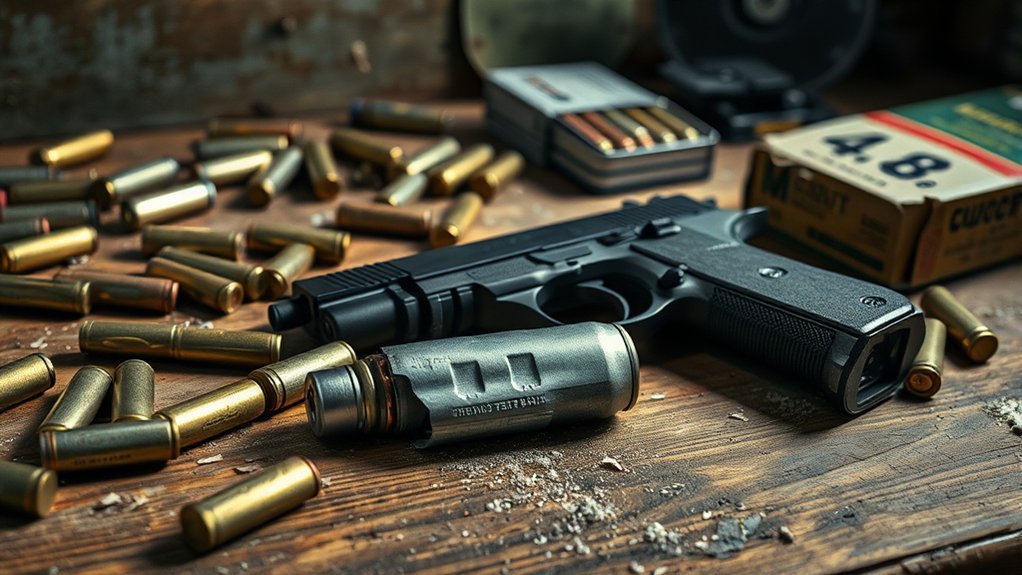
What is the worst ammo casing: brass, steel, or aluminum? Each material has weaknesses, but no single one is universally unreliable. Aluminum has limited reloading value, steel can present corrosion and extraction concerns, and brass generally offers a useful balance of durability and compatibility. Understanding these differences helps you assess ammunition without relying on misleading material rankings.
Quick Answer
There is no universally worst ammo casing. Aluminum is generally unsuitable for reloading, while steel needs protection against rust and may cause extraction problems in some firearms. Brass offers dependable chamber sealing and practical reusability. However, ammunition quality, firearm compatibility, physical condition, and proper storage matter more than case material alone.
Key Takeaways
- Brass cases are commonly reloadable when their condition and the manufacturer’s instructions permit it.
- Steel cases can work reliably in compatible firearms but are generally less convenient to reload.
- Factory aluminum-cased ammunition can be suitable for ordinary range use, despite its single-use design.
- Ammunition age alone cannot establish whether a cartridge remains safe.
- Corrosion, structural damage, and improper storage are warning signs regardless of casing material.
What Is the Worst Ammo Casing?
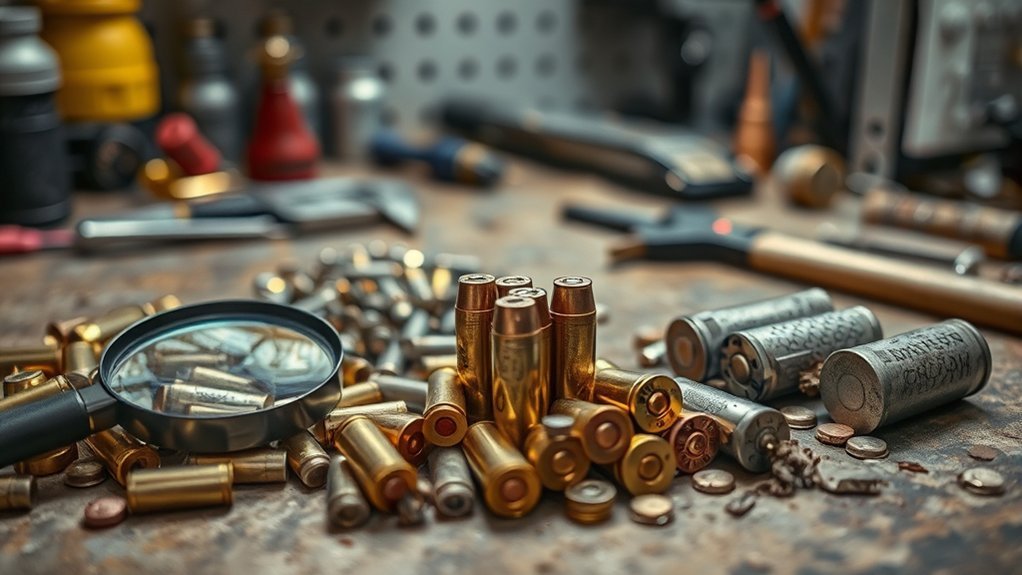
Aluminum-cased ammunition has clear limitations, particularly if you intend to reload spent cases. However, calling it the worst ammunition casing ignores its established use in factory-loaded handgun ammunition.
A cartridge case holds the ammunition components together and acts as a gas seal when the cartridge fires. The Sporting Arms and Ammunition Manufacturers’ Institute (SAAMI) identifies brass, steel, aluminum, copper, and plastic among the materials used for cartridge cases.
The material affects how a case expands, seals the chamber, and releases after firing. These properties influence extraction and case durability, but they do not determine ammunition quality by themselves.
Different materials have different practical limitations:
- Aluminum: Lightweight and economical, but generally unsuitable for reloading.
- Steel: Often economical, but susceptible to rust when protective coatings fail.
- Brass: Corrosion-resistant and commonly reloadable, although usually more expensive initially.
Ammunition that is damaged, incompatible with the firearm, or improperly manufactured is a more immediate concern than an undamaged factory cartridge’s case material.
How Ammo Case Materials Compare
Brass, steel, and aluminum differ in weight, corrosion behavior, flexibility, and reloading potential. Their real-world performance also depends on cartridge design, manufacturing quality, and the firearm.
The following comparison summarizes their common characteristics.
| Case material | Advantages | Limitations | Reloading |
|---|---|---|---|
| Brass | Good chamber sealing, corrosion resistance, and flexibility | Often costs more initially | Commonly reloadable |
| Steel | Economical and suitable for compatible firearms | Rust risk and possible extraction differences | Generally impractical |
| Aluminum | Lightweight, economical, and naturally corrosion-resistant | Limited reuse and different mechanical properties | Not recommended |
| Nickel-plated brass | Additional surface corrosion resistance | Additional manufacturing cost | Often possible if the case remains serviceable |
Brass Vs Steel
The main brass-versus-steel differences involve corrosion resistance, chamber sealing, extraction behavior, and reloading.
Brass expands under firing pressure to seal against the chamber wall. Its mechanical properties also allow the case to contract enough for extraction after pressure falls.
Steel behaves differently. Some steel-cased cartridges may not seal or extract as readily in certain firearms, although this does not mean steel-cased ammunition is inherently defective.
Steel also requires corrosion protection. Manufacturers commonly use protective coatings to reduce rust during storage and handling.
The American Rifleman explanation of cartridge-case materials describes the historical use of steel and the properties that make brass useful for sporting ammunition.
Brass is also more practical for conventional reloading. Steel cases are generally less convenient to resize, and some use primer systems that complicate reloading.
Aluminum Case Tradeoffs
Aluminum reduces cartridge weight and can lower manufacturing costs. Its main practical disadvantage is that aluminum ammunition cases are generally designed for one firing.
Modern aluminum ammunition should not be confused with early experimental case designs.
For example, the CCI ammunition catalog describes heat-treated aluminum cases in its Blazer product line.
These cartridges are manufactured as complete ammunition. Their suitability depends on the specific product and the firearm manufacturer’s instructions, not on a general assumption that aluminum always performs poorly.
Aluminum also differs from steel in hardness and corrosion behavior. It does not automatically cause greater firearm wear simply because its cases are not intended for reloading.
For shooters who collect spent cases, the lack of practical reloading value is a meaningful disadvantage.
Corrosion And Reliability
Corrosion resistance differs among casing materials, but aluminum is not inherently the most corrosion-prone option.
Aluminum develops a protective oxide layer that helps resist further corrosion in many environments. The University of North Texas explains this protective behavior in its aluminum corrosion research.
However, aluminum can still develop localized corrosion under unfavorable chemical conditions.
Brass also resists corrosion well, although prolonged moisture exposure can cause tarnish and surface deposits.
Steel is more vulnerable to ordinary rust when its protective coating is damaged.
Polymer and hybrid cartridge cases add another set of considerations. Their performance depends on the complete design, including how the case body and head are joined.
Material alone does not establish whether a stored cartridge remains safe or reliable.
Why Steel-Cased Ammo Can Cause Problems
Steel-cased ammunition can present extraction and corrosion concerns in some firearms. However, those problems are not universal, and properly manufactured steel cartridges can function reliably in compatible firearms.
Case coating, chamber condition, cartridge design, and manufacturing quality all influence the result.
Extraction And Chamber Wear
Steel cases have different expansion and contraction characteristics from brass. This can affect how easily a fired case releases from the chamber.
In some firearms, difficult extraction may place additional stress on the extractor. However, it is inaccurate to assume that steel cases automatically damage extractors or chambers.
The steel used in cartridge cases is not equivalent to the hardened steel used for many firearm components.
Another common misconception concerns ammunition coatings. Lacquer and polymer coatings primarily help protect steel cases from corrosion. Their presence does not, by itself, prove that a cartridge will become stuck in a hot chamber.
Barrel wear also requires a separate distinction: a steel cartridge case and a steel-containing bullet jacket are different components.
For that reason, wear observed with a particular ammunition product cannot automatically be attributed to its casing material.
If a firearm repeatedly experiences extraction failures, stop using the suspect ammunition and consult the firearm manufacturer’s guidance or a qualified gunsmith.
Corrosion And Storage Risks
Steel-cased ammunition needs protection from prolonged moisture exposure. Damaged coatings can expose the underlying metal to rust.
Storage conditions make a substantial difference.
| Condition | Likely effect |
|---|---|
| Humidity, poor sealing | Greater corrosion risk and possible deterioration |
| Controlled storage, inspections | Reduced moisture exposure and easier detection of damage |
Corrosion may interfere with chambering or extraction. Severe damage can also weaken the cartridge case.
Do not assume that a protective coating makes steel-cased ammunition waterproof.
Corrosive primers are a separate issue. Certain older primer formulations leave residues that promote rust in firearm components. The case material itself does not determine whether a cartridge uses corrosive priming.
When Aluminum-Cased Ammo Falls Short
Aluminum-cased ammunition has its clearest disadvantage in reloading. These cases are generally intended for single use rather than repeated resizing and firing.
The material’s lower weight can be useful, but it does not eliminate differences in strength, flexibility, and wear resistance.
Damaged aluminum cases may show dents, cracks, rim damage, or other deformation. Such damage matters because cartridge cases must maintain their dimensions and structural integrity.
High-pressure applications also require careful distinction. Conventional aluminum case designs have historically faced challenges in high-pressure rifle cartridges, although modern manufacturing has made aluminum cases practical in established handgun ammunition products.
A factory-loaded aluminum cartridge should therefore be assessed according to its intended cartridge specification and manufacturer guidance.
It is not accurate to assume that every aluminum cartridge has inadequate chamber sealing or inherently inconsistent accuracy.
Likewise, aluminum’s useful corrosion resistance does not guarantee that damaged or poorly stored ammunition remains safe.
Note: Follow the ammunition and firearm manufacturers’ instructions. If you encounter repeated feeding or extraction problems, have the firearm and ammunition compatibility assessed by a qualified gunsmith.
Why Brass-Cased Ammo Is Usually Best
Brass is widely used because it combines useful strength, flexibility, corrosion resistance, and practical reloadability.
When a cartridge fires, its case expands against the chamber wall. Brass has mechanical properties that support this temporary seal and allow extraction after chamber pressure falls.
This process is called obturation.
Brass also resists ordinary atmospheric corrosion without requiring the same protective coatings commonly found on steel cases.
Another advantage is reusability. Suitable brass cases can often be reloaded multiple times, although their service life depends on the cartridge, original manufacture, firing conditions, and case condition.
Reloadability should never be assumed from appearance alone.
Cracked cases, damaged primer pockets, and other structural defects can make a previously fired case unsuitable for further use.
Nickel-plated brass provides an additional surface finish. It can offer greater resistance to tarnish and surface corrosion while retaining the underlying characteristics of brass.
Despite these advantages, brass is not immune to damage, poor manufacturing, or improper storage. Its material properties cannot compensate for an unsafe cartridge.
Does Case Material Affect Ammo Shelf Life?
Yes, casing material affects corrosion behavior and structural durability. However, ammunition shelf life also depends heavily on temperature, moisture, packaging, primer condition, and propellant stability.
There is no reliable universal expiration period that applies to every brass, steel, or aluminum cartridge.
Claims that aluminum ammunition lasts only 5–10 years, while brass ammunition automatically remains safe for several decades, are too broad to establish safety.
Even corrosion-resistant cases cannot prevent damage if moisture or chemicals enter a cartridge.
SAAMI’s ammunition storage and handling recommendations explain that prolonged exposure to heat, humidity, water, and chemicals can alter ammunition performance.
Possible consequences include unreliable ignition, incomplete propellant burning, and changes in chamber pressure.
A cartridge’s appearance can reveal some problems, but it cannot prove that the primer and propellant remain chemically sound.
For old ammunition of uncertain origin, especially ammunition exposed to flooding or extreme heat, obtain appropriate professional guidance rather than relying on age or case color alone.
Which Ammo Case Handles Moisture Best?
A properly sealed ammunition storage container provides protection against moisture. Its gasket and overall condition matter more than whether the container is made from plastic or metal.
This distinction is important because an ammunition storage case is different from the metallic casing of an individual cartridge.
Both plastic and metal ammo cans can provide useful protection when designed for ammunition storage and maintained properly.
- Gasketed plastic cans: Lightweight and resistant to external rust, but their sealing performance depends on the lid and gasket.
- Gasketed metal cans: Durable and widely used, but their exterior and sealing surfaces require protection from corrosion.
- Protective inner packaging: Suitable bags and sealed packaging can provide another barrier against environmental moisture.
- Desiccant packets: These can help control residual moisture inside an appropriately sealed container.
Cardboard packaging offers limited protection against prolonged moisture exposure. However, the original factory box remains useful because it identifies the ammunition and its cartridge designation.
Keep that identification whenever possible.
Store ammunition in a cool, dry location away from solvents, excessive heat, and unauthorized access. Ammunition and firearms should also be stored securely and separately.
Vacuum sealing may provide an additional moisture barrier, but it is not a substitute for appropriate storage conditions or inspection.
How Ammo Cases Degrade Over Time
Cartridge cases can deteriorate through corrosion, chemical exposure, physical damage, and unfavorable storage conditions.
Brass may develop tarnish or green surface deposits. Steel can rust, particularly where its protective coating has failed. Aluminum may develop white corrosion products or localized pitting under adverse conditions.
These changes do not all carry the same meaning. Ordinary surface discoloration differs from deep corrosion, cracking, or visible material loss.
Temperature changes can also encourage condensation when ammunition moves between different environments.
Meanwhile, prolonged heat exposure may affect the propellant and primer even when the outside of a case looks normal.
This is why ammunition condition must be assessed as a complete cartridge rather than as an isolated piece of metal.
Regular visual inspection can reveal damage, but it cannot determine every form of internal deterioration.
Signs of Corroded or Unsafe Ammo Cases
Corrosion, cracks, significant deformation, and damaged primers are warning signs that ammunition may be unsafe.
Inspecting cartridges before use helps identify visible problems. However, do not attempt to prove a questionable cartridge safe by firing it.
Visible Corrosion Warning Signs
Visible corrosion deserves attention because it may indicate that the cartridge has experienced unfavorable environmental conditions.
Look for the following:
- Green deposits: Possible corrosion products on copper-containing case materials.
- White deposits: Possible corrosion on aluminum or other cartridge components.
- Rust: Corrosion affecting steel cases or exposed steel components.
- Deep pitting: Localized material loss that may weaken the case.
- Primer corrosion: A warning that the cartridge’s ignition components may have been affected.
Light surface tarnish alone does not establish that ammunition is internally damaged. However, it cannot establish safety either.
Severe corrosion, unknown contamination, or visible structural damage warrants rejection.
Do not attempt to restore questionable ammunition by polishing away corrosion or applying household chemicals.
Case Damage Red Flags
Structural defects can be more serious than ordinary discoloration. They may affect chambering, case integrity, or cartridge pressure.
Important warning signs include:
- Cracked case walls or necks.
- Bulged or visibly distorted cases.
- Deep dents or scratches.
- Loose or visibly displaced projectiles.
- Damaged or improperly seated primers.
- Unusual cartridge dimensions compared with an undamaged cartridge of the same type.
A projectile pushed deeper into its case can reduce internal volume and potentially increase chamber pressure.
SAAMI also warns that repeatedly chambering the same cartridge can cause physical damage or alter projectile seating.
Never force a cartridge into a chamber or fire ammunition that requires abnormal force to close the firearm’s action.
Warning: Do not chamber or fire ammunition with suspected structural damage. If a firearm malfunctions or a projectile may be lodged in the barrel, stop using it and seek qualified assistance.
When Old or Damaged Ammo Is Unsafe
Old ammunition becomes a safety concern when its condition or storage history is uncertain. Physical damage, chemical exposure, and prolonged heat can compromise performance.
Ammunition does not automatically become dangerous on a particular birthday. Conversely, relatively new ammunition can be unsafe after severe damage or improper storage.
Water exposure is especially important.
SAAMI’s guidance on submerged ammunition distinguishes brief exposure to rain from full submersion.
It advises against attempting to salvage previously submerged ammunition because hidden deterioration may affect the primer or propellant.
Potential consequences include failure to fire, incomplete ignition, or insufficient pressure to move the projectile through the barrel.
A projectile lodged in the bore creates a dangerous obstruction for any subsequent shot.
Do not attempt to dry submerged ammunition using direct heat.
Warning: Never burn, crush, dismantle, or fire damaged ammunition as a disposal method. Contact your local law enforcement agency, shooting facility, or appropriate hazardous-waste authority for disposal instructions that comply with applicable regulations.
Keep questionable ammunition separate from serviceable cartridges until an appropriate disposal arrangement is made.
Frequently Asked Questions
Which Ammo Brands Should I Avoid?
Avoid ammunition with an unknown origin, visible damage, incorrect cartridge designation, or an active safety recall. Brands such as Wolf, Tula, and Herter’s cannot be judged unsafe solely by their names or casing materials. Unknown remanufactured ammunition and unlabeled cartridges warrant particular caution because their manufacturing history and specifications may be difficult to establish.
How Long Can Ammo Be Stored in an Ammo Case?
Ammunition can remain serviceable for many years under suitable storage conditions, but no universal lifespan applies to every cartridge. Temperature, humidity, packaging, and manufacturing quality all matter. Store ammunition in its original packaging inside an appropriate container, and reject cartridges showing corrosion or physical damage.
What Ammo Round Has Killed the Most People?
No reliable global casualty dataset establishes which ammunition cartridge has caused the most deaths. The 7.62x39mm cartridge is associated with widely used AK-pattern firearms, but weapon prevalence alone cannot establish a global fatality ranking. Records from conflicts and criminal incidents are incomplete and rarely identify ammunition with enough consistency to support such a conclusion.
What Is the Hardest Ammo to Find?
Obsolete cartridges, uncommon specialty loads, and discontinued ammunition can be difficult to find because production is limited or no longer active. Military-surplus availability also varies. Scarcity depends on the specific cartridge, region, manufacturer, and supply conditions rather than casing material alone.
Conclusion
The worst ammo casing is not determined by material alone. Brass combines useful flexibility, corrosion resistance, and reloadability. Steel presents different extraction and storage considerations, while aluminum offers lightweight construction with limited reuse.
Whatever the case material, cartridge compatibility, manufacturing quality, storage history, and physical condition remain essential safety considerations. Never use damaged or questionable ammunition simply because its casing material has a reputation for reliability.
Sources
- SAAMI Glossary: Cartridge-case definitions, case function, and ammunition terminology.
- CCI Ammunition Catalog: Manufacturer information about Blazer aluminum and brass ammunition.
- American Rifleman — Back to Basics: Cartridge Cases: Cartridge materials, manufacturing considerations, and historical applications.
- University of North Texas — Aluminum Corrosion Research: Protective oxide formation and aluminum corrosion behavior.
- SAAMI — Recommendations for Safe Ammunition Storage and Handling: Storage conditions, inspection, cartridge compatibility, and safe handling.
- SAAMI — Guidance on Ammunition That Has Been Submerged in Water: Moisture exposure, hidden deterioration, and safe disposal.
