When a firearm is discharged, the projectile and propellant gases move forward while the firearm recoils rearward. Free recoil energy estimates the kinetic energy of that rearward firearm motion before the shooter and other factors that affect perceived recoil are considered. It gives you a consistent way to compare recoil in physics terms without confusing calculated recoil with what a person actually feels.
Last updated: September 11, 2026
Quick Answer
Free recoil energy is the calculated kinetic energy of a firearm moving backward after discharge when the firearm is treated as free to recoil. It is based mainly on the momentum of the projectile and propellant gases and the firearm’s mass. It is not the same as felt recoil, which also depends on firearm fit, action design, recoil pads, muzzle devices, and how the firearm is supported.
Key Takeaways
- Free recoil energy is a calculated physics value, not the same thing as felt recoil.
- Projectile mass, muzzle velocity, propellant-gas momentum, and firearm mass all affect calculated recoil.
- With the same ejecta momentum, a heavier firearm has lower recoil velocity and lower free recoil energy.
- Stock fit, action design, recoil pads, muzzle devices, and how the firearm is supported can change perceived recoil without being fully represented by a basic free-recoil number.
- Free recoil is most useful as a consistent comparison value rather than a perfect prediction of comfort.
| Question | Free Recoil | Felt Recoil |
|---|---|---|
| What is it? | A calculated physical quantity based on rearward firearm motion. | The recoil sensation experienced by the person firing the firearm. |
| Main inputs or influences | Projectile momentum, propellant-gas momentum, and firearm mass. | Free recoil plus fit, support, action design, recoil pads, muzzle devices, and recoil-force timing. |
| Typical units | Foot-pounds in U.S. customary usage or joules in SI. | Not represented completely by one universal subjective unit. |
| Best use | Consistent physics-based comparisons. | Describing real-world comfort and perception. |
Understanding Recoil and Its Importance
Understanding recoil matters in shooting sports, firearm selection, safety education, and basic ballistics. Recoil is the rearward motion of a firearm after discharge. As the projectile and propellant gases carry momentum forward, the firearm acquires momentum in the opposite direction.
That rearward motion can affect comfort and how easily a firearm can be controlled. However, a calculated recoil-energy number does not describe every part of the real-world recoil experience.
Free recoil energy gives you a standardized starting point for comparing firearm and ammunition combinations. Felt recoil adds factors such as firearm fit, the operating system, recoil pads, muzzle devices, and how the firearm is supported.
The Physics Behind Free Recoil Energy

Free recoil energy is best understood through conservation of momentum. When the projectile and propellant gases move forward, the firearm develops rearward momentum so that the momentum of the system remains balanced.
Newton’s third law provides a useful conceptual description of the opposing interaction, but conservation of momentum is the clearer basis for calculating free recoil.
The firearm does not receive kinetic energy equal to the projectile’s kinetic energy. Instead, the ejecta and firearm have opposite momentum, and the firearm’s mass and resulting recoil velocity determine its rearward kinetic energy.
For the same forward ejecta momentum, a heavier firearm moves rearward more slowly and has less calculated free recoil energy.
Calculating Free Recoil Energy
To calculate free recoil energy, first estimate the firearm’s rearward momentum from the forward momentum of the projectile and propellant gases. The firearm’s recoil velocity can then be used to determine its kinetic energy.
In a consistent unit system, the relationship can be written as:
Free recoil energy = recoil momentum² ÷ (2 × firearm mass)
A simplified momentum relationship is:
Recoil momentum ≈ projectile momentum + propellant-gas momentum
Or, in symbolic form:
pr ≈ (mb × vb) + (mg × vg)
The propellant-gas term requires an approximation because the gases leaving the muzzle are more difficult to characterize than the projectile. Different published methods can therefore produce somewhat different estimates.
Unit consistency is essential. If projectile and powder weights are listed in grains while firearm weight is listed in pounds, you cannot simply insert those raw numbers into a mass-based kinetic-energy equation without the required conversions. In U.S. customary calculations, free recoil energy is commonly reported in foot-pounds; SI calculations report energy in joules.
For an authoritative treatment of the calculation and its assumptions, see the SAAMI recoil guidance.
Note: Free recoil is a model for comparison. The basic calculation does not fully represent perceived recoil or every effect of firearm fit, action design, recoil pads, muzzle devices, or how the firearm is supported.
Factors Influencing Recoil Energy
The factors that determine calculated free recoil energy should be separated from factors that mainly change felt recoil. This distinction prevents a common mistake: assuming that anything making recoil feel different must also change the basic free-recoil calculation.
Projectile and propellant-gas momentum determine the rearward momentum in the basic model, while firearm mass determines how that momentum translates into recoil velocity and energy.
- Projectile Mass: With other conditions held similar, more projectile mass generally means more forward momentum and therefore more rearward momentum.
- Projectile Velocity: Increasing muzzle velocity increases projectile momentum when projectile mass stays the same.
- Powder Charge and Propellant Gases: Propellant gases leave the muzzle with momentum and therefore contribute to recoil calculations.
- Firearm Mass: With the same ejecta momentum, greater firearm mass produces lower recoil velocity and lower free recoil energy.
- Stock Fit: This mainly changes how recoil is transferred to and perceived by the shooter rather than the baseline free-recoil calculation.
- Action Type: Different operating systems can change the timing and perception of recoil even when a simple free-recoil estimate is similar.
- Muzzle Devices: Devices that redirect propellant gases can change actual recoil behavior, while a basic free-recoil calculation normally represents an unmodified baseline unless the model specifically accounts for that gas redirection.
Measuring Recoil in Different Firearms
When comparing recoil among firearms, caliber alone is not enough. Two firearms using the same cartridge can have different calculated or perceived recoil because firearm mass, configuration, fit, and operating system differ.
For a physics-based comparison, use the same calculation method and consistent input units for each setup. Changing the assumptions between calculations makes the resulting numbers less meaningful.
Perceived recoil requires additional information. Stock dimensions, contact area, action behavior, recoil-force timing, and other design factors can change how the same general recoil event feels.
Engineers can measure recoil using instrumented fixtures, force sensors, accelerometers, and high-speed recording. For ordinary comparisons, free recoil energy is best treated as a standardized estimate rather than a complete measurement of human recoil perception.
The Role of Weight and Velocity
Firearm mass and projectile velocity influence recoil in different ways. Projectile velocity contributes to forward momentum, while firearm mass determines how much rearward velocity results from a given recoil momentum. Keeping these roles separate makes recoil comparisons easier to understand.
Impact of Weight
With the same projectile and propellant-gas momentum, increasing firearm mass lowers recoil velocity. Because free recoil energy is the kinetic energy associated with that rearward motion, calculated recoil energy also falls as firearm mass increases.
- A heavier firearm has lower recoil velocity than a lighter firearm when the recoil momentum is otherwise the same.
- A lighter firearm has higher recoil velocity under those same conditions.
- Projectile mass affects ejecta momentum and therefore cannot be evaluated independently of velocity.
- Firearm mass affects calculated free recoil, while dimensions and fit can independently affect perceived recoil.
Influence of Velocity
For a fixed projectile mass, increasing muzzle velocity increases the projectile’s forward momentum. In the free-recoil model, this requires a corresponding increase in rearward firearm momentum when the other contributors are unchanged.
The important distinction is that projectile kinetic energy is not simply transferred backward to become firearm recoil energy. Recoil energy is calculated from the firearm’s own recoil velocity and mass after momentum is accounted for.
This is why projectile mass and velocity should be considered together. Two projectiles can have similar muzzle-energy figures yet produce different recoil momentum, especially once propellant-gas momentum and firearm mass are included.
Free Recoil vs. Felt Recoil
Free recoil and felt recoil describe related but different things. Free recoil is the calculated rearward kinetic energy of the firearm when it is modeled as free to move. Felt recoil is the physical sensation experienced when that recoil is transferred through the firearm to the shooter.
Two setups with similar calculated free recoil can therefore feel different. Stock dimensions, recoil pads, action design, contact area, recoil-force timing, and how the firearm is supported can alter perceived recoil.
This is why free recoil energy works well for consistent physics comparisons but should not be treated as a universal comfort rating.
Impact on Shooting Performance
Recoil can influence comfort, concentration, and the ability to maintain consistent control during repeated firing. Higher perceived recoil can also contribute to fatigue or anticipation of the recoil event.
- Flinching: Anticipation of an uncomfortable recoil impulse can interfere with consistent handling.
- Fatigue: Repeated exposure to uncomfortable recoil can make longer range sessions physically tiring.
- Consistency: Large variations in how a firearm is supported can make the recoil experience less repeatable.
- Recovery: Greater firearm movement can require more time for the firearm and shooter to settle after discharge.
- Comfort: A setup that is uncomfortable can make productive supervised practice harder to sustain.
Warning: Do not alter a firearm or use ammunition outside the firearm manufacturer’s specifications in an attempt to change recoil. Follow the owner’s manual and use qualified professional support when a firearm, ammunition choice, or modification requires evaluation.
Managing Recoil Safely and Comfortably
Free recoil calculations are best used to understand and compare recoil rather than as instructions for modifying a firearm or changing firing technique. If recoil causes pain, loss of safe control, or significant discomfort, stop and have the firearm and its fit evaluated appropriately.
Manufacturer-approved recoil pads and differences in stock fit can change how recoil feels without necessarily changing the basic free-recoil energy calculated for the firearm. Action design can also change the timing of recoil transfer.
Any firearm modification or muzzle-device change should be compatible with the firearm and handled according to manufacturer guidance or by a qualified professional. A calculated recoil number by itself cannot establish whether a modification is safe or appropriate.
For technique-related concerns, supervised instruction from a qualified instructor is more appropriate than trying to infer handling changes from a recoil-energy formula.
Safety Tip: If recoil causes pain or makes it difficult to maintain safe control, stop shooting and have the setup evaluated before continuing.
[Amazon Products Picked for You]

Grind-to-fit recoil pad for a customized fit on standard stocks
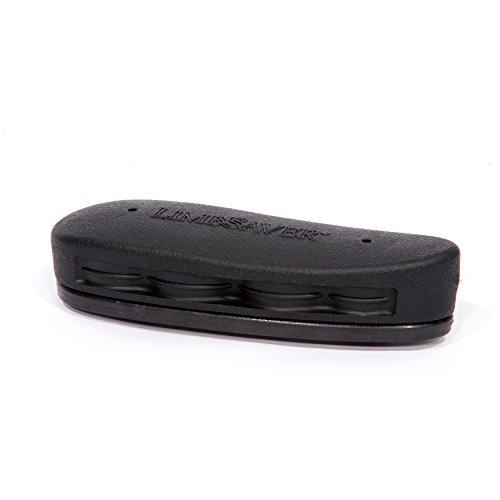
Model 10806 -- Fits select Remington, Mossberg, and Marlin models measuring 4.7 x 1.6 inches (see product description for details before ordering)

Gel filled material reduces up to 70% of recoil felt. Fits most rifles and shotguns. Greatly improves shooting comfort and accuracy
Free Recoil Energy in Firearm Design
Free recoil energy is one of several quantities engineers can consider when evaluating firearm behavior. The calculated value provides a common physical baseline, while design details determine how the resulting recoil event is transferred through the firearm.
Free recoil provides a repeatable physics baseline; firearm design determines much of how that recoil is distributed and perceived.
- Weight Distribution: Total firearm mass affects recoil velocity, while weight distribution can affect balance and handling.
- Barrel Length: Barrel length can influence firearm mass, balance, projectile velocity, and propellant-gas conditions, so its net effect cannot be reduced to one simple recoil rule.
- Stock Design: Stock dimensions and contact geometry affect how recoil forces are transferred to the shooter.
- Recoil Pads: Pads can change contact pressure and recoil-force timing without necessarily changing the baseline free-recoil energy.
- Operating System: The action can change the timing of recoil transfer and therefore perceived recoil.
- Muzzle Devices: Devices that redirect gases can alter actual recoil behavior and may also change blast characteristics; they are not fully represented by a basic free-recoil calculation unless the calculation specifically models them.
[Amazon Products Picked for You]

Slip-on recoil pad for most rifles, shotguns and muzzleloaders

Silicone Butt Pad for Stock: TOURBON buttstock pad made from silicone, a replacement recoil pad for rifle shotgun
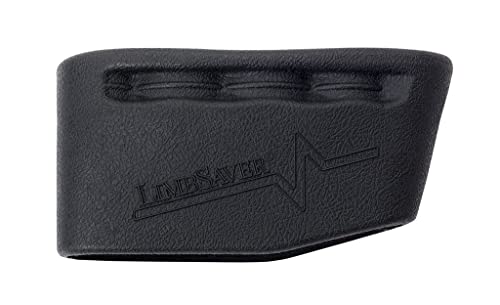
Slips over existing stock without any modifications
Practical Applications for Shooters
Understanding free recoil energy is most useful when you need a consistent way to compare published firearm-and-ammunition combinations. It helps separate the underlying physics from subjective descriptions such as “soft,” “sharp,” or “heavy” recoil.
For example, if ejecta momentum stays the same while firearm mass increases, recoil velocity decreases and calculated free recoil energy decreases. That relationship is useful because it explains why firearm mass matters without assuming that the perceived recoil experience can be predicted from one number alone.
The reverse lesson is equally important: two setups with similar free-recoil energy do not have to feel identical. Fit, action design, recoil-force timing, contact area, and other factors can change perceived recoil.
Use recoil-energy figures as comparison data, not as a substitute for manufacturer guidance, safe handling practices, or direct evaluation of comfort.
[Amazon Products Picked for You]

MEDIUM RECOIL PAD: Sized to comfortably fit on various medium-sized firearms.

Comfortable - Our recoil pads for rifles and shotguns contain hyper-absorbent Visco-Elastic gel to help reduce risk of injury or pain associated with gun recoil and shock

Comfortable - Our recoil pads contain hyper-absorbent Visco-Elastic gel to help reduce risk of injury or pain associated with recoil and shock.
Common Mistakes When Thinking About Recoil
One common mistake is comparing recoil using caliber alone. Caliber primarily describes projectile diameter; it does not by itself tell you projectile mass, muzzle velocity, propellant-gas contribution, firearm mass, or perceived recoil.
Another mistake is confusing projectile muzzle energy with firearm recoil energy. Muzzle energy describes the projectile’s forward kinetic energy. Free recoil energy describes the firearm’s rearward kinetic energy under a recoil model. They are related through the firing event but are not equal quantities.
It is also incorrect to assume that a particular free-recoil number tells you exactly how recoil will feel. Perceived recoil depends on factors that a basic free-recoil calculation does not fully capture.
Frequently Asked Questions
What is free recoil energy?
Free recoil energy is the calculated kinetic energy of a firearm moving rearward after discharge when the firearm is modeled as free to recoil. It is determined from recoil momentum and firearm mass and is commonly expressed in foot-pounds or joules.
Is free recoil the same as felt recoil?
No. Free recoil is a calculated physics value. Felt recoil is the recoil sensation experienced by a person and is also affected by firearm fit, action design, recoil pads, muzzle devices, support, and the timing of the recoil force.
Why does firearm weight affect free recoil?
For the same recoil momentum, a firearm with greater mass moves rearward more slowly. That lower recoil velocity produces less calculated free recoil energy.
Why do propellant gases matter in recoil calculations?
The gases produced by the propellant leave the firearm with forward momentum, so their contribution must be considered along with projectile momentum. Published calculation methods estimate this gas contribution because it is harder to characterize directly.
Is recoil energy the same as bullet muzzle energy?
No. Bullet muzzle energy is the forward kinetic energy of the projectile. Free recoil energy is the rearward kinetic energy of the firearm calculated from the recoil event. The two should not be treated as equal.
Conclusion
Free recoil energy is a physics-based comparison value built from momentum and firearm mass. Projectile mass, muzzle velocity, propellant-gas momentum, and firearm mass determine the basic calculation, while firearm fit and design can change how that recoil is actually perceived.
The key distinction is simple: free recoil tells you what the model calculates; felt recoil tells you what a person experiences. Use the calculated number to make consistent comparisons, then rely on manufacturer guidance, safe handling practices, and qualified instruction when evaluating real-world comfort or firearm suitability.
