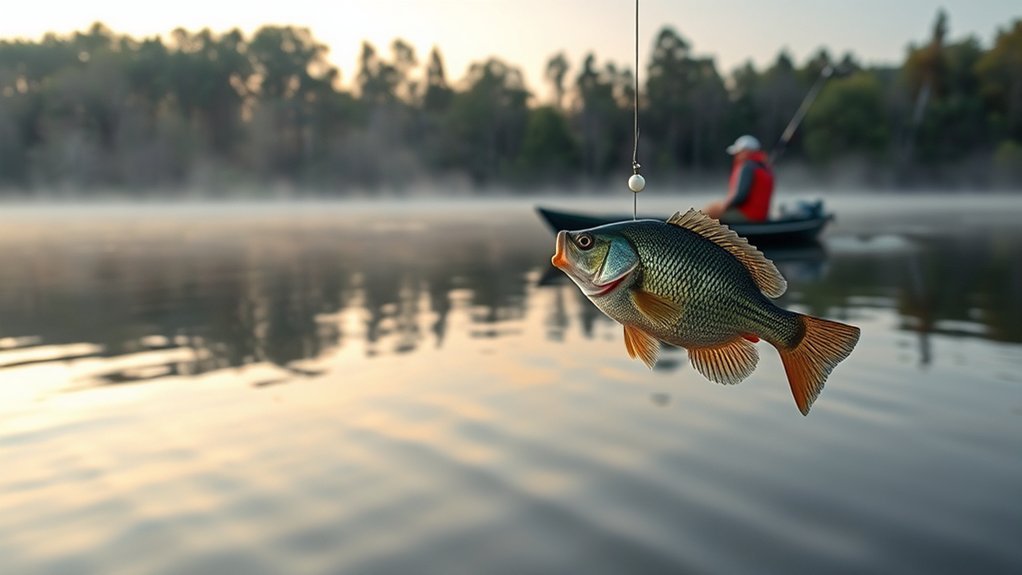
Picture yourself on a calm freshwater lake, the sun glistening off the water as you cast near a brush pile and wait for that soft, telltale tap. Crappie fishing is one of the most beginner-friendly ways to enjoy freshwater angling because crappies often school together, bite on simple bait, and live in many lakes, ponds, reservoirs, and slow rivers. Once you understand how to identify them, where they hold, what bait to use, and how their behavior changes by season, you can fish with more confidence and a better chance of landing your first catch.
Quick Answer
To fish for crappie as a beginner, use a light spinning rod, 4- to 8-pound monofilament line, small hooks, live minnows, or 1/32- to 1/8-ounce jigs. Target brush piles, fallen trees, docks, weed edges, and drop-offs. Fish shallow in spring, deeper in summer and winter, and stay near the school once you catch one.
Key Takeaways
- Crappies are schooling freshwater fish, so one bite often means more fish are nearby.
- Black crappie usually have 7 to 8 dorsal fin spines and irregular dark spots, while white crappie usually have 6 dorsal fin spines and vertical bar-like markings.
- The best beginner baits are small live minnows, soft plastic jigs, tube jigs, twister tails, and Beetle Spin-style lures.
- Spring crappie often move shallow to spawn, while summer and winter fish commonly hold deeper around structure.
- Light tackle helps you feel subtle bites because crappie have delicate mouths and can strike softly.
At a Glance
| Time Required | 1 to 4 hours for a typical beginner trip |
| Difficulty | Beginner-friendly |
| Tools Needed | Light spinning rod, small spinning reel, 4- to 8-pound line, hooks, bobbers, minnows, jigs, pliers, and a measuring tool |
| Cost | Low to moderate, depending on your rod, reel, bait, and local license requirements |
What Are Crappie Fish?
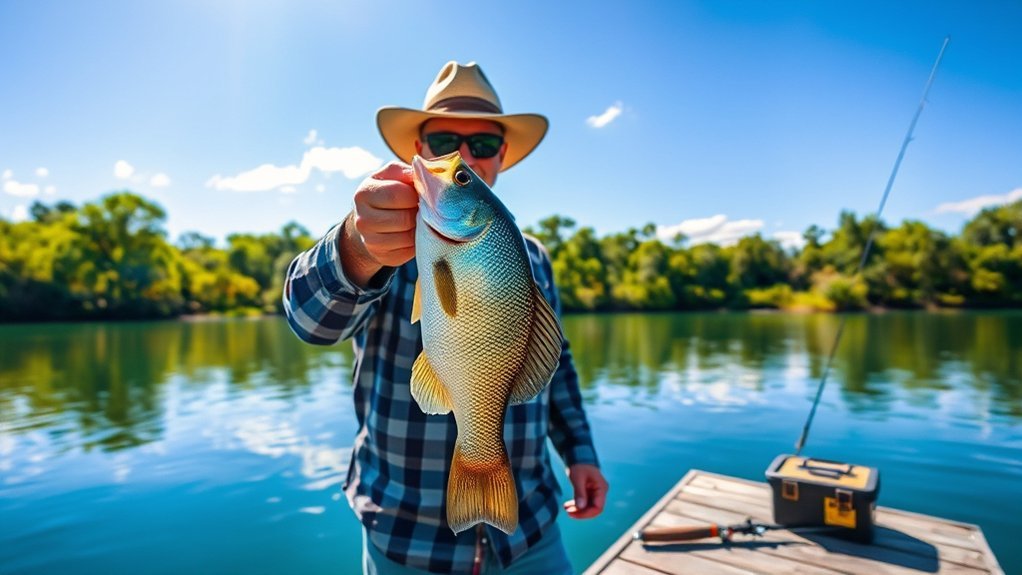
Crappie fish, often called papermouths or speckled bass, are popular freshwater panfish across the United States. They belong to the Centrarchidae family, the same broader sunfish family that includes bass and bluegill. Anglers target crappie because they are fun to catch, good table fish where harvest is legal, and active around easy-to-spot cover.
Most crappies you catch will be modest in size, but larger fish can grow well beyond the common four- to eight-inch range in productive waters. The two main species are black crappie and white crappie. You can often tell them apart by dorsal fin spines and body markings. Black crappies commonly have seven to eight dorsal fin spines and scattered dark spots, while white crappies commonly have six dorsal fin spines and darker vertical bars.
Crappies are known for their social nature. They often school together, which means your first bite can lead to several more if you stay in the same area and keep your bait at the right depth. During the spawning season, which often begins in spring when water temperatures rise into the upper 50s and 60s, crappies move toward shallow waters near wood, grass, docks, and firm-bottom areas. Learning these basics makes your crappie fishing experience easier, safer, and more rewarding.
Note: Local size limits, creel limits, seasons, and bait rules vary by state and sometimes by waterbody. Check your local fishing regulations before you keep fish.
Identification of Crappie Species
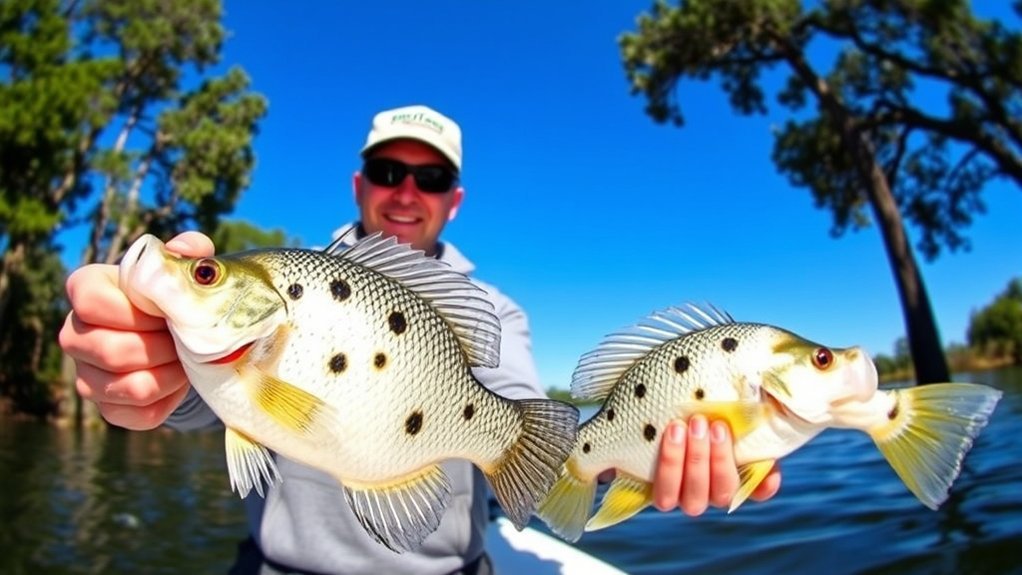
When you’re out on the water, recognizing the differences between black and white crappies can improve your fishing decisions. These two species are both laterally compressed and deep-bodied, but they have traits that help you identify which fish you are targeting.
| Feature | Black Crappie | White Crappie |
|---|---|---|
| Dorsal Fin Spines | 7 to 8 spines | 6 spines |
| Body Markings | Irregular dark spots | Vertical banded dark spots |
| Color | Silvery olive to bronze | Silvery olive to bronze |
| Habitat Preferences | Cooler, clearer waters with vegetation | Warmer, turbid waters |
| Average Length | 4-8 inches; can exceed 19 inches | 4-8 inches; can exceed 19 inches |
Familiarizing yourself with these characteristics will make it easier to identify which crappie you’re targeting. If you are not sure, count the dorsal fin spines carefully and look at the pattern of the dark markings instead of relying on color alone. Water clarity, age, and lighting can make both species look similar at first glance.
Preferred Habitat for Crappie
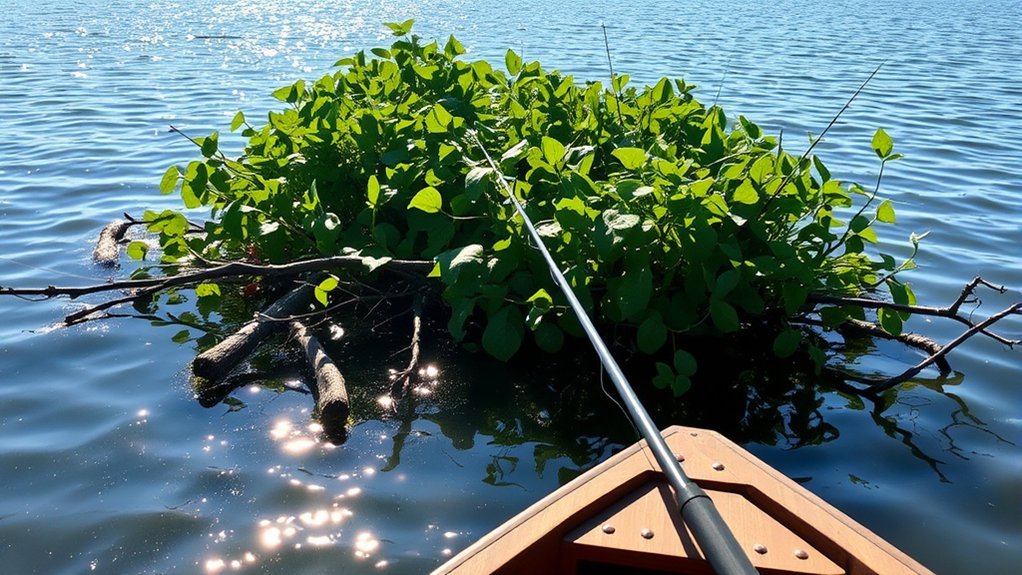
Understanding where crappies like to hold is key to your fishing success. The preferred habitat for crappie includes structures like brush piles, fallen trees, standing timber, weed edges, docks, bridge pilings, and rocky drop-offs. These places provide cover, shade, ambush points, and nearby food.
Black crappies typically prefer cooler, deeper, and clearer waters with more vegetation. White crappies often tolerate warmer, murkier waters with sand or mud bottoms. During the spawning season, you’ll often find crappies in shallow areas around grass edges, stumps, wood cover, and protected banks at depths of 2 to 12 feet. The exact depth depends on water clarity, weather, fishing pressure, and the type of lake or pond you fish.
Pay attention to seasonal movements. Crappies often move deeper during hot summer periods and may hold near deeper structures in winter. In spring, they push shallower as water warms. In fall, they may chase baitfish across mixed depths. By targeting the right habitat for the season, you’ll increase your chances of a successful catch.
Pro Tip: When you catch one crappie, do not leave immediately. Mark the spot mentally, cast back to the same depth, and work the area slowly because the fish may be grouped tightly around cover.
Crappie Grouping Behavior
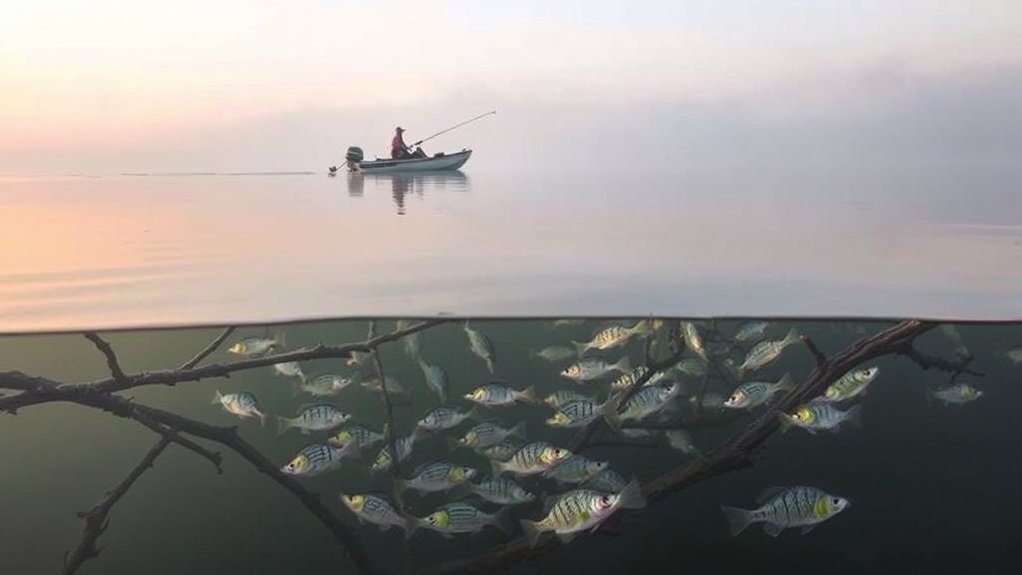
While fishing for crappies, you’ll quickly notice their social nature, as these fish often gather in schools. This grouping behavior makes it easier for crappie anglers to catch multiple fish when one is hooked. Typically, you’ll find crappies around structures like tree limbs, brush piles, docks, and submerged cover, especially during early morning and evening hours when light is lower and fish feed more actively.
| Season | Location | Behavior |
|---|---|---|
| Spring | Shallow waters | Spawning, aggressive |
| Summer | Deeper water | Seeking cooler temps |
| Fall | Mixed depths | Foraging in schools |
| Winter | Deeper structures | Active, grouped |
Understanding this behavior can greatly improve your fishing success. Watch the water temperature, baitfish activity, cover type, and depth. Crappie schools may shift during the day, especially after bright sun, wind changes, or fishing pressure. If the bite slows, adjust your depth before you move to a new area.
Effective Crappie Bait and Lures
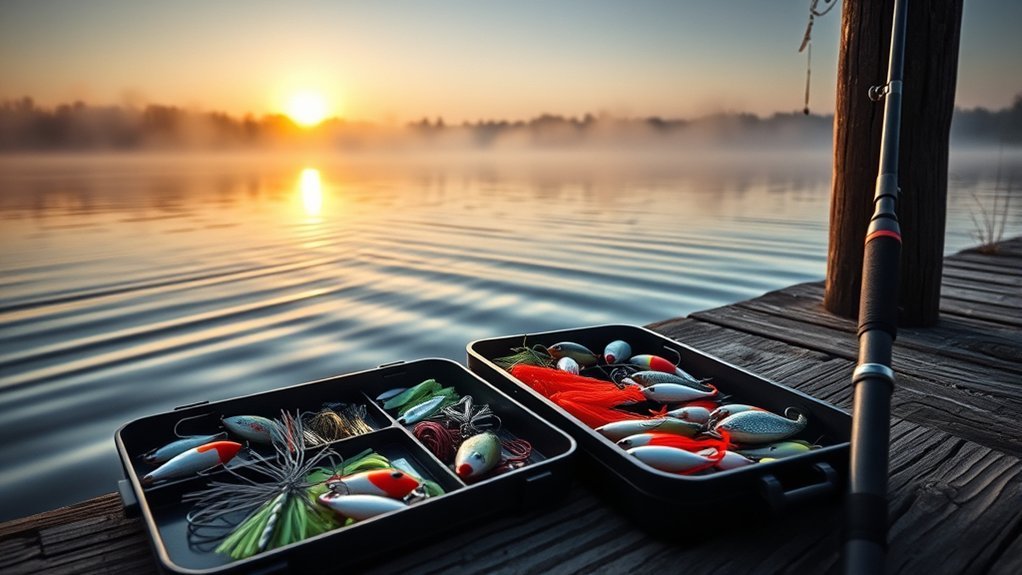
When it comes to crappie fishing, choosing the right bait or lure can make all the difference. Live minnows are often one of the easiest choices for beginners because crappie naturally feed on small baitfish. Still, artificial lures can work extremely well when you match size, color, depth, and retrieve speed to the conditions.
[Amazon Products Picked for You]

【50-Piece Complete Kit】: Includes 50 soft plastic crappie lures, 7cm/2.75in in size. This all-in-one set covers crappie baits and supports long-term crappie fishing, with ample quantity for multiple freshwater and saltwater trips

Pack of 12 jig lures.
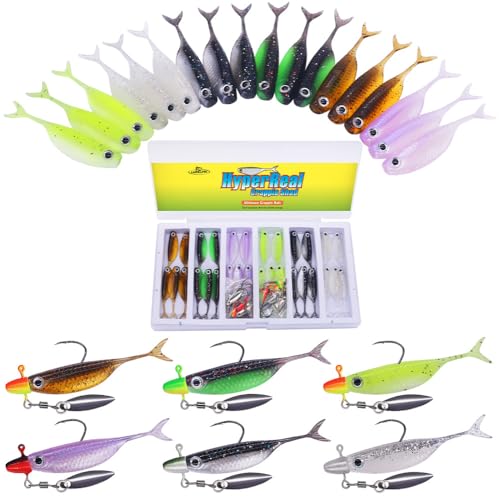
Ultra-Realistic Shad Body with 3D Eyes & Lifelike Scales: Designed with a natural shad profile, this crappie lure features detailed scale textures and large 3D eyes that create a realistic baitfish look. The soft body shape produces a subtle rolling motion that triggers instinctive strikes from crappie and panfish.
Live Bait Options
If you’re looking to improve your crappie fishing success, live bait options can make a big difference. Small live minnows are often considered one of the best bait choices for crappie, especially when fished near structures and schools. You can also try crickets, mealworms, or freshwater shrimp in waters where those baits are legal and common, but minnows usually produce the most consistent results.
When using live bait, choose a number-six hook for many beginner rigs. This size is small enough for crappie but strong enough to handle a good fish. Hook the minnow through the lips, back, or tail depending on how lively you want it to swim. Pair the bait with a small bobber so you can suspend it above brush, weeds, or drop-offs without snagging as often.
While you’re at it, consider pairing your live bait approach with crappie jigs ranging from 1/32 to 1/8 ounce in simple colors like black, white, chartreuse, or red/white. Carrying both live bait and jigs gives you options when crappie ignore one presentation.
Artificial Lure Effectiveness
Have you ever wondered how effective artificial lures can be for crappie fishing? Small jigs, especially 2-inch tube jigs with jig heads ranging from 1/8th to 1/64th ounce, are among the best crappie baits. They work in many water conditions because you can fish them under a bobber, cast and retrieve them, vertically jig them, or slowly troll them.
Popular color choices like red/white, chartreuse, black/chartreuse, pink, and blue/white can attract crappies in both clear and murky waters. In clearer water, natural colors can work well. In stained or muddy water, brighter colors may help fish find your lure. Don’t overlook small twister-tail lures and Beetle Spins, as their motion creates vibration and flash that crappies often notice.
If you prefer using live bait, try pairing shad darts or bucktails with minnows for a more active presentation. When you’re using crankbaits, stick with visible colors like fire craw, pink, or chartreuse patterns around brush, rock piles, and ledges. Keep your retrieve slow because crappie often prefer a smaller, easier meal.
Essential Fishing Gear for Crappie
To successfully reel in crappies, you’ll need a few essential pieces of gear that improve your control, sensitivity, and comfort. Crappie do not require heavy tackle. In fact, lighter gear usually works better because their bites can be soft and their mouths can tear if you set the hook too hard.
- Spinning Rod: Choose a limber rod between 5 to 7 feet for better sensitivity and control.
- Spinning Reel: Opt for one in the 500- to 1000-sized range for smooth drag and line capacity.
- Monofilament Line: A 4- to 8-pound line works best, as it’s less visible underwater and can handle crappie’s delicate bites.
- Bobber Rig: Small bobbers are effective for keeping your live bait suspended at the perfect depth.
With the right gear, you’re well on your way to successful crappie fishing. Remember to select hook sizes ranging from 6 to 2 for your live bait, like minnows, to maximize your chances. You should also carry needle-nose pliers, a small tackle box, split shot weights, a measuring board, sunscreen, drinking water, and your fishing license where required.
Warning: Crappie have thin mouths, so avoid hard hooksets and excessive pressure. Use a smooth drag, lift steadily, and handle fish gently if you plan to release them.
[Amazon Products Picked for You]

Fast Action: The 6-foot 6-inch, 2-piece spinning fishing rod features Light power and Fast action, making it an ideal crappie rod. Its graphite blank is durable and sensitive
Fast Action: The 4-foot 6-inch, 2-piece spinning fishing rod features Light power and Fast action, making it an ideal crappie rod. Its graphite blank is durable and sensitive
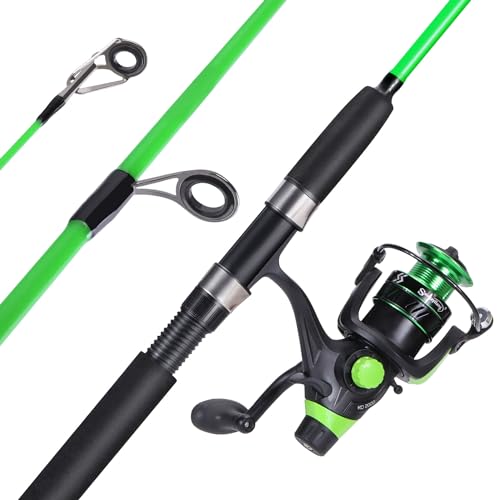
Sensitive & Strong – The spinning rods constructed from Composite Graphite and Glass Blanks which are designed for unbelievable toughness and durability.It allows you cast heavy lures or rigs a long way and master big fish, like catfish and salmon.
Basic Crappie Rigs for Beginners
Simple rigs catch plenty of crappie. You do not need a complicated setup to get started. The best beginner rig depends on whether you are fishing live bait, casting jigs, or fishing vertically near cover.
- Bobber and minnow rig: Tie on a small hook, add a split shot 6 to 12 inches above it, and clip a bobber above the weight. Adjust the bobber until your minnow hangs just above the cover or bottom.
- Jig under a bobber: Tie on a small jig and place a float above it. This works well around shallow brush, docks, weed edges, and spawning banks.
- Vertical jig rig: Drop a small jig straight down near brush piles, bridge pilings, or deeper structure. Lift and lower the rod tip slowly.
- Slow trolling setup: Pull small jigs or minnows at a slow speed along drop-offs, creek channels, or open-water schools.
Start with one or two basic rigs and learn them well. Once you can control depth and detect bites, you can experiment with more advanced techniques.
[Amazon Products Picked for You]

EXCEPTIONAL UNDERSPIN: The Strike King Mr. Crappie Sausage Head Spin features a 3/4-inch hammered willow leaf blade that glimmers and creates a commotion when retrieved, attracting fish and causing reaction strikes. Each pack includes 2 lures

Soft plastic solid body with thin dancing tail for enticing crappie, panfish, bass, trout, perch and more

HIGH DENSITY MATERIAL: Peg Floats are mainly made of high-density foam material, which is lightweight, durable and unbreakable, and also provides optimal buoyancy.
How to Find Crappie From the Bank
You can catch crappie without a boat if you choose the right shoreline spots. Look for public piers, riprap banks, bridge crossings, marina edges where fishing is allowed, brush near shore, laydowns, and shallow coves. Spring is often the easiest season for bank anglers because crappie move closer to shore to spawn.
Cast parallel to cover instead of only casting straight out. This keeps your bait in the strike zone longer. A slip bobber can help you fish deeper water from shore, while a fixed bobber works well in shallow water. If you catch one fish, make several more casts to the same area before moving.
Best Times to Fish for Crappie
Crappie can bite at many times of day, but low-light periods often produce better action. Early morning and late evening are reliable because fish may move shallower and feed more actively. Cloudy days can also extend the bite by reducing harsh light.
Spring is one of the most popular seasons because spawning fish move into reachable areas. Summer can still be productive, but you may need to fish deeper brush, shaded docks, or open-water schools. Fall fishing can improve as crappie follow baitfish. Winter crappie can remain catchable if you slow down and target deeper structure.
Seasonal Crappie Fishing Strategies
When it comes to catching crappie, your approach should change with the seasons. In spring, focus on shallow cover where crappies spawn, while summer calls for targeting deeper waters. As temperatures drop in winter, switch to vertical jigging and slower presentations to stay close to fish that hold near structure.
Spring Fishing Techniques
As spring unfolds and water temperatures climb into the high 50s and 60s, crappie begin their spawning ritual, making this an excellent time for anglers to gear up. To catch crappie effectively this season, focus on these strategies:
- Fish near structures like fallen trees, brush piles, docks, grass edges, and rocky banks.
- Pay attention to water clarity; fish may spawn deeper in clear water and shallower in murky conditions.
- Target low-light periods, such as early morning or late evening, when crappies are often more active.
- Use light tackle with small live minnows or jigs in popular colors like chartreuse, pink, black/chartreuse, or red/white.
These fishing tips will improve your chances of landing spring crappie and help you understand how fish position around cover. Move quietly in shallow areas because spawning fish can spook in clear water.
Summer Depth Strategies
With spring’s warmth fading, crappie fishing shifts into a different gear, requiring anglers to adapt to the summer months. During this season, black crappie often retreat to deeper waters, commonly between 10 and 20 feet, seeking cooler temperatures and comfortable oxygen levels. Focus on mid-depth structures like submerged brush piles, standing timber, ledges, and drop-offs.
| Structure Type | Best Techniques | Water Clarity Effect |
|---|---|---|
| Submerged Brush Piles | Jigs or live bait | Shallow in murky water |
| Drop-Offs | Slow trolling with jigs | Deeper in clearer water |
| Underwater Ledges | Crankbaits in loud colors | Varies with light conditions |
| Open Water | Trolling for schools | Follow depth changes |
| Crappie Schools | Active searching | Use sonar for location |
Adapt your strategies, and you’ll find more summer success. If you do not have sonar, use visible clues such as bridge shade, dock lines, creek channels, and deeper water near shallow feeding areas.
Winter Vertical Jigging
Winter vertical jigging offers one of the most effective strategies for targeting crappies as they seek deeper waters during the cold months. When you head out, aim for depths of 10 to 20 feet or deeper where local conditions require it, especially around brush piles, standing timber, bridge pilings, and channel edges.
- Use small jigs from 1/32 to 1/8 ounce to entice these fish.
- Experiment with colors like chartreuse, pink, white, or black/chartreuse for added attraction.
- Focus on a slow, steady retrieve with occasional pauses, as crappies often bite while the jig is falling.
- Keep an eye on line movement; you may not feel every bite, so watch for subtle changes in tension.
With these tips, you’ll be well on your way to a successful winter crappie fishing experience. Dress for cold weather, use caution around icy banks, and avoid unsafe ice unless local conditions and regulations clearly support it.
Common Crappie Fishing Mistakes
Many beginners miss crappie because they fish too fast, use tackle that is too heavy, or keep the bait at the wrong depth. Crappie often suspend above cover instead of sitting directly on the bottom, so your bait may need to hang 1 to 3 feet above fish rather than drag below them.
- Fishing below the fish: Crappie usually look upward to feed, so start above the school and adjust down slowly.
- Using large bait: Smaller minnows and compact jigs often work better than oversized lures.
- Setting the hook too hard: A firm lift is usually enough because crappie mouths tear easily.
- Leaving too soon: One fish often means a school is nearby, so keep working the area.
- Ignoring regulations: Always check local size, bag, and season rules before keeping fish.
Related Guides
Frequently Asked Questions
How do you fish for crappie as a beginner?
To fish for crappie, use light tackle, target shallow structures during spawning season, and try live minnows or small jigs. Cast near brush, docks, fallen trees, weed edges, or drop-offs. When you catch one, stay nearby because crappie often school together.
What is the secret to catching crappie?
The secret to catching crappie is finding the right structure, depth, and school. Use small minnows or jigs, fish slowly, and adjust your bait depth until you get bites. Spring, early morning, late evening, and shaded cover can all improve your odds.
What is the best bait for crappie fishing?
Small live minnows are one of the best beginner baits for crappie. Soft plastic jigs, tube jigs, twister tails, Beetle Spin-style lures, and small hair jigs can also work well. Match the bait size to the fish and use brighter colors in stained water.
How far off the bottom should you fish for crappie?
You should often fish for crappie about 1 to 3 feet off the bottom near structures. In spring, fish may be shallow and close to cover. In summer and winter, many crappies suspend deeper, so adjust your bobber, jig, or trolling depth until you find the school.
Can you catch crappie from the bank?
Yes, you can catch crappie from the bank, especially in spring. Focus on fishing piers, bridges, riprap, docks where fishing is allowed, brushy banks, and shallow coves. A bobber and minnow rig is one of the easiest bank-fishing setups.
What size hook is best for crappie?
A size 6 hook is a reliable beginner choice for live minnows, though hooks from size 6 to size 2 can work depending on bait size and fish size. Use a sharp hook and a gentle hookset to avoid tearing the crappie’s thin mouth.
Conclusion
As you begin your crappie fishing journey, think of each cast as a lesson. You learn where fish hide, how they respond to bait, and how weather, depth, cover, and season affect the bite. Start simple with light tackle, small minnows, jigs, and a bobber. Then build your skills one trip at a time.
By understanding the nuances of crappie behavior and habitats, you’re giving yourself a better chance to find fish instead of guessing. Grab your gear, embrace the rhythm of the water, and let patience guide your hand. Soon, you’ll find that the thrill of the catch is just the beginning of your adventure.