Braided fishing line helps you feel light bites, cast farther, and pull fish from grass, wood, docks, and other heavy cover. Because braid has very little stretch and a thin diameter for its rated strength, it works well when you need quick hooksets and strong control. To get the best results, choose the right pound test, spool it with backing, use braid-friendly knots, and inspect it often for frays.
Quick Answer
Braided fishing line is best when you want high sensitivity, strong hooksets, long casts, and solid pulling power in cover. It is thinner than most monofilament lines with the same pound rating, but it is also more visible, so many anglers add a fluorocarbon or monofilament leader.
Key Takeaways
- Braid has very little stretch, so you feel bites faster and drive hooks home with less delay.
- Its thin diameter helps with casting distance, reel capacity, and cutting through vegetation.
- Braid can slip on a bare spool, so use monofilament backing or a braid-ready spool.
- A leader helps reduce visibility and adds abrasion protection around rocks, shells, and teeth.
- Check braid often for frays, faded sections, wind knots, and weak terminal knots.
At a Glance
| Best For | Bass, walleye, pike, catfish, saltwater species, heavy cover, deep water, and long casts |
| Difficulty | Beginner-friendly, but knot tying and spooling need practice |
| Tools Needed | Braided line, reel, monofilament backing, scissors or braid cutters, and leader material |
| Main Watchout | Braid is visible, slick, and can dig into itself if spooled loosely |
Understanding Braided Fishing Line
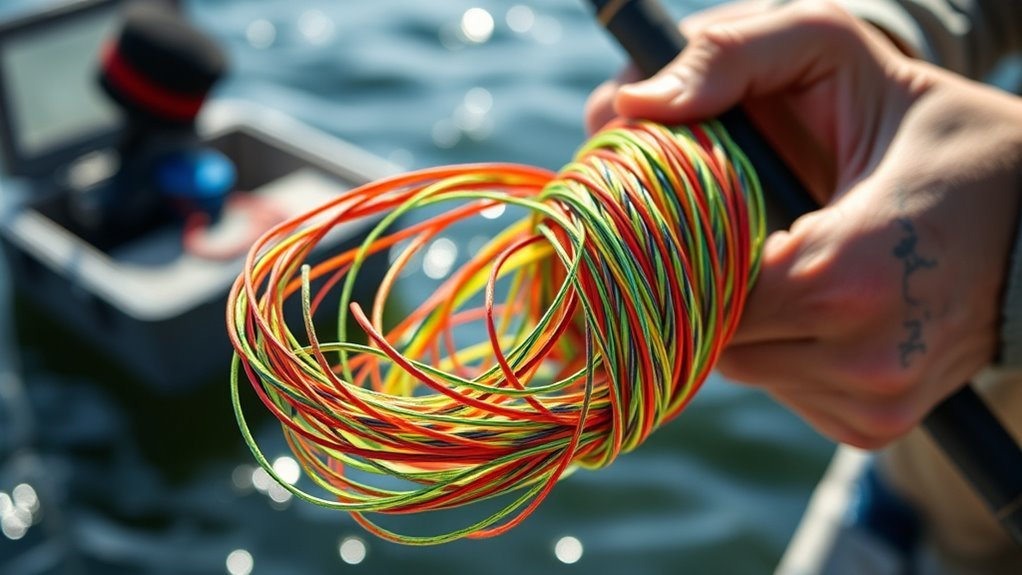
Braided fishing line is made from several strands of synthetic fiber woven into one strong, thin line. Anglers choose it because it delivers impressive strength and sensitivity without the thick diameter you often get from monofilament.
The biggest difference is stretch. Monofilament stretches under pressure, while braid has minimal stretch. That low-stretch feel helps you detect bottom contact, light bites, grass, rocks, and lure vibration more clearly.
Braid also has a high strength-to-diameter ratio. In simple terms, you can use a thinner line while still getting strong pulling power. That helps with longer casts, deeper lure presentations, and more line capacity on the reel.
Braided fishing line gives you better bite detection, but you still need steady pressure during the fight. Slack line can let fish shake free.
You will often see anglers compare braid and mono by diameter. For example, many 20-pound braided lines are close in diameter to much lighter monofilament lines, such as some 6-pound mono options. Exact diameter varies by brand, coating, and fiber count, so always check the spool label before matching line to your reel.
Braid is usually more visible in clear water than monofilament or fluorocarbon. That does not make it a bad choice, but it does mean you may want to add a leader when fish are cautious, water is clear, or your lure needs a more natural look.
Proper spooling techniques are also important. Braid can slip on a bare spool, especially on spinning reels. A short layer of monofilament backing gives the braid something to grip and helps prevent spinning around the spool under pressure.
Key Characteristics of Braided Fishing Line
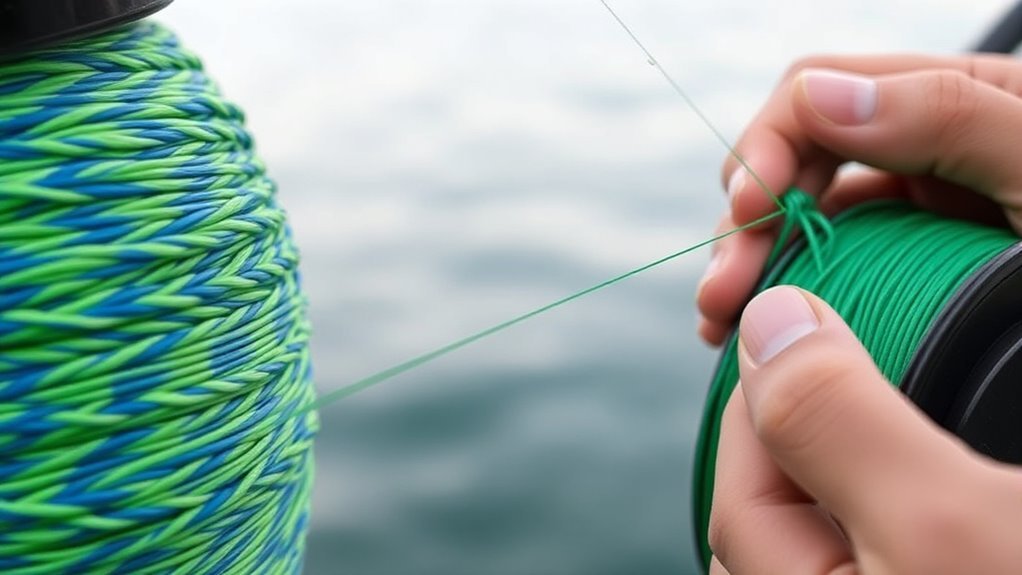
When you choose a fishing line, understanding the key characteristics of braid can help you avoid common beginner mistakes. Braided lines are strong, thin, sensitive, and durable, but they also have tradeoffs.
The low-stretch design gives you direct contact with your lure. That helps when jigging, fishing soft plastics, throwing frogs, working topwater baits, or pulling fish away from weeds and brush.
However, low stretch also means braid is less forgiving. A hard hookset with a tight drag can tear hooks free, especially with small treble hooks or light-wire hooks. Set your drag carefully and match your rod action to the technique.
Compared with monofilament, braid is thinner, more sensitive, and often stronger for its diameter. Monofilament floats better, stretches more, and can be easier for beginners to manage. Fluorocarbon is less visible underwater and works well as a leader.
Here’s a quick comparison:
| Characteristic | Braided Fishing Line | Monofilament Lines |
|---|---|---|
| Stretch | Minimal to none | Moderate to high |
| Diameter | Thinner for the same pound rating | Thicker for the same pound rating |
| Visibility | More visible in clear water | Less visible than many bright braids |
| Sensitivity | High | Moderate |
| Recommended Leader | Fluorocarbon or monofilament | Optional, depending on conditions |
Advantages of Using Braided Fishing Line
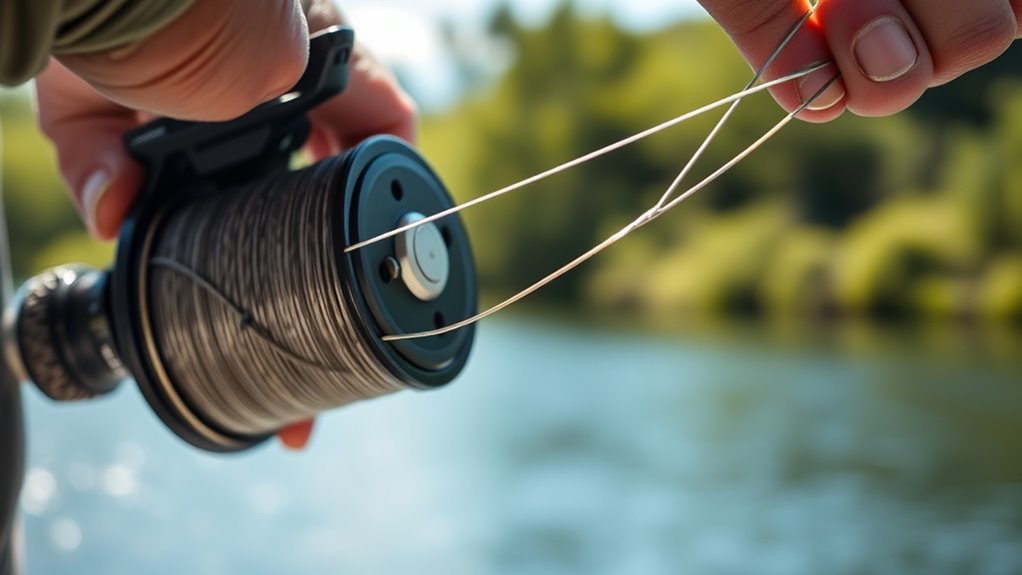
One of the standout features of braided fishing line is its excellent strength-to-diameter ratio. You can use a thin line while still getting the power needed to pull fish away from weeds, timber, docks, and rocky cover.
This thinner diameter can improve casting distance. It also helps some lures reach depth more easily because the line creates less drag in the water. That matters when you fish deep structure, current, or vertical presentations.
The lack of stretch improves sensitivity. You can feel light taps, bottom changes, grass, shell beds, and subtle pressure bites more clearly. That gives you more time to react before a fish drops the bait.
Braid also offers strong hook-setting power. When you fish at long range, in deep water, or around vegetation, low stretch helps transfer energy from the rod to the hook quickly.
Braided lines are also durable against sunlight and water absorption. They do not soak up water the same way some other lines can, and they can last longer than monofilament when you maintain them well.
Although braided line is more visible in water than many monofilament or fluorocarbon lines, you can reduce that issue by using a leader. A leader also adds abrasion resistance near rocks, docks, shells, and fish with rough mouths.
Finally, the soft feel of braid can improve handling and casting distance, especially on spinning gear. It is also useful for fishing frogs, jigs, swimbaits, punching rigs, topwater lures, and other techniques that need power.
Pro Tip: Use braid when you need power and sensitivity, then add a leader when you need stealth or abrasion resistance. This gives you the best parts of both setups.
When Braided Line Is Not the Best Choice
Braid is useful, but it is not perfect for every fishing situation. In very clear water, highly pressured fish may shy away from bright braid tied directly to a lure. A fluorocarbon leader helps, but straight fluorocarbon may work better for some finesse tactics.
Braid also has low shock absorption. If you use treble-hook lures, light-wire hooks, or very short casts, a softer rod or lighter drag setting helps prevent pulled hooks.
Rocky areas can also be tricky. Braid is strong, but sharp rocks, zebra mussels, dock posts, and shell beds can fray it. In those areas, check the final few feet often and use a leader when needed.
Wind can create problems too. Light braid on spinning reels may form loops or wind knots if you reel in slack line. Close the bail by hand, keep slight tension on the line, and avoid overfilling the spool.
Warning: Braided line can cut skin when it is under tension. Do not wrap it around your hand to pull a snag free. Use a dowel, glove, or wrapped tool instead.
Choosing the Right Pound Test
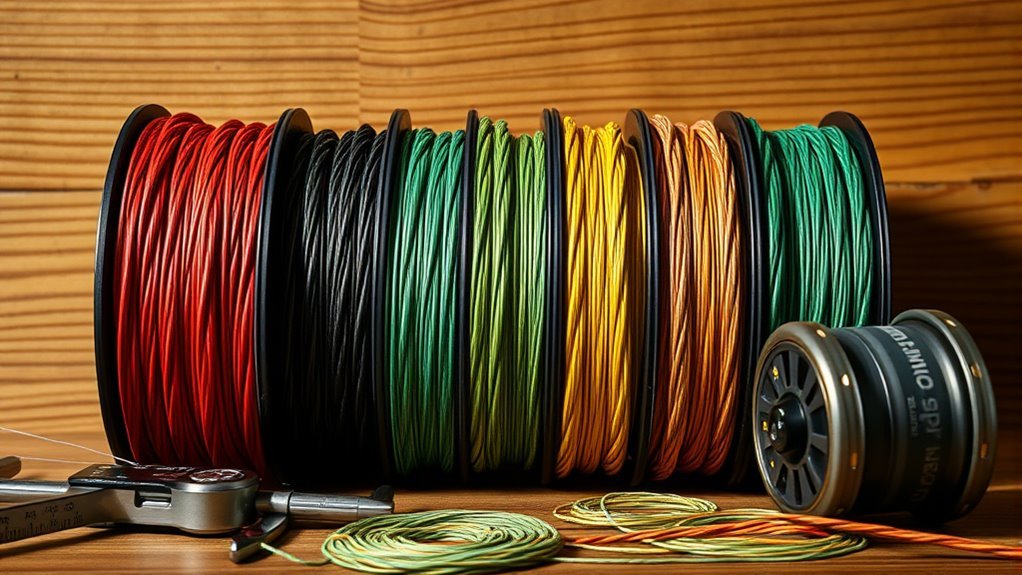
Choosing the right pound test depends on your target fish, cover, lure size, reel type, and water clarity. Do not choose braid by strength alone. Choose it by the full setup.
A lighter braid casts well on spinning reels and works for finesse fishing. Heavier braid works better on baitcasting gear, heavy cover, frogs, flipping, punching, and larger fish.
Here are basic starting points:
- Panfish: For bluegill and crappie, use 2-6 pound braid or light mono, depending on your rod and reel.
- Trout: Use 4-8 pound test for many trout setups, especially when paired with a light fluorocarbon leader.
- Bass and Walleye: Use 8-12 pound braid for finesse spinning setups, 15-30 pound braid for many casting setups, and heavier braid for thick cover.
- Catfish and Saltwater: Consider 15-30 pounds for many catfish situations, while saltwater species may require 20-50 pounds or more depending on fish size and structure.
For bass fishing with spinning gear, 10-15 pound braid with a 6-12 pound leader is a common all-around setup. For baitcasting gear, 30-50 pound braid works well around grass, wood, and frogs. For punching mats or heavy vegetation, some anglers move to 50-65 pound braid.
For saltwater fishing, think about abrasion and fish power. Open-water species may allow lighter braid, while bridges, reefs, jetties, pilings, and wrecks often call for heavier braid and a strong leader.
[Amazon Products Picked for You]

STRONG: Engineered from ultra high molecular weight polyethylene, one of the strongest woven fibers on earth; this 4 strand braid stands up to the most demanding fishing conditions
STRONG: Engineered from ultra high molecular weight polyethylene, one of the strongest woven fibers on earth; this 4 strand braid stands up to the most demanding fishing conditions
STRONG: Engineered from ultra high molecular weight polyethylene, one of the strongest woven fibers on earth; this 4 strand braid stands up to the most demanding fishing conditions
Braid Color and Leader Selection
Braid comes in several colors, including green, yellow, white, gray, blue, and multi-color patterns. Color does not change line strength, but it can affect visibility for you and the fish.
Green braid blends well around grass and stained water. High-visibility yellow or white braid helps you watch line movement, which is useful for finesse fishing, jigging, and detecting slack-line bites.
Multi-color braid changes color at set intervals. It is useful for deep water, trolling, and vertical fishing because it helps you track depth and distance.
A leader gives you more control over visibility and abrasion resistance. Fluorocarbon leaders are popular in clear water because they are harder to see underwater and resist abrasion well. Monofilament leaders work well for topwater lures because mono floats better and has more stretch.
Leader length depends on the situation. A short 12- to 24-inch leader works around heavy cover when you want power. A 4- to 8-foot leader works well for clear water, finesse fishing, and wary fish. Longer leaders can help in very clear water, but they may also bring the knot into your guides.
Note: If your leader knot clicks loudly through the rod guides, shorten the leader or practice a slimmer connection knot, such as the FG knot or a well-tied Double Uni.
[Amazon Products Picked for You]

This double structure 100% fluorocarbon boasts exceptional knot and tensile strength. It’s a top choice for braid to leader connections because it cinches easily for fail-safe knots
This double structure 100% fluorocarbon boasts exceptional knot and tensile strength. It’s a top choice for braid to leader connections because it cinches easily for fail-safe knots
This is a low memory, micro-diameter ice line that’s powered with exclusive Seaguar 100% fluorocarbon resins. It’s built for hard water performance, providing unparalleled abrasion resistance with exceptional knot and tensile strength even on the coldest days. It’s virtually invisible underwater and with almost zero stretch, IceX is more sensitive, helping you detect more bites and catch more fish.
Spooling Your Reel With Braided Line
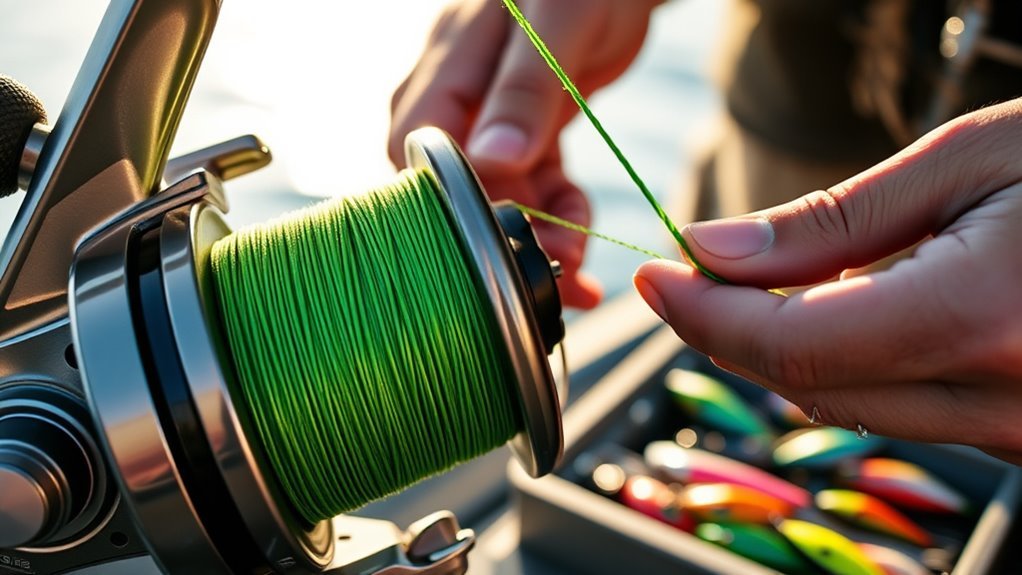
Selecting the right pound test is only the first step. Spooling your reel correctly prevents slipping, digging, loops, wind knots, and poor casting performance.
Start by adding backing material, such as monofilament, to the spool. Braid is slick, so it may spin around a bare spool when a fish pulls drag. Backing gives the braid a grippy base.
Using monofilament backing helps prevent braid from slipping on the spool and helps the line pack more evenly.
Attach the backing to the spool with an arbor knot. Add enough mono to cover the spool surface, then connect the backing to your braid with a Double Uni knot, Albright knot, or another slim connection knot.
When filling your spool, aim for about 1/8 inch below the spool lip. Overfilling can cause loops and tangles during casting. Underfilling can reduce casting distance.
To reduce line twisting, spool the braided line under steady tension. Keep the line tight with a soft cloth or line-spooling tool, and make sure it lays evenly across the spool.
Once the reel is full, pull off a short cast’s worth of line and reel it back in under tension. This helps tighten the pack and remove loose wraps.
For spinning reels, close the bail by hand after each cast. This simple habit prevents loose loops from forming on the spool. Loose loops are one of the main causes of wind knots.
For baitcasting reels, make sure braid is packed tightly. Loose braid can dig into itself after a hard hookset or when pulling a snag. That buried line can stop your next cast suddenly and cause a backlash.
Remember to regularly check your line for wear and tear. Replace damaged sections immediately, and replace the full spool when fading, fraying, or roughness affects performance.
[Amazon Products Picked for You]

Compact and lightweight, easy to remove and install

Durable and Compatible with Multiple Reel Types: The fishing line spooler is constructed with a strong and durable nylon body, ensuring long-lasting use for all your fishing needs.Suitable for spincast, baitcasting, spinning, trolling and fly reels.

STABLE STURDY AND POWERFUL: Fishing line spooler with clamp . Not easy to loose, fast and easy to entangle. Built-in anti-slip mat, the clip is more stable and not easy to loose. Clamp its very powerful and will hold up to the stress of the line pull. Please note that the reels and line are only for spooling reference, NOT INCLUDING in the package(The cloth bag is included in the package).
Best Knots for Braided Fishing Line
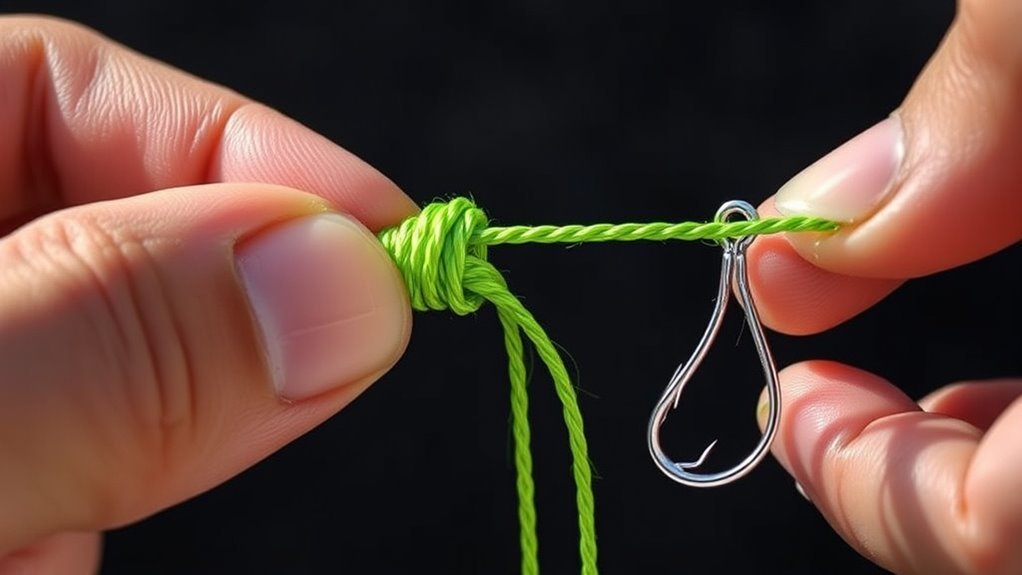
When it comes to securing your braided fishing line, the right knots matter. Braid is strong, but it is also slick. A weak knot can slip before the line reaches its true strength.
Practice these knots before you get on the water:
- Palomar Knot: A simple and strong knot for tying braid to hooks, swivels, snaps, and some lures. It works best when the hook eye is large enough for doubled line.
- Double Uni Knot: A useful knot for connecting braid to monofilament or fluorocarbon leaders. It is easy to learn and works well with lines of different diameters.
- Albright Knot: A strong option for tying braid to heavier monofilament or fluorocarbon leaders. It creates a cleaner connection than many bulky knots.
- Trilene Knot: A strong terminal knot with two passes through the hook eye. It can work with braid when tied carefully and tightened evenly.
- FG Knot: A slim, strong braid-to-leader knot. It takes more practice, but it passes through guides better than bulkier knots.
Always wet your knots before tightening. Pull slowly and evenly so the wraps seat correctly. After tightening, test the knot with steady pressure before casting.
Trim braid with sharp scissors or braid cutters. Dull clippers can leave frayed ends, which make knots harder to inspect.
Practical Tips for Using Braided Fishing Line
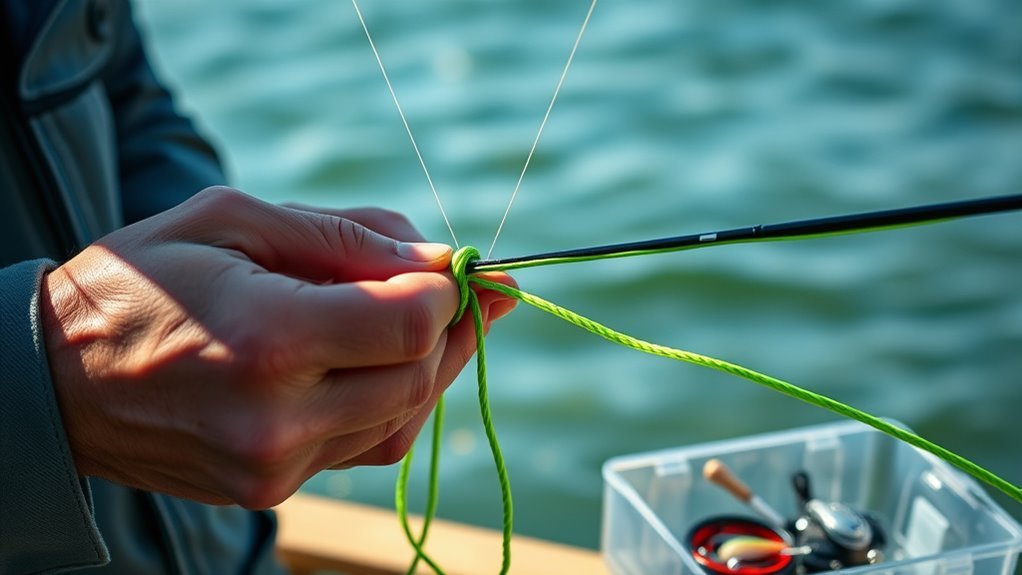
When you’re using braided fishing line, knot tying, drag settings, spooling, and routine maintenance all affect your success.
Strong knots, like the Palomar or Double Uni, help create secure connections. Regular inspections help you spot wear before a damaged section costs you a fish.
Knot Tying Techniques
Mastering knot tying techniques is essential for getting the most from braided fishing line. A solid knot protects your tackle, your lure, and your hookset.
Use these steps to improve knot strength:
- Choose a braid-friendly knot: Use a Palomar knot for many terminal connections and a Double Uni, Albright, or FG knot for leaders.
- Use enough wraps: Slick braid often needs more wraps than mono to bite properly, especially with leader knots.
- Wet the knot: Moistening the line reduces friction and helps the wraps seat cleanly.
- Tighten slowly: Pull both the main line and tag end so the knot forms evenly.
- Test before fishing: Pull firmly on the finished knot before making your first cast.
Retie terminal knots after catching fish, dragging through cover, or pulling free from snags. A knot that looks fine can still weaken after repeated pressure.
Line Maintenance Tips
To keep your braided fishing line in top condition, inspect it often and fix small problems before they grow.
Run the final few feet of line between your fingers. Feel for rough spots, flat sections, fuzziness, or cuts. If the line feels damaged, cut that section away and retie.
Use backing material on spinning reels to prevent slippage and maintain a tight pack. Keep the spool filled properly, but do not overfill it.
Some anglers use line conditioner to reduce noise and improve casting feel. Use only products designed for fishing line, and avoid heavy oils or household lubricants that may damage gear or collect dirt.
Retie your terminal knots often because repeated casting, hooksets, and contact with cover can weaken them.
Address developing loops or tangles immediately. If you see a loop on a spinning reel, stop and remove it by hand instead of casting through it.
With these line maintenance tips, you will extend the life of your braid and keep your setup performing well on the water.
Common Braided Line Problems and Fixes
Even good braid can cause problems if it is spooled, handled, or matched incorrectly. Most issues are easy to fix once you know what caused them.
| Problem | Likely Cause | Fix |
|---|---|---|
| Line slips on the spool | No backing or not enough grip | Add monofilament backing or use a braid-ready spool |
| Wind knots | Loose loops, overfilled spool, or reeling slack | Close the bail by hand and keep tension while reeling |
| Line digs into itself | Loose spooling or heavy pressure | Spool under firm tension and use heavier braid on baitcasters |
| Knots slip | Wrong knot, too few wraps, or poor tightening | Use braid-friendly knots and test each knot before casting |
| Fish seem line-shy | Bright braid in clear water | Add a fluorocarbon leader or use a more natural braid color |
Related Guides
Frequently Asked Questions
Is braided line good for beginners?
Yes, braided line can be good for beginners because it is strong, sensitive, and easy to cast when spooled correctly. Beginners should practice tying braid-friendly knots, use backing on the reel, and start with a leader in clear water.
How do you choose the right braided fishing line?
Choose braided line by matching the pound test to your target fish, cover, lure size, and reel type. Use lighter braid for finesse spinning setups, medium braid for general bass and walleye fishing, and heavier braid for thick grass, wood, catfish, or saltwater structure.
Do you soak braided line before spooling?
You usually do not need to soak braided line before spooling. Braid has little memory compared with monofilament. The more important step is spooling it under firm, even tension with backing so it packs tightly and does not slip.
Is 20lb braid stronger than 20lb mono?
Not automatically. Both are rated at 20 pounds, so the printed strength rating is the same. The main advantage of 20lb braid is that it is usually much thinner, has less stretch, and gives better sensitivity than 20lb monofilament.
Should you use a leader with braided fishing line?
Use a leader when fishing clear water, rocks, shells, docks, or wary fish. Fluorocarbon leaders help reduce visibility and add abrasion resistance. Monofilament leaders work well for topwater lures because they float better and add a little stretch.
How often should you replace braided fishing line?
Replace braid when it becomes badly faded, fuzzy, flattened, frayed, or rough. Many anglers can use braid for more than one season, but you should cut away damaged sections often and replace the full spool when performance drops.
Conclusion
Mastering braided fishing line can make your fishing setup stronger, more sensitive, and more efficient. Braid helps you feel bites, cast farther, work lures with better control, and pull fish away from heavy cover.
The key is using it correctly. Choose the right pound test for your species and technique, spool it with backing, tie strong braid-friendly knots, and add a leader when visibility or abrasion matters.
With the right setup and regular maintenance, braided line can help you fish with more confidence and land more of the fish you hook.