Choosing the right fishing line gets easier once you understand what each type does best. Monofilament, fluorocarbon, braided, and copolymer lines all behave differently in the water, on the reel, and during a hookset. Pick the line that matches your lure, water clarity, cover, and target fish, and you’ll cast better, feel more bites, and land more fish with fewer line problems.
Quick Answer
Use monofilament for easy handling, topwater lures, and beginner setups. Use fluorocarbon when you need stealth, abrasion resistance, and sinking presentations. Use braided line for strength, sensitivity, long casts, and heavy cover. Choose copolymer when you want a stronger, lower-memory alternative to standard mono.
Key Takeaways
- Monofilament is affordable, forgiving, stretchy, and buoyant, so it works well for topwater lures and many beginner setups.
- Fluorocarbon is harder for fish to see, sinks faster than mono, and handles rocks, docks, and brush better.
- Braided line gives you high strength, thin diameter, long casts, and strong bite detection, but it is more visible in clear water.
- Copolymer line bridges the gap between mono and fluoro with better sensitivity, lower memory, and solid all-around performance.
- Line color, pound test, knot choice, and reel type matter just as much as the line material.
Overview of Fishing Line Types

When it comes to fishing line, understanding the main types can greatly improve your time on the water. You’ll usually choose from four common options: monofilament, fluorocarbon, braided, and copolymer. Each one has a different mix of stretch, visibility, strength, abrasion resistance, buoyancy, and handling.
Monofilament line offers buoyancy and stretch, making it a strong choice for topwater lures, crankbaits, panfish rigs, catfish setups, and general-purpose fishing. It is also easy to tie, widely available, and budget-friendly.
Monofilament line is buoyant and stretchy, making it an excellent choice for topwater lures while being easy on the wallet.
Fluorocarbon line is denser than mono and sinks well, so it works nicely for jigs, worms, drop shots, leaders, and clear-water presentations. It is also valued for low underwater visibility and high abrasion resistance, especially around rocks, shells, docks, and timber.
Braided line is made from woven synthetic fibers. It is thin for its strength, has very little stretch, and offers excellent sensitivity. This helps you feel light bites, cut through vegetation, and cast farther with certain lures.
Copolymer line is a modified nylon line made with two or more polymers. It often handles like monofilament but with less stretch, better abrasion resistance, and lower memory.
Fishing Line at a Glance
| Best Beginner Choice | Monofilament, because it is affordable, forgiving, and easy to tie. |
| Best Clear-Water Choice | Fluorocarbon or a fluorocarbon leader, especially for pressured fish. |
| Best Heavy-Cover Choice | Braided line, because it offers high strength and strong hook-setting power. |
| Best All-Around Upgrade | Copolymer, because it improves on standard mono while still handling well. |
Monofilament Line
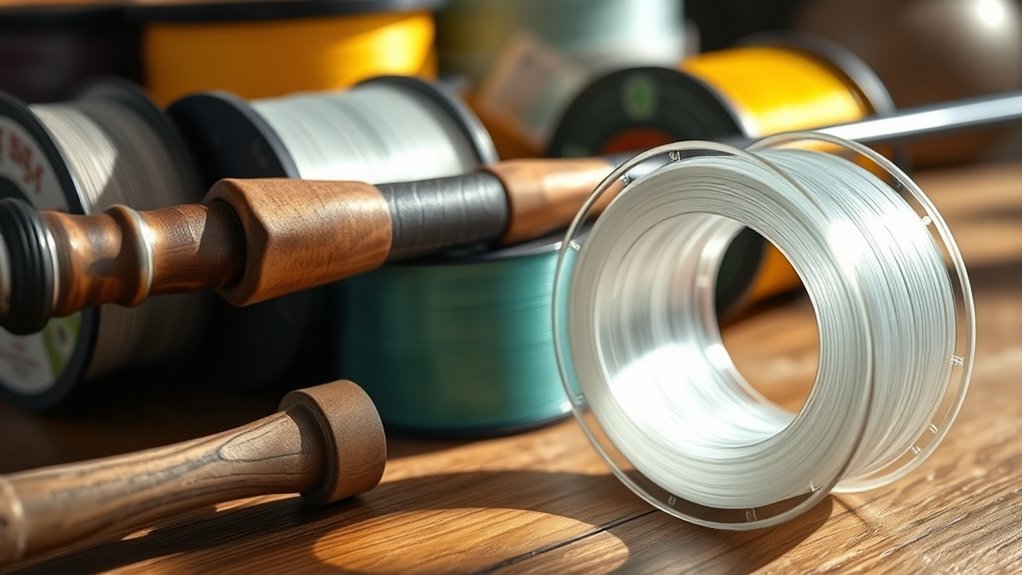
Monofilament line, often called “mono,” is made from a single strand of nylon. It has been a staple in fishing for decades because it is simple, versatile, and easy to manage. If you are building your first spinning or baitcasting setup, mono is usually the safest starting point.
One of its key features is its stretch. Mono can absorb sudden runs, head shakes, and hard strikes, which helps protect knots and keeps small treble hooks from pulling out. That stretch can be useful when fishing crankbaits, live bait, slip bobbers, and topwater lures.
Mono also floats better than fluorocarbon. That makes it a natural fit for topwater fishing, floating baits, and presentations where you do not want your line pulling the lure downward.
However, monofilament can retain memory, which means it may come off the spool in coils. Those loops can reduce casting distance and cause tangles. Fresh line, correct spooling, and not overfilling the reel can reduce the problem.
Mono also absorbs some water and can weaken from sunlight over time. For best performance, inspect it often and replace it when it looks cloudy, feels rough, or breaks too easily during a pull test.
Pro Tip: Use lighter monofilament on spinning reels for fewer coils and smoother casts. If the line jumps off the spool, you may have used line that is too heavy or overfilled the reel.
[Amazon Products Picked for You]
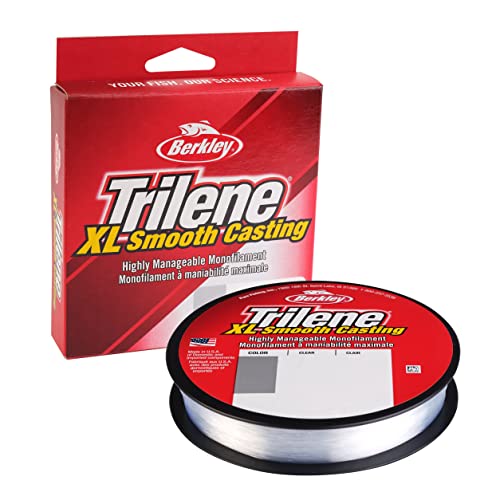
BERKLEY TRILENE XL: Don't let fish off the hook. Stronger and smoother than ever before, this versatile clear fishing line offers exceptional performance with a wide variety of baits and techniques.

【True Knot Strength】Engineered with a premium nylon copolymer blend that maintains true-to-label breaking strength and superior knot integrity. Whether you're tying a Palomar on 6lb ultralight trout gear or locking down a heavy-duty Uni knot on 100lb offshore catfish rigs, this mono delivers the raw power and confidence to turn hard-fighting fish without premature failure.

1. Clear Fishing Line Wire Size: You will get 230 m/755 ft, 0.45 mm/0.018 in fishing Wire
Best Uses for Monofilament
Monofilament works well when you want a forgiving line that handles sudden pressure. It is especially useful for:
- Topwater lures that need to stay high in the water
- Crankbaits and treble-hook lures where stretch helps keep fish pinned
- Live bait rigs for panfish, trout, catfish, bass, and walleye
- Beginner spinning setups
- General pond, lake, river, and pier fishing
Monofilament Pros and Cons
Monofilament gives you a strong mix of value and ease of use, but it is not perfect for every situation.
- Pros: Affordable, easy to knot, forgiving, buoyant, widely available, and beginner-friendly.
- Cons: More visible than fluorocarbon, more stretch than braid, more memory than some copolymer lines, and weaker after long sun exposure.
Fluorocarbon Line
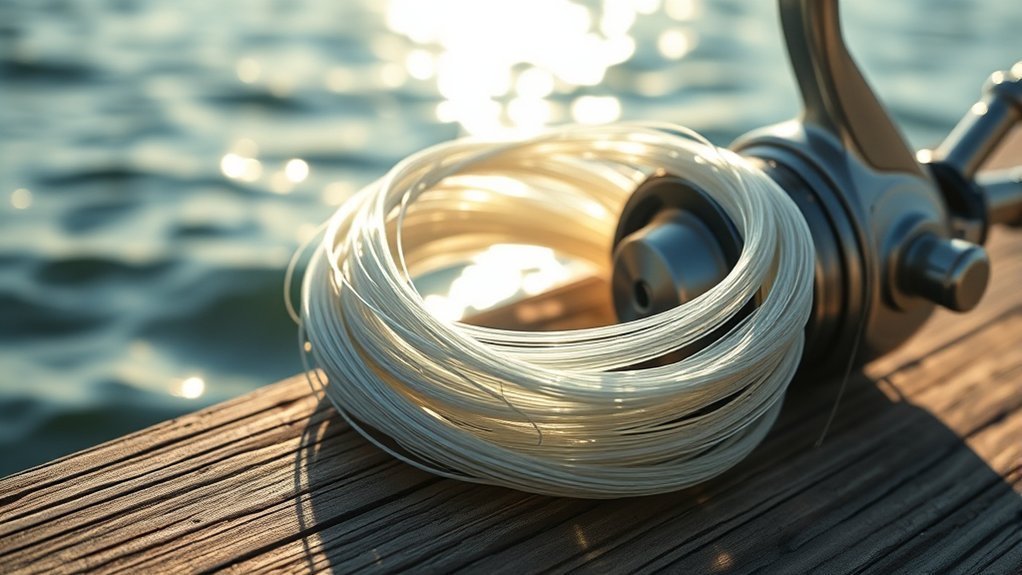
Fluorocarbon line stands out because of its density, low visibility, and abrasion resistance. It is commonly made from polyvinylidene fluoride, often shortened to PVDF. Many anglers use it as a main line, but it is also extremely popular as a leader material.
Fluorocarbon is harder for fish to see underwater than many colored or opaque lines. That makes it useful in clear water, pressured lakes, trout streams, and finesse situations where fish inspect a bait closely.
Its high abrasion resistance helps around rough structure, rock, shell beds, dock posts, brush, and toothy or rough-mouthed fish. It also sinks, which helps with deep presentations and techniques like jigging, drop-shotting, Texas rigs, Carolina rigs, and soft-plastic worms.
Fluorocarbon usually has less stretch than monofilament, though it is not stretch-free. This lower stretch can improve sensitivity and bite detection. You may feel bottom changes, light pickups, and soft taps more clearly than you would with standard mono.
The tradeoff is handling. Fluorocarbon can be stiffer than mono, especially in heavier pound tests. It can jump off spinning reels, form coils, or weaken if you tie poor knots. Wet your knots before tightening and cinch them down slowly to reduce friction damage.
Note: Many anglers pair braided main line with a fluorocarbon leader. This gives you braid’s strength and casting distance while keeping the bait end harder for fish to see.
[Amazon Products Picked for You]

This double structure 100% fluorocarbon boasts exceptional knot and tensile strength. It’s a top choice for braid to leader connections because it cinches easily for fail-safe knots

SEAGUAR RED LABEL: Our Red Label Fishing Line is ideal for use as a freshwater main line with superior knot and tensile strength and nearly invisible.

Fluorocarbon Leader Line – KastKing FluoroKote fluorocarbon fishing line is a premium combination of fluorocarbon and co-polymer, making it virtually invisible in the water. The invisibility can increase angler’s catch rate, especially in clear water situations.
Best Uses for Fluorocarbon
Fluorocarbon shines when stealth and bottom contact matter. Use it for:
- Clear water with wary fish
- Drop shots, shaky heads, jigs, and soft plastics
- Leader material with braided main line
- Rocky banks, docks, brush, and shell beds
- Finesse fishing for bass, trout, walleye, and pressured panfish
Fluorocarbon Pros and Cons
- Pros: Low visibility, good abrasion resistance, sinking action, improved sensitivity, and strong leader performance.
- Cons: More expensive than mono, stiffer in heavier sizes, less forgiving with knots, and not ideal for many topwater lures.
Braided Line
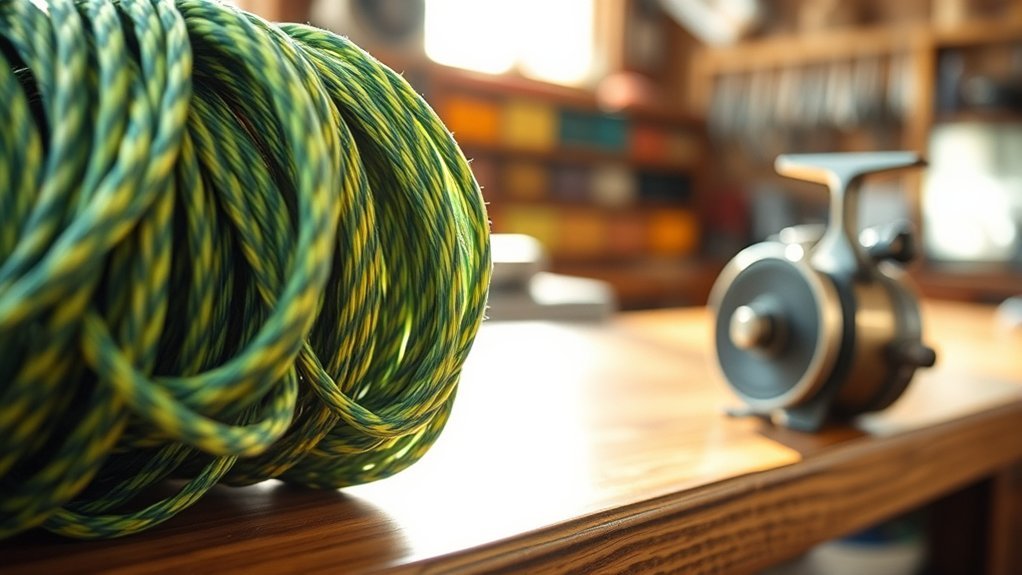
Braided line stands out for its exceptional strength and durability. It is made from multiple woven fibers, giving it a high breaking strength compared with its diameter. This lets you fish stronger line without using a thick, bulky spool of mono.
Its virtually memory-free nature helps with casting performance, especially on spinning reels. Because braid has very little stretch, it also delivers sharp sensitivity. You can feel light bites, weeds, rocks, and bottom changes with much more detail.
This combination makes braided line a top choice for anglers who need precision and reliability around grass, heavy cover, deep water, and long casts.
[Amazon Products Picked for You]

Strong Knot Strength - Dynamically incorporated strands in KastKing SuperPower Braided Lines allow you to easily tie a more solid knot; you can even tie an improved clinch knot. The special proprietary treatment (without a waxy coating) allows the supple fishing line to zip through the guides to your target and gives you better lure swimming action.

Excellent Material:GUMMAX braided fishing line 50lb is constructed from 8 high-strength PE (polyethylene) strands, woven with professional technology to form a tight-knit structure. The fishing line braid's strength surpasses traditional 4-strand PE lines, resisting loosening effectively. The 50lb tensile specification is tailor-made for battling large fish like bass and catfish, perfectly meeting the demands of "catfish braided fishing line" and "bass fishing line".
Strong Knot Strength - Dynamically incorporated strands in KastKing SuperPower Braided Lines allow you to easily tie a more solid knot; you can even tie an improved clinch knot. The special proprietary treatment (without a waxy coating) allows the supple fishing line to zip through the guides to your target and gives you better lure swimming action.
Strength and Durability
When it comes to fishing line, braided options stand out for their impressive strength and durability. Made from multiple strands of synthetic fibers, braided line offers exceptional strength relative to its diameter, often surpassing monofilament or fluorocarbon lines in breaking strength for the same thickness.
This means you can use a thinner line without sacrificing power. Thin diameter helps with casting distance, line capacity, lure depth, and current resistance.
Additionally, braided lines have very little stretch, providing immediate feedback when a fish bites. That fast response helps when fishing jigs, frogs, soft plastics, deep water, and heavy vegetation.
Braided line is particularly effective in heavy cover scenarios. It can pull fish from lily pads, grass mats, wood, reeds, and thick weeds without the same breakage risk you might face with lighter mono or fluoro.
Casting and Sensitivity
While fishing, having a line that maximizes casting distance and sensitivity can improve your success. Braided line excels in these areas, allowing you to detect bites and changes in underwater structure more effectively.
Here are three key benefits of using braided line:
- Enhanced Sensitivity: The lack of stretch means you can feel even slight nibbles, making it ideal for jigging, finesse techniques, and deep-water contact baits.
- Longer Casting Distance: Its thin diameter lets you pack more line onto your spool and cast farther than many comparable monofilament or fluorocarbon setups.
- Smooth Performance: With minimal memory, braided line helps prevent loops and twists during casting and retrieval.
Embracing these features can greatly improve your fishing success, especially when you match braid with the right rod, drag setting, and leader.
Braided Line Limitations
Braid is powerful, but it has some drawbacks. It is more visible in clear water, can dig into itself on the spool under heavy pressure, and may slip if you use knots designed for mono. Some braids can also cut into vegetation, fingers, or soft rod guides if handled carelessly.
Warning: Do not wrap braided line around your bare hand to pull a snag loose. Braid can cut skin under tension. Use pliers, a dowel, or a wrapped cloth instead.
For clear water, consider tying on a fluorocarbon or monofilament leader. For baitcasting reels, pack braid tightly onto the spool and use backing if needed to prevent slipping.
Copolymer Line
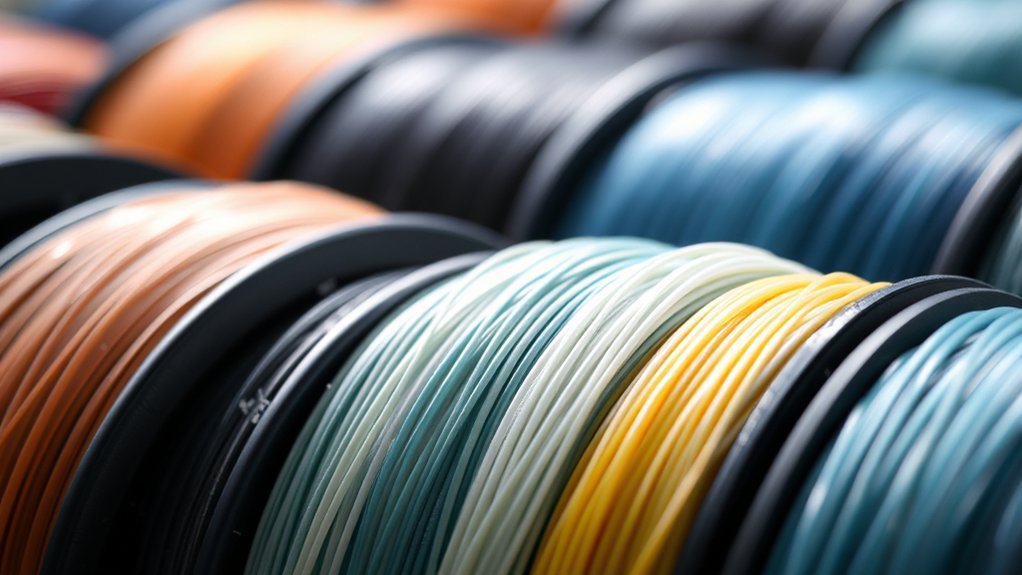
Copolymer line offers anglers a useful upgrade over standard monofilament. It is made from two or more nylon-based materials, which can improve strength, abrasion resistance, handling, or sensitivity depending on the formula.
You’ll find that copolymer lines typically have lower stretch than basic monofilament. That gives you better sensitivity and more direct hooksets while still keeping some forgiveness.
Additionally, copolymer lines often have lower memory, which reduces kinks, coils, and tangles during casting. This helps you focus on presentation instead of fighting line issues.
They are also more abrasion-resistant than many standard mono lines, making them useful around docks, rocks, weeds, and mixed cover.
While these lines may be slightly more expensive than monofilament, their versatility and effectiveness across a wide range of fishing applications can justify the investment.
With copolymer line, you’re choosing a practical middle ground. It is a strong option if you like mono’s handling but want more sensitivity and durability.
Best Uses for Copolymer Line
Copolymer line works well for anglers who want one line that can handle many jobs. It is a good fit for:
- All-purpose spinning and baitcasting setups
- Moving baits like spinnerbaits, chatterbaits, jerkbaits, and crankbaits
- Mixed cover where you need better abrasion resistance than basic mono
- Anglers who want less stretch without switching fully to fluorocarbon or braid
How to Choose the Right Pound Test
Line material matters, but pound test matters too. Pound test describes the line’s rated breaking strength under controlled conditions. In real fishing, knots, abrasion, drag setting, sudden shock, and cover can reduce actual strength.
Choose lighter line when fish are cautious, water is clear, lures are small, or you need better casting distance. Choose heavier line when fish are large, cover is thick, current is strong, or your lure requires power.
Common Pound-Test Starting Points
| Panfish and Trout | 2–6 lb mono, fluoro, or copolymer |
| Bass Finesse Fishing | 6–10 lb fluoro, copolymer, or braid with leader |
| General Bass Fishing | 10–17 lb mono, fluoro, or copolymer; 20–50 lb braid for cover |
| Catfish, Pike, and Heavy Cover | 15–30 lb mono or copolymer; 30–65 lb braid depending on cover and fish size |
Always match your line to the rod and reel ratings printed on your gear. A line that is far heavier than your rod rating can reduce casting performance, overload the blank, and make the setup less safe under pressure.
Fishing Line Color Impact
The color of your fishing line can affect visibility to fish and your ability to see strikes. Clear, green, blue, smoke, yellow, orange, and red lines all have a place, but the best choice depends on water clarity, light level, fishing depth, and presentation.
In clear water, lighter colors like clear, blue-tinted clear, or fluorocarbon often work best when stealth matters. In stained water, green or smoke can blend with the surroundings. Bright lines can help you watch for subtle ticks, jumps, or sideways movement.
Adapting your line color to match water clarity and the species you’re targeting can improve your chances of a catch.
Visibility to Fish
When choosing a fishing line, understanding how color affects visibility to fish is helpful. The color of your line can influence how easily fish detect it underwater.
Here are three key points to consider:
- Clear Lines: These are the most versatile and usually offer low visibility in many water conditions.
- Bright Colors: Lines like orange, yellow, and high-vis green help you see movement, especially during long casts or finesse fishing.
- Color Suitability: In clear water, use subtle colors. In murky or stained water, green, smoke, or darker tones may blend better.
Different fish species may react differently to line visibility. Fishing pressure also matters. In heavily fished water, a less visible leader can make a real difference.
Water Clarity Considerations
Understanding how water clarity affects fishing line color can improve your angling success. In clear water, a clear fishing line or fluorocarbon leader is often the safest choice because it reduces line visibility near the lure.
In murky conditions, visibility to the fish usually matters less. You can use green, smoke, yellow, or high-vis braid if it helps you track your line and detect bites.
Bright colors such as orange and yellow improve long-distance visibility during daylight. They can be useful for watching slack-line bites, drifting baits, and detecting soft pickups.
Clear lines offer versatility, while colored lines can boost your control in specific environments. The best strategy is to match line color to water clarity, lure style, and fish behavior.
Species-Specific Color Choices
Water clarity plays a major role in choosing the right fishing line color, but species behavior also matters. Trout, bass, walleye, panfish, catfish, and pike do not always respond the same way to line visibility.
To enhance your catch rate, consider these color choices based on species and conditions:
- Clear Lines: Best for trout, bass, walleye, and pressured fish in clear water.
- Bright Colors: Useful for crappie, finesse bass fishing, float fishing, and situations where you need to see the line move.
- Darker Colors: Helpful in stained water, vegetation, and low-visibility environments where green or smoke can blend in.
Experimenting with these colors based on the species you’re targeting can greatly impact your fishing outcomes.
Matching Line to Reel Type
Your reel type should influence your line choice. A line that works well on a baitcaster may be frustrating on a small spinning reel, and a heavy line on the wrong reel can cause tangles, poor casts, and wind knots.
Spinning Reels
Spinning reels work best with lighter, more manageable line. Monofilament, copolymer, and thin braid are common choices. Heavy fluorocarbon can coil badly on small spinning reels, so many anglers use braided main line with a fluorocarbon leader.
For most freshwater spinning setups, 4–10 lb mono or fluoro works well. For braid, 10–20 lb is a common range because the diameter stays thin and casts smoothly.
Baitcasting Reels
Baitcasting reels handle heavier line better than spinning reels. They pair well with fluorocarbon, copolymer, monofilament, and braid. Use them for heavier lures, stronger hooksets, deep presentations, and cover-oriented fishing.
Braid can dig into itself on a baitcaster if it is too thin or packed loosely. If you are new to baitcasters, starting with mono or copolymer can make backlash removal easier.
Spincast Reels
Spincast reels are simple and beginner-friendly. They usually work best with light to medium monofilament. Avoid very heavy or stiff line unless the reel is rated for it, because thick line can hurt casting distance and cause feeding problems.
Leader Lines and Knots
A leader is a short length of line tied between your main line and lure or hook. Leaders are useful when your main line is visible, when fish have rough mouths, or when you need extra abrasion resistance near cover.
A common setup is braided main line with a fluorocarbon leader. This gives you braid’s casting distance and sensitivity while using fluorocarbon’s stealth near the bait. Mono leaders can also help with topwater lures because they float better than fluorocarbon.
Popular connection knots include the double uni knot, Alberto knot, and FG knot. The FG knot is slim and strong, but it takes more practice. The double uni is easier for beginners and works well for many freshwater setups.
For tying lures, common choices include the improved clinch knot, Palomar knot, loop knot, and uni knot. The best knot depends on line type and lure style. Braid often performs well with a Palomar or doubled-line knot, while fluorocarbon knots should be tightened slowly and carefully.
Note: Always wet monofilament and fluorocarbon knots before tightening. Dry friction can weaken the line and cause knot failure during a fight.
Line Care, Storage, and Replacement
Fishing line wears out. Sunlight, heat, salt, rocks, hooks, fish teeth, and repeated knots all reduce strength. Good line care helps you avoid surprise breakoffs.
Store spare line in a cool, dry place away from direct sunlight. Avoid leaving line in a hot car for long periods. After saltwater fishing, rinse rods and reels lightly with fresh water and let them dry before storage.
Before every trip, run the last few feet of line between your fingers. If it feels rough, flattened, nicked, or chalky, cut it back and retie. After catching fish around rocks, docks, or weeds, check the line again.
Replace monofilament more often if you fish heavily or store gear in heat and sun. Fluorocarbon usually lasts longer, but it still needs inspection. Braid can last a long time as main line, though faded color, fraying, and weak spots mean it is time to reverse it on the spool or replace it.
Common Fishing Line Mistakes
Small line mistakes can cost you fish. Many problems come from using the wrong line size, poor knots, old line, or mismatched tackle.
- Using line that is too heavy: Heavy line can reduce casting distance, hurt lure action, and overload light rods.
- Using line that is too light: Light line can break around cover or during hard hooksets.
- Ignoring reel capacity: Overfilled spinning reels create loops, while underfilled reels shorten casts.
- Skipping leader material: Braid may need a fluoro or mono leader in clear water or around sharp cover.
- Not checking for abrasion: A small nick near the lure can break under pressure.
- Tying knots too fast: Heat and friction can weaken mono and fluorocarbon.
- Leaving old line on too long: Aged line loses strength and creates avoidable breakoffs.
Related Guides
Frequently Asked Questions
What are the different types of fishing lines?
The main types are monofilament, fluorocarbon, braided, and copolymer line. Monofilament is easy and affordable. Fluorocarbon is low-visibility and abrasion-resistant. Braided line is strong, thin, and sensitive. Copolymer line offers improved performance over standard mono while still handling well.
Is it better to fish with braid or mono?
It depends on your setup. Use braid when you need strength, sensitivity, long casts, or power in heavy cover. Use mono when you want stretch, easy handling, floating action, and a lower-cost beginner setup. Many anglers use both, depending on lure style and water conditions.
When should you use mono vs fluoro?
Use monofilament for topwater lures, treble-hook baits, beginner rigs, and situations where stretch helps keep fish hooked. Use fluorocarbon for clear water, bottom-contact baits, leaders, deep presentations, and areas with rocks, docks, or brush.
Can I put 30 lb line on a 20 lb rod?
You generally should not use line far above your rod’s rating unless the rod manufacturer allows it for a specific technique. A 30 lb line on a rod rated for 20 lb can reduce casting performance, overload the rod, and make breakage more likely under heavy pressure. Check the line rating printed on the rod blank.
What fishing line is best for beginners?
Monofilament is usually the best fishing line for beginners. It is affordable, easy to tie, forgiving during fights, and works with many common lures and bait rigs. Start with a pound test that matches your rod, reel, and target fish.
Do you need a leader with braided line?
You do not always need a leader with braided line, but it often helps. A fluorocarbon leader adds stealth and abrasion resistance, while a mono leader adds stretch and buoyancy. In muddy water or thick vegetation, you can often tie braid directly to the lure.
Conclusion
In the wide world of fishing line options, the right choice depends on how and where you fish. Monofilament floats, stretches, and keeps things simple. Fluorocarbon sinks, hides well, and handles rough cover. Braided line gives you strength, sensitivity, and long casting power. Copolymer offers a balanced upgrade for anglers who want better handling and durability than basic mono.
Match your line to your lure, reel, rod rating, water clarity, and target fish. Then check your knots, inspect for damage, and replace worn line before it costs you a catch. When your line fits the job, every cast becomes more controlled, more confident, and more productive.
Sources
- International Game Fish Association — International Angling Rules — supports the importance of line class, tackle limits, and responsible line use.
- NOAA Marine Debris Program — supports safe handling and disposal of discarded fishing line and other marine debris.
- National Park Service — Leave No Trace Seven Principles — supports packing out discarded line and reducing impact around waterways.