When you’re out fishing, understanding how fish perceive their environment can greatly enhance your success. Fish use sight, smell, hearing, taste, touch, and their lateral line to find food, avoid danger, and react to your lure. Once you understand these senses, you can choose colors, scents, sounds, and presentations that match the water conditions and the species you want to catch.
Quick Answer
Fish sense their world through vision, smell, hearing, taste, and the lateral line, which detects pressure changes and water movement. For better fishing, match your lure to the conditions: use color and flash in clear water, vibration in murky water, scent for smell-driven species, and quiet approaches in shallow areas.
Key Takeaways
- Fish do not rely on one sense. They combine sight, smell, sound, taste, and vibration to decide whether to strike.
- Clear water favors natural shapes, flash, and realistic color. Stained or muddy water favors vibration, contrast, sound, and scent.
- Red fades quickly with depth, while contrast and movement often matter more than exact color in deeper or darker water.
- The lateral line helps fish detect water movement, so lure action, retrieve speed, and vibration can trigger bites even when visibility is poor.
- Quiet movement, low profiles, and careful casting help you avoid spooking fish, especially in shallow water.
At a Glance
| Best Clear-Water Cue | Natural color, flash, realistic profile, and subtle action |
| Best Murky-Water Cue | Vibration, sound, scent, water displacement, and strong contrast |
| Most Useful Senses for Anglers | Vision, smell, hearing, taste, and lateral-line vibration detection |
| Main Fishing Benefit | Better lure choice, better retrieve speed, quieter approaches, and fewer missed opportunities |
The Role of Vision in Fish Behavior
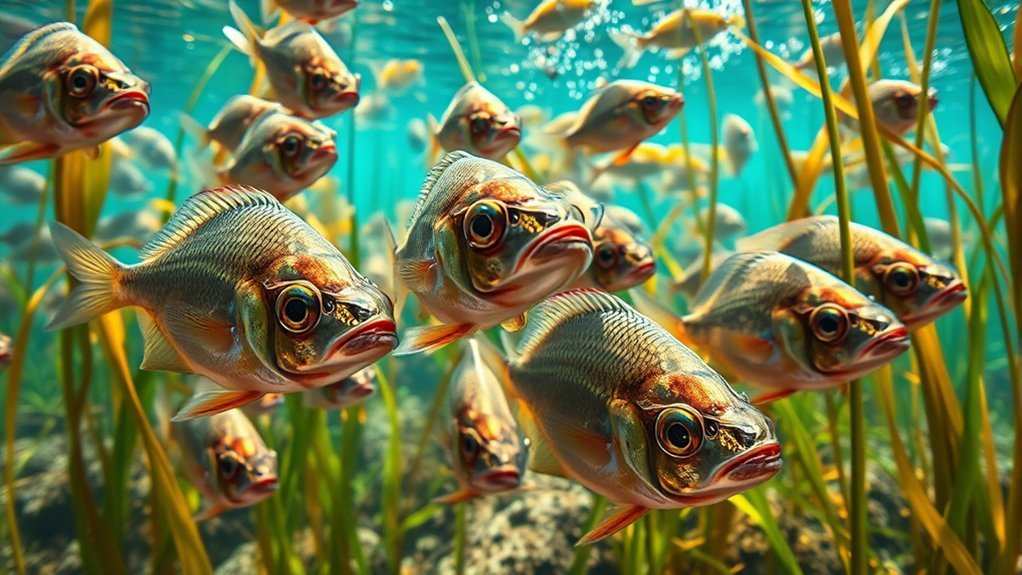
While you might think fish rely solely on their other senses, vision plays an essential role in their behavior and survival. Most fish have eyes adapted for underwater viewing, with round lenses that help focus light in water. This design helps them spot predators, prey, structure, shadows, and movement.
The placement of fish eyes gives many species a wide field of vision. However, fish still have weak areas in their visual field, especially directly behind them and very close to the front of the head. This affects how they notice approaching anglers, boats, shadows, and lures.
Many fish can see colors, which affects lure design and presentation. Bright and contrasting colors can increase visibility in certain water conditions. In clear, shallow water, natural patterns, flash, and realistic movement often work well. In stained water, higher contrast colors can help fish find your lure faster.
Fish vision changes with depth and light. As water gets deeper, colors fade because water absorbs different wavelengths of light at different rates. Red and orange lose visibility earlier than blue and green. That means lure color matters most when fish can actually see it, while lure shape, flash, vibration, and action become more important in deep, dark, or muddy water.
Note: Fish do not see your lure the same way you see it above water. Water clarity, depth, sunlight, bottom color, and surface chop all change how a lure appears underwater.
Understanding Fish Hearing and Sound Perception

Understanding fish hearing and sound perception is essential for effective fishing strategies. Fish do not hear the way humans do, but they are highly sensitive to vibration, pressure changes, and underwater sound. Since sound moves efficiently through water, careless noise can travel farther than many anglers expect.
Fish lack external ears. Instead, they detect sound and vibration through their inner ears and nearby body structures. Some species also use the swim bladder to improve sound detection. In fish such as carp and other ostariophysans, the Weberian apparatus links the swim bladder to the inner ear and helps improve hearing sensitivity.
The lateral line system also works with sound perception by helping fish feel low-frequency movement in the water. This is why a spinnerbait blade, crankbait wobble, popping cork, walking topwater, or vibrating jig can attract fish even when they cannot clearly see the lure.
Different species react differently to sound. Some fish may move toward rattles, splashes, and vibration when feeding aggressively. Others may spook from sudden boat noise, dropped tackle, heavy footsteps on a dock, or a lure that lands too close. The best approach is to match the sound level to the mood of the fish and the water conditions.
Warning: In shallow or pressured water, avoid banging hatches, stomping on docks, dragging gear across aluminum boats, or making repeated splashy casts. Fish may feel those vibrations before they ever see your lure.
The Importance of Smell in Fish Feeding
Understanding how fish detect scents is essential for effective fishing. Fish use openings called nares to draw water across olfactory tissue. These nares are not used for breathing like human nostrils. Instead, they help fish detect dissolved chemicals in the water.
Smell can influence feeding, migration, predator avoidance, spawning behavior, and recognition of familiar water. For anglers, scent matters most when visibility is limited, fish are feeding slowly, or the target species relies heavily on smell.
Sensory Detection of Scents
Fish rely heavily on their sense of smell to navigate and find food in their aquatic environments. Their sensitivity varies by species, but many fish can detect very small amounts of dissolved chemicals. This helps them identify prey, avoid danger, and recognize certain habitats.
Species like catfish showcase an exceptional reliance on olfactory cues, using smell extensively to locate food. Salmon are also well known for using odor cues during migration. Predatory gamefish may use smell less than catfish, but scent can still help them hold a bait longer or locate it when water is dark, cold, or stained.
Fish can detect chemical signals from considerable distances when the scent trail stays intact. However, strong currents, heavy turbulence, fast runoff, and wind-driven chop can break up or scatter scent trails. In those conditions, scent still helps, but you may need to place your bait where the current carries odor toward fish.
While bait sprays, oils, and natural scents can attract fish, overusing them may backfire. Strong artificial odors, gasoline, sunscreen, insect repellent, or excessive scent can make a bait seem unnatural. Understanding these nuances in sensory detection can greatly influence your fishing success.
Feeding Behavior Influences
While many factors influence fish feeding behavior, the role of smell is undeniably important. Fish possess developed olfactory senses that enable them to detect odors in water at low concentrations. This ability is vital for locating food sources and varies among species.
For instance, catfish often rely on their acute sense of smell rather than sight to find meals. Additionally, fish can identify familiar waters and potential threats from a distance, enhancing their survival. Distress scents from injured baitfish can also alert predators and trigger feeding behavior.
- Fish can detect very small amounts of dissolved odors in water.
- Smell may matter more than sight for catfish, carp, and fish feeding in muddy water.
- Familiar scents can help fish recognize habitat, danger, or migration routes.
- Excessive scents, chemical odors, and unnatural residue can repel fish.
Effective Bait Strategies
Given the essential role of smell in fish feeding, employing effective bait strategies can considerably enhance your fishing success. Fish can detect scents in water at low concentrations, making the right bait vital for locating prey. For species like catfish, using natural scents can be particularly effective because they rely strongly on olfactory cues.
When selecting bait, consider the concentration of scents. Strong aromas can attract fish from a distance, but too much scent can seem unnatural. Additionally, using injured-baitfish scent or natural bait oils may trigger predatory instincts in some species. Remember that water current strength and direction affect scent dispersion, so position your bait where the scent trail moves through likely fish-holding areas.
Pro Tip: Before touching soft plastics, live bait, or hooks, rinse sunscreen, fuel, bug spray, and food odors from your hands. Unwanted smells can reduce bites, especially in clear water or when fish are cautious.
Fish Taste: How It Affects Their Diet

Fish taste plays a critical role in their dietary choices, influenced by the unique distribution of taste buds across their bodies. For instance, catfish use extensive taste receptors to identify food in murky waters, while other species may prioritize sight, vibration, and smell over taste.
Understanding the interaction between scent and taste can enhance your fishing strategy. A lure may attract a fish through flash or vibration, but taste and scent can affect whether that fish fully commits, nips, rejects, or holds the bait long enough for a solid hookset.
Taste Bud Distribution
Understanding taste bud distribution in aquatic environments reveals how fish interact with their surroundings and find food. Fish possess taste buds not just in their mouths but also on other body areas, depending on the species. This unique distribution allows them to detect chemical substances in the surrounding water before and during feeding.
- Catfish have many taste receptors on their skin and barbels, making them highly reliant on taste while feeding.
- Most freshwater gamefish do not prioritize taste as strongly as catfish, but taste can still influence whether they hold or reject bait.
- Fish can detect various chemical compounds in the water, aiding in food identification and threat detection.
- Environmental factors, including temperature and water chemistry, can influence taste sensitivity and feeding behavior.
Dietary Preferences Influenced
The diverse distribution of taste buds across fish not only aids in locating food but also influences their dietary preferences. Fish can see and detect vibrations in their environment, but taste sensitivity also plays a role in choosing prey. Species like catfish rely heavily on taste, using receptors on their skin and barbels to identify food in muddy or low-light water.
In contrast, many freshwater gamefish rely more on sight, vibration, and movement while actively chasing prey. Environmental factors, such as water temperature, oxygen levels, forage availability, and chemical composition, can further alter dietary habits. Here’s a brief overview of how taste may influence dietary preferences among different fish species:
| Fish Species | Taste Sensitivity | Dietary Preference |
|---|---|---|
| Catfish | High | Bottom-dwelling organisms, cut bait, insects, worms, and carrion |
| Trout | Moderate | Insects, small fish, larvae, and drifting aquatic prey |
| Bass | Moderate | Minnows, crayfish, frogs, insects, and larger prey |
| Goldfish | Low to moderate | Plant matter, algae, detritus, insects, and small invertebrates |
Scent and Taste Interaction
While many anglers focus primarily on visual cues when selecting bait, the interplay between scent and taste greatly impacts fish feeding behavior. Fish can detect chemical substances in water before ingestion, and some species can taste through receptors on body surfaces.
For instance, catfish rely heavily on their acute sense of taste and smell, equipped with receptors on their barbels and skin. In murky waters, where visibility is limited, scent becomes essential for identifying food sources. For bass, trout, walleye, and other gamefish, scent may not always be the main trigger, but it can help when fish are pressured, cold, or following without striking.
- Fish can detect dissolved scents in very small amounts.
- Strong scents can influence bait selection, especially for smell-driven species.
- Taste receptors are found not just in mouths but also on other body areas in some species.
- The interaction of scent and taste is crucial for slow presentations, live bait, cut bait, and soft plastics.
The Functionality of the Lateral Line System
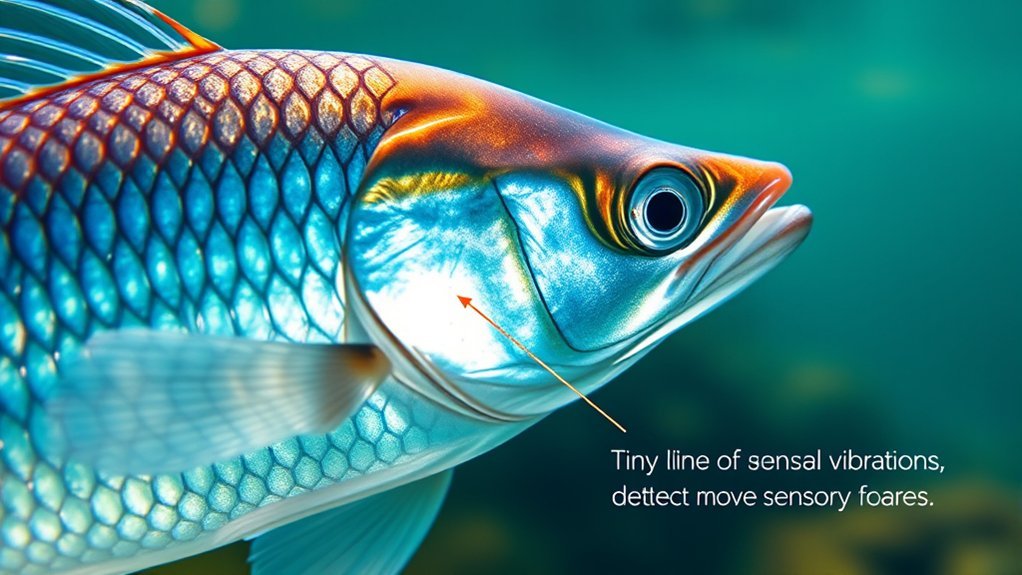
As fish navigate their environments, they rely heavily on the functionality of the lateral line system, a sophisticated sensory system that runs along their bodies. This system allows fish to sense changes in water pressure and movement, which is essential for survival.
The lateral line contains specialized sensory organs called neuromasts, which detect mechanical changes in the surrounding water. Canal neuromasts, located in fluid-filled canals beneath the skin, are good at identifying pressure variations. Superficial neuromasts on the body surface sense the immediate water environment.
By integrating information from multiple neuromasts, fish can perceive vibrations and movements. This helps them hunt prey, avoid predators, travel in schools, and hold position in current. This capability is especially useful in dark or murky waters, where visibility is limited.
For anglers, the lateral line explains why lure action matters so much. A crankbait wobble, blade vibration, jig hop, swimbait tail kick, or topwater splash can create a pressure signature that fish detect before they see the lure clearly.
When visibility drops, fish often shift from sight-first feeding to vibration-first feeding. That is when retrieve speed, lure thump, water displacement, and sound become more important than exact color.
Exploring Fish Sensory Adaptations
Building on the understanding of the lateral line system, fish exhibit a remarkable array of sensory adaptations that enhance their survival in diverse aquatic environments. These adaptations enable fish to detect stimuli that would often go unnoticed by other organisms.
- Fish can detect dissolved odors, which helps them locate food, recognize habitat, and avoid predators.
- The lateral line system helps them sense water vibrations and pressure changes, improving navigation in murky waters.
- Specialized structures, like the ampullae of Lorenzini, allow sharks and rays to detect electrical fields, enhancing hunting capabilities.
- Fish possess vision suited for underwater conditions, although color perception changes with depth, clarity, and light level.
Together, these sensory adaptations equip fish to navigate their environments effectively, making them adept at finding food and evading threats. Understanding these capabilities can enhance your fishing strategies.
Color Perception and Its Impact on Lure Selection
Understanding how fish perceive colors is vital for selecting effective lures, especially since color visibility changes greatly with depth, water clarity, and sunlight. In deeper waters, color vision diminishes, with red and orange fading earlier than shorter wavelengths. This can make a red lure look darker, duller, or less distinct at depth.
In clear, shallow waters, bright colors like chartreuse and orange can improve visibility, while natural baitfish, bluegill, shad, crawfish, or insect patterns may look more realistic. In murky conditions, lures with high contrast, vibration, and brightness often matter more than precise color.
Since fish often notice side profiles, flashes, silhouettes, and motion, dynamic lure action is essential for capturing their attention. Experimenting with various colors and brightness levels can lead to better results. White and black lures often stand out well in low visibility because they create strong silhouettes.
Additionally, understanding the color preferences of specific fish species can guide your lure selection. Different species respond uniquely to color patterns based on habitat, forage, season, water clarity, and feeding behavior.
[Amazon Products Picked for You]


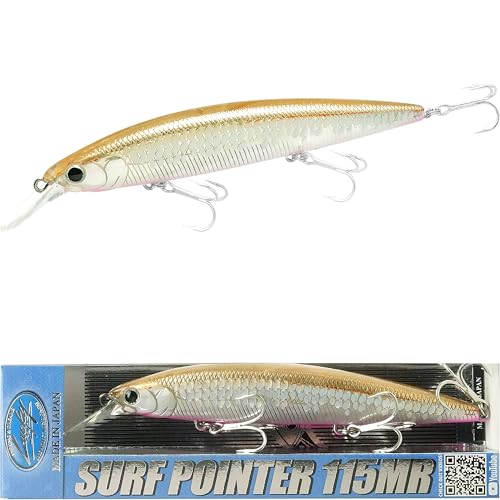
Long Casting Surf Fishing Lure: 4-1/2in (115mm), 3/4oz (22g) sinking saltwater fishing lure that casts far to reach surf lanes and beach troughs. Runs to about 5ft (1.5m) for inshore fishing for halibut and sea bass.
Environmental Influences on Fish Senses
Fish senses are heavily influenced by environmental factors that shape their perception and behavior. In the aquatic world, the properties of water play an essential role in how fish use their sensory organs for survival. Here are some key influences:
- Sound travels efficiently in water, making fish sensitive to vibration, boat noise, and lure sound.
- Colors are absorbed with depth, causing fish to rely more on contrast, flash, and movement in deeper water.
- Low oxygen, temperature changes, and seasonal patterns influence feeding location and activity levels.
- Water clarity and current strength affect reliance on smell and taste, with strong currents changing how scent spreads.
Fish have evolved their lateral line to detect vibrations and currents, which aids in finding food and navigating their environment. Understanding these environmental influences can help you appreciate the complexity of fish senses and their behaviors in various habitats.
Techniques for Fishing Based on Sensory Awareness
To effectively attract fish, you should focus on sensory-based lure selection and your approach techniques. By choosing lures that appeal to fish’s senses of smell, sound, vibration, taste, and sight, you can considerably increase your chances of a successful catch.
Additionally, minimizing noise and vibrations while approaching fishing spots will help you avoid spooking fish, allowing for a more productive fishing experience.
[Amazon Products Picked for You]

SULEBLOOM Realistic Crawfish Design – Ultra-detailed 1.5-inch micro craw body mimics natural movement to attract crappie, bluegill, trout, and other panfish with lifelike precision.
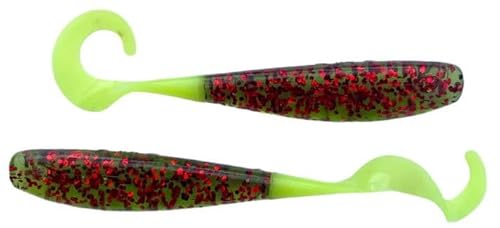
VERSATILE DESIGN: Hybrid curly tail jerkshad with erratic action and nonstop movement, perfect for various fishing techniques including Texas/Carolina rigs, drop shot, wacky, Alabama, and tandem rigging.

BERKLEY GULP! ALIVE! MINNOW FRESHWATER SOFT PLASTIC BAITS: Featuring lifelike scent, taste and texture with a profile that matches the real thing, Berkley Gulp! Alive! Minnows are an essential tool for anglers who want to catch more fish.
Sensory-Based Lure Selection
When selecting lures, it’s essential to consider how fish perceive their environment through various senses. By understanding their sensory capabilities, you can enhance your chances of a successful catch. Consider the following:
- Use scented lures, bait oils, or scent trailers to exploit the fish’s sense of smell, particularly for catfish, carp, and fish in muddy water.
- Opt for lures that produce sound and vibrations, like rattling crankbaits, chatter-style jigs, spinnerbaits, and topwater poppers, to attract fish sensitive to auditory and pressure signals.
- In murky waters, prioritize lure action, vibration, silhouette, and movement over exact color because fish rely more on vibrations and contrast.
- Leverage fish’s lateral lines by creating disturbances that mimic prey movement, allowing fish to detect and assess your lure effectively.
- In clear water, use more realistic colors, thinner line, longer casts, and natural retrieve speeds to avoid alarming fish.
Approach Techniques for Fish
Understanding how to approach fish in various environments greatly impacts your success. To catch more fish, minimize disturbances by walking quietly and avoiding loud noises, as fish are sensitive to vibrations.
Be mindful of your shadows, especially in shallow waters, and maintain a low profile to prevent detection. Use approach techniques that engage fish’s lateral line without alarming them. Slow, deliberate movements and careful casts can keep fish from scattering.
Lures that stimulate multiple senses, including sound, vibration, color, scent, and taste, are more likely to elicit strikes when matched to the water conditions. Additionally, recognize fish’s visual limitations, particularly their weaker viewing angles, to position yourself effectively. By mastering these techniques, you’ll markedly enhance your fishing outcomes.
Matching Fish Senses to Water Conditions
The easiest way to use sensory knowledge is to match your presentation to the water in front of you. Fish do not feed the same way in clear water, muddy water, bright sun, heavy current, deep water, or low light. Their strongest usable sense changes with the situation.
| Condition | Sense Fish May Rely On More | Best Fishing Adjustment |
|---|---|---|
| Clear, shallow water | Vision | Use natural colors, realistic profiles, longer casts, and subtle action. |
| Muddy or stained water | Lateral line, hearing, smell | Use vibration, rattles, scent, dark silhouettes, and slower retrieves. |
| Deep water | Contrast, vibration, pressure changes | Choose lures with flash, thump, or strong water displacement. |
| Low light | Silhouette, vibration, sound | Use topwater, spinnerbaits, swimbaits, or dark-profile lures. |
| Strong current | Pressure detection and smell trails | Cast upstream, keep contact with structure, and let scent or lure action move naturally. |
[Amazon Products Picked for You]

BERKLEY DOUGH RIDER MINNOW: Combining flash, vibration, and scent in one innovative design, these inline spinner lures are built to attract attention in a wide range of conditions. Color: Flashy Perch. Weight: 3/8 oz.

BERKLEY DOUGH RIDER MINNOW: Combining flash, vibration, and scent in one innovative design, these inline spinner lures are built to attract attention in a wide range of conditions. Color: Chrome Flash. Weight: 1/16 oz.

BERKLEY DOUGH RIDER MINNOW: Combining flash, vibration, and scent in one innovative design, these inline spinner lures are built to attract attention in a wide range of conditions. Color: Metallic Natural Shad. Weight: 3/8 oz.
Common Mistakes When Fishing Around Fish Senses
Even experienced anglers overlook fish senses. Small mistakes can make a good spot less productive, especially when fish are pressured, shallow, or inactive.
- Using only color to choose lures: Color matters, but action, vibration, depth, profile, and speed often matter just as much.
- Fishing too loudly: Dock stomps, boat noise, dropped pliers, and heavy trolling motor use can warn nearby fish.
- Ignoring scent contamination: Sunscreen, fuel, soap, and bug spray can transfer to bait and reduce confidence bites.
- Retrieving too fast in muddy water: Fish may need more time to locate a bait through vibration or scent.
- Using bright colors in every situation: In clear water, overly bright lures can look unnatural, especially on pressured fish.
- Casting shadows over shallow fish: A sudden shadow can mimic a predator and cause fish to flee.
Enhancing Your Fishing Success Through Sensory Knowledge
While fish possess remarkable sensory adaptations that enhance their ability to survive and thrive in underwater environments, anglers can leverage this knowledge to greatly boost their fishing success. Understanding the lateral line system of fish allows you to select lures that create vibrations and sounds, effectively attracting them.
Additionally, fish’s superior vision, adapted for the underwater world, helps you choose lures that mimic natural prey under specific conditions. Their senses of smell and taste also help explain why some fish hold bait longer, reject unnatural odors, or respond better to scented presentations.
To maximize your fishing efficiency, consider these strategies:
- Use scented lures to engage their sense of smell and attract fish from greater distances when conditions allow scent to spread.
- Present lures where fish can detect them visually and through vibration, rather than placing them only in weak viewing angles.
- Experiment with lure colors, sizes, profiles, sounds, and actions to discover what resonates best with your target species.
- Stay aware of environmental factors that might enhance or hinder sensory detection, including water clarity, current, depth, temperature, and light.
- Change one variable at a time, such as color, sound, retrieve speed, or scent, so you can learn what fish are responding to.
Frequently Asked Questions
How do fish senses work?
Fish senses work through specialized adaptations. Their eyes detect light, color, contrast, and motion. Their nares detect dissolved chemicals. Their inner ears and body structures detect sound and vibration. Their taste receptors help them evaluate food. Their lateral line detects water movement and pressure changes.
Do fishing guides make a lot of money?
Fishing guide income varies widely by location, season, reputation, target species, trip length, and client demand. Some guides earn part-time income, while established guides in strong destinations can earn much more during peak seasons. Tips, repeat clients, gear costs, licensing, fuel, insurance, and weather cancellations also affect net earnings.
How do you know where fish are when fishing?
To locate fish, observe temperature changes, current seams, baitfish activity, surface disturbances, shade, vegetation, drop-offs, docks, rocks, and submerged structure. Dawn, dusk, overcast skies, and moving water often improve feeding activity. In murky conditions, use scent, sound, and vibration to help fish find your bait.
What are fish’s best senses?
Fish’s best senses depend on the species and conditions. Catfish rely heavily on smell and taste. Bass often use sight, vibration, and lateral-line detection. Trout use vision strongly in clear water. Sharks and rays can also detect electrical fields. In muddy or dark water, vibration, sound, scent, and taste often become more important.
Can fish smell human scent on bait?
Fish can detect many dissolved chemicals, so unnatural odors on bait may reduce bites in some situations. Fuel, sunscreen, insect repellent, soap, and strong food odors can transfer from your hands to bait. Rinsing your hands and using natural bait scent can help, especially when fish are cautious.
Do lure colors really matter to fish?
Lure colors matter most when fish can see them clearly. In clear, shallow water, color, pattern, flash, and realism can make a big difference. In deep, muddy, or low-light water, contrast, vibration, silhouette, sound, and scent often matter more than exact color.
Conclusion
By understanding fish senses, you can transform your fishing experience into a more deliberate and productive adventure. Picture casting a bright lure in clear water, where flash and movement catch a fish’s eye. Then imagine switching to a thumping spinnerbait, scented soft plastic, or rattling crankbait when the water turns muddy and fish rely more on vibration and smell.
The goal is not to use one perfect lure every time. The goal is to read the water and match your presentation to how fish are most likely sensing the world at that moment. When you combine color, sound, vibration, scent, depth, and a quiet approach, you give fish more reasons to find and strike your bait.
Sources
- NOAA Ocean Service — explains how sound travels through water and why underwater sound behaves differently than sound in air.
- NOAA Fisheries — supports general fish biology and sensory adaptation context.
- Encyclopaedia Britannica — explains the lateral line system and how fish detect water movement.
- Shark Research Institute — supports shark sensory discussion, including touch and electroreception context.