Understanding fishing terminology helps you communicate clearly, choose better gear, follow local rules, and fish with more confidence. Whether you are learning basic words like “angler” and “bait” or more advanced terms like “drag,” “trolling,” and “terminal tackle,” this glossary-style guide explains the language you will hear on the water, in tackle shops, and in fishing reports.
Quick Answer
Fishing terminology refers to the words anglers use for gear, bait, lures, techniques, fish behavior, and regulations. Learning these terms helps you pick the right rod and reel, understand fishing advice, follow creel limits, practice catch and release, and improve your chances of catching fish safely and responsibly.
Key Takeaways
- Basic fishing terms help you understand conversations, reports, regulations, and gear labels.
- Technique terms like trolling, jigging, drifting, chumming, and bottom fishing describe how you present bait or lures.
- Gear terms such as rod action, drag, leader, terminal tackle, and reel type affect casting, control, and landing fish.
- Regulation terms like creel limit, slot limit, bycatch, and catch and release support responsible angling.
- Bait and lure terms help you choose presentations that match the species, water depth, and conditions.
Understanding Fishing Terminology
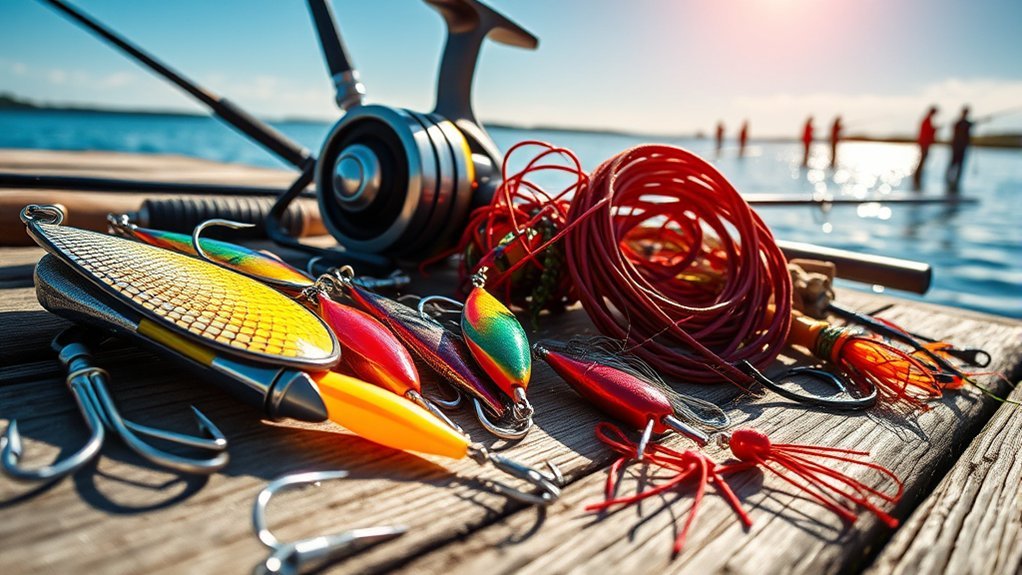
Understanding fishing terminology is useful for both new and experienced anglers. The right terms help you identify gear, follow local rules, read fishing reports, and understand advice from other anglers.
An angler is someone who fishes with a rod, reel, line, hook, bait, or lure. You may also hear people use “fisherman,” “fisher,” or “recreational angler,” depending on the setting.
When you are on the water, you might use chumming to attract fish by scattering bait or fish scraps. This can create a scent trail, but many areas regulate or restrict chumming, so you should check local rules before using it.
The drag on your fishing reel controls how much resistance a fish feels when it pulls line. A properly set drag helps prevent broken line, bent hooks, and lost fish.
Using chumming responsibly can attract fish, while understanding your reel’s drag helps you fight fish without snapping your line.
You should also know your local creel limit, which is the number of fish you may legally keep. Some waters also use size limits, slot limits, seasonal closures, or special gear rules.
Catch and release means returning a fish to the water, ideally with minimal handling and injury. This practice supports conservation and helps maintain fish populations for future trips.
Mastering these terms will improve your fishing experience and help you practice responsible angling.
Common Fishing Terms Beginners Should Know
Before you compare rods, choose lures, or study advanced techniques, learn the common words anglers use most often. These terms appear in product descriptions, fishing reports, regulations, and conversations at the boat ramp.
| Term | Meaning | Why It Matters |
|---|---|---|
| Angler | A person who fishes with rod-and-line gear. | Helps describe recreational fishing clearly. |
| Bait | Natural or prepared food used to attract fish. | Useful for matching what fish already eat. |
| Lure | An artificial bait designed to imitate prey. | Helps you cover water and trigger strikes. |
| Strike | The moment a fish bites or attacks your bait or lure. | Tells you when to set the hook. |
| Hookset | The motion used to drive the hook into the fish’s mouth. | Improves your chance of landing the fish. |
| Line | The cord that connects your reel to your lure, bait, or hook. | Affects casting, strength, and visibility. |
| Leader | A short section of line between the main line and lure or hook. | Adds abrasion resistance or reduces visibility. |
| Limit | The number or size of fish you may legally keep. | Keeps you compliant with local regulations. |
Note: Fishing terms can vary by region. A “rig,” “setup,” “trace,” or “leader” may mean slightly different things depending on where you fish and which species you target.
Fishing Techniques Explained
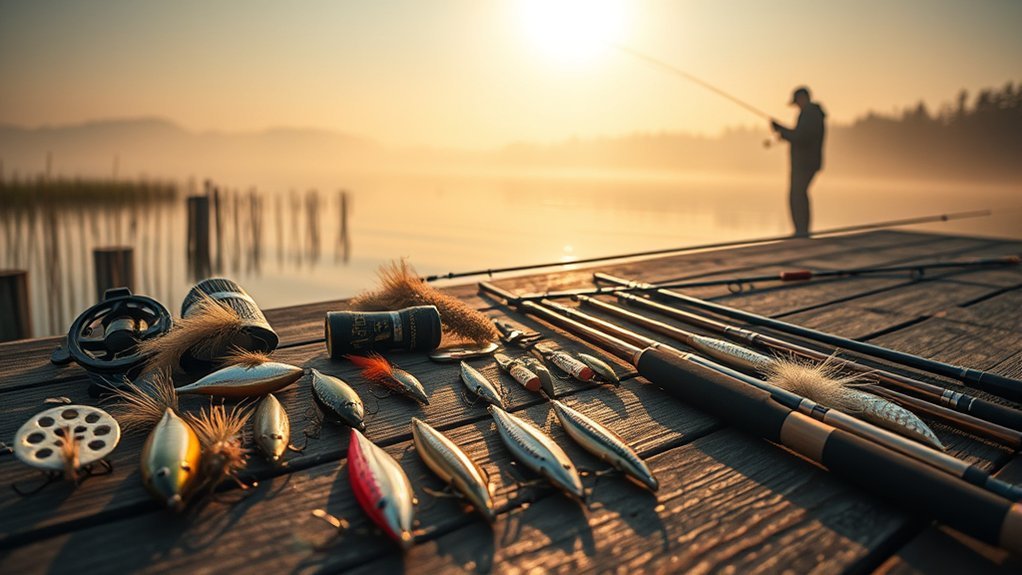
Fishing includes many techniques, and each one helps you target certain species, depths, structures, and water conditions.
Bottom fishing works well for species that feed near the lakebed, riverbed, reef, or ocean floor. You lower a weighted hook, bait, or rig until it reaches the bottom, then wait for a bite or move it slowly.
Jigging involves lifting and dropping your rod tip to make a lure rise and fall. This motion can imitate injured baitfish, shrimp, squid, or other prey.
Trolling means pulling lures or bait behind a moving boat. It helps you cover large areas and target fish that are spread out or suspended at different depths.
Chumming adds scent and small food particles to the water to attract fish. Use it carefully because it can be restricted in some freshwater, saltwater, and protected areas.
Drifting means letting your boat move naturally with wind or current while your bait or lure passes through likely fish-holding areas. It can help you present bait naturally across different depths.
Each technique has its own timing, gear, and learning curve. You should choose your method based on the fish species, water depth, weather, current, structure, and local regulations.
Essential Fishing Gear and Equipment
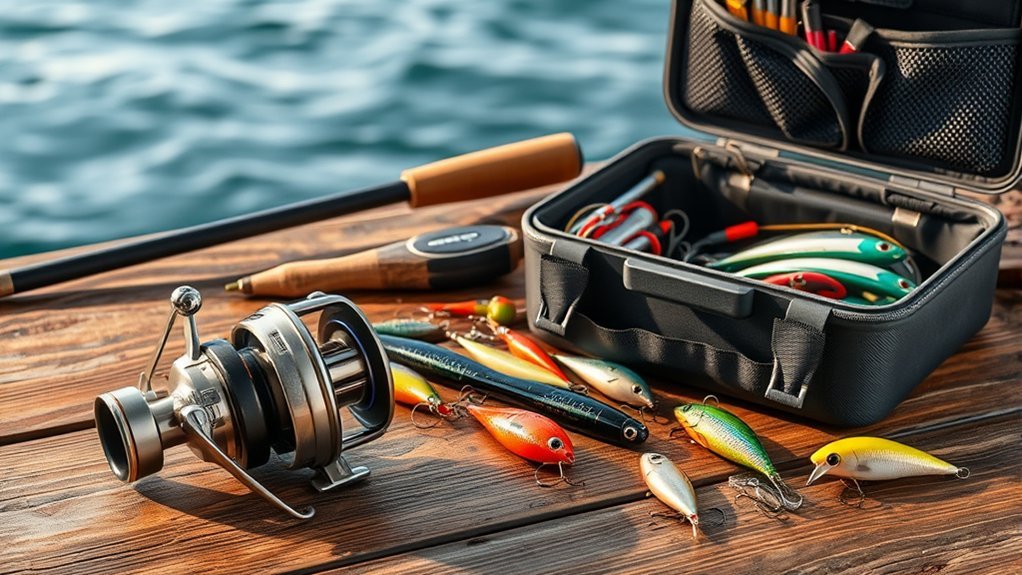
When you prepare for a fishing trip, understanding the main types of fishing rods, reels, lines, and tackle will help you build a setup that fits your target species.
The right terminal tackle, such as hooks, sinkers, swivels, floats, and leaders, can improve your bait presentation and help you land more fish.
Start simple, then adjust your gear as you learn what works in your local water.
[Amazon Products Picked for You]
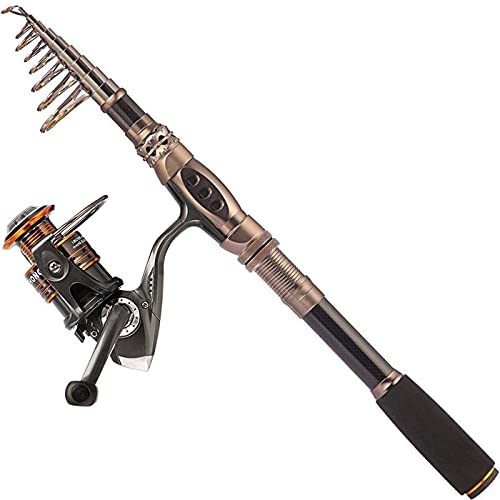
🎣 Warm Prompt: Fishing rod + reel (No Lures & Line) include Only Include 1 Fishing Rod +1 Fishing Reel.

🎣 Warm Prompt: Full Kit with Carrier Case Include 1 Fishing Rod + 1 Fishing Reel + Fishing Line + Various Fishing Lures + Fishing Hooks + Some Necessary Accessories + Carrier Bag.
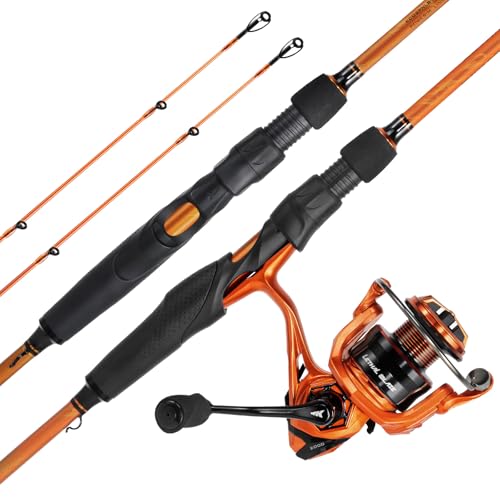
High Sensitivity 2-piece Fishing Rod – Premium KastFlex IM6 graphite blanks give exceptional bite detection for bass fishing, trout fishing, walleye fishing, and more. The Power Transition System (PTS) delivers the seamless sensitivity of a one-piece rod with the convenience of a 2-piece design for easy transport. Includes two matching tip sections for backup.
Types of Fishing Rods
Choosing the right fishing rod matters because it affects casting distance, lure control, hooksets, and how well you fight a fish.
Here are some common fishing rod terms you will see:
- Spinning Rods: Designed for spinning reels and useful for many freshwater and light saltwater techniques.
- Baitcasting Rods: Built for baitcasting reels and often used when you need accuracy, power, and control with heavier lures.
- Rod Power: Describes the rod’s strength, such as ultralight, light, medium, medium-heavy, or heavy.
- Rod Action: Describes where the rod bends, such as fast, moderate, or slow action.
- Rod Length: Usually ranges from short rods for tight spaces to long rods for distance, leverage, or line control.
Understanding these rod types will help you select equipment that fits your fishing style, target species, and casting space.
Reel Types Explained
Understanding reel types helps you choose a setup that matches your skill level and fishing technique. Each reel style offers different benefits.
| Reel Type | Key Features |
|---|---|
| Spinning Reel | Open-face design with easy casting and adjustable drag. |
| Baitcasting Reel | Revolving spool for accuracy, power, and control with heavier lures. |
| Spincaster Reel | Beginner-friendly closed-face reel with simple push-button casting. |
| Conventional Reel | Larger reel often used for trolling, deep water, and heavy lines. |
| Fly Reel | Simple reel designed to hold fly line and support controlled line handling. |
Selecting the right reel improves your casting, line control, and fish-fighting ability. If you are new to fishing, a spinning reel is often the easiest all-around choice.
Essential Tackle Components
A fishing reel is only one part of a complete setup. You also need the right tackle components to present bait or lures effectively.
These items work together:
- Rod: A flexible lever, often made from fiberglass, graphite, composite materials, or blends, used for casting and controlling line.
- Terminal Tackle: Hooks, sinkers, swivels, floats, split rings, snaps, and other small parts attached near the end of your line.
- Leader: A short section of line that connects your hook or lure to the main line. It can add strength, abrasion resistance, or stealth.
- Bait: Natural or prepared material used to attract fish, such as worms, minnows, shrimp, cut bait, corn, or dough bait.
- Line: The main connection between you and the fish. Common types include monofilament, fluorocarbon, and braided line.
Understanding these components will improve your fishing strategy and help you prepare for different conditions on the water.
Types of Bait and Lures
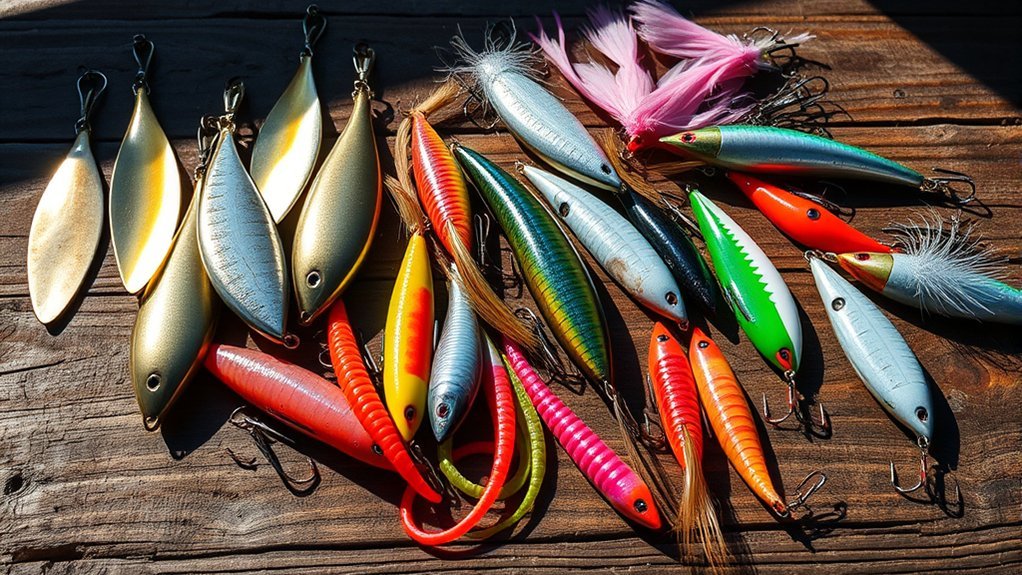
When it comes to fishing, selecting the right bait or lure is important because fish respond to size, scent, color, vibration, movement, and depth.
Bait can include live, dead, cut, or prepared materials such as worms, minnows, shrimp, crabs, insects, corn, salmon eggs, or dough bait. Natural bait works well when fish are feeding by scent or taste.
Lures are artificial items designed to imitate prey. They may look like baitfish, crawfish, insects, frogs, worms, squid, or other food sources.
Common lure types include hard baits, such as crankbaits and jerkbaits, which create action with a hard body or diving lip. Soft plastics, such as worms, swimbaits, grubs, and tube baits, imitate the movement of live prey.
Treble hooks have three hook points and often appear on hard baits. They can improve hookup odds, but you should handle them carefully and check local rules because some waters restrict hook types.
Spinnerbaits use rotating blades to create flash and vibration. They can attract predatory fish in stained water, shallow cover, or windy conditions.
Chatterbaits, also called bladed jigs, combine a jig head, skirt, and vibrating blade. Their strong vibration can help fish locate the lure in grass, stained water, or low-light conditions.
Pro Tip: Match your bait or lure to the food fish are already eating. Small minnows, insects, crawfish, shrimp, and worms can all guide your lure size, color, and retrieve speed.
[Amazon Products Picked for You]

【FISHING BAIT SET】Bombrooster fishing kit includes 4" and 5" soft baits. This versatile set suits various fishing conditions and comes with a tackle box for easy transport.

GREAT FISHING BAIT - The 5 Senko is a staple in the fishing world; The original soft-plastic stickbait is the no1 choice of anglers everywhere; The Senko has spawned thousands of imposters, but nothing beats the original soft stick bait
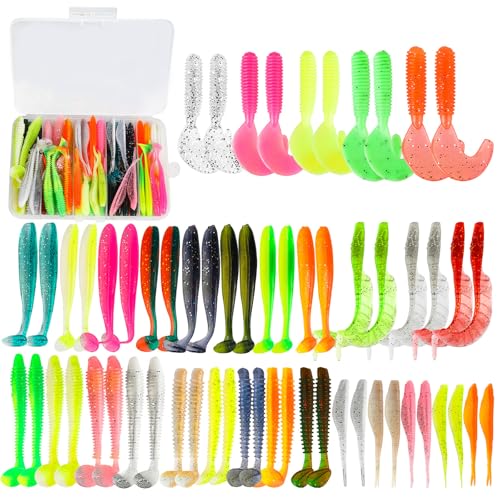
Various Sizes & Colors – This set includes 60 soft plastic paddle tail lures in 6.5cm and 8cm sizes. A wide range of realistic colors allows you to adapt to different water and weather conditions for better catch rates.
Fishing Rods and Reel Features
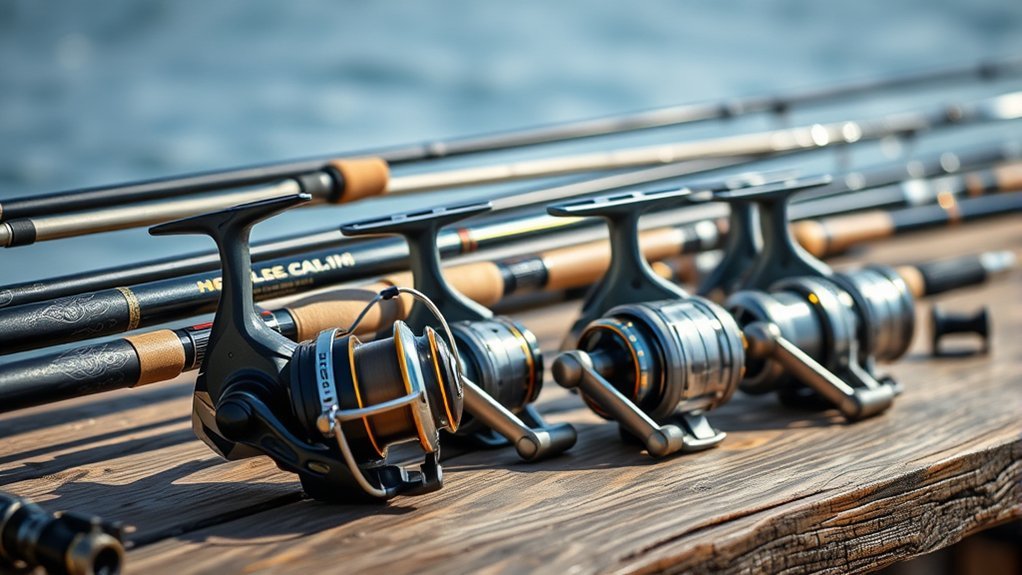
Choosing the right bait or lure is only part of fishing success. Your rod and reel features also affect casting, sensitivity, control, and landing power.
Learning these gear terms will help you compare products and understand why certain setups work better for certain fish.
- Rod Action: Describes how much and where the rod bends. Fast-action rods bend mostly near the tip, while slower-action rods bend deeper into the blank.
- Rod Power: Describes the rod’s lifting strength. Light power suits small fish and light lures, while heavy power suits bigger fish and heavier cover.
- Baitcaster Reels: Offer strong control and casting accuracy, but they need practice because backlash can occur when the spool overruns.
- Bail Functionality: On spinning reels, the bail guides line onto the spool and opens for casting.
- Free-Spool: Allows line to leave the reel with little resistance, often used in baitcasting, conventional, and trolling setups.
- Drag Mechanism: Applies pressure to the line when a fish runs. Proper drag helps protect your line, knots, rod, and hook.
[Amazon Products Picked for You]

🎣 Warm Prompt: Fishing rod(5.91FT)+reel(No Lures & Line) Include 1 Fishing Rod +1 Fishing Reel.
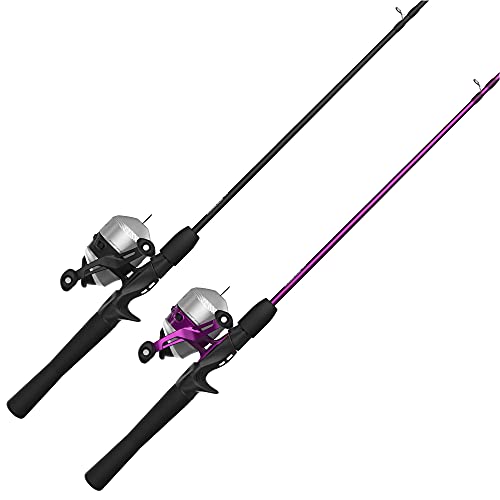
2-PACK COMBOS: Comes with (2) easy-to-use Zebco 33 spincast combos featuring a 5-foot 6-inch 2-piece fishing pole and size 30 fishing reel. You will be ready to hit the water with the patented no-tangle design reel that comes pre-spooled with 10-pound Zebco Cajun line. Whether you’re curious or serious about fishing, the reel that taught America to fish makes it easy

Lightweight and Sensitive IM6 Graphite Blanks – Centron Lite Spinning Combos feature a sensitive and light-weight IM6 Graphite blank designed to provide exceptional value and performance for all anglers. All combos are 2 pc and come in 4 lengths from 6’ to 7’6”.
Fishing Line Terms
Fishing line connects every part of your setup, so line terms are worth learning early. The wrong line can reduce casting distance, break under pressure, or look too visible in clear water.
| Line Term | What It Means | Common Use |
|---|---|---|
| Monofilament | Single-strand nylon line with stretch and easy handling. | Beginner setups, floats, topwater, general use. |
| Fluorocarbon | Dense, low-visibility line with good abrasion resistance. | Leaders, clear water, bottom-contact presentations. |
| Braided Line | Thin, strong line made from woven fibers with little stretch. | Heavy cover, long casts, deep water, strong hooksets. |
| Pound Test | The line strength rating, often shown as “lb test.” | Matching line to fish size, cover, and drag setting. |
| Abrasion Resistance | How well line handles rocks, docks, teeth, shells, and weeds. | Fishing around structure or rough bottom. |
| Line Memory | How much line keeps a coiled shape after sitting on the spool. | Affects casting smoothness and line management. |
Fish Behavior and Location Terms
Fishing terminology also describes where fish hold and how they behave. These words help you understand fishing reports and decide where to cast.
- Structure: Physical features such as points, ledges, humps, drop-offs, creek channels, reefs, rocks, and submerged timber.
- Cover: Objects fish use for shade, ambush, or protection, such as weeds, docks, brush, laydowns, grass, pilings, and lily pads.
- Current Seam: A line where faster and slower water meet. Fish often hold near these edges to save energy and ambush food.
- Breakline: A change in depth, bottom type, temperature, or cover that can concentrate fish.
- School: A group of fish moving or feeding together.
- Spawn: The period when fish reproduce. Fishing rules may change during spawning seasons in some areas.
- Feeding Window: A short period when fish become more active and more likely to bite.
- Thermocline: A temperature layer in deeper water that can affect where fish and bait gather.
Regulation and Conservation Terms
Fishing rules protect fish populations and help keep fisheries healthy. These terms often appear in state, provincial, or local fishing regulations.
- Fishing License: Permission required in many areas before you fish. Requirements depend on age, location, species, and water type.
- Creel Limit: The number of fish you may keep during a day or trip.
- Possession Limit: The total number of fish you may legally have in your possession.
- Size Limit: A minimum or maximum fish length you may keep.
- Slot Limit: A rule that protects fish within a certain size range or allows harvest only inside a certain size range.
- Closed Season: A time when fishing for a species is restricted or not allowed.
- Bycatch: A fish or species caught unintentionally while targeting something else.
- Barbless Hook: A hook without a barb, often used to make release easier and reduce injury.
Warning: Always check current local regulations before fishing. License rules, size limits, bag limits, bait restrictions, hook rules, and seasons can change by waterbody and species.
Specialized Fishing Accessories
Specialized fishing accessories can improve your angling experience by helping you control depth, detect bites, keep bait alive, and present rigs more effectively.
| Accessory | Purpose | Benefit |
|---|---|---|
| Bobber/Float | Suspends bait at a desired depth. | Signals when fish are biting. |
| Downriggers | Maintains bait or lures at specific depths in deep water. | Optimizes bait presentation while trolling. |
| Livewell | Keeps caught fish or live bait alive. | Helps bait stay fresh and supports legal live-fish storage where allowed. |
| Leader | Connects hook or lure to the main line. | Reduces visibility and increases abrasion resistance. |
| Terminal Tackle | Includes hooks, sinkers, swivels, snaps, floats, and similar end-of-line components. | Essential for presenting bait effectively. |
How to Use Fishing Terms When Planning a Trip
Fishing terms become more useful when you apply them before your trip. They help you read conditions, pack gear, and understand what local anglers are saying.
- Check the target species: Learn whether the fish feed near the bottom, around cover, in current, or in open water.
- Match the technique: Use terms like trolling, jigging, drifting, or bottom fishing to choose the right presentation.
- Choose the setup: Match rod power, rod action, reel type, line strength, leader, hooks, and sinkers to your target fish.
- Read the regulations: Look for license rules, creel limits, size limits, seasons, and legal bait restrictions.
- Prepare for release: Bring pliers, a landing net, and proper handling tools if you plan to release fish.
Frequently Asked Questions
What is the 80/20 rule in fishing?
The 80/20 rule in fishing means a small share of your choices often creates most of your success. For many anglers, that means focusing on the best locations, feeding times, proven techniques, and presentations instead of constantly changing everything.
What are the most common fishing terms?
Common fishing terms include angler, bait, lure, hook, line, leader, drag, cast, retrieve, strike, hookset, creel limit, catch and release, bycatch, structure, cover, jigging, trolling, and bottom fishing.
What are some four-letter fishing terms?
Four-letter fishing terms include bait, chum, drag, cast, line, lure, sink, reel, hook, fish, and knot. These simple words describe some of the most important parts of fishing.
What do fishermen call a big catch?
Anglers often call a big catch a “lunker.” You may also hear words like “monster,” “hog,” “tank,” “trophy,” or “bragging-size fish,” depending on the species and region.
What is the difference between bait and a lure?
Bait is usually natural or prepared food used to attract fish, such as worms, minnows, shrimp, or dough bait. A lure is an artificial object designed to imitate prey through shape, color, vibration, flash, or movement.
What does drag mean on a fishing reel?
Drag is the reel system that lets line slip under pressure when a fish pulls hard. A good drag setting helps protect your line, knots, rod, and hook while giving you control during the fight.
Conclusion
Learning fishing terms and techniques gives you a stronger foundation every time you pick up a rod. Once you understand words like drag, leader, structure, jigging, trolling, creel limit, and catch and release, you can make better choices before and during each trip.
Use this guide as a practical reference when you read fishing reports, shop for gear, study local regulations, or talk with other anglers. The more clearly you understand the language of fishing, the easier it becomes to build skill, stay safe, and enjoy your time on the water.