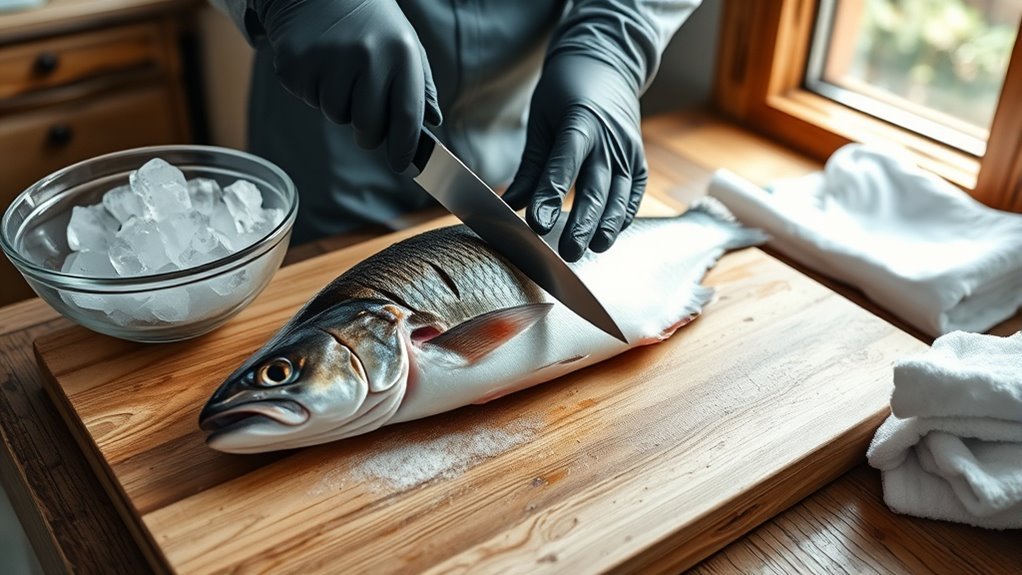
To handle fish safely, start by wetting your hands to protect their slime layer, then use a knotless, rubber-coated landing net whenever possible. Support the fish horizontally, keep it close to the water, and limit air exposure. For hook removal, keep the fish in the water when you can and use long-handled pliers or forceps for better control. If the hook is deeply swallowed, cut the line instead of pulling it free. These simple habits reduce stress, improve release survival, and help protect the fishery for future trips.
Quick Answer
The safest way to handle a fish is to wet your hands, support its body horizontally, keep it in the water as much as possible, and remove the hook quickly with proper tools. Avoid the gills, eyes, and dry surfaces. If the fish looks weak, revive it in the water before release.
Key Takeaways
- Wet your hands or gloves before touching fish so you do not strip away their protective slime layer.
- Support fish horizontally under the belly and near the tail instead of lifting them by the jaw, gills, or line.
- Keep fish in the water whenever possible, especially during hook removal and recovery.
- Use barbless hooks, rubber-coated nets, and long-handled pliers to reduce injury and handling time.
- Release fish only after they can hold themselves upright and swim away under their own power.
At a Glance
| Time Required | Usually less than 1 minute per fish when your tools are ready |
| Difficulty | Beginner-friendly, but larger fish need extra care and support |
| Tools Needed | Rubber-coated landing net, long-handled pliers or forceps, line cutters, barbless hooks, and a wet measuring board if needed |
| Cost | Low to moderate, depending on your net, pliers, and release tools |
Importance of Proper Fish Handling
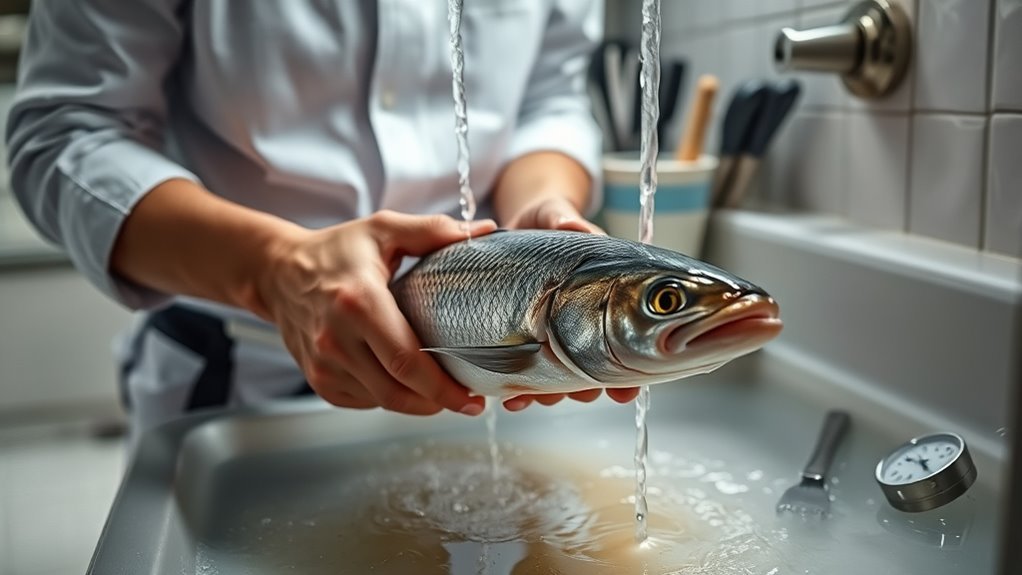
When you handle fish properly, you improve their chances of survival and support the health of the aquatic ecosystem around them. Careful handling matters most when you plan to release the fish, but it also helps when you keep fish for food because clean handling protects quality and reduces waste.
Recreational anglers release large numbers of fish each year, so small habits can make a real difference. Using barbless hooks, a rubber-coated landing net, and quick release techniques can reduce stress, scale loss, and hook injuries. The goal is simple: land the fish quickly, touch it as little as possible, and return it in strong condition when release is allowed.
Fish are not built for long air exposure or rough handling. Dry hands, hot boat decks, grass, sand, and hard measuring surfaces can damage their slime layer, scales, fins, and eyes. Once that protective coating is harmed, the fish may face a higher risk of infection after release.
Stress can also affect recovery. Long fights, warm water, deep hooking, and repeated lifting increase the risk that a fish will swim away weak. By learning proper handling techniques before your next trip, you support conservation and promote responsible angling in your local fishing community.
Warning: Never place a fish on dry ground, hot metal, carpet, or rough boat surfaces if you plan to release it. These surfaces can remove slime, damage scales, and make recovery harder.
Best Practices for Handling Fish
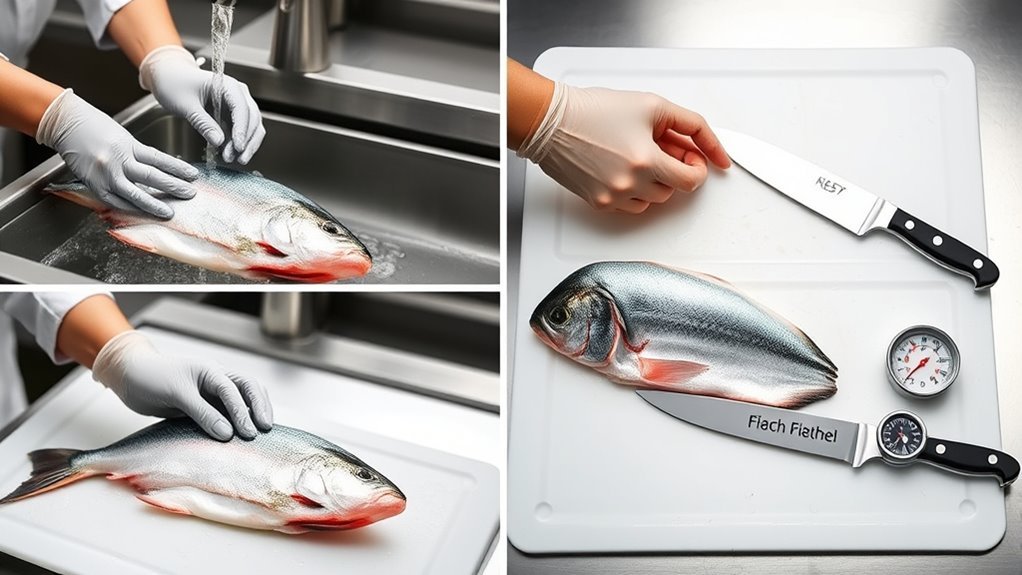
When handling fish, your main goal is to reduce contact, protect the body, and keep the fish breathing. A calm, prepared approach works better than rushing after the fish is already beside you.
Before you make the first cast, keep your release tools within reach. A fish spends less time out of water when your net, pliers, cutters, and camera are already ready.
Minimal Handling Techniques
One effective way to protect the health and safety of fish during handling is to follow minimal handling techniques. These habits help reduce stress and protect the fish’s crucial slime layer.
- Wet your hands before you touch a fish, or use wet rubberized gloves.
- Use a knotless, rubber-coated net instead of a rough mesh net.
- Keep the fish in the water while you remove the hook whenever possible.
- Support the fish under the belly and near the tail when you must lift it.
- Limit air exposure and avoid repeated photo attempts.
- Release the fish gently instead of tossing it back into the water.
If you want a photo, lift the fish only when the camera is ready. Hold it low over the water or over a wet net so it does not fall onto a hard surface.
Proper Fish Support
Proper support during handling is essential to the fish’s well-being and survival. Always use wet hands or wet rubberized gloves to protect the fish’s slime layer, which helps guard against infection.
Support the fish horizontally, placing one hand near the tail and the other under the belly or behind the pectoral area. For smaller fish, a gentle grip behind the head and under the body may be enough. For larger fish, use both hands and keep the fish close to the water.
Avoid holding fish by the jaw or gills. Jaw-holding may look common in photos, but it can injure larger fish when the body hangs vertically. Gills are delicate, and touching them can cause serious harm.
Keep the fish’s body straight rather than bending its head or spine. If you need to measure it, use a wet measuring board and return the fish to the water as soon as you finish.
Using a knotless, rubber-coated landing net helps support the fish’s body weight while minimizing fin splitting, scale loss, and scraping. This makes it one of the best tools for safe catch and release.
Pro Tip: Treat your net like a floating recovery cradle. Keep the fish in the submerged net while you unhook it, measure it, or get ready for a quick photo.
Techniques for Catch and Release
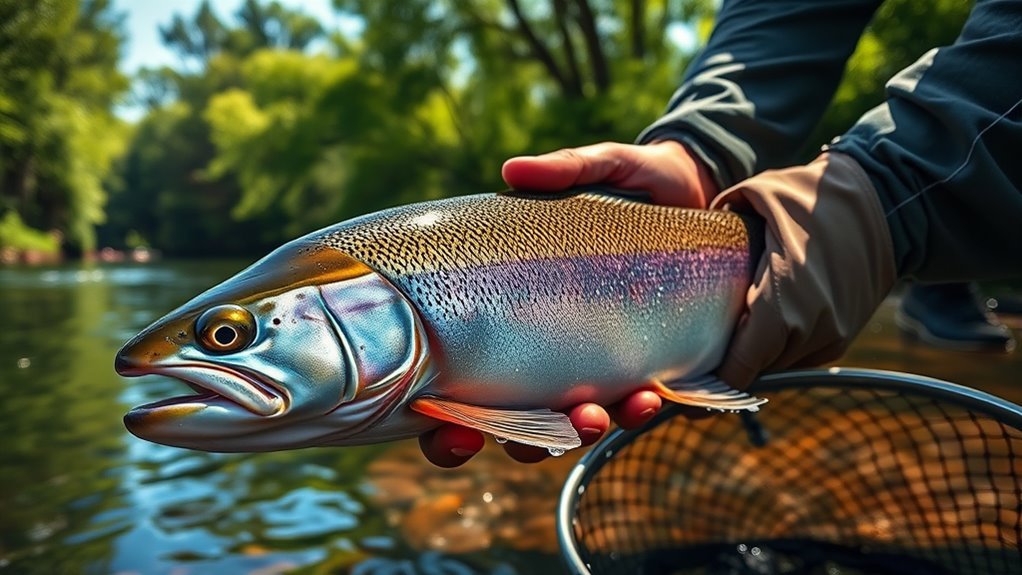
Catch and release fishing is a valuable practice for preserving aquatic ecosystems and supporting healthy fish populations. It works best when you plan for release before the fish is hooked.
Good catch and release starts before the cast. The right hook, tackle, net, and release plan help the fish recover faster.
- Use barbless hooks or crimp the barb to make removal faster and reduce injury.
- Match your tackle to the fish so you can land it quickly without exhausting it.
- Use circle hooks when bait fishing where they are appropriate, since they often reduce deep hooking.
- Handle fish with wet hands or rubberized gloves to protect the slime layer.
- Keep the fish in the water as much as possible during hook removal.
- Limit air exposure and avoid taking several photos of the same fish.
When you’re ready to release, place the fish in the water head first and facing into gentle current if current is present. This helps water move across the gills and gives the fish a better chance to recover.
If the fish appears exhausted, hold it upright in the water and let it regain balance. Do not push it back and forth aggressively. A gentle forward movement or steady hold in current is usually safer because water naturally flows over the gills.
Let the fish swim away when it can hold itself upright and move with steady body control. Following these steps supports sustainable fishing practices and improves the odds that the fish will survive after release.
Removing Hooks Safely
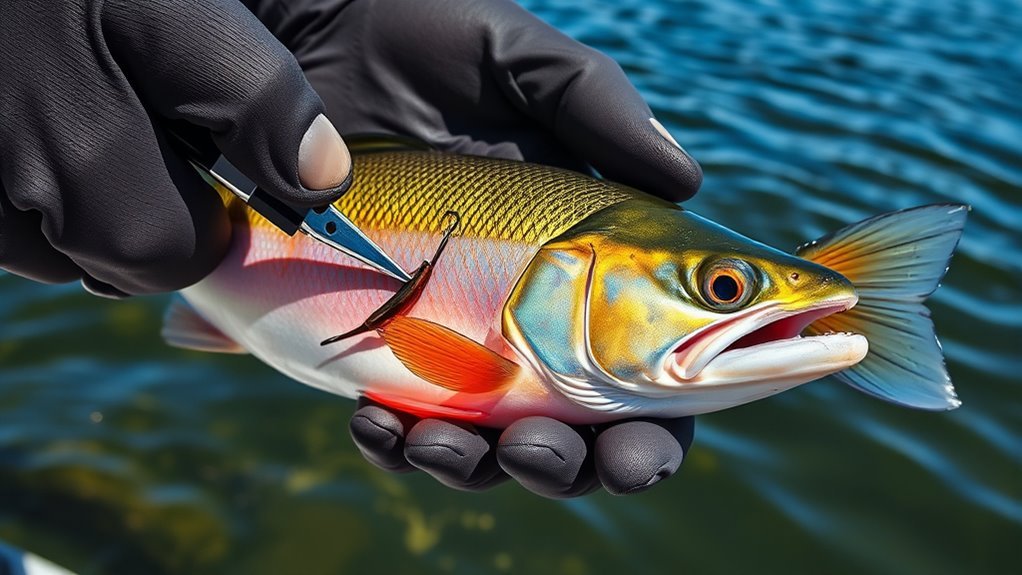
Removing hooks safely is vital for the well-being of the fish you’ve caught. The faster and cleaner the removal, the less stress the fish faces.
Use long-handled fishing pliers, hemostats, or forceps for precision, especially with fish that have sharp teeth, spines, or strong jaws. Keep the fish in the water while you work when possible. If the fish must come out of the water, lift it only after you know where the hook is and which tool you need.
For larger fish, keep them supported in a net or across your knees if you are wading in shallow water. Prevent flopping because a fish can injure itself against rocks, boat decks, or tackle.
If the hook is deeply swallowed, it is often better to cut the line close to the mouth instead of digging for the hook. Pulling on a deep hook can damage internal tissue and reduce survival.
Barbless hooks make this step much easier. You can buy barbless hooks or crimp barbs with pliers before fishing. This small change speeds up release and reduces the amount of force needed to remove the hook.
[Amazon Products Picked for You]

Key Features– Tough S45 steel construction will never bend or break – Polymer coating resists corrosion – 7 inch size is ideal for removing hooks – Crimp split shot or build leaders – Cut wire or mono – Tune baits mono – These KastKing Intimidator 7” pliers are great as fishing tools and are handy fishing accessories to add to your fishing gear
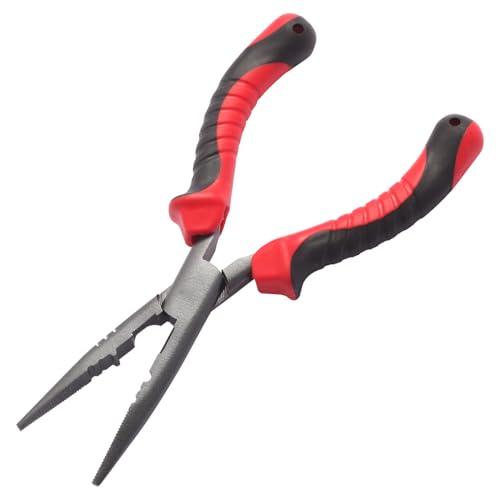
Built for the Toughest Fishing Gear Demands: Crafted from durable high carbon manganese steel, these fishing pliers are made to withstand heavy use. Whether you're deep-sea fishing or river angling, they're your go-to fishing tools for both freshwater and saltwater

🎣【Dependable tackle with an extended duration】: Pristis plier is made of 2CR13 stainless steel at the jaw with a Teflon coating for corrosion resistance. The handle is made of aerospace grade aluminum alloy with an oxidation coating for enhanced durability and lightness. The plier is die-cast and cut by CNC precision processes, making them ideal fishing tackles for freshwater and saltwater.
Step-by-Step Hook Removal
- Keep the fish in the water or in a wet rubber-coated net.
- Wet your hands or gloves before touching the fish.
- Locate the hook and choose pliers, forceps, or a dehooking tool.
- Back the hook out along the same path it entered.
- Cut the line if the hook is deep, near the gills, or unsafe to remove.
- Revive the fish if needed before release.
Note: If a fish is bleeding heavily from the gills or appears unlikely to survive, follow your local regulations. In some cases, keeping a legal fish may be more responsible than releasing one with severe injury.
Gear and Tools for Conservation
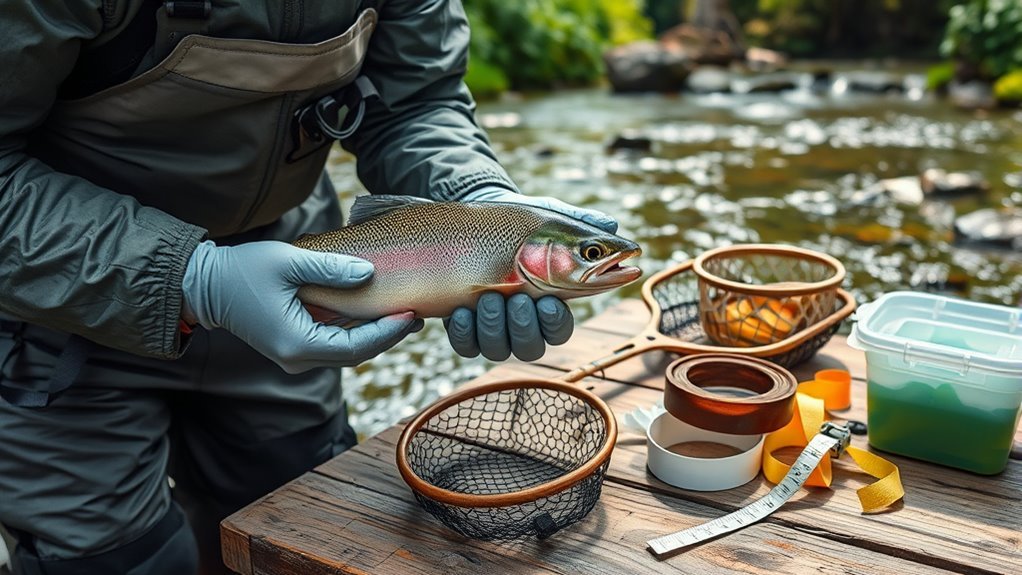
Handling fish safely goes beyond removing hooks. The gear you choose can reduce injury before, during, and after landing the fish.
By adding a few conservation-focused tools to your fishing setup, you can improve fish survival rates and reduce damage during the release process.
- Barbless Hooks: Use barbless hooks or crimp the barbs on your hooks to make removal faster and safer.
- Rubber-Coated Landing Net: Choose knotless, rubber-coated mesh to reduce slime loss, split fins, and scale damage.
- Dehooking Tools: Carry long dehooking tools for fish with sharp teeth, strong jaws, or deeply placed hooks.
- Line Cutters: Keep cutters close so you can cut the line quickly when a hook is too deep to remove safely.
- Wet Measuring Board: Wet the board before measuring so the fish does not contact a dry, rough surface.
- Single-Hook or Modified Lures: Consider replacing treble hooks with single hooks where practical, or removing extra hooks from multi-hook lures.
These tools help you support the fish’s body, shorten handling time, and uphold essential conservation practices. They also make the process easier and safer for you.
[Amazon Products Picked for You]

【Premium Floating Design Fishing Net】Engineered with integrated buoyant foam padding, our fishing net remains afloat for instant retrieval if dropped. Features a fish-friendly rubber-coated nylon mesh that prevents snagging and protects fish, making it ideal for catch and release. Ensures hassle-free and responsible fishing.

【Dimension of the Net】- 15.8" x 11.8" hoop, 11.8" depth and16.7 inch handle. The classical shape and size of the fishing net will surely look good in your pictures. Long handle with excellent grip afford plenty of leverage to land the next fish.
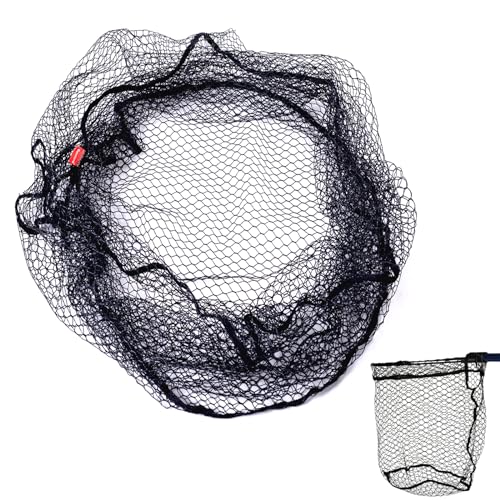
Ample Size:Fits Hoop Size 30"x32", 36"Depth|32.2" Net Dia.|101"Circumference,Mesh Size 3/4 inches,compatible with teardrop landing net hoops.If you use square or irregular-shaped frames,carefully measure the maximum inner width before purchasing.This non-stretch coated mesh can't stretch to fit mismatched sizes.
Tips for Reviving Fish
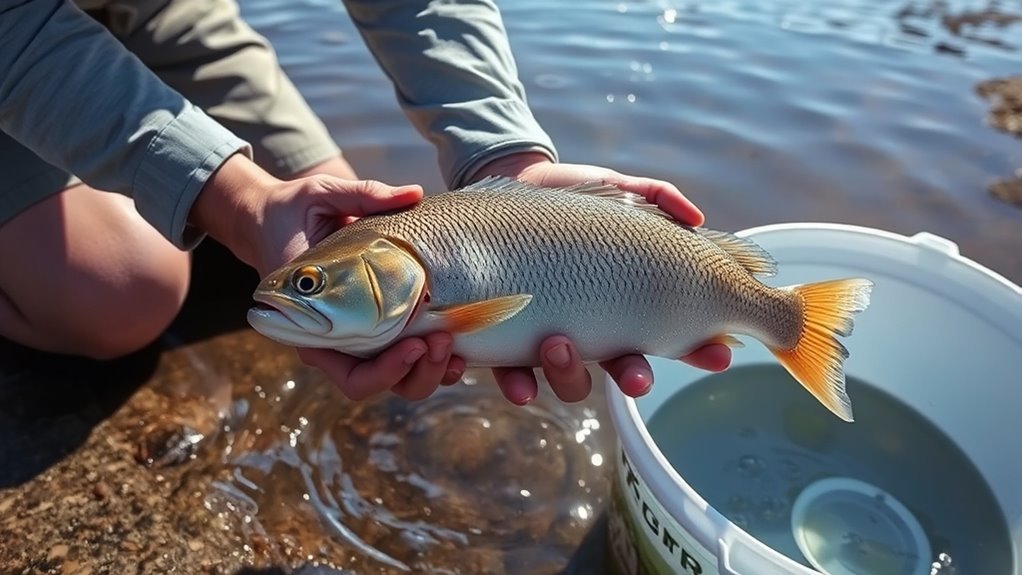
While it is essential to catch fish responsibly, reviving them properly is just as important for improving their survival. Some fish swim away immediately, but others need a short recovery period.
Revival is especially important after a long fight, warm water conditions, deep water capture, or extended handling. Watch the fish closely instead of releasing it before it is ready.
| Step | Action | Purpose |
|---|---|---|
| Hold the fish | Keep it submerged and upright | Help restore balance and breathing |
| Position the fish | Face it into gentle current if available | Let water flow over the gills |
| Check for signs | Look for strong body control and upright posture | Confirm it is ready to swim away |
After catching, hold the fish in water to help it recover. Keep one hand near the tail and one under the belly if the fish needs support. If it tries to kick away strongly, loosen your grip and let it swim off.
If the fish rolls to one side, sinks, or cannot stay upright, keep it in the water longer. Do not drag it backward, and do not move it violently. Gentle forward movement or steady positioning in current is enough to help oxygenated water pass over the gills.
Release the fish only when it can maintain an upright position and swim away with control. These steps improve the fish’s chance of survival after release.
[Amazon Products Picked for You]

Professional Fishing Gloves for Handling - The textured fishing catching gloves is made of a high-strength latex coating and level 5 cut-resistant latex material.Fish glove is waterproof,non-slip,puncture-resistant,abrasion resistant.The seamless palm design makes the fishing gear easy to clean.You can catch slippery fish well and prevent bites or pokes from the occasionally quite sharp dorsal fins when handling freshly caught fish.Valentine's Day gifts for fathers,grandfathers,brothers,uncles.

【Durable Materials】These waterproof fishing gloves are made from high-quality latex, ABS, and polyester, making fishing accessories for men waterproof and sturdy. The seamless palm design ensures ice fishing gloves are easy cleaning.

【High-quality Materials】Fishing gloves are made of polyester materials. These women's fishing gloves are waterproof and wear-resistant. Waterproof fishing gloves provide excellent protection and durability for all your fishing needs.
Choosing and Releasing Fish
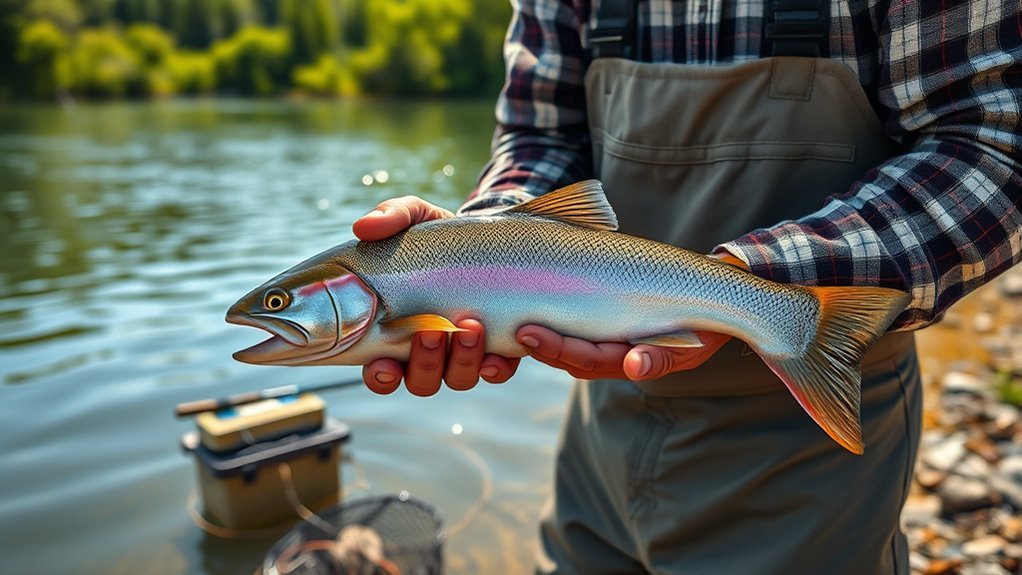
Choosing the right fish to keep or release is essential for maintaining healthy ecosystems and making responsible use of the resource.
A legal fish is not always the best fish to keep, and a released fish still needs careful handling to survive.
Before you decide, check your local fishing regulations for size limits, slot limits, daily limits, seasonal closures, and protected species. Rules vary by location and can change.
To support fish populations and make better release decisions, keep these tips in mind:
- Release fish that are undersized, protected, out of season, or outside the legal slot limit.
- Consider keeping legal fish that are gut-hooked or gill-hooked if regulations allow, since severe injuries can lower survival.
- Use barbless hooks and reel fish in quickly to reduce deep hooking and exhaustion.
- Release large breeding fish carefully when local guidance encourages it.
- Monitor each released fish for responsiveness before letting it swim away.
Always return fish to the water gently and hold them horizontally when lifting is needed. If a fish struggles to recover, give it more time in the water before release.
Handling Fish You Plan to Keep
Safe handling also matters when you plan to keep fish for food. Good handling preserves flavor, protects texture, and reduces spoilage.
Dispatch legal fish quickly and humanely according to local best practices. Then bleed and chill the fish as soon as possible if that is appropriate for the species. Keep fish out of direct sun and place them on ice or in a cooler instead of leaving them in warm water or on a hot deck.
Use clean knives, clean cutting boards, and clean storage bags. Keep raw fish separate from ready-to-eat foods, and wash your hands after handling fish, bait, or dirty gear.
If you clean fish at home, keep the work area sanitary and cook or refrigerate the fish promptly. Fresh handling protects both food quality and personal safety.
Common Fish Handling Mistakes to Avoid
Many fish handling problems come from small mistakes that happen quickly during an exciting catch. Avoiding these habits can improve release success.
- Dry hands: Dry skin can remove the fish’s slime layer.
- Vertical lifting: Hanging large fish by the jaw can strain the jaw, spine, and internal organs.
- Gill contact: Gills are delicate and should not be touched unless you are keeping the fish.
- Long photo sessions: Repeated lifting increases air exposure and stress.
- Rough surfaces: Sand, rocks, carpet, and hot boat decks can damage scales and slime.
- Wrong net type: Knotted nylon mesh can scrape fish more than rubber-coated mesh.
- Delayed tools: Searching for pliers after landing the fish wastes precious time.
Prepare before you cast, and these mistakes become much easier to avoid.
Additional Resources and Expert Insights
You can improve safe and effective fish handling by learning from official fishery agencies, conservation programs, and experienced anglers. Use credible resources when you need guidance on local rules, species-specific release methods, and food safety.
Many state and federal fishery agencies publish catch-and-release guidance, seasonal regulations, and fish handling recommendations. Local rules matter because best practices can change by species, water temperature, and region.
To help you choose the best practices for handling fish in the water, consider these key points:
| Resource | Purpose |
|---|---|
| How-to Videos | Visual guidance on safe fish handling, hook removal, and release posture |
| Expert Insights | Practical tips on supporting the fish, reducing air exposure, and improving survival |
| Barbless Hooks | Helps reduce hook damage and speed up removal when releasing the fish |
Integrating these resources into your routine can improve your technique and lead to better outcomes when fishing.
Sources
- NOAA Fisheries: Responsible Recreational Fishing — supports careful catch-and-release practices and responsible angling.
- Florida Fish and Wildlife Conservation Commission: Fish Handling — supports fish handling, hook removal, and release guidance.
- U.S. Food and Drug Administration: Food Safety for Fish and Fishery Products — supports safe handling for fish kept for food.
Frequently Asked Questions
How do you handle a fish for beginners?
Wet your hands first, keep the fish close to the water, and support it horizontally with one hand under the belly and one near the tail. Avoid touching the gills or eyes. Use pliers to remove the hook quickly, then release the fish once it can stay upright and swim strongly.
What are the seven best ways to handle fish safely?
The seven best ways are to wet your hands, use a rubber-coated net, keep the fish in water, support it horizontally, avoid the gills and jaw, remove the hook with proper tools, and revive the fish before release when needed.
How do you take care of a fish step by step after catching it?
First, decide whether the fish is legal to keep or must be released. If releasing it, keep it wet, remove the hook quickly, support its body, and revive it in the water. If keeping it, dispatch it humanely, chill it quickly, and handle it with clean tools.
What are the proper handling techniques for fish?
Proper fish handling means reducing air exposure, protecting the slime layer, supporting the fish’s full body weight, using safe hook removal tools, and releasing the fish only when it is responsive. These techniques reduce stress and improve survival after release.
Should you use gloves when handling fish?
Wet rubberized gloves can help when handling toothy or spiny fish, but dry gloves can harm the slime layer. If you use gloves, wet them first and avoid rough fabric. For many freshwater fish, clean wet hands are enough.
Is it better to remove a deep hook or cut the line?
If the hook is deep, near the gills, or hard to reach without tearing tissue, cut the line close to the mouth. Digging for a deep hook can cause more damage than leaving it in place.
Conclusion
By handling fish with care, you protect their survival and support the health of aquatic ecosystems. Picture yourself gently cradling a shimmering trout over the water, its scales glistening as you quickly remove the hook and let it recover in your wet hands.
Each careful step matters. Wet hands protect the slime layer. A rubber-coated net supports the body. Fast hook removal lowers stress. A patient release gives the fish time to regain strength.
Commit to these habits every time you fish, and you will enjoy the sport more responsibly. You will also contribute to conservation efforts, helping keep rivers, lakes, and coastal waters full of life for future anglers.