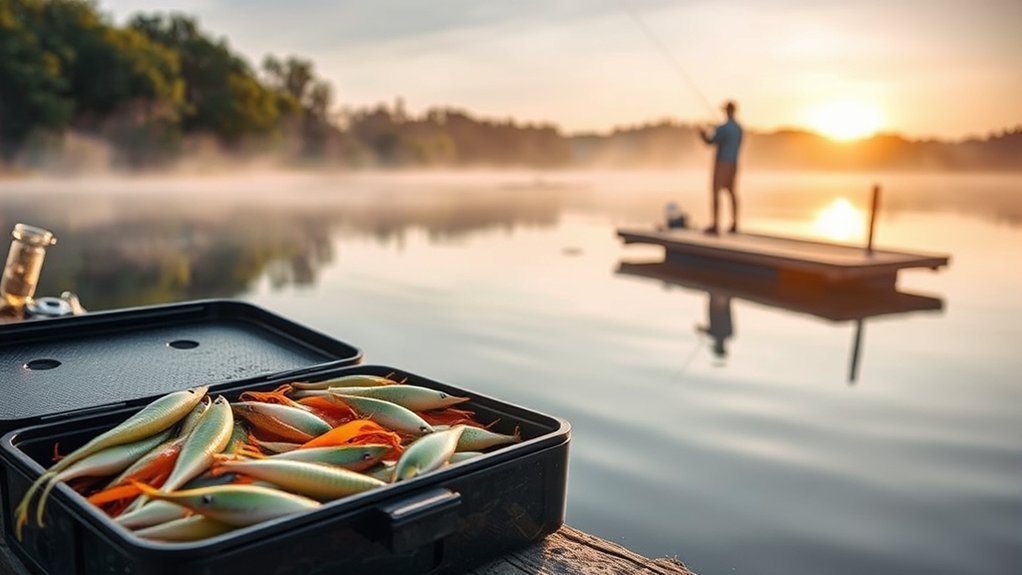
Using live bait can make fishing easier for beginners because it looks, smells, and moves like the food fish already eat. The key is choosing bait that matches your target species, keeping it lively, and rigging it so it swims or drifts naturally. This guide covers saltwater and freshwater live bait, simple hooking methods, bait care, hook choices, safety notes, and common beginner mistakes.
Quick Answer
For beginners, the best live bait is usually shrimp or mullet in saltwater and worms, minnows, crickets, or leeches in freshwater. Match the bait to the fish you want, keep it cool and oxygenated, use the lightest hook that holds it securely, and always check local bait rules before fishing.
Key Takeaways
- Live bait works best when it matches the natural food source of the fish you are targeting.
- Healthy, active bait usually outperforms weak bait, so oxygen, temperature, and space matter.
- Use small, light hooks when possible so your bait can move naturally.
- Saltwater favorites include shrimp, mullet, menhaden, pinfish, sardines, anchovies, and cigar minnows.
- Freshwater favorites include worms, minnows, crickets, grasshoppers, and leeches.
- Local rules may limit which live bait you can use, catch, transport, or release.
At a Glance
| Best For | Beginners learning how to choose, store, rig, and fish with live bait |
| Difficulty | Easy to moderate, depending on bait type and target species |
| Basic Gear | Rod and reel, hooks, sinkers, bobbers or floats, bait bucket, aerator, pliers, and a valid fishing license |
| Most Beginner-Friendly Baits | Shrimp and mullet for saltwater; worms, minnows, crickets, and leeches for freshwater |
| Main Rule | Keep bait alive, legal, and natural-looking in the water |
Types of Live Bait for Saltwater Fishing
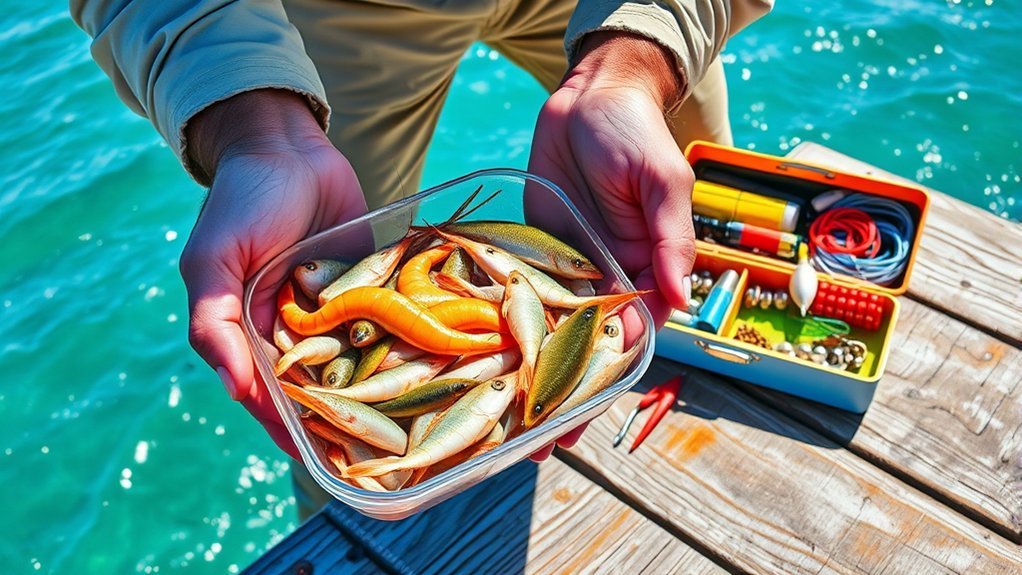
When you’re gearing up for saltwater fishing, understanding the types of live bait at your disposal is essential for success. Saltwater predators often feed by sight, vibration, and scent, so lively bait can make a big difference.
Menhaden, also called bunker or pogies in many coastal areas, are versatile baitfish. They usually have roundish silver bodies and a distinct dark shoulder spot, which makes them attractive to striped bass, bluefish, redfish, king mackerel, and other predators.
Mullet are another dependable choice. They have blunt faces, strong bodies, and visible horizontal stripes. Finger mullet are popular for flounder, redfish, snook, tarpon, and many inshore species because they stay active on the hook.
For targeting larger fish, consider pinfish. These small, oval, hardy baitfish have silvery bodies and yellowish fins. They are common along the Atlantic and Gulf coasts and work well for grouper, snapper, redfish, and other aggressive feeders.
On the West Coast, sardines are a major live bait option. These elongated baitfish can reach several inches long and often have green-blue backs with silver sides. They are widely used for tuna, yellowtail, halibut, and other offshore species.
Anchovies, cigar minnows, pilchards, and blue runners also deserve attention when local bait shops carry them. They can be excellent choices for mackerel, tuna, amberjack, snapper, and other fast-moving predators.
Ultimately, shrimp are one of the most beginner-friendly saltwater live baits. They are easy to use, easy to buy in many coastal areas, and effective for trout, redfish, flounder, sheepshead, snapper, pompano, and many other species.
Note: Bait names vary by region. A baitfish called “pilchard” in one area may be sold under another common name somewhere else. Ask a local bait shop what fish are feeding on that week.
[Amazon Products Picked for You]

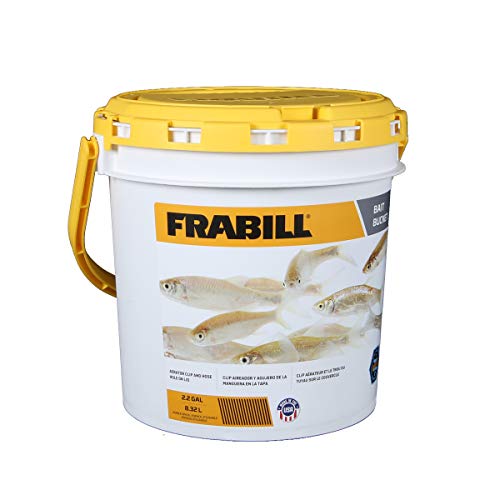
Frabill Insulated Bait bucket with included aerator

LIVE BAIT RETRIEVAL MADE SIMPLE: The unified lid system designed to fit any standard 5-gallon bucket (not included) features a built-in pull rod activated net that quickly and efficiently collects bait and brings it to the surface for easy selection.
Frabill | Trusted By Anglers Since 1938
Popular Saltwater Species to Target With Live Bait
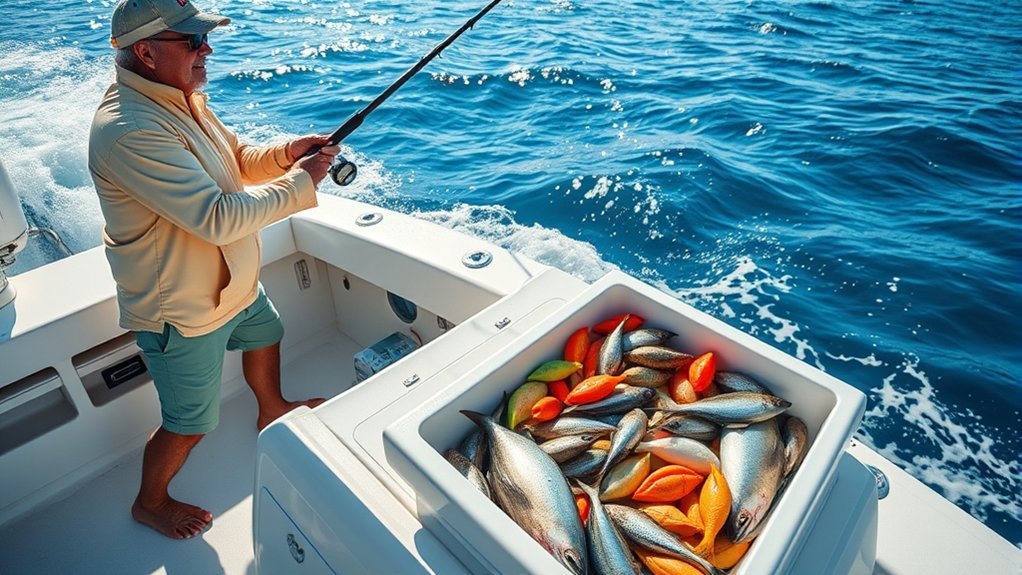
When targeting popular saltwater species, understanding their preferred live baits and effective fishing techniques is essential.
For instance, flounder respond well to mullet, mud minnows, and shrimp, while king mackerel often chase menhaden, cigar minnows, blue runners, and lively mullet in warmer months.
Top Saltwater Species
Targeting top saltwater species with live bait can elevate your fishing experience, offering both excitement and challenge.
Flounder are effectively caught using mullet, shrimp, mud minnows, and menhaden, making them a popular choice for anglers fishing channels, inlets, docks, creek mouths, and sandy drop-offs.
King mackerel, known for their speed, are best attracted with live bait like menhaden, mullet, cigar minnows, and blue runners, especially along coastal waters, near bait schools, around piers, and over reefs.
Bluefin tuna provide an exhilarating challenge and often respond well to anchovies, sardines, mackerel, and menhaden. These fish require heavier tackle, strong knots, and careful handling because they are powerful offshore predators.
When targeting species like tarpon and snook, hardy options such as mullet can trigger aggressive feeding behavior. Shrimp, pilchards, pinfish, and crabs can also work depending on the season and location.
Additionally, live shrimp is versatile and effective, enhancing your chances of a successful fishing expedition across various saltwater species. It is especially useful when you are not sure what is biting.
Ideal Live Baits
Choosing the right live bait is essential for successfully targeting popular saltwater species. Here are some ideal options that can enhance your catch rate:
- Flounder: Use mullet, shrimp, mud minnows, or small menhaden. These bottom-dwellers are attracted to the natural movement and scent of these baits.
- King Mackerel: Opt for menhaden, mullet, cigar minnows, or blue runners. Their lively action entices these aggressive predators.
- Bluefin Tuna: Live anchovies, sardines, mackerel, and menhaden can work well because they mimic natural forage.
- Redfish: Try shrimp, finger mullet, pinfish, mud minnows, or small crabs around grass edges, oyster bars, docks, and flats.
- Speckled Trout: Use shrimp, pilchards, finger mullet, or small baitfish under a popping cork or free-lined near current.
- Snook: Fish live shrimp, pilchards, mullet, or pinfish near mangroves, bridges, docks, inlets, and current breaks.
Effective Fishing Techniques
Effective fishing techniques can greatly increase your success rate when using live bait for popular saltwater species.
When targeting flounder, using mullet, shrimp, mud minnows, or menhaden can attract these flatfish effectively. Let the bait move close to the bottom and work it slowly along edges where flounder can ambush prey.
For king mackerel, lively baits like menhaden, cigar minnows, blue runners, and mullet mimic their natural prey, enhancing your chances. Slow trolling or drifting live bait near structure, bait schools, and temperature breaks can be productive.
If you’re after bluefin tuna, opt for sardines, mackerel, anchovies, or menhaden when they match the local forage. Tuna fishing often requires heavier gear, careful drag settings, and strong leader material.
Drift fishing with live bait is highly effective, allowing you to cover more water and entice a variety of species. This method works well when fish are spread out or when current carries bait naturally through feeding zones.
Finally, using circle hooks is a smart choice for many live bait setups. They often hook fish near the corner of the mouth when used correctly, which can improve release survival for fish you do not keep.
Pro Tip: If your live bait keeps dying quickly, check three things first: water temperature, oxygen level, and overcrowding. Weak bait usually catches fewer fish.
Types of Live Bait for Freshwater Fishing
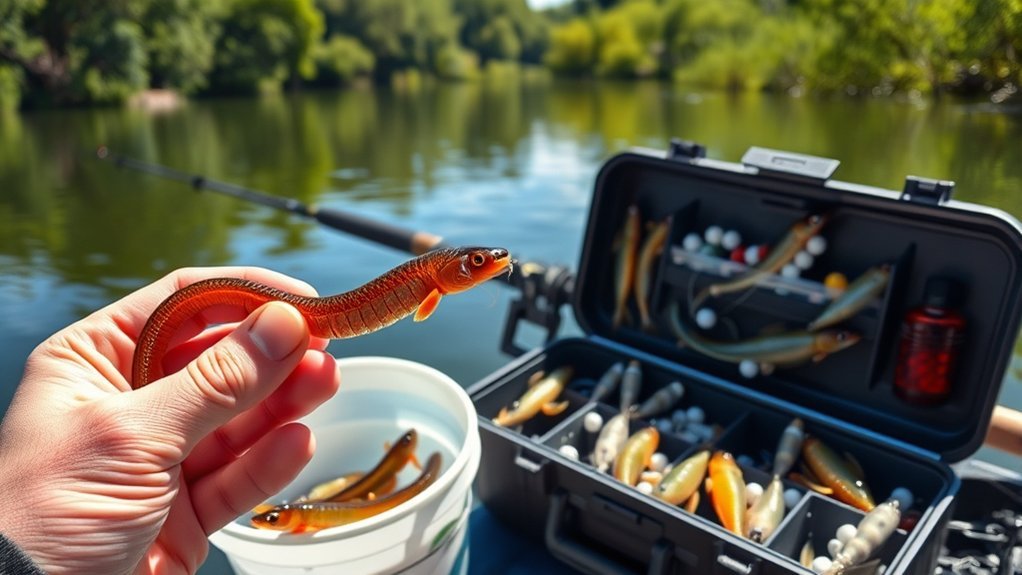
When it comes to freshwater fishing, four main types of live bait consistently prove to be effective: worms, minnows, insects, and leeches. Each has its unique advantages, making them essential for your tackle box.
- Worms: Classic choices like red wigglers and nightcrawlers are readily available and can be easily threaded onto hooks, attracting a variety of fish species.
- Minnows: Ranging from very small baitfish to several inches long, minnows are versatile, but always check local regulations for their use to guarantee compliance.
- Insects: Catching crickets or grasshoppers is simple, and they serve as excellent bait, particularly for younger anglers looking to entice fish.
- Leeches: Non-blood-sucking leeches are particularly effective for targeting species such as bass, walleye, and larger panfish.
Understanding these live bait options will enhance your freshwater fishing experience. The best bait often depends on the season, water temperature, fish activity, and local forage.
Freshwater Live Bait Comparison
| Bait | Best For | Beginner Tip |
|---|---|---|
| Worms | Bluegill, crappie, trout, catfish, bass | Use only enough worm to cover the hook for smaller fish. |
| Minnows | Bass, walleye, crappie, pike, catfish | Hook them lightly so they keep swimming. |
| Crickets and Grasshoppers | Bluegill, trout, panfish | Fish them near banks, grass, and overhanging trees. |
| Leeches | Walleye, bass, catfish | Hook through the sucker end so they move naturally. |
Popular Freshwater Species to Target With Live Bait
Understanding the types of live bait available sets the stage for targeting specific freshwater species that thrive on these offerings.
Bluegill and crappie are frequently drawn to live worms like red wigglers and nightcrawlers, making them ideal targets for beginner anglers. Small pieces of worm under a bobber can be one of the easiest ways to catch panfish.
If you’re aiming for largemouth bass or walleye, consider using minnows, which are available in several sizes. Just remember to check your local regulations regarding their use, transport, and disposal.
For a more accessible option, insects such as crickets and grasshoppers can effectively attract panfish and trout. These baits work especially well in warm months when insects naturally fall into the water.
Finally, leeches are particularly effective for larger species such as catfish and walleye. They stay active on the hook and create a natural swimming motion that fish can detect.
Each of these bait options complements specific species’ feeding habits, enhancing your chances of success on the water. When in doubt, start with a simple worm-and-bobber setup, then adjust based on the fish you see and the bites you get.
How to Match Live Bait to Conditions
Choosing live bait is not only about the fish species. Water clarity, current, depth, season, and temperature can all change what works best.
- Clear water: Use lively, natural-looking bait and lighter line when fish can inspect your setup closely.
- Murky water: Choose bait with more scent, vibration, or movement, such as shrimp, worms, mullet, or minnows.
- Cold water: Fish often move slower, so present bait naturally and avoid working it too fast.
- Warm water: Keep bait cool and oxygenated because heat can reduce oxygen and weaken bait quickly.
- Strong current: Use enough weight to keep bait in the strike zone without making it look stiff or unnatural.
- Heavy cover: Use stronger line and a rig that keeps bait from burying too deeply in weeds, rocks, or brush.
Warning: Never dump unused live bait into a lake, river, bay, or ocean unless local rules clearly allow it. Bait can spread disease, parasites, or invasive species.
Live Bait Care
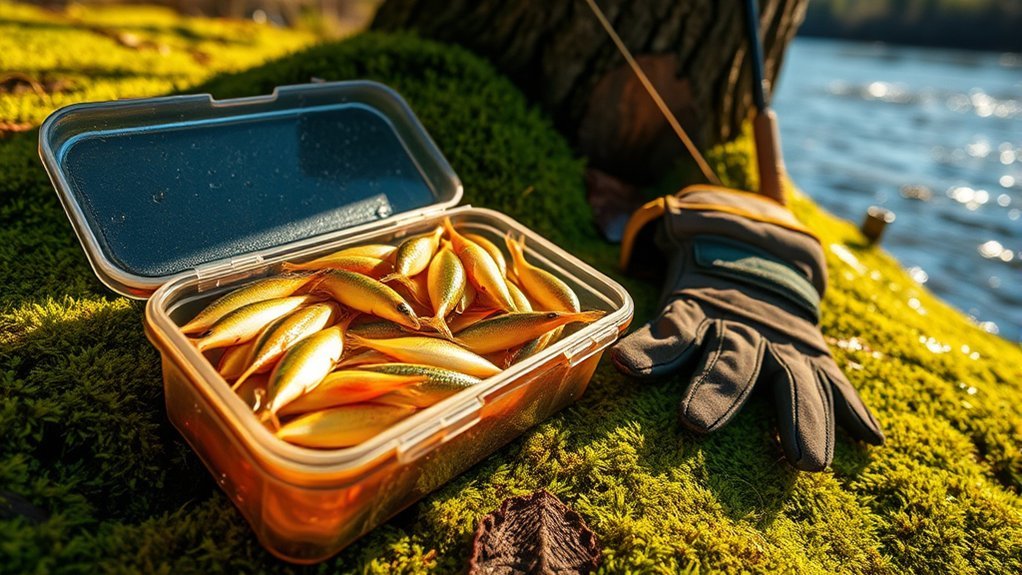
Maintaining the health of your live bait is crucial for a successful fishing trip, as healthy bait significantly increases your chances of attracting fish.
Healthy live bait should look active, balanced, and responsive. Weak bait that rolls over, gasps, or stops moving needs better water, more oxygen, or replacement.
To make certain your bait stays lively, follow these key care tips:
- Optimal Storage: Use a tank, live well, or bait bucket with proper water flow and oxygenation. Monitor water conditions frequently, especially in warm temperatures, as heat can reduce dissolved oxygen.
- Minimize Stress: Handle baitfish minimally and avoid overcrowding in storage. This reduces stress and mortality rates, keeping your bait healthy longer.
- Species-Specific Needs: Understand that different live bait types have unique requirements. For example, shrimp and baitfish need oxygenated water, while crickets and grasshoppers should be stored dry with ventilation.
Regularly check the condition of your bait, as sensitivity to temperature and low oxygen can impact their health, particularly during hot weather. Remove dead bait from the container quickly because it can foul the water and weaken the remaining bait.
How to Store Common Live Baits
| Bait Type | Best Storage Method | What to Avoid |
|---|---|---|
| Shrimp | Cool, clean, aerated saltwater | Freshwater, heat, overcrowding, and rough handling |
| Baitfish | Aerated bucket or live well with enough room | Chlorinated tap water, direct sun, and low oxygen |
| Worms | Cool bedding, shade, and light moisture | Heat, standing water, and dry bedding |
| Crickets and Grasshoppers | Dry, ventilated container with hiding space | Waterlogged containers and sealed boxes |
| Leeches | Cool, clean freshwater | Warm water and direct sunlight |
Live Bait Fishing Techniques
When it comes to live bait fishing, mastering techniques like drift fishing, bottom fishing, float fishing, and free-lining can considerably enhance your success.
Drift fishing allows you to cover vast areas by rigging your bait with or without weights, while bottom fishing focuses on targeting species like grouper and catfish by dropping bait directly to the bottom.
Understanding these strategies will enable you to adapt your approach based on the fishing environment and species you’re targeting.
Drift Fishing Methods
Drift fishing methods are highly effective for anglers seeking to maximize their chances of catching fish by mimicking the natural movements of prey in the water.
Here’s how to optimize your drift fishing experience:
- Bait Rigging: You can rig live bait with or without weights, depending on the water depth and the species targeted. Adjusting your rigging is essential for effective presentation.
- Current Awareness: Pay close attention to wind and current direction. Position your boat accordingly to enhance your drift path and guarantee your bait is in the strike zone.
- Use a Baitfeeder Reel: This reel allows fish to take the bait with minimal resistance, improving your chances of solid hook-ups.
- Control Line Slack: Keep enough slack for natural movement but not so much that you miss bites.
Bottom Fishing Strategies
To effectively target bottom-dwelling species like grouper and catfish, you need to master bottom fishing strategies that utilize live bait.
Start by selecting a sturdy rig equipped with a sinker to keep your bait near the ocean, river, or lake floor. This technique draws in bottom-feeding fish. Common live baits include shrimp, mullet, worms, cut-resistant baitfish, and pinfish, each proven to entice various species.
As you fish, maintain tension on the line; bottom fish often bite firmly, and you’ll want to feel those bites. Opt for the right hook size, preferably circle hooks for many bait presentations, as they can enhance your chances of a successful hook-up without deep hooking the fish.
This precision will greatly improve your bottom fishing success. If you keep snagging, use a lighter weight, change the angle of your cast, or move to the edge of the structure instead of casting directly into it.
Float Fishing With Live Bait
Float fishing is one of the easiest live bait methods for beginners. A bobber or popping cork suspends the bait at a set depth, making it easier to keep bait above grass, rocks, or bottom debris.
Use this method with worms for bluegill, crickets for panfish, shrimp for speckled trout, or minnows for crappie. Adjust the depth until the bait sits slightly above where fish are feeding.
Free-Lining Live Bait
Free-lining means fishing live bait with little or no added weight. This lets the bait swim more naturally, which can be highly effective around docks, bridges, mangroves, grass lines, and calm freshwater edges.
This method works best when current, wind, or bait movement can carry the bait into the strike zone. Watch your line closely because bites may look like a sudden twitch, steady pull, or sideways movement.
How to Hook Live Bait
Hooking live bait effectively is essential for attracting fish and guaranteeing a successful catch. The way you hook your bait can greatly impact its presentation and movement in the water. Here’s how to do it:
- Shrimp: Insert the hook horizontally through the horn area in front of the dark spot, or hook it lightly through the tail when you want it to kick naturally. Avoid piercing vital organs if you want the shrimp to stay alive longer.
- Worms and Nightcrawlers: Thread the hook through one end and secure it by hooking again. This keeps your bait dangling naturally, increasing its appeal.
- Baitfish: Use circle hooks for many live bait situations, as they can promote corner-of-the-mouth hookups. Hook baitfish through the lips, nose, back, or tail depending on how you want them to swim.
- Minnows: Hook through both lips for casting or current, behind the dorsal fin for bobber fishing, or near the tail when you want more movement.
- Crickets and Grasshoppers: Hook lightly through the collar or body so they stay on the hook without losing all movement.
- Leeches: Hook through the sucker end so they can swim naturally and remain attractive to walleye, bass, and panfish.
Note: If your bait spins in the water, it is usually hooked poorly, weighted too heavily, or moving faster than it would naturally swim.
How to Choose a Hook for Live Bait
Selecting the right hook is essential for maximizing the effectiveness of your live bait presentation. The hook type can greatly impact your success on the water. Here’s a quick overview to help you choose wisely:
| Bait Type | Recommended Hook | Notes |
|---|---|---|
| Live Shrimp | Small Circle or Kahle | Helps with proper hooking and minimal damage |
| Catfish | Larger Circle (1/0 to 3/0) | Supports self-hooking with steady pressure |
| Live Worms | Aberdeen Hooks | Ideal for crappie and bluegill |
| Minnows | Aberdeen, Octopus, or Circle | Choose size based on minnow size and target fish |
| Crickets | Small Long-Shank Hook | Useful for small panfish and easy hook removal |
| Leeches | Octopus or Live Bait Hook | Lets the leech swim naturally |
Always opt for the smallest, lightest hook that can effectively secure your target species. This approach allows for free movement of the bait, reducing harm and increasing your chances of a successful catch. Keep these guidelines in mind to enhance your live bait fishing experience.
[Amazon Products Picked for You]

Engineered for the Bigger Catch: This catfish hook is designed for anglers to catch larger fish. Its unique bend and extra-wide gap accommodate large baits, making it ideal for large cut baits(like skipjack, bluegill) and strong enough to fight with large fish. Perfect for both newbies and experienced fishermen aiming to elevate their fishing game.
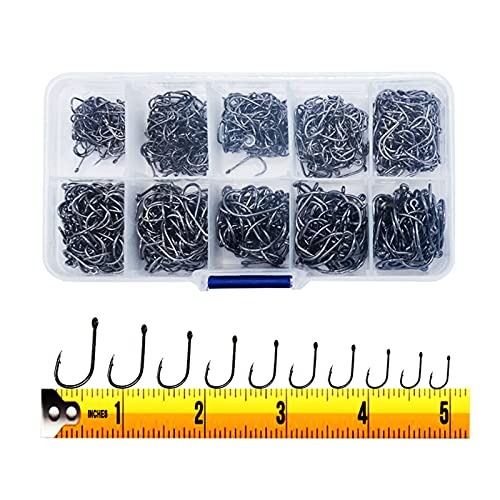
OUR PRODUCTS: A reasonable combination of fish hooks, 3#, 4#, 5#, 6#, 7#, 8#, 9#, 10#, 11#, 12#, a total of 10 types of fish hooks 30PCS each.

Glow in the Dark for Night Fishing Success: Attention: Please use a flashlight to shine directly for 15 minutes before use to activate the night light effectOur glow in the dark fishing hooks feature a powerful luminous coating that attracts fish even in the darkest waters. Perfect for night fishing hooks enthusiasts who want to maximize their catch after sunset (Already applied for a patent)
Beginner Live Bait Rigs
You do not need a complicated setup to start catching fish with live bait. These simple rigs cover most beginner situations.
- Bobber Rig: Use a float, small split shot, and hook. This is ideal for worms, crickets, minnows, and shrimp when fish are feeding above the bottom.
- Carolina Rig: Use a sliding sinker, swivel, leader, and hook. This keeps bait near the bottom while still allowing it to move naturally.
- Drop Shot Rig: Place the hook above the weight so the bait stays just off the bottom. This is useful for freshwater minnows, worms, and leeches.
- Fish Finder Rig: Use a sliding sinker clip or sinker above a swivel and leader. This is popular for surf fishing and bottom fishing with live bait.
- Free-Line Rig: Tie the hook directly to the line or leader with little added weight. This gives shrimp, mullet, minnows, and baitfish a natural presentation.
[Amazon Products Picked for You]

165pcs Pompano Rig Kit: It contains 12 different styles foam floats: 65 cylindrical foam floats, 15 bullet shapes foam floats, 25 round foam floats and 60 colorful beads. You can change the number and size of floats according to the needs of biting bait, water flow, and floating, and then directly hang them on the hook to control the float of the bait.

【10 Vibrant Color Combos – 5 Solid & 5 Mixed】Each pack includes 10 scientifically matched walleye rigs: 5 solid colors and 5 mixed blends. This variety lets you quickly adapt to changing water conditions and fish preferences – a smart choice for any walleye fishing lures setup.

Set of 10PCS Bait Cage for Fishing.
Common Live Bait Mistakes Beginners Should Avoid
Many beginners buy good bait but lose effectiveness through small mistakes. Avoid these problems to get more bites.
- Using dead or weak bait: Replace bait that stops moving naturally.
- Choosing hooks that are too large: Oversized hooks restrict movement and can make bait look unnatural.
- Overcrowding the bait bucket: Too much bait in too little water reduces oxygen quickly.
- Ignoring local regulations: Some areas limit bait species, collection methods, transport, and release.
- Fishing the wrong depth: Adjust your rig until your bait reaches where fish are feeding.
- Handling bait with dry hands: Wet hands can reduce damage to delicate baitfish and shrimp.
- Using too much weight: Heavy sinkers can pin bait down and make it look unnatural.
Live Bait Regulations and Ethics
Live bait rules can change by state, waterbody, species, and season. Some places allow worms and crickets but restrict minnows, crayfish, or nonnative baitfish. Other areas regulate cast nets, traps, bait transport, or bait collection.
Before you fish, check your state fish and wildlife agency’s current regulations. This is especially important when crossing state lines, fishing public lakes, or moving bait between waters.
Ethical live bait use also protects the water you enjoy. Do not release leftover bait unless it came from the same water and local rules allow it. Dispose of unused bait in the trash or save it only when legal and safe to do so.
Warning: A valid fishing license does not automatically mean every live bait is legal. Bait rules are often separate from basic license rules.
Related Guides
Frequently Asked Questions
What licenses do I need for live bait fishing?
You’ll need a fishing license specific to your state or fishing location. Some areas also have separate rules for catching, buying, transporting, or using live bait, so check local regulations before you cast your line.
How do I store live bait before fishing?
Store live bait in the right container for that bait type. Baitfish and shrimp need cool, clean, aerated water. Worms need cool, moist bedding. Crickets and grasshoppers need a dry, ventilated container.
Can I catch my own live bait?
Yes, you can often catch your own live bait with a cast net, dip net, minnow trap, or by hand, depending on the bait and location. Always check local rules because some waters limit bait collection methods, species, and quantities.
What time of day is best for live bait fishing?
Dawn and dusk are often productive because many fish feed more actively in low light. However, tides, current, water temperature, weather, and seasonal patterns can matter just as much as time of day.
Are there specific regulations for using live bait?
Yes, many areas have specific regulations for using live bait. You may need to follow rules about permitted species, bait sourcing, bait transport, seasonal restrictions, and disposal. Check current local regulations before fishing.
What is the easiest live bait for beginners?
Worms are usually the easiest freshwater live bait for beginners. Live shrimp are one of the easiest saltwater options where available. Both are simple to rig, attract many species, and do not require advanced techniques.
Should I use a bobber with live bait?
Use a bobber when you want to suspend bait at a set depth or keep it above weeds, rocks, or bottom debris. Skip the bobber when bottom fishing, free-lining, or fishing deeper current.
Why does my live bait keep dying?
Live bait often dies from low oxygen, warm water, overcrowding, rough handling, dirty water, or the wrong water type. Use an aerator, keep bait shaded, avoid overcrowding, and remove dead bait quickly.
Sources
- NOAA Fisheries — general saltwater fish, habitat, and responsible fishing guidance.
- U.S. Fish & Wildlife Service — conservation guidance related to fish, aquatic habitats, and invasive species awareness.
- National Invasive Species Information Center — invasive species risks connected to moving live organisms between waters.
- Florida Fish and Wildlife Conservation Commission Fishing — example of state-level fishing and bait regulation resources.
- Texas Parks and Wildlife Department Fishing — example of state-level freshwater and saltwater fishing regulation resources.
Conclusion
Mastering live bait techniques gives you a practical way to catch more fish without overcomplicating your setup. Start with beginner-friendly bait, match it to your target species, and keep it lively until it hits the water.
As you gain experience, experiment with different rigs, depths, hook placements, and bait sizes. Small changes often make a big difference. Most importantly, follow local bait rules, handle fish responsibly, and protect the waters you fish.
With each trip, you’ll learn how fish respond to movement, scent, current, and season. So grab your gear, choose healthy bait, and let the excitement of live bait fishing lead you to unforgettable experiences on the water.