When ice fishing, always carry essential safety gear like ice picks, a spud bar, a throw rope, a whistle, and a first aid kit. Check ice thickness in multiple spots before you walk out, and never trust one test hole or old tracks. For foot travel, look for at least 4 inches of clear, solid ice, but remember that no ice is ever completely risk-free. Avoid fishing alone, stay alert to changing weather conditions, and leave early if the ice starts cracking loudly, turning slushy, or pulling away from shore. Use GPS tools to mark your route, identify weak areas, and find your way back if snow, fog, or darkness reduces visibility. Staying informed about ice conditions helps you make safer choices before and during every trip.
Quick Answer
The safest way to ice fish is to check the ice often, wear flotation, carry rescue tools, fish with a buddy, and avoid moving water, pressure ridges, slush, and dark patches. Bring ice picks, a spud bar, a 50-foot rope, warm layers, GPS, and emergency communication before stepping onto the ice.
Key Takeaways
- Check ice thickness in several spots because thickness can change within a few steps.
- Wear a flotation suit or life jacket, and keep ice picks on your body, not buried in a sled.
- Avoid moving water, inlets, outlets, bridges, docks, springs, pressure ridges, and slushy areas.
- Tell someone your plan, fish with a buddy, and carry a charged phone or radio in a waterproof pouch.
- Leave the ice immediately if weather, visibility, cracking, or surface water makes conditions unsafe.
At a Glance
| Time Required | 10 to 20 minutes to check gear, review conditions, test the ice, and mark your safe route before fishing. |
| Difficulty | Moderate. The steps are simple, but you must stay alert and repeat them as conditions change. |
| Tools Needed | Ice picks, spud bar, auger or drill, tape measure, 50-foot rope, flotation, whistle, GPS, lights, first aid kit, and emergency communication. |
| Cost | Basic safety gear is usually low to moderate cost, but flotation suits, GPS units, and shelters can raise the total. |
Essential Safety Gear for Ice Fishing

When you head out for ice fishing, it’s vital to have the right safety gear ready before you step onto frozen water. Do not pack rescue tools deep inside a sled or tackle bag. Keep the most important items on your body so you can reach them if you fall through.
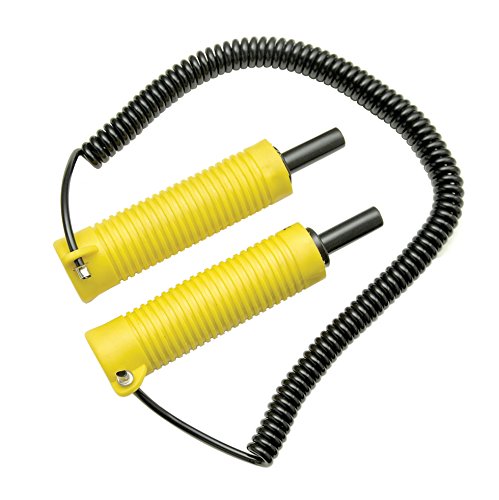
Start with ice picks, which are essential for self-rescue if you break through the ice. Wear them around your neck on a lanyard, outside your coat, where your hands can grab them quickly. A spud bar is another must-have safety tool for testing ice thickness as you walk. If the spud bar breaks through with a light strike, stop and turn back.
Bring an auger or drill with a tape measure so you can test the ice accurately. A quick visual check is not enough because safe-looking ice can still be thin near currents, springs, pressure cracks, and shoreline edges.
Additionally, a floating ice suit or a properly fitted life jacket gives you buoyancy and warmth. It can help keep your head above water and slow heat loss while you work toward the edge or wait for help. Dress in moisture-wicking base layers, insulating middle layers, and windproof outer layers so sweat and wind do not chill you.
Always carry a sturdy 50-foot rope for buddy rescues, allowing you to assist someone from a safe distance. Add a whistle, waterproof flashlight or headlamp, hand warmers, an emergency blanket, and a fully charged phone in a waterproof pouch. A small two-way radio can also help when cell service is weak.
Finally, don’t forget a well-stocked first aid kit to handle minor injuries, cuts, hooks, frostbite concerns, and cold-related problems until you can get off the ice.
Warning: Ice picks, rope, and flotation only help if you can reach them fast. Wear rescue gear on your body instead of storing it in a sled, bucket, or shelter.
[Amazon Products Picked for You]

【A MUST-HAVE ON ICE】These life-saving ice safety spikes are a must-have for ice fishing, ice skating, ice hockey, or walking on ice, they allow you to self-rescue when falling into ice.
Frabill | Trusted By Anglers Since 1938

BUILT-IN SAFETY WITH FLOAT ASSIST – Designed with MotionFloat Technology, this parka provides internal buoyancy assistance in case of an ice break-through (Not a Coast Guard-approved PFD), adding extra protection for ice anglers.
Understanding Ice Thickness and Conditions

Understanding ice thickness and conditions is essential for your safety while ice fishing, especially since ice can vary dramatically across a body of water. One lake can have strong ice in one bay and unsafe ice near an inlet, bridge, or current line.
Always check the thickness in multiple locations because sudden changes can occur due to flowing water, snow cover, springs, underwater structure, and temperature shifts. For foot traffic, a minimum of 4 inches of clear, solid ice is commonly recommended. Snowmobiles and ATVs need more ice, often around 6 to 8 inches or more, depending on conditions, load, and local guidance.
Clear, blue ice is generally stronger than cloudy, white, honeycombed, or slushy ice. Cloudy ice may contain air pockets, refrozen slush, or weak layers. Dark patches, standing water, and soft edges can signal thinning ice beneath the surface.
Be aware of warning signs like cracking ice, widening pressure cracks, water bubbling through holes, and shore ice pulling away from land. Some cracking is common as ice expands and contracts, but loud booms, shifting plates, or fresh open cracks deserve caution.
Use a spud bar or drill test holes as you move, especially when entering a new area. A good habit is to check near shore, then again every short distance as you walk toward your fishing spot. If the ice changes color, texture, or sound, stop and test again before going farther.
Avoid areas over moving water, including rivers, channels, inlets, outlets, culverts, narrows, bridges, docks, bubblers, and dam areas. These spots often have thinner ice because current keeps water moving below the surface.
Always maintain a safe distance from risky spots to protect yourself while enjoying your ice fishing experience. When in doubt, turn around. A missed fishing day is better than a rescue situation.
Ice thickness is not uniform. Test as you go, watch the color and surface, and treat every new area as unverified until you check it yourself.
Key Safety Tips for Ice Fishing

Although ice fishing can be an enjoyable experience, prioritizing safety is essential to prevent accidents. Conditions can change during the same trip, so treat safety as something you repeat, not something you do once at the shoreline.
Always check ice thickness in multiple locations, ensuring it’s at least 4 inches thick for foot traffic and thicker for snowmobiles, ATVs, shelters, and groups. Spread out when walking with others so too much weight does not sit on one small area.
Carry essential gear like ice picks for self-rescue, a spud bar to test ice integrity, and a throw rope for emergencies. Keep your phone, keys, and lighter in waterproof bags. Store dry gloves, socks, and a hat in your vehicle or sled in case you get wet.
It’s wise to avoid fishing alone; having a buddy increases safety and support if you fall through the ice. If you do go alone, tell someone your exact destination, route, expected return time, and when they should call for help.
Stay alert to changing weather conditions, as strong winds, rain, heavy snow, warm spells, and rapid temperature shifts can weaken ice and create dangerous situations. Snow can also hide cracks, old holes, thin patches, and pressure ridges.
Be cautious around high-risk areas, such as moving water, slushy patches, dark ice, heaves, cracks, and pressure ridges, which often indicate unstable ice. Do not drive on ice unless local authorities or experienced local sources confirm conditions, and even then, keep windows partly open, unbuckle while driving on ice, and avoid parking close to other vehicles.
Move slowly and deliberately. Carry heavy gear in a sled instead of on your back, but do not overload it. If you hear sharp cracking, see water spreading, or feel the ice sag, retrace your route carefully and leave the area.
Pro Tip: Before you start fishing, drill a test hole near your shelter spot and measure the ice. Recheck later if temperatures rise, wind increases, or water appears on the surface.
What to Do Before You Step Onto the Ice
A safe trip starts before you leave home. Check local ice reports, bait shop updates, park notices, and weather forecasts. Local knowledge matters because one lake, bay, or access point may be safer than another nearby area.
Create a simple trip plan. Write down where you will park, which access point you will use, where you plan to fish, who is going with you, and when you expect to return. Share that plan with someone who is not on the ice.
Charge your phone fully and keep it warm in an inside pocket because cold drains batteries quickly. Download offline maps if service is poor in the area. Pack extra gloves, a face covering, snacks, water, and any medication you may need.
Inspect your gear before you go. Check that your ice picks are sharp, your rope is not frayed, your flashlight works, and your first aid kit is stocked. If you use a heater inside a shelter, make sure you have proper ventilation and a carbon monoxide detector made for portable use.
Utilizing GPS Tools for Safety on the Ice

Using GPS tools can considerably enhance your safety while ice fishing, especially in challenging conditions. These essential ice fishing devices, including fish finders with mapping features, handheld GPS units, and reliable phone navigation apps, help you track safe paths on the ice and navigate effectively, even in low visibility.
Before you leave the shore, activate GPS tracking to create a record of your route. This can be invaluable if you need to retrace your steps later. It also helps you avoid wandering toward unsafe areas when snow, fog, darkness, or blowing wind makes the shoreline hard to see.
Activate GPS tracking before leaving the shore to record your route, ensuring you can easily retrace your steps later.
Mark waypoints on your GPS to identify areas with weak ice, large cracks, slushy patches, open water, pressure ridges, and safe access points. You can also mark your shelter, vehicle, and route back to shore.
Premium mapping features may show depth changes, structure, and lake contours, which helps you choose fishing spots while avoiding narrows, current areas, and steep drop-offs where conditions may change quickly. Still, GPS does not replace physical ice checks. Use your spud bar and test holes even when the map looks safe.
Regularly update your GPS device with the latest maps and features to support better navigation. Carry a backup power bank because cold weather can drain batteries fast. By utilizing these tools, you can fish with more confidence while staying safer on the ice.
Note: GPS can help you return to shore, but it cannot tell you whether the ice under your feet is strong. Always test the ice as you move.
[Amazon Products Picked for You]
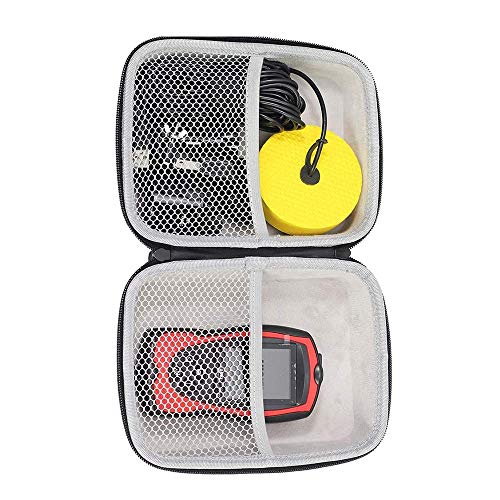
Travel Case for Fish Finder: This hard travel case specially designed for your fish finder. It would be suitable for storing your fish finder and fishing sonar. You can put it on the boat or kayak not worrying about water wetting your fish finder anymore. You can put it on the off-road vehicle and not worrying about the bumpy road will damage the fish finder or other devices.

Compact and lightweight GPS handheld navigator boasts an anti-slip design offering a bright 3.2" screen that is sunlight readable, even in bright sunlight, plus, physical buttons provide more versatility in any conditions

Shows you what is in the water: water depth, approximate fish location (suits for all sorts of fish), fish size(small/median/big), short & tall weeds, sand & rocks on bottom. Suitable for fishing from a kayak, off the dock, and ice fishing. It can be used in fresh water as well as salt/sea water.
Importance of Fishing With a Buddy

Fishing with a buddy not only enhances your overall experience but also greatly boosts safety on the ice. Having a partner means you can rely on each other in case of emergencies, ensuring immediate assistance if someone falls through the ice.
Your buddy can use a rope, sled, flotation device, branch, or other long object to help with a rescue while staying back from the weak edge. This keeps both of you safer than rushing directly toward the hole.
The buddy system fosters shared responsibility, making you both more vigilant about ice conditions and personal safety. One person can test the ice while the other watches for changes, checks navigation, or keeps gear organized.
Additionally, fishing together allows for shared knowledge and skills, which can improve your fishing success. A more experienced partner may notice unsafe pressure ridges, changing wind, or weak shore ice before you do.
If sudden weather changes occur, a buddy enables quicker decision-making, helping you exit potentially hazardous conditions safely. Agree ahead of time that either person can call off the trip without argument if conditions feel unsafe.
Monitoring Weather Conditions While Ice Fishing
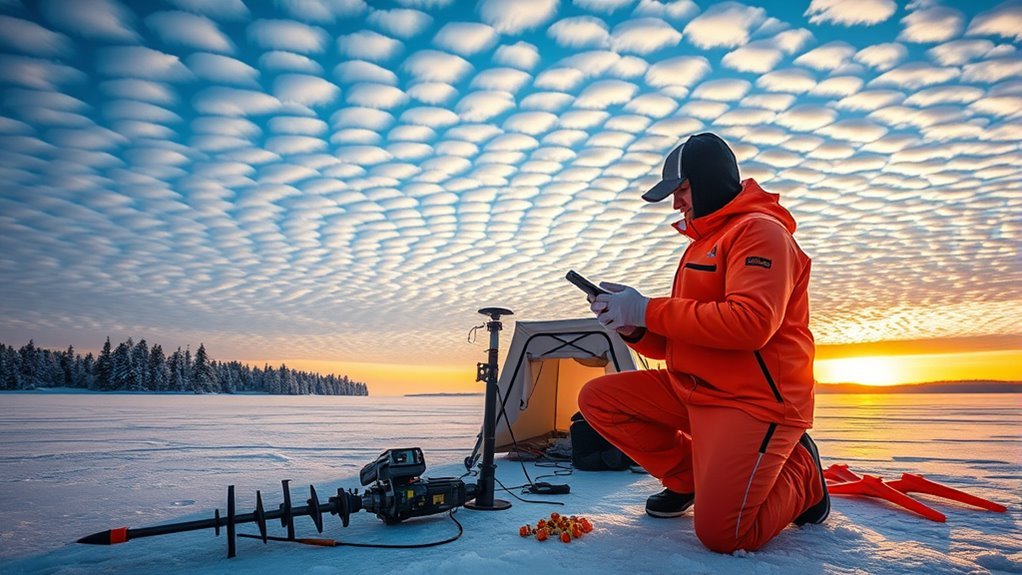
As you prepare for your ice fishing adventure, staying informed about weather conditions is vital for your safety. Sudden temperature changes can severely impact ice stability, making it important to check the weather forecast before and during your trip.
Warm days, rain, and wind can weaken ice faster than you may expect. Heavy snow may insulate ice and slow new ice growth. Strong wind can move ice sheets, open cracks, and build pressure ridges. Fog or blowing snow can also make it hard to find your way back to shore.
Be mindful of the following dangers:
- Heavy snow can insulate ice and hide cracks, old holes, and weak spots.
- Wind conditions may create hazardous pressure ridges or widen existing cracks.
- Precipitation can lead to standing water, which may signal weakening surface ice.
- Dark patches can signal thinning ice, wet ice, or water under the surface.
- Cracking sounds, shifting plates, or sudden booming may mean the ice is under stress.
- Warm nights can prevent the ice from refreezing firmly after a sunny or rainy day.
- Reduced visibility can make it difficult to follow your safe route back to shore.
If you observe any of these ominous signs, like pulling away shore ice, widening cracks, or loud cracks underfoot, pack up and leave the ice immediately. Do not wait for conditions to get worse.
Staying alert to changing conditions will help you return to safety and enjoy a more controlled experience on the ice. Always prioritize your safety and be prepared to adjust your plans based on the weather.
What to Do if Someone Falls Through the Ice
If someone falls through the ice, do not run straight to the hole. The ice near the break may be weak, and you could fall in too. Call emergency services first if you have a phone or radio, then begin a safe rescue from a distance.
Follow the “reach, throw, row, go” idea when possible. Reach with a long object from a safe position, throw a rope or flotation device, use a sled or boat if available, and only go onto the weak area as a last resort with proper rescue training and backup.
If you fall in, try to stay calm and control your breathing. Turn toward the direction you came from because that ice held your weight before. Kick your legs, use your ice picks to grip the surface, and pull your chest onto the ice. Once out, roll away from the hole instead of standing immediately.
After getting out, get to shelter, remove wet clothing if you can do so safely, and warm up gradually. Seek medical help because cold-water immersion and hypothermia can be serious even if you feel alert at first.
Warning: Never drive, walk, or gather around a rescue hole. Keep your weight spread out, use a rope or long object, and call emergency services right away.
Portable Shelter, Heater, and Carbon Monoxide Safety
Ice shelters can make fishing warmer and more comfortable, but they add safety concerns. Anchor your shelter well in windy weather, keep exits clear, and avoid placing gear where it blocks the door.
If you use a portable heater, follow the heater’s instructions and keep ventilation open. Fuel-burning heaters can produce carbon monoxide, a colorless and odorless gas that can be deadly. Headache, dizziness, weakness, nausea, confusion, or unusual sleepiness are warning signs that you need fresh air immediately.
Keep heaters away from fabric, clothing, paper, tackle, and fuel containers. Do not sleep in a heated shelter unless it is designed for that use and you have proper ventilation and a working carbon monoxide detector. Turn the heater off before refueling or moving it.
[Amazon Products Picked for You]

EASY POP-UP HUB SETUP: Hub-style pop-up ice fishing shelter—1 person can set up and take down this ice fishing tent in under 60 seconds. Packs into a carry bag for a portable, compact winter fishing trip.
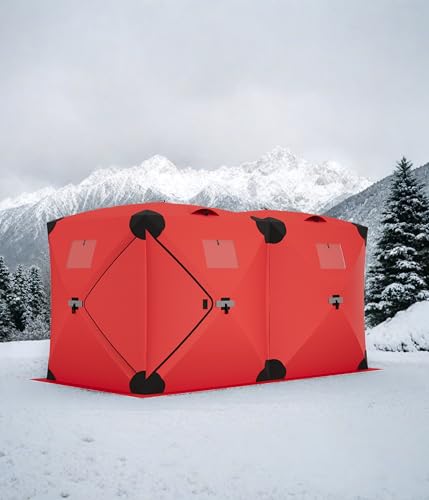
Easy to Use - Adopts a hub design, allowing one person to set up and take down the shelter in under 60s. Equipped with a carrying bag, it is lightweight and compact, enabling easy transport to any ice fishing spot.

Pop-Up Tent: With our pop-up ice fishing tent set up is easy. To assemble or put away your fishing shelter, simply pull up on the roof and then out on all four sides.
Related Guides
Frequently Asked Questions
What should I do if I fall through the ice?
Stay calm, control your breathing, and keep your head above water. Turn toward the direction you came from, kick your legs, and use your ice picks to pull your chest onto the ice. Roll away from the hole, crawl toward safer ice, get warm, and seek medical help as soon as possible.
How can I recognize unsafe ice conditions?
Watch for slush, dark patches, standing water, pressure ridges, open cracks, honeycombed ice, weak shore ice, and ice near moving water. Unsafe ice may also appear around inlets, outlets, bridges, docks, springs, and culverts. Test with a spud bar and drill holes often instead of relying on appearance alone.
Are there specific ice fishing regulations to follow?
Yes. You must follow local fishing laws, licensing rules, bait rules, size limits, possession limits, season dates, shelter rules, and ice access restrictions. Regulations vary by state, province, lake, and species, so check your local fish and wildlife agency before you go.
What first aid supplies should I bring ice fishing?
Bring adhesive bandages, gauze, antiseptic wipes, medical tape, blister care, pain relief, tweezers, small scissors, hand warmers, an emergency blanket, personal medication, and a waterproof list of emergency contacts. Add dry gloves and socks so you can change quickly if your hands or feet get wet.
Can I ice fish alone safely?
You can reduce risk when fishing alone, but fishing with a buddy is much safer. If you go solo, tell someone your plan, carry emergency communication, wear flotation, keep ice picks on your body, test the ice often, and avoid remote areas, moving water, night travel, and questionable ice.
How often should I check ice thickness while walking?
Check before you step fully onto the ice, then test again as you move away from shore. Recheck whenever the ice color, sound, surface, snow cover, or water depth changes. Test more often near cracks, points, narrows, weeds, current areas, and other high-risk spots.
Is clear ice always safe?
No. Clear ice is usually stronger than cloudy or slushy ice, but it can still be unsafe if it is too thin, cracked, warmed by weather, weakened by current, or stressed by weight. Always measure thickness and consider the full conditions before trusting it.
Conclusion
By following this ice fishing safety checklist, you can enjoy a thrilling day on the ice while minimizing risks. The cold, distance from shore, and changing ice may feel intimidating, but smart preparation gives you more control.
Picture the camaraderie of fishing with friends, bundled up, sharing hot drinks, checking the ice together, and reeling in your catch with confidence. With the right gear, a safe route, reliable communication, and a willingness to leave when conditions change, you can create unforgettable memories without ignoring the hazards.
Embrace the adventure, but always prioritize your safety and well-being on the ice. Fish with a buddy, test often, respect the weather, and remember that no fish is worth stepping onto ice you do not trust.
Sources
- Minnesota Department of Natural Resources Ice Safety — supports ice thickness, changing ice conditions, and general safety guidance.
- National Weather Service Winter Safety — supports winter weather awareness and cold-weather safety planning.
- American Red Cross Winter Storm Safety — supports emergency preparation, cold exposure awareness, and winter safety supplies.
- U.S. Coast Guard Life Jacket Wear Guidance — supports the value of wearing flotation around cold water and boating-related hazards.