Water flows like a language, and you’ll catch more trout when you learn how to read its sentences. Riffles, runs, pools, seams, foam lines, and pockets each tell you where food moves and where trout can feed without wasting energy. Focus on those changeover zones because they give trout oxygen, cover, current relief, and steady food in one small area.
Quick Answer
To fish riffles and pools well, target the seams where fast water slows, cast upstream or quartering upstream, and let your fly or bait drift naturally. Use shorter, controlled presentations in riffles, longer gentle casts in pools, and adjust weight, depth, and rig style until your offering moves like real food.
Key Takeaways
- Riffles are shallow, broken, oxygen-rich water where trout often feed actively.
- Runs connect riffles and pools, giving trout depth, current, and reliable drift lanes.
- Pools offer slower, deeper resting water, especially during bright sun, cold weather, or low flows.
- The best casts usually land near seams, foam lines, boulders, drop-offs, and riffle-to-pool transitions.
- Your rig should change with depth and speed: dry-dropper, double nymph, Euro nymphing, wet flies, or small streamers can all work.
At a Glance
| Time Required | 30 minutes to learn the water; a full session to refine depth, drift, and casting angles |
| Difficulty | Beginner to intermediate |
| Tools Needed | Fly rod or light spinning setup, leader or tippet, nymphs, dries, small streamers, split shot or weighted flies, polarized glasses, and wading gear where legal and safe |
| Cost | Low if you already own basic trout tackle; moderate if you need waders, boots, or a dedicated nymphing rod |
How to Identify Riffles, Runs, and Pools
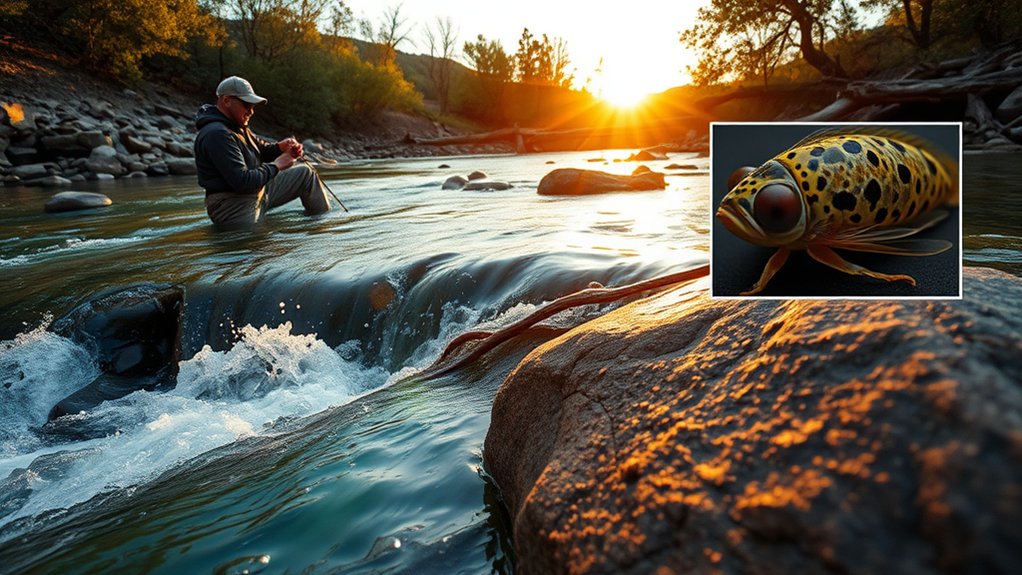
Want to spot the best trout-holding water quickly? Start by reading the river like a map. Riffles are shallow, broken sections where water tumbles over rocks, gravel, and uneven bottom. They often show small waves, bubbles, flashing current, and brighter surface texture.
Riffles help concentrate food because current dislodges aquatic insects and carries them downstream. They also mix oxygen into the water, which can make them especially productive when trout feel safe enough to feed in faster current.
Runs sit downstream of riffles. They are usually deeper and smoother than riffles, but they still have enough current to carry food. A good run often looks like a moving conveyor belt between the riffle above and the pool below.
Pools form where the channel widens, bends, deepens, or drops. They have slower current, darker water, and more depth. Larger trout often use pools for rest, cover, and safety, especially during bright light or colder conditions.
To identify each zone, watch the surface first. Turbulence, bubbles, and small standing waves mark riffles. A smooth but steady surface usually signals a run. Calm, dark, slower water with little agitation often shows a pool.
Use the river gradient to predict locations. Steeper reaches usually create more riffles and pocket water. Flatter reaches create longer glides and deeper pools.
When fishing, target the seams between these zones. Trout use oxygen-rich riffles, softer runs, and low-energy pools together. Position yourself so your fly, lure, or bait drifts where current changes and trout can intercept food.
Note: Not every stream labels itself cleanly. A small creek may have a riffle that drops straight into a short pocket, while a larger river may have long runs that behave like moving pools.
Why Transition Zones Hold the Most Trout
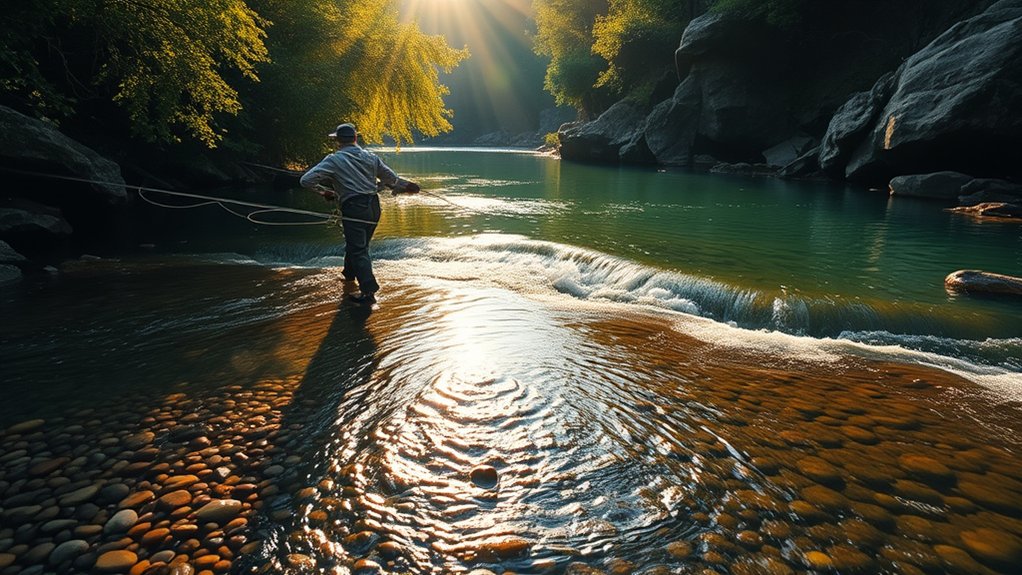
Because water speed and depth change where riffles meet pools, change zones give trout the best of both worlds: oxygen-rich, food-packed currents and nearby slow, deep water for rest and cover.
You’ll focus on change zones because they concentrate insects, minnows, and drifting food where current starts to slow. Trout can sit just outside the strongest flow, then slide a few inches to feed.
Read surface turbulence, foam lines, bubble trails, and color changes to spot feeding lanes. A narrow lane of foam often shows the same path that drifting insects take.
Use current seams and submerged structure, including rocks, logs, root wads, and undercut banks, to predict where trout hold out of sight. These spots give trout a soft pocket beside faster food delivery.
Approach quietly, stay low where the bank is open, and present upstream into feeding lanes. Let natural drift do most of the work instead of dragging your fly across current at the wrong speed.
Remember that higher oxygen levels in riffles can draw trout into adjacent runs and pool heads. Don’t ignore the margin where fast flow meets slack water. You’re not guessing; you’re interpreting river physics and habitat.
Targeting these precise seams frees you from random casts and puts you where trout concentrate. That saves time, reduces wasted motion, and increases your strike rate.
The best trout lie is often not the fastest water or the slowest water. It is the soft edge beside moving food.
Best Gear and Rig Choices for Riffles and Pools
Pick gear that matches fast, shallow riffles and slower, deeper pools so you can present flies precisely and change tactics quickly.
A 9-foot, 5-weight fly rod with weight-forward floating line handles many riffle, run, and dry-dropper situations. It casts well, mends easily, and gives you enough control for most small to medium trout water.
For deeper pools, technical runs, or tight-line nymphing, a longer 10-foot, 3-weight or 4-weight nymphing rod can help you hold line off the water and stay connected to subtle takes.
Set up a dry-dropper rig with a 12–18 inch dropper nymph when trout may feed both near the surface and below it. Adjust tippet length by water type. Use shorter droppers in shallow riffles to reduce hang-ups, and use longer droppers in deeper runs or pools when you need the nymph to sink.
- Choose rods and lines: Use a 9-foot 5-weight for general riffle, run, and dry-fly work. Use a 10-foot 3-weight or 4-weight for close-contact nymphing in deeper runs and pools.
- Rig for versatility: A dry-dropper rig covers surface and subsurface takes. Wet flies or small streamers on a 9-foot leader tapered to 3x or 4x can work well in pools and tailouts.
- Adjust nymph weight: Use beadhead nymphs, small split shot, or tungsten flies when you need depth. Use lighter nymphs in skinny riffles so the drift stays natural.
- Match tippet to water: Lighter tippet helps with delicate presentations, but stronger tippet gives control around rocks, logs, and faster current.
Fish with intent and freedom. Your gear should not lock you into one method. It should let you change depth, angle, and speed as the river changes.
Pro Tip: Before changing flies, change depth and drift first. Many “wrong fly” problems are really drag, depth, or angle problems.
Casting and Presentation Techniques for Fast and Slow Water
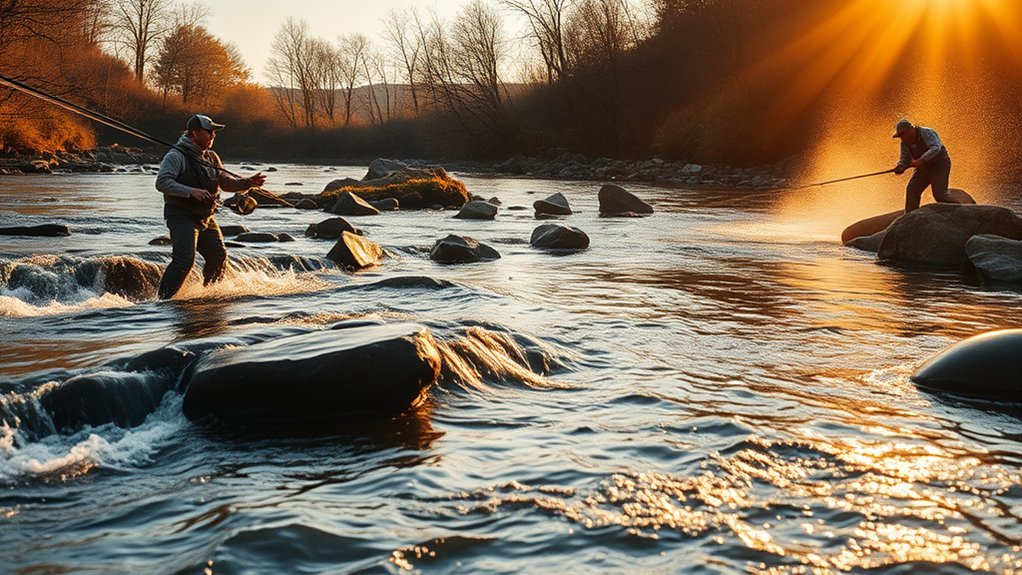
You’ve matched gear to water; now focus on how you deliver the fly. In riffles, cast upstream or quartering upstream into the current, then make an early upstream mend so your fly rides the same speed as the bubbles.
Keep a high rod and use a shorter working line in fast current. This cuts drag, keeps you responsive to subtle takes, and helps you control the drift through broken water.
In pools, make longer, delicate casts and present parallel to holding seams when possible. Trout in pools often have more time to inspect your offering, so avoid slapping the water or dragging line over their heads.
Let flies sink deeper before you retrieve in pools. A slow, controlled retrieve, gentle hand-twist, or natural swing with the current can tempt resting fish holding near the bottom, behind rocks, or along the tailout.
Vary retrieve speed and slight rod-tip lifts to imitate struggling prey. Small changes often matter more than dramatic strips.
Read water and adjust angle, depth, and mend strength. Mend more assertively in riffles, but use softer corrections in pools. You’ll gain freedom from guesswork by matching casting and presentation to flow, then striking confidently when a trout commits.
Nymphing Strategies: Dry-Dropper, Double Nymphs, and Euro Nymphing
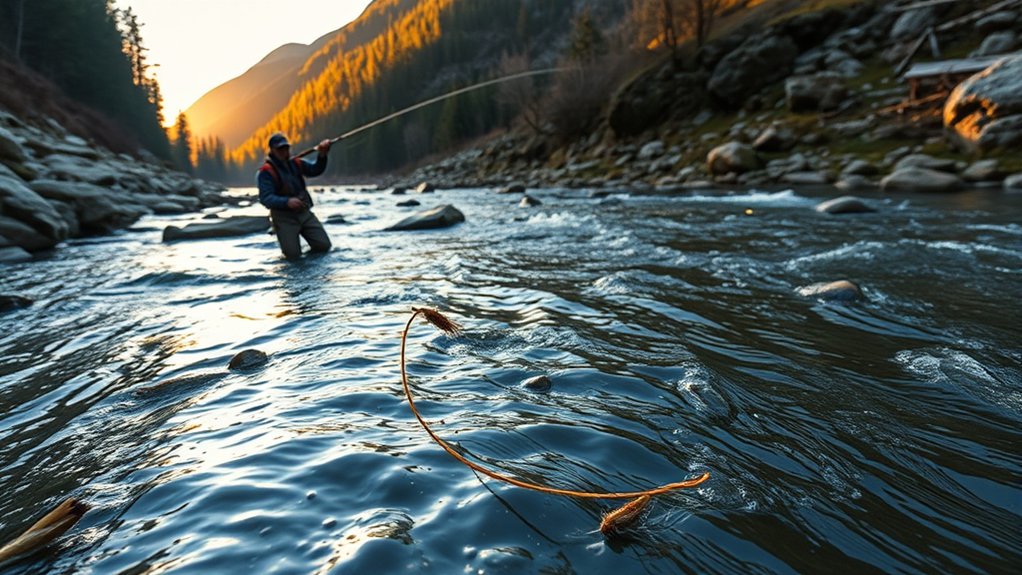
You’ll start by rigging a dry-dropper with a 12–18 inch piece of 4x or 5x tippet off your dry fly so you can present surface and subsurface options in the same feeding lane.
Try a double nymph rig with two different patterns at staggered depths to cover more water and trigger selective trout.
For fast water or tight strike detection, switch to Euro nymphing with a long leader, light tippet, and a high-stick approach. This method helps you feel subtle takes and keep flies tracking through the seam.
Dry-Dropper Setup Basics
A dry-dropper rig pairs a buoyant dry fly with a subsurface nymph so you can present to trout feeding both on the surface and just below it.
Rig a 12–18 inch lighter tippet from the dry fly to the nymph in shallow riffles. In deeper runs and pools, lengthen the dropper so the nymph can reach the feeding depth without pulling the dry under too often.
Cast upstream or at a slight upstream angle so the dry lands naturally. Your goal is a good drift through riffles, seams, and pool heads without the dry skating across the current.
- Choose different types of dries and nymphs; buoyancy and weight matter.
- Use the dry as a strike indicator, but watch both flies for takes.
- When you see a take, set the hook quickly with a short lift instead of a hard sweep.
Double Nymph Rigging
When you want to cover multiple water columns and vary sink rates, double nymph rigs give you a simple, effective setup. Tie a heavier, often beadhead nymph on the point and a lighter nymph about 12–18 inches above it so both flies ride naturally through runs and pools.
Set your tippet so the upper nymph drifts freely without tangling. That 12–18 inch spacing handles many depth changes and keeps both flies near the strike zone.
Choose a weighted nymph for faster sinks in riffles and a lighter nymph for softer seams, shallow pockets, and cautious fish.
Read water to position upstream or quartering upstream into likely lies. You’ll increase catching fish by matching fly weight to water type and current speed while staying focused and mobile.
Euro Nymphing Technique
If you want tighter contact and faster strike detection than a standard double-nymph rig gives, Euro nymphing can sharpen your presentation in riffles, seams, and pocket water.
You’ll use a long leader, short working line, thin tippet, weighted nymphs, and a high rod position to keep direct feel in flowing water.
Watch color changes to find pockets, slots, and depressions where trout hold. Focus on short drifts through runs where subtle strikes can feel like a pause, tick, or slight hesitation.
Target riffles and deeper water during low-light conditions when trout often feed more confidently.
- Rig: Use a long leader, thin tippet, weighted nymphs, and a visible sighter for immediate feedback.
- Technique: Keep the rod high, remove slack, lead the flies slightly, and follow the drift without pulling them unnaturally.
- Read water: Seek color changes, seams, slots, depressions, and pockets; move freely to exploit each short opportunity.
Warning: Fast riffles can hide slippery rocks, sudden drops, and strong pushy current. Wear proper footwear, use a wading staff when needed, and never step where you cannot recover your balance.
Timing: When to Fish Riffles Versus Pools Through the Seasons
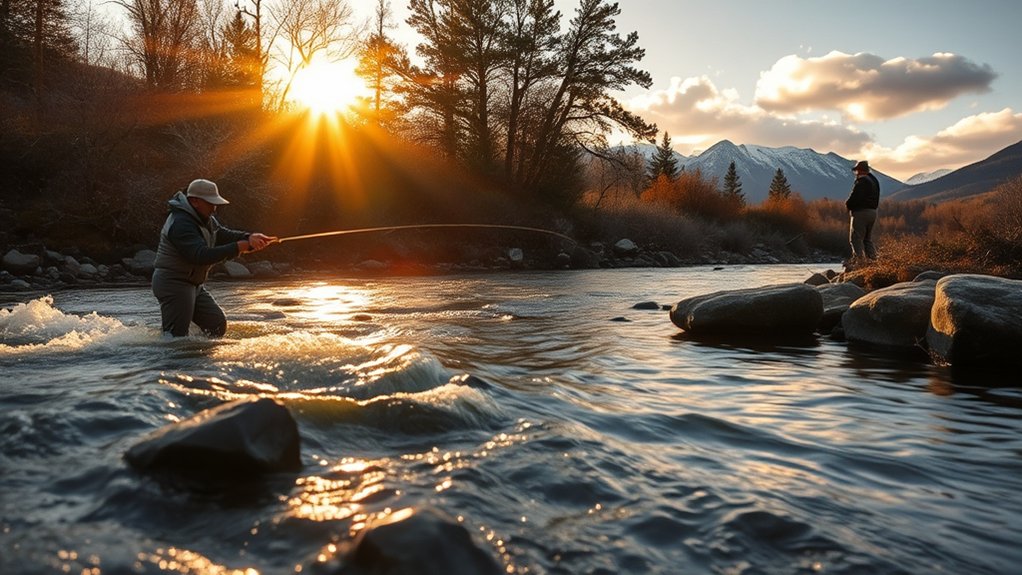
Because trout follow water conditions, you’ll want to fish riffles more often when oxygen, temperature, and food movement make trout active. In many trout streams, spring and early summer bring reliable insect activity and feeding windows in riffles and runs.
During warm weather, riffles and fast runs can stay more comfortable because they hold moving, oxygenated water. After post-snowmelt cloudiness clears, return to riffles, seams, and pool heads where food starts moving again.
In fall and winter, trout often spend more time in deeper, slower water because it offers stable conditions and reduces energy use. That does not mean they never feed in riffles, but it does mean you should check pools, slow runs, and soft inside seams carefully.
| Season | Where to Fish | Why it Works |
|---|---|---|
| Spring | Riffles, runs, and pool heads | Rising temperatures and insect activity can increase feeding |
| Summer | Riffles, shaded runs, and oxygen-rich seams | Moving water can provide oxygen and steady food delivery |
| Fall | Pools, tailouts, and slower runs | Cooling water and changing light often shift trout toward stable holding water |
| Winter | Deep pools and slow inside seams | Lower metabolism makes trout favor shelter, depth, and slower current |
Respect seasonal shifts. Move from riffles to pools as conditions cool, and favor deep pools in winter. You’ll fish smarter, not harder, when you match timing to trout behavior.
Reading Subtle Water Signs and Pocket Structures
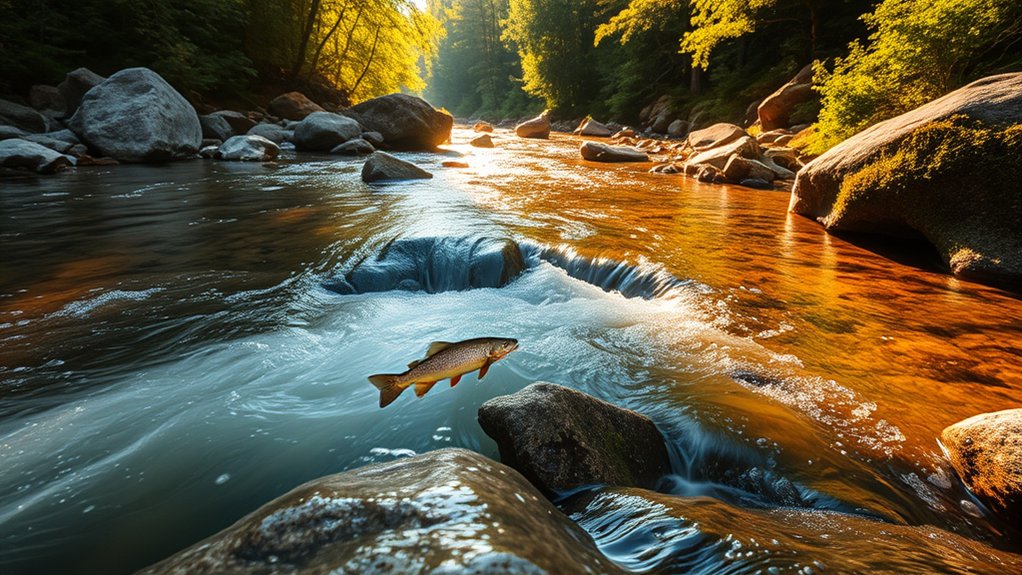
After you’ve matched season and run type, start reading subtle water signs and pocket structures to pinpoint where trout actually hold.
You’ll learn to spot subtle water signs, including surface disturbances, foam lines, bubble trails, and color shifts. These marks often reveal current seams, depth changes, and hidden pocket water.
Watch flow patterns around rocks. Eddies, soft cushions, and reduced speed create fish-holding areas that are often deeper or calmer than the surrounding riffle.
Watch how water wraps rocks. Eddies and slower seams form protected pockets where trout can hide, rest, and feed.
Note the water surface texture. Slicks, small ripples, V-wakes, and sudden dark patches can reveal depth changes, submerged stones, and downstream pockets.
Consider lighting conditions and time of day. Low light can push trout into pocket structures and shallow feeding lanes, while bright sun often drives them under cutbanks, deeper ledges, or overhead cover.
- Scan for foam lines and surface disturbances at seams where slower pocket water meets faster flow. These are prime fish-holding areas.
- Read flow patterns around boulders to target eddies, cushions, and deeper-than-riffle pockets with precise casts.
- Adjust your approach for lighting conditions. Fish may move into pockets at dawn and dusk, then tuck under cover when overhead light increases.
Common Mistakes When Fishing Riffles and Pools
Many anglers find good water but fail to fish it cleanly. The most common mistake is casting too far. Long casts may feel impressive, but they create more drag and reduce strike detection in broken current.
Another mistake is fishing only the obvious pool center. Deep middle water can hold trout, but the best feeding lanes often sit at the head, tailout, inside seam, or edge where current delivers food.
Don’t wade into the best water before you fish it. In small streams, trout may hold close to the bank or at your feet. Make the first few casts from back from the edge, then move only after you cover near water.
- Avoid dragging the fly: Mend early and often so the fly moves with the current.
- Avoid one-depth fishing: Change weight, dropper length, or retrieve speed until you reach the feeding zone.
- Avoid noisy movement: Heavy steps, splashing, and bright silhouettes can spook trout before you cast.
- Avoid ignoring tailouts: Trout often slide into shallow tailouts during low light to feed.
Step-by-Step Riffle-to-Pool Approach
Use a simple system every time you reach a riffle, run, or pool. This keeps you organized and helps you cover water without rushing past the best lies.
- Stop before the edge: Watch the water for a minute before stepping in. Look for foam lines, rises, flashes, and current seams.
- Fish the near water first: Make short casts to the closest seam, bank pocket, or soft edge before reaching across the stream.
- Cover the riffle head: Use short upstream casts, a high rod, and quick mends to keep your fly drifting naturally.
- Work the run: Extend your drift through the smoother middle water, adjusting depth if you stop touching fish.
- Slow down at the pool: Let nymphs or streamers sink, use softer casts, and watch for subtle takes.
- Finish with the tailout: Present carefully where the pool shallows and speeds up again. Trout often feed there during low light.
This approach prevents random casting. You move from shallow to deep, near to far, and fast to slow without stepping on fish.
Related Guides
Frequently Asked Questions
What is the number one rule of fishing riffles and pools?
The number one rule is to match your presentation to the water speed. In riffles, use short controlled drifts and quick mends. In pools, slow down, cast gently, and let your fly or bait reach the right depth before moving it.
What should you not do while fishing trout water?
Don’t rush into the stream, slap long casts over holding water, ignore current seams, or use the same depth all day. Avoid loud wading, poor line control, and repeated draggy drifts. Also check local regulations before fishing, especially for bait rules, seasonal closures, and catch limits.
What time of day is best for creek fishing?
Dawn and dusk are often strong because trout feel safer in low light and insects may be active. Midday can still work in shaded riffles, deeper pools, and broken pocket water. Watch water temperature, insect activity, cloud cover, and angling pressure instead of relying on the clock alone.
What is the fast-moving water between riffles and pools called?
The fast-moving water between riffle areas and pools is usually called a run. A run has steadier depth and smoother current than a riffle, but it still moves enough food to attract trout. Runs are excellent places to fish nymphs, wet flies, and small streamers.
Should you fish the riffle first or the pool first?
Fish the closest soft water first, then work from the riffle head through the run and into the pool. This keeps you from spooking trout in shallow edges, pocket water, and tailouts before you have a chance to present to them.
Are riffles better than pools for trout?
Neither is always better. Riffles can be better when trout feed actively in oxygen-rich current. Pools can be better during bright sun, cold weather, low flows, or when larger trout want depth and cover. The best spot is often the transition between the two.
Conclusion
You’ll stand where riffle meets pool with better eyes now, not just better tackle. Watch the seams, foam lines, boulders, tailouts, and subtle color changes. Use a dry-dropper, double nymph rig, wet fly, or small streamer when the water calls for it. Cast upstream or quartering upstream in riffles, whisper flies into pools, and mend before drag ruins the drift. Trout love changeover zones. You just have to outthink, not overpower, the river.
Sources
- National Park Service Angler Code of Ethics — supports responsible angling, low-impact fishing, and ethical stream behavior.
- U.S. Forest Service Water Safety — supports wading safety and caution around moving water.
- USGS Water Science School: Dissolved Oxygen and Water — supports the role of oxygen in aquatic habitat.
- U.S. Fish & Wildlife Service: Fishing Responsibly — supports responsible fishing practices and regulation awareness.