Barometric pressure is useful for fishing mainly as a weather-trend signal, not as a magic bite number. There is no scientifically established universal pressure reading that guarantees better fishing. Instead, watch whether pressure is rising, falling, or staying steady, then pair that trend with wind, cloud cover, water temperature, clarity, current, and bait activity. A falling barometer often accompanies an approaching front, while rising pressure commonly follows one, and those wider weather changes can affect where fish hold and how aggressively they feed.
Last updated: September 21, 2026 — revised pressure thresholds, research framing, weather-station guidance, tactics, FAQs, sources, and internal links.
Quick Answer
There is no scientifically proven universal best barometric pressure for fishing. The direction of change and the weather arriving with it are more useful than one reading. Falling pressure may accompany cloudy, windy pre-front conditions that produce an active bite, stable weather can support repeatable patterns, and rising post-front pressure may coincide with brighter, tougher conditions. Use the barometer as one clue alongside the water and weather you actually see.
Key Takeaways
- No universal barometric-pressure number has been proven to produce the best fishing.
- Standard sea-level atmospheric pressure is about 29.92 inHg, but that is a meteorological reference, not a fish-bite target.
- Pressure trend is most useful when it helps you identify an approaching front, settled weather, or post-front clearing.
- Wind, light, water temperature, clarity, current, forage, season, and fish location can matter as much as or more than pressure.
- Never chase a falling-pressure bite into lightning, dangerous wind, rough water, or severe weather.
How Barometric Pressure Influences Fish Behavior
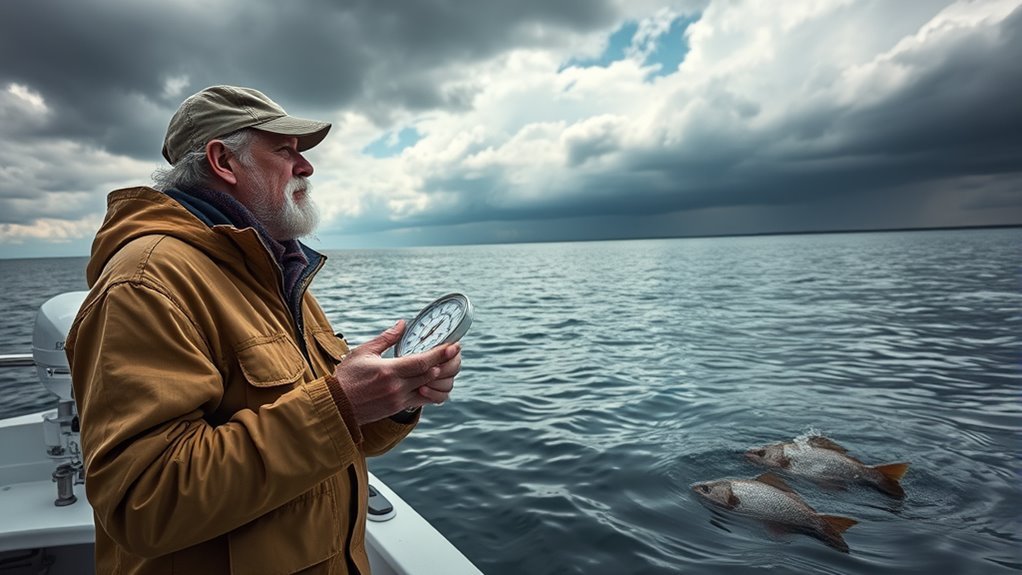
Barometric pressure is the pressure exerted by the atmosphere. Changes in that pressure often arrive with changes in wind, cloud cover, light, air temperature, rainfall, and other weather conditions that anglers can observe directly.
Many fish use a swim bladder to control buoyancy, so pressure changes can physically affect the volume of gas in that organ. However, that does not prove that ordinary weather-driven pressure changes directly switch feeding activity on or off. Fish routinely experience much larger hydrostatic pressure changes when they move vertically through the water column.
The available feeding evidence is limited. A 2014 Bemidji State University study of yellow perch found no statistically significant effect of rising versus falling barometric pressure on how much the fish ate. That study involved one species and a limited laboratory setup, so it should not be treated as the final answer for every fish. It does show why anglers should avoid treating pressure as a guaranteed feeding switch.
What pressure does particularly well is help identify a changing weather pattern. A falling barometer may accompany an approaching front with increasing wind and cloud cover. Rising pressure often appears as a front clears. Stable pressure can indicate settled weather. Fish may respond to that whole package rather than to the barometer alone.
Treat the barometer as a weather-stage indicator, not a fish-mood meter. The trend tells you when conditions are changing; the water tells you how the fish are responding.
Is There an Ideal Barometric Pressure for Fishing?
There is no scientifically established universal best barometric pressure for fishing. Standard atmospheric pressure at sea level is about 29.92 inHg, or 1013.25 hPa, but that number is a meteorological reference rather than a biological optimum for fish.
A reading such as 29.99 inHg can appear while pressure is falling before a front, holding steady during settled weather, or rising after a storm. Those three situations can produce very different wind, light, temperature, water, and fish-location conditions even though the barometer passes through the same number.
For practical fishing, ask three questions instead: Which way is pressure moving? How quickly is the overall weather changing? What are the fish and forage doing right now?
During settled conditions, established feeding zones such as weed edges, points, creek channels, docks, reefs, flats, drop-offs, current seams, and shallow cover near deeper water are logical starting points. During an approaching or departing front, be ready to change depth, location, lure speed, and presentation according to the actual conditions.
Note: Do not label an entire day “good” or “bad” from one pressure reading. Season, oxygen, water temperature, current, tide, bait movement, water clarity, fishing pressure, habitat, and light can all change the result.
Barometric Pressure Cheat Sheet for Anglers
Use this table as a weather-and-tactics starting point rather than a bite forecast. Local patterns vary, so compare each pressure trend with the conditions and catch results from your own water.
Pressure at a Glance
| Pressure Trend | Weather Context to Check | Fishing Adjustment to Test |
| Stable pressure | Settled wind, light, and temperature may let fish establish repeatable locations. | Repeat productive structure, depth, and forage patterns until fish behavior changes. |
| Falling pressure | An approaching front may bring more wind, cloud cover, rain, and lower light. | If fish are roaming or chasing, test moving baits and cover water while conditions remain safe. |
| Rising pressure | Post-front clearing can bring brighter skies, changing wind, and cooler or drier air. | If the bite slows, target shade, cover, current breaks, or deeper edges and use more precise presentations. |
| Stable high pressure | Often associated with settled, clear weather, although local conditions vary. | Prioritize low-light periods, shade, depth, cover, natural colors, and quiet presentation when needed. |
| Rapidly falling / very low pressure | A strong weather system or storm may be approaching or nearby. | Put safety first. Leave before lightning, dangerous wind, flooding, or rough water develops. |
Measuring Barometric Pressure Effectively

To measure barometric pressure effectively, focus on consistency. Use the same reliable source before each trip, watch the multi-hour trend, and record the weather and fishing result alongside the pressure reading.
Also understand what your device is showing. Station pressure is the pressure measured at the instrument’s actual elevation. Many weather apps and home stations display sea-level or relative pressure, which is adjusted so readings from different elevations can be compared more easily. Compare like with like instead of treating every displayed number as identical.
For fishing, a single number is less useful than a sequence. Write down whether pressure is rising, falling, or steady, then note the wind, clouds, water temperature, clarity, current or tide, fishing depth, lure, and catch result. Repeated observations from the same water can reveal patterns that a generic pressure chart cannot.
Types of Barometers
Barometers and weather services give anglers several ways to follow pressure trends. The best choice depends on how local you want the measurement to be and how much weather information you want with it.
- Analog Barometers: These require manual reading of a dial and work well at home, cabins, garages, or other fixed locations.
- Digital Barometers: These can display current pressure plus trend arrows, graphs, stored history, or alerts depending on the model.
- Tempest Weather System: This home weather station measures barometric pressure along with other local weather variables and connects its readings to an app and supported smart-home services.
- Phone Weather Apps: These are convenient for trends and forecasts, but some readings may come from a station that is several miles from your fishing location.
The most useful setup is the one you can check consistently and compare with your actual fishing log.
Pressure Placement Tips
Placement rules depend on the instrument. A traditional indoor barometer should be protected from direct sun, strong drafts, heating equipment, and abrupt temperature changes. These conditions can interfere with representative pressure measurements.
An outdoor all-in-one weather station has different requirements. For example, WeatherFlow recommends installing a Tempest in an open outdoor location with good sky and sun exposure, away from buildings and unnatural heat or moisture sources. Follow the manufacturer’s siting instructions instead of applying indoor-barometer rules to an outdoor station.
Whatever instrument you use, check it consistently before and after major weather changes. The goal is not to find a magic pressure value; it is to see how the weather pattern develops around your fishing sessions.
Using the Tempest Weather System for Local Pressure Trends
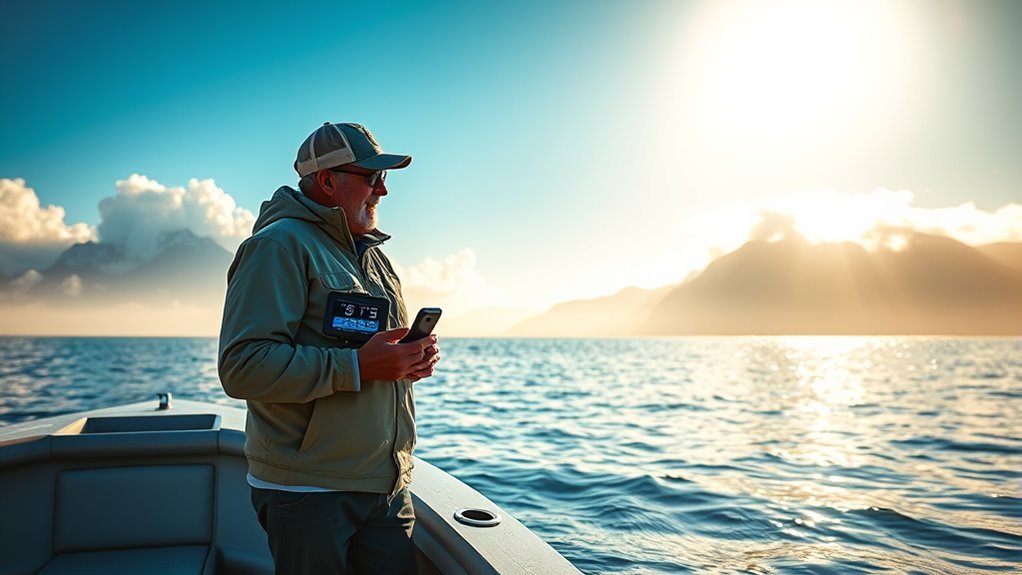
A Tempest Weather System is one example of a personal weather station that can provide local pressure and weather observations instead of relying only on a distant regional station.
According to WeatherFlow, Tempest measures barometric pressure along with temperature, humidity, wind, rain, lightning, solar radiation, and other variables. Its app reports adjusted sea-level pressure, which is useful when you want to follow the local trend consistently.
A personal station is most useful when it is reasonably close to the water you fish. It cannot tell you what fish are doing, but it can show whether your local weather is changing in the way the broader forecast predicted.
Real-Time Pressure Monitoring
Real-time weather monitoring helps because you can compare pressure against the other conditions changing at the same time instead of treating the barometer as an isolated signal.
Useful observations include:
- Whether pressure is rising, falling, or remaining steady
- Changes in wind speed and direction as a front approaches or leaves
- Temperature, rainfall, and lightning conditions that may affect safety or fish location
- How current conditions compare with previous productive trips in your fishing log
This approach gives pressure an appropriate role: it helps describe the weather pattern, while your observations of water, bait, cover, current, and fish response determine the fishing decision.
Smart Integration Features
Tempest supports app access and several smart-home integrations, including services such as Alexa, IFTTT, and Rachio. These integrations can make it easier to check local conditions or build weather-based alerts.
For fishing, the main benefit is convenience. You can check the recent pressure and weather trend before leaving home, compare it with the forecast, and decide what conditions you are likely to encounter.
Technology should support your judgment rather than replace it. Once you reach the water, watch baitfish, birds, wind direction, cloud cover, current, tide, water clarity, temperature, and actual fish activity.
Fishing Strategies During Pressure Changes
Use pressure trends to decide what conditions to test first, not to lock yourself into one presentation. The fish’s response should override the rule of thumb.
Here are practical starting points:
- Falling Pressure Before a Front: If cloud cover, wind, and bait activity increase and fish begin roaming, test reaction baits or faster coverage. Do not assume every falling barometer creates an aggressive bite.
- Rising Post-Front Pressure: If skies clear and fish become harder to locate, slow down, tighten your target area, and check cover, shade, current breaks, or deeper edges.
- Stable Weather: Repeat productive structure, depth, and forage patterns until the fish give you a reason to change.
- Rapid Weather Changes: Pay more attention to safety and actual fish location than to the pressure number itself.
Pro Tip: Keep a fishing log with the pressure trend, sky condition, wind, water temperature, clarity, current or tide, lure, depth, and catch results. Over time, your own water-specific history is more useful than a universal pressure chart.
Best Lures and Presentations by Pressure Trend
There is no lure that becomes “best” simply because the barometer rises or falls. Let the pressure trend suggest the weather stage, then match your lure to fish activity, visibility, cover, forage, depth, and water temperature.
During falling pressure ahead of a front, moving baits can be useful if the fish are actively chasing. Spinnerbaits, vibrating jigs, crankbaits, swimbaits, topwaters, jerkbaits, spoons, and moving soft plastics let you cover water quickly.
During bright post-front conditions, finesse presentations may become more useful if fish hold tighter to cover or stop traveling far for a bait. Finesse worms, drop shots, Ned rigs, small jigs, weightless soft plastics, live bait, and natural colors are common options.
During stable weather, match the lure to the season and local forage instead of the pressure number. If fish are chasing bait, use moving presentations. If they are holding near individual pieces of cover, switch to a slower, more precise lure.
When you get short strikes, keep the successful depth and location in mind before changing everything. A smaller profile, different retrieve, or slower fall may be enough. For a broader lure-selection framework, see the bait selection for fishing guide.
Freshwater vs. Saltwater Pressure Patterns
Barometric pressure can help describe weather changes in both freshwater and saltwater fishing, but the other variables you prioritize should change with the environment.
In freshwater lakes, ponds, and rivers, combine the pressure trend with wind, light, current, water temperature, clarity, vegetation, depth changes, and seasonal fish movement. Bass, crappie, walleye, pike, muskies, catfish, trout, and panfish do not all use habitat in the same way.
In saltwater, tides, current, swell, salinity, wind, and bait movement can dominate your decision-making. A falling barometer may signal an approaching system, but productive pressure conditions are irrelevant if wind or seas become unsafe. For broader planning, see the saltwater fishing basics guide.
For coastal fishing, check pressure together with the tide stage and current. Moving water that concentrates bait around cuts, points, bridges, flats, jetties, creek mouths, and channel edges can provide a more direct fishing clue than the barometer alone.
Warning: Never chase a falling-pressure bite into dangerous weather. If lightning, high wind, rough water, flash flooding, or severe storms are possible, leave early and choose safety over fishing.
The Impact of Weather Conditions on Fishing
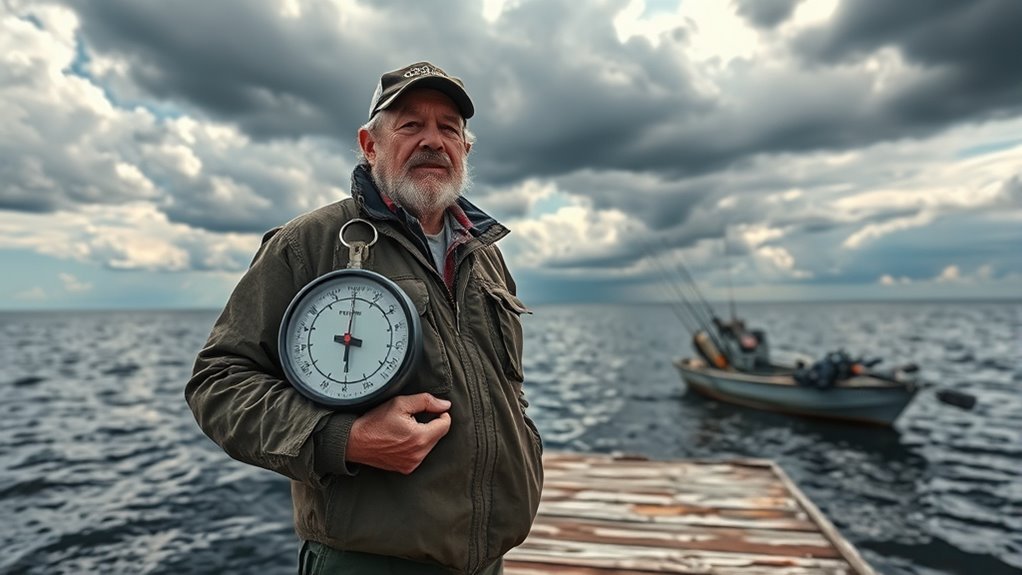
Weather affects fishing through several linked variables, which is why barometric pressure should be read as part of a package rather than by itself.
Rising pressure often occurs as a weather system clears. Depending on the front, that change may arrive with brighter skies, different wind, cooler air, or reduced cloud cover. In shallow or clear water, those changes can alter visibility and where fish feel comfortable feeding.
Falling pressure can accompany an approaching weather system with building clouds, wind, temperature changes, and rain. Anglers often report active feeding before fronts, but it is difficult to isolate pressure from those simultaneous environmental changes.
A changing barometer tells you the weather pattern is moving. Use wind, light, water conditions, and fish response to decide what the change means for your fishing.
Rapid changes can also affect water clarity, current, temperature, and access. Instead of automatically slowing down or speeding up because of the barometer, watch the first several fish you contact and adapt to the depth, cover, and presentation they respond to.
If changing weather creates stained water, use the visibility and water conditions to guide lure choice. The muddy water fishing guide covers those adjustments in more detail, while the low-light fishing guide explains how clouds, dawn, dusk, and reduced visibility can alter lure presentation.
Common Mistakes When Using Barometric Pressure for Fishing
The biggest mistake is treating one number as a guarantee. A reading such as 29.99 inHg does not tell you whether the pressure has been falling, stable, or rising, and those situations can occur under very different weather conditions.
Another mistake is assuming that correlation proves direct causation. Anglers may catch more fish during a falling barometer, but pressure can be changing at the same time as wind, clouds, temperature, rain, current, and light. Those other variables may explain part—or most—of the difference.
Do not compare pressure readings blindly either. One device may report station pressure while another reports sea-level-adjusted pressure. Focus on the trend from a consistent source.
Season also matters. Spring, summer, fall, and winter fish may occupy different depths and habitat regardless of pressure. Cold water, spawning stage, oxygen, forage movement, and current can change fish activity independently.
Water clarity is another major variable. A front that muddies the water may require more vibration, contrast, or tighter target placement. Clear, bright conditions may reward longer casts, quieter approaches, and natural presentations.
Finally, do not blame barometric pressure for every slow trip. Boat traffic, fishing pressure, wrong depth, poor lure choice, low oxygen, temperature, missing forage, tide timing, and simply fishing an unproductive location can all reduce catches. For more on another major weather variable, see the wind conditions for fishing guide.
Insights From Professional Anglers

Experienced anglers frequently use barometric pressure, but their observations should be treated as field experience rather than controlled scientific evidence.
A 2025 Wired2Fish report on barometric pressure collected several useful perspectives:
- Capt. Sonny Schindler described exceptionally active fishing during rapidly falling, pre-storm conditions, while also emphasizing the dangerous weather that accompanied those trips.
- Professional bass angler Drew Gill emphasized that the pressure reading itself may matter less than the visibility and other weather changes associated with it.
- Capt. Ed Zyak described fishing more aggressively during falling pressure and downsizing or slowing his presentation during rising, high-pressure conditions.
- Louisiana guide Mike Frenette described low-pressure periods when fish became unusually active, but his practical approach is still to go fishing and respond to the conditions he finds.
The same report notes that these observations are anecdotal and that isolating barometric pressure from wind, cloud cover, temperature, and other simultaneous changes is difficult. That distinction is important: experienced anglers can give you useful tactics without turning their experiences into universal biological rules.
How to Separate Pressure From Other Weather Effects
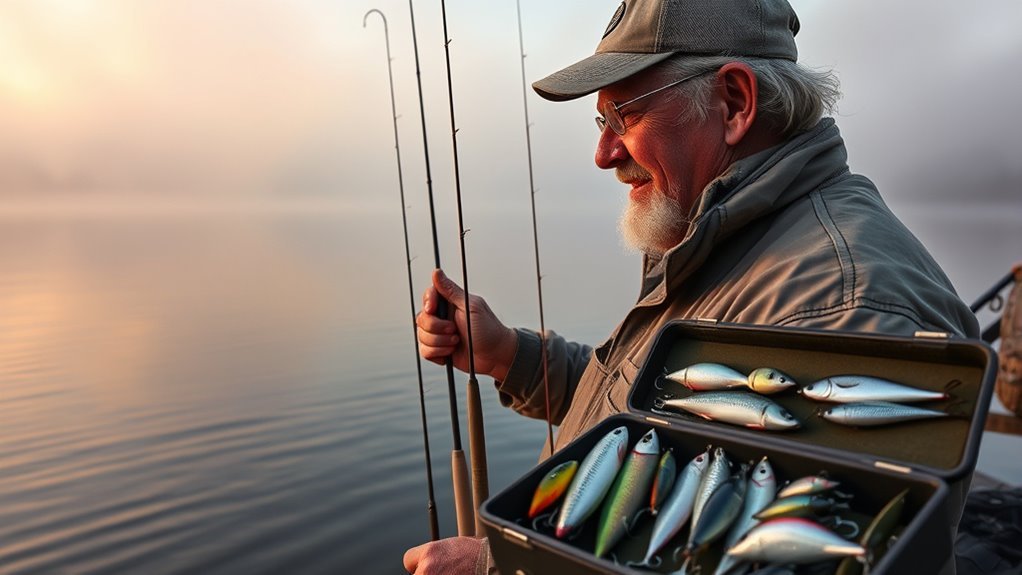
If you want to know whether pressure matters on your home water, collect your own fishing data instead of relying only on generalized charts.
Track the pressure trend, but also record the variables that change with it. Otherwise, you cannot tell whether pressure, wind, light, temperature, current, or fish location produced the result.
For each trip, record the time, pressure trend, cloud cover, wind, water temperature, clarity, current or tide, target depth, lure or bait, and number of bites or fish caught. Use the same weather source each time so your readings are comparable.
Then compare trips with similar seasons and water temperatures. If two outings had similar pressure but very different wind, light, or current, do not attribute the difference in catch rate to pressure alone.
Also compare where the fish were located. A day that feels “dead” at three feet may be productive at twelve feet. Changing depth before blaming the barometer gives you a cleaner test of what actually changed.
Over time, this method can produce a local decision framework: not “29.8 is good,” but something more useful such as “on this lake, increasing south wind and cloud cover before a front often moves bait onto these points.” That is information you can apply repeatedly.
Simple Barometer Fishing Plan
You can use a simple pre-trip routine to make barometric pressure useful without overthinking it.
- Check the recent trend: Determine whether pressure has been rising, falling, or staying fairly steady over the last several hours.
- Identify the weather stage: Decide whether a front is approaching, conditions are settled, or a front has recently passed.
- Check safety first: Review lightning, wind, rain, flood, marine, and severe-weather risks before deciding to fish.
- Read the water: Note temperature, clarity, current or tide, bait activity, and the most likely fish-holding depth.
- Choose a starting presentation: Use moving baits if fish are actively roaming or chasing; use more precise presentations if they are holding tightly to cover or structure.
- Change location and depth when needed: Do not keep repeating the same cast simply because a pressure chart says the conditions should be good.
- Record what happened: Save the pressure trend, weather, water conditions, location, lure, depth, and catch details for future comparison.
This keeps pressure in its proper role: a useful clue inside a repeatable fishing decision process.
Frequently Asked Questions
What Is the Best Barometric Pressure for Fishing?
There is no scientifically established universal best barometric pressure for fishing. Standard sea-level pressure is about 29.92 inHg, but that is a meteorological reference rather than a bite target. Pay more attention to whether pressure is rising, falling, or stable and to the weather and water conditions changing with it.
What Barometric Pressure Is Too High for Fishing?
There is no proven pressure number above which fish stop biting. High-pressure systems can coincide with bright, clear, settled weather, which may change fish location or make some presentations less effective. If the bite is difficult, test shade, cover, deeper edges, quieter presentations, or low-light periods instead of treating the pressure reading as a cutoff.
Do Fish Bite Better When the Barometric Pressure Is Falling?
Anglers often report good fishing during falling pressure before a front, but pressure is changing alongside wind, cloud cover, light, temperature, and other variables. A falling barometer can therefore identify a promising weather window, but it does not guarantee an aggressive bite.
Is 29.99 Barometric Pressure Good for Fishing?
A reading of 29.99 inHg is close to standard sea-level atmospheric pressure, but the number alone cannot tell you whether fishing will be good. Check whether the pressure has been rising, falling, or stable and then compare that trend with wind, light, water temperature, clarity, current, and fish activity.
Does Barometric Pressure Directly Make Fish Feed?
The direct feeding effect is not well established. Fish with swim bladders respond physically to pressure changes, but a controlled yellow-perch study found no significant difference in food intake between rising and falling barometric pressure. Weather conditions that occur with pressure changes may be an important part of what anglers observe.
Is Rising or Falling Pressure Better for Fishing?
Neither trend guarantees better fishing. Falling pressure ahead of a front often coincides with cloud cover and wind that can create productive conditions, while rising pressure after a front may coincide with clearing skies and a tougher bite. Use the pressure trend to identify the weather stage, then adjust to the fish’s actual location and activity.
Should I Fish During Very Low Pressure?
You can fish during low pressure when conditions are safe, but very low or rapidly falling pressure may accompany a strong weather system. Check lightning, wind, rain, flooding, waves, and marine warnings before going. No fishing opportunity is worth staying on the water during dangerous weather.
Conclusion
Barometric pressure and fishing are connected most usefully through changing weather patterns, not through one universal “best” number. Standard atmospheric pressure may provide a reference, but it does not tell you when fish will bite.
Use rising, falling, or stable pressure to identify the stage of the weather pattern. Then make your fishing decisions from the conditions that fish experience directly: light, wind, water temperature, clarity, current, tide, oxygen, forage, habitat, depth, and fishing pressure.
The most reliable approach is to keep your own log and test patterns on the waters you fish. Pressure can help you anticipate change, but observation and adaptation are what turn that information into more productive fishing.
Sources
- NOAA National Weather Service: The Weather Guide — standard-atmosphere pressure reference and pressure conversions.
- Bemidji State University: The Effect of Barometric Pressure on Feeding Activity of Yellow Perch — controlled feeding study.
- In-Fisherman: Barometric Pressure and Bass — discussion of evidence limitations and weather confounding.
- In-Fisherman: Understanding Barometric Pressure and How It Affects Fishing Success — angling and weather-pattern context.
- Wired2Fish: Understanding Barometric Pressure in Fishing — professional-angler observations and research caveats.
- WeatherFlow Tempest System FAQs — pressure measurement and sea-level pressure display.
- WeatherFlow: Siting & Installation for Tempest — manufacturer installation guidance.