
Creating a watermelon stroller is a fun, creative way to turn fresh fruit into a baby-shower centerpiece guests will remember. You will carve a whole watermelon into a stroller-style carriage, fill it with fruit, add playful wheels, and finish it with a cute cantaloupe baby figure. With basic tools, careful cuts, and a little planning, this project can look impressive without feeling complicated.
Quick Answer
To make a watermelon stroller, stabilize a whole watermelon, carve out a carriage opening, scoop the fruit, attach grapefruit wheels with blueberry hubcaps, and add a cantaloupe baby figure. Keep everything chilled until serving, use sharp tools safely, and assemble the stroller close to the event for the freshest presentation.
Key Takeaways
- Choose a firm, ripe, evenly shaped watermelon so the stroller sits flat and holds its shape.
- Use a sharp knife, serrated knife, melon baller, toothpicks, and skewers for cleaner cuts and stronger assembly.
- Wash the fruit before cutting, keep cut fruit refrigerated, and serve it within a safe time window.
- Build the stroller with stable wheels, a balanced handle, and a snug baby figure before adding fruit salad.
- Prepare parts ahead when needed, but finish assembly close to serving time for the best look and freshness.
At a Glance
| Time Required | About 30 to 45 minutes, depending on carving detail |
| Difficulty | Easy to moderate |
| Tools Needed | Sharp knife, serrated knife, cutting board, melon baller, spoon, skewers, toothpicks, platter |
| Cost | Low to moderate, based on fruit selection and decorations |
Overview and Purpose
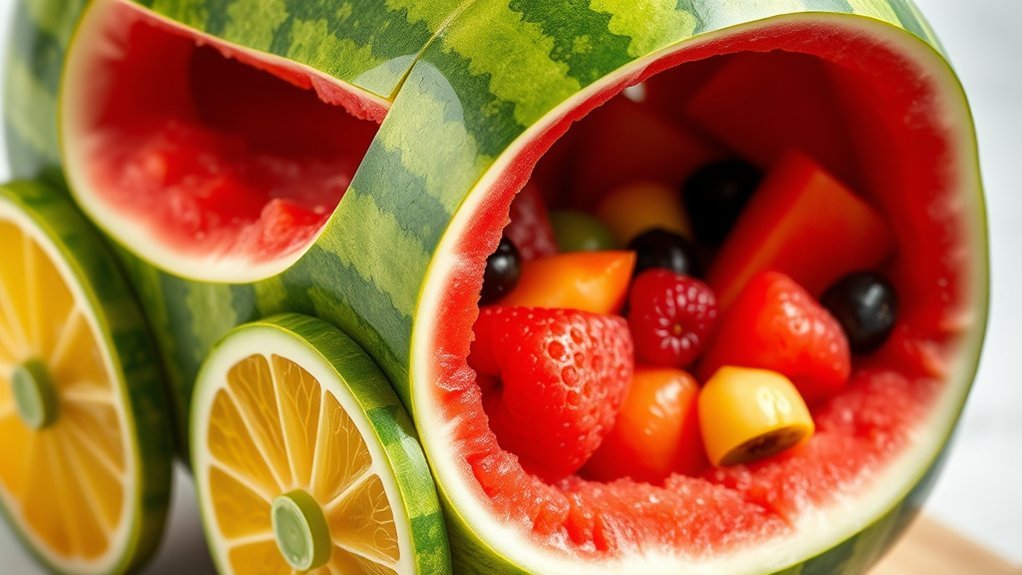
When you want to add a unique touch to your next celebration, crafting a watermelon stroller is a delightful way to do it. This edible centerpiece works especially well for baby showers, gender reveal parties, summer birthdays, brunch tables, and family gatherings. It gives guests something cheerful to notice right away while also serving as a fresh fruit display.
This project also gives you a practical way to serve fruit in a fun shape. Watermelon naturally brings bright color, high water content, and a refreshing flavor, while other fruits add contrast, texture, and personality. Instead of placing fruit in a standard bowl, you create a vibrant fruit salad nestled inside a cheerful stroller design.
The simplicity of this creation lies in its minimal materials: a whole watermelon, grapefruit wheels, blueberries, and a few colorful fruits for filling and decoration. With basic carving techniques, you can shape your watermelon into a charming stroller that holds delicious treats. Enhance the design with a playful cantaloupe baby figure or decorative elements to elevate your presentation. Best of all, you can complete this engaging project in about half an hour when your fruit and tools are ready.
Warning: Always wash the outside of the watermelon before cutting. A knife can move bacteria from the rind into the fruit, so clean the rind, use a clean cutting board, and refrigerate cut fruit until serving.
Ingredients and Tools Needed
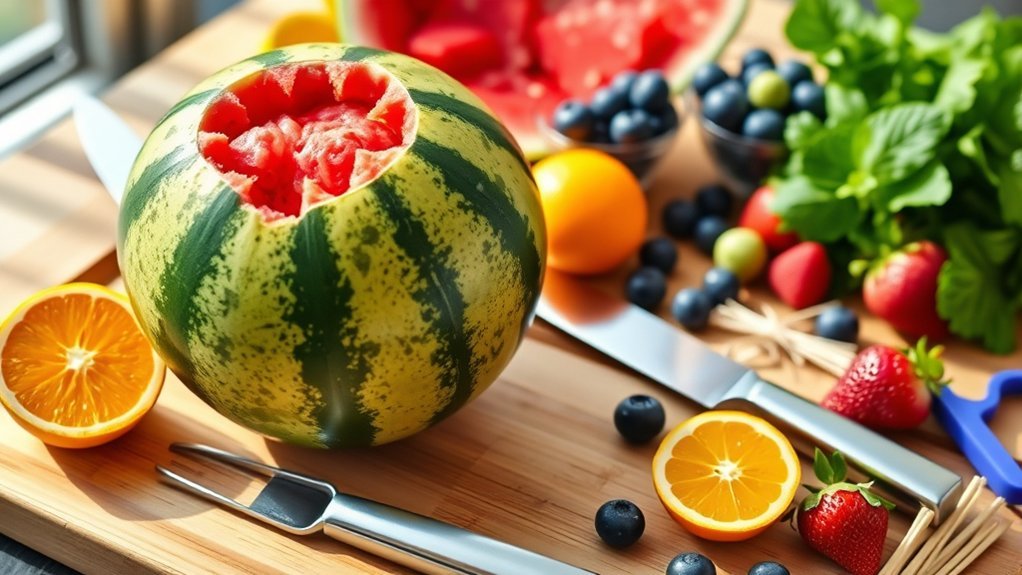
To craft your watermelon stroller, you’ll need a few essential ingredients and tools. Start with a whole watermelon and a cantaloupe as your main characters, then gather colorful fruits for extra flair. Don’t forget the sharp knife, melon baller, and skewers. These will be your trusted helpers as you shape the stroller, assemble the wheels, and build the baby figure.
[Amazon Products Picked for You]

QUALITY CONSTRUCTION: Made with razor sharp high-carbon German steel blades for durability and long-lasting sharpness; Semi-flexible blades help with effortless maneuverability

1, The knives handle is made of wood,the blade is razor sharp, made of high carbon strain-resistant stell

[ Quality Materials] Crafted from high-grade iron with rusts-proof coating, these carving tools are built to last through years of culinary use. the stable construction ensures they won't bend or break during intricate carving work while remaining completely food-safe. unlike cheaper alternatives, our tools maintain edges for precise cuts and beautiful food art creations.
Essential Ingredients Overview
Creating a delightful watermelon stroller requires a few vital ingredients that bring your fruity vision to life. First, choose a ripe watermelon with a firm rind and a shape that can sit flat after trimming. This becomes the main structure of your stroller. A large oval watermelon usually works better than a round one because it gives you more carriage space.
Next, gather a vibrant fruit combination. Cantaloupe works well for the baby figure because it is firm enough to shape and has a warm color that stands out. Kiwi, oranges, green grapes, red grapes, strawberries, blueberries, honeydew, and extra watermelon pieces can fill the stroller and decorate the outside. Grapefruit slices make bright stroller wheels, while blueberries can act as neat little hubcaps.
For a balanced display, choose fruits with different colors and sizes. Small fruits like grapes and blueberries fill gaps, while melon balls and orange wedges add volume. Avoid fruits that brown quickly unless you plan to serve the stroller right away.
Required Tools Explained
As you begin the fun journey of crafting a watermelon stroller, having the right tools at your fingertips can make all the difference. Emphasizing tool safety and effective cutting techniques will help create a smoother process and a cleaner result. Here’s what you’ll need:
- Sharp knife: For precise cutting with less pressure.
- Serrated knife: Perfect for making decorative zigzag cuts around the watermelon opening.
- Large spoon: Helpful for scooping out loose watermelon flesh.
- Melon baller: Great for shaping watermelon, cantaloupe, honeydew, and kiwi into bite-size pieces.
- Toothpicks: Essential for securing small fruit parts together.
- Skewers: Useful for adding structural support to the stroller’s handle and wheels.
- Cutting board: Gives you a stable surface and helps protect your counter.
- Serving platter or tray: Makes the finished stroller easier to carry and display.
- Paper towels: Useful for drying the rind and wiping extra juice during assembly.
With these tools, you’re set to create a delightful and stable watermelon stroller that’s sure to impress at any gathering.
Optional Decoration Ideas
Transform your watermelon stroller into a show-stopping centerpiece with a few fun decoration ideas. Start by adding baby-themed decorative accents like food-safe cupcake toppers, a small ribbon tied around the platter, or a tiny sign placed beside the stroller. Keep non-edible items outside the fruit so guests know what is safe to eat.
Incorporate colorful fruits such as kiwi, orange, strawberries, and grapes to craft a vibrant design for the baby figure and wheels. For extra sweetness, add edible embellishments like gummy candies or chocolate-covered treats, but use them lightly so the display still feels fresh. Personalize the carriage with a small sign featuring the baby’s name or a cute message. Fill the carriage with additional fruits like cantaloupe and honeydew to create a delightful medley of flavors and textures.
Note: If young children will eat from the display, remove toothpicks, skewers, and non-edible decorations before serving individual portions.
Preparation Steps
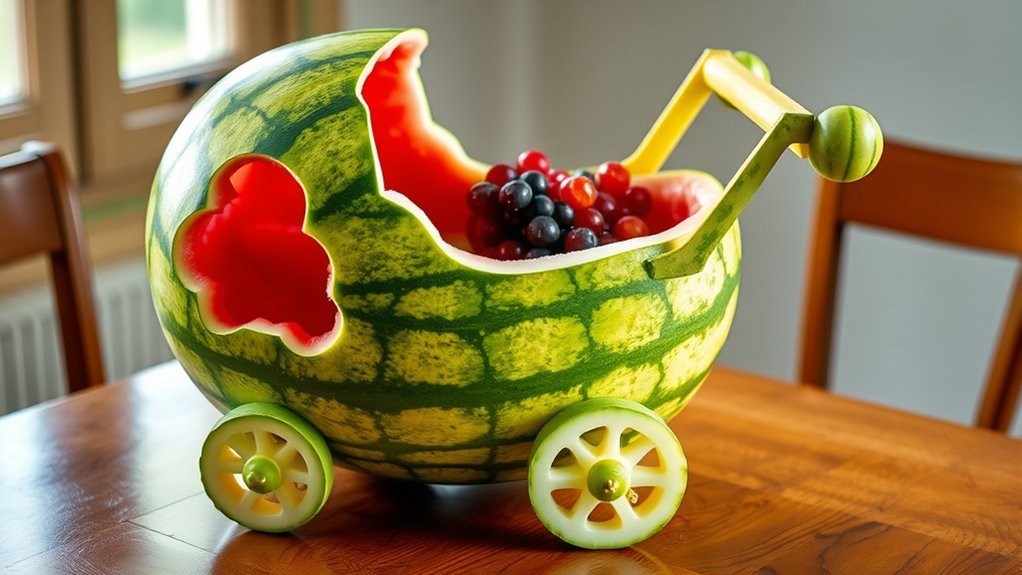
Before diving into the fun part of crafting your watermelon stroller, start with a clean and stable setup. Wash all fruit under running water, dry it with clean towels, and clear enough counter space to work safely. Place the watermelon on a cutting board and test how it rests before making your first cut.
Mastering these preparation techniques will set you up for success in watermelon carving:
- Cut a thin slice from the bottom of the watermelon to create a stable base.
- Mark the carriage opening lightly with a washable food-safe marker or the tip of a knife.
- Cut the stroller opening carefully, using a straight or zigzag edge depending on your preferred design.
- Hollow out the watermelon, removing enough flesh to form a carriage shape; keep the fruit for a refreshing salad.
- Shape the handle by trimming excess melon, making both sides symmetrical for a polished finish.
- Assemble the wheels using quarter-inch thick grapefruit slices and secure them with blueberries as hubcaps.
- Use toothpicks to attach the handle and wheels, making sure everything is firmly fastened for stability.
With these steps completed, you’re ready to bring your watermelon stroller to life. Work slowly, keep your cuts controlled, and wipe away extra juice as you go so the outside stays clean for presentation.
Pro Tip: Chill the watermelon before carving. A cold watermelon is usually firmer, easier to handle, and more refreshing when served.
[Amazon Products Picked for You]

4 In 1 Stainless Steel Fruit Tool Set: Unique design, function includes Melon Baller Scoop Set for digging, carver knife for fruit carving tools, 2 size watermelon scooper for removing and digging flesh of fruits and vegetables

80-Piece Fruit Carving Kit: Complete set includes stainless steel carving knives (main blade, V-cut, wave knife, etc.), food-grade molds, and ergonomic tools. Perfect for creating fruit platters, watermelon baskets, and decorative garnishes. Ideal for family bonding activities, kids' fruit art classes, and party dessert preparation.

Versatile 6-in-1 Kitchen Wonder: Designed to transform your culinary creations, this multi-functional carving tool is a must-have for crafting stunning fruit platters and vibrant vegetable salads. It combines a precision kitchen fruit carving knife, a handy watermelon & ice cream scoop, a watermelon slicer fork, a 2-in-1 dig pulp separator and fruit peeling tool, a crinkle knife for adding texture, and a lemon zester grater.
Creating the Baby Figure and Handle
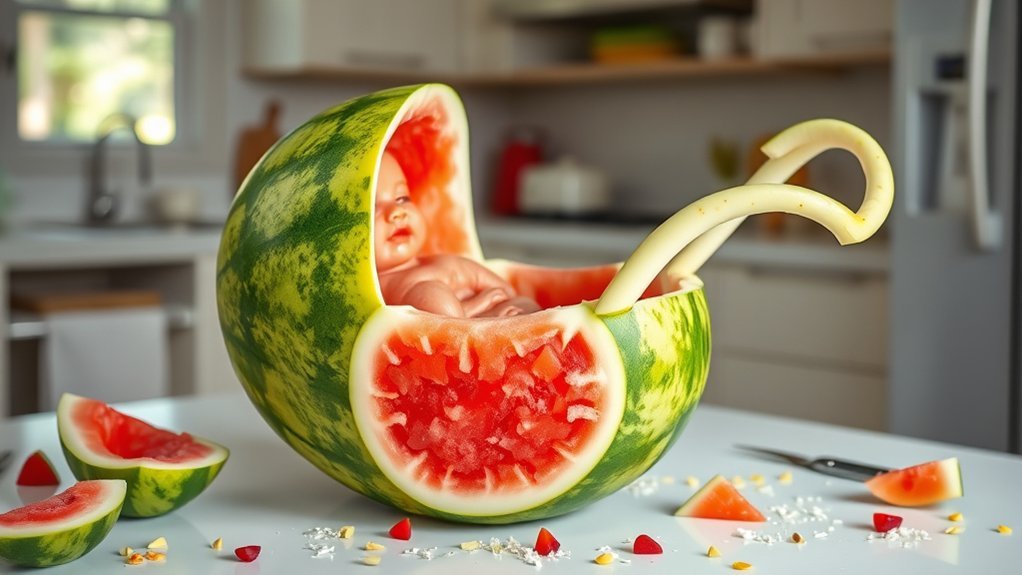
Now it’s time to bring your watermelon stroller to life with a cute baby figure and a sturdy handle. You’ll start by crafting a charming cantaloupe baby, complete with grape eyes and strawberry eyebrows, making sure it fits snugly in the watermelon carriage. Then, you’ll shape the handle with care, using a serrated knife for clean edges and stability.
[Amazon Products Picked for You]

🍉 Melon Baller Set: Melon scoop set includes 4 in 1 melon baller scoop set*1 set, fruit vegetable peeler*1 pc, fruit corer tool*1 pc, food cutter shapes set*9 pcs. Melon baller scoop set and cookie cutters can quickly remove seeds and dig flesh, vegetable cutter shapes, fruit pulp separating and fruit slicing to make perfect fruit platter.

Professional Fruit Carving Tools: Upgrade your kitchen with this all-in-one fruit carving kit, featuring a melon baller scoop, V-cutter, zester, wave knife, and seed remover. Perfect for creating restaurant-quality fruit platters, fun-shaped snacks, or elegant garnishes—Ideal for parties, catering, or home entertaining.

Made of quality stainless steel and plastic handle, durable.
Baby Figure Creation Steps
Creating the baby figure for your watermelon stroller adds a delightful touch to your centerpiece. Follow these steps for a charming and creative presentation:
- Peel a cantaloupe, keeping both ends intact to form a rounded head.
- Use a melon baller to sculpt a cute nose from the cantaloupe, then attach red grapes for the eyes with toothpicks.
- Halve strawberries to create expressive eyebrows, securing them to the cantaloupe head with toothpicks.
- Add a small orange wedge or grape half for a mouth if you want more expression.
- Place the baby figure inside the hollow watermelon carriage and adjust the fruit around it for support.
- Confirm the baby figure sits snugly inside the hollow watermelon carriage for stability and appeal.
- Take your time to make each detail special, bringing your baby figure to life.
If the cantaloupe baby feels too tall, trim a small flat spot from the bottom so it sits lower and more securely. If it leans, use fruit pieces around the base to support it without showing extra toothpicks.
Handle Design Techniques
Once you’ve crafted the adorable baby figure nestled inside your watermelon stroller, focus on the design of the handle. Begin by cutting away excess melon to create a symmetrical shape that enhances the overall handle aesthetics. Use a serrated knife for precise cuts, creating clean edges for a polished look.
Secure the handle with toothpicks or skewers, making sure it’s firmly attached for stability while on display. Consider adding small pieces of fruit or decorative elements that match your baby shower theme for a touch of flair. Remember, ergonomic design is not the real goal here because the handle is decorative, not meant for lifting. Place it thoughtfully so guests can admire its beauty while the watermelon stroller stays stable on the platter.
Assembly and Stability Tips
As you plunge into the assembly of your watermelon stroller, balancing the adorable baby figure with a sturdy handle is essential for a charming presentation. Here are some helpful stability techniques to tackle any assembly challenges:
- Peel a cantaloupe and carve out a nose, securing red grapes as eyes with toothpicks.
- Make certain the baby figure sits properly in the watermelon carriage, adjusting its position for balance.
- Cut the handle carefully to maintain symmetry, enhancing visual appeal.
- Use 16 skewers for the handle assembly, inserting them securely to prevent wobbling.
- Attach wheels evenly on both sides so the stroller looks balanced from the front and side.
- Use extra fruit as hidden support if the baby figure tilts forward.
- After assembly, clean up any excess melon pieces for a polished look.
With these tips, your watermelon stroller will be both delightful and stable, ready to impress.
Skewer Assembly
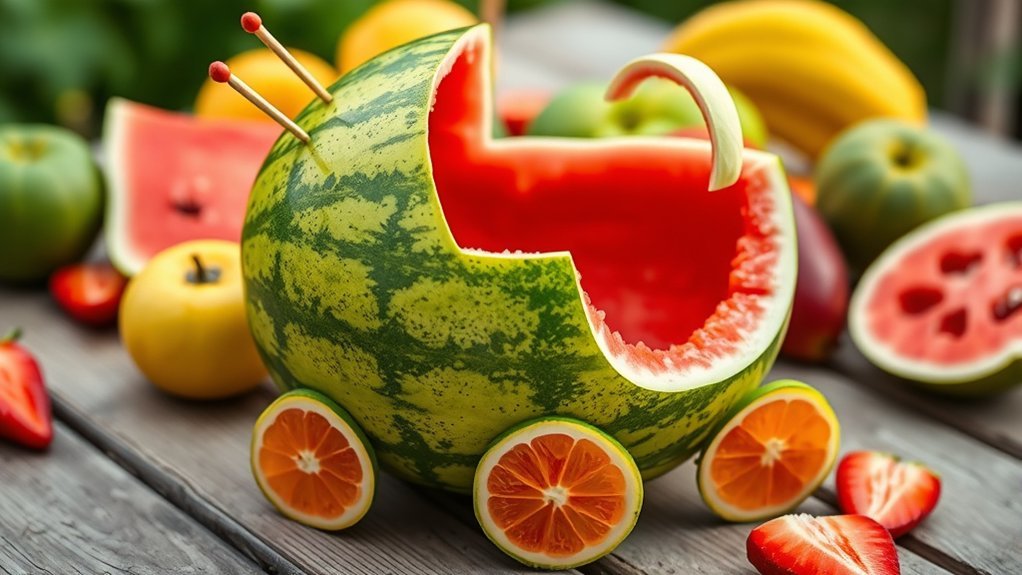
To guarantee your watermelon stroller is both sturdy and visually appealing, gather 16 skewers for the handle assembly. Choose from various skewer types, verifying they’re strong enough to support the weight of your decorative handle. Break off six pieces to use as structural supports for the handle, distributing three on each side to maintain balance. Insert the skewers securely into the watermelon, checking the alignment frequently to verify both sides are symmetrical. If you find any weak connections, use toothpicks to reinforce the joints between the skewers and watermelon for added stability.
| Skewer Type | Use | Materials |
|---|---|---|
| Bamboo | Handle Support | Natural Bamboo |
| Metal | Stability Reinforcement | Stainless Steel |
| Wooden | Aesthetic Appeal | Eco-Friendly Wood |
Bamboo skewers are usually the easiest choice because they are lightweight, affordable, and simple to trim. Metal skewers can be stronger, but they are not ideal for a party display where guests may serve themselves. If you use metal pieces for support, remove them before serving the fruit. Wooden skewers work well for decorative parts, but check for splinters before placing them near food.
Warning: Do not use the decorative handle to carry the watermelon stroller. Move the finished centerpiece by lifting the platter from underneath.
Time Management

When you immerse yourself in the watermelon stroller project, effective time management can make all the difference between a fun experience and a frustrating one. To help ensure smooth sailing, allocate about 30 to 45 minutes for the entire project, including preparation, assembly, and cleanup. Add more time if you want detailed decorations or if children are helping.
Break the project into specific steps to create an efficient workflow:
- Wash and dry the fruit.
- Cut the base and mark the carriage opening.
- Hollow the watermelon.
- Create wheels.
- Assemble the baby figure.
- Build and secure the handle.
- Fill the stroller with fruit.
- Monitor each step with a timer.
- Budget extra time for adjustments.
If you need to prepare ahead, scoop melon balls and cut sturdy fruits earlier the same day. Store them in covered containers in the refrigerator. Save the final assembly for closer to the event so the wheels, handle, and fruit display look fresh.
Final Touches and Presentation
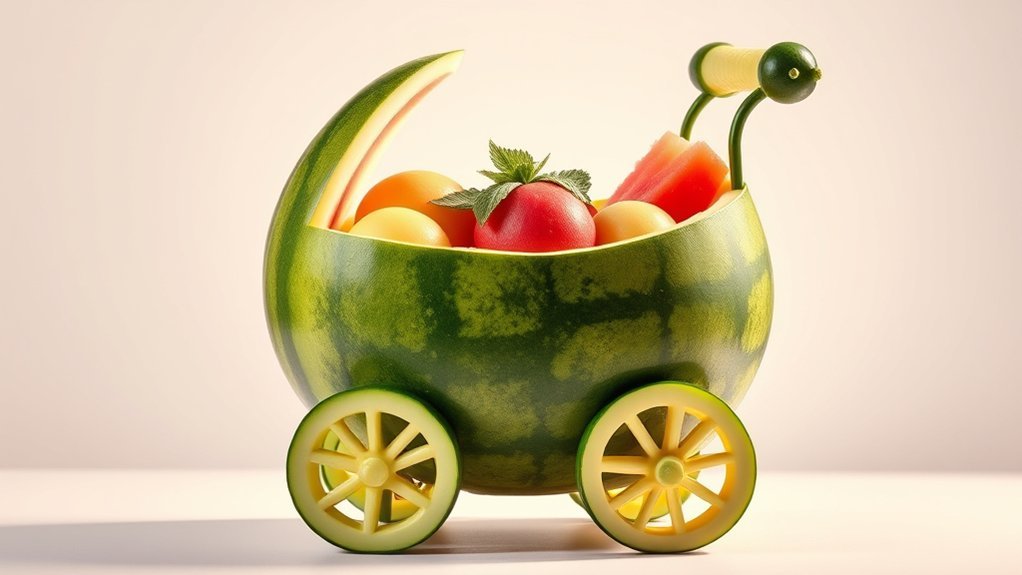
With the watermelon stroller assembled and the project on track, focus on the final touches and presentation that will truly make your creation stand out. Start by ensuring each component is securely attached. Check the stability of the handle and wheels, then inspect the baby figure to make sure it sits neatly inside the carriage.
Enhance the visual appeal using presentation techniques like adding blueberries as hubcaps or draping baby-themed decorations around the carriage. Place brighter fruits near the top so the display looks full and colorful from a distance. Use smaller fruit pieces to fill gaps around the baby figure and along the stroller edges.
To further attract attention, present your watermelon stroller on a vibrant platter that complements your event’s theme. This colorful display invites curiosity and engagement from your guests. Share the story behind your creation as you reveal it, allowing for deeper guest engagement and a personal connection. Before serving, give everything a final inspection to catch any loose pieces or needed adjustments. These thoughtful details will elevate your presentation and create lasting memories for everyone involved.
Serving and Food Safety Tips
A watermelon stroller looks best when it is fresh, cold, and clean. Because this project uses cut fruit, treat it like any other perishable party food. Keep the finished stroller refrigerated until guests arrive, then place it on the serving table close to eating time. If the room is warm or the party is outdoors, serve smaller portions and return extra fruit to the refrigerator when possible.
- Wash before cutting: Rinse the watermelon, cantaloupe, grapefruit, grapes, and berries before preparation.
- Use clean tools: Wash knives, cutting boards, and melon ballers before and after contact with fruit.
- Keep it chilled: Store cut fruit in the refrigerator until you are ready to serve.
- Watch the time: Do not leave cut fruit sitting out for several hours, especially in warm weather.
- Serve safely: Remove visible toothpicks, skewers, and decorative pieces before giving fruit to children.
Common Mistakes to Avoid
Even a simple watermelon stroller can become frustrating if the base is wobbly, the fruit is too soft, or the decorations are too heavy. Avoid these common mistakes to keep your project looking neat and party-ready.
- Cutting too much from the bottom: A thin slice creates stability. A deep slice can weaken the watermelon and expose too much fruit.
- Making the opening too large: Leave enough rind around the carriage so it can hold its shape.
- Overfilling the stroller: Too much fruit can press against the sides and make the display look messy.
- Using weak wheel supports: Grapefruit wheels need firm toothpicks or skewers to stay in place.
- Skipping the platter: A sturdy tray makes the finished stroller easier to move and catches extra juice.
- Assembling too early: Fruit can release juice over time, so finish the display near serving time.
Frequently Asked Questions
Can I use other fruits for the stroller besides watermelon?
You can use other fruit alternatives like pineapple or cantaloupe for smaller displays, but watermelon works best for the stroller body because it has a large rind, roomy center, and strong shape. Use colorful fruits like grapes, kiwi, berries, orange slices, and melon balls to decorate and fill the carriage.
How long does the watermelon stroller stay fresh?
A watermelon stroller usually looks best on the day you make it. You can keep leftovers for about 2 to 3 days in the refrigerator when stored in a covered container, but the display may lose its crisp shape and release more juice over time.
Is this project suitable for children to help with?
Children can help with safe tasks like washing fruit, scooping melon balls, arranging grapes, and decorating the platter. Adults should handle all knife work, skewer placement, and toothpick assembly. Remove sharp supports before serving fruit to young children.
What can I do with leftover watermelon pieces?
You can use leftover watermelon pieces in smoothies, fruit salads, popsicles, fruit skewers, agua fresca, or snack cups. You can also freeze small cubes for drinks. Store leftovers in a covered container in the refrigerator and use them while they still look and smell fresh.
Can I prepare the stroller in advance for an event?
You can prepare some parts in advance, such as washing fruit, cutting melon balls, and chilling the watermelon. For the best look, carve and assemble the stroller the same day as the event. Keep the finished display refrigerated until serving time.
How do I keep the wheels from falling off?
Use firm grapefruit slices, place them evenly on both sides, and secure each wheel with toothpicks or trimmed skewers. Add a blueberry hubcap to hide the attachment point. If the rind is very slippery, dry the outside before inserting the supports.
Can I make a watermelon stroller without a baby figure?
Yes. You can skip the cantaloupe baby figure and simply fill the carriage with fruit salad. The stroller shape, wheels, and colorful filling still create a strong baby-shower centerpiece, and the simpler version is faster to assemble.
Sources
- U.S. Food and Drug Administration: Selecting and Serving Produce Safely — supports washing produce before cutting and safe handling of fresh fruits.
- USDA Food Safety and Inspection Service: Danger Zone — supports keeping perishable foods chilled and limiting time at room temperature.
- USDA FoodData Central — supports general fruit nutrition reference for watermelon and other fresh fruits.
Conclusion
In just a few simple steps, you can transform a humble watermelon into a show-stopping stroller that steals the spotlight at any gathering. With its vibrant colors, playful wheels, sweet baby figure, and fresh fruit filling, your creation becomes both a decoration and a treat.
The key is to work safely, keep the base stable, chill the fruit, and assemble the final details with care. Once your watermelon stroller is ready, place it on a sturdy platter, give it one last check, and enjoy the moment guests gather around your watermelon wonder.
