Last updated: September 22, 2026
Strollers generally do not have a universal expiration date the way many car seats do. Instead of replacing a stroller after an arbitrary number of years, check the manufacturer’s instructions, your child’s height and weight limits, the stroller’s recall status, and the condition of safety-critical parts such as the brakes, frame, wheels, harness, and folding locks.
For U.S. readers, manufacture date can also provide useful context. The federal safety standard for carriages and strollers took effect on September 10, 2015, and newer revisions have applied since then. A stroller’s age alone does not tell you whether it is safe, but an older or secondhand stroller deserves a careful model, recall, and condition check before use.
Quick Answer
Strollers usually do not have a universal fixed expiration date. Keep using one only while it remains within the manufacturer’s limits, has no unresolved safety recall, and its frame, brakes, wheels, harness, folding lock, and other required parts work correctly. Stop using it if a safety-critical part fails or the manufacturer says the stroller should be retired.
Key Takeaways
- Strollers generally do not expire on one universal schedule; manufacturer guidance, recalls, child limits, and actual condition matter more than age alone.
- Check brakes, wheels, frame, harness straps, buckles, folding locks, screws, and quick-release parts regularly and before use.
- Stop using a stroller with failed brakes, a cracked or bent frame, broken locks, missing safety parts, or a harness that no longer secures the child properly.
- For a used stroller, identify the exact model and manufacture date, check recalls, and test all safety functions before placing a child in it.
- A stroller and an infant car seat in a travel system are separate products. The stroller may have no fixed expiration date even when the car seat does.
At a Glance
| Expiration Date | Usually no universal fixed date. Follow the instructions and retirement guidance for the exact stroller model. |
| U.S. Safety Standard | 16 CFR Part 1227. ASTM F833-21 applies under the current federal rule to strollers manufactured from February 15, 2022 onward. |
| Routine Check | Check brakes, wheels, frame locks, and the harness before use. Inspect more closely after travel, impact, long storage, or a change in handling. |
| Most Important Parts | Brakes, wheels, frame, harness, buckles, folding locks, screws, rivets, and quick-release fittings. |
| Stop Using Immediately If | Brakes fail, a folding lock will not engage, the frame is cracked or bent, required parts are missing, the harness is unsafe, or the stroller is subject to a stop-use recall or warning. |
Do Strollers Expire?
There is no universal U.S. rule that says every stroller must be discarded after a particular number of years. The safer approach is to judge the exact stroller by its manufacturer instructions, child-use limits, recall status, available approved replacement parts, and physical condition.
The U.S. Consumer Product Safety Commission regulates carriages and strollers under 16 CFR Part 1227. The regulation addresses hazards involving stability, brakes, restraint systems, latches and folding mechanisms, structural integrity, wheels, and related safety features. The current eCFR rule incorporates ASTM F833-21.
For U.S. manufacture dates, CPSC guidance shows the following standard history:
- September 10, 2015: The federal mandatory stroller standard became effective, incorporating ASTM F833-13b with a CPSC modification.
- October 2, 2016: ASTM F833-15 became the applicable incorporated version for newly manufactured products.
- November 5, 2019: ASTM F833-19 became applicable.
- February 15, 2022: ASTM F833-21 became applicable and remains the version incorporated by the current federal rule.
These dates do not create an expiration date for a stroller already in your home. They tell you which federal standard applied when a U.S. stroller was manufactured. For a secondhand stroller, that makes the manufacture date useful context alongside its recall history and present condition.
A travel-system stroller also needs to be separated from the infant car seat attached to it. The stroller frame may have no fixed expiration date while the infant car seat may have a manufacturer-defined useful life. Check the stroller manual and car-seat manual independently rather than assuming one date applies to both products.
Note: Always check your stroller’s manual first. Model-specific instructions can include child height and weight limits, maintenance rules, approved replacement parts, warranty terms, and warnings that do not apply to every stroller.
What Affects How Long a Stroller Lasts?
Two strollers of the same age can be in very different condition. Usage, storage, terrain, loads, cleaning, and maintenance all affect how quickly individual parts wear.
- Material and construction: Frames, fabrics, tires, bearings, joints, buckles, and folding mechanisms wear at different rates.
- Frequency of use: Daily walking, errands, daycare runs, and travel create more operating cycles than occasional use.
- Storage conditions: Extended exposure to moisture, direct sun, extreme temperatures, or outdoor storage can accelerate deterioration of some materials.
- Maintenance: Removing debris, cleaning according to the manual, checking fasteners, and using only approved lubricants or replacement parts can prevent avoidable problems.
- Load limits: Follow the listed child, storage-basket, accessory, and configuration limits. Do not assume an older child is safe simply because they can physically fit in the seat.
- Terrain: Repeated use on rough pavement, gravel, sand, curbs, and similar surfaces can increase wear on wheels, bearings, suspension components, and joints.
- Travel and handling: After airline handling, shipping, a hard drop, or another significant impact, inspect the frame, wheels, locks, and brakes before the next ride.
Choose and use a stroller for the conditions it was designed to handle. If your question is about positioning a younger baby rather than the stroller’s age, see the guide on using a stroller for a newborn safely.
When Should You Replace a Stroller?
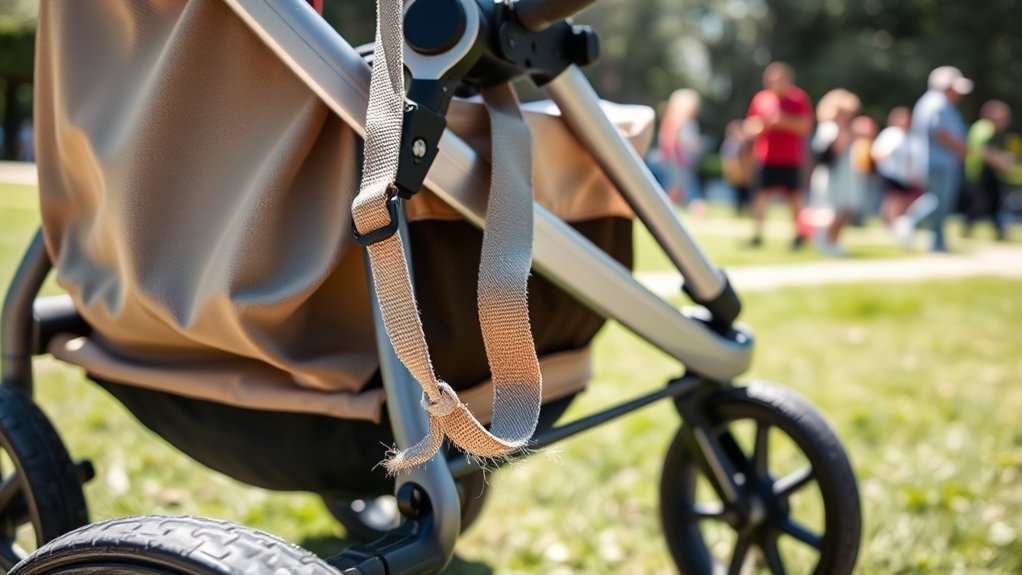
Age by itself is a poor retirement test. Function is more useful. Some worn components may be replaceable with manufacturer-approved parts, while structural damage or failed safety mechanisms can mean the stroller should not be used.
- Wobbly or unstable wheels: Wheels that shake, bind, detach, or develop excessive play can affect control and stability.
- Failed brakes: Stop using the stroller if its parking brake will not engage and hold as designed.
- Frayed or damaged straps: Harness straps, buckles, and adjusters must secure the child as the manufacturer intended.
- Cracked or bent frame: Structural damage can compromise stroller stability and support.
- Unreliable folding locks: A stroller that will not lock securely in its operating position should not carry a child.
- Missing safety-related parts: Missing pins, fasteners, wheel-retention parts, restraint components, or other required hardware need to be resolved before use.
- Serious corrosion: Heavy corrosion at joints, axles, fasteners, brake components, or folding points deserves particular attention.
- Uncontrolled steering: Investigate persistent pulling, sticking, wheel wobble, or looseness before continuing normal use.
- Unresolved recall or safety warning: Follow the remedy in the official notice. Depending on the recall, that may mean repair, replacement, refund, or disposal.
Warning: Do not keep using a stroller with failed brakes, a cracked or bent structural frame, a folding lock that does not secure the stroller, or a harness that cannot restrain your child correctly. Follow the manufacturer or CPSC instructions for any recalled model.
[Amazon Products Picked for You]

Repair or Replace? A Simple Decision Guide
| What You Find | Best Next Step |
|---|---|
| Dirty fabric, crumbs, or debris | Clean according to the stroller manual and re-inspect. |
| Worn wheel, canopy, basket, or other replaceable component | Check whether the manufacturer offers an approved replacement for your exact model. |
| Loose or missing required hardware | Stop using the stroller until the correct manufacturer-approved hardware is installed and the stroller passes its functional checks. |
| Brake, buckle, or folding mechanism does not work correctly | Stop using it. Contact the manufacturer about an approved repair or replacement. |
| Cracked, bent, or structurally compromised frame | Stop using it and contact the manufacturer. Do not improvise a structural repair. |
| Open safety recall or warning | Follow the official recall or warning instructions before further use. |
| Model cannot be identified or recall status cannot be confirmed | For a secondhand purchase, choose a stroller that can be positively identified and checked. |
The Importance of Regular Maintenance
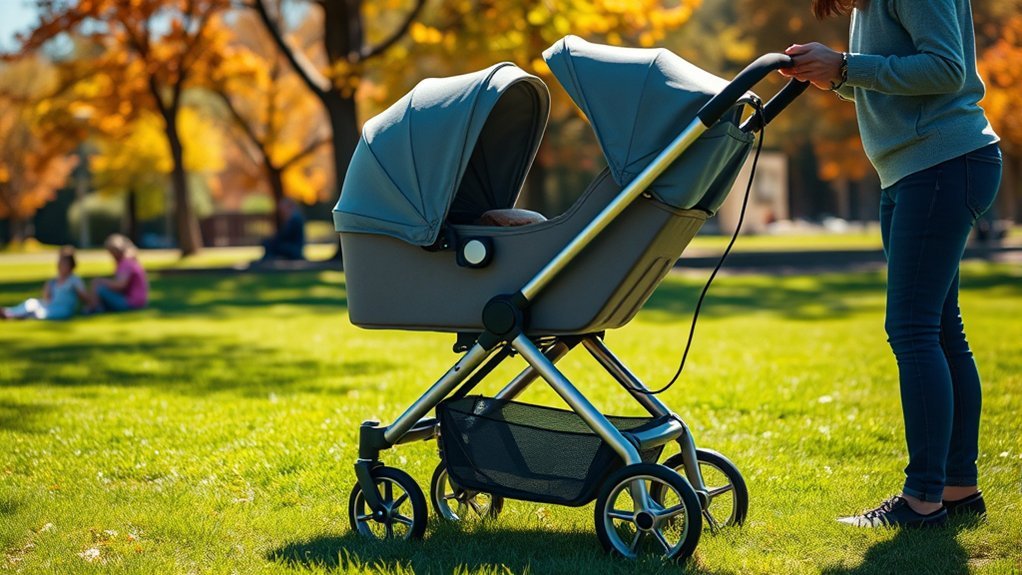
Regular maintenance helps you find wear before it develops into a larger problem. Focus on the parts that control stopping, steering, restraint, folding, and structural support rather than treating cleaning alone as proof that a stroller is safe.
Maintenance deserves extra attention after rain, mud, sand, snow, travel, or long storage. Debris around wheels and moving components can interfere with normal operation, while trapped moisture can contribute to corrosion or mildew.
Routine Cleaning Practices
Use the cleaning instructions for your exact model. Mild soap and water are suitable for many stroller surfaces, but fabric-removal, washing, drying, and lubrication instructions vary.
Remove crumbs and debris from seat seams, buckles, wheels, hinges, and storage areas. Let cleaned parts dry fully before folding or storing the stroller.
Check the manual before removing a seat pad, machine washing fabric, or applying lubricant. Do not spray oil or another lubricant into a brake, hinge, wheel, or lock unless the manufacturer instructs you to use it there.
Pro Tip: Cleaning is also inspection time. While wiping the stroller down, look closely at wheel attachments, folding joints, frame connections, buckles, and strap anchor points instead of waiting until something feels obviously wrong.
Inspection for Wear
Do a brief functional check before using the stroller. Perform a closer inspection periodically, and repeat it after airline travel, a hard impact, extended storage, or whenever the stroller starts steering, folding, braking, or rolling differently.
Look for frayed straps, unstable wheels, loose fasteners, cracked plastic, bent tubing, corrosion, or unusual movement at joints. Engage the parking brake and confirm that it functions as described in the manual. Make sure wheels remain properly attached and rotate normally.
Check the harness as well. Buckles should engage and release correctly, straps should adjust normally, and required restraint components should be present and undamaged. CPSC advises caregivers to use the stroller’s safety harness when a child is riding in it.
How Do You Inspect an Old Stroller for Safety?
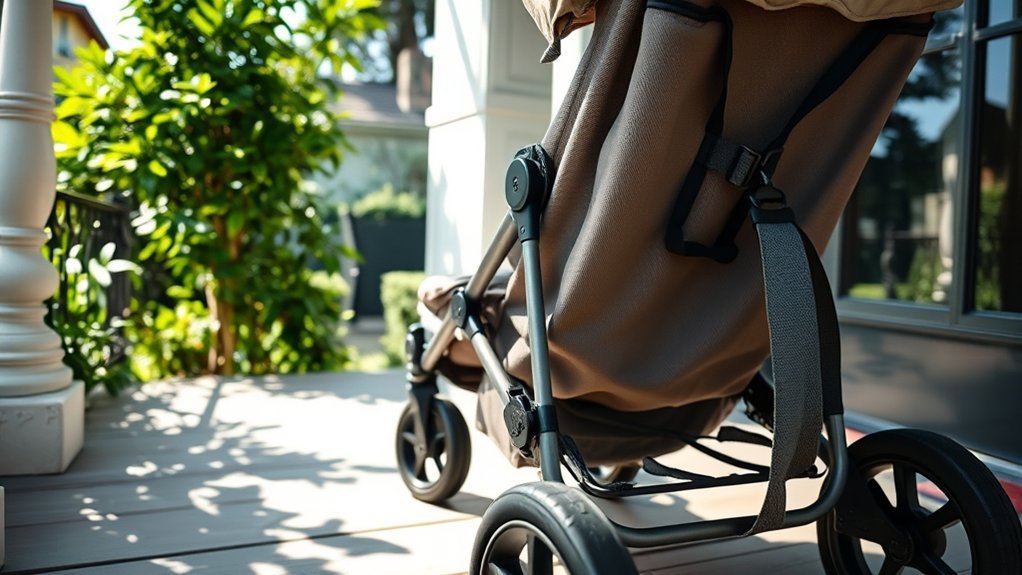
Use this check before putting an older stroller back into service, before buying a secondhand model, after travel or storage, and whenever its operation changes.
A stroller’s age is only one clue. Model identity, recall status, child limits, and the condition of its safety mechanisms provide a better retirement test.
- Identify the stroller: Find the manufacturer, model number, and manufacture date so you can locate the correct manual and recall information.
- Check the brakes: Engage the parking brake according to the manual and confirm that it holds as intended.
- Inspect the wheels: Look for excessive wobble, binding, cracks, loose tires, missing retention parts, or abnormal movement. Remove hair, thread, gravel, and other debris.
- Test the harness system: Check straps, buckle components, attachment points, and adjusters for damage or missing pieces.
- Open and lock the stroller: Make sure the frame reaches its normal operating position and its required locks engage completely.
- Test the folding mechanism: Fold and unfold the stroller as instructed and verify that the mechanism operates consistently.
- Inspect the frame: Look for cracks, bends, severe corrosion, loose joints, or repairs that are not manufacturer-approved.
- Review fasteners and fittings: Check required screws, rivets, caps, pins, quick-release fittings, and attachment points.
- Check the seat and canopy: Make sure the seating structure and fabric are attached as intended and do not interfere with the restraint system.
- Review accessories: Confirm that adapters, bassinets, second seats, ride-on boards, organizers, trays, and other accessories are approved or specifically listed as compatible with the exact stroller model.
Do not add an accessory simply because it can physically attach to the stroller. An incompatible accessory can change balance, interfere with folding or restraint components, or exceed a model-specific load limit.
[Amazon Products Picked for You]

【Secure & Stable Fit】This cup holder replacement fits tighter and more securely than the original. It attaches firmly to your car seat and stays in place without slipping or falling out, giving you safer and more reliable use every day

Perfect Compatibility:This premium safety harness clip is designed as replacement parts/accessories to fit diono stroller and car seat, ideal for quick and easy replacement of worn or broken clips
Upgrading to a New Stroller: When and Why
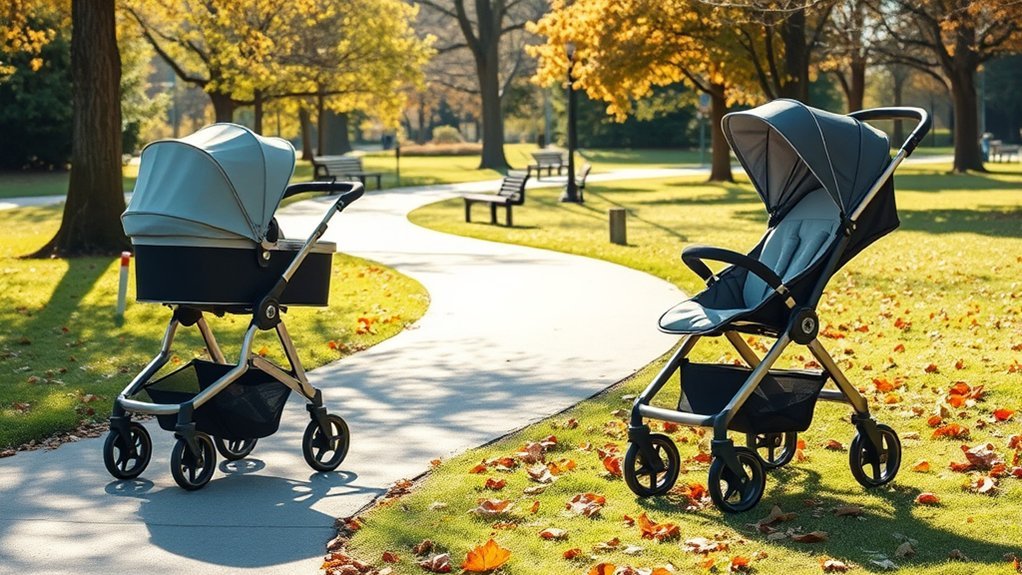
Replace or retire a stroller when it can no longer be used within its instructions, when a safety-critical component cannot be restored with an approved repair, when required replacement parts are no longer available, or when an applicable recall or warning directs you to stop using it.
Your child can also outgrow an otherwise functional stroller. Follow the stated height, weight, seating, and configuration limits rather than using age alone. If you are deciding whether your baby is developmentally ready for a different seating position, the guide on when a baby can sit forward in a stroller covers that separate question.
Practical needs matter too. A stroller may still be safe but no longer suit your vehicle, storage space, walking conditions, travel routine, or family configuration. In that situation, replacing it is a usability decision rather than an expiration requirement.
[Amazon Products Picked for You]

Compatible with Diono Strollers – This stroller harness buckle replacement is designed to work with Diono strollers and compatible car seat systems, helping restore a secure and dependable harness connection.
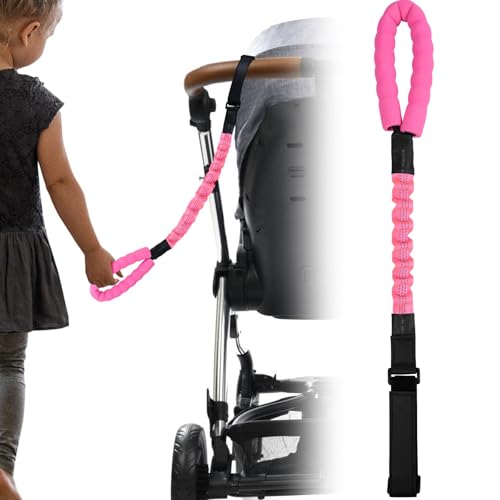
Toddler Leash Connect to Anything-The ONEDONE Stroller Handle for toddler with velcro loop can easily be attached to strollers, wagons, shopping carts, luggage,backpack,carrier, diaper bag and more. The adjustable loop and slide design make it fit perfectly on any pole or loop and giving more flexibility and freedom for kids when traveling

Versatile 3 or 5-Point Harness Options: Adaptable to your baby’s growth! This harness offers two options: a secure 5-point harness that can be easily converted to a 3-point harness by removing the two detachable shoulder straps. Perfect for all stages of your baby’s development
Are Used Strollers Safe?
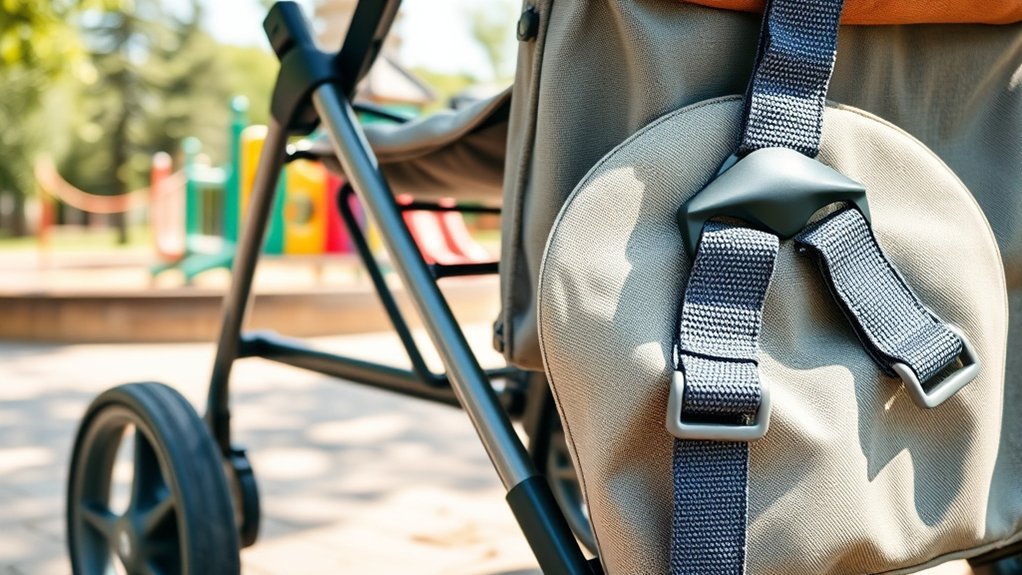
A used stroller can be considered only after you can positively identify it and inspect its safety features. Ask for the manufacturer, exact model, manufacture date, manual if available, included accessories, known repairs, and any replacement parts that have been installed.
For U.S. products, a manufacture date before September 10, 2015 means the stroller predates the effective date of the federal mandatory stroller standard. That fact alone does not prove the stroller is defective, but it is important context when comparing an older secondhand stroller with a newer one.
Avoid a secondhand stroller if you cannot determine what model it is, cannot check its recall status, or find structural damage, failed brakes, unreliable locks, missing restraint parts, unstable wheel attachments, or other unresolved safety defects.
Inspect for Damage
Focus first on the parts that keep the stroller structurally stable, stopped when parked, locked open, and able to restrain the child:
- Structural integrity: Look for cracks, bends, serious corrosion, loose joints, or questionable repairs in the frame.
- Harness system: Check required straps, buckles, attachment points, and adjusters for damage or missing parts.
- Operational components: Test wheels, brakes, folding locks, recline mechanisms, and handlebar stability according to the manual.
Also confirm that manufacturer-approved replacement parts are still available if the stroller needs repair. A cheap secondhand stroller is poor value if a safety-critical component cannot be restored correctly.
Verify Safety Features
Before using a secondhand stroller, verify that required safety features function correctly and that any included bassinet, infant car seat adapter, second seat, ride-on board, or other accessory is specifically compatible with that stroller and configuration.
| Safety Feature | Verification Checklist |
|---|---|
| Harness System | Confirm required straps and buckles are intact, adjustable, correctly attached, and able to secure the child as instructed |
| Brakes | Confirm the parking brake engages, holds, and releases as described in the manual |
| Frame | Look for cracks, bends, severe corrosion, unstable joints, or unapproved repairs |
| Wheels | Check wheel attachment, excessive wobble, binding, worn components, and missing retention hardware |
| Components | Verify required parts are present and manufacturer-approved or specifically compatible with the model |
| Identification | Confirm the model and manufacture-date label is readable enough to locate the manual and check recalls |
If a major safety mechanism fails, stop using the stroller while you determine whether the manufacturer provides an approved remedy. Do not improvise structural, restraint, brake, or folding-lock repairs.
How Do You Check a Stroller for Recalls?
In the United States, search the CPSC recalls and product safety warnings database using the stroller’s brand and model information. Then check the manufacturer’s own safety or recall page for model-specific instructions.
- Identify the product: Find the brand, model number, and manufacture date on the stroller label.
- Search the official record: Check CPSC recalls and product safety warnings plus the manufacturer’s current notices.
- Match the exact model: Read the affected model numbers and manufacture-date ranges rather than assuming an entire brand is recalled.
- Follow the stated remedy: A notice may instruct owners to stop using the product and obtain a repair, replacement, refund, or another remedy.
- Inspect the stroller anyway: No listed recall does not guarantee that a particular used stroller is free of wear, missing parts, or damage.
Recall checks are not only for very old strollers. For example, on June 11, 2026, CPSC issued a warning about B. Childhood strollers over an entrapment hazard and violation of the mandatory stroller standard. The agency told consumers to stop using those products and not sell or give them away.
If you cannot identify a secondhand stroller well enough to check its recall status, choose another stroller whose model information can be verified.
Responsible Disposal and Recycling of Strollers
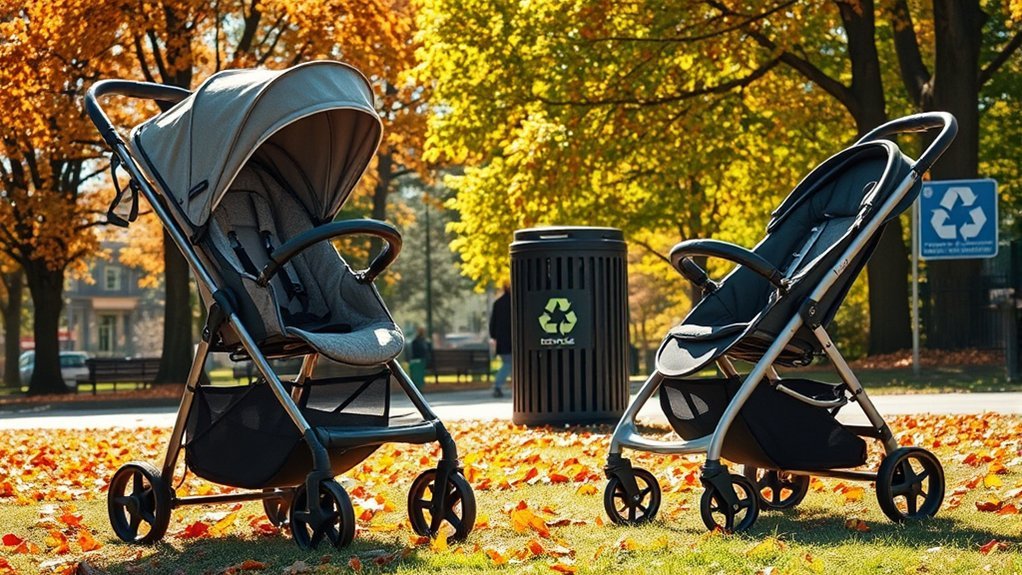
If a stroller remains complete, functional, identifiable, and free of an unresolved recall or safety warning, a local donation or resale program may accept it. Check the receiving organization’s rules before taking it there.
Do not donate or resell a stroller when an official recall or safety warning tells owners to stop using, destroy, or dispose of it. Follow the specific remedy in the notice. The correct action can differ from one recall to another.
For a non-recalled stroller that is simply worn beyond safe use, contact your local waste or recycling program about metal, plastic, textile, wheel, or bulky-item disposal. Recycling rules vary by location, so do not assume every component belongs in curbside recycling.
If you offer a safe spare component separately, identify the exact stroller model it came from and do not imply compatibility with models the manufacturer has not approved.
Quick Pre-Use Stroller Safety Checklist
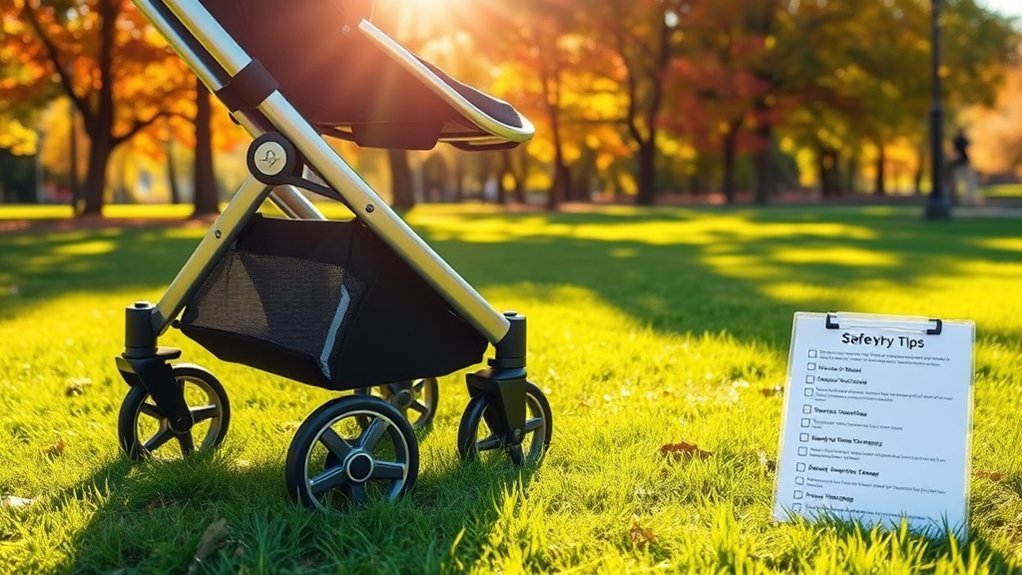
Once a stroller has passed the more detailed inspection, use this shorter check before an outing. Its purpose is to catch a new problem before the child rides.
- Brake: Confirm the parking brake operates normally.
- Wheels: Check that wheels are attached and do not show new wobbling, binding, or obvious damage.
- Harness: Confirm required straps and buckle components are present and undamaged.
- Frame lock: Open the stroller fully and make sure the operating lock engages.
- Seat: Confirm the seat, recline mechanism, and supporting fabric are correctly positioned.
- Load: Stay within the stroller’s child, basket, accessory, and configuration limits.
- Handlebar: Avoid adding bags or accessories in ways the manufacturer warns can affect stability.
- When stopped: Use the parking brake as instructed and keep the child properly restrained.
If something suddenly feels different—steering pulls, a wheel develops play, a brake feels weak, or a lock does not engage—stop and inspect the stroller rather than assuming the change is harmless.
Frequently Asked Questions
Can I use a stroller for multiple children over time?
Yes, if the stroller remains within the manufacturer’s limits, has no unresolved recall or stop-use warning, and passes a safety inspection before it is used for the next child. Check the frame, brakes, wheels, folding mechanisms, harness, required hardware, and any accessories.
Do the stroller and car seat in a travel system expire at the same time?
Not necessarily. They are separate products with separate instructions. A stroller may have no fixed expiration date while its infant car seat has a manufacturer-defined useful life or expiration date. Check both manuals and product labels separately.
How can I tell if a used stroller is safe?
First identify the exact model and manufacture date and check its recall status. Then inspect and test the brakes, wheels, harness, folding locks, frame, required hardware, and compatible accessories. Skip a used stroller if it cannot be identified or has unresolved structural or safety defects.
What should I do with a damaged stroller?
Stop using it if the damage affects a safety-critical part. Check whether the manufacturer provides an approved repair or replacement component for the exact model. Do not improvise repairs to the frame, brakes, harness, wheel retention, or folding locks.
Does a stroller’s manufacture date matter?
Yes, but it is not the same as an expiration date. In the United States, the mandatory federal stroller standard took effect on September 10, 2015, and newer ASTM F833 revisions have applied to later products. The manufacture date helps identify the model, applicable standard, manual, replacement parts, and recall history.
Is a 10-year-old stroller automatically unsafe?
Age alone does not prove that a stroller is safe or unsafe. A 10-year-old stroller made in 2016 should still be evaluated by its exact model, manufacturer instructions, child limits, recall history, parts availability, and present condition. If its identity cannot be confirmed or a safety-critical component is damaged or unreliable, do not use it.
Do strollers have warranties and how do they work?
Warranty coverage depends on the brand, model, purchase conditions, and warranty terms. Check the manufacturer’s documentation for the exact coverage period, exclusions, registration requirements, proof-of-purchase rules, and available replacement parts. A warranty period is not the same thing as an expiration date.
Should I replace a stroller after airline travel?
Not automatically. Inspect it before the next ride for frame damage, loose or damaged wheels, cracked parts, unreliable locks, missing hardware, and brake problems. Stop using it if a safety-critical feature no longer works correctly. For broader airline rules, see the guide on traveling with a car seat and stroller on a flight.
Conclusion
Strollers generally do not expire on one universal timetable. The better question is whether your exact stroller can still be identified, is being used within its manufacturer limits, has no unresolved recall or safety warning, and still performs every safety-critical function correctly.
Check the model and manufacture date, review the manual, search the official recall database, and inspect the brakes, wheels, frame, harness, and folding locks. If a critical mechanism fails or structural damage cannot be repaired with a manufacturer-approved solution, stop using the stroller. That condition-based approach is more reliable than replacing a stroller simply because it has reached an arbitrary age.
