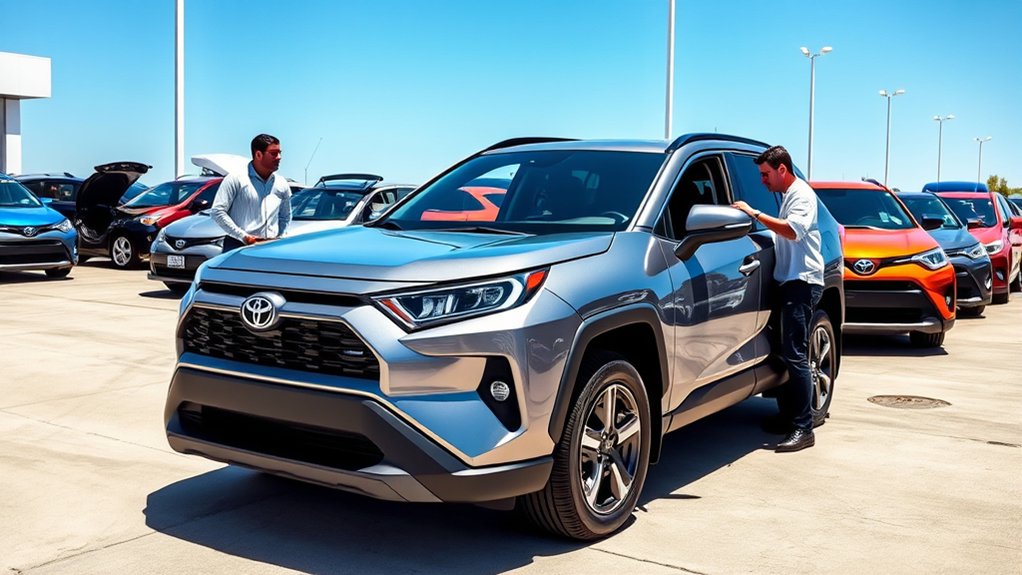
No. The 2026 U.S.-market Toyota RAV4 does not offer a V6 engine. Every current RAV4 uses a 2.5-liter four-cylinder gasoline engine as part of either a hybrid or plug-in hybrid system. The regular hybrid produces 226 net combined horsepower with front-wheel drive or 236 horsepower with all-wheel drive, while the plug-in hybrid produces 324 horsepower. If you want a factory-built RAV4 V6, look at U.S. models from 2006 through 2012, which offered Toyota’s 3.5-liter 2GR-FE V6.
Last updated: September 19, 2026. Specifications checked against current Toyota U.S. sources.
Quick Answer
The 2026 Toyota RAV4 has no V6 option. Its 2.5-liter four-cylinder hybrid systems produce 226 hp with FWD, 236 hp with AWD, or 324 hp in the AWD plug-in hybrid. Toyota last sold a U.S.-market RAV4 V6 for the 2012 model year; the optional 3.5-liter 2GR-FE V6 was available from 2006 through 2012.
Key Takeaways
- No 2026 U.S.-market Toyota RAV4 has a V6; every current version uses a 2.5-liter four-cylinder hybrid powertrain.
- Toyota offered the 3.5-liter 2GR-FE V6 in U.S. RAV4 models from 2006 through 2012.
- The old V6 produced 269 horsepower and 246 lb-ft of torque; the current plug-in hybrid produces 324 net combined horsepower.
- The 2025 model year was the final U.S. RAV4 lineup to include a conventional gas-only powertrain.
- Certain 2006–2009 RAV4 V6 models were included in Toyota’s VVT-i oil-supply-hose Limited Service Campaign, so service history matters when shopping used.
- Towing capacity varies by grade and drivetrain, so verify the rating for the exact RAV4 before towing.
Does the 2026 Toyota RAV4 Have a V6?
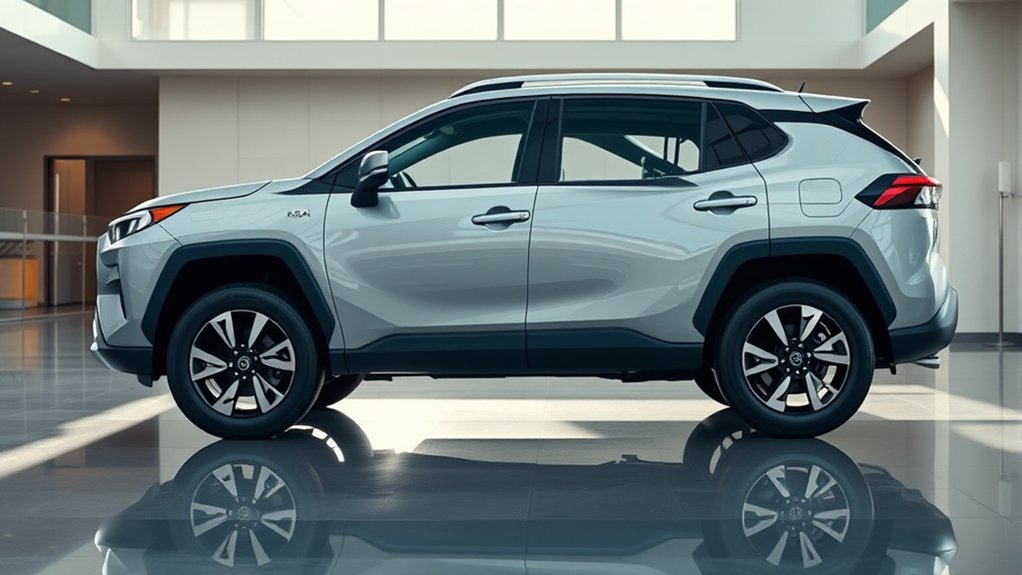
No. For the 2026 model year, Toyota moved the U.S. RAV4 to a fully electrified lineup. That does not mean every RAV4 is a battery-only vehicle. Both current powertrains still use a 2.5-liter gasoline four-cylinder engine, but they combine it with electric motors.
According to Toyota’s 2026 RAV4 specifications, the regular hybrid produces 226 net combined horsepower with front-wheel drive or 236 net combined horsepower with electronic all-wheel drive.
The 2026 RAV4 Plug-in Hybrid uses a larger externally rechargeable traction battery and more powerful electric drive hardware. Toyota lists 324 net combined horsepower, standard all-wheel drive, a 0-to-60-mph time of 5.4 seconds, and an EPA-estimated 54 miles of electric range for the SE grade.
Note: These specifications apply to U.S.-market vehicles. RAV4 engine choices, trim names and specifications can differ in Canada and other markets.
| Model | Powertrain | Output | Drive | Efficiency / range context |
|---|---|---|---|---|
| 2026 RAV4 Hybrid | 2.5-liter four-cylinder hybrid | 226 hp FWD 236 hp AWD |
FWD or electronic AWD, depending on grade | Up to 47 city / 40 highway / 43 combined mpg on the most efficient FWD configuration |
| 2026 RAV4 Plug-in Hybrid | 2.5-liter four-cylinder plug-in hybrid | 324 hp | AWD | EPA-estimated 54-mile electric range on the SE grade |
| 2006–2012 RAV4 V6 | 3.5-liter 2GR-FE V6 with five-speed automatic | 269 hp 246 lb-ft |
FWD or electronically controlled 4WD | 2012 V6: 19 city / 27 highway mpg FWD; 19 / 26 with 4WD |
The important distinction is that cylinder count no longer tells you the RAV4’s total available power. The gasoline engine is only one part of the current hybrid system, so the 324-horsepower plug-in hybrid produces more combined system output than the old 269-horsepower V6.
How Do Current RAV4 Engines Compare With the Old V6?
The old RAV4 V6 and the current electrified RAV4s deliver power in different ways. The 2006–2012 V6 relied on a naturally aspirated 3.5-liter gasoline engine and a five-speed automatic. The 2026 RAV4 Hybrid combines a smaller four-cylinder engine with electric motor assistance through Toyota’s electronically controlled continuously variable transmission.
The regular 2026 hybrid produces less total system power than the old V6 at 226 or 236 horsepower, but it uses substantially less gasoline. The plug-in hybrid reverses that relationship: its 324-horsepower combined system output exceeds the V6’s 269 horsepower, and the SE can cover an EPA-estimated 54 miles on electricity when fully charged.
The RAV4 lost two cylinders after 2012, but the current plug-in hybrid produces 55 more combined horsepower than the old 269-hp V6.
If you are comparing the final gas-only RAV4 with a hybrid rather than researching the old V6, see the dedicated Toyota RAV4 gas vs. hybrid comparison. The 2025 model year was the last U.S. RAV4 lineup to include a conventional gas-only version.
- 2006–2012 V6: best understood as an older used-RAV4 powertrain with strong naturally aspirated acceleration and higher fuel consumption.
- 2026 regular hybrid: does not require external charging and prioritizes everyday fuel efficiency.
- 2026 plug-in hybrid: adds external charging, electric-only driving capability and the highest combined output of the three.
Why Did Toyota Drop the RAV4 V6?
Toyota discontinued the RAV4 V6 when it introduced the redesigned 2013 model. In Toyota’s own 2013 RAV4 presentation, the company said the compact-crossover segment was moving toward greater fuel efficiency and pointed buyers who needed more power toward the larger Highlander.
The 2013 RAV4 redesign therefore replaced the previous generation’s optional V6 with a 2.5-liter four-cylinder and a six-speed automatic. Later generations expanded into hybrid and plug-in hybrid powertrains rather than bringing the V6 back.
That change does not mean every newer RAV4 is less powerful. Electric motors can contribute torque and horsepower without adding gasoline-engine cylinders. The 2026 plug-in hybrid demonstrates that clearly: its 2.5-liter four-cylinder-based system produces 324 net combined horsepower, compared with 269 horsepower from the old 3.5-liter V6.
The smaller gasoline engine also works as part of a more efficient system. Toyota rates the most efficient 2026 RAV4 Hybrid configuration at up to 47 mpg city, 40 highway and 43 combined, while the 2012 V6 was rated at 19 city and 26–27 highway depending on drivetrain.
How Does the 2026 RAV4 Perform Without a V6?
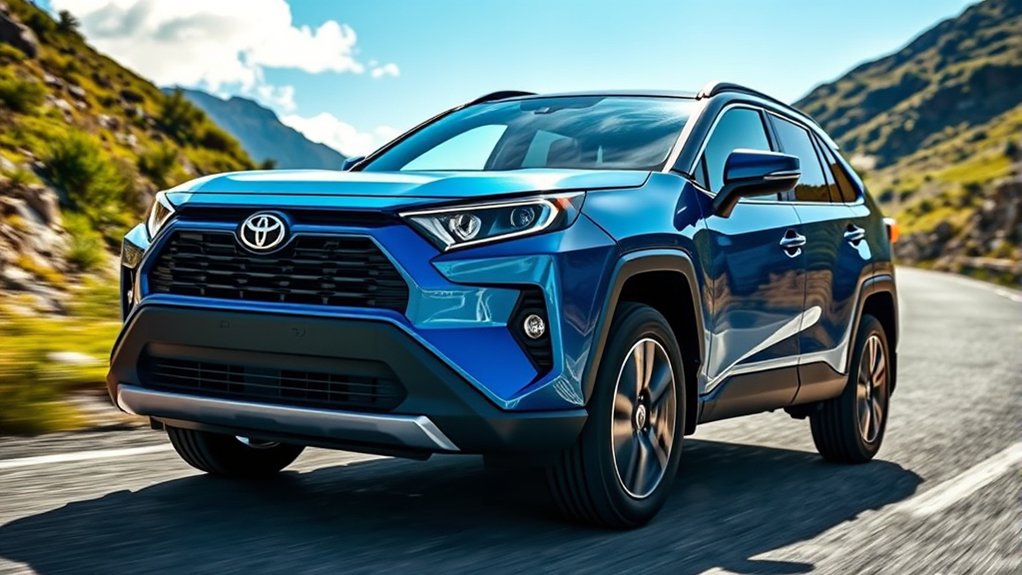
The absence of a V6 does not leave the current RAV4 with one performance level. The regular hybrid is aimed at efficient everyday driving, while the 324-horsepower plug-in hybrid provides considerably stronger acceleration.
Engine Options Overview
The 2026 hybrid delivers 226 horsepower with front-wheel drive or 236 horsepower with electronic all-wheel drive. Toyota’s hybrid transaxle uses a planetary-type electronically controlled continuously variable transmission rather than the conventional stepped automatic used by the old V6 or the eight-speed automatic used by the 2025 gas RAV4.
The 324-horsepower plug-in hybrid is the quicker current powertrain. Toyota lists a 0-to-60-mph time of 5.4 seconds. For historical context, Toyota said the 269-horsepower RAV4 V6 could reach 60 mph in under seven seconds.
Electronic AWD hybrid versions use a dedicated rear electric motor rather than a conventional driveshaft running from the engine to the rear axle. The rear motor can add drive force when rear-wheel traction is useful.
Driving Experience Insights
The regular hybrid is designed for commuting, family travel and routine highway driving without requiring the driver to plug it in. Its traction battery is managed automatically using the gasoline engine and regenerative braking.
The plug-in hybrid adds a larger battery that can be charged externally. When sufficient battery charge is available, it can handle many shorter trips on electricity before operating as a gasoline-electric hybrid.
The GR SPORT plug-in hybrid goes further than simply adding visual trim. Toyota gives it GR-specific steering mapping, suspension tuning, performance tires, a lower ride height and functional aerodynamic changes. It still uses the same basic 324-horsepower plug-in hybrid system.
RAV4 Towing Capacity
The 2026 RAV4’s tow rating depends on grade and drivetrain rather than engine cylinder count alone. Toyota lists 1,750 pounds for the lower-rated configurations and up to 3,500 pounds for specified AWD hybrid and plug-in hybrid grades.
For a trim-by-trim explanation, see the Toyota RAV4 towing-capacity guide.
Warning: Do not apply one RAV4 towing figure to every trim. Check the owner’s manual and specifications for your exact grade, drivetrain, hitch equipment, passenger load, cargo weight and trailer-brake requirements before towing.
Does a Four-Cylinder Mean the 2026 RAV4 Is Less Powerful?
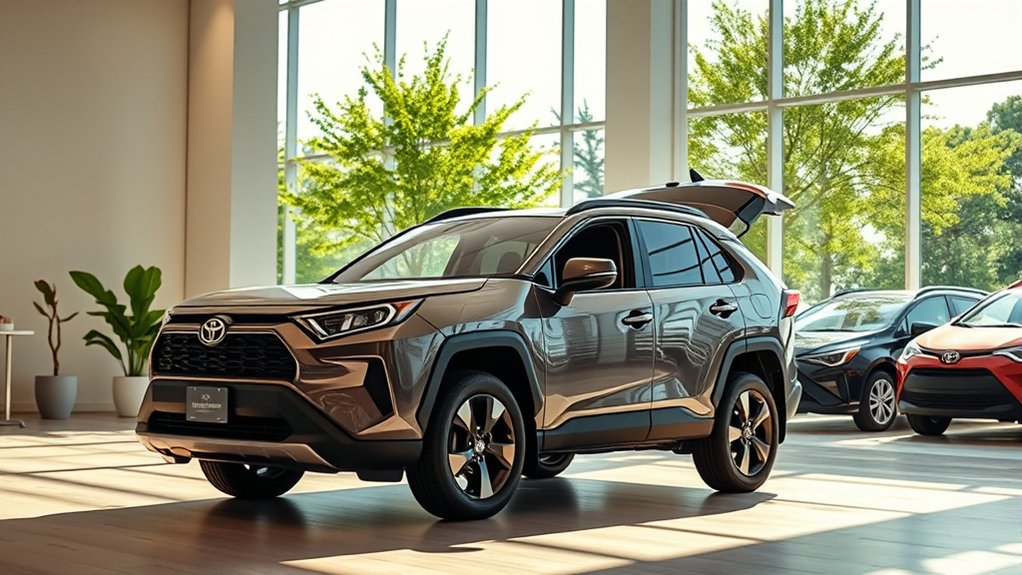
No. Comparing cylinder count alone can be misleading on an electrified vehicle because the gasoline engine is only part of the propulsion system. Toyota combines the 2.5-liter four-cylinder with electric motor-generators, a traction battery and power electronics.
In the regular hybrid, that combination produces 226 net horsepower with FWD or 236 horsepower with AWD. The AWD system also uses a dedicated rear electric motor, so Toyota does not need a conventional mechanical driveshaft between the front and rear axles.
The plug-in hybrid uses a larger battery and more powerful electric drive components to reach 324 net combined horsepower. That is 55 horsepower more than the 269-horsepower V6 sold in 2012, even though the gasoline engine itself has four cylinders instead of six.
For buyers, the practical comparison is therefore not simply “four cylinders versus six.” It is total system output, fuel economy, charging requirements, drivetrain, towing capacity and the age and condition of the individual vehicle.
What Should You Check When Buying a Used RAV4 V6?
U.S.-market RAV4 V6 models were sold from 2006 through 2012 with Toyota’s naturally aspirated 3.5-liter 2GR-FE engine. Toyota rated the 2012 version at 269 horsepower and 246 lb-ft of torque and paired it exclusively with a five-speed automatic transmission.
A particularly important service-history item applies to certain 2006–2009 V6 models. Toyota issued a Limited Service Campaign for the VVT-i oil-supply hose because the rubber portion of the hose could deteriorate and leak oil. Toyota described this as a service campaign rather than a safety recall, so do not rely only on an ordinary open-recall lookup when reviewing an older vehicle’s history.
Before buying a used RAV4 V6, confirm:
- Engine: Verify the 3.5-liter displacement or 2GR-FE designation rather than trusting the listing title.
- VVT-i oil-hose history: For affected 2006–2009 vehicles, check Toyota service records and inspect for oil leakage.
- Cold-start behavior: Listen for abnormal noises and check for warning lights before the engine is warmed up.
- Cooling and fluid condition: Look for coolant loss, oil leakage, evidence of overheating and neglected maintenance.
- Transmission operation: The five-speed automatic should engage and shift without abnormal delay, slipping or warning lights.
- Towing equipment: A 3,500-pound maximum was not automatic on every V6. Toyota listed 2,000 pounds as the standard V6 rating and up to 3,500 pounds with the required towing equipment on applicable models.
- Overall condition: Because every RAV4 V6 is now an older used vehicle, corrosion, accident history and maintenance records can matter more than model year alone.
For a deeper year-by-year used-V6 guide, see which Toyota RAV4 models came with a six-cylinder engine.
Pro Tip: A used listing that says “Sport” or “Limited” does not by itself prove the RAV4 has a V6. Verify the engine through the vehicle’s documentation, VIN information or underhood identification before arranging a purchase.
Will Toyota Bring Back a V6 RAV4?
Toyota has not announced a return of the V6 for the RAV4. The current sixth-generation U.S. model was launched around hybrid and plug-in hybrid powertrains using a 2.5-liter four-cylinder engine.
A future V6 therefore should not be treated as an expected or confirmed product. Toyota can change future powertrain plans, but no current Toyota announcement establishes a V6 RAV4 return.
For the present model year, the choice is straightforward: the 2026 U.S. RAV4 uses either the regular hybrid or the plug-in hybrid powertrain, not a conventional gas-only engine and not a V6.
Frequently Asked Questions
Does the 2026 Toyota RAV4 have a V6 engine?
No. Every U.S.-market 2026 RAV4 uses a 2.5-liter four-cylinder gasoline engine as part of either a hybrid or plug-in hybrid system. Toyota does not offer a V6 or conventional gas-only RAV4 for 2026.
Which Toyota RAV4 model years had a V6?
U.S.-market RAV4 models offered an optional 3.5-liter 2GR-FE V6 from 2006 through 2012. Toyota discontinued the V6 when the redesigned 2013 RAV4 arrived.
How much horsepower did the RAV4 V6 make?
Toyota rated the 3.5-liter RAV4 V6 at 269 horsepower and 246 lb-ft of torque in the 2012 model. It was paired with a five-speed automatic transmission.
Is the 2026 RAV4 Plug-in Hybrid more powerful than the old V6?
Yes in combined system output. Toyota rates the 2026 RAV4 Plug-in Hybrid at 324 net combined horsepower, compared with 269 horsepower for the old 3.5-liter V6. The two powertrains deliver that output in very different ways.
Can a 2026 RAV4 tow 3,500 pounds?
Some specified AWD 2026 RAV4 hybrid and plug-in hybrid grades are rated to tow up to 3,500 pounds, while lower-rated configurations are limited to 1,750 pounds. Confirm the exact grade, equipment and loading requirements before towing.
What should I check on a used RAV4 V6?
Confirm that the vehicle actually has the 3.5-liter 2GR-FE engine, review maintenance and accident history, inspect for oil and coolant leaks, check transmission operation and have the vehicle inspected from a cold start. On certain 2006–2009 V6 models, also verify Toyota’s VVT-i oil-supply-hose service-campaign history.
Conclusion
The 2026 Toyota RAV4 does not have a V6. Every current U.S. model uses a 2.5-liter four-cylinder as part of a hybrid or plug-in hybrid powertrain. The regular hybrid produces 226 or 236 horsepower depending on drivetrain, while the plug-in hybrid produces 324 net combined horsepower.
If you specifically want a RAV4 V6, shop the 2006–2012 generation and verify that the vehicle has the 3.5-liter 2GR-FE engine. Condition and service history are especially important on these older vehicles, including the VVT-i oil-hose campaign history on applicable 2006–2009 models. For a new 2026 RAV4, compare the regular hybrid and plug-in hybrid based on fuel economy, charging access, output, drivetrain and towing needs rather than cylinder count alone.
Sources
- Toyota USA Newsroom: 2026 RAV4 specifications — current hybrid outputs, drivetrain details, fuel-economy estimates, GR SPORT information and towing context.
- Toyota: 2026 RAV4 Plug-in Hybrid — 324-hp output, acceleration and EPA-estimated SE electric range.
- Toyota USA Newsroom: 2025 RAV4 — confirms the outgoing gas and hybrid powertrains and the 2025 gas-only lineup.
- Toyota USA Newsroom: 2013 RAV4 reveal — explains the discontinuation of the previous-generation V6.
- Toyota USA Newsroom: 2012 RAV4 specifications — historical V6 horsepower, torque, transmission, acceleration and fuel economy.
- Toyota USA Newsroom: VVT-i Oil Line Limited Service Campaign — service-campaign coverage for certain 2006–2009 RAV4 V6 models.


1 thought on “Does the Toyota RAV4 Come With a V6 Engine Today? Current Options Explained”