Quick Answer
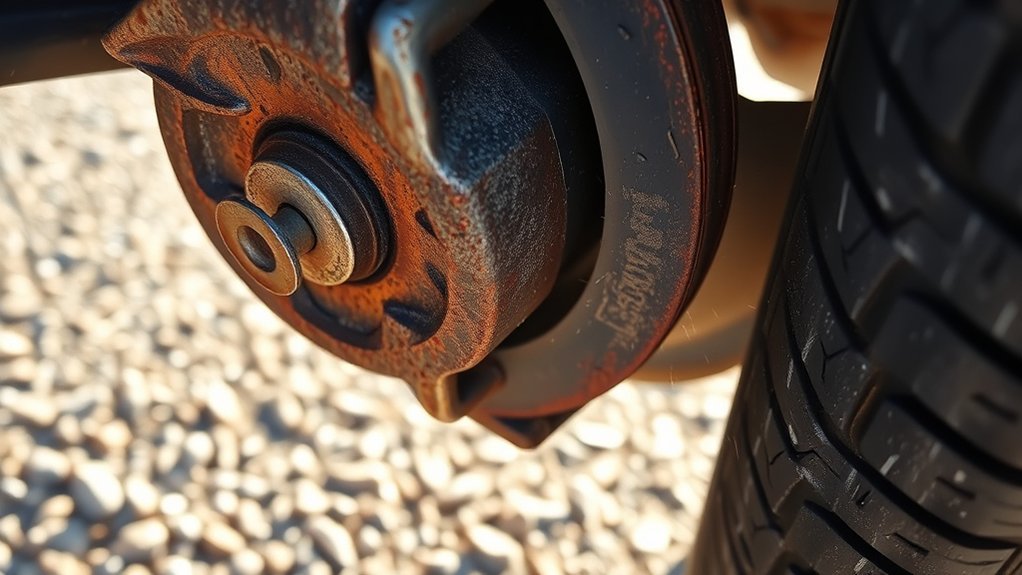
Toyota RAV4 brake pads often last tens of thousands of miles, and roughly 30,000 to 70,000 miles is a useful planning range, not a fixed Toyota replacement interval. Replace them based on measured pad thickness, uneven wear, damage, braking symptoms, and the specifications for your exact model year. Stop-and-go traffic, hills, towing, heavy loads, aggressive braking, corrosion, and brake-system condition can shorten pad life.
Last updated: September 22, 2026
If you hear persistent squealing or scraping, have the brakes checked soon. Grinding, reduced stopping performance, a soft pedal, severe pulling, smoke or overheating, or a brake-system warning light requires more urgent diagnosis.
Key Takeaways
- A broad 30,000-to-70,000-mile range can help with planning, but Toyota does not use one universal brake-pad replacement mileage for every RAV4.
- Pad thickness and condition matter more than mileage alone. For example, Toyota lists a 1.0 mm (0.04 in.) brake-pad wear limit for the 2024 RAV4; confirm the specification for your exact model year.
- Do not assume the front and rear pads will wear out at fixed or predictable mileages. Inspect both axles independently.
- Persistent squealing or scraping can be a brake-pad wear-indicator warning. Grinding can mean the friction material is severely worn and may allow metal-to-metal contact.
- Vibration, pulling, a soft pedal, overheating, or a brake warning light can have causes beyond worn pads and should be diagnosed rather than guessed.
- RAV4 Hybrid and plug-in hybrid models use regenerative braking during many deceleration events, which changes how often the friction brakes are used, but the pads and rotors still require routine inspection.
How Long Should My RAV4 Brake Pads Last?
Many service sources cite about 30,000 to 70,000 miles as a typical brake-pad planning range, but there is no single mileage at which every Toyota RAV4 needs new pads. Some pads wear sooner, while others remain serviceable well beyond that range.
The better question is whether the pads still have adequate friction material and are wearing evenly. Toyota’s maintenance information focuses on inspecting brake pads and discs for excessive wear and replacing deteriorated or damaged parts rather than assigning one universal replacement mileage.
For a concrete manufacturer reference, the 2024 Toyota RAV4 Owner’s Manual lists a brake-pad wear limit of 1.0 mm (0.04 in.). That is a model-year service limit, not a recommendation to wait until every pad reaches exactly 1.0 mm. Have your exact RAV4 specification confirmed when the pads are inspected.
What Are the Warning Signs of Worn Brake Pads?
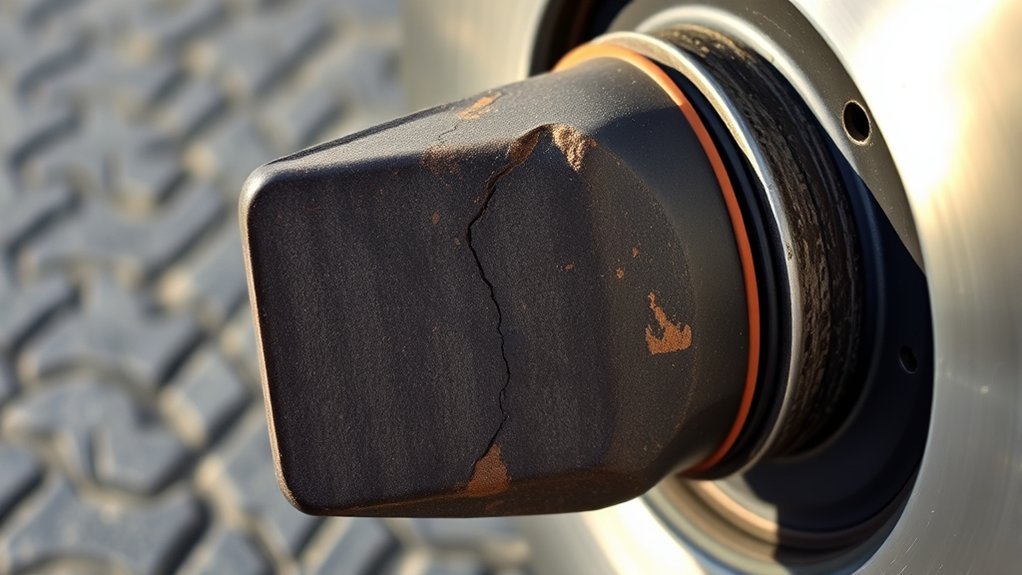
Brake noises are useful clues, but one symptom does not always identify the exact failed part. Pay attention to how the vehicle sounds, feels, and stops.
| Symptom | What It May Mean | What to Do |
|---|---|---|
| Persistent squealing or scraping | A brake-pad wear indicator may be contacting the rotor, although contamination or other brake issues can also cause noise. | Arrange a brake inspection soon. |
| Grinding | The friction material may be severely worn, allowing metal-to-metal contact and possible rotor damage. | Do not postpone diagnosis. Avoid unnecessary driving. |
| Brake-pedal or steering-wheel vibration | Possible rotor runout or thickness variation, uneven friction deposits, caliper trouble, or another chassis/brake issue. | Have the cause measured and diagnosed. |
| Pulling while braking | Possible uneven braking, a sticking caliper, hydraulic problem, tire issue, alignment problem, or suspension fault. | Arrange inspection promptly. |
| Burning or acrid smell near a wheel | An overheated or dragging brake, repeated heavy braking, or another brake problem. | Stop aggressive driving, allow the brakes to cool safely, and inspect persistent overheating. |
| Brake-system warning light or major change in pedal feel | A brake-system fault that may not be related to pad thickness alone. | Follow the owner’s-manual warning instructions and arrange prompt diagnosis. |
Toyota specifically warns that a squealing or scraping noise from the brake-pad wear-limit indicators should prompt an inspection and that delaying replacement can damage the rotors. Check the warning information for your exact RAV4 model year because brake-system designs and dashboard warnings vary.
What Factors Affect the Lifespan of Toyota RAV4 Brake Pads?
Your RAV4’s brake-pad life depends on how much friction braking the vehicle performs and whether every brake component releases and wears correctly.
| Factor | Effect on Brake-Pad Life |
|---|---|
| Stop-and-go traffic | Frequent braking generally increases wear compared with steady highway driving. |
| Hills and mountain driving | Long or repeated braking events create more heat and friction wear. |
| Towing or heavy loads | More vehicle mass can require more braking energy and increase brake heat. |
| Driving style | Late, hard braking usually wears friction components faster than anticipating stops and slowing progressively. |
| Pad material and quality | Different friction compounds have different noise, dust, heat, feel, and wear characteristics. |
| Calipers and hardware | A sticking caliper, seized slide, or damaged hardware can create rapid or uneven pad wear. |
| Road salt, moisture, and corrosion | Corrosion can affect rotors, hardware, and caliper movement even when mileage is low. |
Do RAV4 Hybrid Brake Pads Last Longer?
RAV4 Hybrid and plug-in hybrid models use regenerative braking during many deceleration events. The electric motor can help slow the vehicle while recovering energy, so the conventional friction brakes may do less work during some everyday stops.
That can reduce friction-brake use, but it does not eliminate brake-pad, rotor, caliper, or fluid maintenance. Conventional brakes still operate during harder stops and in other situations, and lower friction-brake use does not prevent corrosion or sticking components. Inspect hybrid brakes according to the maintenance requirements for the exact model year rather than assuming the pads will last a particular number of miles.
How Do You Decide When RAV4 Brake Pads Need Replacement?
Use this order of importance rather than replacing pads solely because the odometer reaches a round number:
- Measure pad thickness. Compare the measured friction material with the service specification for your exact RAV4.
- Check for uneven wear. Compare inner and outer pads and the left and right sides of the axle.
- Inspect the rotors. Check thickness, surface condition, scoring, heat damage, and runout where required.
- Inspect calipers and hardware. Pads that wear much faster on one side can point to a sticking caliper, slide, or other mechanical issue.
- Consider symptoms. Persistent wear-indicator noise, grinding, pulling, vibration, overheating, or changed pedal feel can justify immediate inspection regardless of mileage.
- Use mileage only as context. A vehicle driven mainly on open highways may wear brakes differently from one used in heavy traffic, hills, towing, or short urban trips.
[Amazon Products Picked for You]

PLEASE CONFIRM YOUR FITMENT: Using the Amazon Confirmed Fit bar at the top of the page or check the Product Description to confirm your vehicle fitment. This may be delivered in multiple boxes
![MOTOREVO Front Geomet Brake Rotors Kit for RAV4 [2019-2024, 305mm12.01in] Automotive Replacement Vented Coated Drilled Slotted Brake Discs and Ceramic Brake Pads 2019 2020 2021 2022 2023 2024](https://m.media-amazon.com/images/I/41FI5Jmc-SL._SL500_.jpg)
[Vehicle Model] This front automotive replacement brake kit is compatible with RAV4 2019 2020 2021 2022 2023 2024 ALL Models. Please verify your vehicle's production year to ensure proper fitment and performance.
![MOTOREVO Rear Geomet Brake Rotors Kit for RAV4 [2019-2024, 281mm11.07in] Automotive Replacement Back Coated Drilled Slotted Brake Discs and Ceramic Brake Pads for 2019 2020 2021 2022 2023 2024](https://m.media-amazon.com/images/I/41isR7dzOgL._SL500_.jpg)
[Vehicle Model] This rear automotive replacement brake kit is compatible with RAV4 2019 2020 2021 2022 2023 2024 ALL Models. Please verify your vehicle's production year to ensure proper fitment and performance.
Best Practices for Maintaining Your Toyota RAV4 Brakes
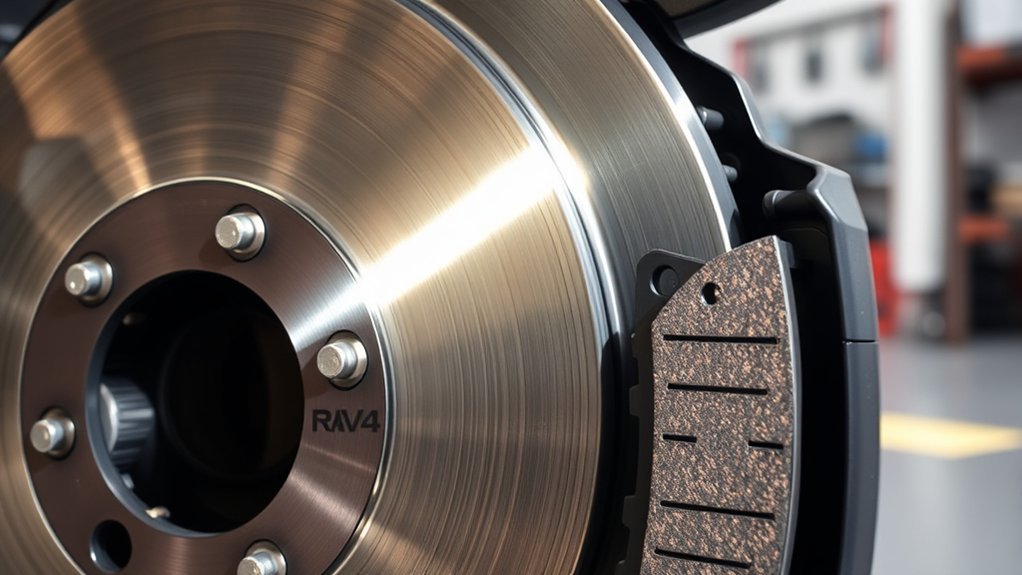
A good brake inspection looks at the complete system rather than treating the pads as an isolated maintenance item.
- Inspect the pads and rotors during scheduled maintenance: Follow the maintenance guide for your exact RAV4 year and powertrain.
- Measure instead of guessing: Ask for remaining pad thickness when the brakes are inspected so you can track wear over time.
- Check both inner and outer pads: Uneven wear may reveal a caliper, slide, or hardware problem that is not obvious from the outside pad alone.
- Inspect rotors whenever pads are serviced: Rotor condition, thickness, scoring, and runout can determine whether they can remain in service.
- Pay attention to brake fluid: Follow Toyota’s fluid specification and maintenance guidance. If the fluid level is unexpectedly low, identify the cause rather than simply topping it off.
- Use smooth braking when conditions allow: Anticipating stops can reduce unnecessary heat and wear.
Brake pads are normally replaced as an axle pair so the left and right wheels receive matched friction material. RepairPal likewise describes pad replacement as replacing both front pads or both rear pads together.
Use brake pads specified for your exact RAV4 year, trim, powertrain, brake package, and axle. Genuine Toyota pads are one option, while reputable aftermarket pads may also be appropriate when their application and specifications match the vehicle.
[Amazon Products Picked for You]

[PLATFORM SPECIFIC FRICTION MATERIAL} - Bosch Blue offers advanced, platform specific Ceramic friction material formulations for optimal stopping power, reduced brake fade, and long-lasting performance

[THE BOSCH ADVANTAGE] - The Bosch QuietCast line draws on over 77 years of OE braking excellence; promising the highest quality performance, industry-leading strength and durability, and exclusive innovations including Molded Shim Technology (MST)

[THE BOSCH ADVANTAGE] - The Bosch QuietCast line draws on over 77 years of OE braking excellence; promising the highest quality performance, industry-leading strength and durability, and exclusive innovations including Molded Shim Technology (MST)
How Much Does RAV4 Brake Pad Replacement Cost?
Brake-pad prices vary by model year, location, labor rate, friction material, and whether the rotors or other brake parts also need service. As of September 2026, RepairPal’s Toyota RAV4 brake-pad replacement estimate lists an average of about $328 to $386, excluding taxes, fees, location differences, and related repairs.
Treat that figure as a current reference rather than a guaranteed quote. A job becomes more expensive if the rotors are below specification, badly scored or damaged, a caliper is sticking, hardware needs replacement, or another brake-system fault is discovered.
Replacing the pads before the backing material damages the rotor can help avoid unnecessary additional repair. However, rotors do not have one universal replacement mileage. Their condition and measurements determine whether they remain serviceable.
[Amazon Products Picked for You]

OE REPLACEMENT: Designed and engineered to OE specifications for fit, form, and function

Brake Pads Replacement for 2021-2024 Lexus ES250 - [2025 Lexus UX300h] - 2019-2021 Lexus ES300h - [2019-2021 Lexus ES350] - 2019-2022 Lexus UX200 - [2019-2024 Lexus UX250h] - 2019 Toyota Avalon - [2020-2021 Toyota Avalon (Except TRD Model)] - 2022 Toyota Avalon - [2020-2022 Toyota C-HR (Assembled in Japan)] - 2019-2024 Toyota Rav4 - [2021-2024 Toyota Venza] - 2022-2024 Toyota Corolla Cross - [2020-2024 Toyota Camry (Except TRD, XLE Navi)] - 2025 Toyota Camry

Compatible with: for Toyota RAV4 2.4L 2.5L 2006-2012 (Exc. 3rd Rows Seats), for RAV4 2.5L LE 2013-2018, for Lexus HS250h 2010-2012
Related Guides
Frequently Asked Questions
Can I Drive With Worn Brake Pads Temporarily?
If you only hear a brake-pad wear-indicator squeal and the vehicle otherwise stops normally, drive only as necessary to arrange inspection and do not postpone service. If you hear grinding, experience reduced stopping performance, a soft or sinking pedal, severe pulling, smoke or overheating, or a brake-system warning that indicates a serious fault, avoid continued driving and arrange professional service or towing as appropriate.
How Do I Know if My Rotors Need Replacement?
Rotor replacement should be based on inspection and measurement, not a fixed mileage. A technician should check rotor thickness against the model-specific minimum, measure runout when appropriate, and inspect for severe scoring, cracks, heat damage, corrosion, or other conditions that make the rotor unserviceable.
What Are the Consequences of Ignoring Brake Wear?
Allowing severely worn pads to remain in service can reduce braking performance and damage the rotors. Toyota warns that driving after the brake-pad wear indicators begin producing squealing or scraping can lead to rotor damage. Any meaningful change in braking performance deserves prompt diagnosis.
Are Aftermarket Brake Pads as Good as OEM?
Some reputable aftermarket pads can be appropriate replacements, but quality, friction material, noise, dust, hardware, warranty, and fitment vary. Match the pads to the exact RAV4 year, trim, powertrain, axle, and brake package. OEM Toyota pads provide a known factory-oriented specification, while aftermarket products should be evaluated individually rather than assumed to be equivalent.
How Often Should I Have My Brakes Inspected?
Follow the scheduled-maintenance guide for your exact RAV4 model year and inspect the brakes sooner whenever you notice noise, pulling, vibration, overheating, changed pedal feel, reduced braking performance, or a brake-system warning. Toyota maintenance guidance uses recurring brake inspections rather than one universal brake-pad replacement mileage.
What Is the Minimum Toyota RAV4 Brake Pad Thickness?
The specification depends on the model year. As one manufacturer example, Toyota lists a 1.0 mm (0.04 in.) brake-pad wear limit for the 2024 RAV4. Confirm the service specification for your exact RAV4 rather than assuming one measurement applies to every generation.
Do RAV4 Hybrid Brakes Wear Differently?
They can. RAV4 Hybrid and plug-in hybrid models use regenerative braking to help slow the vehicle during many driving situations, reducing how much friction braking is required in some stops. However, the conventional pads, rotors, calipers, and brake fluid still require scheduled inspection and can develop wear or corrosion problems.
Conclusion
Do not replace Toyota RAV4 brake pads by mileage alone. A 30,000-to-70,000-mile estimate is useful for planning, but measured pad thickness, wear pattern, rotor condition, driving environment, and braking symptoms give you a much better answer.
If your brakes are quiet and working normally, follow the inspection schedule for your exact model year and ask for a pad-thickness measurement during service. If you hear persistent scraping or grinding, notice overheating, pulling, vibration, a major pedal change, or reduced stopping performance, have the braking system inspected promptly instead of waiting for a mileage target.
