
If your Toyota Tacoma has a part-time 4WD system with 2H, 4H, and 4L, use 2H for normal driving on hard-surfaced roads, 4H when you need extra traction on loose or slippery surfaces that allow some tire slip, and 4L for slow, difficult terrain that needs maximum low-range control. On Toyota’s fourth-generation part-time system, the owner’s manual says to reduce speed below 62 mph (100 km/h) when shifting between 2H and 4H, while shifting between 4H and 4L requires a complete stop and Neutral on automatic-transmission models. Procedures can vary by model year and transmission, so always follow the manual for your exact Tacoma.
Quick Answer
Use 2H for normal hard-surface driving, 4H for snow, ice, gravel, mud, sand, and other surfaces that allow tire slip, and 4L for slow steep climbs, descents, deep mud, deep snow, or technical off-road driving. Do not treat 62 mph as a universal 4H driving limit; it is a shift threshold on certain Tacoma systems.
Key Takeaways
- 2H: Normal driving on hard-surfaced roads for lower driveline drag, quiet operation, and normal road handling.
- 4H: Use when the surface is slippery or loose enough to allow tire slip, including snow, ice, gravel, mud, sand, and many off-road trails.
- 4L: Use for slow, demanding terrain where low gearing and maximum control matter more than speed.
- Toyota’s fourth-generation part-time system requires speeds below 62 mph when shifting between 2H and 4H; 4H-to-4L shifts require a complete stop and Neutral on automatic models.
- Not every Tacoma uses the same drivetrain. Some current Tacoma configurations use full-time 4WD, so confirm which system your truck has.
At a Glance
| Time Required | A few seconds for 2H↔4H; stop fully before 4H↔4L on applicable automatic models |
| Difficulty | Easy once you know your Tacoma’s controls |
| Tools Needed | None |
| Cost | $0 |
Note: This guide mainly covers Tacoma models equipped with Toyota’s selectable part-time 4WD system. Current Tacoma lineups also include certain full-time 4WD configurations, which do not follow every 2H/4H rule described here. Toyota’s 2026 lineup information confirms that both part-time and full-time systems are available depending on configuration.
Quick Rules: Pick 2HI, 4HI, or 4LO
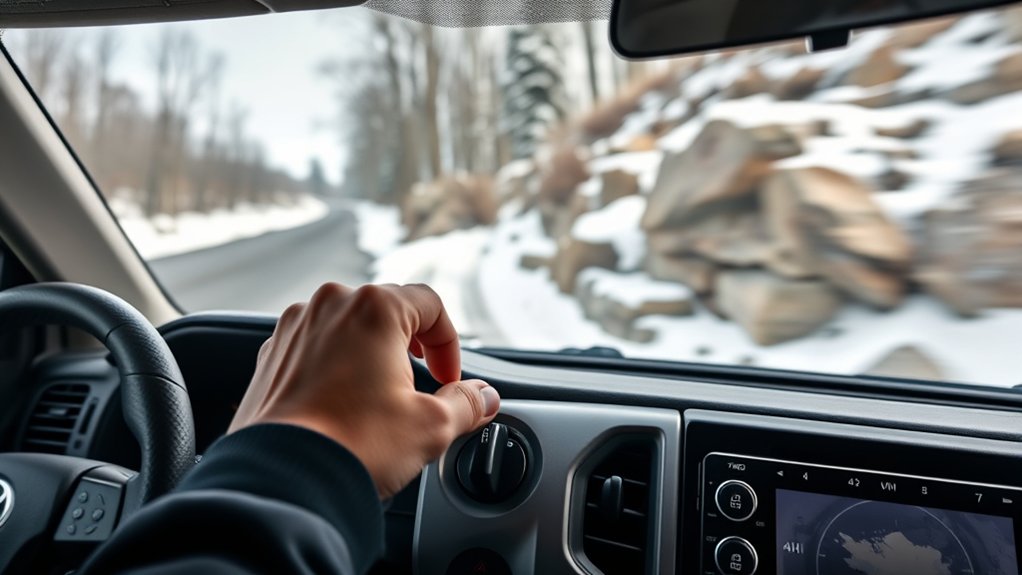
The easiest way to choose between 2H, 4H, and 4L is to think about surface grip, required torque, and vehicle speed.
- Use 2H for ordinary paved-road driving when the tires have normal grip.
- Use 4H when you need additional drive traction and the surface is loose or slippery enough to permit some tire slip.
- Use 4L when you need low gearing for very slow, difficult off-road work such as steep climbs, steep descents, deep mud, deep snow, rocky terrain, or controlled recovery situations.
Warning: Do not use part-time 4H or 4L for routine driving on dry, high-traction pavement. Because the front and rear driveline are coupled, the tires need enough surface slip to release driveline tension during turns.
Rain by itself is not an automatic reason to select 4H. A wet paved road may still provide substantial traction. If the surface does not allow enough tire slip, stay in 2H unless your exact owner’s manual says otherwise. Snow-covered roads, ice, loose gravel, mud, sand, and off-road tracks are more typical part-time 4H conditions.
What 2HI, 4HI, and 4LO Actually Do
On a Tacoma equipped with part-time four-wheel drive, the three transfer-case positions change which axles receive drive and whether the transfer case uses its normal high range or its lower gear range.
| Mode | What It Does | Best Use |
|---|---|---|
| 2H / 2HI | Uses the normal high range with rear-wheel drive on the part-time system. | Normal paved-road driving. |
| 4H / 4HI | Engages the front and rear driveline while retaining the high transfer-case range. | Snow, ice, gravel, mud, sand, and loose or slippery trails. |
| 4L / 4LO | Engages four-wheel drive through the transfer case’s low range for greater torque multiplication and slower vehicle movement. | Steep climbs or descents, rocks, deep mud, deep snow, and controlled low-speed off-road maneuvering. |
Toyota describes 2H as the normal position for hard-surfaced roads, 4H as the high-range four-wheel-drive setting for conditions where the tires can slip, and 4L as the maximum-power and maximum-traction range for difficult terrain. You can review Toyota’s instructions in the Toyota Tacoma part-time 4WD owner’s manual section.
When to Use Each Mode: Conditions and Shift Speeds
The correct mode depends more on surface traction than on a single speed number.
When to Use 2H
Stay in 2H for normal commuting, highway driving, parking lots, and other hard-surfaced roads where the tires have good grip. It is the normal road-driving position for Tacoma part-time 4WD models.
When to Use 4H
Select 4H when extra propulsion traction is useful and the road or trail surface can allow the tires to slip enough to prevent driveline windup. Common examples include:
- Snow-covered or icy roads
- Loose gravel
- Muddy tracks
- Sand
- Loose dirt
- Wet grass
- Moderate off-road trails
On Toyota’s 2024 fourth-generation part-time system, the manual instructs you to reduce vehicle speed to less than 62 mph (100 km/h) before shifting between 2H and 4H. That figure should not be interpreted as a target driving speed in snow, ice, mud, or other low-traction conditions. Drive only as fast as visibility, tire grip, terrain, and braking distance safely allow.
When to Use 4L
Use 4L when high-range gearing is no longer ideal and you need more low-speed control. Typical situations include:
- Climbing or descending a steep off-road grade
- Crawling over rocks or deep ruts
- Moving through deep mud, sand, or snow
- Controlled recovery work
- Very slow trailer maneuvering on steep or loose terrain
There is no useful universal Tacoma 4L speed limit that applies to every model year and drivetrain. Treat 4L as a low-speed range and follow the restrictions in your exact owner’s manual.
The “62 mph” figure on Toyota’s fourth-generation part-time system is a threshold for shifting between 2H and 4H—not a recommendation to drive 62 mph whenever 4H is engaged.
How to Shift: Step-by-Step for Tacoma
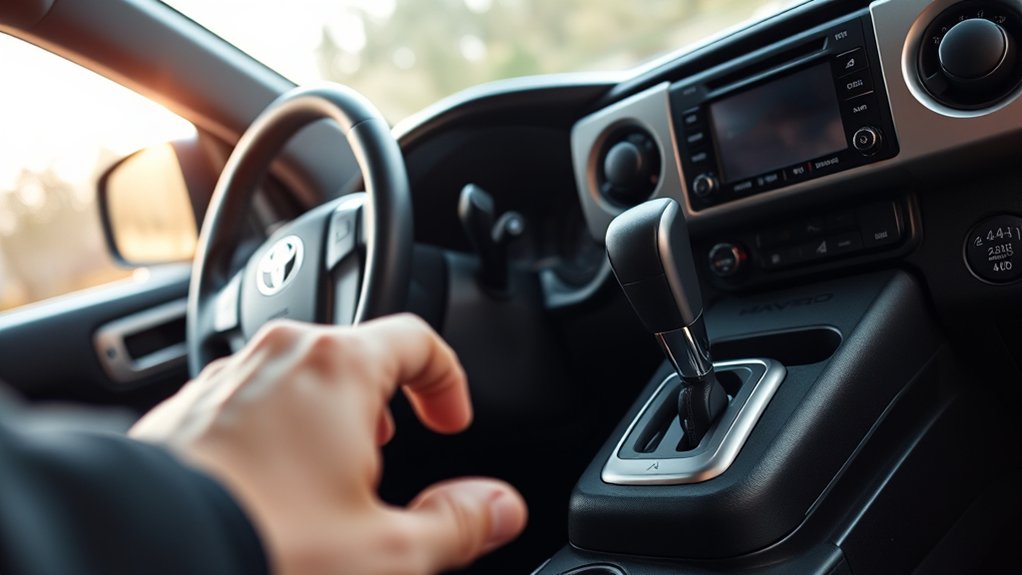
Controls and procedures vary by Tacoma generation and transmission. The following steps match Toyota’s fourth-generation automatic-transmission part-time 4WD guidance and are a useful reference for many newer models. Always give your exact owner’s manual priority.
Shift From 2H to 4H
- Make sure the wheels are not spinning or slipping aggressively.
- Reduce vehicle speed below 62 mph (100 km/h) on the cited fourth-generation system.
- Drive as straight as practical.
- Select 4H with the front-wheel-drive control switch.
- Watch the 4HI indicator and confirm that engagement completes.
Shift From 4H to 2H
- Reduce vehicle speed below the model’s specified shift threshold; Toyota’s fourth-generation manual specifies below 62 mph.
- Keep the vehicle moving straight when practical.
- Select 2H.
- Confirm that the 4HI indicator goes out.
Shift From 4H to 4L
- Bring the vehicle to a complete stop.
- Keep the brake pedal depressed.
- Shift the automatic transmission to N (Neutral).
- Select 4L.
- Wait until the 4LO indicator confirms engagement before continuing.
Shift From 4L to 4H
- Stop completely and keep the brake pedal depressed.
- Shift the automatic transmission to Neutral.
- Select 4H.
- Wait for the indicator lights to confirm that the transfer-case shift has finished.
Warning: Do not operate the 4WD selector while the wheels are spinning. Toyota specifically warns drivers to stop the slipping or spinning before shifting. When changing between 4H and 4L, do not assume the transfer-case shift is complete until the indicator confirms it.
If you have a manual-transmission Tacoma, use the procedure in your specific owner’s manual. Clutch use, allowable vehicle movement, switch design, and shift requirements have differed across Tacoma generations.
What If the 4HI or 4LO Light Keeps Flashing?
A flashing indicator normally means the requested transfer-case change has not completed. Toyota’s fourth-generation manual advises driving straight ahead while gently accelerating or decelerating in certain incomplete 2H/4H shifts. Depending on the indicator combination, slowly moving forward or in reverse and retrying after stopping can also help the mechanism align.
Do not make sharp turns to try to “release” the system. If the 4HI and 4LO indicators flash rapidly or the system repeatedly refuses to shift, Toyota advises having the four-wheel-drive system inspected.
Pro Tip: Make your 2H-to-4H selection before you are buried in deep mud or snow. Shifting while the tires are already spinning heavily is exactly what Toyota tells drivers to avoid.
Tacoma 4WD Monthly Maintenance Checklist
Toyota’s fourth-generation part-time 4WD manual recommends driving in four-wheel drive for at least 10 miles (16 km) each month so the front-drive components remain lubricated. This is a total 4WD-use recommendation; it does not mean you need to drive 10 miles in 4H and another 10 miles in 4L.
Because part-time 4WD should not normally be used on high-traction pavement, perform this monthly exercise only where conditions are appropriate—such as a loose gravel road, suitable unpaved route, snowy road, or another surface where the tires can release driveline tension. If your model-year manual gives different guidance, follow it instead.
Monthly Engagement Drive
A simple monthly routine can help you confirm that the system engages normally:
- Choose an appropriate loose or slippery surface.
- Engage 4H using the correct procedure for your truck.
- Drive enough in four-wheel drive to meet Toyota’s model-specific recommendation.
- Watch for abnormal noises, warning messages, delayed engagement, or persistent indicator flashing.
- Return to 2H before normal high-traction pavement if your truck uses part-time 4WD.
You do not need to force a long 4L drive simply for maintenance. Use 4L when conditions safely call for low range and when your owner’s manual requires or recommends cycling it.
4WD Component Inspection
Use the monthly exercise as an opportunity for a simple visual and operating check rather than inventing a separate fluid-service interval.
- Tires: Check that all four tires are the correct size, similar in tread depth, and properly inflated.
- Leaks: Look beneath the truck for new oil or fluid leaks around the transfer case, differentials, and driveline.
- Driveshaft and joints: If accessible, look for obvious damage, damaged boots, loose hardware, or unusual corrosion.
- Indicators: Confirm that 4HI and 4LO indicators behave normally when the system is operated correctly.
- Noise: Pay attention to new clunks, grinding, humming, or vibration that appears only after 4WD is engaged.
Fluid inspections and replacements should follow Toyota’s maintenance requirements for your exact model, mileage, use, and operating conditions rather than an invented monthly fluid-change schedule.
Why Your Tacoma Vibrates or Binds: Quick Diagnostics
Binding in part-time 4WD is not always the same thing as a mechanical vibration. Understanding the difference can keep you from replacing parts unnecessarily.
Driveline Windup on High-Traction Pavement
If the truck feels as though it is resisting a turn, hopping, scrubbing the tires, or tightening up while 4H or 4L is engaged on dry pavement, the likely issue is driveline windup. In a part-time system, the front and rear driveline are coupled, but the front and rear axles travel different distances during a turn. A loose surface allows the tires to slip enough to release that difference; dry pavement may not.
Return to 2H as soon as it is safe and appropriate. If disengagement does not complete, follow the straight-line or short forward/reverse procedure in your model’s owner’s manual rather than making a tight turn.
Vibration That Continues on an Appropriate Surface
If the Tacoma vibrates even while driving straight on loose terrain, possible causes include:
- Mismatched tire sizes or significantly different tread depths
- Incorrect tire pressures
- Wheel or tire imbalance
- Damaged driveshaft components
- Worn joints or bearings
- Front CV-joint or boot problems on applicable models
- Transfer-case, differential, or driveline faults
Do not assume every 4WD vibration is normal. Persistent vibration, grinding, repeated warning messages, rapid 4WD-indicator flashing, or difficulty completing a transfer-case shift deserves professional diagnosis.
Real-World Scenarios: Snow, Mud, Towing, and Off-Road
The best mode becomes easier to understand when you match it to real driving situations.
Snow and Slush Handling
Use 4H when snow, packed snow, ice, or slush creates enough slip that additional driven wheels improve your ability to get moving and maintain propulsion. Accelerate smoothly and leave much more room for braking.
Four-wheel drive can help the truck move forward, but it does not create unlimited tire grip. Your tires still determine much of your braking and cornering performance. Proper winter tires can matter more than simply selecting 4H.
If snow becomes deep enough that the truck needs very slow, controlled progress or substantially more low-speed torque, stop and engage 4L using the correct procedure.
Mud, Sand, and Loose Trails
4H is often suitable when you need to maintain some momentum through loose dirt, moderate mud, or sand. Move to 4L when the terrain becomes steep, deeply rutted, rocky, or slow enough that high-range gearing makes precise throttle control difficult.
Modern Tacoma off-road trims may also provide systems such as Multi-Terrain Select, CRAWL Control, a locking rear differential, or Downhill Assist Control. Toyota’s current Tacoma information notes that Multi-Terrain Select can operate in both 4WD High and 4WD Low on applicable models.
Towing and Low-Speed Control
Do not shift to 4L simply because a trailer is heavy. Normal paved-road towing should use the normal drive mode specified for your truck and trailer combination.
4L becomes useful when you are moving a trailer very slowly on a steep or loose off-road surface where low gearing provides better control—for example, backing on a loose incline, pulling through deep mud, or maneuvering over difficult terrain. Avoid tight turns in part-time 4WD on high-traction pavement.
Steep Climbs, Descents, and Rock Crawling
4L is designed for situations where low-speed control matters more than momentum. The lower gearing lets the truck move more slowly for a given engine speed and can make throttle inputs easier to control on steep climbs, descents, rocks, and deep ruts.
On equipped models, CRAWL Control or Downhill Assist Control may provide additional low-speed assistance, but these systems do not replace correct 4WD selection, tire placement, or safe judgment.
Frequently Asked Questions
What do 2H, 4H, and 4L mean on a Toyota Tacoma?
On a part-time 4WD Tacoma, 2H is two-wheel-drive high range for normal road driving, 4H is four-wheel-drive high range for loose or slippery surfaces, and 4L is four-wheel-drive low range for slow, difficult terrain that needs more torque multiplication and control.
When should I use 4H instead of 4L on a Tacoma?
Use 4H when you need extra traction but still need normal high-range gearing, such as on snow, ice, gravel, mud, sand, or moderate trails. Use 4L when terrain is steep, deep, rocky, or technical enough that slow movement and low gearing are more useful than speed.
Can I shift a Toyota Tacoma into 4H while moving?
Many Tacoma part-time systems allow 2H-to-4H shifting while moving. Toyota’s 2024 fourth-generation manual instructs drivers to reduce speed below 62 mph (100 km/h) before shifting between 2H and 4H. Exact procedures vary by model year, so check your truck’s manual.
Can I use 4H on a Tacoma in the rain?
Rain alone does not automatically mean you should use part-time 4H. If the paved surface still has substantial grip, part-time 4WD can develop driveline windup. Toyota describes 4H for surfaces that permit tire slip, such as icy, snowy, loose, or off-road surfaces. Follow the manual for your exact Tacoma.
How does a Toyota Tacoma 4×4 system work?
On part-time 4WD models, the transfer case lets you choose rear-wheel-drive high range, four-wheel-drive high range, or four-wheel-drive low range. In 4H or 4L, the front driveline is engaged so both axles can help propel the truck. Some newer Tacoma configurations instead use full-time 4WD, so their operation differs.
Why is my Tacoma’s 4HI or 4LO light flashing?
A flashing light usually means the requested transfer-case change has not completed. Follow the owner’s-manual procedure, which may include driving straight while gently accelerating or decelerating, moving slowly forward or in reverse, or stopping and repeating the shift. Rapid flashing or repeated failure can indicate a fault that needs inspection.
Conclusion
For a Tacoma with part-time four-wheel drive, the practical rule is simple: 2H for normal hard-surface driving, 4H for loose or slippery conditions that allow tire slip, and 4L for slow, demanding terrain. Do not confuse Toyota’s 62-mph 2H/4H shift threshold on certain newer models with a universal 4H driving-speed limit, and do not use a made-up universal speed limit for 4L.
Shift only when the conditions in your owner’s manual are satisfied, wait for the dashboard indicator to confirm the transfer-case change, and avoid part-time 4WD on high-traction pavement. Toyota also recommends at least 10 miles of four-wheel-drive operation each month on the cited fourth-generation part-time system to keep front-drive components lubricated. If the system repeatedly flashes, grinds, vibrates, or refuses to shift after you follow the correct procedure, have it inspected rather than forcing the selector.
Sources
- Toyota 2024 Tacoma Hybrid Owner’s Manual — Part-Time 4WD System — backs 2H/4H/4L usage, 62-mph shift threshold, 4H↔4L procedure, indicator troubleshooting, and the monthly 10-mile recommendation.
- Toyota Canada — What’s New: 2026 Toyota Tacoma — confirms current Tacoma part-time and full-time 4WD configurations.
- Toyota USA — Explaining Toyota’s 4WD Drivetrain Technologies — manufacturer background on Toyota four-wheel-drive systems.
- Toyota Owners — Manuals and Warranties — source for checking model-year-specific Tacoma operating instructions.
