
For U.S.-market Toyota Camry Hybrid vehicles from model year 2020 onward, the high-voltage hybrid battery is covered for 10 years or 150,000 miles from the original in-service date, whichever comes first. Toyota separately lists 8 years/100,000 miles for the battery control module, hybrid control module, and inverter with converter. The battery warranty covers qualifying defects in materials or workmanship; it is not a 70% capacity-retention guarantee.
Last updated: September 19, 2026 — verified against Toyota’s 2026 Camry Warranty & Maintenance Guide, Toyota’s current U.S. hybrid warranty information, and current Toyota support information.
Quick Answer
For U.S.-market Toyota Camry Hybrid vehicles from model year 2020 onward, the high-voltage hybrid battery is covered for 10 years or 150,000 miles from the original in-service date, whichever comes first. The listed battery control module, hybrid control module, and inverter with converter generally have a separate 8-year/100,000-mile term. Coverage follows the vehicle to later owners but does not restart after a sale, and Toyota’s Camry warranty does not state a 70% capacity-retention trigger.
Key Takeaways
- The hybrid battery receives 10 years or 150,000 miles of coverage on U.S. Toyota hybrids beginning with model year 2020.
- For the 2019 U.S. Camry Hybrid, Toyota listed the hybrid battery under the 8-year/100,000-mile Hybrid System Warranty; owners of earlier vehicles should check the exact model-year guide and emissions coverage.
- The battery control module, hybrid control module, and inverter with converter are generally covered for 8 years or 100,000 miles.
- Toyota’s Camry warranty does not promise that the battery will retain at least 70% of its original capacity.
- Coverage transfers automatically to later owners at no charge while time and mileage remain.
- Covered repairs include parts and labor, but damage caused by misuse, accidents, improper repairs, or inadequate maintenance may be excluded.
Understanding the Toyota Camry Hybrid Battery Warranty
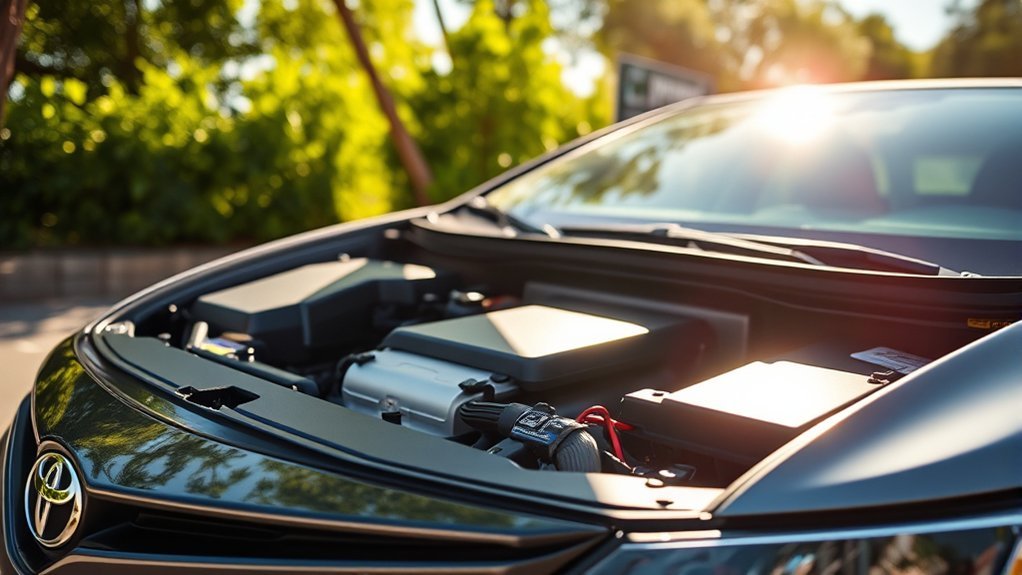
For U.S.-market Toyota hybrid vehicles beginning with model year 2020, Toyota increased the hybrid battery warranty to 10 years from the original in-service date or 150,000 miles, whichever occurs first. Toyota’s current manuals and warranties portal and the 2026 Camry Warranty & Maintenance Guide confirm these terms.
The warranty is designed to pay for repairs needed to correct a defect in materials or workmanship in the Toyota-supplied high-voltage hybrid battery. It is not a routine battery-replacement plan, a maintenance plan, or a guarantee that normal aging will never affect battery performance.
Note: This article covers Toyota’s U.S. warranty. Coverage in Canada and other markets may differ. Your vehicle’s model-year Warranty & Maintenance Guide is the controlling source if any general summary conflicts with it.
Hybrid Battery Versus the 12V Battery
A Camry Hybrid contains two different types of batteries:
- High-voltage hybrid or traction battery: Supplies electrical power to the hybrid drive system and stores energy recovered through regenerative braking.
- 12V auxiliary battery: Powers computers, locks, lighting, and other low-voltage systems and helps the vehicle enter its ready state.
The 10-year/150,000-mile hybrid battery warranty applies to the high-voltage traction battery. It does not mean that the ordinary 12V battery receives the same coverage.
Which Model Years Receive the Extended Warranty?
Toyota announced the extended term for new model-year 2020 Toyota hybrid, plug-in hybrid, and fuel-cell vehicles. Therefore, a U.S. 2020 or newer Camry Hybrid receives the 10-year/150,000-mile hybrid battery term, subject to the applicable Warranty & Maintenance Guide.
For comparison, Toyota’s 2019 Camry Hybrid Warranty & Maintenance Guide lists the hybrid battery under the Hybrid System Warranty at 8 years or 100,000 miles. Earlier model years and emissions-related coverage can differ, so use the guide for the exact vehicle rather than applying the 2020+ term retroactively. For a deeper explanation of California-emissions coverage, see our Camry California emissions warranty guide.
Warranty at a Glance
| Hybrid Battery | 10 years or 150,000 miles for U.S. model-year 2020 and newer Toyota hybrids, whichever occurs first |
| 2019 Camry Hybrid Battery | 8 years or 100,000 miles under the 2019 U.S. Hybrid System Warranty; verify older years and emissions provisions separately |
| Other Hybrid Components | 8 years or 100,000 miles for the listed control modules and inverter with converter |
| Coverage Begins | The vehicle’s original in-service date |
| Transferability | Automatically transfers at no cost to subsequent owners while coverage remains |
| Capacity Guarantee | No stated 70% capacity-retention guarantee in the Camry Hybrid battery warranty |
Which Warranty Applies?
- 2020+ Camry Hybrid, traction battery itself: 10 years/150,000 miles from the original in-service date, whichever comes first.
- Battery control module, hybrid control module, or inverter with converter: generally 8 years/100,000 miles.
- 2019 Camry Hybrid: the hybrid battery was included in the 8-year/100,000-mile Hybrid System Warranty; earlier years should be checked individually.
- Used Camry Hybrid: remaining coverage transfers automatically, but the clock and mileage limit do not restart.
- Capacity or fuel-economy concern: Toyota must diagnose a covered defect; the Camry Hybrid warranty does not state a 70% capacity-retention threshold.
Toyota’s extended hybrid battery term is 10 years or 150,000 miles from the vehicle’s in-service date, whichever occurs first.
What Components Are Covered Under the Warranty?
The hybrid battery and the related electronic components do not all receive the same warranty period. The current U.S. Camry guide separates them as follows:
| Component or Coverage | Typical U.S. Term | What It Means |
|---|---|---|
| High-voltage hybrid battery | 10 years/150,000 miles | Repairs needed to correct covered defects in the Toyota-supplied traction battery |
| Hybrid battery control module | 8 years/100,000 miles | Also described as the battery voltage sensor |
| Hybrid control module | 8 years/100,000 miles | Also described as the power management control module |
| Inverter with converter | 8 years/100,000 miles | Controls conversion and distribution of electrical power in the hybrid system |
| Basic new-vehicle coverage | 3 years/36,000 miles | Covers many other Toyota-supplied parts, subject to exclusions |
| Powertrain coverage | 5 years/60,000 miles | Covers listed engine, transaxle, motor/generator, and drive-system components |
If you are unsure how the traction battery, battery control module, inverter, and DC-DC converter differ, see our Camry Hybrid battery-components guide. The warranty term depends on which component actually failed, so the diagnostic result matters.
When Toyota approves a repair under an applicable warranty, the general warranty provisions state that covered repairs and adjustments are made at no charge for parts and labor. Toyota or the servicing dealership decides whether the affected component should be repaired or replaced and whether a new or remanufactured part will be used.
[Amazon Products Picked for You]

【Other part numbers】8677776040,86777 76040,8644476020,86444 76020,4348800041,434880 0041,4348800010,434880 0010.

UNDER-VOLTAGE SWITCH MODULE: This is a under-voltage switch module used to turn off the power of load in the event of the voltage dropping below a set value

Duration of Coverage: Key Timeframes Explained
The warranty expires when the first limit is reached. For example, coverage ends if the vehicle reaches 150,000 miles before its tenth anniversary, even if fewer than 10 years have elapsed. It also ends at 10 years if the vehicle has fewer than 150,000 miles.
When Does the Warranty Clock Start?
The starting point is the vehicle’s in-service date. Toyota defines this as the first date the vehicle was delivered to its original purchaser, leased, or placed into service as a company car or demonstrator.
This date may be earlier than the day a used-car buyer purchased the vehicle. A buyer considering a used Camry Hybrid should ask a Toyota dealership to verify the original in-service date and remaining coverage using the VIN.
Does the Warranty Transfer to a Used-Car Buyer?
Yes. Toyota’s general warranty provisions state that warranty coverage transfers automatically at no cost to subsequent owners. The transfer does not restart the time or mileage limits; the new owner receives only the coverage that remains from the original in-service date.
Pro Tip: Before buying a used Camry Hybrid, give the VIN and current mileage to an authorized Toyota dealership and ask it to confirm the original in-service date, open recalls, service campaigns, and remaining hybrid battery coverage.
How to Maintain Your Hybrid Battery for Longevity
The Camry Hybrid is not a plug-in vehicle. You do not connect it to a home charger or DC fast charger, and you do not need to keep its traction battery at a manually selected percentage. The hybrid control system manages charging and discharging automatically while the vehicle is driven.
[Amazon Products Picked for You]

【FITMENT】: HV Battery Cooling Air Intake Filter Screen Compatible for 2019 2020 2021 2022 2023 2024 Toyota Rva4 / 2021-2024 RAV4 Prime Venza

Replaces part numbers: G92DJ-47020, G92DJ-48020
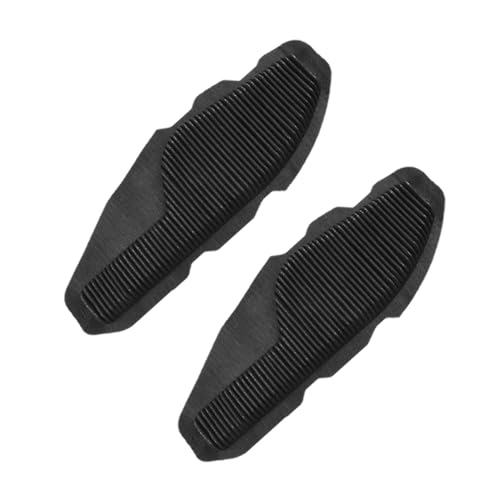
Fit for: This black HV Battery Intake Filter fits for 2019-2024 Toyota RAV4 Hybrid, 2021-2024 RAV4 PRIME Hybrid, and 2021-2024 Toyota Venza Hybrid! Notice: Not Fit for 2021 Toyota Camry hybrid!!
Let the Hybrid System Manage Charging
Energy reaches the traction battery through the engine-generator system and regenerative braking. Normal changes in the battery gauge are expected as the vehicle alternates between electric assistance, regenerative charging, and engine operation.
There is no owner procedure that requires maintaining the battery between 15% and 85%, and ordinary Camry Hybrid owners do not need to plan charging sessions. Instead, follow warning messages in the instrument display and arrange diagnosis if a hybrid-system warning remains on.
Protect the Battery’s Cooling Airflow
The battery relies on cabin air and a cooling intake system to manage temperature. Avoid covering or blocking the hybrid battery air intake vent with clothing, seat covers, luggage, pet hair, or debris.
Toyota’s maintenance schedule includes inspection and periodic cleaning of the HEV battery cooling intake filter. The exact interval can vary with model year, mileage, and operating conditions, so use the schedule for your vehicle rather than a generic interval. Our Camry service-interval guide explains how Toyota’s mileage and time limits work.
Follow the Scheduled Maintenance Guide
Keep receipts and records for scheduled maintenance, inspections, and repairs. Records can make a warranty review easier, especially when Toyota needs to determine whether a failure resulted from a defect or from improper maintenance or repair.
Toyota states that it will not deny a warranty claim solely because you lack maintenance records or used a repair provider other than a Toyota dealership. However, damage or failure caused by inadequate maintenance, improper repairs, or unsuitable parts may not be covered.
Warning: The Camry Hybrid uses high-voltage DC and AC systems. Do not touch orange high-voltage cables, connectors, the service plug, inverter, or traction-battery assembly. Battery diagnosis, removal, repair, and disposal should be handled by trained personnel with the proper protective equipment.
Options After Your Warranty Expires
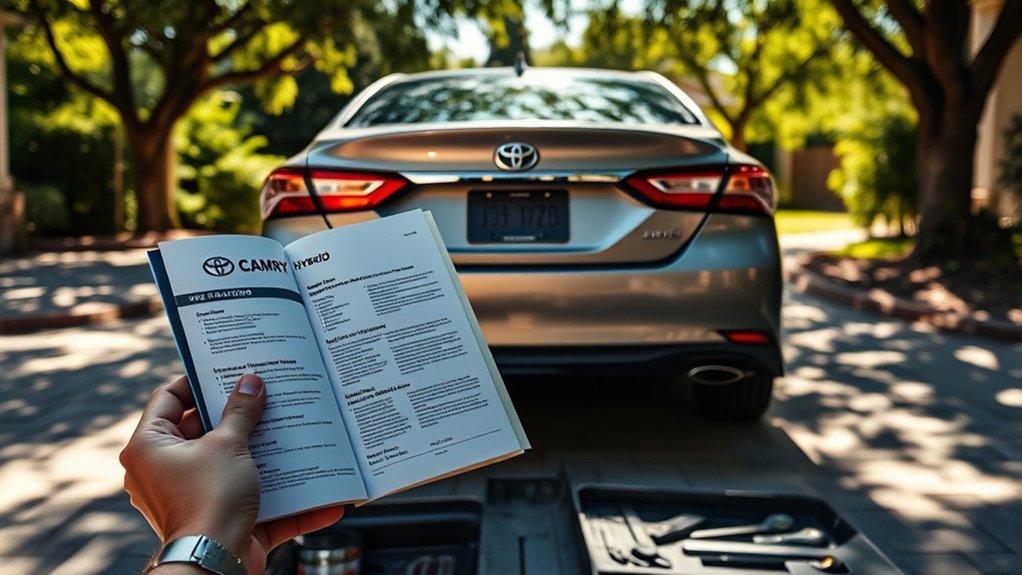
A battery-related warning does not always prove that the traction battery must be replaced. Wiring faults, cooling problems, sensors, control modules, and other hybrid-system components can produce overlapping symptoms. Obtain a complete diagnostic report before approving a costly replacement. See our Camry Hybrid battery warning-signs guide for the difference between symptoms and a confirmed battery fault.
After the warranty expires, practical options may include:
- Professional diagnosis: Ask for diagnostic trouble codes, test results, the technician’s conclusion, and a written estimate.
- Toyota replacement: Request the part number, total installed price, and warranty that applies to the replacement battery.
- Qualified independent hybrid repair: Compare the technician’s training, battery source, testing process, labor coverage, and replacement-part warranty.
- Vehicle-value comparison: Compare the repair cost with the Camry’s condition, mileage, expected remaining life, and current market value.
- Toyota assistance inquiry: Ask whether any recall, service campaign, warranty enhancement, or goodwill-assistance program applies to the VIN.
Replacement-battery warranty: Toyota’s current parts warranty states that a Toyota high-voltage battery installed by an authorized Toyota dealer on an eligible non-commercial vehicle is covered for 36 months with no mileage limit from installation, or for the remainder of the applicable New Vehicle Limited Warranty, whichever provides greater coverage. A battery not installed by an authorized Toyota dealer, or installed on a commercial, fleet, or livery vehicle, is generally covered under Toyota’s 12-month Service Parts Limited Warranty. Confirm the terms on the repair order before approving replacement.
Do not open, dismantle, or attempt to repurpose a high-voltage battery yourself. A qualified repair facility should manage removal, storage, transportation, and recycling.
[Amazon Products Picked for You]

OBD2 SCANNER & BATTERY TESTER IN ONE – The INNOVA 5210 OBD2 scanner not only reads and clears check engine light and ABS codes (coverage may vary) but also functions as a car battery tester to check alternator health and prevent unexpected breakdowns.

Your Car's Personal Doctor: Say Goodbye to Check Engine Light Troubles! The YM319 OBD2 scanner swiftly reads and clears engine fault codes, pinpointing the root cause of issues. Monitor your engine's every "breath" like a pro—view freeze frame data, check I/M readiness status, run oxygen sensor tests, and more. With a built-in database of over 63,000 fault codes, it delivers precise and reliable diagnostics, making it your trusted partner for vehicle maintenance and repair.

【2026 Professional Car OBD2 Scanner】Upgrade check engine code reader V850 featuring complete OBDII/EOBD functionality and 12V battery voltage test. Universal code reader for cars and trucks can quickly read & clear codes, turn off engine light or MIL, view freeze frame, I/M readiness, EVAP leak test, vehicle information retrieval (VIN/CIN), DTC lookup, real-time date display (RPM, coolant temp etc.) in text and graphs, O2 sensor test, onboard monitoring mode 6&8, perform component testing etc.
How to Make a Toyota Camry Hybrid Battery Warranty Claim
Use the following process when you suspect a problem with the traction battery or another hybrid component:
- Record the symptoms. Note warning messages, reduced fuel economy, unusual battery-gauge behavior, drivability changes, noises, and the conditions under which the problem occurs.
- Photograph warning messages. Dashboard warnings may disappear after the vehicle is switched off, so a clear photo can help document the complaint.
- Gather key information. Bring the VIN, current mileage, original in-service date if known, maintenance records, and previous repair invoices.
- Schedule an authorized Toyota diagnosis. Tell the service adviser that you want the concern evaluated under the applicable hybrid battery or hybrid system warranty.
- Ask about diagnostic charges in advance. A dealer may require diagnostic authorization. Ask whether the charge will be waived if Toyota confirms a covered defect.
- Request the decision in writing. If the claim is approved, confirm which component will be repaired or replaced. If denied, request the reason and supporting test results.
- Escalate unresolved concerns. Speak with the dealership’s service manager or customer-relations manager before contacting Toyota’s Brand Engagement Center.
Note: Reduced fuel economy alone does not establish a warrantable battery defect. Tire pressure, weather, driving speed, heater use, short trips, engine condition, and other factors can also change fuel consumption.
If the dashboard shows “Check Hybrid System” or another hybrid warning, record the message before clearing anything. Our Camry Hybrid system warning guide explains when to stop driving and why the warning is not the same as a confirmed battery failure.
Key Limitations of the Toyota Camry Hybrid Battery Warranty
The hybrid battery warranty covers qualifying defects; it does not cover every reason a battery or related system might stop working. Toyota’s current Camry guide lists exclusions that can include damage or failure resulting from:
- Fire, accidents, or theft
- Abuse, negligence, racing, overloading, or other misuse
- Improper repairs
- Alteration or tampering
- Inadequate or improper maintenance
- Installation of unsuitable parts or accessories
- Floods, water contamination, hail, road debris, salt, and other environmental conditions
- Normal wear, deterioration, or maintenance expenses that are not caused by a covered defect
- An altered odometer that prevents the actual mileage from being determined
- Certain salvage or total-loss vehicle histories, subject to the guide’s specific exceptions
A capacity change by itself does not automatically establish coverage. Toyota’s 2026 Camry guide defines the hybrid battery warranty around repairs needed to correct defects in materials or workmanship; it does not publish a 70% capacity-retention threshold for the Camry Hybrid. Likewise, a warning light does not guarantee approval until the vehicle has been diagnosed.
The warranty also generally does not pay incidental or consequential expenses such as lost income, lodging, telephone charges, or transportation costs caused by a vehicle failure. Separate transportation-assistance provisions or state law may provide additional rights in some situations.
How to Contact Toyota for Warranty Support

Begin with an authorized Toyota dealership. In many cases, a service manager or customer-relations manager can review the technician’s findings, verify the warranty term, and resolve questions about coverage.
If the dealership does not resolve the concern, contact the Toyota Brand Engagement Center at 800-331-4331. Toyota currently lists normal response hours as Monday through Friday from 8:00 a.m. to 8:00 p.m. Eastern Time and Saturday from 9:00 a.m. to 7:00 p.m. Eastern Time.
Have the following information ready:
- Vehicle identification number
- Current mileage
- Original in-service date, if known
- Dealership name and location
- Repair-order or case numbers
- Diagnostic findings and trouble codes
- A concise description of the requested resolution
If the dispute remains unresolved, review the dispute-settlement information in the vehicle’s Warranty & Maintenance Guide. Toyota’s guide describes an informal dispute process and additional procedures that can vary by state.
Frequently Asked Questions
What does the Toyota Camry Hybrid battery warranty cover?
It covers repairs needed to correct qualifying defects in materials or workmanship in the Toyota-supplied high-voltage hybrid battery, subject to the exclusions and other conditions in the vehicle’s Warranty & Maintenance Guide.
What is the battery warranty on a 2025 Toyota Camry?
For a U.S.-market 2025 Camry, the high-voltage hybrid battery is covered for 10 years or 150,000 miles from the original in-service date, whichever occurs first. The listed battery control module, hybrid control module, and inverter with converter generally receive 8 years or 100,000 miles.
What is the battery warranty on a 2026 Toyota Camry?
Toyota’s U.S. 2026 Camry Warranty & Maintenance Guide lists 10 years or 150,000 miles for the hybrid battery, measured from the in-service date and subject to the guide’s exclusions.
Does Toyota guarantee that the battery will retain 70% capacity?
The current U.S. Camry Hybrid battery warranty does not state a 70% capacity-retention guarantee. It covers repairs needed to correct defects in materials or workmanship. Toyota must diagnose the concern and determine whether it qualifies.
Does Toyota replace a hybrid battery for free?
Toyota pays for covered repairs, including parts and labor, when a qualifying defect is approved within the applicable time and mileage limits. Toyota does not provide a free replacement for an expired warranty, an excluded cause of damage, or normal aging without a covered defect.
Does the Toyota hybrid battery warranty include labor?
Yes. Toyota’s general warranty provisions state that covered repairs and adjustments are made at no charge for parts and labor. Diagnosis must still confirm that the failure is covered.
Does the battery warranty transfer to a second owner?
Yes. Toyota states that warranty coverage automatically transfers at no cost to subsequent owners. The original in-service date and original mileage limit still control, so the coverage period does not restart when the vehicle is sold.
Must all maintenance be performed by a Toyota dealership?
No. Toyota says maintenance and repairs may be performed by the owner or another service provider. However, a failure caused by improper maintenance, unsuitable parts, or an improper repair may be excluded, so keeping detailed records is advisable.
What are possible signs of a hybrid battery problem?
Possible signs include a persistent hybrid-system warning, stored diagnostic trouble codes, unusual swings in the battery gauge, reduced electric assistance, frequent engine operation, drivability problems, or a significant unexplained change in fuel economy. These symptoms require diagnosis because other components can produce similar effects.
What was the hybrid battery warranty on a 2019 Toyota Camry Hybrid?
Toyota’s U.S. 2019 Camry Hybrid Warranty & Maintenance Guide lists the hybrid battery under the Hybrid System Warranty at 8 years or 100,000 miles, whichever occurs first. Emissions-related coverage can differ, so verify the exact VIN and applicable guide.
What warranty applies to a Toyota replacement hybrid battery?
Toyota’s current parts warranty states that an eligible high-voltage battery installed by an authorized Toyota dealer is covered for 36 months with no mileage limit from installation, or for the remainder of the applicable New Vehicle Limited Warranty, whichever provides greater coverage. Different terms apply to non-dealer installation and commercial, fleet, or livery vehicles.
Conclusion
For U.S.-market Toyota Camry Hybrid vehicles from model year 2020 onward, the high-voltage hybrid battery is generally covered for 10 years or 150,000 miles from the original in-service date, whichever comes first. The battery control module, hybrid control module, and inverter with converter generally have a separate 8-year/100,000-mile term.
The warranty covers qualifying defects in materials or workmanship; it does not promise a 70% capacity level or guarantee replacement whenever performance changes. Keep the cooling intake clear, follow the maintenance schedule, retain repair records, and have warning lights diagnosed promptly. For a definitive coverage decision, use the VIN and current mileage to confirm the terms with an authorized Toyota dealership.
Sources
- Toyota 2026 Camry Warranty & Maintenance Guide — battery and hybrid-component warranty terms, exclusions, transferability, maintenance responsibilities, safety, and warranty service.
- Toyota 2025 Camry Warranty & Maintenance Guide — model-specific warranty and maintenance information for the 2025 Camry.
- Toyota Manuals and Warranties — official vehicle-selection portal and current Toyota hybrid warranty summary.
- Toyota Hybrid Battery Warranty Extension Announcement — confirms the model-year 2020 change to 10 years or 150,000 miles.
- Toyota Contact Us — current Toyota Brand Engagement Center phone number and response hours.
- Toyota 2019 Camry Hybrid Warranty & Maintenance Guide — confirms the pre-2020 8-year/100,000-mile Hybrid System Warranty that included the hybrid battery.
- Toyota Parts Warranty Information — current service-parts terms for dealer-installed and non-dealer-installed high-voltage replacement batteries.
