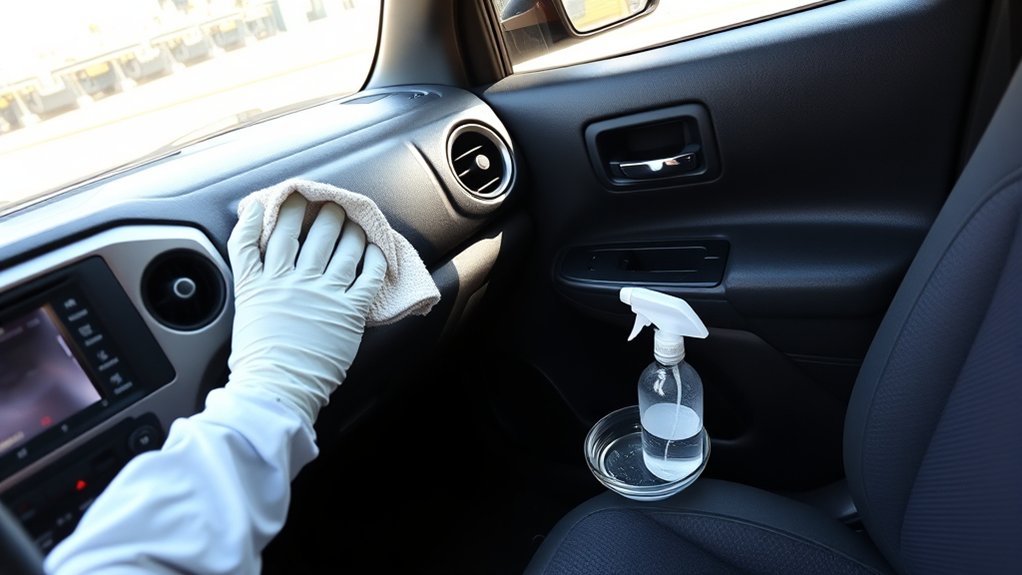
To clean Toyota Tacoma interior plastics and trim safely, start by vacuuming loose dirt, then wipe with a soft microfiber cloth dampened with lukewarm water. If dirt remains, recent Tacoma owner’s manuals call for a soft cloth lightly dampened with neutral detergent diluted to about 1%, followed by wiping away detergent and moisture. Because materials and screen guidance vary by model year and trim, check your exact owner’s and multimedia manuals before using chemicals on the steering wheel, seats, display, or coated trim.
Last updated: September 19, 2026
Quick Answer
To clean Toyota Tacoma interior plastics and trim, vacuum loose grit first, then wipe with a microfiber cloth lightly dampened with lukewarm water. If grime remains, use a small amount of neutral detergent diluted to about 1% when your model-year manual permits it, then wipe away residue and dry the surface. Keep liquid away from screens, switches, seams, and airbag areas, and never make driving controls or floor mats slick.
Key Takeaways
- Check the Toyota manual for your exact Tacoma before using chemicals on screens, upholstery, or special trim.
- Vacuum and dust first so loose grit does not scratch glossy panels, gauge lenses, or touch screens.
- Spray cleaner onto the cloth instead of directly onto the dashboard, console, switches, or display.
- Use separate clean towels for screens, general plastics, leather, and heavily soiled areas.
- Never put a slick dressing on pedals, floor mats, steering-wheel grips, the shift knob, or other driving controls.
At a Glance
| Time Required | About 30 to 60 minutes for routine cleaning |
| Difficulty | Easy |
| Tools Needed | Vacuum, microfiber cloths, soft detailing brush, interior-safe cleaner, and clean water |
| Toyota Cleaning Baseline | Vacuum first, wipe with lukewarm-water-damp cloth, then use about 1% neutral detergent only if needed and permitted by the exact manual |
| Cost | No added cost if you already own the supplies; otherwise, cost varies by the products selected |
What Does Toyota Recommend for Cleaning a Tacoma Interior?
Recent Tacoma owner’s manuals use a simple progression: vacuum loose dirt and dust, wipe dirty surfaces with a cloth dampened with lukewarm water, and move to a soft cloth with neutral detergent diluted to about 1% only when water alone does not remove the dirt. Wring out excess water and wipe away remaining detergent and moisture. Toyota also warns against polish wax or polish cleaner on the instrument panel because a glossy surface can reflect in the windshield.
Material-specific restrictions matter. Recent Tacoma manuals warn against alkaline or acidic cleaners, thinner, benzene, and alcohol on seats, and against organic solvents or alcohol-containing cleaner on the steering wheel. Toyota multimedia guidance also calls for a soft glasses-cleaning-type cloth on the display and warns against benzine and alkaline solutions. Use the Toyota manual portal to confirm the instructions for your exact model year, upholstery, and screen.
Essential Cleaning Supplies for Your Tacoma’s Interior
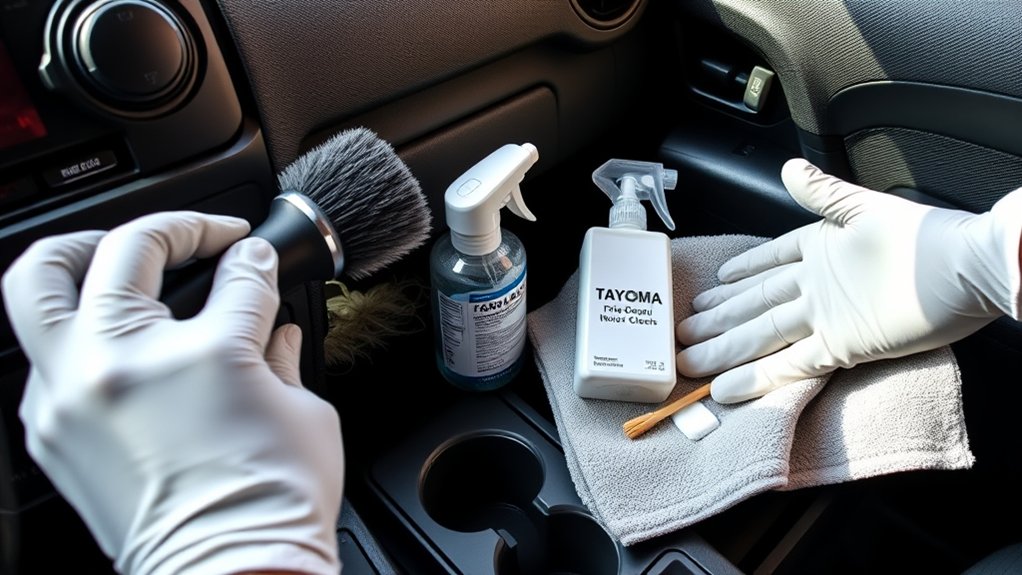
You do not need a large detailing kit. A few clean, surface-safe tools will handle most Tacoma interior cleaning jobs:
- Several clean microfiber cloths: Use one for screens, one for ordinary plastics, and another for dirty or greasy areas.
- A vacuum with a soft brush or crevice tool: Remove sand, dust, crumbs, and pet hair before introducing moisture.
- A soft detailing brush: Use it around vents, seams, textured plastic, cupholders, and switches without forcing liquid into openings.
- A neutral detergent or surface-approved interior cleaner: Recent Tacoma manuals use about a 1% neutral-detergent solution for general interior cleaning when water alone is not enough; confirm your exact model-year instructions.
- Clean water: A cloth lightly dampened with water may be enough for dust and light fingerprints.
- Material-specific upholstery cleaner: Use separate products for fabric, genuine leather, or synthetic upholstery when required.
The EPA’s Safer Choice program identifies products that meet program requirements for ingredient safety and performance. That label does not mean a cleaner is compatible with every Tacoma surface, so you still need to read the product label, check Toyota’s material guidance, and perform a spot test.
Warning: Do not use a protectant, conditioner, wax, or glossy dressing on the pedals, floor mats, steering-wheel grip, shift knob, parking-brake control, or any surface that must remain secure in your hand or under your foot.
Prepare Your Tacoma Before Cleaning
Park in a shaded area and allow the cabin to cool. Hot plastic and glass can cause a cleaner to dry too quickly, leaving streaks or uneven residue. Open the doors or windows while using cleaners, especially products with a strong odor. EPA guidance recommends increasing ventilation when using products that emit volatile organic compounds and following every product-label precaution.
- Remove loose items. Empty cupholders, console trays, door pockets, and storage bins.
- Vacuum from top to bottom. Start around the dashboard and seats, then finish with the carpet and mats.
- Identify each material. Hard plastic, soft-touch trim, glossy panels, screen coatings, genuine leather, and synthetic upholstery may need different products.
- Read the vehicle and product instructions. Use Toyota’s manual portal to locate the guidance for your Tacoma’s model year and trim.
- Test the cleaner. Apply a small amount to a hidden section and let it dry before treating a visible area.
Note: A damp cloth is safer than a wet cloth around switches, speaker openings, USB ports, seams, powered-seat controls, and dashboard areas that may contain electrical or restraint-system components.
Step-by-Step Guide to Cleaning Your Dashboard and Steering Wheel
Clean the dashboard and steering wheel as separate surfaces. The dashboard may accept a non-greasy protectant approved for its material, while the steering-wheel grip should remain dry and slip-free.
1. Clean the Dashboard and Textured Plastic
- Remove loose dust with a dry microfiber cloth, vacuum brush, or soft detailing brush.
- Apply a small amount of interior-safe cleaner to the cloth. Do not spray the dashboard directly.
- Wipe a small area using light pressure.
- Use a dry detailing brush to loosen dirt from textured grain, vents, seams, and corners.
- Wipe again with a clean, slightly damp cloth if the cleaner leaves residue.
- Dry the surface with a separate microfiber cloth.
If you use an optional UV protectant, first confirm that your exact manual permits it on that surface. Toyota warns against polish wax and polish cleaner on the instrument panel because they can damage the finish and create windshield reflections. If a compatible protectant is used elsewhere, choose a low-gloss finish, apply it sparingly to the cloth, and keep it away from the windshield, gauge lenses, screens, controls, and steering wheel.
2. Clean the Steering Wheel Safely
Use a soft cloth lightly dampened with water and follow the cleaner restrictions in your exact owner’s manual. Recent Tacoma manuals specifically warn against organic solvents such as thinner and against cleaners that contain alcohol on the steering wheel. Work around buttons and seams without soaking them, wipe away all residue, and allow the wheel to dry fully before driving.
Do not place cleaner or dressing on the steering-wheel center pad. That area may contain the driver’s airbag, and liquid should not be allowed to enter its seams.
Pro Tip: Keep one microfiber cloth reserved only for screens and glossy trim. A towel previously used with protectant can leave greasy haze on displays and gauge lenses.
How to Clean Touch Screens and Consoles Safely
Clean the Touch Screen and Gauge Lens
Turn the vehicle off and let the display cool. Start with a clean, dry microfiber cloth. Use gentle passes and avoid pressing hard against the screen or gauge-cluster lens.
If dry wiping does not remove the marks, check your model-specific multimedia manual before adding moisture or cleaner. Toyota’s 2024 Tacoma multimedia manual says to clean the screen gently with a glasses-cleaning cloth or similar soft cloth and warns against benzine or an alkaline solution. Earlier Tacoma multimedia manuals also warn against alcohol and other chemical cleaners, so do not assume a generic screen spray or disinfecting wipe is safe for every model year.
Avoid paper towels, abrasive pads, household glass cleaners, strong solvents, and any unapproved chemical that could affect the display surface. CDC guidance for electronic displays also says to follow the device manufacturer’s cleaning instructions.
Clean the Center Console, Cupholders, and Switches
- Remove coins, charging cables, trash, and loose items.
- Vacuum crumbs and grit from cupholders, trays, and seams.
- Apply cleaner to a microfiber cloth and wipe broad plastic surfaces.
- Use a barely damp detailing brush around switches and textured edges.
- Wipe loosened dirt away before it dries.
- Dry the area, checking that no liquid remains around buttons, charging ports, or seams.
Removable rubber cupholder inserts can often be cleaned separately with mild soap and water, but confirm that the insert is designed to be removed. Dry it completely before reinstalling it.
Clean Interior Plastics, Door Panels, and Decorative Trim
Hard and Textured Plastic
Use a soft brush to loosen dirt from the molded grain, then wipe with a damp microfiber cloth. For stubborn grime, use a surface-compatible interior cleaner. Repeat a light application instead of scrubbing aggressively.
Soft-Touch and Rubberized Trim
Soft-touch coatings can become tacky, shiny, or discolored when exposed to strong solvents or heavy friction. Start with water on a microfiber cloth. If more cleaning is needed, use a product specifically approved for soft-touch automotive materials and test it in a hidden area.
Glossy and Painted Trim
Glossy black and painted trim can show fine scratches easily. Remove grit first, use a clean screen-grade microfiber cloth, and wipe with very light pressure. Do not use a stiff brush, abrasive pad, or dirty towel.
Door Panels and Grab Handles
Clean upper door trim with the same material-specific method used on the dashboard. Use a slightly stronger but still compatible cleaner on dirty pull handles and lower hard-plastic panels. Keep liquid away from window switches, lock controls, speaker grilles, and door seams.
Effective Techniques for Cleaning Leather and Fabric Seats
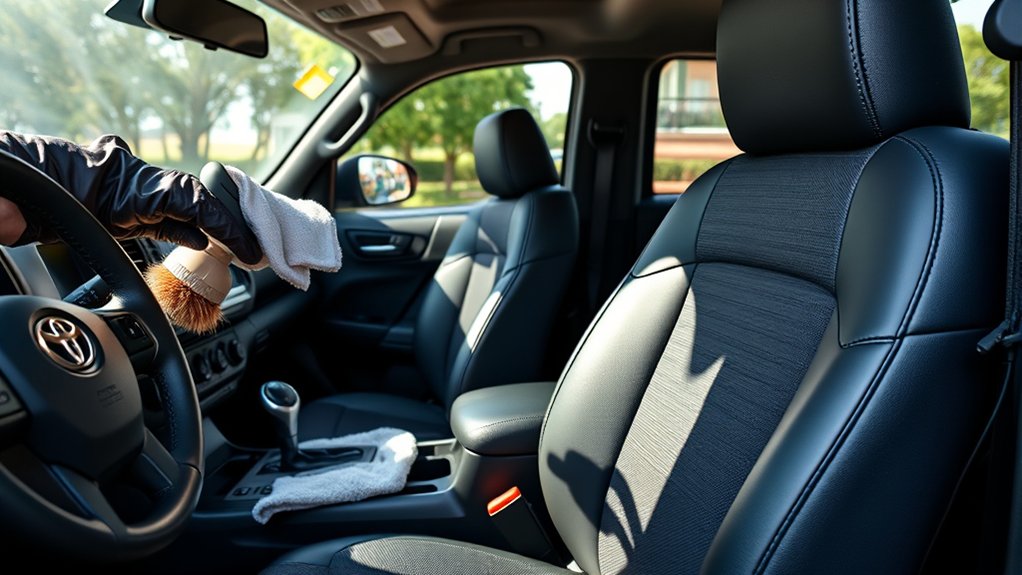
Vacuum the seats before using a liquid product. Pay close attention to stitching, seat tracks, creases, and the gap between the seat bottom and backrest. Do not drag a vacuum nozzle across delicate upholstery.
Clean Genuine or Synthetic Leather
- Confirm the material in your Tacoma manual or trim information.
- Test the cleaner on a hidden section.
- Apply the product to a microfiber cloth rather than pouring or spraying it onto the seat.
- Wipe gently, working one panel at a time.
- Use minimal moisture around perforations, seams, heating elements, and powered-seat controls.
- Remove residue and allow the seat to dry before use.
For genuine leather, recent Tacoma manuals describe vacuuming first, wiping with a soft cloth dampened with an approximately 5% neutral wool-detergent solution, removing detergent residue, then drying with a soft cloth and allowing the leather to finish drying in a shaded, ventilated area. Confirm the method for your exact model year and trim before treating the seat.
Use a conditioner only when it is approved for that upholstery. Many automotive seating surfaces have protective coatings or use synthetic materials that do not need a traditional leather conditioner. Too much product can leave the seat shiny, sticky, or slippery.
Clean Fabric Seats
- Vacuum thoroughly to remove loose soil.
- Apply an upholstery cleaner according to its label.
- Agitate lightly with a soft brush when the fabric allows it.
- Blot with a clean cloth instead of rubbing the stain outward.
- Repeat lightly rather than soaking the foam beneath the fabric.
- Leave the doors open until the seat is fully dry.
Excess moisture can cause long drying times, odors, water rings, or residue. Use an extractor only if you know how to control the amount of water and remove it effectively.
Remove Common Tacoma Interior Messes
Dust and Trail Dirt
Vacuum first, then use a soft brush while holding the vacuum nozzle nearby. This lifts dust from textured plastic without spreading it across the cabin. Finish with a lightly damp microfiber cloth.
Mud
Let thick mud dry before vacuuming or brushing away the loose material. Wet wiping fresh mud can push soil deeper into textured plastic or fabric. After dry removal, clean the remaining mark with a product approved for the surface.
Sticky Drink Residue
Blot fresh liquid immediately. For a dried spill, hold a cloth lightly dampened with warm water against the spot for a short time, then wipe gently. Repeat before moving to a stronger cleaner. Do not flood cupholder seams or electronic controls.
Sunscreen, Lotion, and Body Oil
These residues can leave pale or greasy marks on dark plastic and upholstery. Use a small amount of compatible interior cleaner on a cloth and work from the outer edge of the mark toward the center. Avoid aggressive scrubbing, which can change the surface sheen.
White Cleaner Residue or Streaks
Residue often means too much product was used or the cleaner dried before removal. Wipe the area with a clean cloth lightly dampened with water, then dry it. Do not cover residue with more dressing.
Pet Hair
Vacuum loose hair first. A clean rubber upholstery tool or slightly damp microfiber cloth can gather remaining hair from compatible fabric. Avoid using sticky or sharp tools that may pull fibers or damage seat perforations.
Cleaning Products and Methods to Avoid
- Direct spraying: Overspray can enter switches, vents, ports, seams, speakers, and display edges.
- Household glass cleaner on unknown surfaces: It may not be suitable for coated displays, gauge lenses, plastics, or tinted materials.
- Strong solvents or material-prohibited chemicals: Acetone, paint thinner, gasoline, and similar products can damage plastic, coatings, adhesives, and upholstery. Recent Tacoma manuals also prohibit alcohol-containing cleaner on the steering wheel and alcohol on seats.
- Magic erasers and abrasive pads: These can change the sheen or remove a coating.
- Stiff brushes: They may scratch trim or pull upholstery fibers.
- Heavy silicone or glossy dressing: It can create glare, attract dust, or make controls slippery.
- Excess water: Saturation can reach foam, wiring, switches, sensors, and seams.
- Mixed cleaning chemicals: Never combine cleaners or disinfectants.
Warning: Do not mix bleach, ammonia, acids, alcohol-based products, or other cleaning chemicals. Follow every product label, ventilate the cabin, and keep cleaning products away from children and pets.
When to Clean and Disinfect the Interior
Clean high-touch areas when they are visibly dirty and after spills. Routine cleaning with a surface-appropriate product is generally enough for normal maintenance. Current CDC cleaning and disinfecting guidance says that in most situations cleaning alone can remove most germs and that disinfection is generally most relevant when someone is sick or was recently sick.
If disinfection is needed, clean the surface first and use a disinfectant that is both approved for the material and used according to its label. Do not assume a household disinfecting wipe is safe for leather, displays, soft-touch coatings, or every automotive plastic.
Tips for Keeping Your Interior Plastics and Trim Looking New
Clean spills promptly and remove loose dust before it becomes packed into textured surfaces. A quick dry wipe or vacuum usually causes less wear than waiting until heavy buildup requires stronger cleaning.
Use a protectant only when it is compatible with the surface and useful for your driving conditions. Follow its label instead of relying on a fixed three-month schedule. A low-gloss finish is usually better around the dashboard because it is less likely to create reflections.
| Task | Frequency | Notes |
|---|---|---|
| Remove spills and sticky residue | As soon as practical | Blot first and avoid flooding seams or controls |
| Vacuum and dust | Every one to four weeks, depending on use | Clean more often after trail driving, work use, pets, or open-window driving |
| Wipe high-touch plastics | When visibly dirty | Use a damp microfiber cloth before trying a stronger cleaner |
| Deep-clean crevices and upholstery | Seasonally or as needed | Avoid soaking fabric, seams, perforations, or electrical controls |
| Apply an approved protectant | According to the product label | Keep it away from screens, controls, steering-wheel grips, pedals, and mats |
When to Call a Professional Detailer
Stop cleaning if a surface becomes sticky, loses color, develops a different sheen, or transfers material to the cloth. Professional help is also sensible for mold, persistent odors, bodily-fluid contamination, deeply soaked seats, widespread dye transfer, damaged screen coatings, or stains that require repeated aggressive treatment.
For electrical problems, damaged switches, warning lights, or liquid that has entered an electronic component, contact a qualified repair professional rather than continuing to clean the area.
Related Guides
Frequently Asked Questions
What does Toyota recommend for cleaning a Tacoma interior?
Recent Tacoma owner’s manuals say to vacuum loose dirt first, wipe dirty surfaces with a cloth dampened with lukewarm water, and use a soft cloth with neutral detergent diluted to about 1% only if water does not remove the dirt. Wring out excess water, remove detergent residue, and follow the separate restrictions for seats, the steering wheel, screens, and the instrument panel.
What can I use to clean the plastic interior of my Toyota Tacoma?
Start with a clean microfiber cloth lightly dampened with water. For dirt that remains, use a mild automotive interior cleaner labeled safe for the specific plastic or soft-touch surface. Apply it to the cloth, test a hidden area, and wipe away all residue.
What do professional detailers use to clean the inside of vehicles?
Professional detailers commonly use vacuums, multiple microfiber towels, soft brushes, controlled amounts of surface-specific cleaner, and extraction equipment for suitable fabrics. The important difference is not one special chemical. It is identifying the material, using the correct dilution, controlling moisture, and removing residue.
What do dealerships use to clean a Toyota interior?
Products and methods vary by dealership and detailing department. A dealership may use commercial interior cleaners, vacuums, microfiber towels, brushes, and optional dressings. Do not assume that every dealership product is suitable for every Tacoma material. Ask what will be applied, especially on leather, screens, soft-touch trim, and driving controls.
How do I clean a car’s interior plastic surfaces without leaving streaks?
Remove dust first, use only a small amount of cleaner on the cloth, and work one section at a time. Follow with a second microfiber cloth lightly dampened with water if residue remains, then dry the surface. Avoid cleaning hot plastic in direct sunlight.
Can I use disinfecting wipes on my Tacoma’s dashboard and screen?
Only use a wipe when both Toyota’s instructions and the wipe label confirm compatibility with that surface. Some disinfectants can affect screen coatings, leather, soft-touch materials, or painted trim. Routine cleaning is generally enough unless disinfection is needed for a specific health reason.
How often should I clean my Tacoma’s interior?
Remove spills promptly and clean surfaces when they are visibly dirty. For most trucks, a light vacuum and dusting every one to four weeks is practical. Work use, trail driving, pets, children, open windows, and dusty climates may require more frequent care.
Conclusion
The safest way to clean your Toyota Tacoma interior is to follow Toyota’s mildest-first sequence: vacuum loose dirt, try a lukewarm-water-damp cloth, then use about 1% neutral detergent only when needed and allowed by the exact manual. Apply liquid to the cloth instead of the vehicle, keep moisture away from electronics and seams, and leave driving controls free of slippery residue.
Check the owner’s and multimedia manuals for your exact model year before treating screens, seats, the steering wheel, or coated trim. Consistent light cleaning is usually safer than waiting for heavy buildup and then relying on aggressive chemicals or scrubbing.
Sources
- Toyota Manuals and Warranties — model-specific owner’s manuals and vehicle-care instructions
- CDC: When and How to Clean and Disinfect — surface compatibility, electronics, product-label, ventilation, and chemical-mixing guidance
- U.S. EPA Safer Choice — information about cleaning and car-care products made with evaluated ingredients
- U.S. EPA: Volatile Organic Compounds and Indoor Air — ventilation considerations when using products that emit VOCs
- Toyota 2024 Tacoma Multimedia Owner’s Manual — touch-screen cleaning and chemical restrictions

