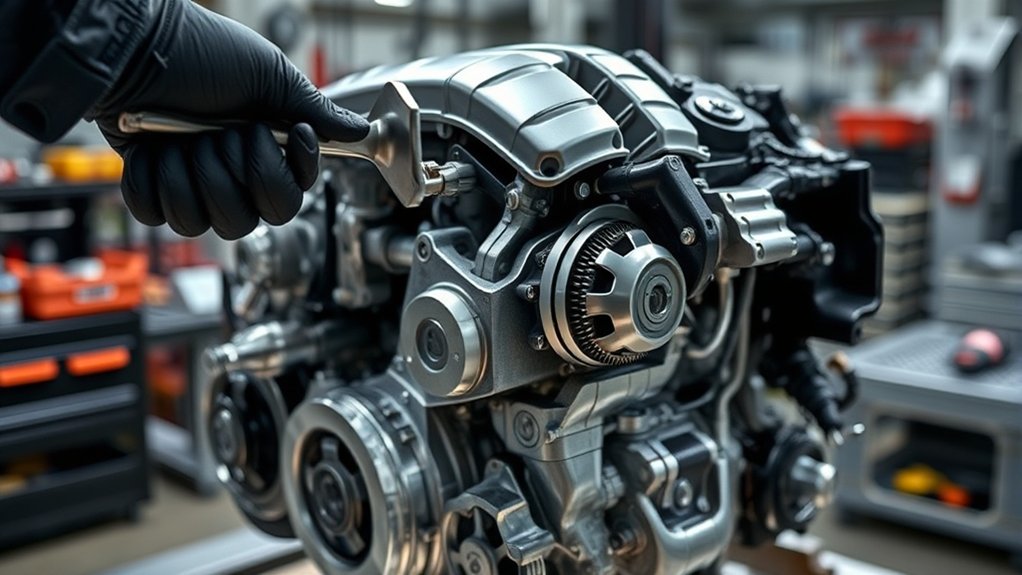
Your Toyota Camry’s variable valve timing system changes camshaft timing as the engine’s speed, load, temperature, and power demand change. Toyota’s best-known version is VVT-i, or Variable Valve Timing-intelligent. The exact arrangement depends on the Camry’s model year, engine, market, and hybrid configuration, so identify the engine before ordering a valve, actuator, sensor, or timing component.
Quick Answer
The Toyota Camry VVT-i system changes when the intake or exhaust valves open and close by adjusting camshaft timing. Depending on the engine, the adjustment may use engine-oil pressure, an electric actuator, or both. Low oil, restricted oil passages, wiring faults, sensor errors, actuator wear, or incorrect mechanical timing can disrupt operation.
Key Takeaways
- VVT-i continuously changes camshaft timing instead of switching only between two fixed positions.
- Earlier Camry engines may use hydraulic intake-only or dual-cam timing, while newer Dynamic Force engines may combine electric VVT-iE with hydraulic VVT-i.
- Correct oil level, viscosity, condition, and pressure are essential for every oil-operated part of the system.
- A VVT-related code identifies a circuit or operating problem; it does not automatically prove that the oil control valve has failed.
- Campaigns, service bulletins, parts, oil specifications, and test procedures must be matched to the engine and VIN.
What Is Toyota VVT-i and How Does It Work?
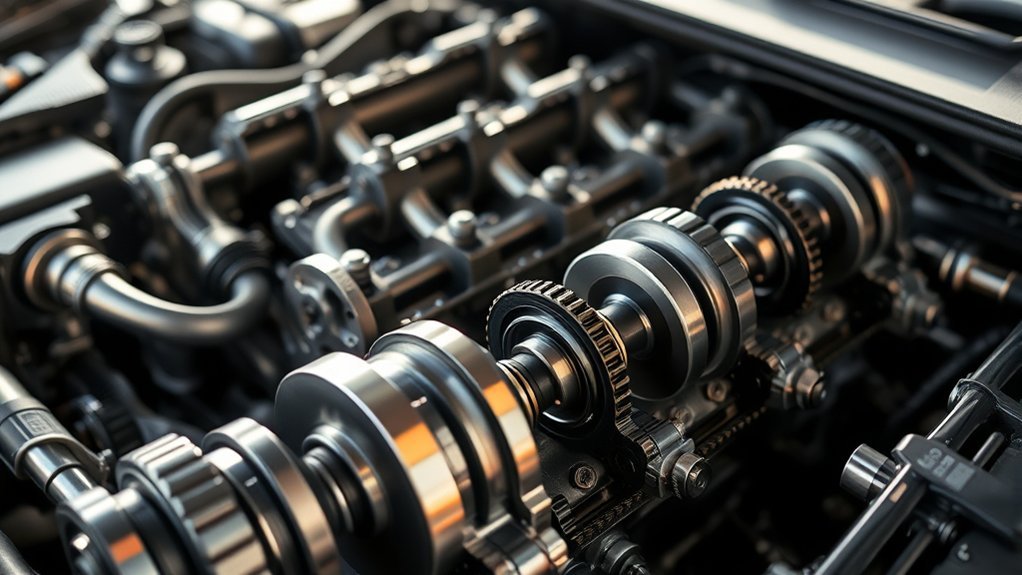
Toyota announced its VVT-i technology in 1995. The original design continuously adjusted intake-valve timing according to driving conditions instead of using the earlier two-position system. Toyota connected this control with better low- and mid-speed torque, higher-speed breathing, fuel economy, and lower nitrogen oxide and hydrocarbon emissions. The company’s original explanation is available in its 1995 VVT-i technical announcement.
Camshaft timing describes the relationship between the camshaft and crankshaft. The crankshaft moves the pistons, while each camshaft opens and closes a group of valves. Advancing or retarding a camshaft changes when those valves operate relative to piston movement.
The engine control module does not command one permanent amount of advance. It calculates a target camshaft angle from information such as engine speed, calculated load, throttle demand, coolant temperature, oil temperature where monitored, and camshaft position. The available inputs and control strategy vary by engine.
VVT-i is one part of the complete powertrain. Its real-world effect depends on the engine design, calibration, oil condition, transmission or hybrid system, vehicle weight, driving style, and operating environment.
Main VVT-i Components
- Engine control module: Calculates the requested camshaft position and controls the applicable actuator or oil control valve.
- Crankshaft position sensor: Reports crankshaft speed and position so the computer can identify piston position and compare crankshaft movement with camshaft movement.
- Camshaft position sensor: Reports the camshaft’s actual position and lets the computer determine whether it followed the requested command.
- Oil control valve: Meters pressurized engine oil to the advance, retard, or holding chambers of a hydraulic camshaft actuator.
- Camshaft timing actuator or phaser: Rotates the camshaft through a limited range in relation to its sprocket.
- Electric VVT actuator: On VVT-iE applications, an electric motor performs selected timing adjustments without depending solely on hydraulic pressure.
- Engine oil and oil passages: Supply pressure and lubrication to hydraulic control valves, actuators, timing-chain components, and bearings.
- Timing chain or timing belt: Establishes the basic mechanical relationship between the crankshaft and camshafts.
- Wiring, connectors, and power supplies: Carry sensor signals and actuator commands. A circuit fault can imitate a failed mechanical component.
How the VVT Control Cycle Works
- The engine control module reads engine speed, load, throttle demand, temperature, and other operating information.
- It calculates a target intake or exhaust camshaft angle.
- On a hydraulic circuit, it changes the command to the oil control valve. On an electric circuit, it commands the applicable motor and position control.
- The hydraulic or electric actuator moves the camshaft toward the target angle.
- The camshaft position sensor reports the actual angle.
- The computer continually adjusts the command to reduce the difference between the requested and actual positions.
This closed-loop process operates while the engine idles, accelerates, cruises, climbs a grade, or slows down. If the actual camshaft position moves too slowly, travels in the wrong direction, remains too advanced or retarded, or disagrees with the crankshaft signal, the computer may store a diagnostic trouble code and use a limited or default timing strategy.
Which VVT System Does a Toyota Camry Use?
There is no single VVT layout for every Toyota Camry. Earlier four-cylinder engines may control only the intake camshaft, later four-cylinder and V6 engines may adjust both intake and exhaust timing, and newer Dynamic Force engines may combine electric and hydraulic actuation.
For a current example, Toyota Canada lists the 2026 Camry’s 2.5-liter Dynamic Force four-cylinder engine with both VVT-iE and VVT-i. Toyota’s Dynamic Force technical descriptions identify the common dual arrangement as electric VVT-iE on the intake side and hydraulic VVT-i on the exhaust side. Toyota also describes the 2026 U.S. Camry as an all-hybrid model. Market specifications can differ, so confirm the engine through the VIN, underhood emissions label, owner information, or parts catalog before applying this description to another vehicle.
| System | What It Controls | What Camry Owners Should Know |
|---|---|---|
| VVT-i | Continuously phases a camshaft. Earlier conventional applications commonly adjusted the intake camshaft hydraulically. | The oil control valve, actuator design, operating range, and test values differ by engine. |
| Dual VVT-i | Adjusts both intake and exhaust camshaft timing. | A dual-cam engine may have separate valves, actuators, sensors, circuits, and trouble codes for each side. |
| VVT-iE | Uses an electric motor for selected cam-timing control rather than relying only on engine-oil pressure. | A vehicle can combine electric VVT-iE on one camshaft with hydraulic VVT-i on another. Electrical and hydraulic diagnosis may both be required. |
| VVT-iW | Provides a wider intake-cam timing range on selected Toyota engines. | The wider range can support different combustion strategies, including modified Atkinson-cycle operation on applicable engines. Do not assume every Camry uses it. |
| Valvematic | Adds continuously variable intake-valve lift control to valve-timing control. | Valvematic changes valve lift as well as timing. It is a separate technology and is not standard on every Camry. |
Note: Use Toyota’s VIN specification tool, the underhood label, and the applicable owner’s manual and maintenance guide to confirm the exact vehicle. A Camry from another market or model year may use different hardware even when its exterior generation looks similar.
How VVT-i Reduces Emissions
Valve timing affects cylinder airflow, the amount of residual exhaust left in the cylinder, and how much work the engine uses to draw air past the throttle. Changing timing across the operating range gives the engine computer more control than a fixed camshaft position.
At selected loads and speeds, valve overlap allows some exhaust gas to remain in or return to the cylinder. Toyota described this as an internal exhaust-gas-recirculation effect. The residual gas can reduce peak combustion temperature and help limit nitrogen oxide formation. The same strategy can reduce pumping loss and return some unburned mixture for another combustion event.
The computer does not maximize overlap at all times. Toyota’s early VVT-i description explains that overlap is reduced at idle to stabilize combustion. Other timing strategies are used during high load, higher engine speed, cold operation, catalyst warm-up, and deceleration.
VVT-i is only one part of emissions control. Fuel injection, ignition timing, external exhaust-gas recirculation where fitted, oxygen or air-fuel-ratio sensors, the catalytic converter, engine temperature, hybrid operating strategy, and mechanical condition all affect the final emissions result.
A VVT fault can increase emissions indirectly when the camshaft does not reach its intended position. The engine control module may store a code, limit cam adjustment, or use a default position until the problem is repaired.
How VVT-i Improves Performance and Fuel Efficiency
No single valve-timing position works equally well at idle, during low-speed acceleration, at highway cruise, and near the engine’s upper speed range. VVT-i lets the engine select a better compromise for each condition.
- At idle: The system can reduce overlap and select timing that supports stable combustion and smooth operation.
- During low- and mid-speed acceleration: It can improve cylinder filling and useful torque response.
- At higher engine speeds: A different intake-closing point can help the engine continue moving air efficiently.
- During light-load cruising: Cam timing can reduce pumping work and support efficient combustion.
- During cold operation: The engine can use timing strategies that support drivability, catalyst heating, and emissions control.
- In a hybrid Camry: Valve timing works with engine start-stop control, motor assistance, battery management, and regenerative braking rather than operating as an isolated fuel-saving feature.
These effects may improve power delivery and fuel use compared with operating the same engine at one fixed camshaft angle. They do not provide a universal horsepower or fuel-economy increase. EPA or Natural Resources Canada ratings and real-world consumption reflect the complete vehicle, including its engine, electric motors where fitted, transmission, aerodynamics, tires, temperature, traffic, accessory use, and driver behavior.
A functioning VVT system also cannot compensate for restricted airflow, worn spark plugs, low compression, incorrect fuel pressure, clogged injectors, exhaust restriction, or another unrelated engine fault.
What VVT-i Does Not Mean
- It does not always change valve lift. Conventional VVT-i changes camshaft phase. Valvematic and other variable-lift systems add separate lift control.
- It is not a two-position high-rpm switch. Conventional VVT-i continuously adjusts through an operating range.
- It is not the same as Honda VTEC. Both are variable-valve technologies, but the mechanisms and control strategies differ. Some VTEC versions switch valve-lift profiles, while conventional Toyota VVT-i primarily changes camshaft timing.
- It does not prove how many control valves the engine has. The number depends on the engine, the number of controlled camshafts, and whether electric actuation is used.
- It does not guarantee a problem is caused by dirty oil. Oil condition matters on hydraulic circuits, but wiring, sensors, actuators, pressure, software, and mechanical timing can produce similar symptoms.
Common Toyota Camry VVT-i Problems and Symptoms
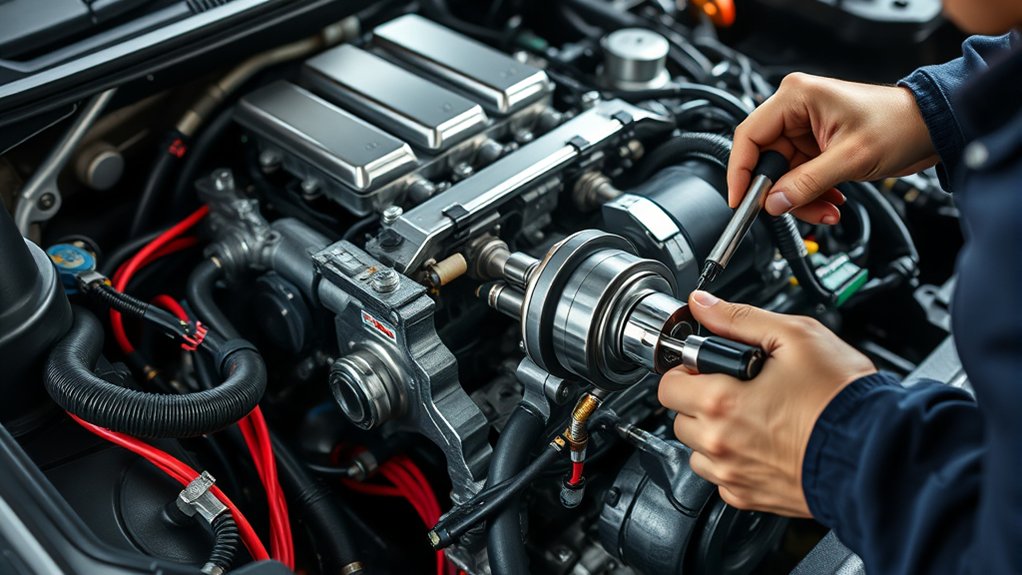
The VVT system depends on accurate sensor information, sound wiring, correct mechanical timing, suitable oil, adequate oil pressure, and free-moving control components. A symptom or code should begin a diagnosis rather than trigger automatic parts replacement.
Warning: Stop the engine if the oil-pressure warning remains on, the engine is losing oil rapidly, it stalls in traffic, or you hear loud continuous timing-chain, grinding, or knocking noise. Driving with inadequate oil pressure or a serious mechanical timing fault can cause extensive engine damage or an unexpected stall.
| Symptom | Possible Causes | First Checks | Urgency |
|---|---|---|---|
| Check engine light with a cam-timing code | Low or unsuitable oil, restricted oil passage, oil control valve fault, electric-actuator fault, damaged wiring, sensor error, actuator wear, low oil pressure, or incorrect mechanical timing | Read all codes and freeze-frame data; verify oil level, condition, and specification | Diagnose promptly |
| Rough idle, hesitation, difficult starting, or stalling | Incorrect cam position, sticking control valve, actuator fault, vacuum leak, ignition problem, fuel-delivery fault, sensor error, or another engine problem | Scan for codes and inspect basic engine data before replacing VVT components | High if the engine stalls or cannot maintain safe speed |
| Loss of power or unexplained fuel-economy decline | VVT disabled by a fault, incorrect cam timing, slow actuator response, sensor error, or a non-VVT engine problem | Check stored and pending codes, service history, and commanded-versus-actual cam-angle data | Moderate unless drivability is unsafe |
| Brief rattle immediately after a cold start | Actuator lock-pin or gear wear, oil drain-back, tensioner delay, unsuitable filter, low oil level, low pressure, or another mechanical source | Record the duration and conditions; verify oil and filter specification; check for an applicable Toyota bulletin by VIN | Inspect soon; urgent if loud, worsening, or continuous |
| Visible engine-oil leak | Valve cover, seal, oil line, filter housing, timing cover, oil control valve seal, or another pressurized oil-system leak | Check the level and locate the highest wet point after cleaning the area safely | High if the level falls, the warning light appears, or oil reaches hot exhaust parts |
Model-Specific Camry Rattle and Oil-Hose Information
Toyota bulletin T-SB-0041-13 addressed an approximately one-second cold-start knock or rattle on specified 1AR-FE and 2AR-FE applications. It included qualifying Camrys from certain model years, plants, and production ranges. That bulletin does not prove that every brief rattle requires a camshaft timing gear, and its repair procedure should not be applied without confirming the engine and VIN. The bulletin is available through the NHTSA technical-service-bulletin archive.
Toyota Limited Service Campaign 90K covered certain 2007–2010 Camrys equipped with the 2GR-FE V6. The rubber section of the VVT-i actuator oil-supply hose could degrade and leak, potentially producing abnormal engine noise or an oil-pressure warning. The campaign extension expired on December 31, 2021, and it did not cover every Camry. Review the original Toyota LSC 90K notice, then use Toyota’s VIN-based recall and service-campaign lookup and the NHTSA recall database for current vehicle status.
Common Toyota VVT Code Families
The exact code set depends on the engine and diagnostic standard. The examples below describe common code families, not a replacement instruction.
| Code Examples | General Meaning | What It Does Not Prove |
|---|---|---|
| P0010, P0013 and related circuit codes | The computer detected an electrical problem in a camshaft actuator or oil-control-valve circuit. | They do not prove the valve itself is bad; wiring, connectors, power, ground, and the control module must be checked. |
| P0011, P0012, P0014, P0015 and related performance codes | A camshaft is too advanced, too retarded, slow to respond, or outside its expected operating range. | They do not separate dirty oil, low pressure, a sticking valve, actuator wear, sensor error, or incorrect chain timing by themselves. |
| P0016, P0017 and related correlation codes | The crankshaft and camshaft signals do not have the expected mechanical relationship. | They do not prove a sensor is the cause. Chain stretch, incorrect installation, actuator position, tone-wheel damage, wiring, or signal faults may be involved. |
| P1349 and older Toyota-specific codes | A manufacturer-specific VVT operating fault on applicable older engines. | The exact detection conditions and test procedure must come from service information for that engine. |
On an inline-four engine, there is only one cylinder bank, normally called Bank 1. A V6 has Bank 1 and Bank 2. “Sensor A” commonly refers to an intake-side camshaft and “Sensor B” to an exhaust-side camshaft, but use the Toyota repair manual because scan-tool descriptions and engine layouts can vary.
How to Diagnose a Toyota Camry VVT-i Problem
- Identify the vehicle and engine. Record the VIN, model year, market, engine family, hybrid status, and any recent repair work. Do not order parts from the Camry name alone.
- Record the exact symptoms. Note whether the problem occurs after a cold soak, during warm idle, under acceleration, while cruising, during engine restart, or under all conditions. Record how long any noise lasts.
- Read every stored and pending code. Save freeze-frame data before clearing anything. Misfire, oil-pressure, voltage, temperature, sensor, or communication codes may change the diagnostic direction.
- Check the oil level correctly. Park on level ground and follow the procedure in the owner’s manual. Do not assume that adding oil is safe without reading the dipstick, and do not overfill the engine.
- Confirm oil and filter specifications. Verify the viscosity, oil quality, service interval, and filter application for the exact engine and climate. A receipt showing “synthetic oil” does not prove the viscosity or quantity was correct.
- Inspect for leaks, contamination, and sludge. Low oil volume, debris, or a restricted passage can slow a hydraulic actuator. Heavy deposits may also indicate a broader lubrication problem.
- Inspect connectors and wiring. With the engine off and cool, look for loose locks, backed-out terminals, damaged insulation, corrosion, oil intrusion, or a harness touching hot or moving parts.
- Compare requested and actual cam angles. A suitable scan tool can show whether each camshaft follows the engine computer’s command, how quickly it moves, and whether it returns to the expected position.
- Test the control valve or electric actuator with model-specific information. Coil resistance alone may not expose a sticking spool, intermittent circuit, restricted screen, actuator-position fault, or inadequate oil supply. Do not apply uncontrolled battery power to a component unless the repair procedure specifically permits it.
- Verify oil pressure when the evidence supports it. Slow response on several oil-controlled components, persistent noise, or an oil-pressure concern may indicate a supply problem rather than several failed actuators.
- Evaluate sensor signals. Check power, ground, signal integrity, and waveform quality when a correlation or position fault remains unexplained.
- Check mechanical timing when indicated. Correlation codes, continuous chain noise, implausible angle data, excessive correction, previous timing work, or failure to reach the requested angle can justify inspecting the chain, guides, tensioner, sprockets, actuators, and timing marks.
Checks an Owner Can Perform Safely
- Read the oil level using the owner’s-manual procedure.
- Record warning lights, scan codes, freeze-frame information, and the conditions that trigger the symptom.
- Review oil-change receipts for viscosity, quantity, filter, and mileage.
- Look for fresh oil under the car or around accessible engine surfaces without reaching near belts, fans, exhaust parts, or hybrid high-voltage components.
- Record a brief cold-start noise from a safe position so its duration can be compared over time.
- Check the VIN for current recalls and service campaigns.
Tests That Usually Require Professional Equipment
- Bidirectional scan-tool commands and actuator active tests
- Commanded-versus-actual cam-angle graphing
- Oil-pressure measurement with the correct adapter and specification
- Oscilloscope comparison of crankshaft and camshaft signals
- Inspection of small oil screens and passages that require component removal
- Timing-cover removal, chain measurement, and mechanical timing verification
- Electric VVT-iE actuator initialization or calibration procedures where specified
Pro Tip: Treat the code description as the area in which the computer detected a problem, not as an instruction to replace the named component. Verify oil supply, wiring, sensor signals, commanded angle, actual angle, and mechanical timing before buying parts.
Toyota Camry VVT-i Repair Options
The correct repair depends on the failed test. Replacing an oil control valve may solve a verified valve fault, but it will not repair low oil pressure, damaged wiring, an electric actuator fault, or incorrect chain timing.
| Verified Cause | Typical Repair Direction | Important Qualification |
|---|---|---|
| Low oil or incorrect viscosity | Correct the level or service the oil and filter with the specified products. | Find the reason for oil loss or consumption. An oil change cannot repair damaged hardware. |
| Damaged connector or wiring | Repair the circuit using weather-sealed terminals, proper routing, and the applicable wiring diagram. | Do not replace a valve solely because its circuit code is present. |
| Restricted or sticking oil control valve | Inspect the valve and any specified screen or passage; clean or replace only as permitted by the repair procedure. | Solvents, compressed air, or uncontrolled energizing can damage some components. |
| Worn hydraulic actuator or timing gear | Replace the verified actuator or gear and complete any specified relearn, inspection, or oil service. | Some repairs require valve-cover or timing-cover removal and precise torque procedures. |
| Electric VVT-iE actuator or control fault | Follow the electrical, position-sensor, actuator, and initialization tests for the engine. | An ordinary hydraulic-solenoid test does not fully diagnose an electric actuator. |
| Stretched chain, worn guide, or incorrect timing | Repair the mechanical timing system and inspect related actuators, tensioners, lubrication passages, and seals. | This is a precision mechanical repair. Incorrect assembly can cause poor running or engine damage. |
Repair cost varies because an accessible control valve and a timing-chain or VVT-iE actuator repair involve very different labor, parts, gaskets, diagnostic time, and calibration procedures. Engine family, local labor rates, parts availability, previous damage, and whether oil leakage contaminated other components also affect the final amount.
How to Maintain the VVT-i System
- Use the specified oil viscosity and quality. Oil that is unsuitable for the engine or operating temperature may affect hydraulic response and lubrication.
- Follow the applicable maintenance schedule. Do not apply one universal mileage or time interval to every Camry.
- Use a suitable oil filter. The filter must provide the correct fit, flow, filtration, bypass operation, and anti-drain-back performance for the application.
- Check the oil level between services. An engine can consume or leak oil before the next scheduled change.
- Repair external leaks promptly. A leak does not need to originate at a VVT component to reduce the engine’s oil supply.
- Investigate warning lights instead of repeatedly clearing them. A recurring cam-timing code indicates an unresolved fault or operating condition.
- Avoid unnecessary flushing chemicals. Loosened deposits can travel into small oil passages. Follow Toyota service information rather than a universal additive claim.
- Keep repair records. Record oil viscosity, filter number, mileage, warning lights, codes, symptoms, and replaced parts.
Regular oil service supports VVT operation, but it cannot reverse mechanical wear or repair an electrical fault. If the system remains slow after the oil level and specification are corrected, continue the diagnosis instead of repeatedly changing the oil.
How Toyota’s Variable Valve Timing Technology Has Evolved
Toyota announced VVT-i in 1995 as a continuously variable intake-cam timing system. Its earlier WT mechanism had used two timing positions. The continuous system gave the engine computer finer control across changes in speed and load.
Dual VVT-i later added exhaust-cam control on applicable engines. VVT-iE introduced electric actuation for selected timing functions. VVT-iW increased the available timing range on selected engines, and Valvematic combined valve-timing control with continuously variable intake-valve lift. Toyota’s 2007 Valvematic announcement describes that lift-control distinction.
Direct injection is not a future VVT concept. Toyota documented its D-4 direct-injection engine working with VVT-i in 1996. Modern engines combine valve timing with port and direct injection, ignition control, cooled or internal exhaust-gas recirculation, thermal management, emissions aftertreatment, and electrification.
The current Camry illustrates how the focus has broadened beyond one engine mechanism. Toyota describes the 2026 U.S. Camry as an all-hybrid vehicle with front-wheel drive or available electronic on-demand all-wheel drive. Its engine valve timing operates alongside electric motors, battery control, regenerative braking, and power-management software.
Claims about artificial intelligence, self-adjusting hardware, or an unannounced future actuator should be treated cautiously unless Toyota publishes supporting technical information. For an owner, the practical question is which engine, actuator system, and calibration the specific Camry uses now.
Related Guides
Frequently Asked Questions
How does Toyota variable valve timing work?
The engine computer calculates a target camshaft position from speed, load, temperature, throttle demand, and other data. A hydraulic oil control valve or electric actuator moves the camshaft, and a position sensor reports whether it reached the requested angle.
Does every Toyota Camry use the same VVT-i system?
No. Camry engines have used intake-only hydraulic VVT-i, Dual VVT-i, and newer combinations of electric VVT-iE and hydraulic VVT-i. The arrangement depends on the model year, engine, market, and hybrid configuration.
What variable valve timing system does the 2026 Camry use?
Toyota Canada lists the 2026 Camry’s 2.5-liter Dynamic Force engine with VVT-iE and VVT-i. Toyota’s Dynamic Force descriptions commonly identify electric VVT-iE on the intake side and hydraulic VVT-i on the exhaust side. Verify the specification for your market and VIN.
Are Toyota VVT-i engines reliable?
VVT-i is widely used and can provide long service when the complete engine is maintained correctly. Reliability still depends on the engine design, service history, oil supply, wiring, sensors, actuators, timing components, and operating conditions.
What are the symptoms of a bad VVT-i system?
Possible symptoms include a check engine light, rough idle, hesitation, stalling, reduced power, increased fuel use, difficult starting, or abnormal startup noise. These symptoms are not exclusive to VVT-i, so scan data, oil checks, electrical testing, and mechanical inspection are needed.
Can low or dirty oil cause a VVT-i fault?
Yes. Hydraulic VVT-i components use engine-oil pressure. Low oil, unsuitable viscosity, contamination, restricted passages, or inadequate pressure can slow or prevent movement. Correcting the oil problem may restore operation if no component has been damaged, but persistent faults require testing.
Does Toyota variable valve timing increase power?
It can improve usable torque and power by selecting a more suitable camshaft position for the current speed and load. The change is not one fixed horsepower amount and varies by engine, calibration, and operating condition.
Is Toyota VVT-i the same as Honda VTEC?
No. Both are variable-valve technologies, but they use different mechanisms and strategies. Conventional Toyota VVT-i primarily changes camshaft timing continuously, while some Honda VTEC systems switch between valve-lift or duration profiles. Specific versions of both technologies vary.
How many VVT solenoids does a Toyota Camry have?
The number depends on the engine. An intake-only hydraulic system may use one oil control valve, while a dual-cam or V6 engine may use several. A newer engine may also use an electric VVT-iE actuator instead of a conventional oil control valve for one camshaft.
Can a Toyota VVT oil control valve be cleaned?
Some removable valves or screens can be inspected and cleaned when the model-specific procedure permits it. Cleaning will not repair a burned coil, worn spool, damaged actuator, low oil pressure, or incorrect timing. Avoid aggressive solvents, uncontrolled compressed air, and direct battery power unless Toyota’s procedure authorizes them.
Can you drive with a VVT-i fault code?
Driving risk depends on the code and symptoms. Arrange diagnosis promptly even if the engine seems normal. Stop driving if the oil-pressure warning stays on, oil is leaking rapidly, the engine stalls or runs severely rough, power loss makes traffic unsafe, or loud continuous mechanical noise is present.
Why can Toyota Camry VVT-i repair costs vary so much?
A wiring repair or accessible control valve involves far less labor than a camshaft actuator, electric VVT-iE unit, oil-pressure problem, or timing-chain repair. Engine type, diagnostic time, parts, gaskets, local labor rates, and related damage all affect the total.
Conclusion
Toyota’s VVT-i system lets a Camry engine use more suitable valve timing as operating conditions change. Depending on the engine, the system may control one or both camshafts through hydraulic VVT-i, electric VVT-iE, or a combination of the two. The result can be smoother low-speed operation, stronger useful torque, efficient high-speed airflow, lower pumping loss, and improved emissions control.
Reliable diagnosis starts with the exact engine and VIN. Check the oil level and specification, preserve all codes and freeze-frame data, inspect the wiring, compare requested and actual cam angles, and test oil pressure or mechanical timing when the evidence supports it. Do not assume that a code, startup rattle, old service campaign, or generic Camry repair video applies to every model.
Sources
- Toyota Motor Corporation: Toyota Develops New VVT-i Engine Technology — supports the 1995 introduction, hydraulic components, continuous timing control, internal EGR, pumping-loss, torque, and emissions explanations.
- Toyota Motor Corporation: Dynamic Force Engine and VVT-iE Technical Description — explains electric VVT-iE on the intake side and hydraulic VVT-i on the exhaust side in Toyota’s Dynamic Force dual system.
- Toyota Motor Corporation: Valvematic Engine Valve Mechanism — supports the distinction between valve-timing control and continuously variable valve-lift control.
- Toyota Canada: 2026 Camry Specifications — identifies the current 2.5-liter Dynamic Force Camry engine with VVT-iE and VVT-i.
- Toyota T-SB-0041-13 Rev1: Brief Engine Knock/Rattle Noise at Cold Startup — supports the model-, engine-, production-, and VIN-specific context for qualifying 1AR-FE and 2AR-FE applications.
- Toyota Limited Service Campaign 90K Extension — documents the VVT-i oil-supply-hose condition on certain 2007–2010 2GR-FE V6 Camrys and the campaign’s expiration.
