·
Reviewed for accuracy
·
Last updated April 2026
·
3 min read
Fishing in an eddy can turn a slow day into a cooler full of fish. These swirling pockets of water trap bait and attract hungry predators. Understanding these water dynamics is vital. Eddies create a unique environment where fast and slow currents meet. Fish flock to these areas. By targeting the seam where these currents converge, you boost your chances of a great catch. Whether you fish from a kayak or a boat, you must use specific tactics. This guide explains the best strategies to maximize your success in these productive spots.
Quick Answer
To fish an eddy effectively, position your boat or kayak up-tide on the outer edge of the swirling water. Cast your bait into the slower water and let it drift naturally toward the seam where the fast and slow currents meet, as this is where predator fish wait to ambush prey.
Key Takeaways
- Cast your line into the seam where fast water meets slow water.
- Turn off boat engines early and coast into position to avoid spooking fish.
- Use weightless eels or natural bait to match the natural drift of the eddy.
- Look for current breaks behind large boulders or sharp shoreline curves.
What You’ll Need for Eddy Fishing
Before heading out, make sure you pack the right gear for the specific demands of swirling currents. You will need:
- Live or rigged weightless eels
- Deep-diving plugs and metal lip lures
- A stealthy watercraft (kayak or boat with a quiet trolling motor)
- Polarized sunglasses to spot underwater boulders and eddy seams
What Is an Eddy and Why Do Fish Like Them?
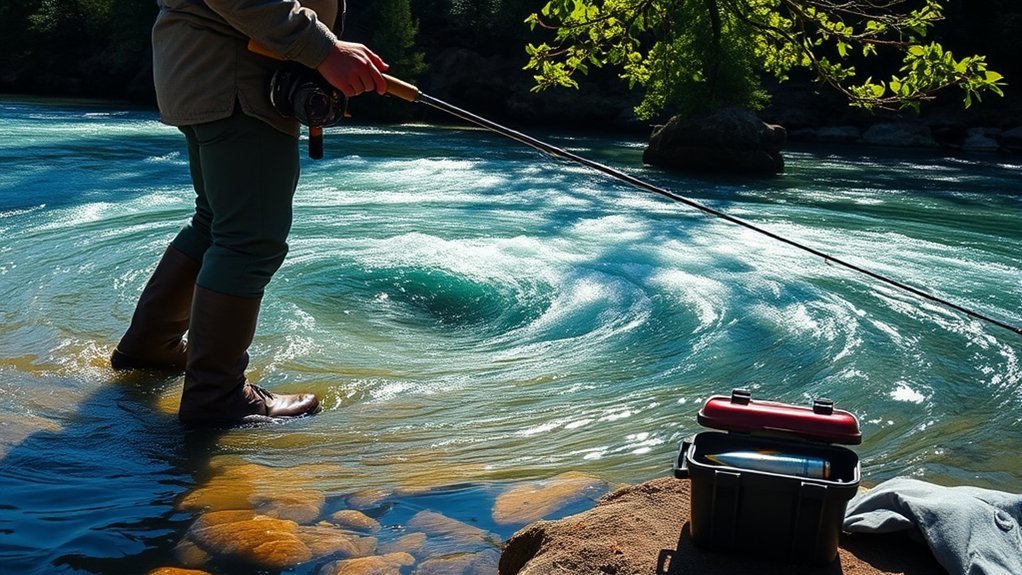
Understanding eddies is vital for any angler who wants to catch more fish. According to the National Oceanic and Atmospheric Administration (NOAA), eddies are circular water movements that flow counter to the main current. They create small whirlpools that attract fish like trout and striped bass. You can often catch fish in the slow, circulating waters of eddies. Look for them along riverbanks or behind large boulders. Fish use these boulders as shelter from strong currents.
Pay close attention to the eddy line. The eddy line is the exact seam where fast-moving water meets slower water. Targeting this specific area increases your chances of a catch. Tides, water levels, and current speed influence how eddies form. Because of this, you must scout these spots carefully. When you understand how fish behave in eddies, you can adapt your approach and improve your catch rate.
Core Techniques for Targeting Eddies
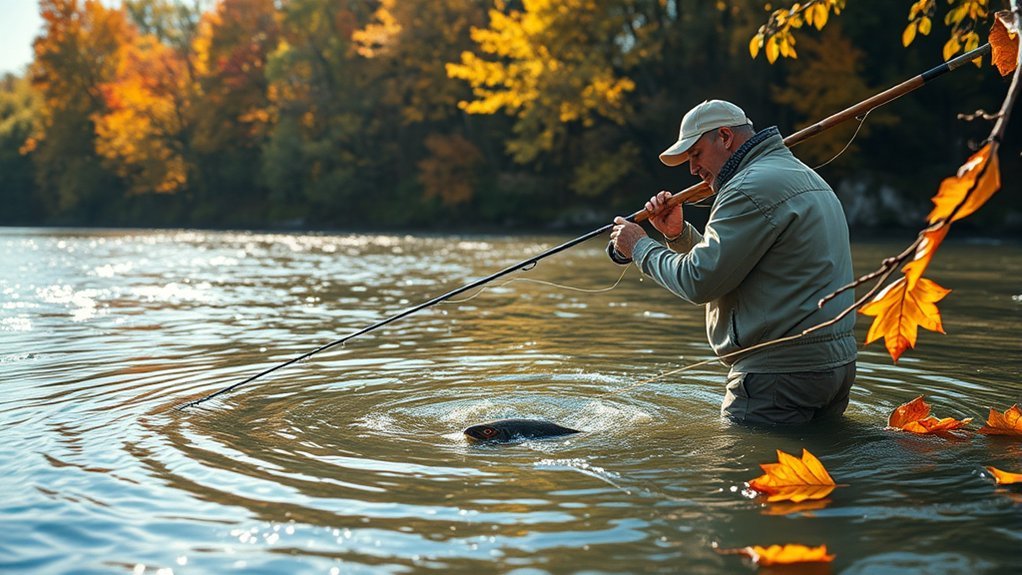
Your approach changes based on your watercraft. Follow these core steps to target an eddy effectively:
- Analyze the current: Locate the seam where the fast current shears against the slow water.
- Position up-tide: Anchor or hold your position just outside the main swirl of the eddy.
- Cast into the slow water: Drop your bait into the calmest part of the pool.
- Let the bait drift: Allow the natural circular motion of the eddy to pull your bait toward the seam.
Basic Kayak Tactics
Mastering a few key tactics from a kayak will boost your catch rate. Start by rigging weightless eels. Weightless baits allow you to cover the area through a slow troll or a natural drift. Pedal your kayak slightly to keep your line off the bottom in slower currents. This prevents snags and keeps the bait in the strike zone. You can also cast and retrieve large soft plastics to entice fish hiding near the edges. Mix live, dead, or rigged eels to find what the fish want.
Basic Boat Positioning
You must position your boat strategically to present your bait properly. Anchor on the outer edge of the eddy first. Cast toward the slower water where fish group together. Turn off your engine early to ensure a stealthy approach. Use live eels or bunker for bait. Always aim for the seam where the fast rip meets the slower water. Review this quick reference guide for boat tactics:
| Technique | Description |
|---|---|
| Positioning | Anchor on the outer edge of the eddy |
| Casting Direction | Target slower water and visible seams |
| Bait Selection | Use live eels, bunker, or metal lips |
| Stealth Approach | Coast into spots, leaving engines off |
Advanced Kayak Fishing Strategies
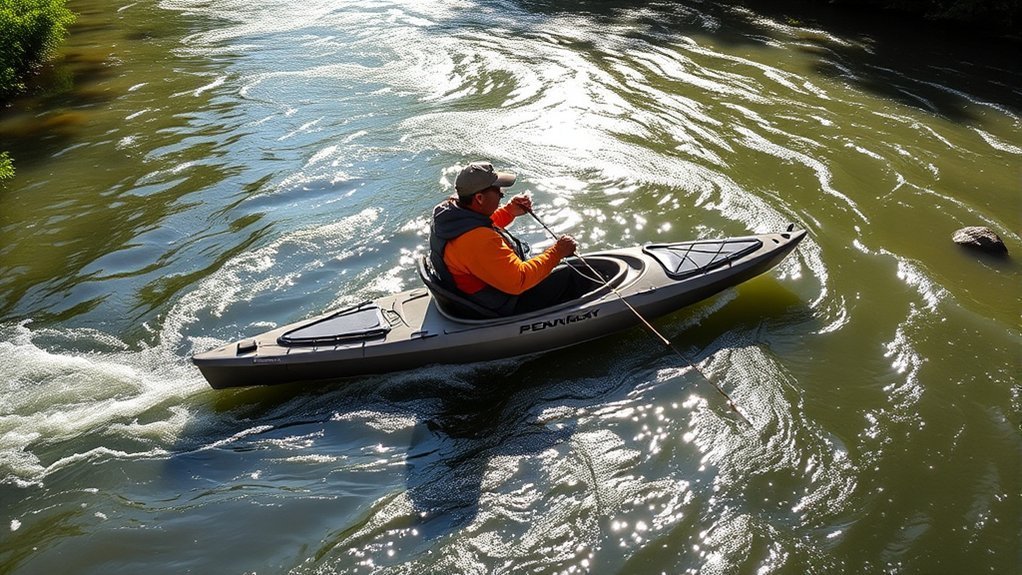
Fishing eddies from a kayak requires precise boat control. Start by stopping your kayak at the very edge of the eddy. Cast your lure directly into the slowest water. Weightless eels work best here. You can drift them slowly to cover the entire pool. Slight pedaling keeps your line tight enough for good bite detection.
Pro tip: Use your kayak pedals in reverse just enough to match the current speed, allowing your bait to hover perfectly in place.
You must remain stealthy. Minimize hull noise while you approach the spot. Never use a loud motor. Instead, let the current pull you quietly into position. Fly fishing anglers should cast small streamers or poppers that mimic local baitfish. These small profiles trigger aggressive strikes in tight pools.
Boat Fishing Tips for Successful Eddy Angling
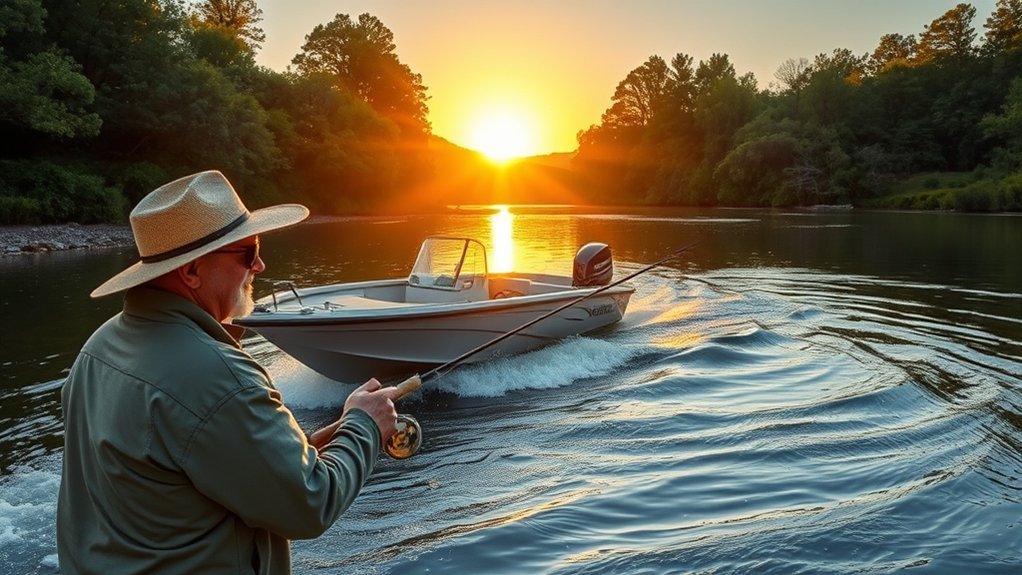
You maximize your success by keeping the boat stable. Position your craft at the outer edge and cast into the slow water. Fish hide in this calm water to conserve energy. Approach the area slowly to keep the fish actively feeding.
Warning: Engine vibrations carry much further underwater than in the air, instantly shutting down the feeding behavior of predator fish.
Positioning Your Boat
Anchoring in the right spot determines your success. Follow these steps to catch more fish from a skiff or center console:
- Park the boat on the outer edge of the eddy.
- Turn off the main engine at least 50 yards away.
- Use a trolling motor or coast into your final position.
- Deploy your anchor quietly to hold the boat on the current seam.
Quiet Approach Techniques
How you approach an eddy matters just as much as where you anchor. Start your approach from across the river. This minimizes noise directly above the fish. Execute a ferry crossing maneuver to keep your momentum steady. Point the bow toward the top of the eddy. Enter the area at a 90-degree angle. Keep your lateral momentum moving forward as you cross the turbulent eddy line. Carve a tight arc into the calm water. This puts you in the perfect spot to cast a dry fly or lure. Never point your boat directly downstream, as you will lose steering control.
Surf Fishing Approaches in Eddy Areas
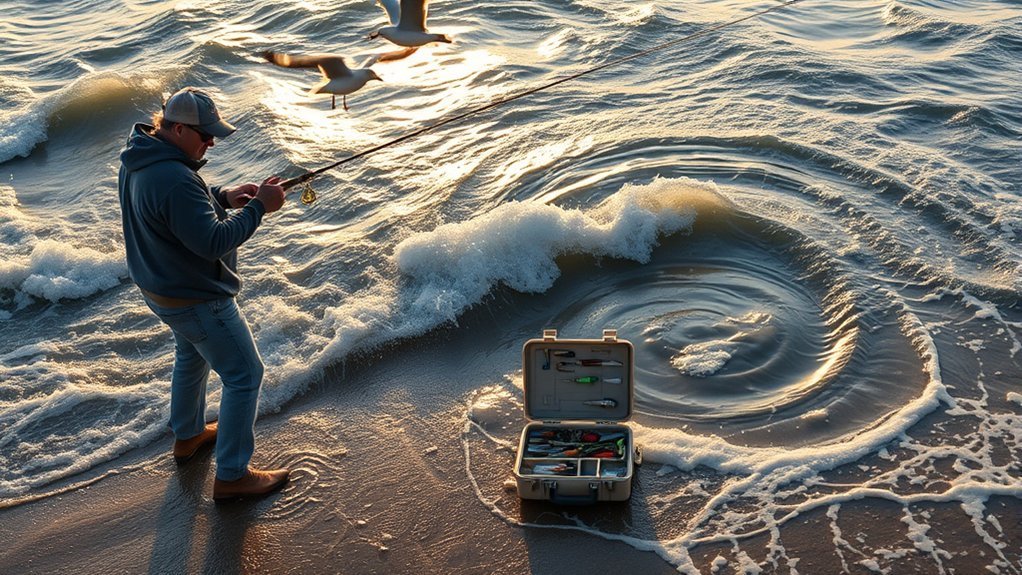
Surf anglers face unique challenges when targeting ocean eddies. You must understand how beach currents pull bait into deeper troughs. Try these surf tactics to catch more fish:
- Stand up-tide: Cast your bait so it drifts naturally down into the swirling trough.
- Throw metal lips: Large metal lip plugs and darters mimic injured baitfish perfectly in swirling water.
- Dead stick eels: Let a rigged eel sit motionless on the bottom when fish refuse moving baits.
- Use bunker chum: Throw chunks of bunker into the current to create a scent trail that pulls fish out of the eddy.
Adapting Eddy Fishing Techniques to New Locations
You must adapt your techniques when fishing a new river or coastline. Find the current breaks first. Look for sharp bends in the shoreline or large boulders breaking the surface. Fish use these structures to block the heavy current. Review local topographical maps to find deep holes where eddies form. These maps save you hours of searching.
Match your bait to the local water conditions. Change your lure size or color to mimic the baitfish native to that specific river. Talk to local bait shop owners to get the latest reports. Ask them how the current water levels affect the local eddies. Stay flexible and observe the water closely to catch fish in unfamiliar territory.
Frequently Asked Questions
How do you fish an eddy effectively?
Position your boat or kayak on the outer edge of the swirling water. Cast weightless lures or deep-diving plugs into the slow water, and drag them across the seam where the fast and slow currents meet.
What is the 80/20 rule in fishing?
The 80/20 rule states that 80 percent of fish live in just 20 percent of the water. You should ignore empty water and focus your time entirely on highly productive spots like eddies and current seams.
What is the 90/10 rule in fishing?
Similar to the 80/20 rule, the 90/10 rule suggests that 90 percent of fish gather in 10 percent of the water area. This highlights the importance of targeting specific structures and depth changes.
How can you spot an eddy from the shore?
Look for circular water movements flowing opposite the main river current. Watch for foam, leaves, or debris swirling in a circle behind large boulders or near sharp riverbank curves.
Conclusion
Patience pays off when you target moving water. Eddies naturally gather baitfish, making them the most productive spots on any river or coastline. By positioning your boat quietly and casting right on the current seam, you guarantee your bait lands exactly where predator fish hunt. Grab your gear, locate a strong current break, and start casting into the seams on your next trip.
References
- What is an eddy? — National Oceanic and Atmospheric Administration (NOAA)
- Reading Water and River Fishing Tips — Take Me Fishing

1 thought on “Fishing Eddies: Proven Tactics to Catch More Fish”